
Reuters is running a video on a man named Lechi Vataev, a Chechen refugee currently in Russia. He can channel 220-volt electricity through his body naturally, without damage or convulsions. He doesn’t know why he can do it, or how he came into his powers. After seeing the video, I have to say the fellow is surprisingly un-electrifying for a man with electric super-powers. His current motto: “I feel tired and I have a headache sometimes.” If that’s not enough to get you running to see him, then you’re not alone. At least it’s still pretty cool to watch him light a bulb while holding live wires plugged into an electric outlet.
Monthly Archives: December 2006
The new Nabaztag
Just this summer, I demonstrated what was then a new product on the US market on HGTV’s “I Want That! Tech Toys” show. It was called the Nabaztag smart bunny, and it was an interactive, programmable little toy that looked like a white bunny and connected to the Internet through WiFi. I also wrote a pretty detailed review about its capabilities.
Well, the folks at Violet, the makers of the Nabaztag, have just launched a new version, which does a whole lot more. You can communicate with it by voice, and you can program it to read books back to you, using RFID tags. Watch the video below, taped on a French TV show, it’s pretty cool stuff. Little kids would probably go bananas for the chance to have their books read back to them by a little toy bunny.
A hike to Cheile Turului
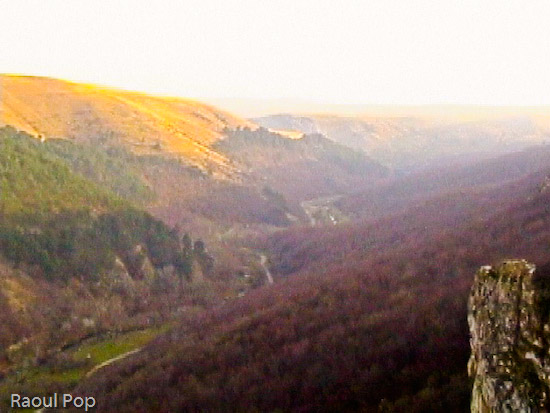
Cheile Turului is a picturesque and little known canyon located near Cluj, Romania. It’s a bit hard to get to. It’s off the main roads, and one has to travel on unpaved country roads and through a couple of villages to get to it, but the effort is worth it.
I’m not sure how to best describe the place. One normally associates canyons with climbing up a mountain or at least a sizable hill. Not so with Cheile Turului. You simply travel along on fairly level ground, climbing imperceptibly, until you get to it, and all of a sudden, you’re faced with this gorge that’s lined with serious stone walls on either side. It’s as if the ground opened up to create it. There are crevices and mini-caves almost everywhere one looks. I’m sure spelunkers and climbers would have a field day there.
I visited it in November of 2002 with my brother, on a fairly cold day, and photographed it. Unfortunately, I took most of the photos with my camcorder, so the resolution is fairly low. Some are even captures from video, so they’re at 640×480. Nonetheless, I wanted to share them because it’s a beautiful place to visit.
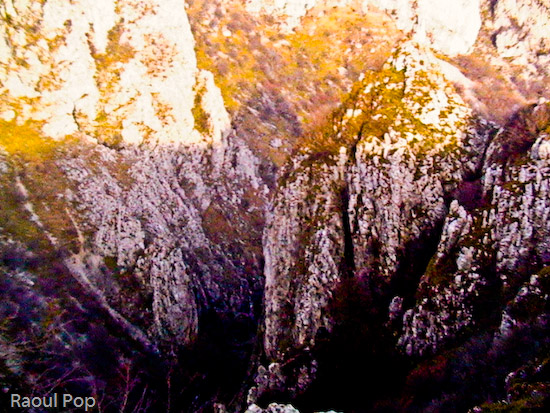
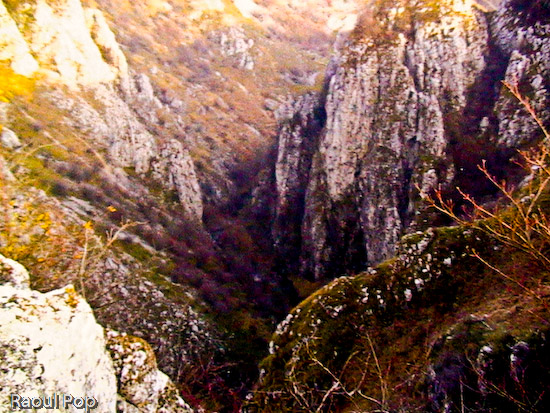
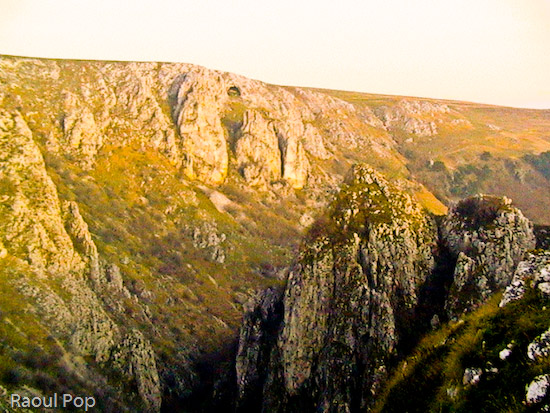
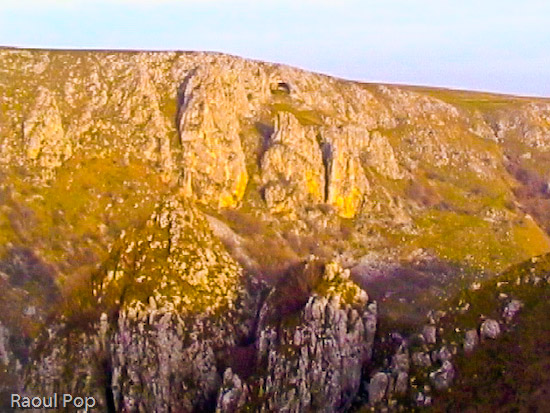
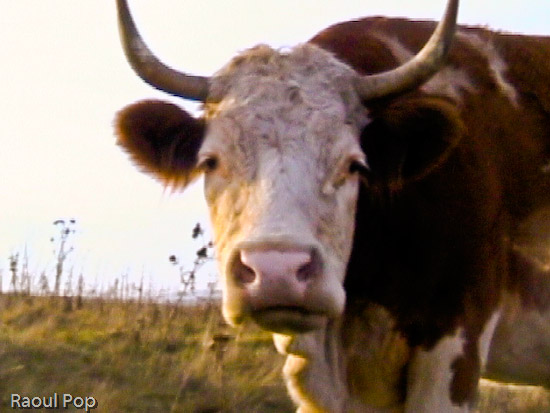
A single cow was out to pasture, grazing peacefully nearby. It was thoroughly unimpressed with my camera. Judging the quality of the photos, I can see why… 🙂
Book review: Digital Photography, Expert Techniques (2nd Edition) by Ken Milburn
This book is meant for “photographers who are serious about producing the highest quality photographs in the most efficient and cost-effective way possible.” That would include anyone from advanced amateur photographers to seasoned pros looking for new and more efficient ways of doing things.
Ken Milburn, the author, is a seasoned pro with lots of paid, published experience. He’s also an accomplished writer of technical works like these, in particular ones dealing with digital photography and Photoshop. What’s more, this book is now in its 2nd edition, which ought to tell you that if it was good enough to be reprinted, it’s probably worth your money.
The book is divided into twelve chapters that take you from prepping for a photo shoot to processing the photos and presenting them to the world. A great emphasis is placed on the workflow, and best practices are presented, and I might say, drilled into the reader. O’Reilly has spoiled me, because they always have good TOCs and indexes, and nice intro sections that are good stepping stones to the headier content, and this book is no different. Each chapter is summarized, so the reader knows where to look for things. What’s more, Ken’s writing is approachable and down to earth. You can tell he’s familiar with the subject matter and is also used to explaining these concepts.
Ken teaches the workflow mentioned above using the Adobe Bridge and Photoshop applications. If nothing else, Adobe applications like these have a wide reach, so you’ll be able to replicate what you learn from the book. I like the explanations that Ken offers for shooting in RAW vs. JPEG mode, and for ensuring that you are always ready to take photos, no matter the conditions. Another nice nugget is the method of eliminating noise from your photos by using Photoshop. The book is worth its price for the extensive photo retouching techniques alone. For example, have you ever wanted to know how to eliminate the bags under someone’s eyes, or take out shadows and imperfections? This is covered in the post-processing sections. As a bonus, panoramic and HDR (high dynamic range) photos are also taught. In the last chapter of the book, you’ll learn the methods of editing your photos’ embedded data (EXIF and IPTC), as well as presenting them to clients and to the world at large. This is more and more important these days as photos get posted online and can be so easily copied. Embedding information is one more way you can prove copyright.
There is one error I noticed, and that is in the recommended specs for desktops and laptops in the beginning chapter. Instead of GB, RAM is indicated in MB, as in “plug at least 1 MB of RAM into the motherboard and move up to 2+ MB as quickly as you can afford it.” I had to chuckle when I read this. It’s obvious Ken refers to GB, not MB, and I’m surprised this typo made it past the editors in the 2nd edition.
I highly recommend this book. Being an amateur photographer myself, I looked forward to reading it, and now it’s a worthwhile addition to my reference library. I learned many useful things from it, and I think you will, too.
Walking along the Constanta wharf
Constanta, located on the Black Sea, is one of the main cities of Romania. It’s a busy port, and a city with a lot of history. I guess its equivalent here in the States would be Miami. I visited Constanta with Ligia in April of 2003 and took some photos on the wharf, which is a pretty famous spot. It, and the Casino built on it, have been featured in several famous Romanian movies.
The building that now houses the Casino was planned and drawn by a Romanian architect, and built in 1909 in the Art Nouveau style. The architect’s wife drowned in the Black Sea, and he wanted to pay homage to her memory through the majestic building.
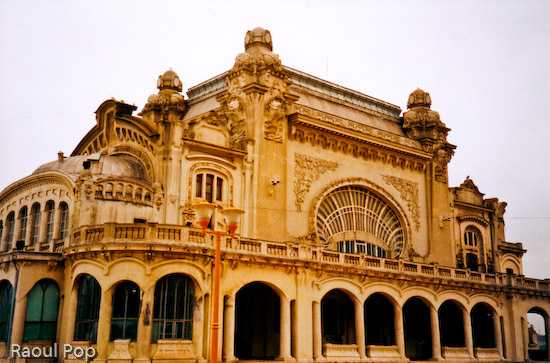
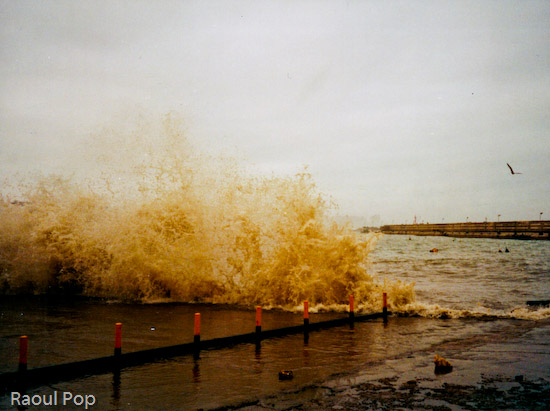
I’d walked along the same wharf as a child, with my parents, many years ago. Revisiting the spot was bitter-sweet, and the cold, damp spring day didn’t make it any sweeter. I’d watched the same concrete embankment as a child, and was fascinated by the fury of the waves breaking against it. That same embankment was still standing in 2003 — the very same stones — although they were now showing their age.
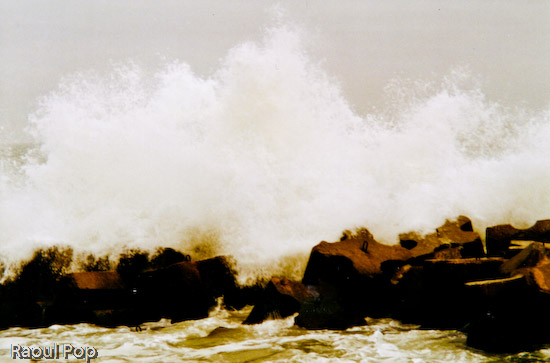
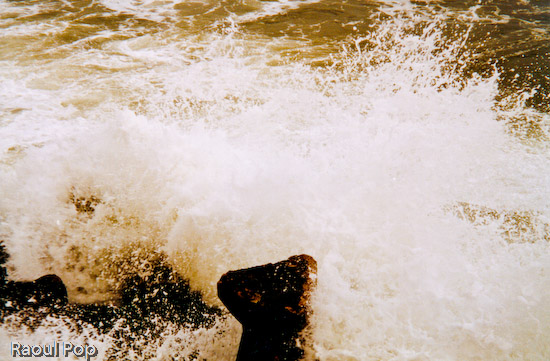
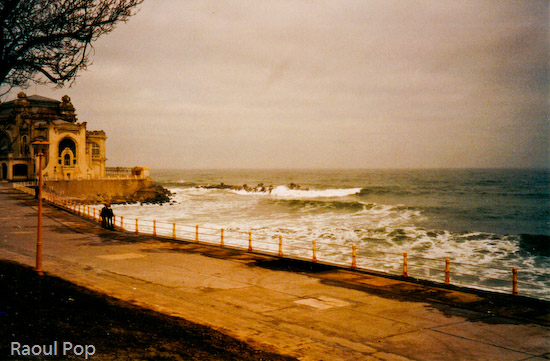
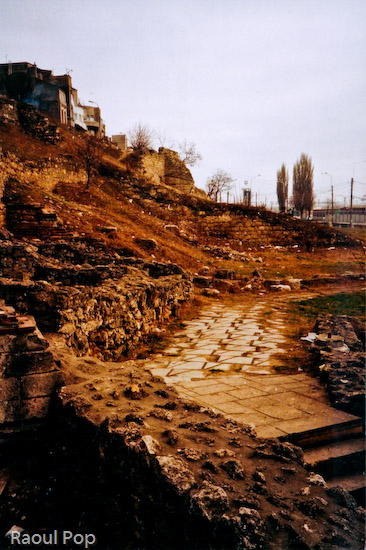
Before reaching the wharf, we walked along the main street that leads from downtown to the beach, and visited the ruins of an old Roman building which was probably a public bath house at some point. On the hill, homes of the old aristocracy stood as a reminder of Romania’s monarchic past. I for one miss the monarchy. With a king, you know who’s in charge and who’s to blame. Politicians blame each other, blame circumstances, lie and steal — it’s a circus, and no one is ever held accountable.
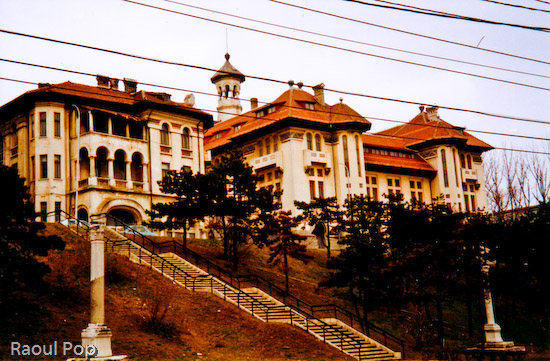
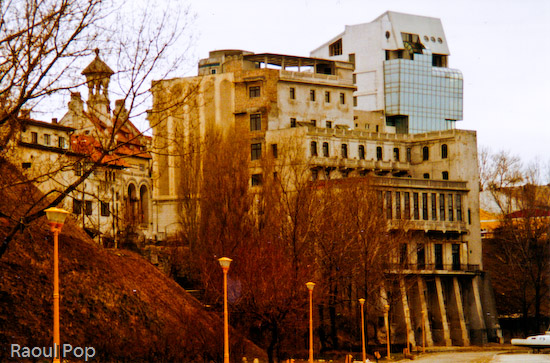
As we walked off the beach and back toward downtown, we saw this odd building, a mix of modern and old architectural styles.
 Raoul Pop