Lists

Condensed knowledge for 2007-09-19

A bit of a health theme to this edition of condensed knowledge:

  • A new CPR technique was discovered. It’s called OAC-CPR (Only rhythmic Abdominal Compression). As its name implies, you only press on the abdomen, eliminating the risk of broken ribs, mouth-to-mouth, and fatigue from pushing so hard. Definitely worth looking into this!
  • Prozac found in the drinking water in the UK. Apparently so many people are on the anti-depressant in England, that it can now be found, diluted, in the water supply, after having passed through their bodies, into the sewers, through the water treatment plants, etc. Although the “experts” are saying there’s no risk, I doubt it. I mean, this is a drug, found active, in the water supply!
  • WD40 turns out to be a great help for bad joints. Despite the precautions written on the cans, rubbing it into the skin was of tremendous help to a man suffering from joint pain. Not sure that I’d recommend this.
  • Aspartame is the behind the spike in suicides for teen and pre-teen girls. Apparently, it’s a powerful mood-changer — it causes depression. Something to think about the next time you buy your children something with Nutrasweet or Aspartame as the sweetener.
  • Exercising in traffic is bad for your heart. Now that’s something I’ve known was wrong for some time. It just didn’t make sense to me when I saw people running on the sidewalk, next to heavy traffic, breathing in all those noxious fumes. When I run, I want to breathe fresh, healthy air, not someone’s nasty car exhaust. I just couldn’t get why they’d put themselves through something that unhealthy. It turns out the particulates from vehicle emissions decrease our blood’s ability to clot, and restrict the amount of blood that reaches the heart immediately upon exposure.
  • Mobile phones are as dangerous as smoking. So reads a recent headline… People have gone back and forth on the safety of mobile phones for years. Now the EU has finally decided to pick a side and take action. The article’s in Romanian, but what it says is that governments are starting to take mitigating action, first by warning people of the risks, and then by looking at ways to minimize exposure to WiFi radiation. They’re recommending that people go back to using wired Internet connections instead of wireless ones.

Now for some funny stuff:

And some economic discussion:

  • Greenspan on Iraq war, oil link. He confirms what I’ve thought and said for some time. In his talk with Matt Lauer, he touches on the housing bubble and the fiscal irresponsibility of the current administration, but he has no compliments for the Democrats, either. Last, but no least, he says the dollar may be replaced by the euro as the reserve currency of choice.
  • Transparent Investing: what your broker doesn’t want you to know. Here’s a site that offers a purportedly frank discussion of index investing. Definitely worth a look.
Standard
Thoughts

Moved my ideas to ComeAcross

Until now, I housed the various ideas I published online at my personal site. I decided to move them here to my blog, and I did just that today. I could not have done it without the Import/Export functionality in WordPress, and even more importantly, without the Redirection plugin from Urban Giraffe. That plugin is one amazing piece of work! I just love it.

I imported my posts, assigned them to a new user so I could easily find them, and then I simply entered the corresponding URLs on each site into the Redirection plugin settings page, as seen below. Then I deleted the original posts at RaoulPop.com. Now every time someone tries to access the page for an idea at RaoulPop.com, they’ll get a 301 redirection to that same page here at ComeAcross. It couldn’t have been easier!

The Redirection plugin for WordPress

I got a chance to look at my ideas once more, and it was interesting to see that some of them have already come true. I’ll let you have a look at them as well. Can you tell which ones are already out there?

The thing to keep in mind as you go through these ideas is that I tried to match the publish time of each one with the exact time (to the minute, anyway), when I got the idea. So you’ll see publish times going back to 2005 or so for most of them. The gravitational propulsion-levitation idea doesn’t have an exact time. I do know that I started thinking about it back in 1997, and although it seems outlandish, I’m pretty confident that it can be done. We just don’t have all of the pieces of the that jigsaw puzzle yet.

This page will give you the background information on why I decided to publish my ideas on the web. I call it my great experiment in ethics. We’ll see how it turns out.

Standard
Reviews

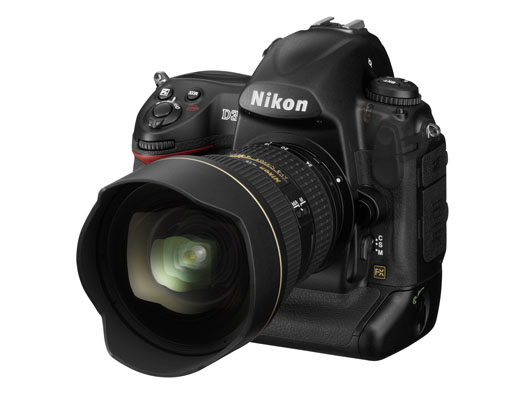
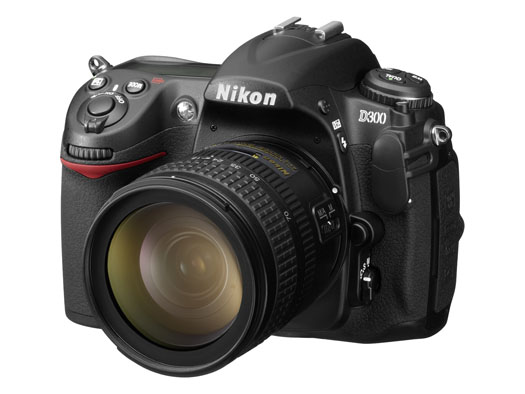
Camera preview: Nikon D3 and D300 DSLRs

On August 23, 2007, Nikon introduced two new DSLRs to the market: the full frame D3, and the D300, an upgrade to the D200. I’m late with this bit of news — I meant to publish the post sooner, but I was out of the country and I had less access to the internet that I’d hoped. Still, since I went to the trouble of getting nice studio pics for the two cameras, I thought I’d write about it anyway, late or not.

First, a few photos. There’s the D3 below, and the D300 is right after it.

These two cameras have gotten plenty of coverage already. What else is there to be said? Well, remember the big CCD vs. CMOS arguments that went on and on for years? Hmm, let’s see, who was it that argued for CCD? Why, it was Nikon, of course. What have they just done? They’ve switched to CMOS entirely for their new DSLRs.

There was another argument thrown around, also by Nikon and its supporters. Um, yes, I remember now, it had something to do with full-frame vs. cropped sensors. I’m paraphrasing here, but Nikon people were saying something along the lines of “full-frame isn’t needed for digital, it’s useless — we can accomplish everything we want with a cropped sensor.” So, what just happened? Nikon put out a full-frame DSLR.

Short of holding my brother’s D70s in my hand, changing the lens, cleaning its sensor and taking a few photos, I don’t have a lot of hands-on experience with Nikon cameras. I considered buying the D200 this past spring, but opted for the Canon 5D instead. I can tell you what my brother says about his D70s — and believe me, it’s not flattering… It turns out there was a ridiculously high rate of factory defects with that camera, particularly when it came to autofocus. His camera can’t autofocus to save its life. He’s had to use manual focus ever since he bought the camera. He’s finally going to pay to repair it, after more than one and a half years of use. He’d have sent it to Nikon for repair while the warranty was still good, but there are no official Nikon reps in Romania, which is where he lives and works.

We sat there comparing on-screen menus between his D70s and my Canon 5D. He couldn’t believe how easy it was to navigate the menus on my 5D, and to get the settings that he wanted, the first time, right away. He kept mumbling under his breath about how pathetic the D70s was, and how he could never find stuff when he was pressed for time. Heck, I tried to help him find the sensor cleaning mode and gave up after several minutes. We just couldn’t find it. We ended up putting the camera in mirror lock-up mode, pressing the shutter and cleaning the sensor that way. That’s pretty pathetic from a UI (User Interface) point of view.

On the other hand, I’ve heard some people praise Nikon’s controls. I don’t get it. Perhaps if you’ve been a Nikon guy for years, the stuff is just easier to find, but they sure don’t make it easy for someone who picks up the camera and wants to use it. Canon does make it easy, and that’s one of the reasons I like them.

There’s another thing I can say for Nikon in general. Their PR people gave me the run-around when I tried to get a D200 for review. On the other hand, Olympus and Canon were responsive and willing to send me review units. I’ve also heard of really bad customer support experiences from Nikon users.

Take these experiences for what they’re worth. They may have been isolated incidents — or not. I’m certainly willing to forget my bad experience with Nikon PR if they are interested in sending me a D300 or D3 for review. I’ll do what I usually do, which is to use it as my primary camera for one month, then write an honest, detailed review of the experience.

From a design point of view, these two new cameras look really nice. I can’t tell you how they feel in my hand, since I haven’t had the chance to hold them (yet).

I do want to point out that Nikon has more high-res photos for its cameras than Canon. That’s nice. It gives people a chance to get a closer look at them, and it’s an added convenience. You can see the rest of the photos below.

Here’s that troublesome CMOS that Nikon people used to badmouth in the past. It’s the sensor that does what a CCD cannot, which is to enable Nikon to go all the way to 6400 ISO natively on the D3 and 3200 ISO on the D300 (and even all the way up to 12,800 and 25,600 ISO in expanded mode on the D3).

Yes, ISO-wise, Nikon one-upped Canon, but they haven’t managed to get the same amount of resolution from the full-frame sensor that Canon can get. My 5D has roughly the same resolution as the D3 (12.8 vs. 12.1), while the Canon 1Ds Mark III has 21.1 megapixels — but only goes up to 1600 ISO natively. So there’s a certain give and take here that has to do with the physical limitations (at least to date) of the medium.

If you squeeze more pixels out of the same surface area, the pixel pitch decreases and you end up more prone to noise. If you keep the pixel pitch large, you can get more low-light sensitivity, but you don’t have the resolution. Nikon chose to go for low-light sensitivity with their two newest cameras, which I think is an interesting choice. Perhaps they did it to silence the Nikon critics who kept harping on their noise-prone CCD sensors. Whatever the reason, I’d love to see just how one of these two cameras does in low light with a nice fast lens like a 50mm f/1.4 or f/1.2.

Till then, I’ll leave you with more information:

Standard
How To

Proper disposal of old electronic equipment

Frank Gruber of SomewhatFrank.com posted a neat video made by GOOD Magazine to his blog. The video’s enclosed below, and you can also view it directly on YouTube. It documents first hand just how electronic waste is “recycled” in countries like China or India. Besides unmitigated pollution to the air, ground and water, the workers themselves are exposed to serious damage from working at those places.

Please don’t contribute to the problem. Do the right thing. Recycle your electronic waste (old computers, stereos, iPods, printers, etc.) the right way by sending them to companies that will do it right here in the US, in environmentally-safe ways. The major computer manufacturers will either recycle them for free nowadays, or allow you to pre-purchase a shipping label so you can send the computer back to them at the end of its useful lifespan. The average cost to recycle a computer in the US is $30. That’s a small price to pay to ensure that you’re not causing even more damage to the environment that feeds you and keeps you alive.

Standard
Thoughts

ISPs to become IT providers for home users?

Bruce Schneier makes a solid point in his recent post entitled “Home Users: A Public Health Problem?”, where he states that computers and computer security are much too complicated for the regular home user. That’s most certainly true. No matter how much you “educate” the average user, they’re still going to mess up. Even if they’re working in IT, that’s no guarantee of know-how. There are so many things you can do in IT these days that an IT guy might not even know what a hard drive or a RAM module looks like. You really have to like working with computers to get the way they work and to be willing to put in the time to learn how to protect and operate them the right way.

But then Schneier says ISPs should become IT providers for the home user. In other words, provide real Help Desk support for software installations, router and firewall settings, anti-spyware and anti-virus software, etc. This sounds good at first until you realize there’s a very small step between that and choosing to mitigate damage to the network by controlling what software users can install and use on their computers. What’s to stop ISPs from requiring that users register their computers on their domain (or doing it automatically as users run their software CDs), then pushing down group policies that enforce their rules?

What’s the alternative? Make computers easier to use! Operating systems and the gadgets that go along with them have to become really easy to use. A certain number of security options have to be enabled by default, and those settings have to able to propagate from the OS down to the gadgets (firewalls, routers, printers, network drives, WiFi devices, etc.) automatically and where applicable. You set it once and it gets set everywhere else. I talked about this in another post of mine, entitled “It’s got to be automated“. Have a look at that as well.

The starting point should be OS X. It’s not the best OS it could be, but it’s a lot easier to use for most everyday tasks than other systems, but even it is hard to figure out for a normal user when it comes to security and special protocols like site hosting, file sharing or FTP, and privileges between users in places like the Shared folder.

We need to do away with arcane file names for user groups in operating systems. Privileges should be much easier to set for files, folders and entire drives. Systems ought to be smart enough to know when we’re trying to share something with the firewall up, and pop up an on-screen wizard to assist us. They should anticipate certain things and guide us through.

I say we need to make all network devices manageable directly through the computer, instead of having to log onto them separately. This goes especially for routers. The computer should know there’s a router on the network, and allow us to manage its settings from the control panel, as we would manage a printer, but make it even easier. It should auto-configure it with medium-level security by default and only ask us to choose a password and be done with it.

The solution lies in making better software and hardware.

Standard