Reviews

Hardware preview: DroboPro

Updated 1/14/19: I have revised my opinion of Drobo devices. After experiencing multiple, serious data loss events on multiple Drobo models, even recent ones, I no longer consider them safe for my data.

Updated 11/23/09: The new DroboElite is now available. It differs from the DroboPro because it offers two Gigabit Ethernet ports instead of one, multi-host support, and up to 255 Smart Volumes.

Today, April 7, 2009, Data Robotics launches a new product aimed at professionals and SMBs: the DroboPro. I got a preview of it yesterday. Let me share what I learned with you.
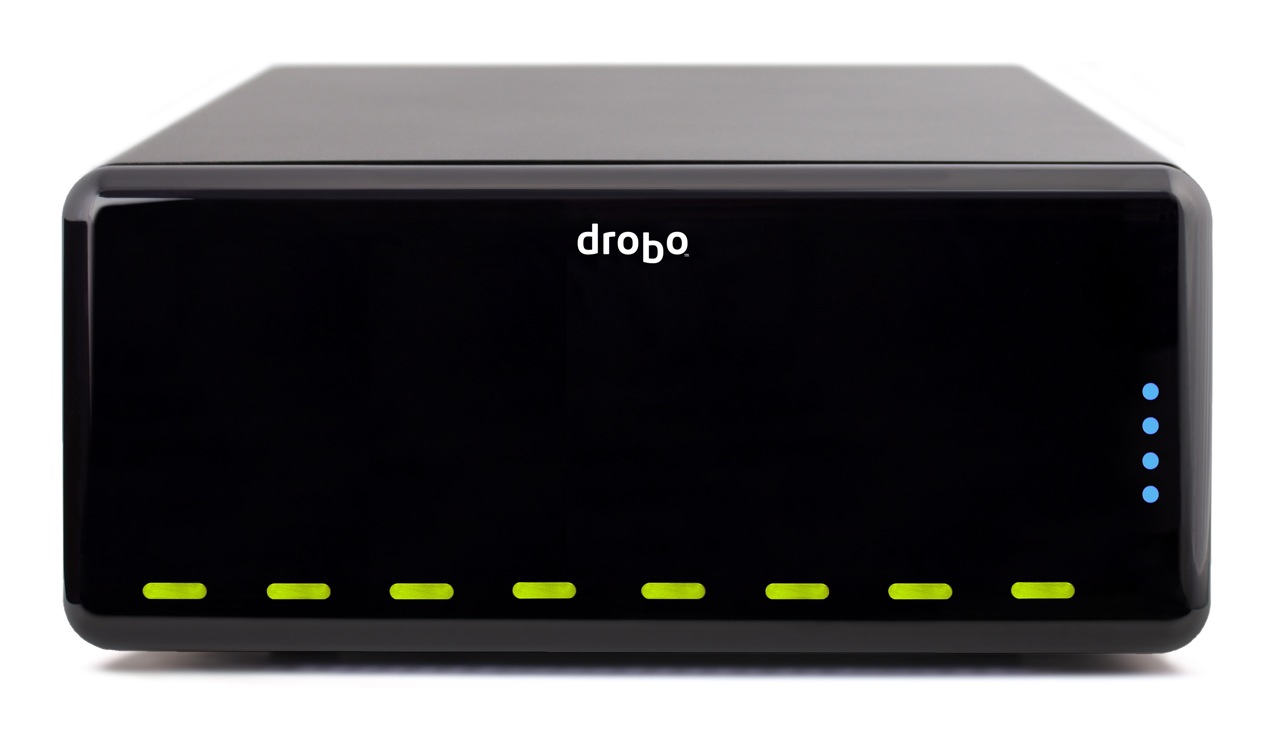
Drobo Pro top

The DroboPro has some really cool features, some of which I, along with others, anticipated and looked forward to seeing. As I wrote in my review of the Firewire Drobo, Data Robotics was looking at making an 8-drive Drobo, possibly rack-mounted. I also thought they might introduce the capability to safeguard against two drive failures. And, as I wrote in this comment on that same review, in response to a reader’s wishlist for the Drobo, I thought they might at some point build networking capabilities right inside the Drobo.

Well, the new DroboPro does all those things and more!

  • 8 (eight) drives
  • 2 form factors: desktop and rackmount
  • Dual drive redundancy
  • Gigabit ethernet
  • iSCSI
  • Smart volumes: create up to 16 different virtual volumes, each of which can grow to 16TB
  • Price is $1,299 for entry level DroboPro or $3,999 for a loaded model with eight 2TB drives
  • Instant $200 rebate with customer loyalty program

Let’s dive into those new features a bit. Keep in mind my knowledge is as yet limited, since I haven’t seen the full specs; I only had a phone briefing.

8 drives

You know how the drives are arranged horizontally in the regular Drobo? They’re arranged vertically in the new DroboPro, which is about the same height, and a little less than twice the width of the original.
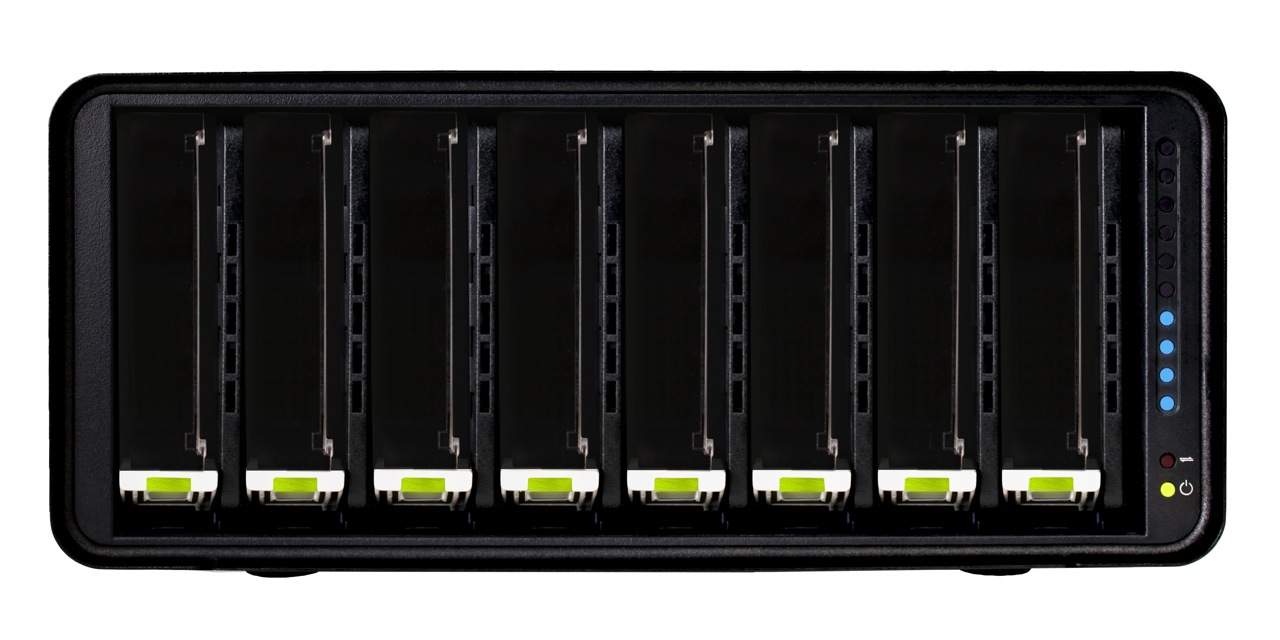
Drobo Pro cover off

Two form factors

The DroboPro comes in a desktop form factor which is 12.17″ wide, 5.46″ high and 14.1″ long. The length is about 3″ more than that of the original Drobo. I think the extra space houses the additional circuitry for the network, power supply and other features.

The other form factor is a rackmount with a 3U height. If I understood correctly, the rackmount kit can be attached and detached as needed, so you can interconvert between the two form factors if you like.

DroboPro dimensions

Drobo Pro rackmount kit

Built-in power supply

One thing that’s easy to miss if you look at the back of the DroboPro is that it no longer has a DC adaptor port, but a regular 120-240V connector. Have a look and see. This means the power brick which converts 120-240V AC to 12V DC has been eliminated. You’ll also notice a power switch on the back. That’s new too.

Drobo Pro back

Dual drive redundancy

As it was explained to me, the DroboPro comes standard with single drive redundancy, and the dual drive redundancy is an option that can be turned on at any time. In case you’re not familiar with the concept, this means two of the drives inside the Drobo can fail, and your data will still be safe.

Gigabit ethernet

Business-class networking is now built right into the DroboPro, along with enterprise-class features, like iSCSI with automatic configuration. The ethernet port on the DroboPro does not replicate the functionality of the DroboShare, as I initially thought. It only works through the iSCSI protocol, which means it needs to be mapped directly to a host, like a server or workstation, which can then share it among multiple servers or workstations. In that sense the DroboPro is not a NAS (Network Attached Storage), but a SAN (Storage Area Network).

iSCSI

If you’ve set up iSCSI volumes in the past, then you know how much of a headache they can be, and how bad the performance can be if it’s not set up correctly or if the hardware isn’t working as it should. I know firsthand about this. With the new DroboPro, the iSCSI setup is automatic. It’s as easy as plugging it into the network. The Drobo Dashboard software then finds it and mounts it as a volume on your machine via iSCSI. The work is done behind the scenes so you don’t have to worry.

For Windows, the DroboPro uses the Microsoft iSCSI initiator, and for the Mac, the folks at Data Robotics wrote their own iSCSI initiator. Those of you who work with Xserve and Xsan use Fibre Channel technology to connect to the network volumes, and you may wonder why Data Robotics went with iSCSI. It’s because iSCSI is more utilitarian. It doesn’t require special network hardware to work; it can use the existing ethernet network infrastructure, so there’s a lower cost of entry and maintenance.

I was assured that iSCSI throughput on the DroboPro is very fast. I guess it’s up to us to do some testing once the DroboPro starts to ship, so we can see just how fast it is. See the iSCSI guide on Drobo’s website for more details.

Smart Volumes

With the DroboPro, you can create up to 16 different virtual volumes, each of which can grow to 16TB. This is very important for the enterprise market, where companies want to be able to separate the data onto separate volumes and assign separate access privileges to each. Those of you who are network admins can readily appreciate how useful this is. Those of you who are creatives can also appreciate being able to assign a volume for Time Machine backups, one for videos, one for photos, and so on. Furthermore, each volume can be resized as needed, which is a huge leap forward compared to the difficulty of resizing LUNs set up over RAID volumes.

Price

The entry level DroboPro (enclosure-only) costs $1,299. The high end DroboPro, which includes the rackmount kit, two drive redundancy and is pre-loaded with eight 2TB hard drives for a total of 16TB of space, costs $3,999. There’s also a handy customer loyalty program which will give you an instant $200 rebate if you’ve purchased a Drobo in the past.

Those of you who might balk at the price should compare the features and ease of use of the DroboPro with other comparable products on the market. I’m going to walk you through a different kind of comparison, one that looks at the cost of the original Drobo and the cost of the new DroboPro.

Think of the DroboPro as two regular Drobos in one. The original Drobo is $499 for the enclosure, so that brings the price to $998. The difference between $998 and $1,299 is made up by the additional networking features and the complexity of the circuitry and auto-management algorithms of an 8-drive array. Keep in mind the DroboPro has enterprise-class features like dual drive redundancy, iSCSI and smart virtual volumes. Those features alone warrant charging several hundred dollars to thousands more for it, as other companies who make similar products have already been doing.
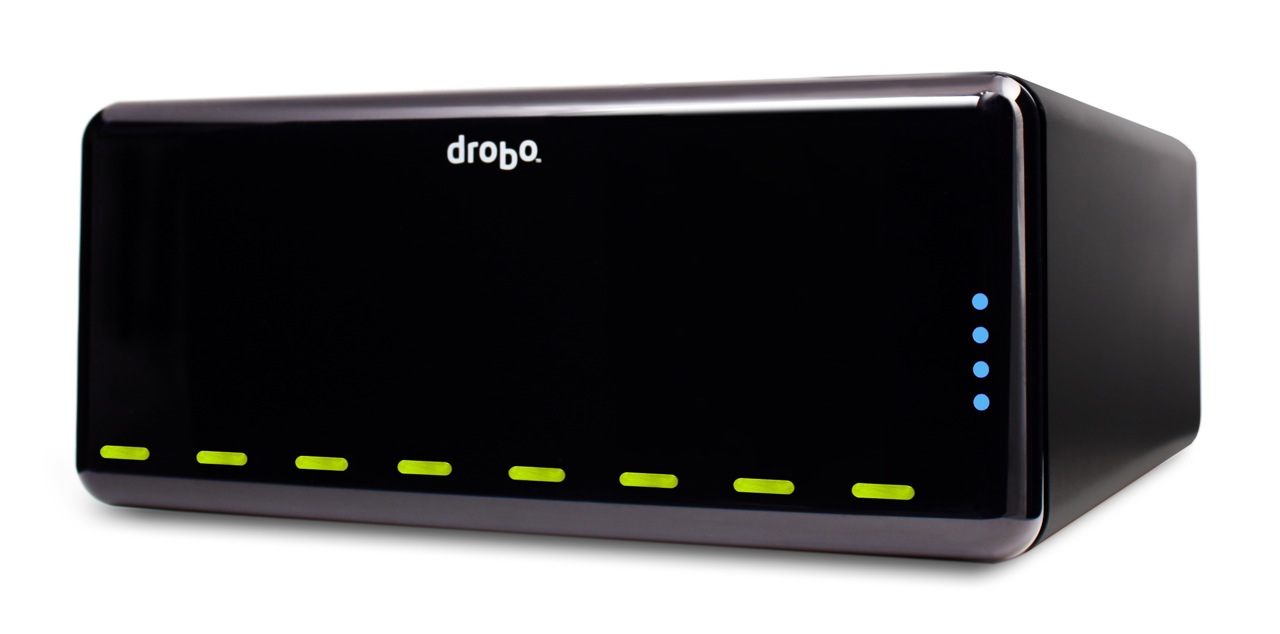
Drobo Pro side

Summary

The DroboPro is a fantastic addition to the Drobo line. Its enterprise-class features, its incredible ease of use, and its unmatched storage flexibility make it the perfect external storage solution for busy professionals with serious storage needs or business server rooms. Users will appreciate all of the space it makes available for their work, and system admins will appreciate how easy it is to set up and maintain. From a design point of view, it’s a drool-worthy beauty. Having been a Drobo user for almost 1½ years, I can tell you it is my storage solution of choice, and I look forward to upgrading to a DroboPro some day.

Images used courtesy of Data Robotics.
Standard
Lists

Gadget Monday – April 6, 2009

Here are this week’s seven cool gadgets.

Dell Studio One

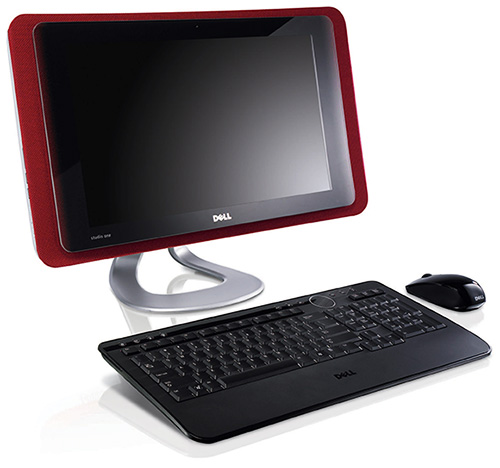
Dell’s design has definitely improved in recent times, and the Dell Studio One is a great example of their new direction. It’s an all-in-one desktop with a 19″ widescreen display. It’s smaller than the 20″ iMac from Apple, but it looks wider because Dell put all the circuitry in the back instead of letting some of it reside under the screen, and because the aspect ratio for its display is 16:9, not 16:10. Hardware-wise, the specs are nice and on-par with the iMac, and the price certainly isn’t bad at $700 for the entry-level model. I do hope, for Dell’s sake, that the Studio One will run Windows 7, not Vista…

dell-studio-one-19

[via LikeCool]

Lenovo Pocket Yoga

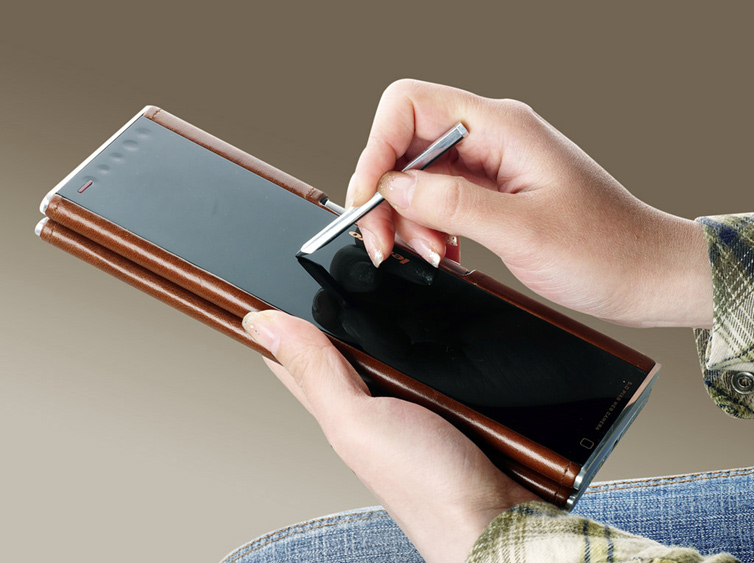
This neat device from Lenovo is a cross between a Pocket PC, a netbook, and a laptop. There are no specs or pricing or availability listed for it anywhere, only some photos in Lenovo’s Flickr account. I like the stylish design and the size, but I have many questions about it, such as OS, specs, tactile feel of the keyboard, battery life, display quality, stylus usability, etc.

lenovo-pocket-yoga-4

lenovo-pocket-yoga-1

lenovo-pocket-yoga-3

[via LikeCool and Lenovo]

LaCie iamaKey USB flash drive

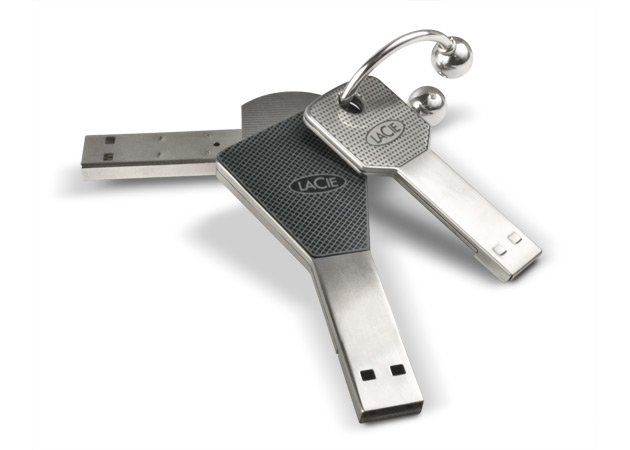
Key-shaped, functional and cool design for a USB flash drive. It’s also a good deal at only $18 for the 4GB version and $30 for the 8GB version.

lacie-iamakey-1

lacie-iamakey-2

lacie-iamakey-3

[via LikeCool and LaCie]

Zero Mouse by Oliver Rosito

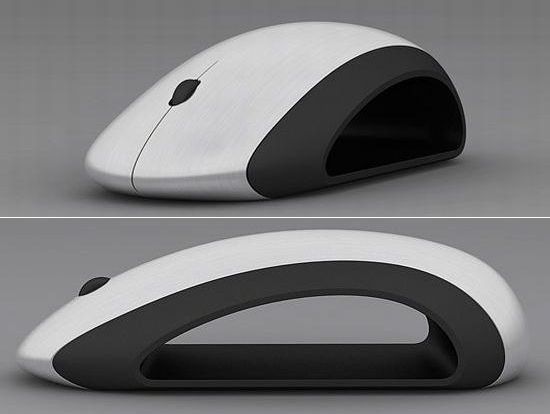
An elegant, hollowed-out mouse concept design, made of aluminum and rubber. I like it, but I do have one question: where will they fit the batteries?

zero-mouse

[via The Design Blog]

JVC Everio X Camcorder

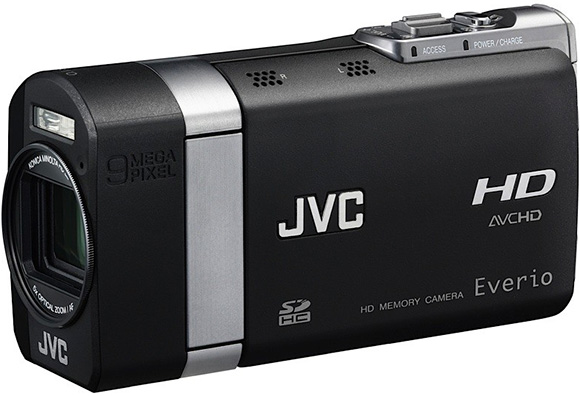
The Everio line of camcorders from JVC have sure come a long way since I last reviewed them. The new Everio X camcorder is both a digital camera and video camera, recording 9 megapixel stills and full HD (1080p) video with a 1/2.33 inch CMOS sensor. One set of features that sets it apart is the ability to shoot photos at high speed. It’ll record 5 megapixel photos at 60 fps (frames per second), and will even go as high as 600 fps, although the image size at that speed is only 640×72 pixels.

jvc-everio-x-camcorder

[via LikeCool and JVC]

Electric Man

A power strip shaped to look like a smiling stick figure man.  You can use it for those bulky adapters, since there’s plenty of space between each grounded outlet. Only $15 from UrbanOutfitters.

[via LikeCool]

Three doors in one by Slam Doors

Did you ever see “The Three Bears” classic cartoon or read the story as a child? Same concept here. You’ve got a little door for Baby Bear, a medium door for Mama Bear and a big door for Papa Bear. Nice!

three-doors-in-one

[via LikeCool]

Standard
Thoughts

Let's recap where we are economically

A video compilation of various Peter Schiff TV appearances (2002-2009) is available on YouTube. The quality isn’t that great, but the message is pure gold. He’s been saying since 2002 that the US economy would collapse, and he gave solid reasons why it would collapse every time. His messages got more pointed with each appearance, they made sense, and yet he was ridiculed over and over for his opinions by so-called pundits on various TV networks. Ben Stein once said to him: “Sub-prime is a tiny, tiny blip.” I bet he’d like to eat his words now…

In 2004, I wrote an article where I said some of the same things Peter Schiff was saying — namely, that an economy financed by debt would not go on forever, and that we might be headed for another Great Depression. Back in 2004, the real estate market hadn’t even hit its peak, so I based my observations on common sense. I have no education in finance, but I can spot a turd no matter what it’s called.

I wrote then that the slowing US economy was being falsely propped up by the war spending in Iraq, but that wouldn’t last. You see, the government operated under a false assumption. The thought that what pulled us out of the Great Depression — the ramped up spending for WWII — would do it again in modern times. They were wrong. As I also wrote then, the WWII spending paid off: the world wanted American products after the war — they were hungry for them, and the manufacturing economy, which had been making weapons, shifted into making lots of things for export, like cars and clothes and other badly needed things in war-torn countries. Back then, we had a manufacturing economy, and there was real demand for our products.

History unfortunately does not repeat itself. In 2004, things were different. The US had no American products to export (unless you count weapons of war). It had moved most of its manufacturing overseas, leaving little to make at home. It was going into massive debt to finance a war that would (among other doubtful goals) stimulate a slowing economy, yet, from the get-go, they were not building American goodwill overseas in order to stimulate demand for American products. Even if they had done that, there were no American products to export, since we did not have a manufacturing economy any more.

A quick aside: some were saying a while back that the US is in the information services business — you know, IT, expertise, analysis, consulting, research, etc. — white collar stuff. I don’t buy it. For one thing, not everyone in the US can hold a white collar job. There are a finite number of people out of the US population (percentage-wise) that can do those jobs, and there are a finite number of such jobs available. To make things worse, information products lose their market value fast in times of economic hardship: when you need money to buy bread, you aren’t going to worry about knowledge; your stomach comes first. Also in the “things get worse” department, India and China are only two of the countries that can steal a large number of our information jobs as more of their people are educated. Don’t forget how many Indians work for Microsoft and other tech companies, and how many Chinese are involved in research. Unfortunately real products that fulfill real, tangible needs are still the king, because they are always in demand if they’re quality goods.

Okay, back to the war. It took people’s minds off the economy until the real estate market ramped up, and when that bubble burst, the whole ugly truth came to life. We had no economy to speak of, it was all propped up by debt, and all that debt was crashing down on us, as some, including myself, predicted. In my article from 2004, I said the following:

… unless we get someone in the White House who is willing to address the problem of debt head-on, I think our country is headed for certain disaster.

Fast forward to 2008. At the end of September of that year, I laid down my thoughts about the impending economic crisis. I was saying pretty much the same things I said now, except I approached the problem from a different angle. You see, we hadn’t yet elected Obama. Later that year, my wife and I, along with many other people, voted for him, because he was better than the alternative, and we hoped he’d do some good.

While the jury is out on that last part, and part of me says I should just sit back and wait to see what he does with his presidency, part of me goes back to the problem of debt and wonders if he’s tackled it head-on, like it needs to be handled. Unfortunately, he’s headed in the very opposite direction. He’s going to put our country into yet more debt in order to keep stimulating the economy. All this stimulating makes me wonder what status quo the government hopes to achieve. Just what state of the economy do we want to return to? Where do we want to go after we’ve spent all of that money? These words from Jim Kunstler say it best:

“… to what state of affairs do we expect to recover? If the answer is a return to an economy based on building ever more suburban sprawl, on credit card over-spending, on routine securitized debt shenanigans in banking, and on consistently lying to ourselves about what reality demands of us, then we are a mortally deluded nation.”

So, we’ve been going into more and more debt, for years and years, propping up a sick economy that has no more manufacturing backbone to stand on its own, and we’ve never taken our medicine. The US economy is like a sick man who’s hyped up on speed and other crap to keep from crashing into a bed and going through a proper recovery from a serious bout of the flu. It can’t go on forever. It has to at some point end. It doesn’t make sense otherwise. Like I said in an article from February of this year, there will be an ugly third act, where the fat lady will sing and the curtains will come down, and believe you me, it’s going to be a doozy.

Will it have to do with the severe de-valuing of the dollar and cause it to be replaced as the world reserve currency? Possibly, since some countries out there, like China and Russia, are already calling for a new global currency. I think there will be more unrest beyond the dollar debacle. And who knows, perhaps behind the scenes, that was the plan all along: bring on a crisis where bargains are to be had for those with the money to get them, and the sort of economic unrest that would make it easier to move certain pieces of the big puzzle into their place.

Standard
Lists

Condensed Knowledge – April 5, 2009

This is a summary of articles I read and found interesting during this past week. The list is shared from among my feed subscriptions:

Standard
How To

Can the WD TV be networkable with firmware upgrade?

The WD TV can be placed on a network via an unofficial firmware upgrade available from B-RAD. The souped-up firmware apparently allows one to plug USB ethernet sticks (I’ve had one of those lying around in my desk drawer for years) into the WD TV and mounts its connected drive(s) onto the network — among other additional features.

I haven’t tried this yet. I found out about it from Tobias Schneble, a reader from Germany who emailed me after seeing my article on upgrading the WD TV to the new official firmware from WDC. Tobias tells me there’s a wiki site where detailed instructions are given.

Updated 4/5/09: I modified the post in accordance with the very helpful comment you see below, provided by the fellow who runs the B-RAD website. It turns out that hacking the WD TV to add it to a network and to enable other extra features is as easy as upgrading it with a normal firmware package. That’s great!

Standard