Events

Photos from the Legg Mason Tennis Classic

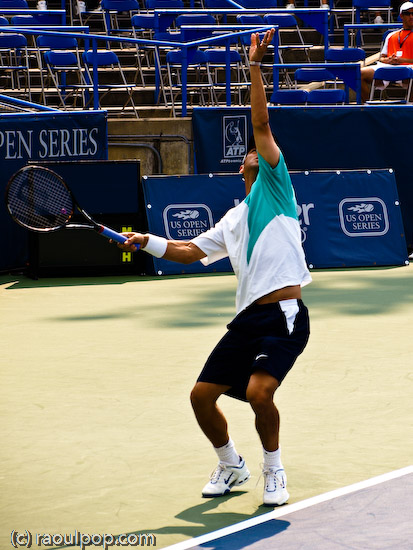
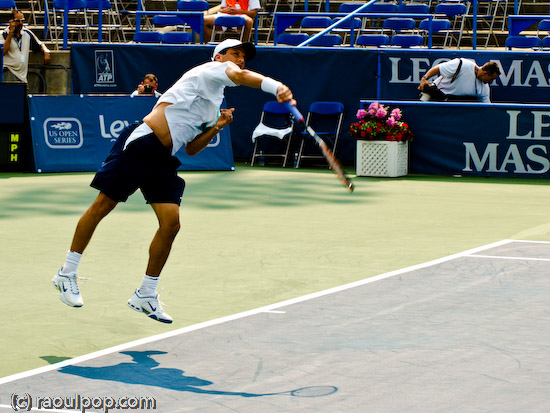
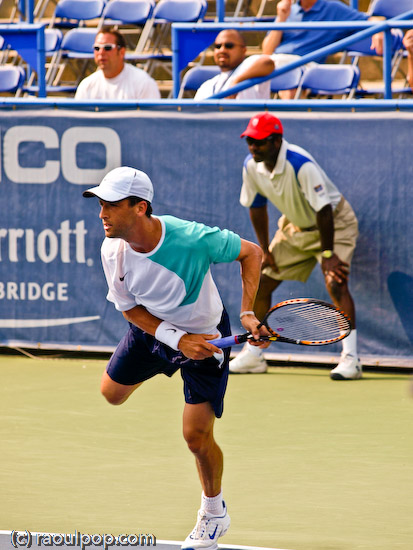
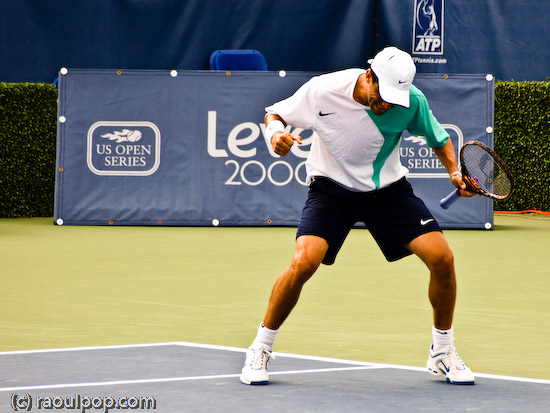
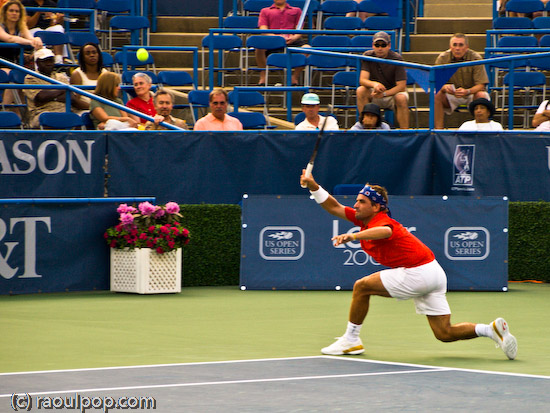
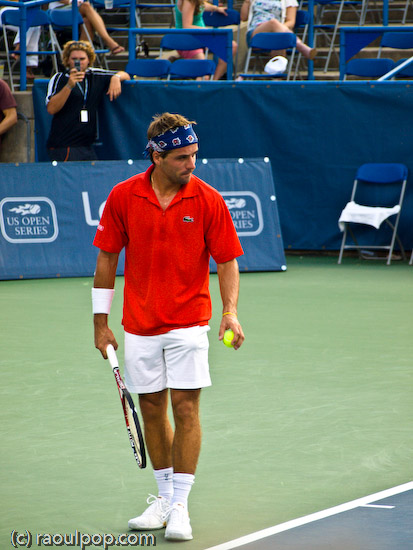
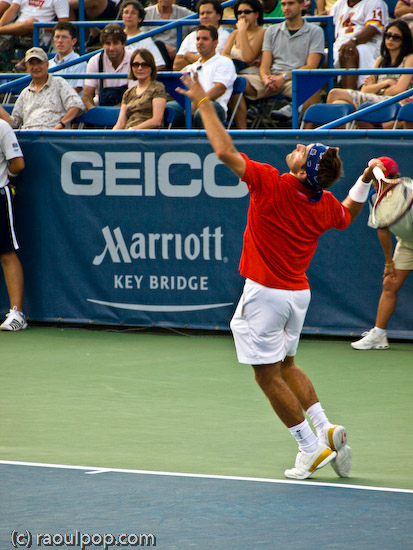
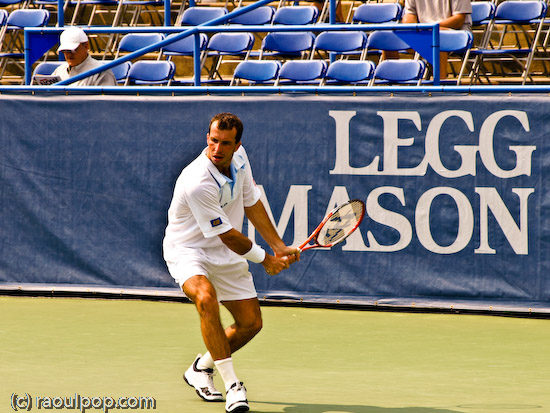
I wrote about the fun day I spent at the William H. Fitzgerald Tennis Center here in DC yesterday, watching the Legg Mason Tennis Classic courtesy of Olympus, and promised I’d publish photos taken at the matches with the new E-510.

After I deleted the blatantly bad ones, I was left with 607 photos. I spent a couple of hours sorting through them, and picked 44, which I then processed. There are a few nice blooper-type photos from the tournament as well, where the players are making funny faces or their bodies are in contorted positions, so those will be kind of fun to see.

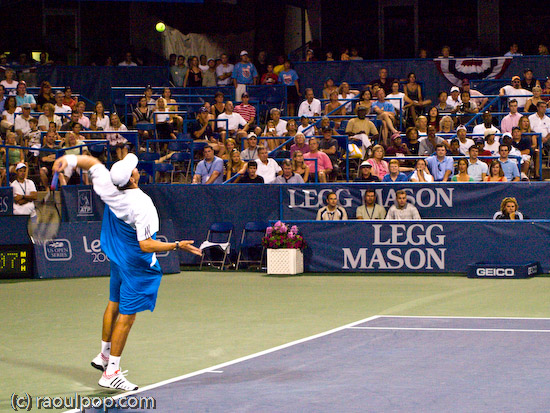
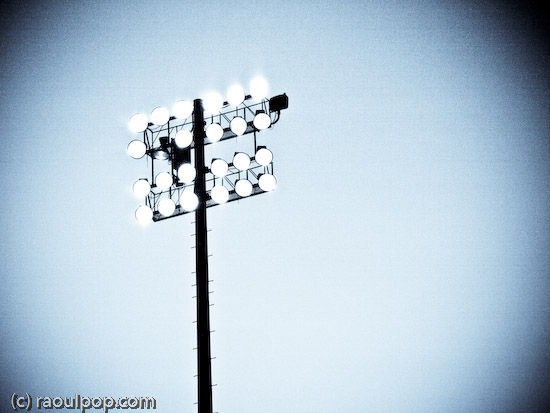
Under the cold glow of the big lights

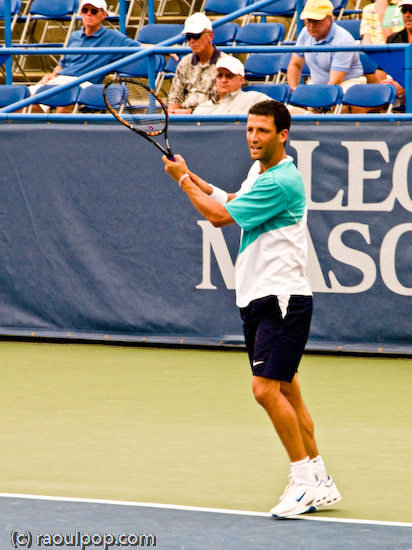
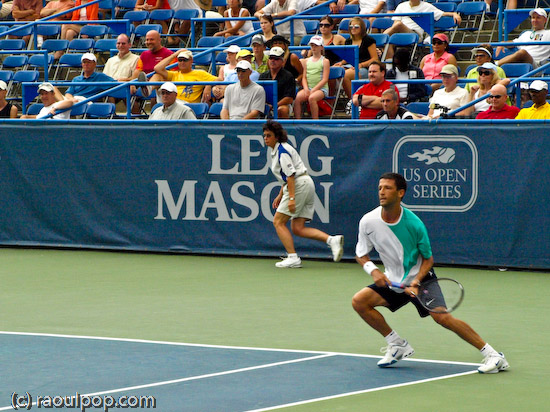
P. Goldstein

P. Goldstein

P. Goldstein

P. Goldstein

P. Goldstein

P. Goldstein

P. Goldstein

P. Goldstein

P. Goldstein

P. Goldstein

P. Goldstein

Overcast

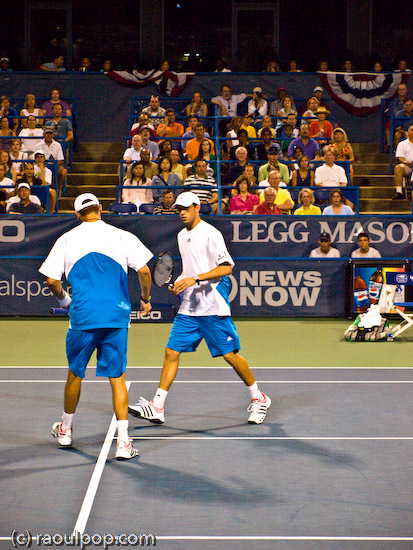
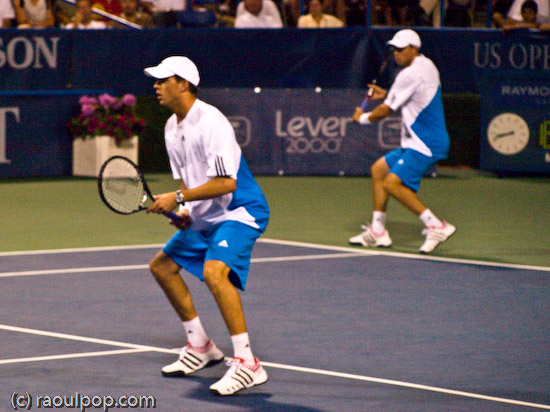
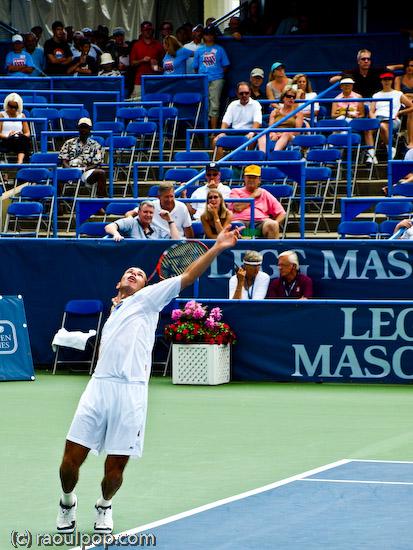
Bryan Twins

Bryan Twins

Bryan Twins

Bryan Twins

Bryan Twins

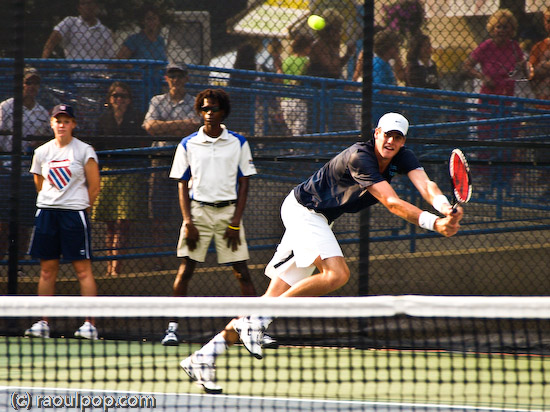
Unforgiving August sky

Take it in stride

One tall dude

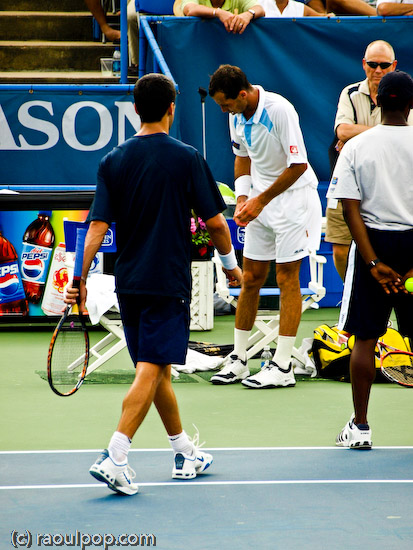
T. Phillips

T. Phillips and P. Goldstein

T. Phillips and P. Goldstein

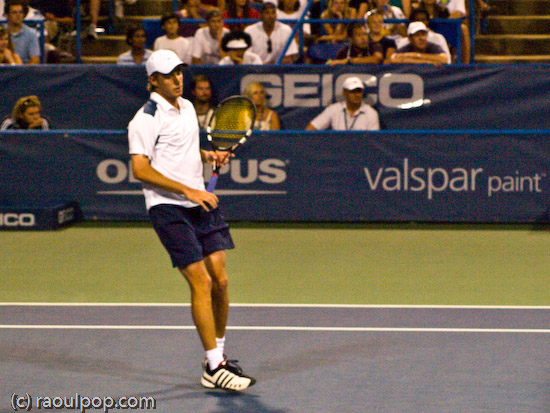
A. Clement

A. Clement

A. Clement

A. Clement

Saw the light

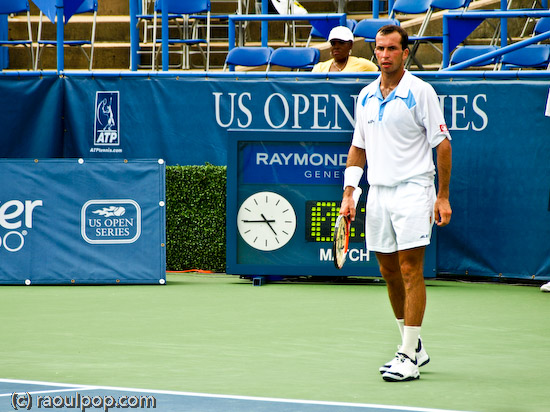
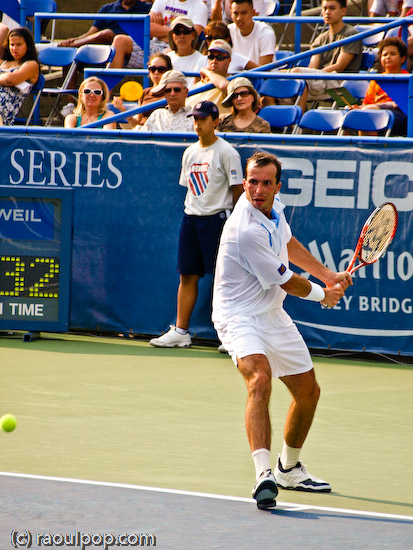
R. Stepanek

R. Stepanek

R. Stepanek

R. Stepanek

R. Stepanek

R. Stepanek

R. Stepanek

R. Stepanek

R. Stepanek

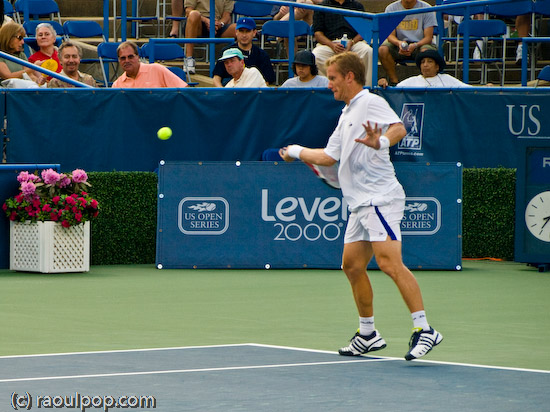
T. Johansson

T. Johansson

T. Johansson

T. Johansson

T. Johansson

T. Johansson

T. Johansson

Standard
Places

A night at the Legg Mason Tennis Classic

I received an exciting invitation from Olympus PR last week. Would I be able to attend the Legg Mason Tennis Classic on August 1st, here in DC? I’d get a box seat and the chance to try out the new E-510 DSLR. Absolutely, I said!

What do you think I did this afternoon? I was center court, sure enough, sitting together with five other folks from reputable news organizations, geeking out on Olympus DLSR stuff and comparing cameras and features. The E-410 was also available to try out. It’s the smallest and lightest DSLR on the market. You’ll remember the E-330 held that title before, but it didn’t have a prism. The E-410 has the prism. It, along with the E-510, now also has Live View, which lets you compose photos on screen.

If you know your cameras, then you know Live View is a pretty innovative feature, which is really hard to accomplish on a DSLR. In the E-330, Olympus used two sensors and a complicated mirror system to accomplish it. With the E-410 and E-510, they’ve simplified things. Now they have only one CMOS that does it all. I’m planning to write a detailed review of the E-510 after I’ve used it thoroughly for a month, and I’ll explain how the Live View works in the review.

Back to the Legg Mason Classic. The weather was filthy hot today, but thankfully the humidity was fairly low for our area, and the sun’s oven-hot rays tapered off around 7 pm. I slathered on plenty of sunscreen, but still got sunburn. Such is life when you’re a pale-face.

The first match, at 4 pm, was P. Goldstein (USA) vs. R. Stepanek (CZE). By the way, you can check the schedule over here. I didn’t know who to root for. Goldstein put up a serious fight and I thought he’d win. Stepanek looked like he was losing, but somehow he kept on top and won the match. Goldstein was the crowd favorite — apparently he grew up in the DC area. Stepanek got booed a few times, but I have a feeling he didn’t really care. He kept at it and brought home the bacon, so to speak — home for him being Monte Carlo, which is not a bad place to call home if I might say so.

The second match was A. Clement (FRA) vs. T. Johansson (SWE). Johansson had some amazingly fast serves. He clocked in at 132 mph once, if I remember correctly. He also had great returns. Clement kept pouting and giving the crowd angry looks if they’d as much as get up from their seats. In the end Clement went home to sulk over a baguette and Brie and Johansson advanced to the next round.

The third (and final match for me) featured the annoying Bryan twins (USA) vs. P. Goldstein and T. Phillips (USA). Yes, you read correctly. That’s the same Goldstein from the first match at center court. How he managed to recover from that exhausting match with Stepanek in the course of a couple of hours, I don’t know, but there he was, ready to put up another good fight. I instantly had to root for him. You have to respect a guy that plays two tournament matches in one night. That’s real dedication and perseverance. Unfortunately, all he and Phillips could do against the (yes, I’ll say it again) annoying Bryan twins was to put up a good fight.

The dynamically annoying duo towered over the shorter Goldstein and Phillips and smiled gleefully as they mercilessly tore away at their opponents. I’m sorry, I don’t care if they’re top seeded and girls find them cute, I found myself calling them names and hoping Goldstein and Phillips would beat the pants off them. I didn’t end up staying for the whole match, and after I got home, I found out that the annoying Bryan twins lived up to their ill-begotten reputation and won it. I so wanted them brought down a notch… They desperately need it.

All in all, I had a LOT of fun, and I’m really glad I got to meet people from the National Geographic Traveler, Internet News and The Washington Post. But all of this would not have been possible without Michael Bourne (yes, that’s his real name) from Mullen, who organized the entire get-together and provided us with some great new DLSRs to test and review. Michael, Mullen, Olympus, thank you! I look forward to processing the photos I got last night, and reviewing the E-510! 🙂

Updated 8/6/07: The photos are available right here.

Standard
How To

Should I get Canon or Nikon?

I’ve gotten asked this question a few times lately, and it’s probably a good idea to share my thoughts publicly. Here’s an email conversation I had earlier today:

B.T.: “Simply put, is the Canon 30D or the Nikon D80 the best way to go? […] Was about to get the Nikon D40, but then got a piece of advice that said that Canon might be better in the way of sports photography. I’m not sure if this was a “standard” or a perceived notion. Anyhow, now I’m trying to decide between the D80 and 30D. I know once I buy into either the Nikon or Canon “family” I’m pretty much there because of accessories and lenses.

So… what was it that made you choose Canon? I knew you were considering the D200 for a bit. […] But what are you thoughts on overall image quality between the two given the different types of image sensors (CCD vs. CMOS)? And I’ve actually thought of going ahead w/ the D40 as a stepping stone to the D200. To be honest, I’ve been back and forth a few times… but wondered about your opinion. […]”

My reply, with some additional edits:

I’m always hesitant to give brand-specific advice, because what works for me might not work for you. I have not used Nikon DSLRs yet. People that use them love them. By the same token, people that use Canon DSLRs love them as well. And people that use Olympus DSLRs love them too. And Sigma, and Fuji, etc.

What I can tell you is to try out the camera. Inquire locally, perhaps at your local camera shop, and see where you can rent the camera you’re interested in buying, even if it’s only for a day or two. Then rent the camera from the other brand, and compare. Even if it costs you up to $200 for the total cost of renting them, it’s well worth it considering you’ll be spending thousands on the equipment and will own it for several years or more, particularly the lenses.

When it comes to the 30D and D80, I tried out the 30D for a whole month. Then I went to the store and examined the D80 closely. I liked the grip and feel of the 30D better than that of the D80, but that’s just me, and my hands are different from others’.

What I can also tell you is that it seems the Nikon cameras have a little more noise and they lose some of the detail in low light when compared to Canon. But if you plan to use a tripod for longer exposures or a flash — and both of these devices will allow you to use a lower ISO — the difference in photo quality is going to be difficult to see, so don’t hang your entire purchase decision on this issue alone, unless shooting mostly hand held in low light is going to be one of the main reasons you want the camera.

Once you get above a certain level (you graduate from a point-and-shoot to a DSLR), the brand or the camera itself doesn’t matter that much. It won’t be the camera that takes the great photos, it’ll be you. To a certain extent, the lenses that you use will matter more than the camera body. You can get great photos with any brand of camera, provided you know its strengths and weaknesses and know just how to use it.

One last thought: the CCD vs. CMOS sensor arguments are pretty useless all around. Don’t forget, Nikon itself — while praised for its CCD sensors — uses a CMOS sensor for its flagship model, the D2X. It doesn’t matter what sensor is inside the camera, as long as the camera manufacturer uses it well. It seems Canon makes pretty darn good use of its CMOS sensors, while Nikon makes great use of their CCD and CMOS sensors as well. And after trying out an Olympus DSLR, I was pretty happy with their CCD sensor as well (except in low light). The Fuji Pro line has some pretty interesting sensors as well. And Sigma is doing groundbreaking work with the Foveon sensors in their SD line. The SD14 is a pretty amazing camera, and I would have bought it instead of my 5D if its effective resolution wasn’t 5 megapixels. (Note: the SD14’s advertised resolution is 14 megapixels, because it has three stacked sensors at 4.7 megapixels each, but the effective resolution is still about 5 megapixels.)

The point is to find out what works for you, and know how to use it well. You can only do that when you’ve held the equipment in your hand and researched the field thoroughly. It really helps when you sit down in front of a spreadsheet and add up all of the stuff you want to buy: camera body, lenses, filters, tripods, batteries, bags, sensor and lens cleaning equipment, editing software, etc. You’ll quickly find out what your ceiling price is, and you’ll know what camera body and brand you can afford. And if you compare your choices that way, you’ll have the information you need to make an educated, logical choice. The decision will be all yours, and believe me, you’ll enjoy your equipment a lot more that way.

Standard
Places

Walking out on hope

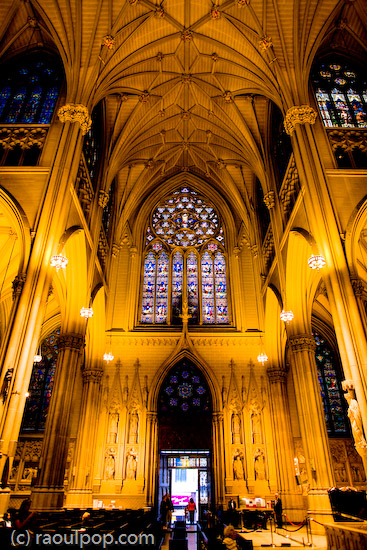
The story behind this photo is a bit interesting. Ligia and I were visiting St. Patrick’s Cathedral in New York when I took this photo. I didn’t have a tripod with me, so this was taken handheld with my 24mm lens. This is why I love fast lenses and cameras that have very little noise.

Three weeks later, close friends of ours were visiting, and I had a gift for them. I asked them to go through the photos I took in Manhattan and pick out one they liked best. I’d then postprocess and print it on the spot. They picked this one and I did my part. A day or so later, I uploaded it to Flickr, and it made it to Explore within 12 hours.

Why the title? Because more people seemed to walk out than walk in.

Walking out on hope

Standard
Events

Unequivocally

This little daffodil was spreading its pure petals back in mid-March, signaling, and unequivocally so, that spring had arrived. This was one of the first days I had my Canon EOS 30D and 100mm macro lens, and that’s when I realized, also unequivocally, that I’d stepped onto new photographic terrain, and didn’t want to go back.

First blush

Standard