Reviews

My Olympus E-3 DSLR

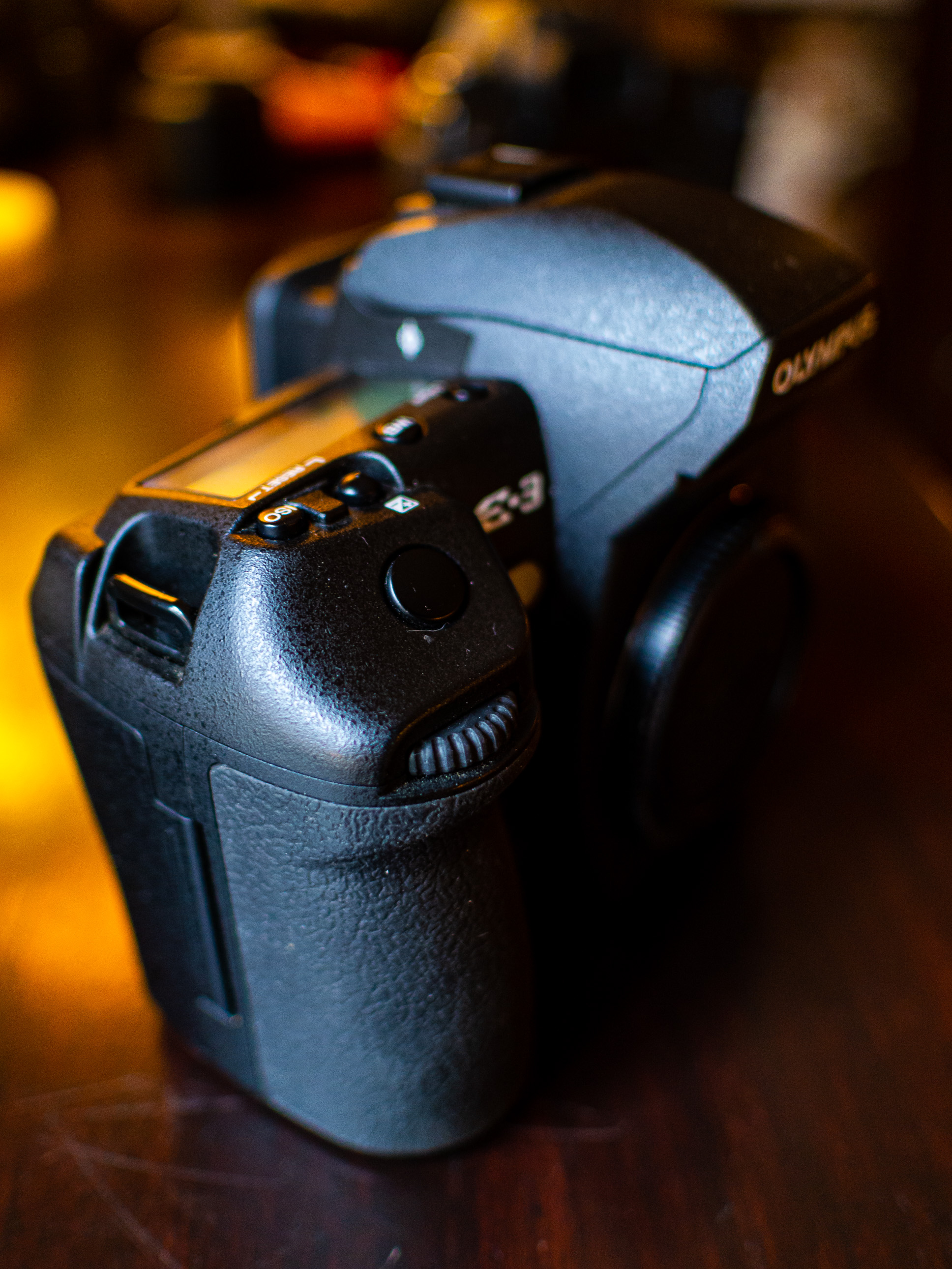
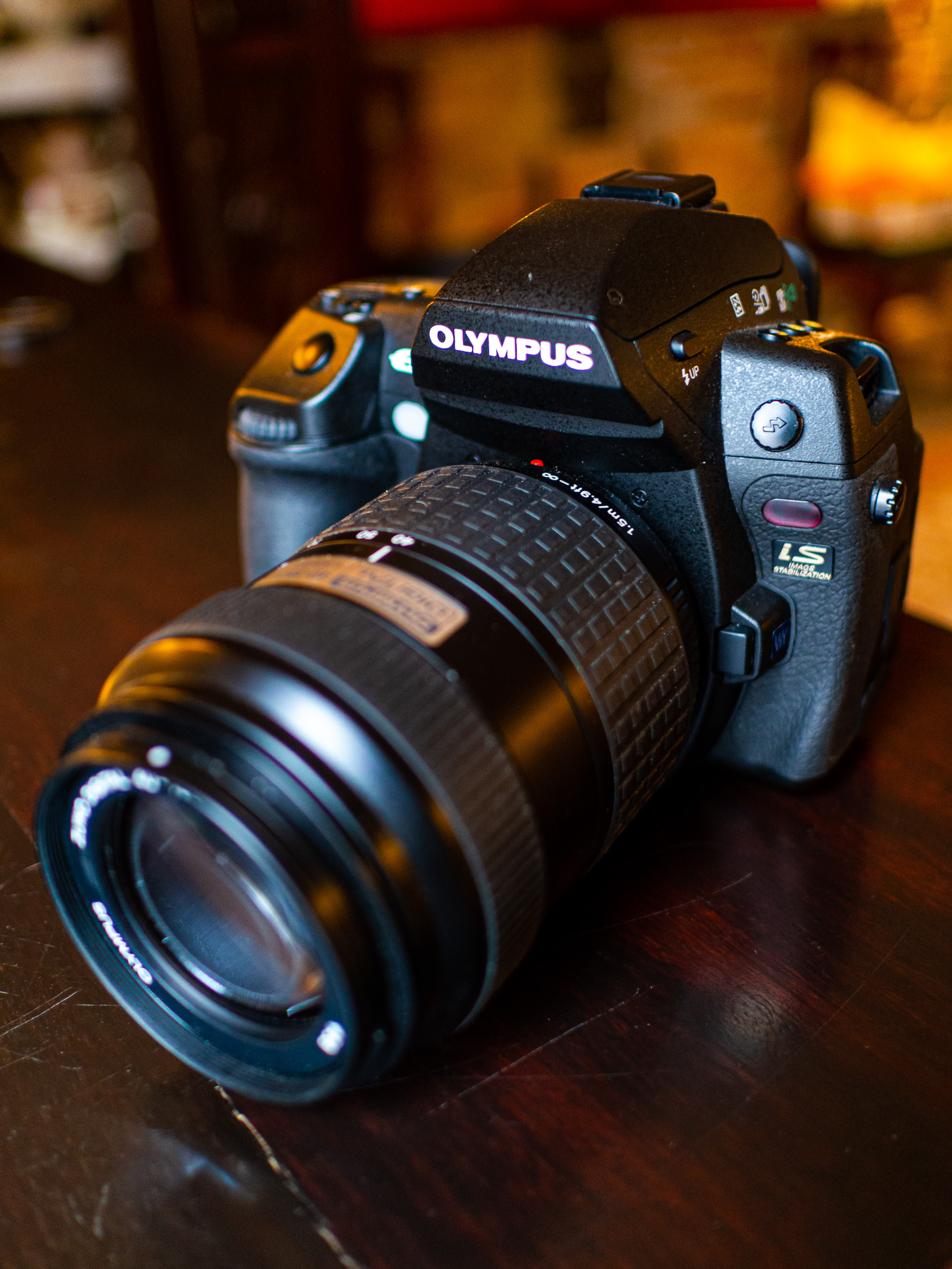
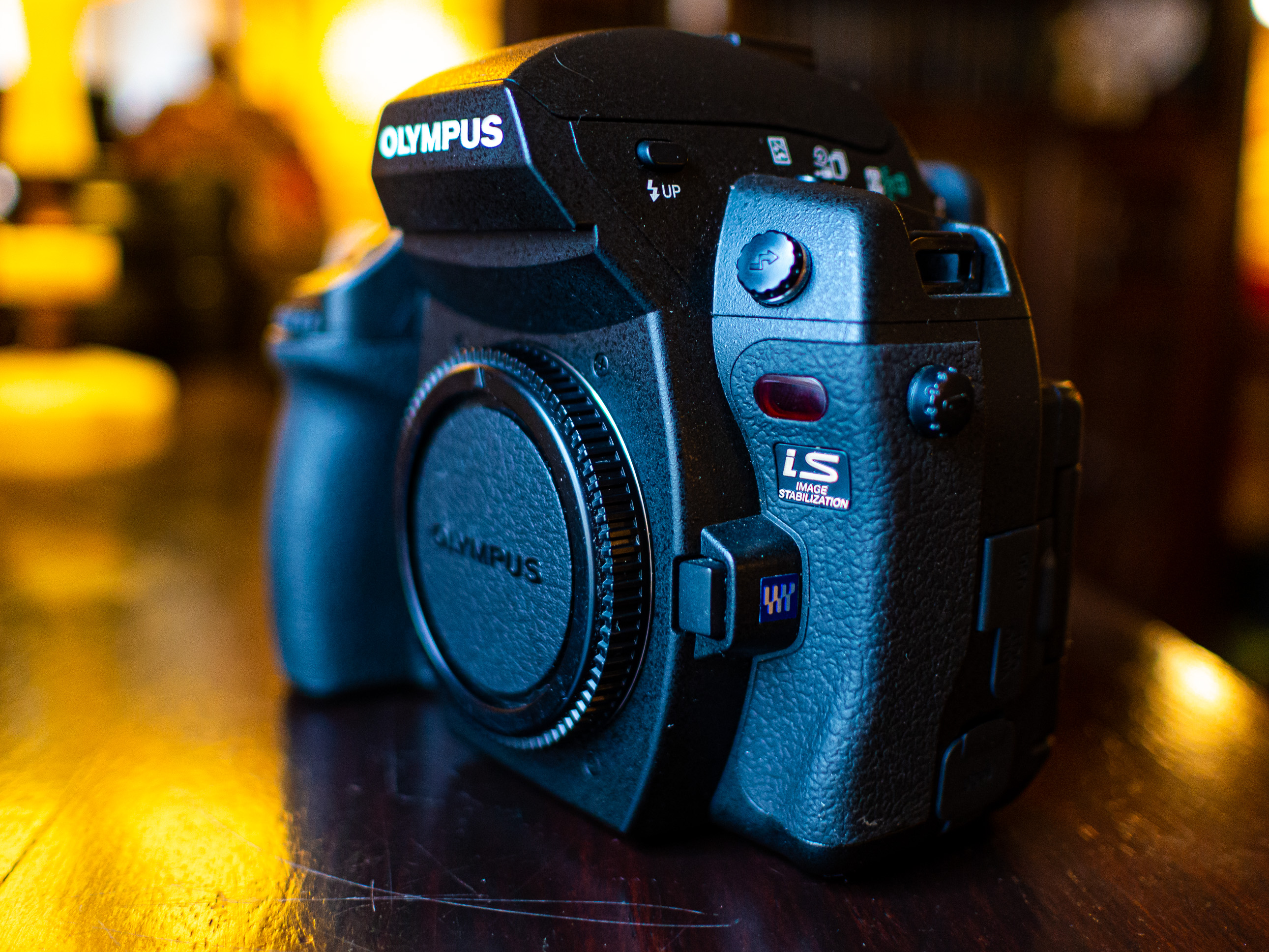
I bought an Olympus E-3 a couple of days ago. Its full name is the EVOLT E-3, and it was Olympus’ flagship DSLR back in 2007. It was announced on October 17, 2007 and it became available on November 23 of that same year. I realize it’s now 2020, thirteen years later, but I found it online in really good condition, with a low shutter count (only 8000 or so exposures) and at a good price. Other than a small crack in the lower left-hand corner of the LCD, this camera is in great shape and it’s a real joy to use.

I was present at the camera’s launch party in NYC on October 16, 2007. You can see my write-up of the event, with photos and video, in this post. I would have loved to purchase the camera at the time, but I was invested in Canon gear at the time. The E-3 was a great camera for its time, quite ahead of the competition in many ways. The supersonic dust reduction function that’s so common on all of the interchangeable-lens cameras nowadays was then only present on Olympus cameras, because they came up with it. The swiveling LCD, also ubiquitous nowadays, was a novelty only present on this camera and on an older model, the EVOLT E-330 DSLR. The in-body image stabilization, a big selling point on so many expensive cameras nowadays, was yet another feature that Olympus invented and was only present on their latest cameras such as their new flagship and other models launched that year. The E-3 was a dustproof and splashproof camera, and at least two of the lenses also launched with it, the Zuiko 12-60mm SWD f2.8-4 and the Zuiko 50-200mm SWD f2.8-3.5, were also dustproof and splashproof. This was incredible at the time. All these features and capabilities seem normal now, but they were extraordinary back then.

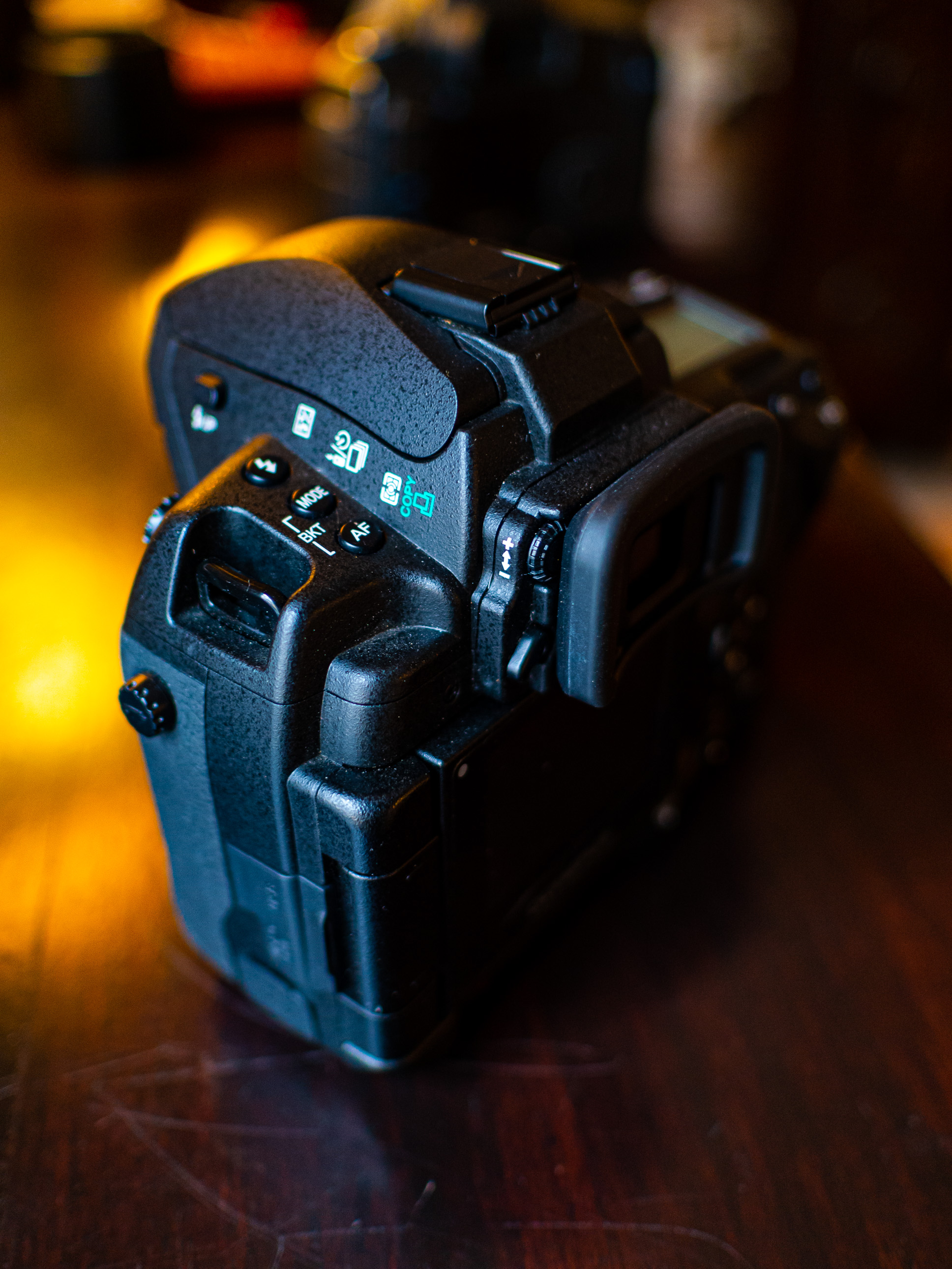
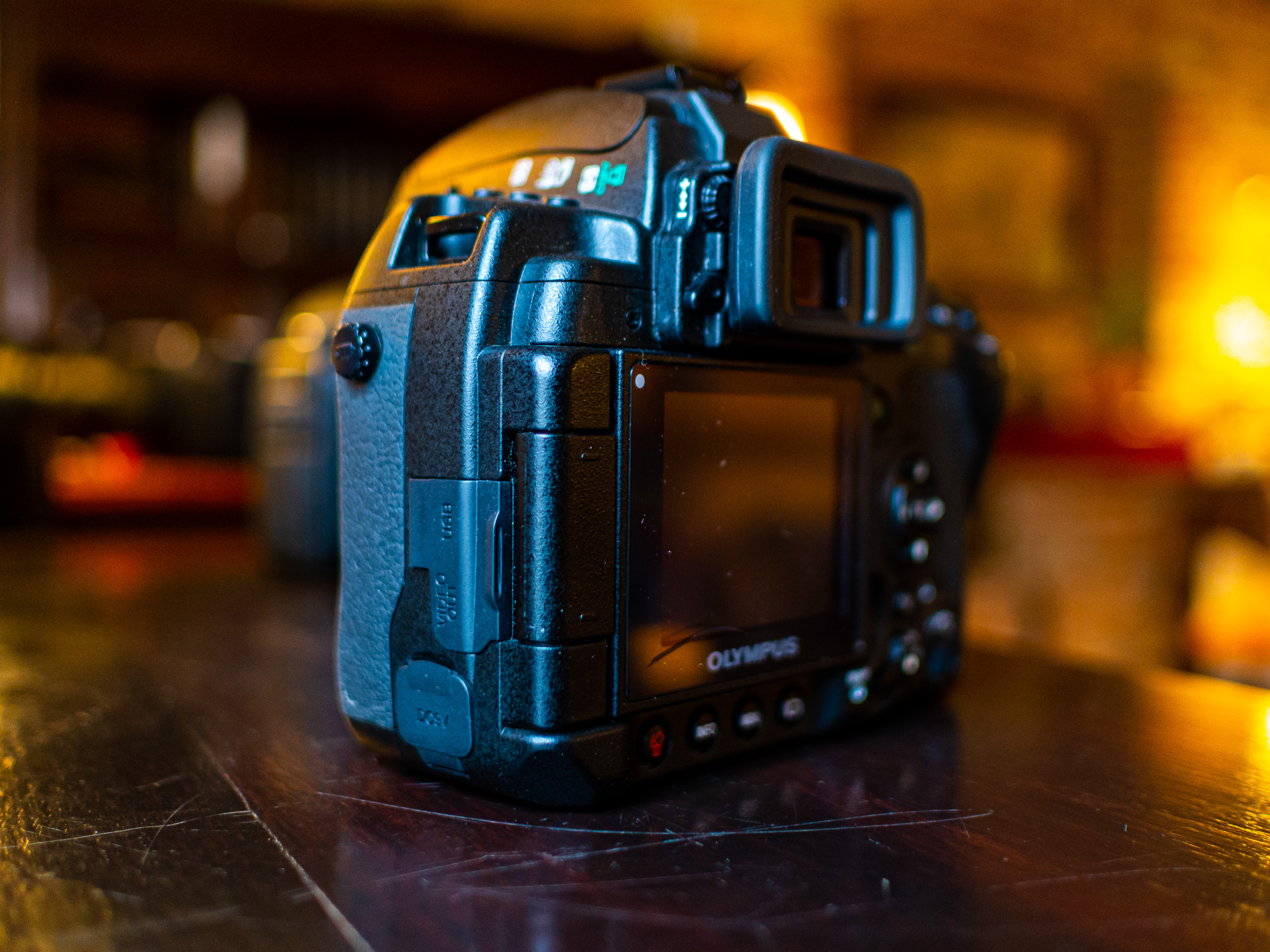
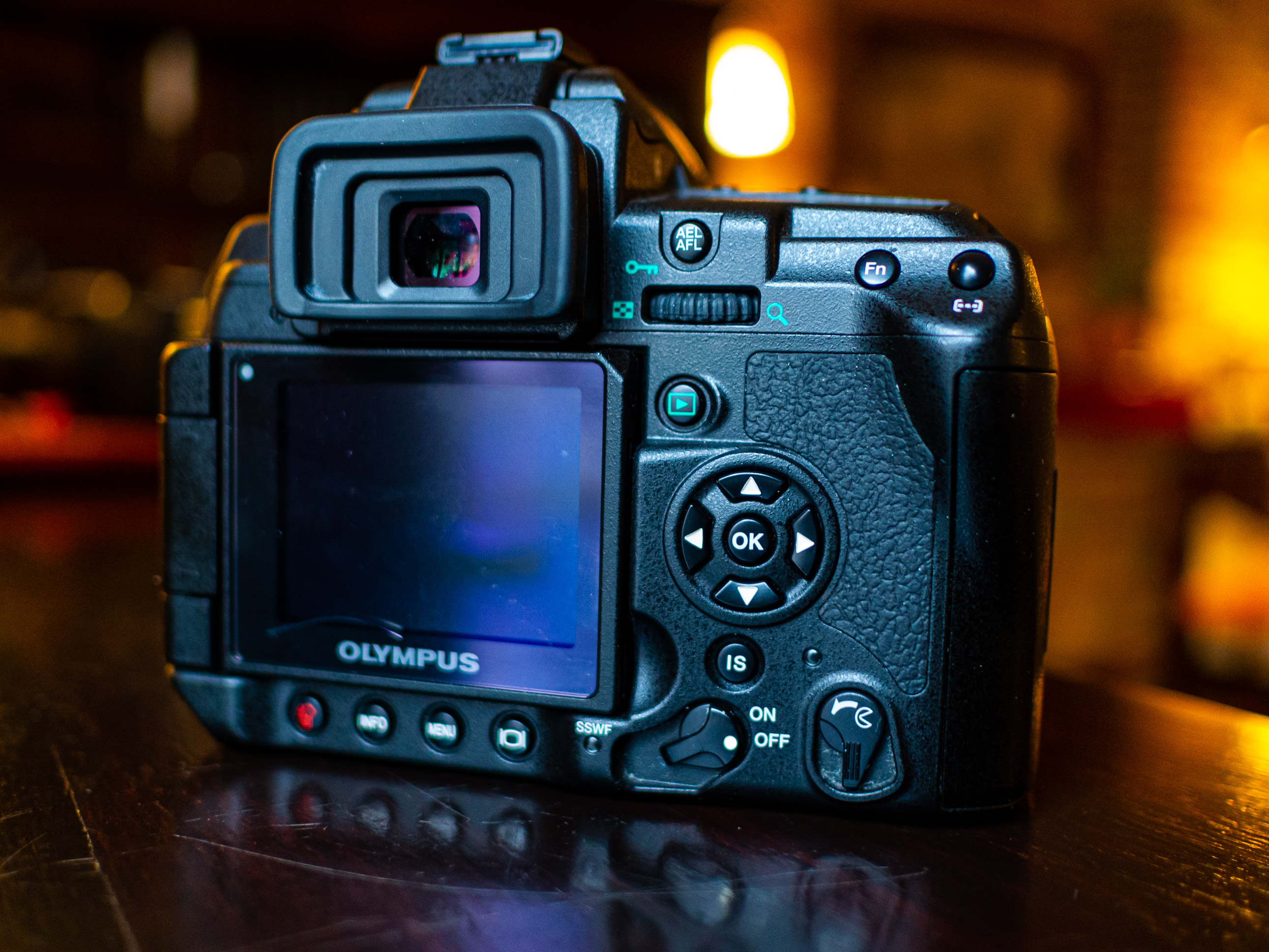
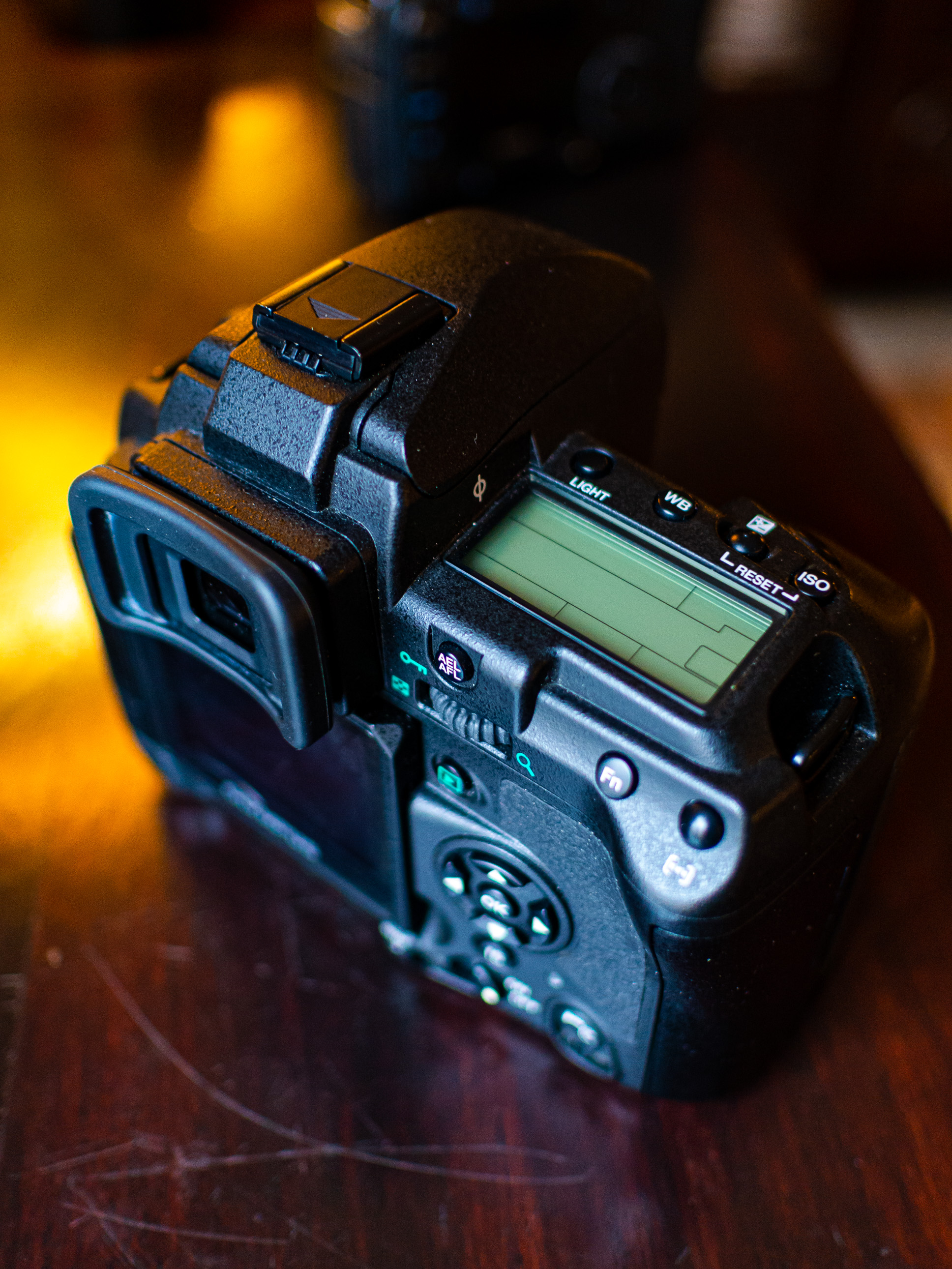
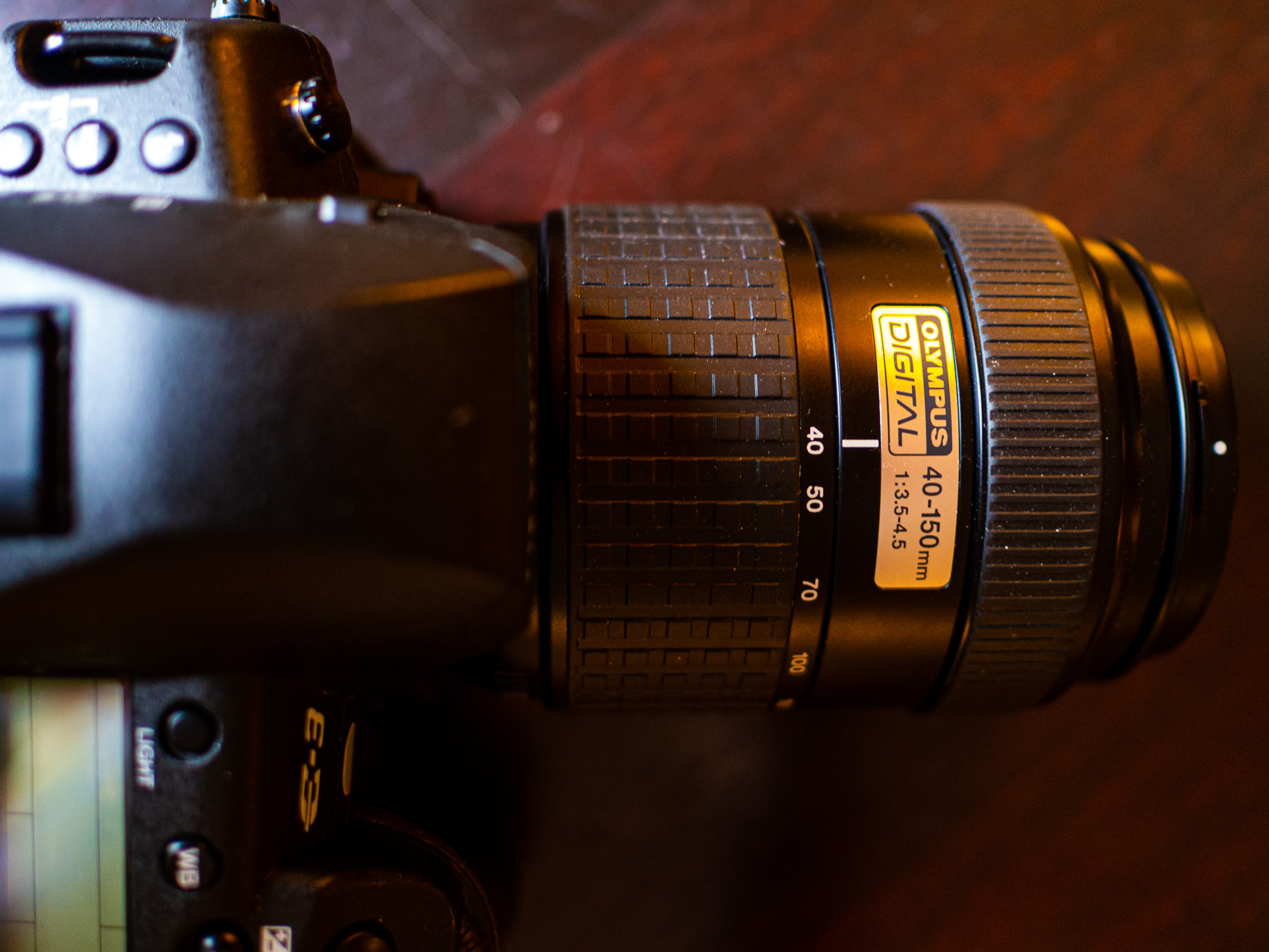
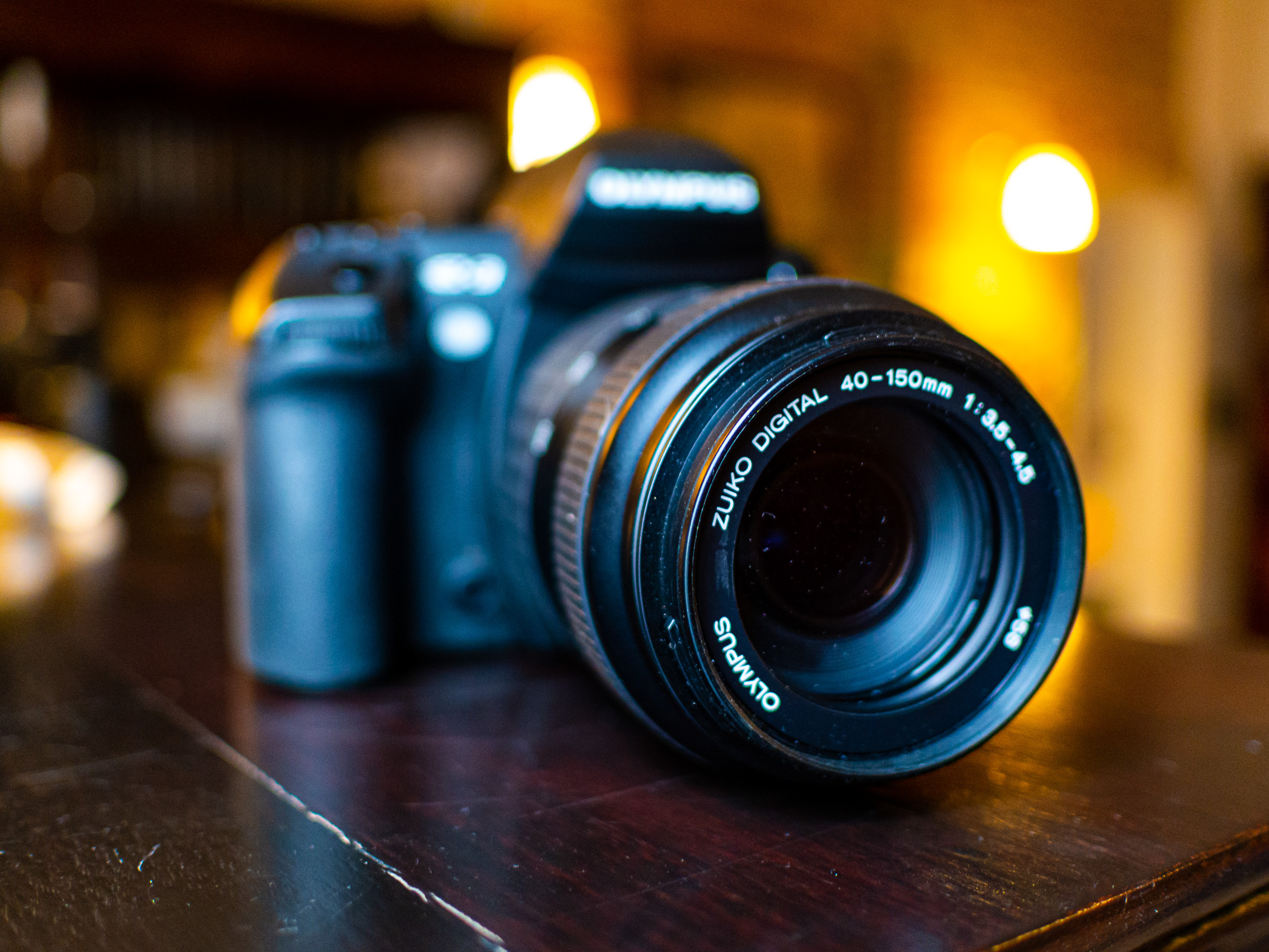
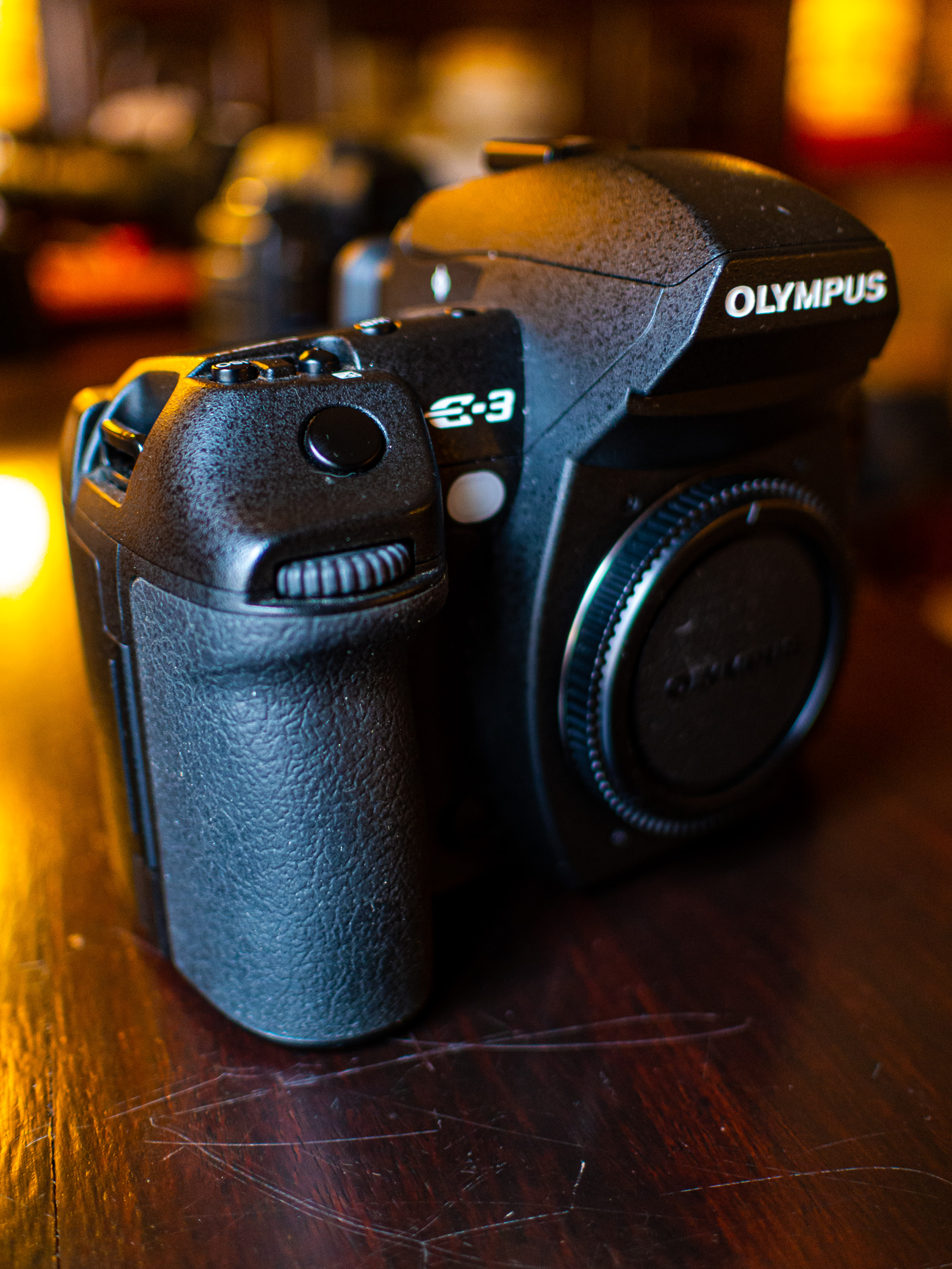
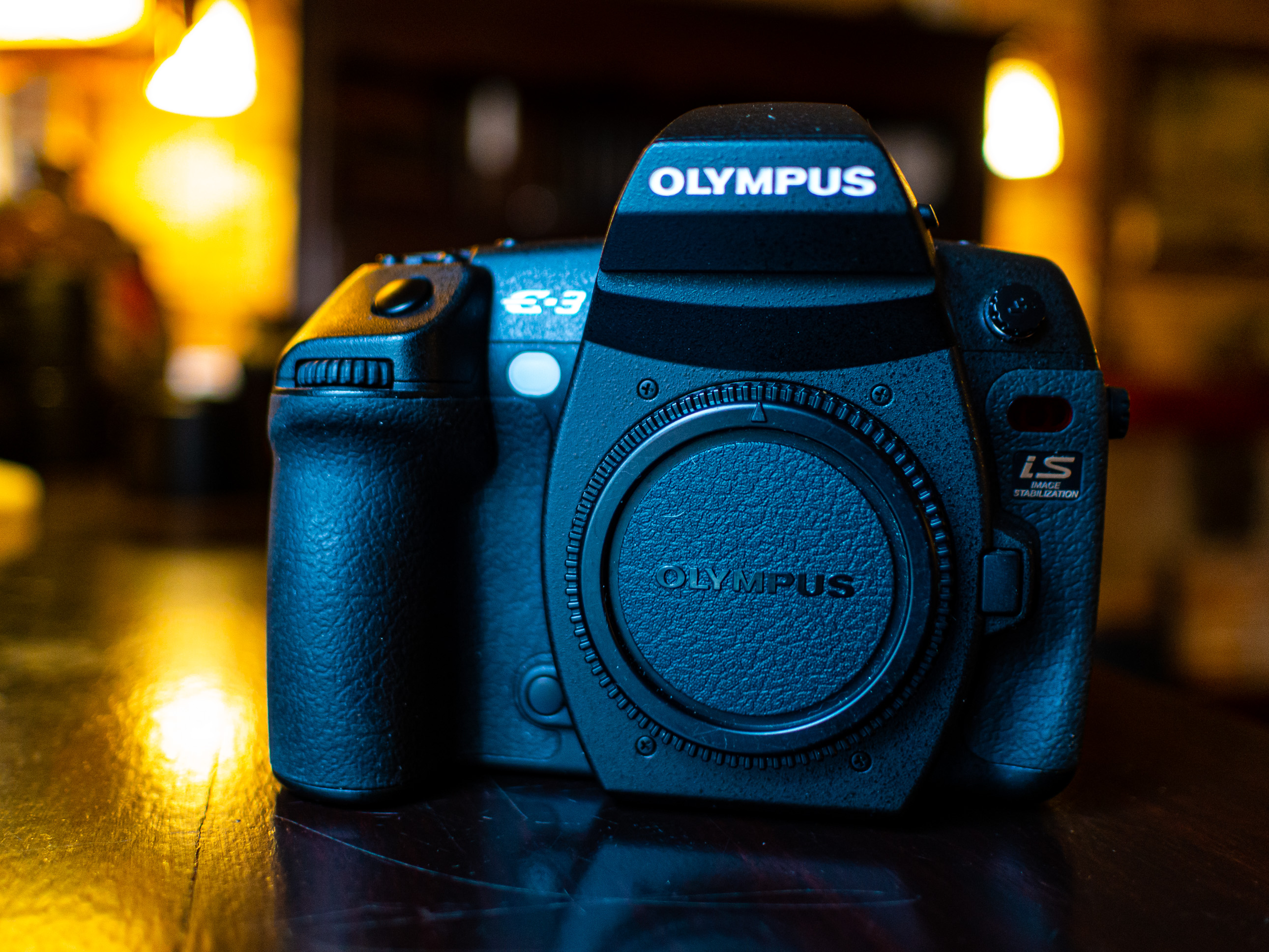
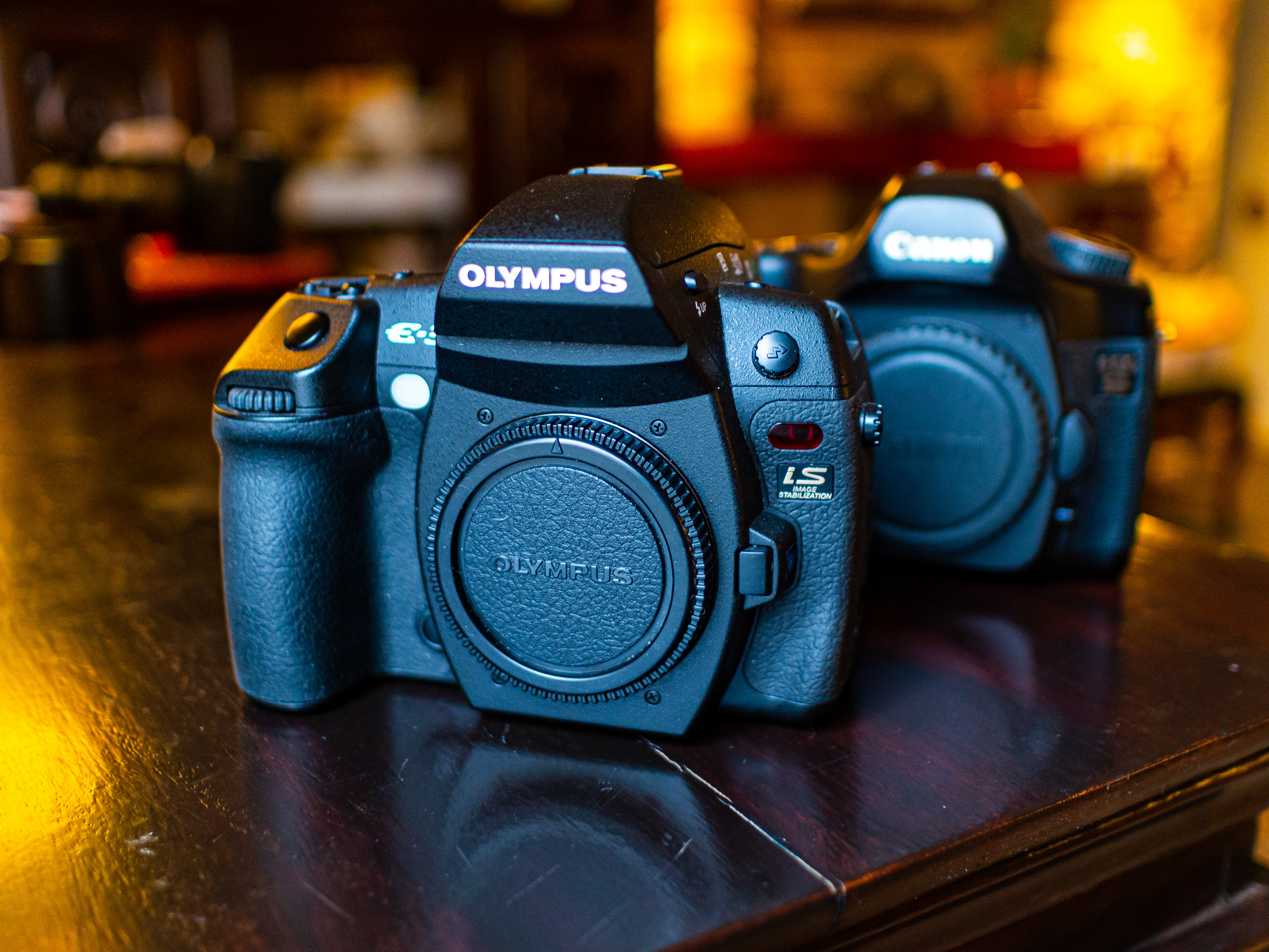
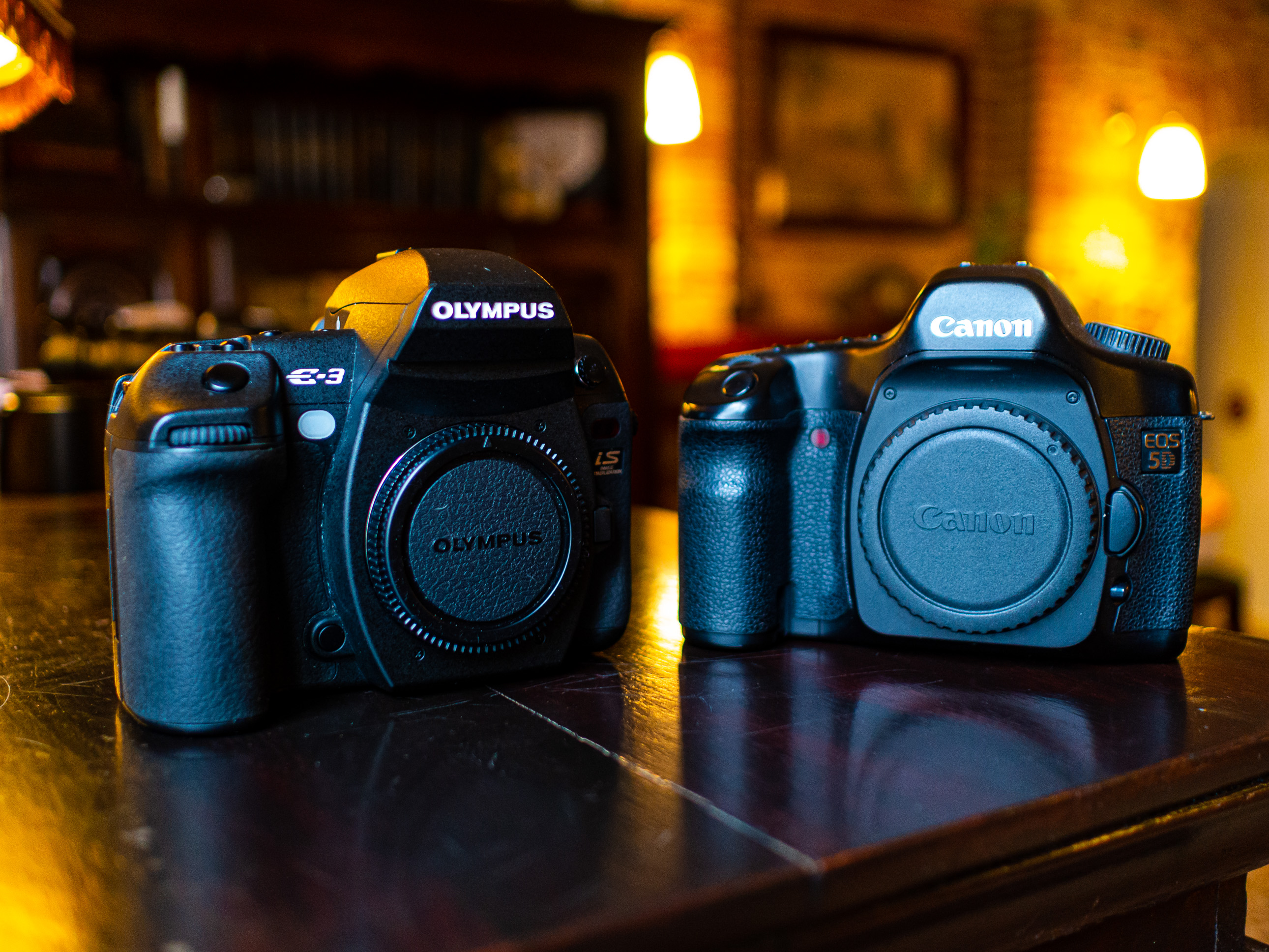
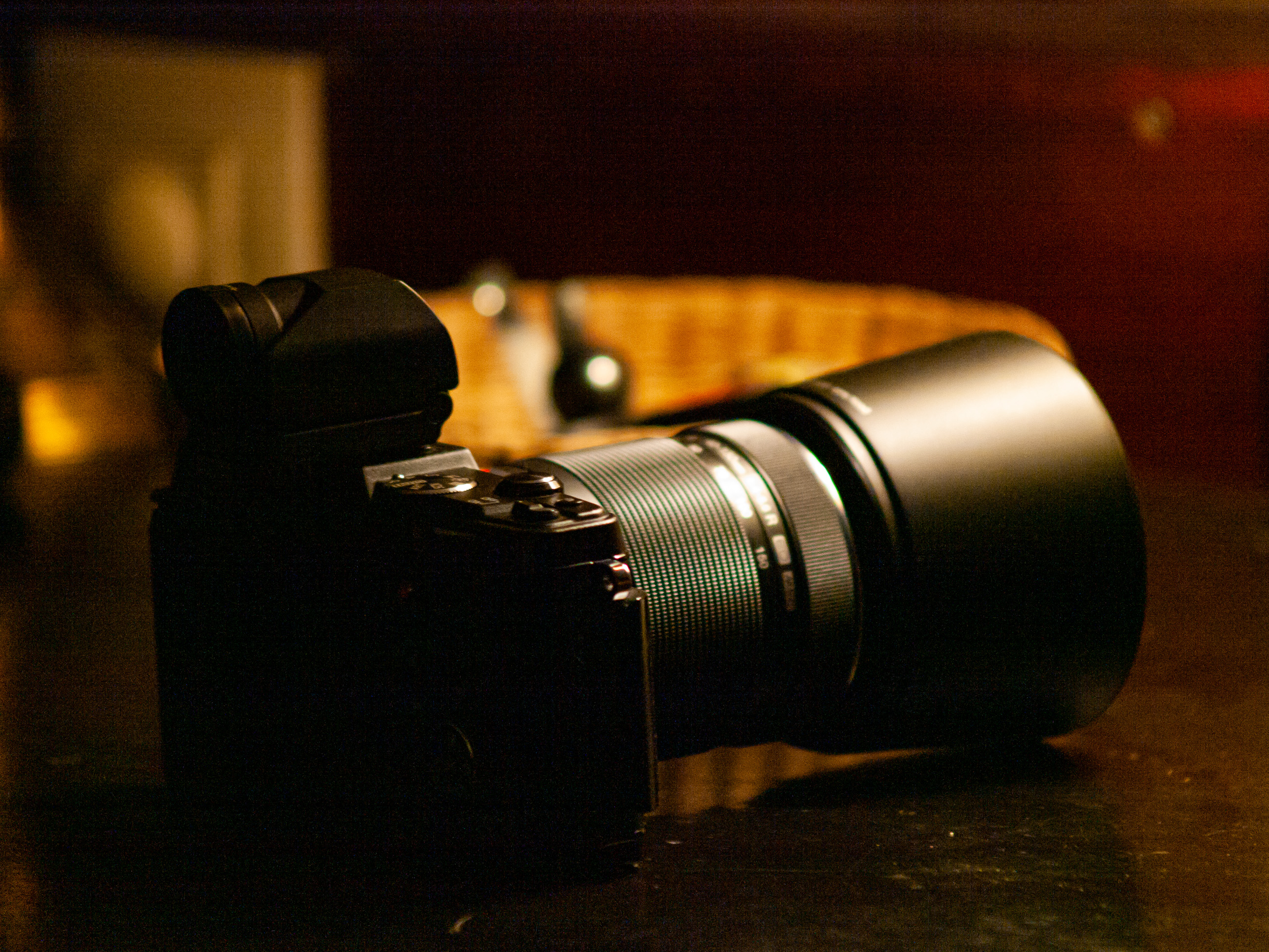
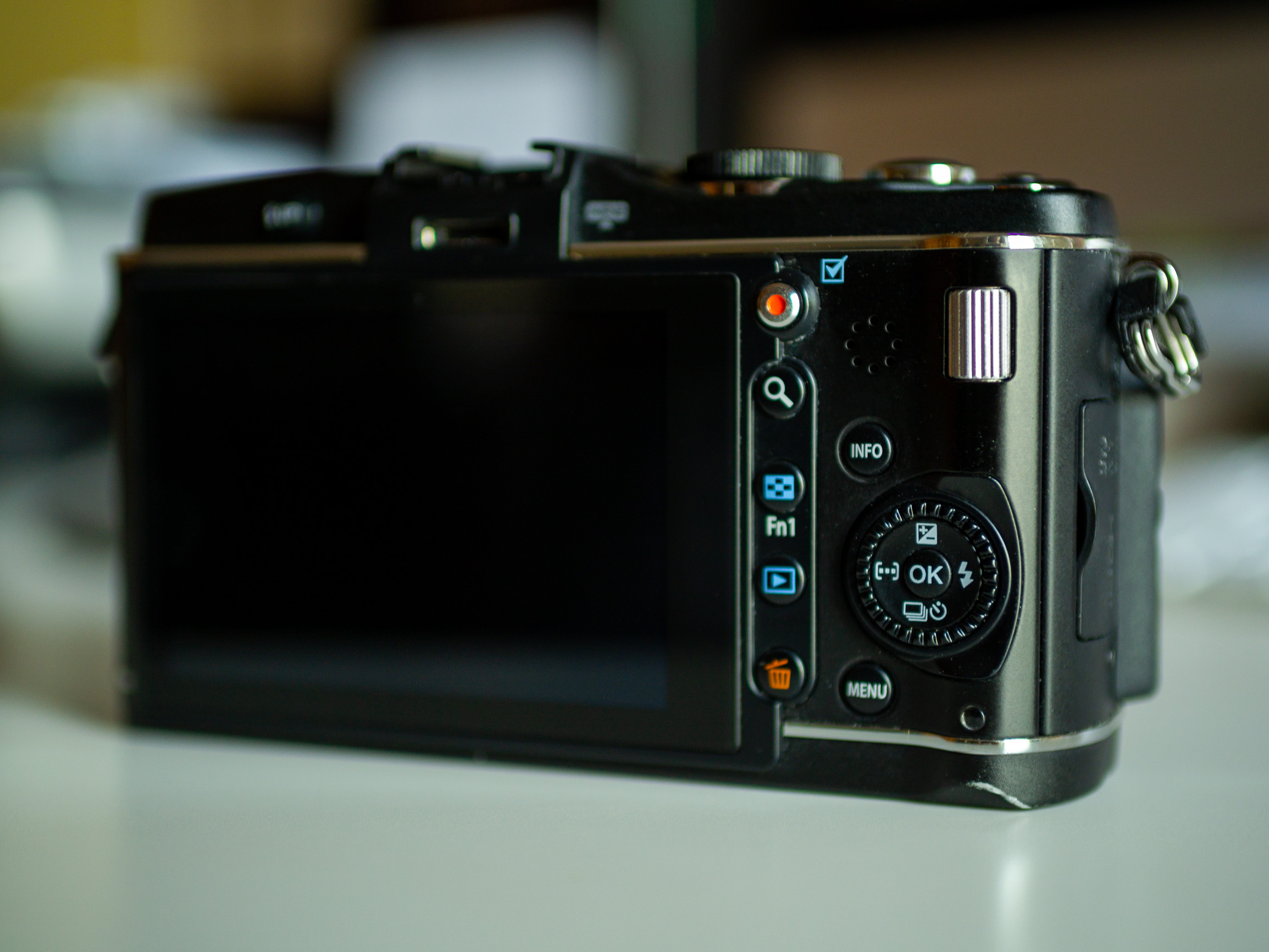
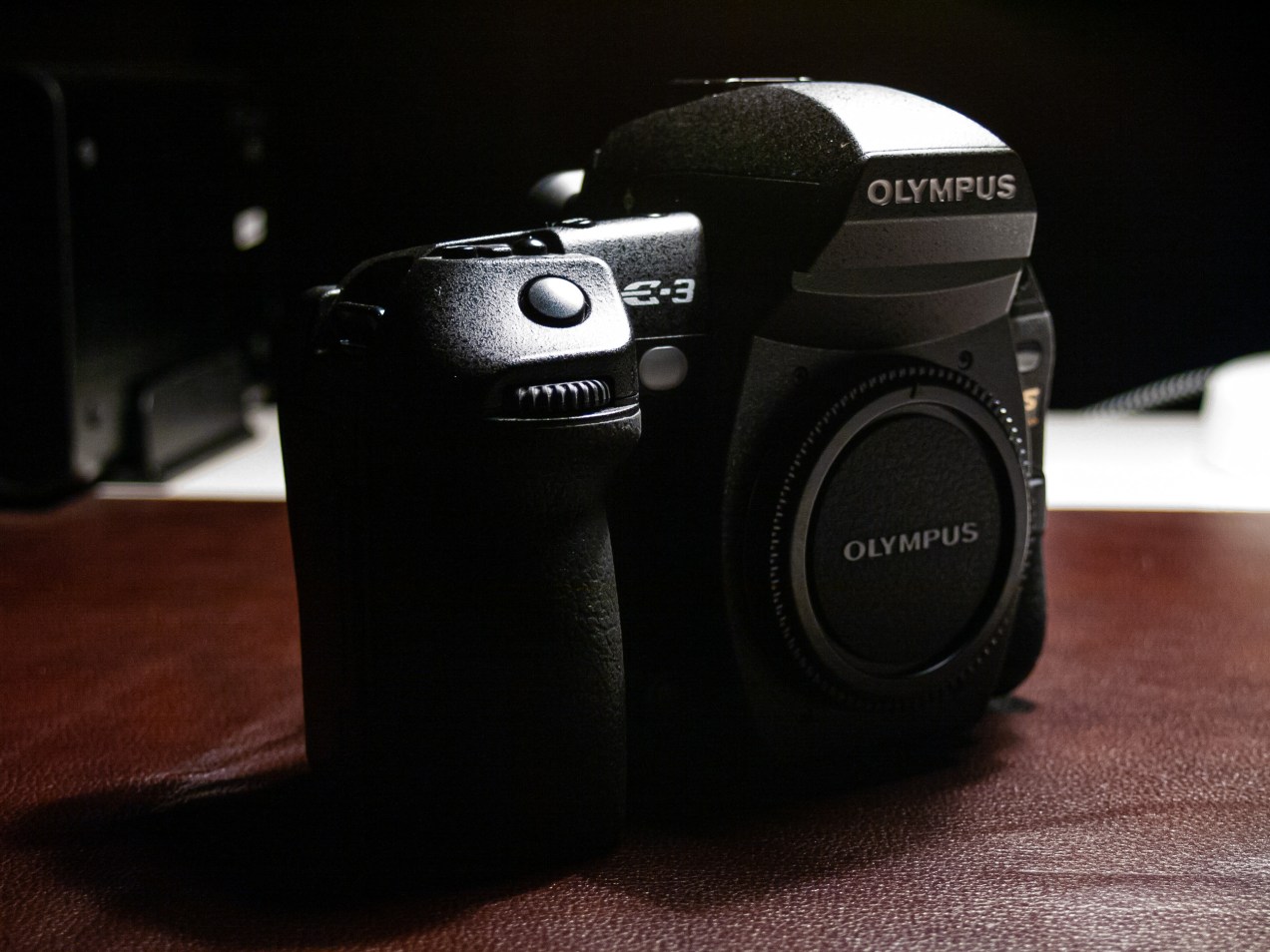
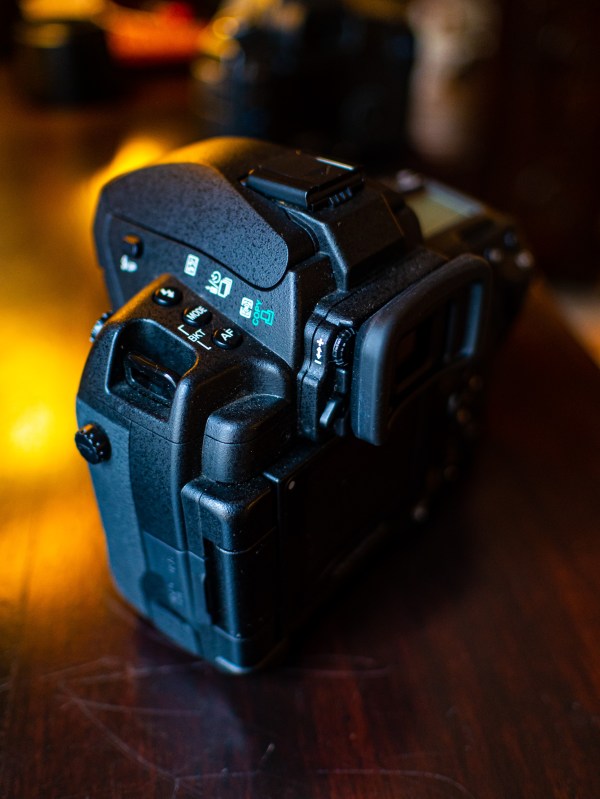
Here is a gallery of photographs of the camera. Please forgive the dust specks. These are real world photographs of equipment that’s actively in use. It’s not a photo shoot. I didn’t airbrush it. I didn’t clean all its nooks and crannies. I simply placed it on a piece of furniture and took these photos.
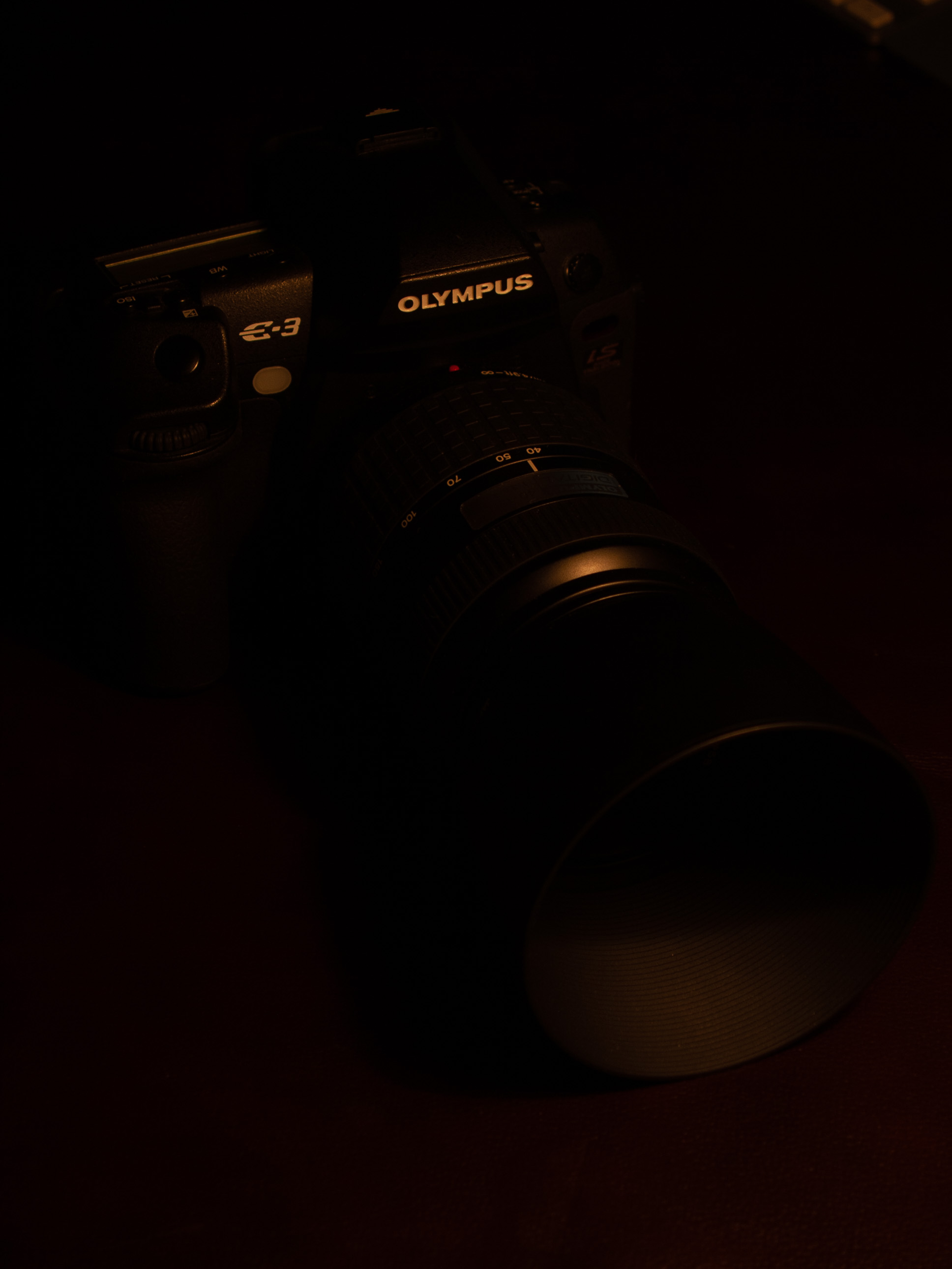
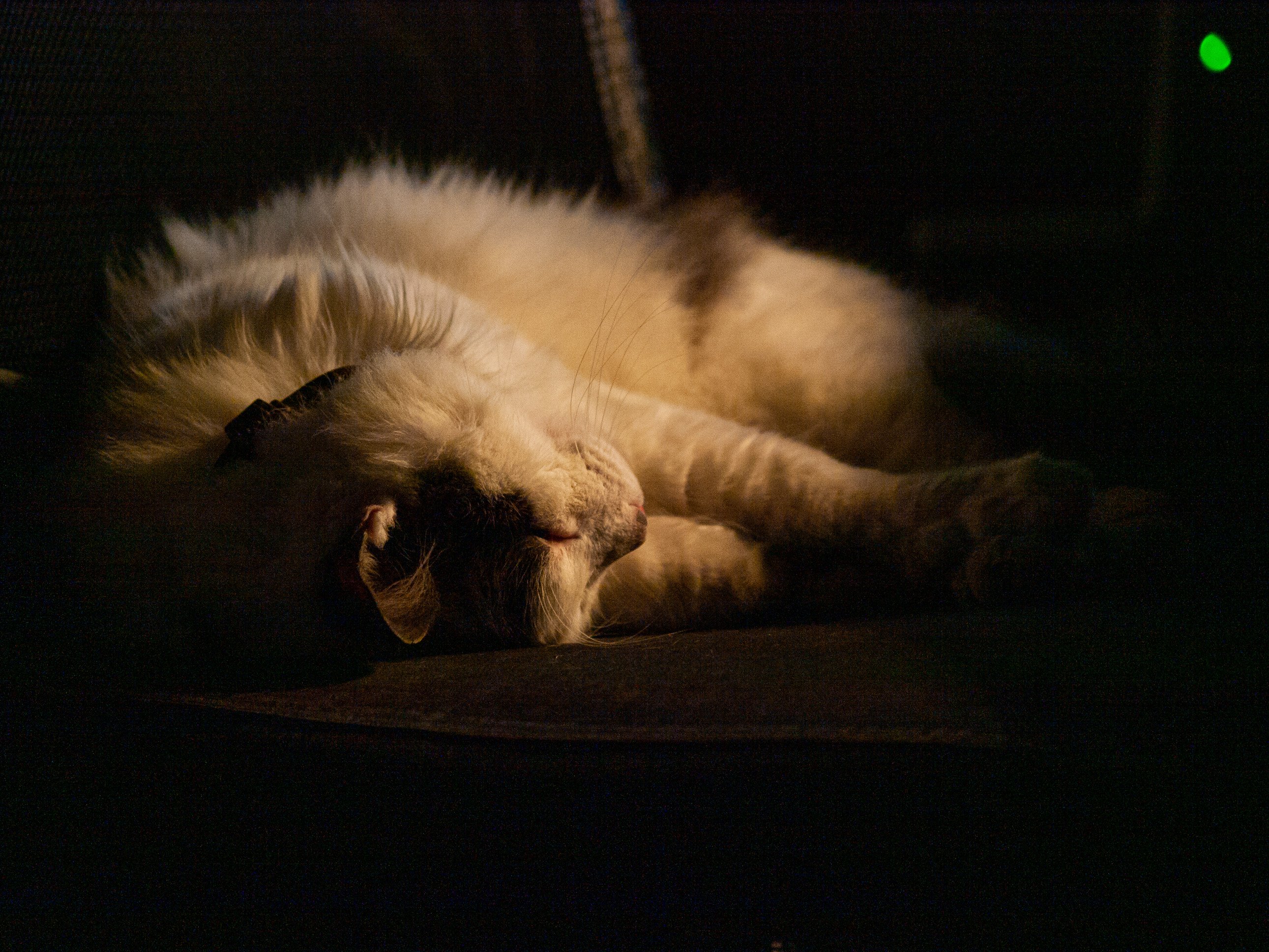
One of the big concerns with Olympus cameras at that time (around 2007) was their performance in low light (at high ISO settings). Typically there was quite a bit of noise at 800 ISO and above, but not so on the E-3, where low-light performance was much better than that of less expensive cameras such as the E-510, which had been launched earlier that year. The E-3 was a flagship camera after all. As a matter of fact, when I look at low-light photos taken with the E-3 now, they’re just as good as the “gold standard” of the day, the Canon 5D, and this is remarkable given that the E-3 could only gather half the light with its Four Thirds sensor size. Since 2007, the noise reduction capabilities of software such as Lightroom have also improved by leaps and bounds, to the point where high-noise photos from the past can look quite good when developed within the software. I admit that I also like a bit of noise. Sometimes I like a lot of noise (up to a point). It adds character to an image. Granularity, that organic quality of film that’s missing from crisp, clean and clear digital images taken at 100-200 ISO, tends to make a photograph more endearing.

When I began to use the camera in earnest, I looked for the mode dial out of habit. There wasn’t one where I’d typically find it. Believe it or not, I hadn’t noticed this at the camera’s launch event and surprisingly enough, I hadn’t noticed it in press photos of the camera either. Now I began to panic a bit. Where was the damned thing? Did it break off? After all, this was a second-hand camera. Where was it?!
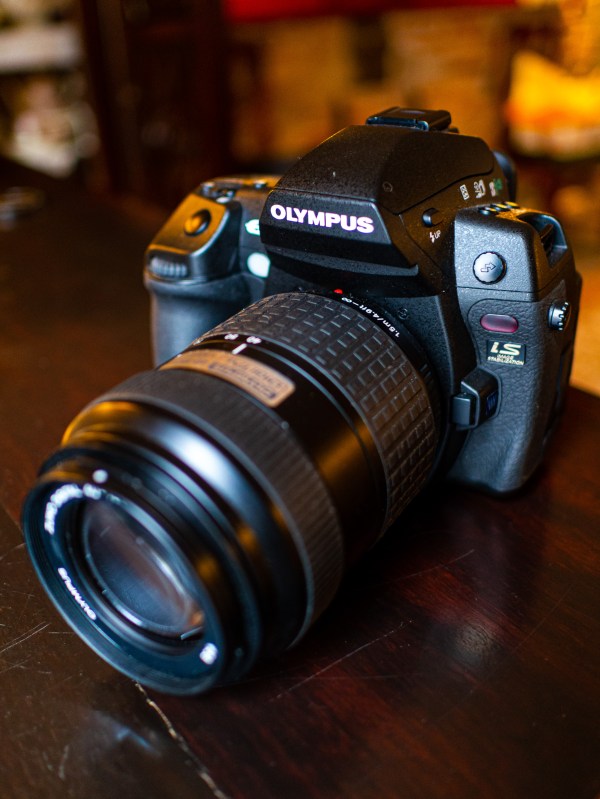
It wasn’t to be found, because there isn’t one. I had to look up the user manual on the Olympus Japan website in order to find out that indeed, it didn’t break off and there isn’t one. You switch the mode by pressing the Mode button on the left-hand top side of the camera and by rotating the dial on the back of the camera. Once you do it, it becomes second-nature and you begin to wonder why other cameras have to have specific mode dials. After all, how often do you switch the mode? Really, how often? My cameras typically stay on Aperture priority virtually all of the time. I switch to Shutter priority when I have to capture high-speed images or when I want to force motion blur, but that’s seldom, and when I do night photography, I stick it in Manual mode, but really, the camera stays in Aperture mode most of the time.
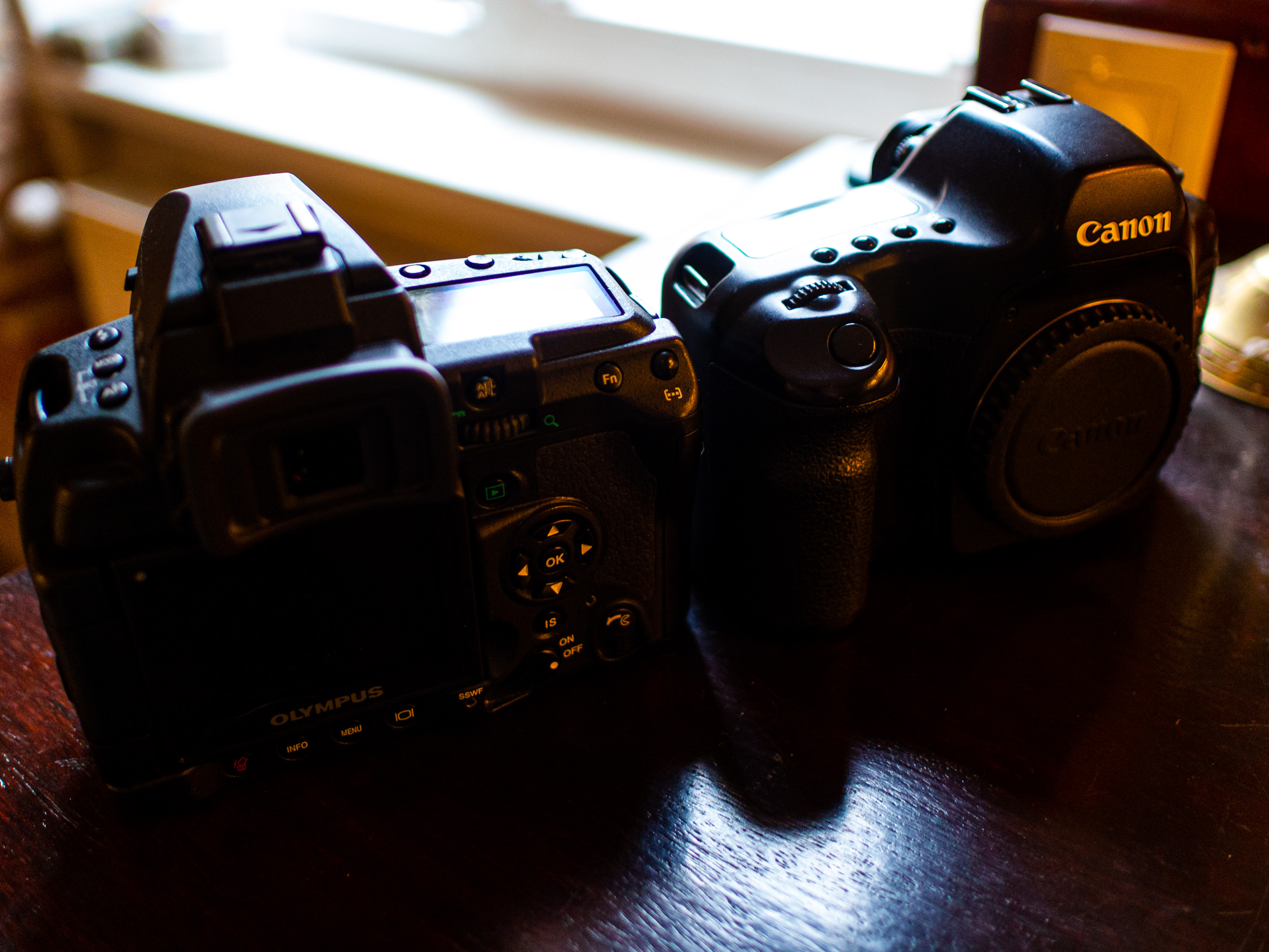
I thought I’d do something now that I couldn’t do at the time of the E-3’s launch, which is to sit the camera side by side with my 5D and see how the two stack up. Which one’s taller? Which one’s wider? How do the grips compare? How do the various buttons compare? I was surprised to find out that the E-3 is just a bit taller than the 5D, and that the 5D is quite a bit wider, about 2 cm wider. You don’t feel this until you take the cameras in your hand. The E-3 sits a little better in the hand while you can feel the 5D’s center of gravity pulling it to the left a bit. I also like the E-3’s many buttons, which make it easier to get to certain features that are otherwise buried in the menus. And that’s another thing: the E-3 is packed with features compared to the 5D. The 5D’s design is simple and curved, while the E-3’s is angled, full of corners and turns and also some curves — like this lovely curve on the left hand side, near the lens release button.

The E-3 may have a more complicated design, but I like it. I liked this camera from the get-go, and I’m glad I could buy it now, almost thirteen years after it was made.

Having just compared the looks of two of the leading cameras of their day, I will also say this: comparing the features of various cameras in an effort to see which one’s better is useless. Yes, I mean that! It’s useless because in the end, what really matters are these two things:

  • Do you like that camera? If yes, buy it.
  • Can you take the photos that you want to take with that camera? If yes, buy it.

Worrying about this and that feature and why it is or it isn’t present on a particular model is a waste of time. Watching camera comparisons and reading reviews ad nauseam is useless. You need to know what you want from a camera, come up with a list of “finalists”, and then you need to go and hold those cameras in your hand and see how they fit you, see how easily you can access the functions that matter to you. Get the one that you like best. That’s it. I know this is a bit of a rant, and it’s as much addressed to me as it is to you, because in spite of knowing these things, I still tend to obsess over some features sometimes.

I got the E-3 with the 40-150mm f3.5-4.5 lens, which was at the time a premium version of the regular (kit) 40-150mm lens, whose aperture range was f4-5.6. This is a wonderful lens. And now that I have a Four Thirds camera, I will likely get other Four Thirds lenses, such as a wide zoom, a large aperture prime, perhaps a macro, a 35-100mm f2.0 SWD zoom, I’ll see…

I’ve been taking quite a few photos with the E-3 since I bought it, and I’ve been carrying everywhere with me. As I say elsewhere on this site and on other sites, I always have a camera with me. I seldom rely on my phone to take photos that I care about, simply because taking photos with a mobile phone is a constant disappointment to me when it comes to the quality of the images. In order to get proper keepsakes, you need a real camera, and the E-3 is a real camera. It’s a flagship camera and it feels like a flagship; it’s solidly made and it has withstood the test of time beautifully. Everything still works on it: all the buttons, all the switches, all the features — and the images I get with it are wonderful. I also love the mechanical sound of the shutter on it. The shutter sound is after all the most prominent sort of feedback one gets from the camera when they use it, and I want my cameras to sound good to my ears. The E-3 definitely sounds good. I’m so glad I had the chance to buy this camera after all these years!

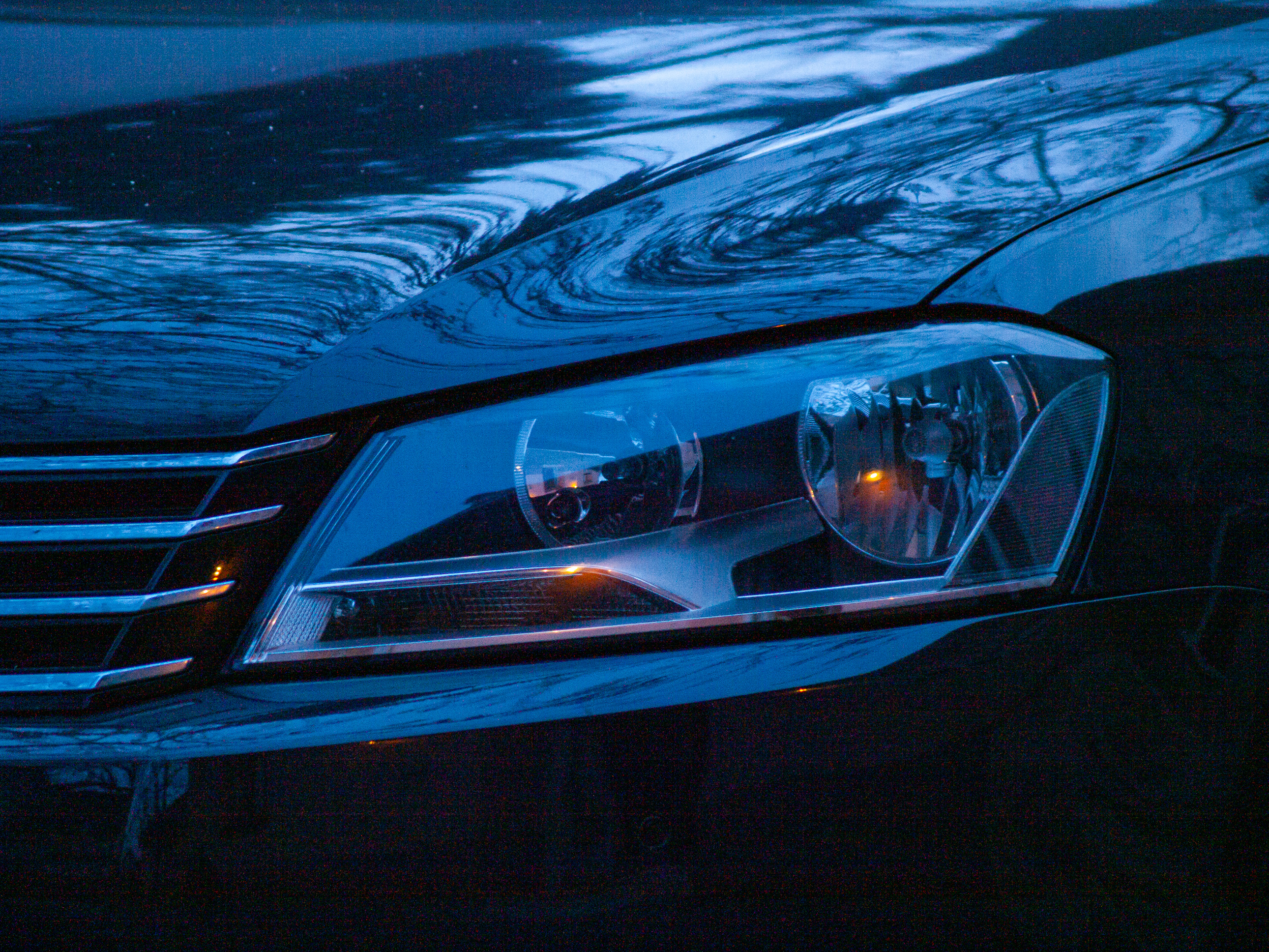
I’ll leave you with a few of the images I’ve taken with it. Enjoy!

Standard
Places

Late spring in our garden

Summer doesn’t officially start until the solstice on June 21, so even though it feels very much like summer outside, we can still call it spring. Here is a gallery of photographs taken recently in our garden (on the 9th) with my PEN E-P2 and the 12-50mm lens, which does double duty as a macro when you need it. I’m so glad I bought this camera. It came out in 2010 and even now, in 2018, I can’t call it outdated when I can take photographs like these with it. Look at the colors, at the details, at the clarity and the bokeh. It’s so good 😍. I know I shouldn’t praise my own photos and I’m not, I just really like this camera. I love all my PEN cameras, they’re awesome little beasts.

Standard
Reviews

My Olympus PEN E-P3

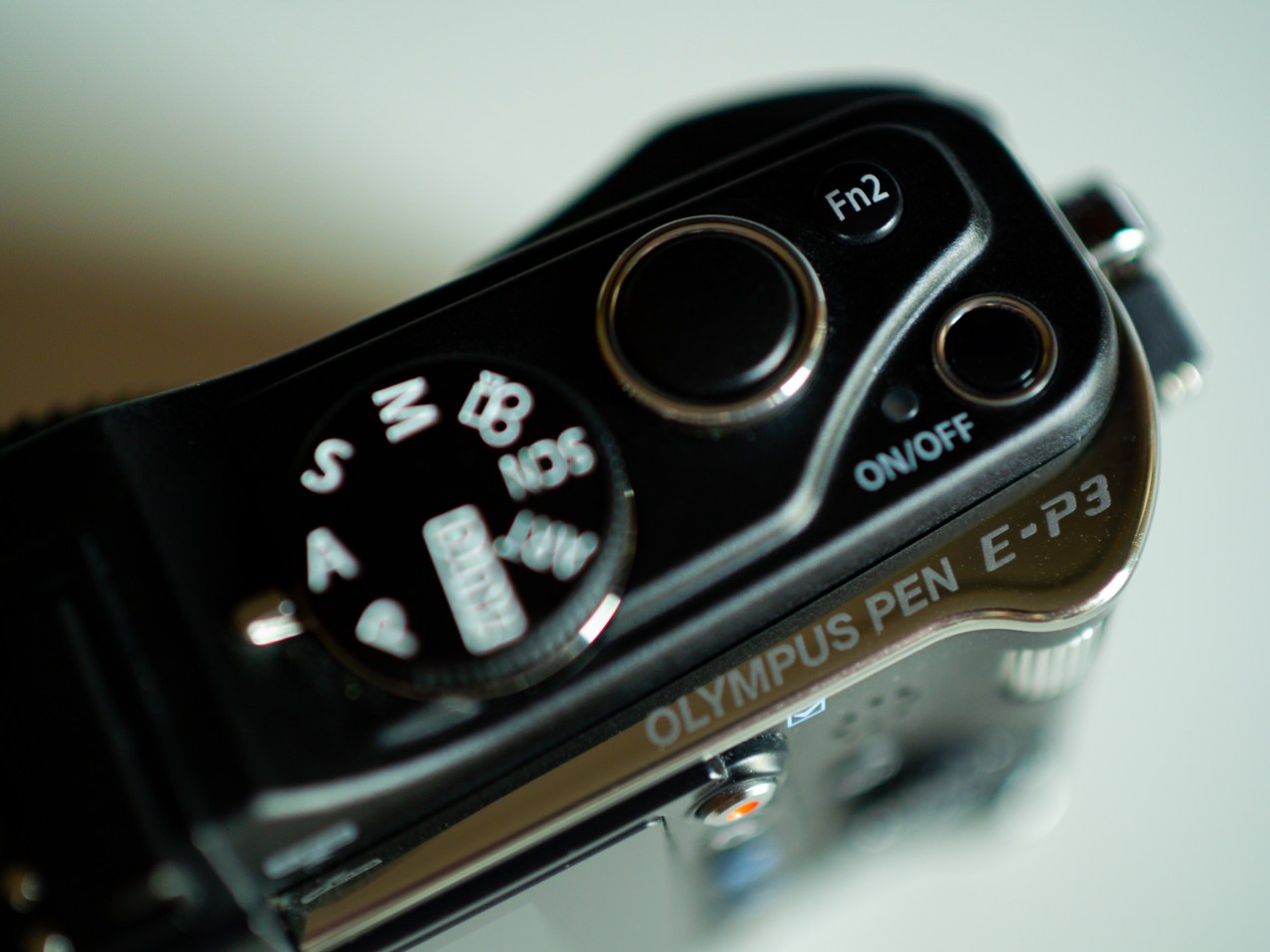
I purchased this PEN E-P3 just a few days ago, to add it to my collection of Olympus PEN cameras. As I mentioned in my previous post, I now have all the PEN models except the PEN-F.

I love PEN cameras because they are the smallest full-featured cameras out there. Yes, there are smaller cameras, but they have smaller sensors. And there are small cameras with bigger sensors, but they’re not as small as these cameras, and you have to deal with big, heavy lenses. The PEN cameras are just perfect. The sensor is big enough to allow for great resolution without squeezing pixels too close together and small enough to allow for small, lightweight lenses.

PENs are almost as full-featured as the bigger OM-D cameras (which I also love and which have their own charm, purpose and amazing capabilities), but the PENs are small and light and easy to carry, so they’re perfect for traveling light or for an all-day photo shoot in the studio, when you have to move around and hold the camera at all sorts of angles in order to get that perfect photo. That was and is the Olympus MFT promise: small, lightweight gear and superb image quality. This is why my PEN E-P5 has become my main camera, by the way. I love using it in my studio and I use it everywhere else as well. This is also why I wanted to collect all of the PEN models. I wanted to see their evolution firsthand, from the standard-setting E-P1 to the E-P5 and the PEN-F.

I bought my E-P3 second-hand and there were some scratches to the underside of the camera. I also discovered after the purchase that the IBIS wasn’t working. I talked with the seller about it and it wasn’t malice. The fellow was a beginner and didn’t even know how to adjust the IBIS, much less that it wasn’t working. I guess at some point, the mechanism either broke or got stuck, so I packed it up yesterday and sent it in to one of the Olympus Service Centers in Eastern Europe to have it fixed. I look forward to getting it back in full working order and using from time to time, as I also use my other PEN cameras. They’re not just collectibles to me. They’re also working cameras and it’s important to me that each and every one of them is fully operational.

Before I sent this camera in for service, I mounted the 25mm f1.8 lens on it, plus my newly-arrived MCON-P02 Macro Converter (which I definitely recommend) and went into our garden to take photographs. I wanted to see how the E-P3 had improved upon the E-P2 in image quality. And it definitely has! The color gradation is better and so are the details. It has the same resolution as the E-P2 (12.2 megapixels) but the images are better and there’s less noise.

I do wish I had adopted the PEN system earlier, back in 2010 when I reviewed the E-P2. I think I’d have been pretty happy working with PEN cameras all these years and maybe also getting an OM-D camera. While I can’t change the past, I am working with Olympus gear now and I am very happy with it.

Enjoy the photographs!

Standard
Reviews

My Olympus PEN E-P1

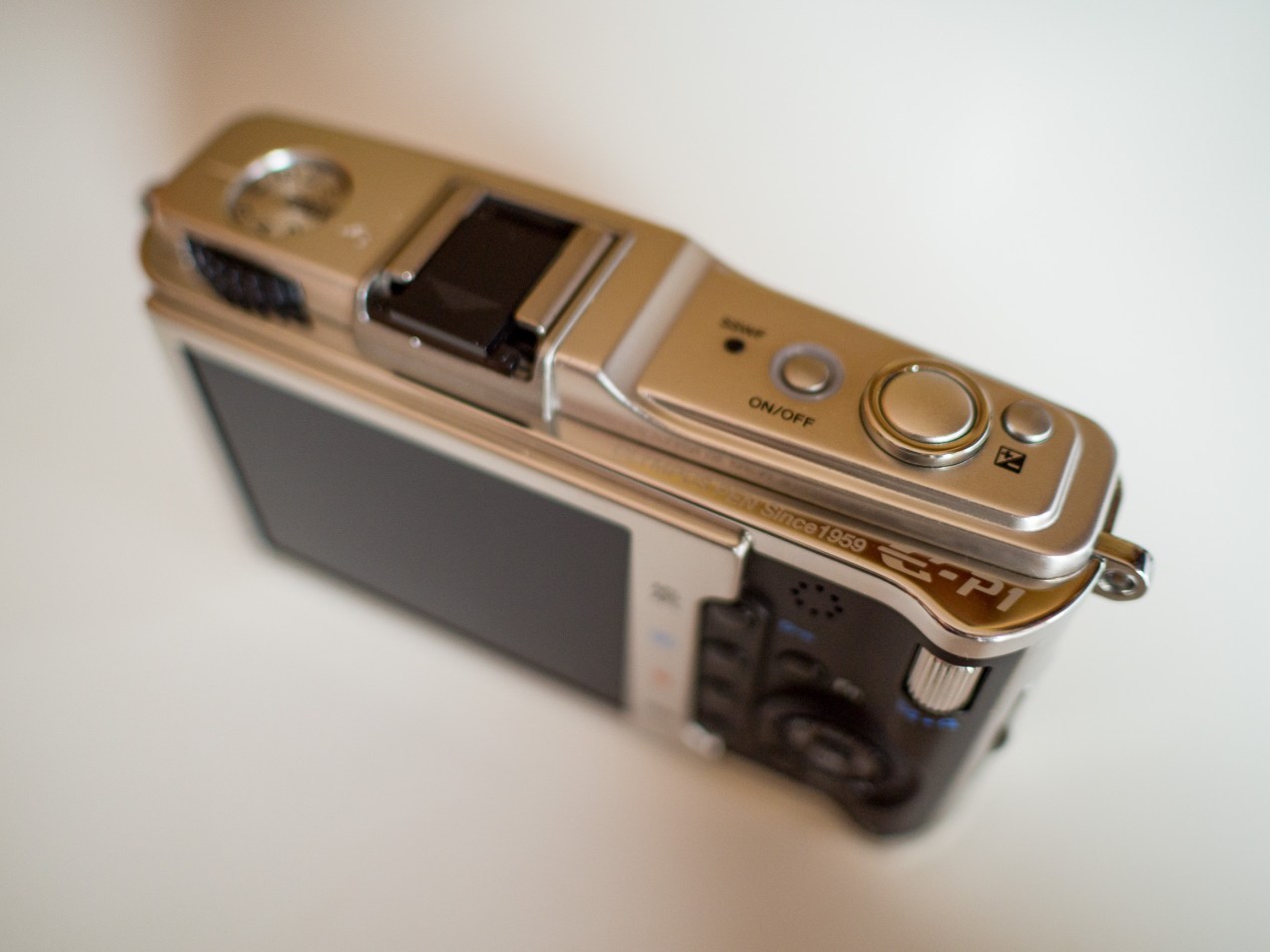
Several days ago, I purchased a PEN E-P1. I’ve been thinking about a number of years of collecting all the digital PEN cameras that Olympus has made. I’m not referring to the PL (Pen Lite) or PM (Pen Mini) camera lines, which were launched alongside the regular PEN cameras in an effort to provide lower-cost alternatives for consumers with lower budgets. I’ve wanted to own all of the regular, full-featured PEN cameras, of which there are five models: E-P1, E-P2, E-P3, E-P5 and PEN-F. So when did my love of PEN cameras start? It was when I reviewed the PEN E-P2 back in 2010. I loved that camera and I wanted to have it right there and then, but I was heavily invested in Canon gear at the time. Fast forward to 2018. When I bought the E-P1, I already had the E-P2 and the E-P5 (I also have the first PL model, the E-PL1). Since then, I’ve also purchased the E-P3, so now the only camera left to get for my collection is the PEN-F.

The E-P1 is an important camera. Launched on June 16, 2009, it was the first digital PEN. Fifty years before it came the original PEN, in 1959. Both cameras were revolutionary in their design and their compact size. What Olympus managed to do with the digital PEN was amazing: they managed to give us the features and quality that only came with larger, heavier cameras, in a tiny and light camera body that could be carried in a pocket or a purse. In its time, the E-P1 was the lightest, smallest and most capable camera on the market. It may not have been the best at everything, but it offered image quality that was higher than or comparable to much larger and more expensive cameras with larger sensors. Even today, almost nine years later, when the E-P1 is coupled with a great lens, such as the M.Zuiko 25mm f1.8, it can produce truly beautiful photographs that match quite well the quality of images made with cameras that have full-frame sensors. You’ll see this in the gallery below, which contains photos I’ve taken in our garden with the E-P1 and the 25mm f1.8.

I am fortunate and happy that I was able to build my PEN collection, and that I get to work every day with such great cameras. The PEN E-P5 is my primary camera now, both in the studio and outdoors. I love it. Enjoy the photographs!

Standard
Reviews

My two new Olympus lenses

I’ve recently purchased two new lenses for my Olympus cameras and I like them very much. Not only are they mignon, but they’re wonderfully sharp, they focus quickly and they offer me something I didn’t think I could get from MFT (Micro Four Thirds) lenses and cameras: bokeh and handheld photography in low light.

Yes, I’ve only just gotten the memo: you can get wonderful bokeh from MFT lenses. Having worked with MFT lenses whose maximum aperture was f/3.5 in the past and present and knowing that MFT sensors had a greater depth of field than larger sensors, I’d become accustomed to not being able to get the kind of bokeh I could get from my other cameras like my Canon 5D. I also didn’t think I could push my aging PEN cameras to take bright, handheld photos in low light. But these new lenses have changed my mind completely!

I love the kind of bokeh I can get from them. Depending on the distance between my subject and the background and the kind of background used, the bokeh is either wonderfully feathered or downright creamy, as you’ll see in the photographs I’ve posted here.

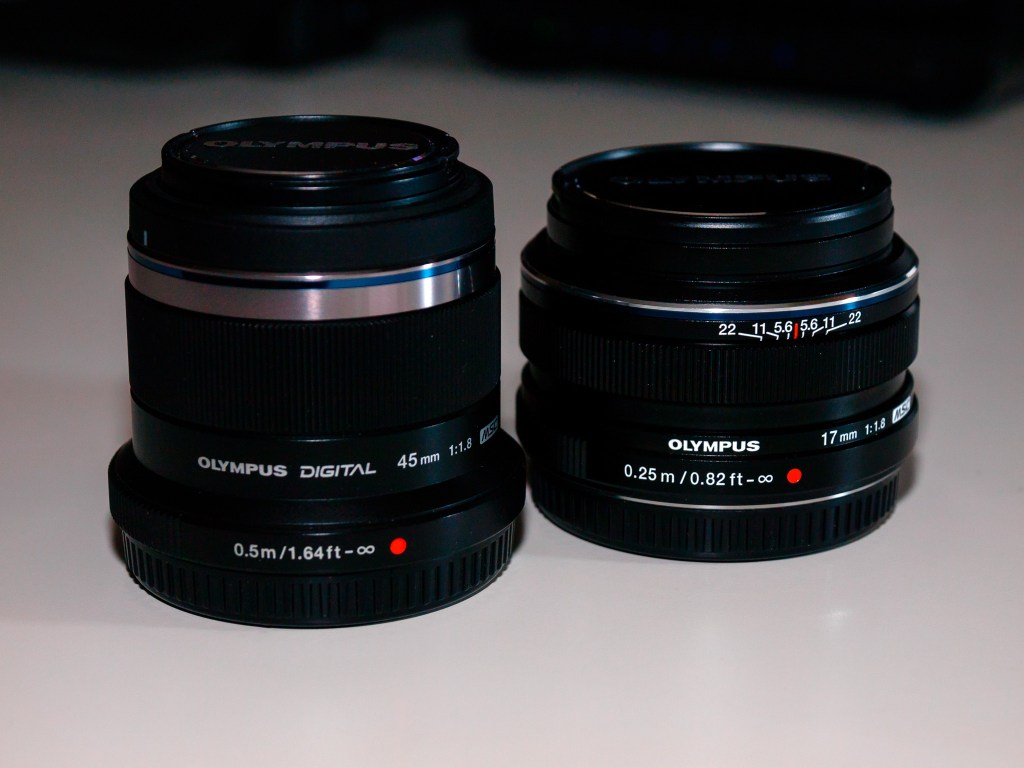
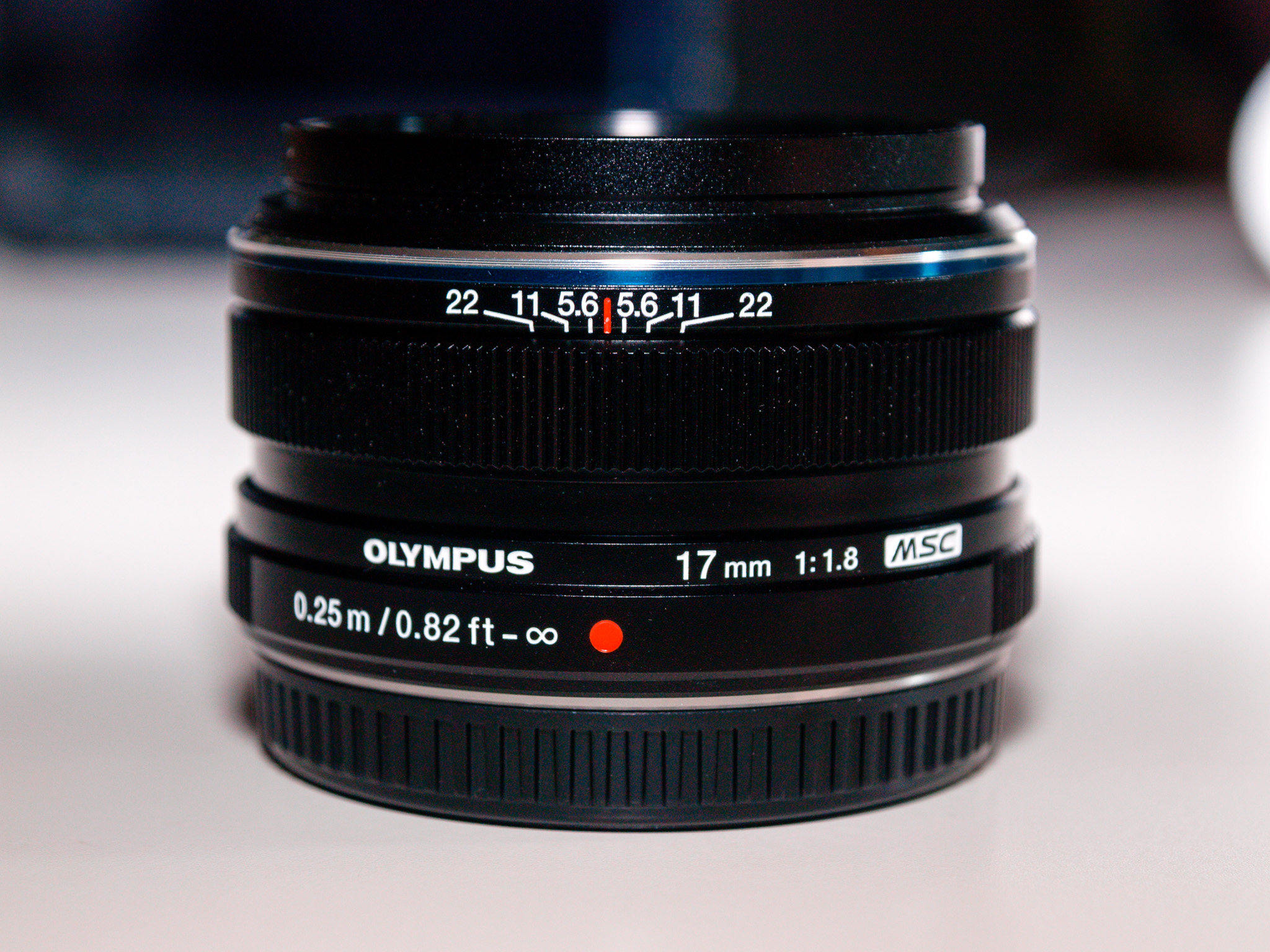
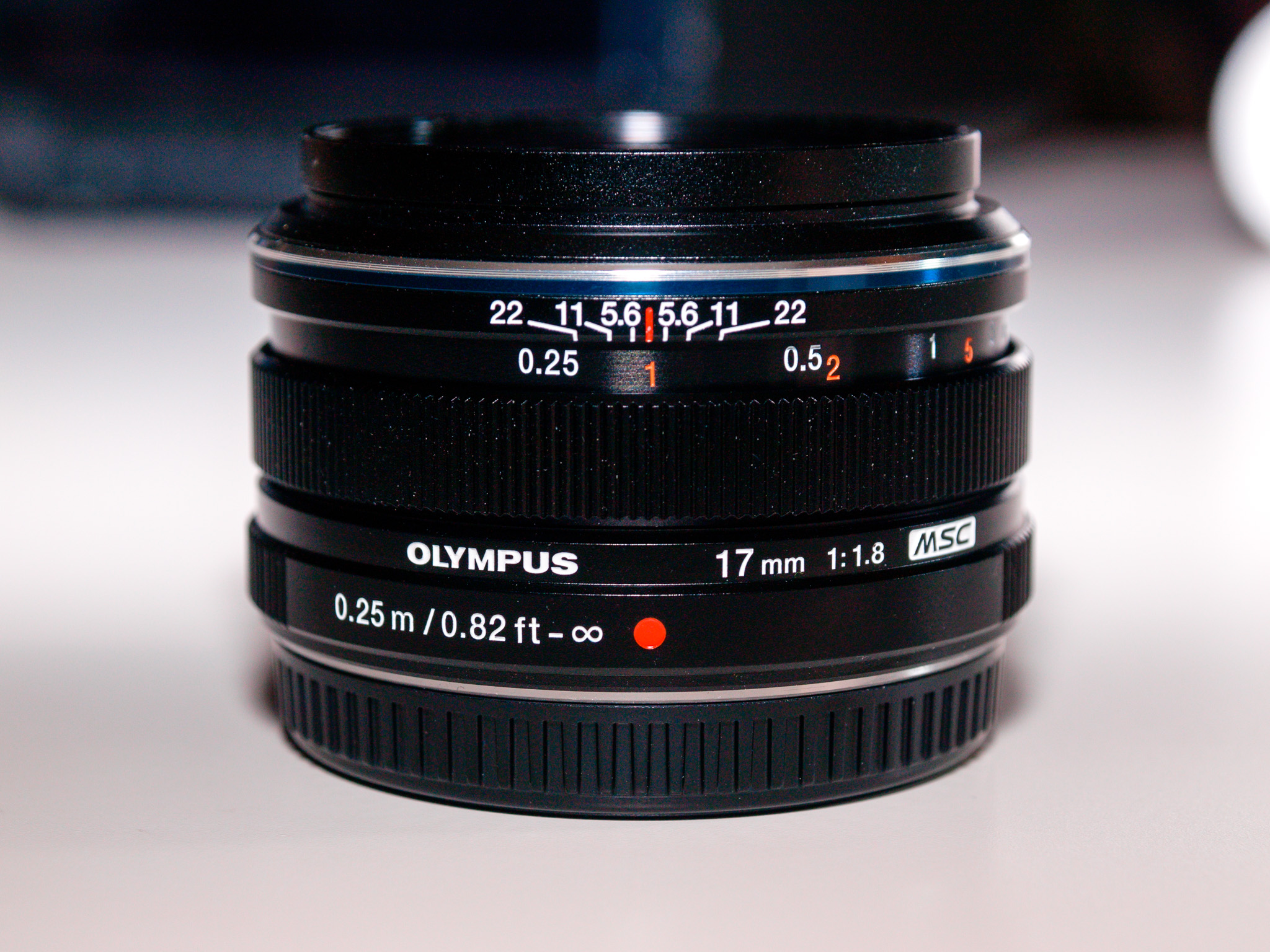
What lenses am I talking about? They’re the M.Zuiko Digital 17mm 1:1.8 and the M.Zuiko Digital 45mm 1:1.8.

Olympus M.ZUIKO DIGITAL 45mm 1:1.8 and M.ZUIKO DIGITAL 17mm 1:1.

There are also Pro versions of these lenses available from Olympus, for all the typical, 35mm equivalent focal lengths, and those lenses open up to f/1.2, so it stands to good reason that the bokeh they make is even better. If I were to take my lenses for example, the equivalent Pro versions for them are the M.Zuiko Digital ED 17mm f1.2 and the M.Zuiko Digital ED 45mm f1.2. Since both of my current Olympus cameras are PEN cameras and I wanted to test the waters first, I bought the f/1.8 lenses, because (1) they’re less expensive, (2) they’re lighter and (3) they’re smaller (amazingly small, actually). However, were I to have a bigger camera such as the OM-D E-M1 Mark II, I would likely get the Pro lenses. They would be a much better fit for a camera that has a native resolution of 20 megapixels and can produce 50 megapixel images in high-res shot mode.

The 17mm f/1.8 lens has a beautiful metal body and is simply lovely to look at. It also has something that Olympus calls “fast focus switch”; I also remember seeing the term “manual clutch focus” somewhere to describe it. The focus ring slides down to reveal a manual focusing scale and it also puts the lens in full manual focus mode. This is different from the manual focus mode you can set in camera, which is more of a focus-by-wire on Olympus cameras. I can explain this in more depth in another post if you’re interested, but for now, I just want to point out the neat feature of this jewel of a lens.

Olympus M.ZUIKO DIGITAL 17mm 1:1.8 Lens

In typical usage, the focus is electronic and set by the camera

Olympus M.ZUIKO DIGITAL 17mm 1:1.8 Lens

When you slide the focus ring down, it reveals the manual focusing scale, with markings in both meters and feet, and it puts the lens in manual mode

It’s time for me to show you some photographs, so you can see the bokeh for yourselves. First, let me show you a few images of the lenses themselves, which I took today with a two-flash setup, right on my desk.

Now let me show you images taken with the 17mm f/1.8 lens. When you see my face in these photos, please don’t think I love taking selfies. It’s just that I’m a readily available subject when I need to test something out.

Finally, here are a selection of photographs taken with the 45mm f/1.8 lens. The bokeh is more pronounced here because of the longer focal length, and it is a truly wonderful thing!

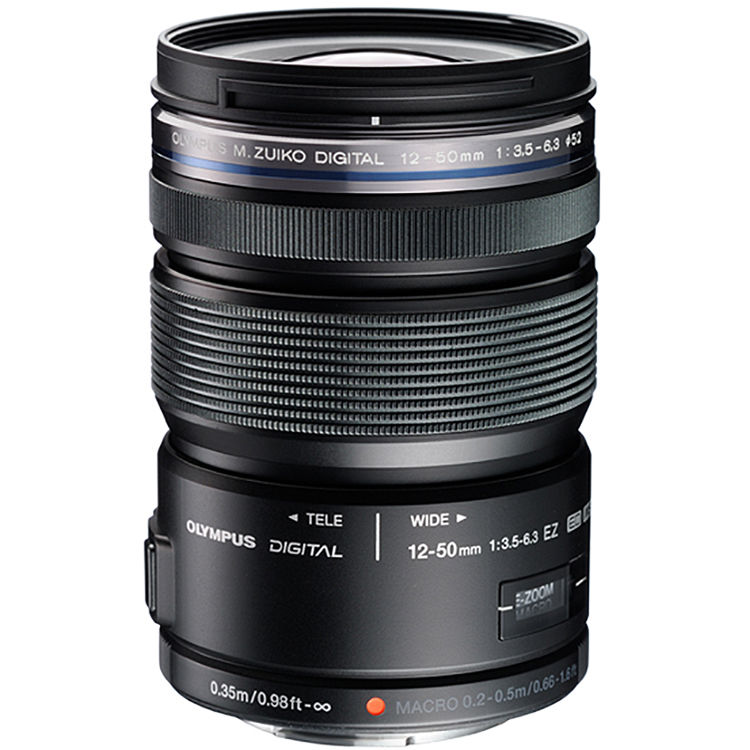
I am so glad I bought these lenses. They have opened up a whole new world for my Olympus cameras. Btw, I took the photographs of the lenses with my PEN E-P2 using the M.Zuiko 12-50mm EZ f/3.5-6.3 lens.

Olympus PEN E-P2 Mirrorless Camera

Olympus PEN E-P2 Mirrorless Camera

Olympus M.Zuiko Digital ED 12-50mm f:3.5-6.3 EZ Lens

Olympus M.Zuiko Digital ED 12-50mm f:3.5-6.3 EZ Lens

I invite you to visit my profile on the MyOlympus website, where I have posted many more photographs taken with my Olympus cameras over the years.

Standard