Thoughts

A long commute may push you toward divorce

I’ve been a proponent for telecommuting for years, and I’m glad to see more proof — such as this article, which presents research from Sweden, where they’ve found that long commutes (around 45 minutes) make you 40% more likely to divorce, and also re-inforce gender-based stereotypes, where the man will usually have the better job and do the long commutes, while the woman is forced to take a lower-paying job closer to home.

According to the study, 11 percent of Swedes have a journey to work that consists of a 45-minute commute or longer. Many commuters have small children and are in a relationship. Most are men.

The risk of divorce goes up by 40 percent for commuters and the risk is the highest in the first few years of commuting.

And more Swedes are travelling farther distances to work.

“The trend is definitely pointing upward. Both the journey to work and the working hours are getting longer, “ Sandow told The Local.

The study was based on statistical data from two million Swedish households between 1995 and 2000.

This article in The Economist echoes the research, and offers additional arguments:

Ms Lowrey ends up running through the whole litany of traditional commuter complaints—that it makes us fat, stresses us out, makes us feel lonely, and literally causes pain in the neck—and finds research to prove that the moaners are, more often than not, right. “People who say, ‘My commute is killing me!’ are not exaggerators,” she concludes: “They are realists.”

This of course is in addition to the arguments I’ve already put forth in the past, such as in this article offering reasons for telecommuting, or this article about reducing waste in business operations.
Standard
Thoughts

Cows and roads in Romania

A typical sight you might encounter as you drive through the Romanian countryside is cows returning home from pasture in the evening, or, if you’re an early morning traveler, going to pasture.

It’s interesting the first few times, particularly if you’ve never seen that sort of thing before. It’s “touristy”, cute, etc. But it gets old really fast, for multiple reasons:

  • Herds on the roads worked back when the pace of travel was as fast as a horse and buggy could take you. Nowadays cars go somewhat faster than that. Having to slam on your brakes and go in 1st gear or stand still for up to 30 minutes isn’t something the weary traveler looks forward to doing when trying to get home or find some lodging.
  • You won’t find it cute after an angry ox sticks his horns into your hood or tries to mount your car, frustrated because he couldn’t mount his favorite cow that day…
  • Your neck veins will possibly burst as you experience the indolence of the cow herders, who will drag themselves along at a snail’s pace, blissfully unaware of the cars that are waiting for them to move the animals off the road. Most won’t give a cow’s behind about you even if you ask them nicely or yell at them.
  • You’ll not think it such a quaint sight after you run through a few steaming cow pies and have to hose them off your car later.
  • If you have to brake suddenly, then begin to slide dangerously on the mud laid on the road by the cows, you’ll begin to appreciate the usefulness of clean asphalt, unsullied by manure or thick mud.

In this day and age, I’m surprised village mayors still allow the cows to use the main roads, instead of directing the animal traffic to use the side roads and the back roads. Sure, the cows have gotten used to using the same route every day, but they can be re-trained. It seems to me the will just isn’t there, and that’s a shame.

Standard
Places

Beware of chimney sweeps in Romania

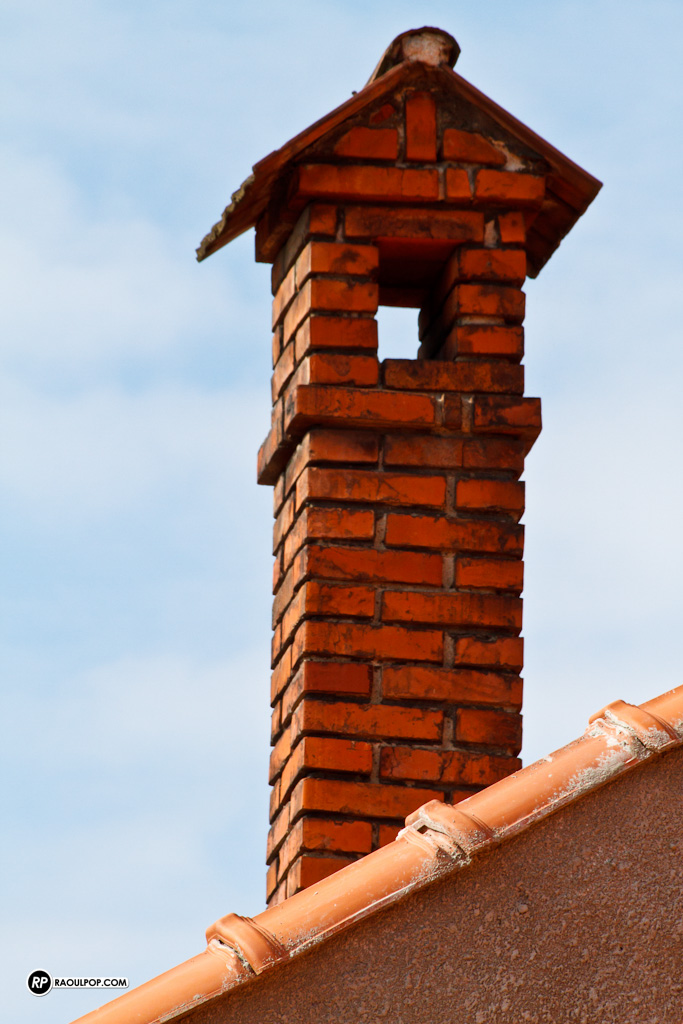
As cold weather begins to set in Romania, itinerant chimney sweeps begin to make their rounds. They’ll come to the gate and offer to clean your chimneys, or they’ll use lines like “We’re here from our head office, we’ve been sent down to check and clean your chimneys,” which of course is a bold-faced lie. Chimney sweeps mostly work alone, they have no companies, and no headquarters. It’s been that way for centuries. Sometimes, as an added bonus, they’ll reek of cheap wine. And almost always, they’ll be of Roma (gipsy) origin.

The keyword when using their services is CAUTION. If you don’t exercise caution, you do so at risk to your wallet and some of your smaller and perhaps valuable belongings. I’m not stereotyping here, I’m summarizing popular wisdom. I’ve met honest, hard-working gipsies, but they are few and far between.

If you ask them what it costs to clean a chimney, they’ll give you a quick look-over (if they haven’t already), and since they’ve already checked your house from the outside, they’ll quote a price that’s in line with your neighborhood, your house and your clothes.

If you say okay and bring them into your attic to start cleaning, you’ve got to be very careful, because they’ll often double their prices. They’ll say, and I speak from personal experience here, that your chimney is too tall, and they’ll need to charge double. At this point you have two choices: pay the extra money, or begin to escort them to your gate so you can kick them off your property. You should ALWAYS choose the second option.

What’ll happen next is they’ll back down and try to haggle a new price, somewhere between the one they quoted at the gate and the one they quoted in the attic. NEVER back down. Stick to the quoted price or kick them out. They’ll usually give up and agree to the original price.

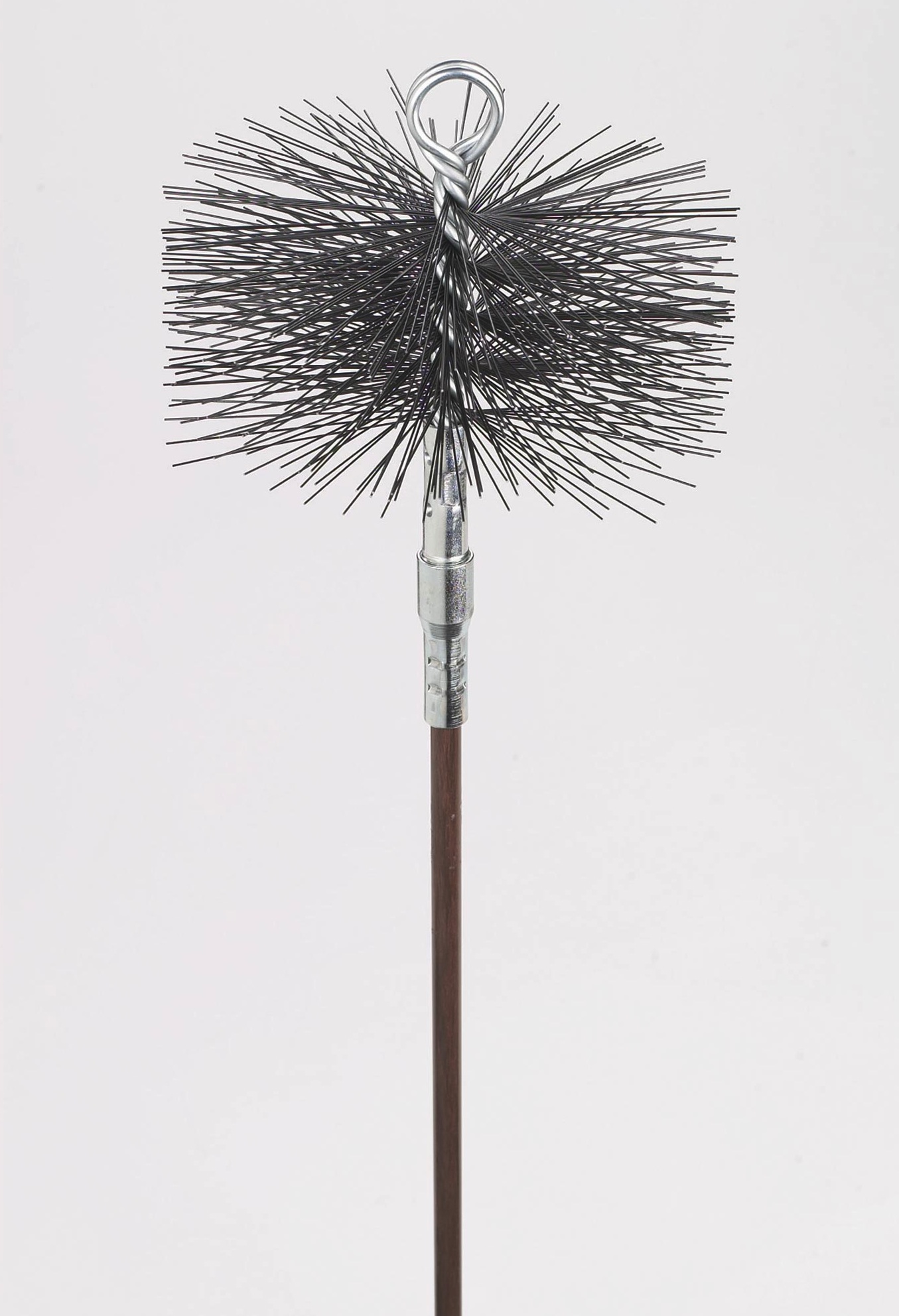
Make sure they come equipped with all the equipment they need. They should have an adequate chimney brush, not a make-do one, and they should have a mirror, to look up the chimney and ensure that it’s clean. If they don’t have a mirror and ask you for one, make sure to check around when you get back to make sure nothing’s gone. Also make sure to monitor their every move while they’re in your attic/house. Something may just disappear when you’re not looking.

Photo courtesy of Northern Tool & Equipment

Finally, when they’re done, make sure they give you a stamped and signed receipt which states your full name and address, and also a certificate which states that your chimneys have been checked and are working properly — you may need the latter in your dealings with Romgaz and its subsidiaries, the only (can you say unfair monopoly…) natural gas company in Romania.

If you happen to live in a nice neighborhood and have taken care of your house, then beware of the initial quoted price, it may be higher than what their services are worth. Try to halve it, then negotiate up to 65-75% of their asking price if need be, or try to get it down to 50%. For example, one price I heard lately (fall of 2010) was 30 RON per chimney. I think that’s adequate, but it could be negotiated down to 20 RON if your budget is limited, or if you’ve got lots of chimneys (5-6 of them, for example). Use your judgment and exercise caution.

Standard
Thoughts

A neat talk by Peter Tyack at TED, entitled “The Intriguing Sound of Marine Mammals“, in which he explains the effect of human noise on the sounds made by marine mammals, and what’s being done to correct the situation. A few tidbits:

  • Better propeller designs decrease propeller noise by up to 90%
  • Insulating the engine chamber from the hull reduces engine noise by up to 99%
  • Slowing down the ships by 50% decreases overall noise and reduces fuel consumption by 30%

There’s also a cool cartoon at the end of the talk, called “Good Vibrations”, made by Jeremy Clapin.

Marine mammals, underwater sounds and shipping noise

Aside
Thoughts

The pattern behind self-deception

Michael Shermer, the Founding Publisher of Skeptic magazine and the Executive Director of the Skeptics Society, gave a talk at TED about self-deception — how our mind (sometimes) plays tricks on us. A couple of interesting tidbits:

  • Dopamine antagonists decrease the patterns we see
  • Dopamine agonists increase the patterns we see

Wonderful stuff!

Standard