Reviews

Checking in with Energizer's Advanced Lithium Batteries

I can finally report on the battery life of the Energizer Advanced Lithium Batteries given to me in late January. I wrote about them on February 4th, and put them in my Canon EOS 5D’s battery grip a week or so after that. They worked until this past Saturday evening, April 25th. When I did the tally, I saw that I’d taken 1,872 photos with them. That’s not a typo. The vertical grip stayed on my 5D all the time, from the time I put the batteries inside it to the time I took them out, and that’s how many photos I got with the batteries.

While that battery life is very impressive, given the 5D’s 500-600 shot battery life with one of its single rechargeable batteries, or 1,000-1,200 shots or so with two rechargeable batteries in its vertical grip, it doesn’t tell the whole story. There are a few things I need to clear up first:

  • During these past few months, I’ve been shooting mostly landscapes. That means I didn’t take lots of photos in one sitting, which would have drained the batteries faster. I would expect that if I shot events, the battery life would have been significantly less.
  • For some reason, and I’m still not sure whether my vertical grip is to blame or the batteries, the battery life sensor kept giving a low battery notice the whole time the batteries stayed on the camera, from the time I put them in to the time I took them out. Sometimes the battery life sensor would even flash the really low battery signal, indicating the batteries only had a few shots left in them. Regardless, they kept on working until Saturday evening. Not sure whether this was because the camera expected 1.5V out of each battery, not 1.2V, or whether my battery grip, which had been sitting in a box, unused, for several months before this, is at fault, but that was my experience.
  • Related to the two bullet points above, the batteries gave out while I was shooting an event. It’s possible that they would have lasted even longer if they hadn’t been put through prolonged, continuous use. It’s also possible that if I stick them back in the camera, they might have enough life in them to let me squeeze off another several shots, but that would go against the conditions of my test, where I wanted to see how long they lasted without taking them out of the camera.

Whatever your mileage may be (and I encourage you to do your own testing), I’m very impressed with the battery life. While it was a hassle to keep the vertical grip on my camera the whole time (I prefer to shoot without it unless I’m doing events), it was an interesting experiment. I would recommend keeping a set of these batteries in your bag as a backup, just in case your regular batteries run out of juice. They have a long shelf life, and they won’t self-discharge like rechargeable batteries.

I also promised in my initial post that I would use them in my 580EX II speedlite. I’m keeping that promise. I’ve been using them in it since February, and they’re still doing fine. Again, I haven’t used the speedlite very much, because I’ve been shooting mostly nature stuff, but I did shoot a wedding recently and it worked flawlessly the whole time. I’ll let you know when those run out and I’ll tally up their shot life, too.
Standard
Thoughts

This is why I dislike tests

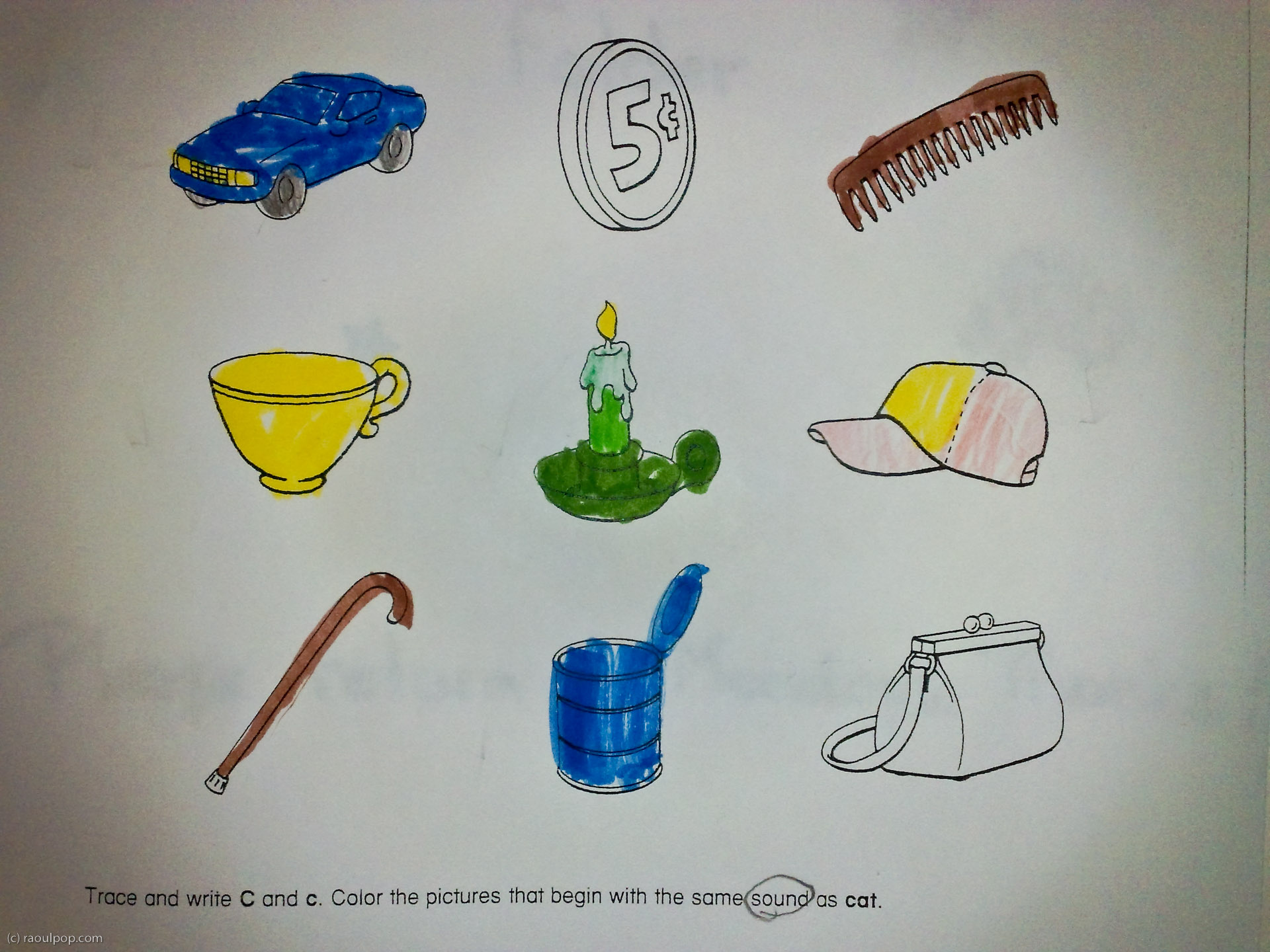
A couple of evenings ago, we were at our friends’ home, and I helped their daughter with her homework. She’s in kindergarten, and they’re teaching them how to read. One of the homework questions helped to re-awaken my dislike for tests. You can see the question below, I took a quick photo of it.

My beef with things like this is that there are usually multiple answers to a question, depending on how it’s interpreted. Unless you phrase it clearly and objectively from the start (which doesn’t happen very often), you’ll always have students that get it wrong, because not everyone thinks the same way. While in college and in graduate school, I’d often find myself at a crossroads when it came to answering many test questions; I’d come up with two or more different answers, all of which would be valid answers depending on how I interpreted the question. I’m fairly certain that some professors still remember my arguments with them on matters like these, and my insistence that my answer was also right, if only the question would be looked at another way.

If we look at this particular question, we see that it asks the child to “color the pictures that begin with the same sound as cat“. Okay, it sounds innocuous enough, until you start thinking about what that means. Do they mean the “c” sound of the word “cat”, or do they mean the “ca-” sound from the word “cat”? I don’t know. No further explanation is given.

Our friends’ daughter told me her teacher wanted her to choose the objects that began with the same “c” sound, and proceeded to do so. You can see what she did above. She told me that’s what her teacher wanted her to do, and those were the choices that her teacher wanted her to pick. But if you judge the objects by the teacher’s own definition, you see that the teacher is wrong. After all, the 5-cent coin starts with the same “c” sound as “cat”, unless you choose to call it a nickel, in which case it doesn’t belong on the list. So does the coin purse in the lower right corner, unless you choose to call it a purse or a bag, in which case it also has no place on this list.

No, I think the correct way to look at it is to interpret the instructions literally, and to pick the objects that begin with the same “sound” as “cat”, which is the “ca-” sound. If we do that, then we can only pick the candle, the cap and the can. The cane is a close call, but I’d say it’s not the same sound as cat. (If we were from Massachussetts, then we’d also be able to pick the car, since we’d pronounce it the same way due to our NE accent.)

Do you see the real problem here? It doesn’t matter what the right thing is or what the facts are. It only matters what the teacher thinks is right, which in this case, and quite possibly in many other cases, is wrong. As long as you learn what the teacher wants you to learn, facts, reality and objectivity be damned, you’ll get good grades and you’ll get ahead in life. As long as you go along with the generally accepted answer, you’re okay. This doesn’t encourage creative thinking, and it doesn’t encourage variety of thought; this is more or less brainwashing. This is why I dislike tests, and why I don’t like questions made up by others, particularly when they’ll only take one answer — theirs.

Standard