Reviews

Flushed Away (2006)

“Flushed Away” is an entertaining tale of a house rat named Roddy enjoying the good life as the spoiled pet of a rich girl. Just as the girl’s family goes on vacation and he can really let loose, an intruding rat comes in, gets a taste of the good life, and flushes Roddy down the toilet.

Roddy ends up in some sort of rat colony (more like a little city) down in the sewers, and he must find a way to get back home while negotiating life on completely new terms. He finds a girl rat named Rita, who helps him. The two make an unlikely pair since she hates him from the get go, but as they say, opposites attract. There’s a nice surprise ending that I don’t want to spoil for you, and tons of action throughout.

If you’re familiar with Nick Park’s work (think Wallace & Grommit) then you’ll recognize the animation style. The difference is that “Flushed Away” is computer-animated, not made with the usual stop-motion clay puppets that Nick Park works with. The same style was preserved, for the most part, but it was all done on the computer. There is a noticeable difference, and for the diehard Wallace & Grommit fans, it’s a bit of a letdown. The movement is neither smooth enough for good computer animation, or jumpy enough to fit Nick Park’s stop-motion style. But in the end, the movie stands on its own as an enjoyable adventure and one tends to forget about the animation’s shortcomings.

Nick Park actually voices one of the slugs in the movie. He’s not in the credits, and I can’t find out which slug it is, so I’ll let you all guess. If you find out, do let me know.

This movie also features famous actors for the main voice talents, and as I stated in other movie reviews, there’s no reason not to give real voice actors the chance to do these roles. I don’t know that Hugh Jackman and Kate Winslet added anything special to the voices of Roddy and Rita, other than their names and a bit of intonation. Now when it comes to The Toad, voiced by Ian McKellen, and Le Frog, voiced by Jean Reno, the story is entirely different. Their voices are distinct enough to fill out their characters and make them come to life.

At any rate, it’s a great family movie and I liked it.

More info:

Standard
Reviews

Stuart Little and Stuart Little 2 (1999, 2002)

Ligia and I really loved the first two Stuart Little movies. They both combined live action with 3D computer animation, and back in 1999, this was an achievement. By today’s standards, we can tell the animation’s a bit dated, but still, the overachieving, little white mouse is a lovable character and you soon gloss over the flaws in the animation that couldn’t be helped back when it was made.

The first movie deals with Stuart’s adoption by the Little family, and his adventures while fitting in with both the Little’s only child, George, and the family cat, Snowbell, voiced by Nathan Lane. We find Stuart befriending a little canary named Margalo and gaining a little independence from his overly protective mother in the second movie.

I must admit that I was bothered a bit by Stuart’s introduction to the audience in the first movie. Yes, this is a children’s story, and we’re supposed to suspend disbelief, and I’m more than willing to do that, but still, for such a pivotal plot point, the screenwriters might have done a better job explaining why the Littles would adopt a mouse instead of a child, and why it didn’t seem odd to them that a mouse spoke and read, or was treated as one of the children at the orphanage.

My impression was that Stuart dominated the first movie as a character, but Snowbell blew everyone else away in the sequel. Nathan Lane’s whiny voice was the perfect complement for the lazy, spoiled Snowbell, who comes through in a big way for both Stuart and Margalo. I would also be remiss if I wouldn’t recognize Michael J. Fox’s contribution to the two movies. His voice was the right choice for Stuart.

I would not recommend the third installment in the series, made in 2003. It was a complete departure from the first two movies. While still featuring the voices of the original actors, it was completely (and poorly) animated in 2D, thus losing that winning combination of live action and 3D animation that really made the first two movies. The Stuart Little in that third movie looks so unfamiliar, and the animation is so choppy and un-lifelike, that it’s really nearly impossible to bond with the characters. Only children unfamiliar with the first two movies might enjoy it.

More information:

Standard
Reviews

Robots (2005)

Robots (2005)Having just watched Robots (2005) for the first time, I’m amazed I didn’t go see when it came out. I don’t know what I was thinking, but now I know I’d have enjoyed it thoroughly.
The plotline sounds familiar: a small-town boy goes to the big city and makes good, in spite of all odds. But as we all know, it’s not the yarn, it’s how you spin it that makes it interesting. This story is told in a quirky, entertaining way that makes it worth our time. The boy is a robot, who goes to the big city to follow a dream, and in the process, saves all Robot World from certain disaster while instilling hope in the hearts of countless other robots.

That big metal world is brought to life on-screen, and although we’re constantly reminded the characters are robots, we personify and identify with them. A wonderful benefit of the robotic nature of the characters is the ability to pull countless gags, which is where the screenwriters leave no stone unturned. Fender, played by Robin Williams, is the main go-to character for gags, and he delivers on every one. Although Robin Williams’ riffs and improvisations are too much in real life, they’re perfect for voice-overs. He was great in all of Disney’s Aladdin movies, he was great in Happy Feet (2006) and he’s great in this movie as well.

Mel Brooks fit into the role of Bigweld surprisingly well. But other than him, I had a hard time recognizing the voices of the other famous actors employed for the voice over work. And that begs the question, other than the bragging rights, why hire famous actors for all of the major roles in a movie like this? It’s probably more expensive, and there are plenty of voice talents waiting in the wings who’d welcome the chance to shine.

I liked the animation, and loved the details on the robots, like the little rust spots, the almost real bolts, the glassy eyes, and the tinny, yet moldable faces. Like I said, the way the story’s told really makes it worth our time. Ligia and I were swinging along to “junk” by the end of the movie. You’ll know what I mean once you watch the movie! 🙂

More information:

Standard
Thoughts

The Simpsons me

I read a post over at Dawn Armfield’s blog today that resonated with me. It’s about one’s online identity, and whether you’re comfortable enough to be yourself even when you can be someone else. If you read my blog regularly, I think you pretty much know where I stand on that. I write in first person, my photo’s everywhere, I’m not shy about expressing my opinions, etc. I would ask where you stand on that, but it might be a moot point. I get the feeling that the people uncomfortable revealing their identity online, for whatever reason, won’t reply. I’ll only get comments from the ones like me.

Something fun did come out of it though, and I wanted to share that with you as well. Dawn built a Simpsons avatar for herself (you can see hers in her blog post) and inspired me to do the same. I headed over to the Simpsons Movie site, which is where you can partake in this fun little experience, and built one for myself. It was a bit difficult to find the bits and pieces that would make the character look like me, but in the end, I arrived at a reasonable facsimile. Have a look below. Ligia got a kick out of it. She said she liked it, and that it was really funny.

I don’t think I’ll be using this as my online avatar, but it’s fun to look at it. For example, I had no idea that I would like a hippie if I wore certain clothes. What do you think? And by all means, if you want to chime in on how you identify yourself online, please do so as well.

The Simpsons Me
Standard
Reviews

James and the Giant Peach (1996)

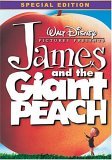
James and the Giant Peach (1996)Last night was the first time Ligia and I saw this delightful movie (IMDB). I regret not seeing it earlier. I remember the ads on TV back when it came out. I hadn’t read the book by Roald Dahl, nor did I know the story was written by him until I watched the featurette included in the special features on the DVD. I might have known it though.

All his stories weave scary elements into whimsical storytelling with wonderful plotlines and happy endings that remain with you. It makes for such vivid characters and happenings! I still treasure “The BFG” (1989, IMDB), more than 15 years after seeing it. I taped it when it ran on TV, and I still have the tape somewhere — although it’s probably so demagnetized by now that I wouldn’t be able to watch it.

Boy, those aunts of James’ were sure scary! If I were still a child, I might have had nightmares about them. The sets were great. You could tell right away they were sets, but that didn’t detract from their atmosphere at all — in fact, it added to it. I wondered why, and then I saw Tim Burton’s name as Co-Producer. I might have known that as well. The sets had the same feel as “Nightmare Before Christmas” (1993, IMDB) and “Charlie and the Chocolate Factory” (2005, IMDB).

Parents have already picked up on what makes the movie wonderful for children, so I’m only going to mention it in passing: it’s the uplifting message it carries, of course, picked up from the book. James, a child mistreated by his aunts to the point of abuse, hangs on to his imagination and the kindness that his parents instill in him, and proves to be a hero loved by the insects he saves, and by his adopted city, New York. It’s the sort of story that you’ll want to read to your children over and over, and the sort of story they’ll want to listen to over and over and over.

I thought the movie was very well done and highly watchable. I always have a healthy amount of respect for the people that work on these stop-motion animation movies. It takes years to get them done. It took three years for this movie. There are 24 frames per second, which means that each scene had to be rearranged for each frame, 24 times per second and 1,440 times for a full minute of action. That’s a herculean effort, and one has to respect that. When you add in the fact that the finished product looks great, it’s really a wonderful achievement.

Loved it!

Standard