Thoughts

DSLRs and video to converge

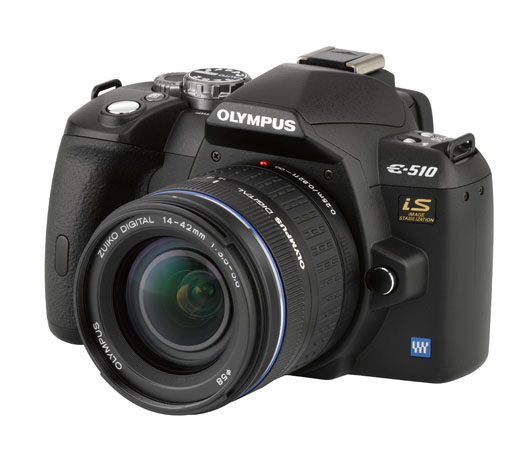
On September 24, 2007, I published my review of the Olympus E-510 DSLR, one of the first prosumer cameras on the market to feature Live View (TTL video preview, directly off the same CMOS sensor used for photographs). Unless people were to jump to conclusions, I wanted to make it clear that it won’t let you record videos — but I knew that market forces were aligning to bring some sort of video capability to DSLRs.
I myself was opposed to that idea. I thought it would bastardize a DSLR to make it record video. After all, a DSLR takes great photos, and it should only do that. I also thought that video camera manufacturers would squeeze photo-taking capabilities into video cameras, which would result in crappy photos being taken by gadgets that should have stayed video cameras. Well, I was wrong. I forgot all about how the market delivers what the consumer wants, and has a way of sometimes exceeding expectations.

Behold the Nikon D90. It is the first DSLR that takes video, and it’s not some low-res video that you can get from a point-and-shoot digicam; it’s 720p HD video. What’s more, it lets you control depth of field by manually adjusting the focus while shooting. Best of all, you’re already using a sensor that takes great photographs, and the expensive glass you already paid for. You don’t need to spend yet more money on a dedicated video camera. You get the best of both worlds: the interchangeable lenses of a DSLR, and the quality of a decent video camera.
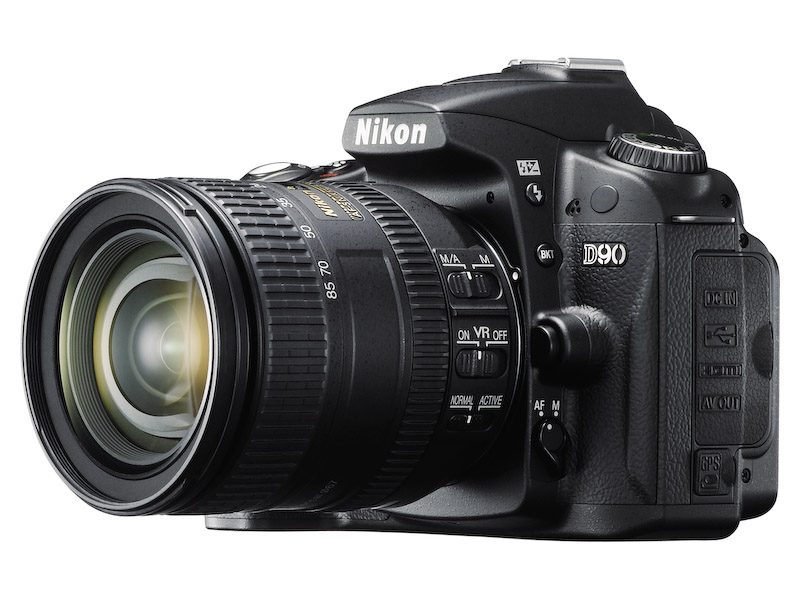
I am truly blown away by the D90’s specs. If I hadn’t already invested in the Canon 5D and Canon lenses, I would be sorely tempted to get the D90. I crave (badly) the ability to take quality photos and video with a single device, but unfortunately, up to this point, that was not possible unless I carried both a DSLR and a video camera.

As good as the D90 is though, it will soon be eclipsed. Why? Market forces. How long do you think it will be before we’ll have a DSLR that can record 1080p HD video? Or how about an even smaller and thinner DSLR than currently possible? How about a DSLR that looks and weighs about the same as a point-and-shoot, but gives you photo quality that’s equivalent to (or exceeds) today’s DSLRs? It’s all coming.

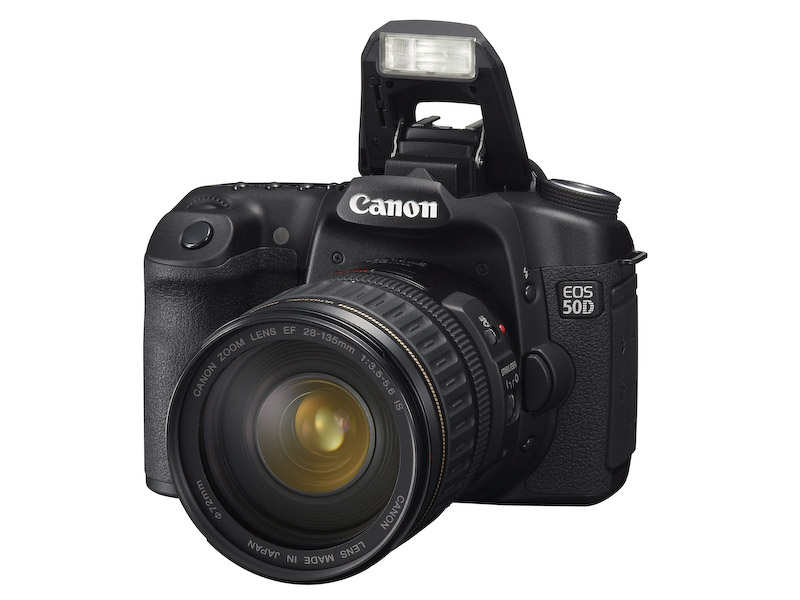
Let’s look at what’s currently available. First, we have the new Canon 50D. You may think it’s been eclipsed by the D90 or the D300, but you’d be wrong. You see, Canon took things further than I thought possible with it, by giving us 15 megapixels in a cropped (1.6x) sensor that also shoots (natively) up to 3200 ISO. I didn’t think that was possible on a cropped sensor. I thought 12 megapixels was the max at that sensor size. I was wrong.
You know where else I’ll be proven wrong? Back when I attended the Olympus E-3 launch party, I talked about the camera’s (somewhat) limited 10 megapixel resolution, and I thought they had reached the limitations of the Four Thirds 2x cropped sensor. I thought the sensor’s surface area was too small to get more resolution out of it. But now that Canon has proven you can get 16 megapixels out of a 1.6x cropped sensor, I don’t see why you can’t get 12 megapixels or more out of a 2x cropped sensor.

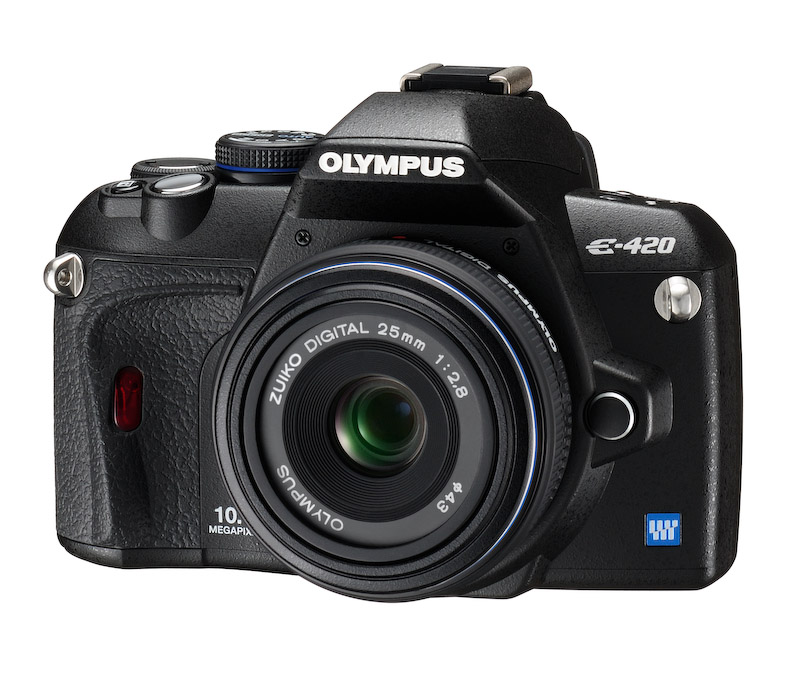
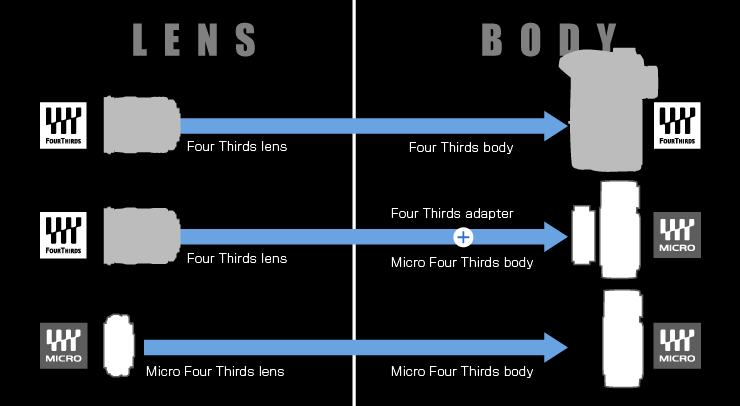
Here’s where I get to the last part, smaller and lighter DSLRs than currently thought possible. Currently, the smallest DSLR on the market is the Olympus E-420, pictured below. Do you know what the Four Thirds consortium has come up with? It’s the Micro Four Thirds standard, which allows for thinner, shorter lenses, and thinner, shorter camera bodies. A Micro Four Thirds camera will look and weigh just about the same as a point-and-shoot camera with a decent zoom lens.
Wait, it gets even better. The current aspect ratio of Four Thirds cameras is 4:3. The aspect ratio of Micro Four Thirds cameras will be 16:9. That’s the same aspect ratio used in movies. Where do you think that’s going? It means your photos and your videos will have the same aspect ratio, and the line between photography and videography will get even more blurred, and it’s quite possible that in the near future, we’ll have 1920x1080p HD video recorded by a tiny little DSLR with a tiny little lens on it.
That’s just what seems logical to me, and I’m a fairly conservative estimator. You wait and see what the market will do. We’ll have some very interesting DSLRs to play with in the next few years.

[Images used courtesy of Canon, Nikon and Olympus. ]
Standard
Thoughts

Dumping on the Poor: see the video

I wrote about the problem with e-waste and pollution in China back in April, but this topic is worth harping on every chance I get. It’s very serious, and it will affect us as well, in the very near future. The Earth is smaller than we think, and its ecosystem is fragile enough already.

Please watch the video entitled “E-Waste: Dumping on the Poor” (4 min 35 sec). It’s available on YouTube, and it was put together by a journalist called Michael Zhao, who took a trip to China and filmed what’s going on there. I found out about the video from an article in Time Magazine, entitled “Your Laptop’s Dirty Little Secret“. Michael has a website as well, called eDump. The full documentary he made is available here (20 min).

Standard
Reviews

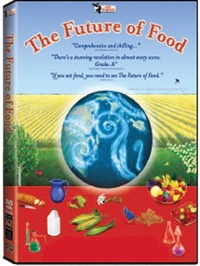
Watch "The Future of Food"

If you have not yet heard of a documentary called “The Future of Food” (2004), or haven’t yet watched it, please take the time to do so. It is vital that you know what’s going into the food that you eat, and it’s vital that you know it now, before it’s too late.

What’s been happening over the past 20 years here in the States is that our food supply has been slowly taken over by biotech companies who are interested only in their bottom line. They have used tactics akin to racketeering practices in order to get farmers to use their seeds and only their seeds. They have placed their executives in key government positions, in order to ensure that their policies go through. They have done and are doing everything in their power to get us to eat their genetically modified foods, without regard for safety, common sense, decency or ethics. I’m not saying this by myself. The documentary itself will prove it to you.

All that is bad enough, but what’s really appalling is that they are patenting genes. They have patented plant genes, and now they want to patent animal genes and even human genes. They are trying to get the market in their tight snare, so they can squeeze profits out of everywhere and ensure they control our food supply completely. They have even patented one of the genes involved in breast cancer, then sued researchers who had been doing working on it, to force them to pay exorbitant licensing fees. Needless to say, research on that gene has been significantly curtailed, directly due to their malefic influence. That’s the sort of “work” they engage in.

When I call them racketeers, I have a great frame of reference in mind. It’s a short crime drama made in 1936, entitled “The Public Pays“, which won an Oscar. It depicted a protection racket that preyed on the local milk distribution in one American city, and the people’s successful fight against them. The biotech goons may not beat up people and physically destroy their milk trucks and containers, but they have legal “procedures” which wield the same sort of power and yield the same horrible results. This time, they’re working hand in hand with specially-placed government officials who make sure the biotech rules get enforced and the little guys get screwed royally — not to mention that the consumers, and the marketplace in general, are manipulated to no end as well.

Don’t believe me? Watch the documentary. And if you can find “The Public Pays”, watch that as well and compare the two to see the striking similarities. What’s more, if someone can assure me that “The Public Pays” is now in the public domain, I’ll gladly post it online, either at Google Video or somewhere else.

As you get to the end of the “Future of Food” documentary, you’ll get heartened by the organic farming efforts, which are great, but keep in mind that Whole Foods now sells mostly non-organic fruits and vegetables, and also imports supposedly organic foods from China, whose food supply is so laden with pesticides it’s not even funny. Yet Whole Foods still dares to hold the same high prices on their stuff, which means they’ve cut costs and are pocketing the difference. Lesson learned: don’t shop at Whole Foods. Go to Trader Joe’s or MOM’s, if you have them in your neighborhoods.

Seek REAL organic foods, and make sure to vote with your wallets. Where you buy your food, and what sort of food you buy, determines our food supply’s future. Write to your congressmen and demand that the proposed law (introduced by Dennis Kucinich) to label genetic foods as such be finally approved.

My wife just chimed in with some great advice. It turns that while we wait for foods to be properly labeled as GM or not, there’s an easy way to tell already. Fruits and vegetables all have little stickers on them, with numeric codes (4 or 5-digit numbers). It seems that if those numbers start with 4, they’re conventionally-grown, but not genetically modified. If they start with 8, they’re GM — stay away from them! And if they start with 9, they’re organically grown and are safe to eat. Not sure if this is officially true, but she says that’s usually been the case, at least for the organic foods that she buys.

Here’s how you can watch the documentary:

  • Google Video (free, but quality isn’t that great)
  • YouTube (free, but in multiple parts): start here
  • Netflix (instant streaming, DVD quality, but requires subscription)
  • Amazon (you can purchase the DVD)

Standard
Thoughts

Taking foolproof photos

We read about software that can improve blurry photos these days, and about significant improvements to autofocus on even inexpensive cameras. We look at photos that we take, the washed out ones, and wish we’d have exposed them a little less, or a little more. We wonder how they can be improved.

My solution points to bracketing. This is a current feature on one of my digital cameras, the Panasonic Lumix FZ20. When switched on, it will take three photos with three different exposure times (high, medium and low). I only press the shutter button once, and get three photos from which I pick the best one. Of course, this series of photos can also be used to get high dynamic range (HDR) photographs through manipulation, but the point is, the consumer only needs to press the shutter once. That’s the key.

I believe eventually we’ll see cameras that integrate bracketing into every photo. They’ll not only vary exposure times but also focus. The process will be seamless to us. We’ll press the shutter button once, the camera will only seemingly take one photo, but when we get home and download the photos to our computer, our camera software will allow us to use slider controls to adjust the focus and exposure without damage to the photograph’s quality. We’ll be able to bring different elements in and out of focus, and make the photo brighter or darker, just as we please.

Standard
Reviews

Some really cool news and products

Wired News is running a great FAQ on Intel’s Dual Core processors – what’s on the market now, and what’s going to get here pretty soon. Bottom line – if you’d like some fast laptop processors, wait until the Merom line gets on the market, which will be late August. Perhaps some laptop makers (Apple included) will allow us to pre-order?

The Economist has an insightful article on the history of the PC and what awaits us in the future. Bottom line: some of the basic PC functions, like email and the web, are being relegated to other devices/appliances. The PC’s functions are changing, but that’s not to say its popularity is diminishing.

Western Digital has put out a new mini-HD called the Passport Pocket, at 6GB for $100, that can automatically sync itself to certain folders on your computer, will automatically encrypt the data, and will allow you to enter contact and reward info that will be useful in case you lose it. Only this information will be visible to strangers. Nice!

Merriam Webster has come out with a USB Dictionary and Thesaurus that they’re storing on a 256MB hard drive. The tool comes with a few freebies as well: a phonetic spell correction, a grammar guide, confusable word alerts, and a crossword puzzle solver. Alright!

You’ll finally be able to use that RDS function (RD-what?!) on your radio, with the Kensington iPod FM Transmitter with RDS. What this means is your car’s radio will now be able to display the artist and song info, so you won’t have to endanger yourself and others on the road by squinting at the iPod screen. Very, very nice!

Standard