Thoughts

The future is the past is the future

Back in late 2008, I heard of a technology that was touted as new: instant price matches, made available by scanning the barcode of a product in a store, through an iPhone app called Checkout SmartShop. I chuckled. This idea wasn’t new at all.

BarPoint

I worked for a company called BarPoint for a few months in 2000 or 2001, I can’t recall exactly. As you can see if you visit their domain name, it’s up for sale now. Back then, it was working just fine, and they were working hard to put together an online directory of products whose prices could be instantly matched from many stores. They even had gizmos with little barcode scanners you coud buy and carry with you to a store; they were little Palm PDAs outfitted with small add-on barcode scanners. These gizmos would connect back to the BarPoint servers via built-in dial-up modems, and would quote you prices from other stores.

BarPoint Wireless Devices

They had investors lined up, had cleared about two rounds of investing, had bonafide employees, etc. Unfortunately for them, it was the end of the dotcom boom. They were still burning through the cash and not generating any profits, because they didn’t get off the ground fast enough. I left as they started to cut employees. Other co-workers hung on through a company move from nice offices in downtown Ft. Lauderdale to a warehouse in Deerfield Beach (both in South Florida), and many efforts to revive the company. Things didn’t work out for them. You’re welcome to follow the site’s progress and slow death on the Internet Archive’s Wayback Machine.

What is obvious now is that they had two things going against them: the idea was ahead of its time, and the market crashed. Back then, this wasn’t so obvious. People thought the idea was cool and wanted to make it work. I thought it was cool and even thought they might somehow pull it together and start making profits, even after I left. I bought some stock in the company, only to watch its price sink to very near $0 over time.

The interesting thing about the iPhone is that it’s truly a game-changer. It penetrated the market quickly, and app development for it is so easy that you don’t need an army of people, like BarPoint did. You also don’t need to sell the devices, or worry that device adoption is reserved for a very small segment of the market. The iPhone is practically everywhere. I don’t even know if Kigi Software, the makers of the Checkout SmartShop, is a real company, or a dba name for one or two smart developers working from home. But that’s what’s cool about these times. The price for bringing an interesting product to the market is no longer prohibitive, like it was for BarPoint. Almost anyone can do it if they want to, nowadays. And the end product is something that kicks BarPoint in the rear quite effectively.

You simply enter the barcode into the iPhone using the numeric keypad, and you get instant price matches. Voila.

Enter UPCGet online price quotes

You can even find out where the product is being sold in other local stores, or read online reviews. It does everything the BarPoint product would have done if it could have gotten off the ground.

Get local storesGet reviews

Very nice indeed.

Standard
Thoughts

Another point of view about ferryboats

Nowadays, people think a ferry is a romantic way to get over a river, but in the 1930s, during the Great Depression, people used to think otherwise.

A ferry ride

A ferry ride

For a great look back in time, watch “Bridge Ahoy“, a Popeye cartoon released on May 1, 1936. In it, Bluto overcharges passengers for rides on his ferry, so Popeye, Olive and Wimpy decide to build a bridge and let people cross the river for free.

You see, when you’re the only way to get across a river, you’ve got a monopoly. You control the market and set your own price. Before monopoly laws, it’s probably what happened with ferryboats, and it didn’t sit well with the cash-strapped folks of the mid-1930s. If we had only ferryboats to get across rivers nowadays, we’d no doubt share the same feelings.

Things worked out in the cartoon and the three delivered a bridge made to order. Everyone was happy except Bluto, the ferryboat owner, which was as expected.

Of course, if we carry this solution over to modern times, it breaks down right away. You see, we get charged to go over bridges nowadays. Kind of makes the point of building a bridge to avoid ferry tolls moot, doesn’t it?

Standard
Events

The Atlantic Cable – Eighth Wonder of the World

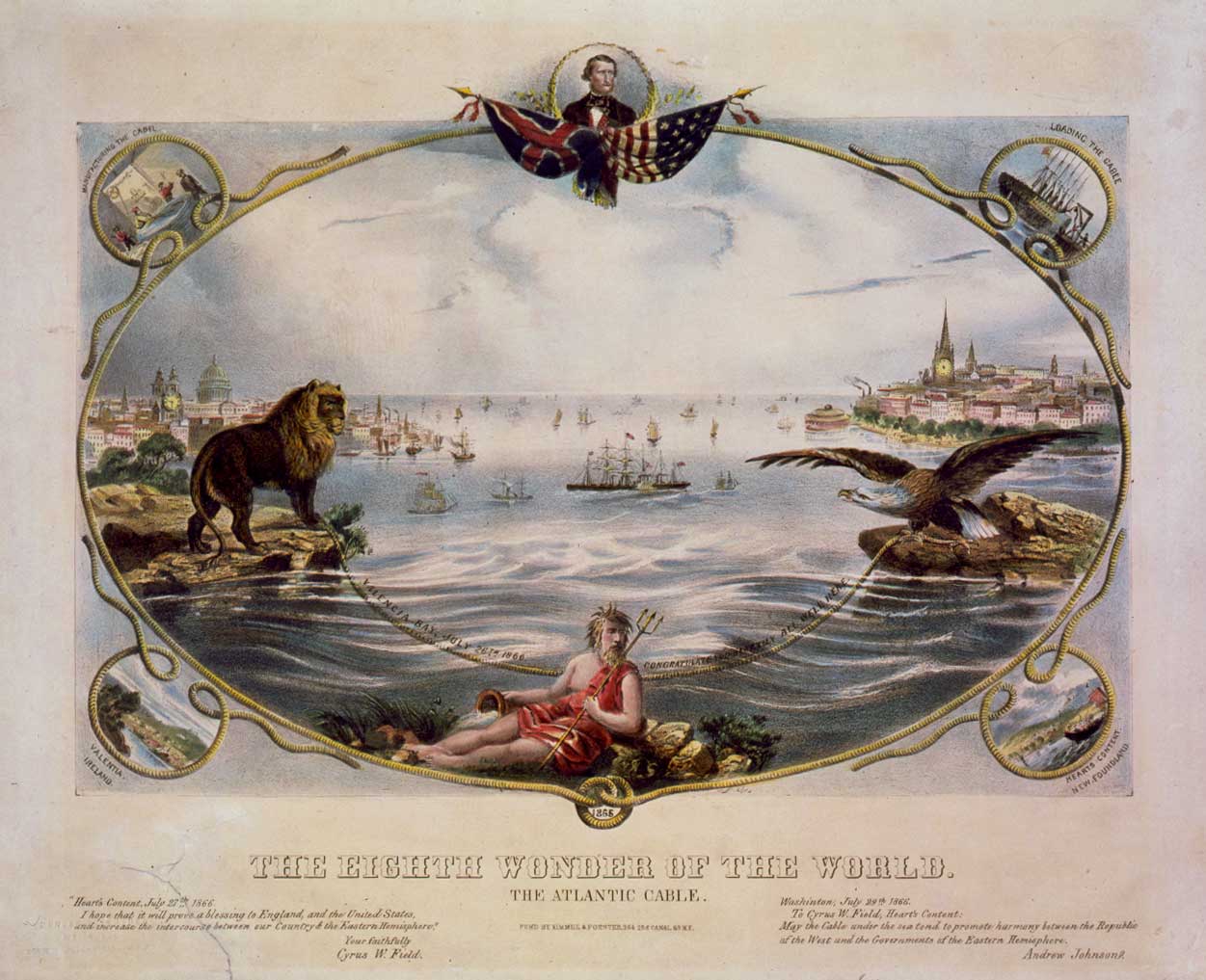
In July 1866, after the successful completion of the project which undertook to lay a single undersea cable through the North Atlantic, from Newfoundland to Ireland, this following commemorative print was created:

The Eighth Wonder of the World

The Atlantic Cable was the idea of the New York merchant and financier Cirus W. Field, who wanted to communicate with Europe in hours, not weeks, and in 1854, conducted the first trial of laying a 2,000 mile cable between the US and Europe. The first three attempts were not successful, but in 1866, his persistence paid off, and his cable worked. Needless to say, he was showered with due praise and honors for his efforts — one of them being this print.

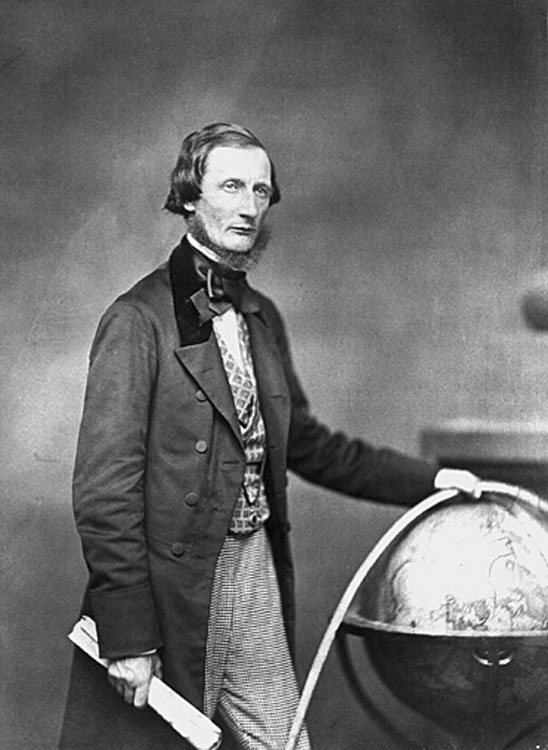
When you look at Cirus W. Field, the man, he wasn’t that imposing. He seems to have been of average height and thinner build, and yet, this is the man that laid the foundation of long-distance communication. Isn’t it wonderful what one person can achieve if they set their mind to it?

Cyrus W. Field, as photographed by Mathew Brady in 1958

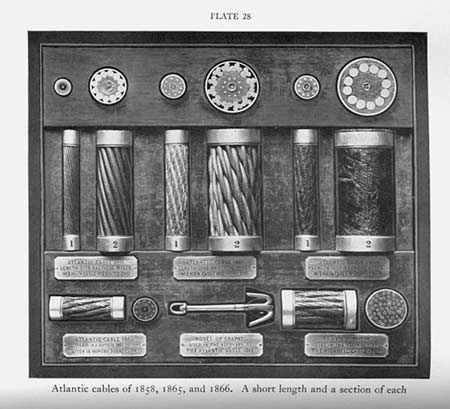
Just how did those trans-Atlantic telegraph cables look? You can see longitudinal and transverse sections of each size in this print:

Samples of the Atlantic cables used in the 1800s

The cables are quite complex, as you can see above. When you think that 2,000 miles of these cables had to be made, from scratch, in the mid 1800s, it’s no wonder they were at the time called the Eighth Wonder of the World.

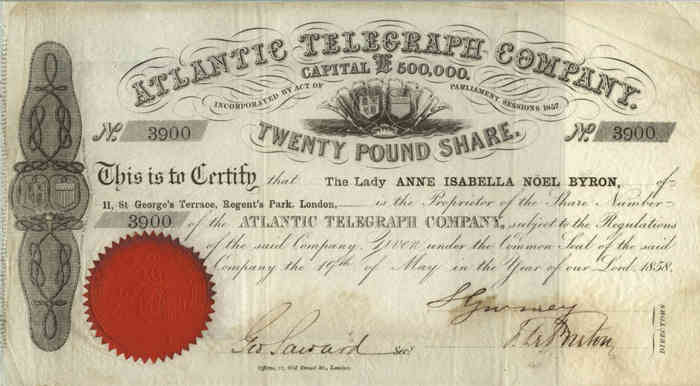
The failures to lay working cables before 1866 attracted controversy. You see, Cyrus Field didn’t finance the matter himself. He’d have been bankrupted many times over. He used other people’s money by selling shares in the venture. Here’s one such stock certificate, sold to Lady Anne Isabella Noel Byron, Lord Byron’s widow. This certificate lost most of its value after the failure of the 1858 cable, then became worthless until the formation of the companies which handled the laying of the 1865 and 1866 cables.

Atlantic Cable Stock Certificate

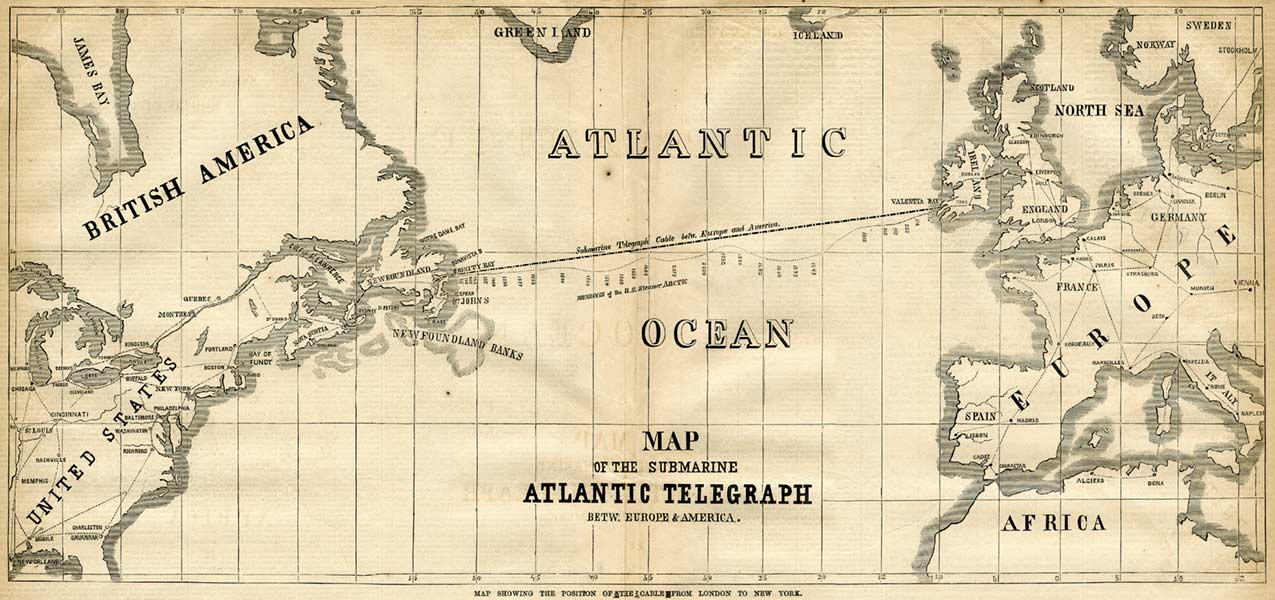
The route of the 1858 cable can be seen in the map included here:

1858 Telegraph Cable Map

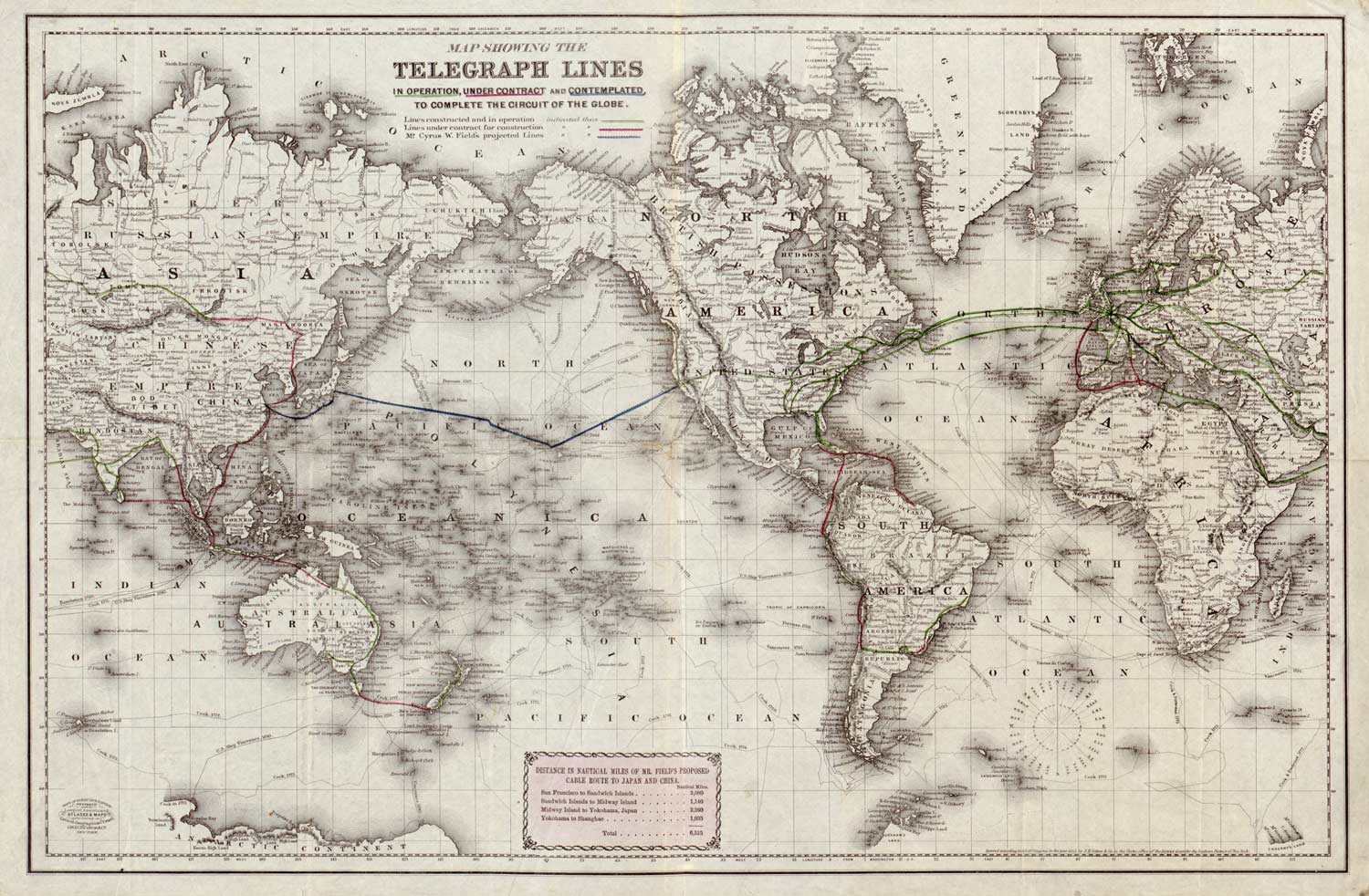
The routes of the cables available in 1870 can be seen on this map:

1870 Telegraph Cable Map

Pause here for a bit and think about this: in the late 1800s, these were all of the communication routes available in the entire world. That was it. There was no internet, no telephone, no TV, no radio, only written letters and telegraph. Oh yes, they also had Indian smoke signals, but they weren’t as widely used, and those communication lines aren’t marked on these maps as each transfer hub was assembled and disassembled on the fly.

It’s easy to complain about how much faster and more reliable our Internet access could be, but the fact of the matter is that we’ve made amazing strides in communication over the past century and a half. As I write this, I’m sitting at a desk in a village in rural Dobrogea, Romania, and am storing these letters or bits or whatever you want to call them on my server back in the United States, instantly, each and every time I press the “Save Draft” button in my WordPress Editor. That’s amazing, in and of itself.

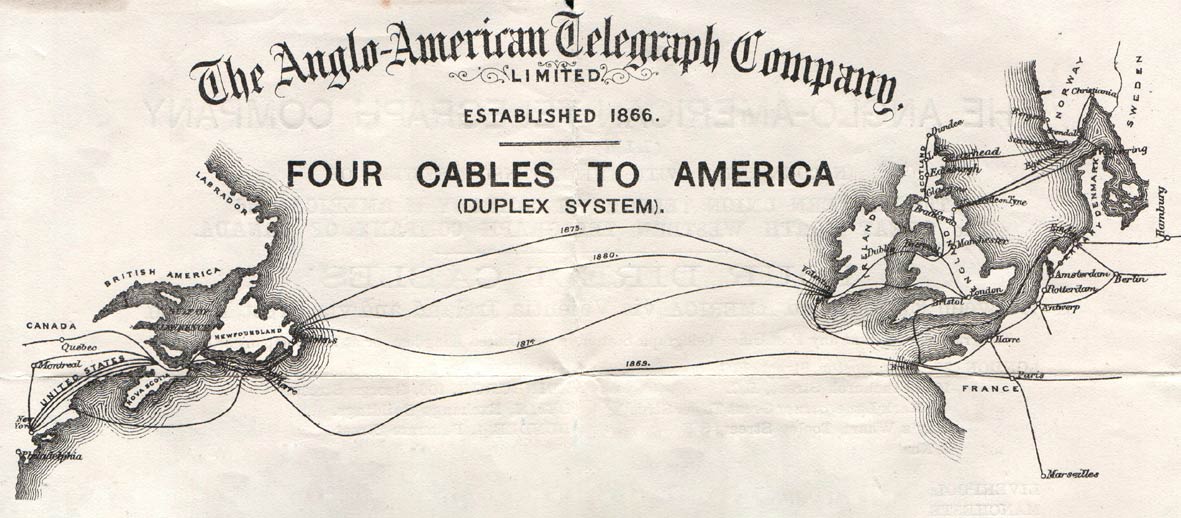
Let’s fast forward and see how fast things progressed from that single cable laid in 1866. By 1880, there were four cables already.

1880 Telegraph Cable Map

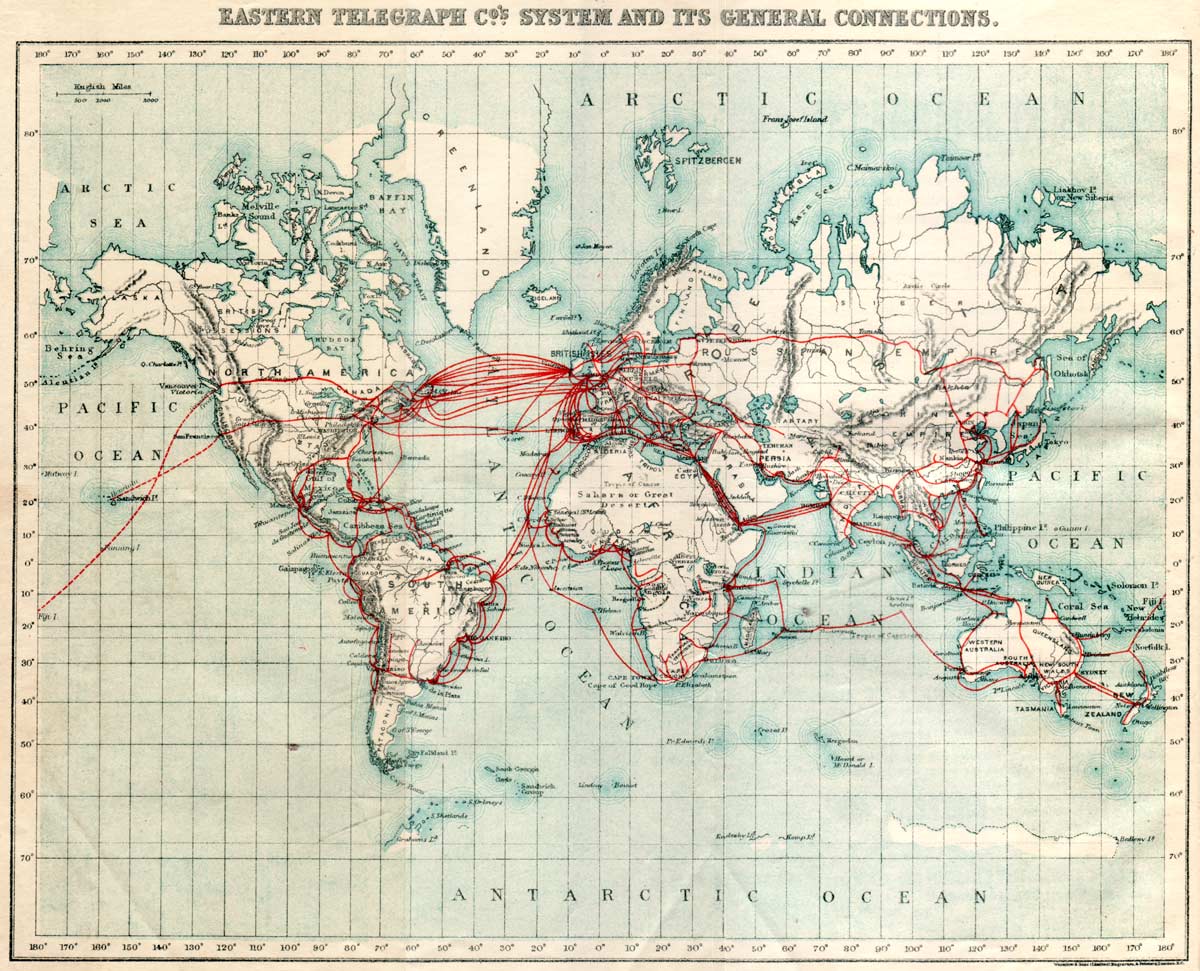
By 1901, there were 14 cables. That’s right, fourteen, from four just 20 years earlier.

1901 Telegraph Cable Map

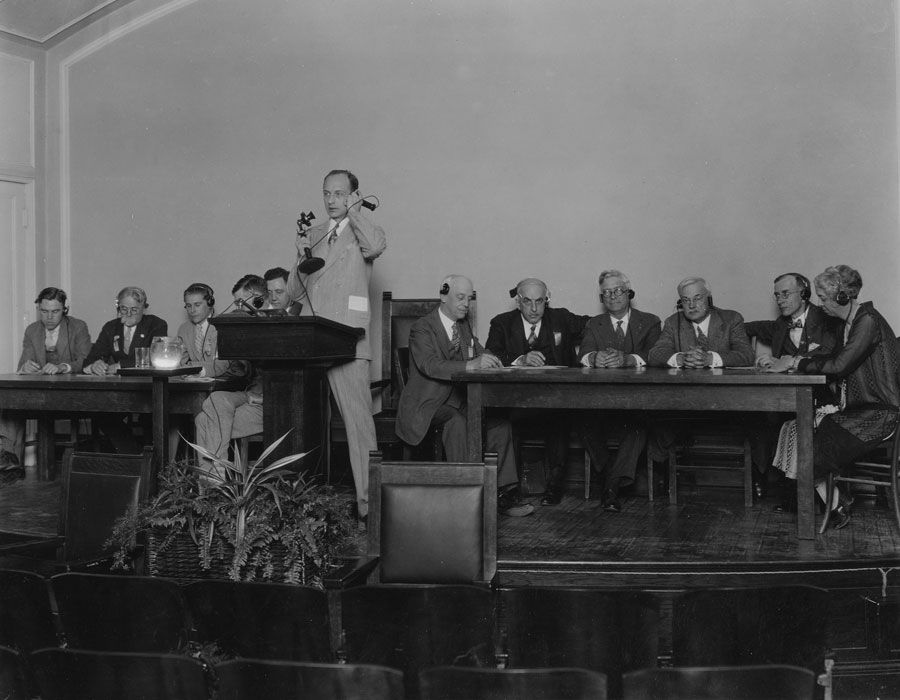
Although trans-Atlantic telegraph communications progressed quite fast, the first trans-atlantic telephone call did not occur until 1927. It was made from Columbia, Missouri, to London, lasted six minutes and cost $162, which was quite a large sum for that time.

The first trans-Atlantic telephone call, in 1927

Just think, now we can talk anywhere in the world for pennies a minute, or do audio or video chats with applications like Skype or iChat for free. We sure have come a long way!

Sources

Images used courtesy of the History of the Atlantic Cable & Undersea Communications and Missouri School of Journalism Archives.

Standard
Thoughts

Speak softly and… what's that?

I guess when Theodore Roosevelt uttered his now famous phrase, “Speak softly and carry a big stick; you will go far,” he might have been thinking about something like this:

Punt Gun -- Washington, DC

It’s a punt gun. It would not have been used like pictured in the photo above, because the recoil action was too strong. It would have knocked both men on their backs and possibly dislocated the shooter’s shoulder.

There’s a demo video of one of these monster guns in action on YouTube. I recommend you see it to get an idea of the damage it can inflict. It was apparently used for shooting flocks (that’s right, entire flocks) of birds while mounted to the bow of a boat.

[via Shorpy]

Standard
Places

Munich's New City Hall VI

I'm using "new" in a relative sense here, since it's several centuries old. The fantastic city hall tower contains the famous Rathaus-Glockenspiel. We see it here from below, looking up toward the top.

I'm using "new" in a relative sense here, since it's several centuries old. The fantastic city hall tower contains the famous Rathaus-Glockenspiel. We see it here from below, looking up toward the top.

Standard