Events

The Olympus E-3 Launch Party

Back on August 15, I wrote about the “new E-1”, the Pro DSLR from Olympus that would replace the existing E-1. I had the wonderful opportunity to attend the launch party for that new DSLR, officially called the E-3, on October 16. The party was held at the Museum of Natural History in NYC, and it started at 5:30 PM EST.

This post is rather long, so I thought I’d summarize it for your benefit:

  • First part: my thoughts on the event and the E-3, with photos of the camera
  • Second part: video from the event
  • Third part: my photos from the event

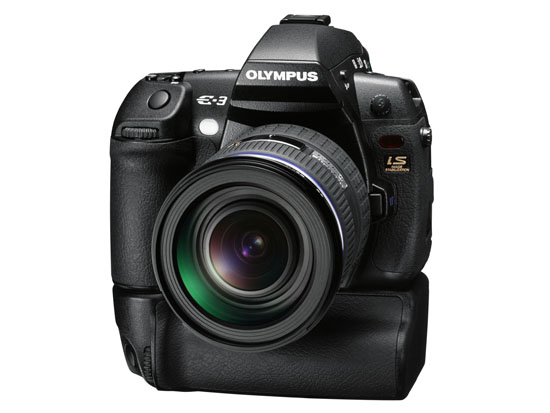
Olympus E-3 DSLR (front view with battery grip)

I was impressed with the quality of the event. Olympus rented an entire wing at the Museum of Natural History, and set up stations where we could talk with specially-chosen pro photographers about the E-3 and try out beta units of the camera. (The firmware isn’t yet finalized, so actual review units weren’t available.) There were food and drink bars (the cheese was fantastic) and all sorts of other goodies were spread all around (like a timeline display of all of the representative Olympus digital cameras, starting with their first model, and ending with the E-3). The event went nicely according to plan, and there was even a drawing where a lucky winner got an E-3 Pro Package (camera, speedlite, lenses, etc.) plus an all-expenses paid trip to India with one of the Olympus pros. I didn’t win it, unfortunately.

The atmosphere wasn’t one of hard sell. I could chat at ease with photographers and relax while looking at slideshows of photos taken by the pros or snacking on food. Ligia and I enjoyed ourselves. The weather was gorgeous. It had been sunny all day, and as evening descended on the city, the sky stayed clear, and a cooler breeze made it feel like a proper autumn night.

The E-3 surprised me in several ways:

  • It didn’t differ much from the concept photos I’d seen earlier, which was interesting. It means Olympus had been working on it for a long time, pretty much had the form factor down, and were simply perfecting it.
  • It was bigger and heavier than I expected. Having worked with the E-500, E-510 and E-410, I expected the body to be lighter and smaller. It wasn’t. The weight of the E-3 is exactly the same as the weight of my Canon 5D: 810 grams. It’s also as big as my 5D – actually, a little taller.
  • It felt very solid. When I gripped it, there was no mistaking it: I held a Pro DSLR in my hand.
  • The ISO sensitivity went all the way to 3200. What’s more, the camera’s Auto ISO function also varied the ISO from 100 to 3200. That’s a rarity. There’s usually an upper limit (something like 800) to Auto ISO on other cameras.
  • The camera uses an 11-point AF system. I complained about the 3-point AF on the E-510, and it looks like that’s not a problem on the E-3. It could focus very fast in lower light conditions, even at f/4.
  • The CMOS resolution is 10.1 megapixels. I honestly expected it to be 12 megapixels, just because everyone is pushing the envelope on resolution these days. I have a feeling this may be a limitation of the sensor’s surface area. The more megapixels one crams onto a sensor, the more chance there is for noise in lower light. It’ll be very interesting to watch and see how Olympus deals with the need for increased resolution in their Four-Thirds system.
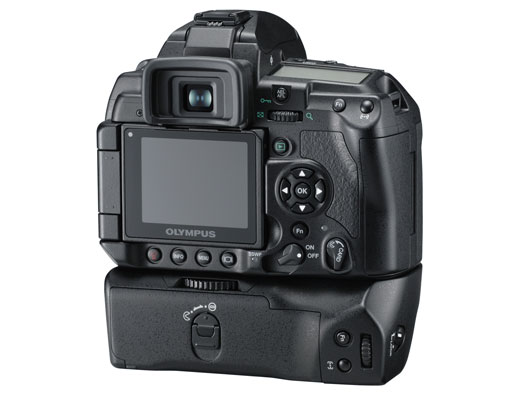
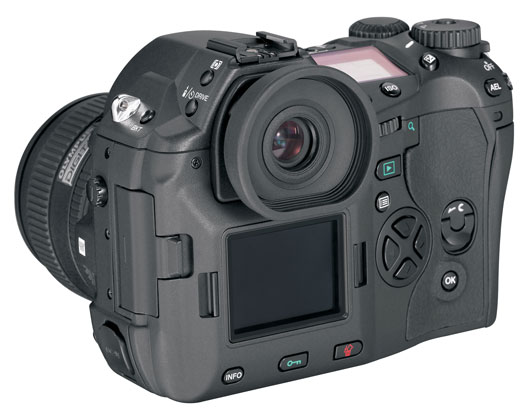
  • The LCD screen swivels out, just like on the E-330.

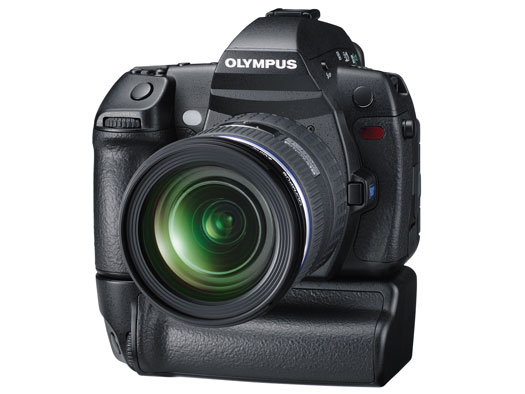
Here are some more photos of the E-3, from various angles. The E-3 was launched with a brand new lens, the 12-60mm f/2.8-4. The effective focal range of this lens is 24-120mm, because of the 2x crop factor of the Four-Thirds system sensors.

I didn’t get a chance to play too much with the controls on the camera. One thing to say here is that Olympus built in a lot of buttons to allow for one-touch access to the camera’s most-used functions. I did find it a bit awkward to change the mode and ISO settings. To change the mode, I had to press the Mode button on the camera’s top left side, then rotate the back dial. To change the ISO, I had to press the ISO button on the top right of the camera, then rotate the front dial (located underneath the ISO button). Both movements felt odd, and I wondered how this would work out in the field.

To be fair, I don’t know if that was the right or only way to change those settings, and I can’t really judge the placement and ergonomics behind the controls after only a few minutes of trying out the E-3. I did like the idea of having two dials, one for the thumb and one for the index finger. I look forward to trying out a review unit for my usual 30 days, and then deciding if the controls work well or not.

I took a few photos at high ISO (1600 and 3200) and was pleasantly surprised by the low noise visible on the camera’s LCD screen, even at f/4. Since I used my own CF card to take the photos, I really looked forward to examining those photos closer when I got home. Unfortunately, one of the Olympus representatives present at the event saw me do it and erased my card. His reasoning was that the camera’s firmware is not yet final, and he didn’t want me to get the wrong impression about the E-3’s capabilities. Sounds logical, and he apologized profusely, but I still couldn’t help feeling it was a pretty stinky thing to do to me, right after I’d talked with an Olympus engineer from Japan who had no problem whatsoever with the photos I’d taken, and who actually encouraged me to go home and have a look at them on my computer. I have to say I was pretty disappointed about that, but I didn’t let it ruin my evening.

Olympus launched three new lenses with the camera. Two were new (12-60mm f/2.8-4 SWD and 14-35mm f/2.0 SWD), and one was re-engineered (50-200mm f/2.8-3.5 SWD). They also launched a re-engineered FL-50 speedlite. I realized once more the big advantage of the Four-Thirds system when I looked at their lens line-up, which was on display at the event. They have a 150mm f/2.0 lens, and a 300mm f/2.8 lens. You may not think that’s much until you realize their crop factor is 2x. That means that they’ve really got a 300mm f/2.0 lens and a 600mm f/2.8 lens. Let that sink in for a bit. That’s pretty spectacular. No one has lenses with that focal reach and at that large aperture on the market. To think that you can get f/2.8 at 600mm effective focal length is mind-boggling to me. Wow.

Overall, the E-3 is truly the new flagship camera from Olympus. It represents the culmination of their efforts in many areas: the Four-Thirds system, AF, durability, ruggedness, optics and image processing. Now that it has arrived, I’m sure many people, including myself, can’t wait to try it out and see what it can do.

I put together a short video (about 4 minutes) of the party. It ends with the lens line-up and a cross-section of the E-3 with the 12-60mm lens mounted on. It’s pretty cool, and it gives you a unique look at the camera from the inside out. You can watch it below or here.

I’ve also got more photos from the event below. They were not taken with the E-3 (for the reason given a few paragraphs above). They were taken with my Canon 5D.

There were some really, really cool ice sculptures on display at the event. There was even a bar made out of ice, with the Olympus logo embedded in it.
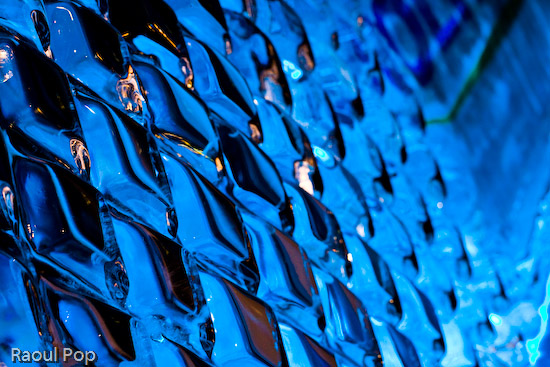

Rhomboid

Mellow yellow

Ice sculpture

The guts of the E-3 were on display.
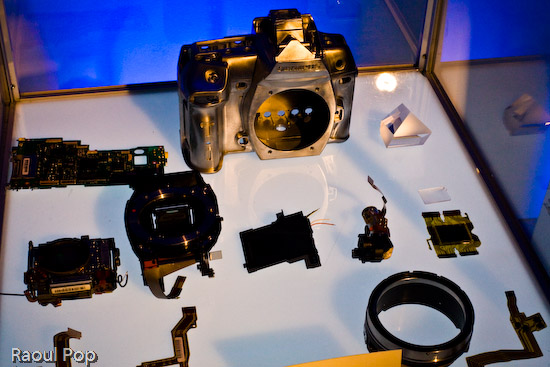
The components of the E-3 DSLR

Gene Hirschel of Internet News was there. I met him at the previous Olympus PR event, which announced the E-510 DSLR.

Gene Hirschel

John Isaac is one of the Olympus Pro photographers, and he’s currently specializing in wildlife. He worked at the UN for 30 years as an official photographer.
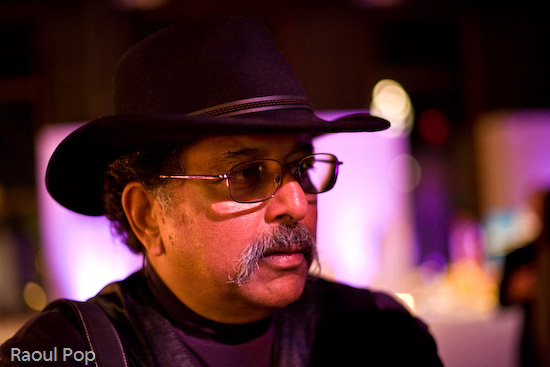
John Isaac

The man below is the sculptor of the many amazing crystal figures on display at the event. I have a photo of one of them below, and they’re also featured in the short video I made. I’m terrible with names and I didn’t catch his.

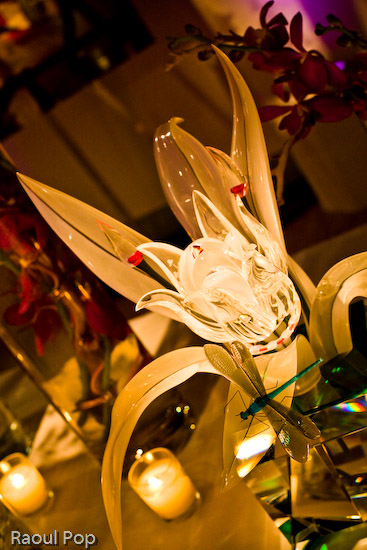
Crystal sculptor

One of the crystal sculptures

Guess who took this photo of us? It was Anne Day, and she used my 5D. I consider it a privilege, especially after I saw some of the other people whose photographs she’s taken. Have a look at her site and see what I mean.

Ligia and Raoul

Here’s Anne Day in person:

Anne Day

I took this as I rested on a table, watching slideshows of travel photography. The blue light of the LCD projected reflected in my glass of tonic water.
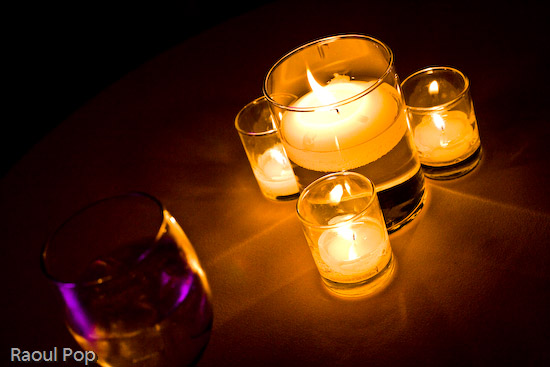
A glass of tonic water by candlelight

I caught Ligia thinking about something when I took this.

Ligia

If you thought Ligia’s photo was out of focus, you’re going to get a real surprise out of the next one. The thing is, I LOVE out of focus photographs. There’s a certain sweet spot that varies with lighting, distance and focal length, but if you get it just right, the colors really pop, and the shapes become very interesting. These are people at the launch party. I’m probably going to share more of my out of focus photographs in the near future. I’ve been accumulating a lot of them within the past several months.

People at the launch party

To demonstrate the E-3’s dust proofing, they buried two cameras in sand. They’re supposed to still work without any problems after this happens to them. I didn’t try them out, but it’s very likely that they worked just fine afterwards.
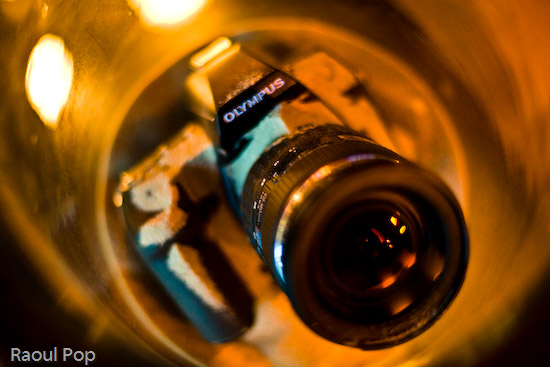
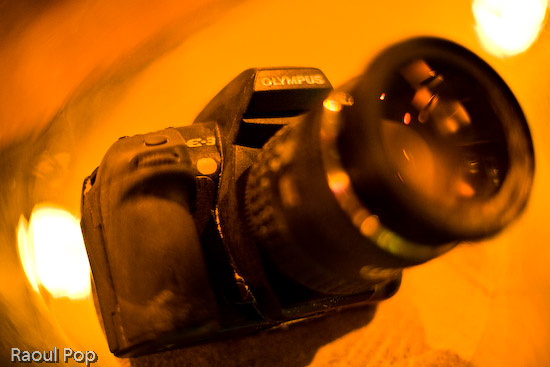
Olympus E-3 buried in sand

Olympus E-3 buried in sand

Gary Kralle (one of the other Olympus Pros), John Isaac and a friend were talking when I took this photo. Gary came up to me afterwards and we chatted a bit about cameras.
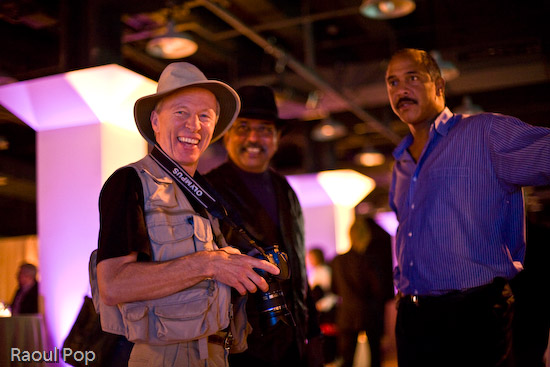
Gary Kralle, John Isaac and friend

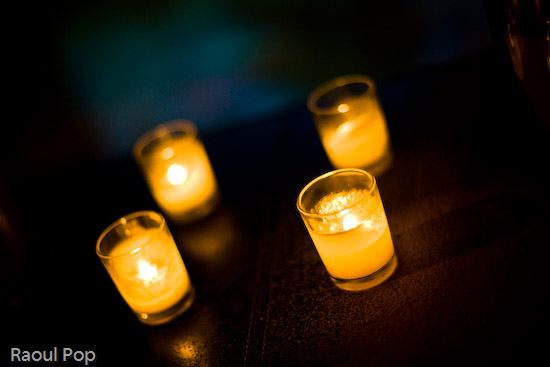
I love abstract shots that emphasize bokeh. Here are a few that I took at that night.

Grow

Cactus

Four lights

When we left, there were swag bags ready for us. Here’s what was inside: a travel document holder, a pen, a paperweight, a coaster, and lots of details on the E-3. All were emblazoned with the Olympus logo. Pretty nice!
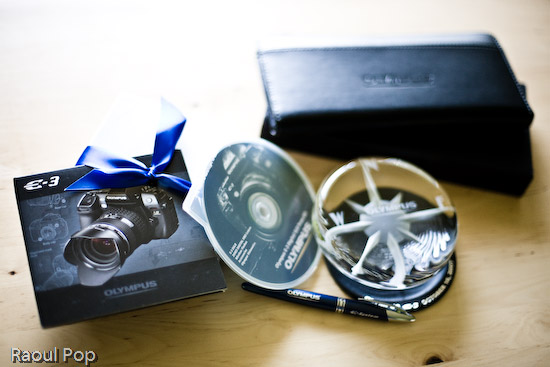
Swag from launch party

Michael Bourne, thank you very much for the invite! I look forward to reviewing the E-3 properly when it becomes available.

More information:

Standard
Reviews

Camera review: Olympus EVOLT E-510 DSLR

Back in August 1st, Olympus PR invited me to attend the Legg Mason Tennis Classic here in DC and shoot with their new DSLR, the EVOLT E-510. I enjoyed myself thoroughly at that event, and my thanks go out to Michael Bourne from Mullen, the agency that handles the PR for Olympus.

When I arrived there, I was given a review kit for the E-510, containing the camera, the FL-36 speedlite, and the two-lens kit (14-42mm and 40-150mm). For my review, I did what I usually do: I used the review unit as my primary camera for a month, taking note of the experience. What you’ll get now are my impressions of the camera, after taking thousands of photographs with it in various light and weather conditions, indoors and outdoors. You can choose to watch it below or here, and to download it as well. My full written review is enclosed below as well.

The E-510 is a prosumer camera made to be portable, affordable and easy to use. The E-510, a 10-megapixel DSLR, is smaller and lighter than its predecessor, the E-500, which I reviewed this past January. Even though it’s smaller, the grip was designed so well that I could hold the camera comfortably, without missing the heft of the E-500 or that of my personal camera, the Canon 5D. (I like my cameras a little chunky, they’re easier to stabilize that way.) The E-510 was even lighter than I thought with a lens mounted on it. The two-lens kit includes two premium lenses designed for travel and portability. They’re incredibly light given their focal range. I expected the 14-42mm lens to be light, but I was blown away by how small and light the 40-150mm lens was. Olympus really did an amazing job with the lenses and the camera when it came to portability. The whole kit (camera, lenses, speedlite and charger) was so light I could carry it anywhere very easily. I could run with it and barely felt its weight — as a matter of fact, I did just that on a couple of hikes through the forest.

The thing to remember when looking at focal lengths with any Olympus DSLR is that they’ve got a 2x crop factor. It’s because they use the 4:3 standard, which specifies a sensor size of approximately half the dimensions of a full frame sensor (17.3 mm vs. 36 mm and 13 mm vs. 24 mm). This means the surface area of the sensor is 1/4th that of a full frame sensor. It also means you need to multiply the focal length listed on each lens by two in order to get the effective focal length. If the math is a bit confusing, just keep remember the crop factor and you’ll do fine.

To illustrate this, let’s look at the two kit lenses. The wide angle zoom, 14-42mm, yielded an effective focal range of 28-84mm. The tele zoom, with a 40-150mm range, yielded an effective focal range of 80-300mm. Now do you understand why I was amazed by how light and small the lenses were? Try finding an 80-300mm zoom lens from another DSLR manufacturer, and I guarantee you that it won’t be this small and light. Olympus can accomplish this because of their sensor’s form factor. It’s a small sensor, 1/4th the surface area of a full frame sensor. That means they need less glass in the lenses, because there’s less sensor to cover with the glass. Because there’s less glass, the lenses are easier to make. You get the same optical quality, but the lenses are cheaper, lighter and smaller.

As long as I’m talking about the sensor, I should mention that it’s a Live MOS, which gives it the ability to do Live View (it lets you compose photos on the LCD instead of the viewfinder). There is a slight delay between the time that you press the shutter button and the photo is taken when using Live View. The advantage is that you can zoom into the photo up to 10x, on screen, and make sure your focus is tack sharp. This is particularly useful for macro photography.

If you’re graduating to the E-510 from a point and shoot, you may say “Big deal, I’ve composed photos on the LCD screen all along. What’s the difference?” Well, the difference is huge. Until Olympus introduced Live View, no other prosumer DSLRs on the market offered it. The mechanisms were much too complicated. Because CCD sensors were in use on most DSLRs until recently, separate CMOS sensors would have needed to be installed in the camera, and light diverted to them with additional mirrors. As a matter of fact, Olympus’ first Live View DSLR, the E-330, functions through that mechanism. Things there are complicated, and the potential for breakdown is increased. But with the introduction of the E-410 and E-510, Olympus switched to CMOS sensors altogether. This allowed them to use the same sensor for both photographs and Live View, dramatically simplifying the mechanism involved. Other camera manufacturers soon followed suit, and now we have both Canon and Nikon DSLRs with the same capabilities. Nikon also switched from CCD to CMOS sensors in their recent DSLRs, the D300 and D3.

To get back to Point and Shoot cameras, they use CCD sensors. That means they have little rinky-dink CMOS sensors hidden away next to the CCD sensor, and they use those to let you compose on screen and record movies. But those tiny sensors have pathetic imaging capabilities, and understandably so. By and large, Point and Shoot cameras are small and inexpensive. Manufacturers can’t afford to cram expensive components in there. Not so in the E-510 and other DSLRs that have Live View or its equivalent. They use the same large, expensive sensor for everything. While they won’t let you record movies, they will allow you to see very accurately what your camera sees, directly through the lens, and will automatically compensate for aperture, shutter speed, ISO and white balance settings so you can see how a photo will look before you press the shutter button.

The camera also features Olympus’ SSWF (Super Sonic Wave Filter) technology, which shakes dust off the sensor. Olympus was the first company to introduce this feature, and other DSLR manufacturers only recently introduced similar technology on their cameras. The SSWF light is located next to the shutter button on top of the camera, and it flashes blue when it’s active. I can tell you that it does work. I did not have to sit there with the Heal tool, removing dust spots from the photos taken with my E-510, whereas I have to do that on a regular basis when I take photos with other DSLRs.

Another important feature built right into the camera is the sensor-shift image stabilization. It stabilizes the image by shifting the sensor on both the X and Y axis (horizontally and vertically). You can hear it working on longer exposures. It works pretty well. But don’t forget to switch it off when you mount the camera on a tripod, otherwise you’ll get blurry photos. This is a pretty common bug with image stabilization technologies, and it doesn’t matter when they’re built into the camera or the lenses. When the camera is kept very stable, they go nuts trying to stabilize what doesn’t need to be stabilized. The end result is a blurry photo. So switch off the IS.

The advantage of in-camera stabilization versus in-lens stabilization is that it’s cheaper over the long term. You can use any sort of compatible lens (older or newer) with that camera, and you’ll be able to take advantage of the image stabilization with every single lens. That’s not the case with in-lens stabilization, which, as its name implies, is located in the lens. That means each of those lenses will cost more, and their cost adds up as you buy more of them. To be fair, it seems that in-lens stabilization works over a greater range of f-stops in real-life use than in-camera stabilization. But you can’t argue with the price difference, and the results are pretty good, too.

The photo you see here was taken at a shutter speed of 1/13th of a second, as I was bent over a brook, looking at a crayfish. If you take photographs yourself, then you know that you can’t keep your body very stable when you’re bent over, unless you’ve stabilized yourself somehow, which was not the case here. Yet that photo came out clear and sharp, even at 100%. The water even managed to look a little oily, which only happens with longer exposures.

Other useful features of the camera are the many scene modes, and the ability to write to CF, Microdive and xD cards. To find two-card slots on other DSLR brands, you have to look to the professional models (over $4,000). Yet Olympus includes that option on the very affordable, prosumer-oriented E-510. That’s a really nice touch.

The E-510 uses the new TruePic III image processor, which gives better colors and more accurate skin tones. I found that to be true as I used the camera. Where I found this image processor similar to the TruePic II (used in the E-500) was in the auto white-balance, which tended to err on the side of colder color temperatures. Thankfully, I shot in RAW, so I was able to adjust the WB in post-processing, but those shooting in JPG mode may want to be aware of this and adjust the White Balance accordingly before using the camera. Personally, I prefer cameras that err on the side of warmer color temperatures (but not too warm, because that can get pretty ugly). My Canon 5D does a great job with the auto white balance. But I expect that from it. It cost three times as much as the E-510.

The autofocus still uses only three focus points, and yes, that makes a difference. I found it to be slower than autofocus on cameras that use more focus points. It tended to hunt sometimes, even in broad daylight. But overall, it worked pretty well, and the focusing delay wasn’t significant.

Battery life is advertised at 650 shots per charge. In practice, I found that I got about 800 shots per charge. Maybe that’s just me. I always seem to get more shots per charge than the specs.

I use Adobe Lightroom to post-process all my photos, regardless of what camera I use. I noticed that RAW files created by Olympus cameras (both the E-500 and E-510 are subject to this), take longer to load fully in Lightroom than RAW files created by Canon cameras. I’m not sure why this is, and whether it occurs with other workflow-oriented applications, like Aperture, but I thought it worth mentioning. Just in case you’re wondering, I did upgrade to the latest version of Lightroom as of this date, which is version 1.2.

Sensitivity to low light was a point of contention in my review of the E-500, where I noted the CCD sensor was prone to lots of chroma noise at higher ISO. Presumably, the Live MOS sensor of the E-510 has better low light performance and generates less noise. In terms of ISO speeds, it goes from 100-1600, like the E-500. I did find less chroma noise when I used it. Luminance noise was about the same, perhaps a little more, but that has to do with CMOS sensors in general.

Basically, I can’t give you a definitive opinion on the camera’s low light performance. The two kit lenses that shipped with my review unit were too slow to properly judge how this camera does in low light situations. The 14-42mm lens was f/3.5-5.6 and the 40-150mm lens was f/4.5-5.6. To judge a camera’s performance in low light, you’d need faster lenses, ones that can open up to at least f/2.0. Ideally, the lenses should open up to f/1.8, f/1.4 or f/1.2. I asked Olympus to send me such a faster lens, but they weren’t able to do that within the review period. As I told them, I’d be glad to test the camera with a fast lens if they can arrange it at some point in the future, and report on my findings.

It wouldn’t be fair if I didn’t also show you some more photos taken with the camera. They’re enclosed in the photo gallery above. You can also view all of my published photos from the Legg Mason Tennis Classic, which were all taken with the E-510.

The E-510 is a great all-around DSLR. It’s light, affordable, packed with features and options, and it will help you get great photos. I would definitely recommend it to someone who’s looking to purchase a DSLR and lens kit for well under $1,000.

More information:

Standard
Reviews

Camera preview: Olympus E-3 DSLR

Olympus has been working on their new flagship DSLR, the “new E-1”, now called the E-3, for some time, and word is that it’s going to be launched later this year, possibly in November, or sooner. I’ve seen some concept photos of the new E-3 body, and it looks pretty sweet. They’re not the final version of the camera, but still, I think the E-3 will look pretty close to the photos you see below.

New E-1 (side)

At the Olympus press event I attended on 8/1, I got to play with an old E-1 that belongs to Gene Hirschel of Internet News. The body was surprisingly light and sturdy, and I liked the various on-camera buttons that gave me direct access to functions like ISO, bracketing, white balance, etc.

I really liked the shutter action. It was unlike any other DSLR shutter I’ve tried. The movement was soft and made very little noise. It was muffled, but it felt great to keep pressing the shutter button. I took quite a few photos with it in the span of a few minutes. This is the body of the old E-1:

Old E-1 (front)

Have a look at the rest of the photos posted below and compare the existing E-1 body with what could be the new one. I’ll be very interested to test and review the new E-1 when Olympus launches it this year.

As you can see, the old E-1 came with a round eyecup, but the new one will likely get the more standard rectangular eyecup. The LCD screen will also be bigger, and quite possibly swivel out, since it will have the innovative Live View feature.

New E-1 (back)

Old E-1 (back)

It also looks like the new E-1 will have a recessed function dial, like Canon DLSRs. I really do think that’s more useful than the fully exposed dial. Having it right there, next to your index finger, saves time, as you don’t need to take your hand off the grip to adjust settings. As a matter of fact, it looks like both function dials will be recessed, which is something I haven’t seen on other cameras. I also like the new On/Off switch.

New E-1 (front)

I also spy an on-camera flash, which would be a new addition. The old E-1 had no flash, much like the Canon 5D. Personally, I prefer no on-camera flash. It’s always better to use an external speedlite, but I guess it is useful for most people to have a simple little flash they could use if they needed it.

All in all, I’m pretty excited about it. If it looks anything like the concept body in these photos, it should be a wonderful design.

Standard
Reviews

Camera preview: Olympus Stylus 770 SW

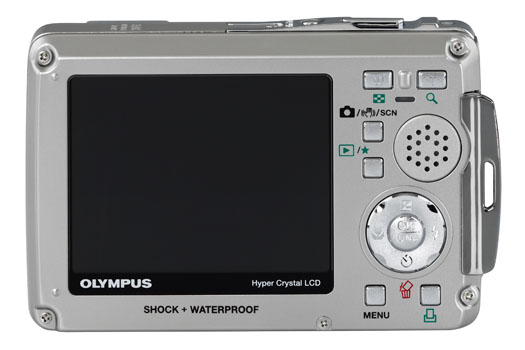
At the same Olympus PR event I attended last week, Michael Bourne from Mullen demonstrated the new Olympus Stylus 770 SW (Shock and Waterproof camera). It’s a very sturdy camera, enclosed in an all-metal housing that can not only withstand drops from up to 5 feet and water pressure up to 33 feet, but can also take up to 220 lbs. of physical/mechanical pressure. Ligia and I have been looking for a new point-and-shoot, and this looks like it might be the camera we want.

While were were talking, Michael casually raised and dropped the camera right onto a concrete ledge, leaving me with a case of drop-jaw. Then he picked it up as if nothing happened, and took some photos with it. Wow! Then, to drive the point home, he dropped it to the ground again, and stood on it with one foot, putting his entire body weight on top of the camera. Again, he picked it up and it was just fine! Here’s a triptych showing that little sequence of events:

Standing on an Olympus Stylus 770 SW

I got to use it a bit as well, and it’s got just the right weight for its size. It doesn’t feel flimsy at all. When you grip it, you know you’re gripping something well-made. The all-metal housing looks really nice, and the shutter lag isn’t bad considering that it’s a point-and-shoot. I got to handle it inside a dimly lit store as well, and when I bumped up the ISO to 1600, the photos still looked decent on screen, even when zoomed in. It’s certainly a whole lot better than our current point-and-shoot camera, the Kodak EasyShare v610, which was all the rage in July of last year (2006) due to its dual lenses and in-camera photo stitching capabilities.

Here are a few more photos of the camera (these ones are courtesy of Olympus USA). Notice the sleek lines. If you read my blog regularly, you know I’m a sucker for good design, and I think Olympus did a great job here.

Olympus Stylus 770 SW -- Front

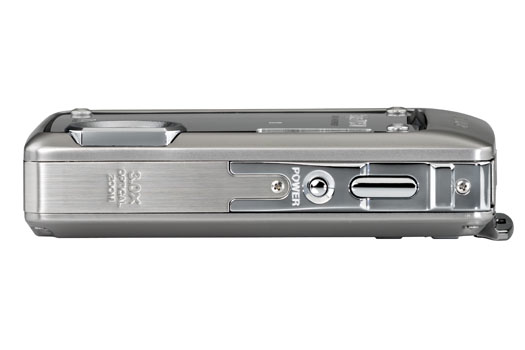
Olympus Stylus 770 SW -- Top

Notice how nicely laid out the buttons are. There’s no confusion about their function, like on some cameras (Samsung, I’m talking about you here). The on-screen menus are also easy to navigate. I had no problem finding my way around the menus as soon as I went in.

Olympus Stylus 770 SW -- Back

All in all, this little camera’s one hot contender in the point-and-shoot market, and a virtual shoe-in for our next ultra-portable digital camera.

More information:
Standard
Events

Photos from the Legg Mason Tennis Classic

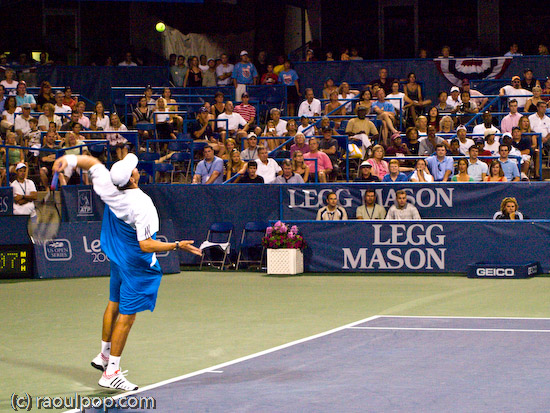
I wrote about the fun day I spent at the William H. Fitzgerald Tennis Center here in DC yesterday, watching the Legg Mason Tennis Classic courtesy of Olympus, and promised I’d publish photos taken at the matches with the new E-510.

After I deleted the blatantly bad ones, I was left with 607 photos. I spent a couple of hours sorting through them, and picked 44, which I then processed. There are a few nice blooper-type photos from the tournament as well, where the players are making funny faces or their bodies are in contorted positions, so those will be kind of fun to see.

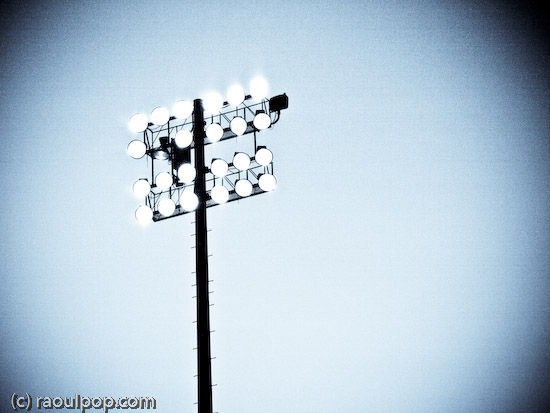
Under the cold glow of the big lights

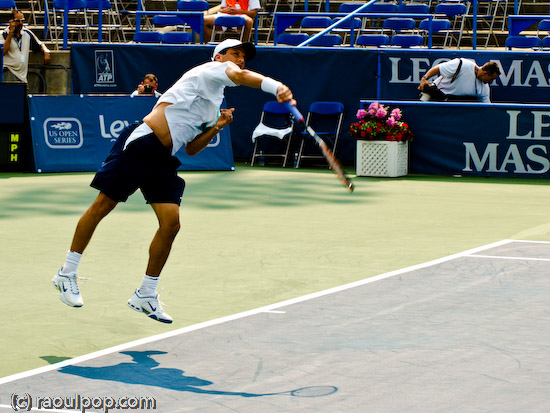
P. Goldstein

P. Goldstein

P. Goldstein

P. Goldstein

P. Goldstein

P. Goldstein

P. Goldstein

P. Goldstein

P. Goldstein

P. Goldstein

P. Goldstein

Overcast

Bryan Twins

Bryan Twins

Bryan Twins

Bryan Twins

Bryan Twins

Unforgiving August sky

Take it in stride

One tall dude

T. Phillips

T. Phillips and P. Goldstein

T. Phillips and P. Goldstein

A. Clement

A. Clement

A. Clement

A. Clement

Saw the light

R. Stepanek

R. Stepanek

R. Stepanek

R. Stepanek

R. Stepanek

R. Stepanek

R. Stepanek

R. Stepanek

R. Stepanek

T. Johansson

T. Johansson

T. Johansson

T. Johansson

T. Johansson

T. Johansson

T. Johansson

Standard