
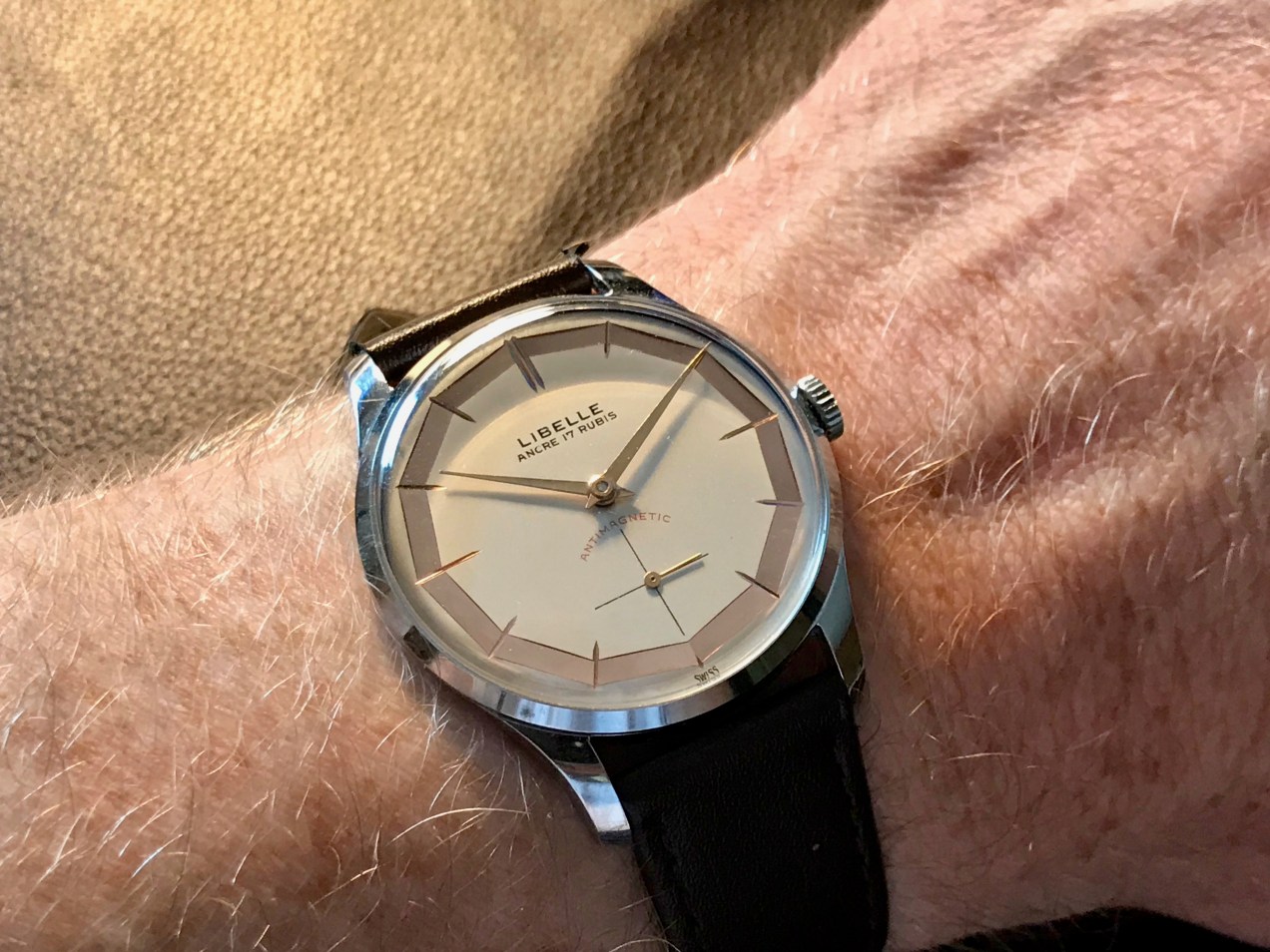
This is a 1960s Libelle watch with an Ancre 17 jewel manual winding movement. Not much is known about the brand, but these watches are likely Italian-assembled with Swiss movements. I bought it NOS from a small store in Italy and had it checked and lubricated at my watchmaker’s.
Tag Archives: videos
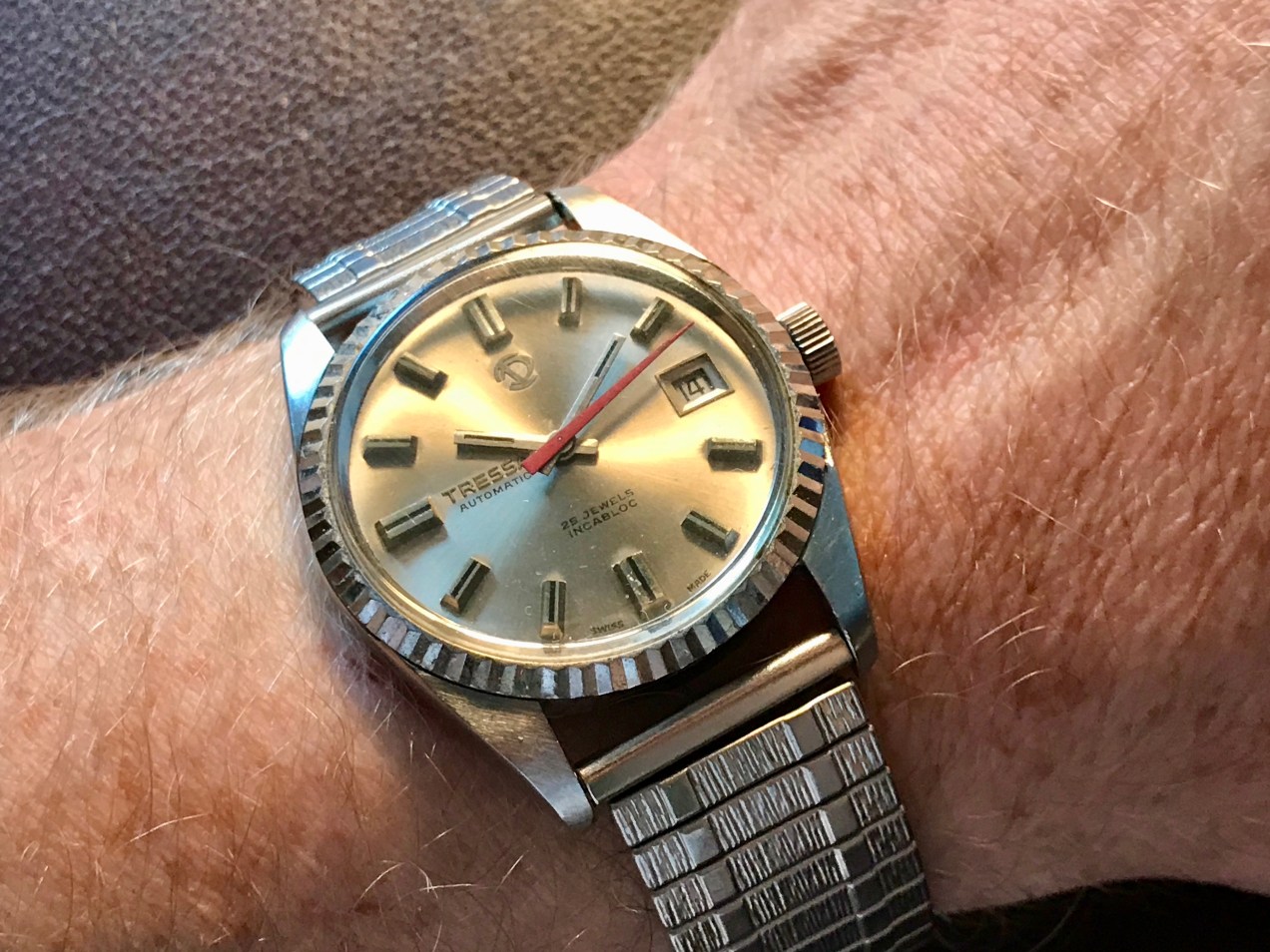
A 1970s Tressa Automatic Watch
This is a 1970s Tressa Automatic wristwatch with an Incabloc 25 jewel movement and date function, serial number 81272. I purchased it in the autumn of 2016 and had it fully serviced by my watchmaker. This watch keeps incredibly accurate time and is very sturdy, in spite of its currently low market price. It has about a 2-day power reserve. The date can also be adjusted separately from the time, once again pretty surprising for a watch of its price. The elastic metal band is also very nice, although it’s a bit tight for my wrist.
Learning English
This is the fifth video in a new series where I talk about the people, experiences and things that have helped me in life. Who knows, perhaps they’ll help you as well! In this one, I talk about how learning English well has shaped my experience as an immigrant to the United States, about how learning English is still very much of relevance in today’s world, and I also offer some comments on the state of immigration in the US and Europe.
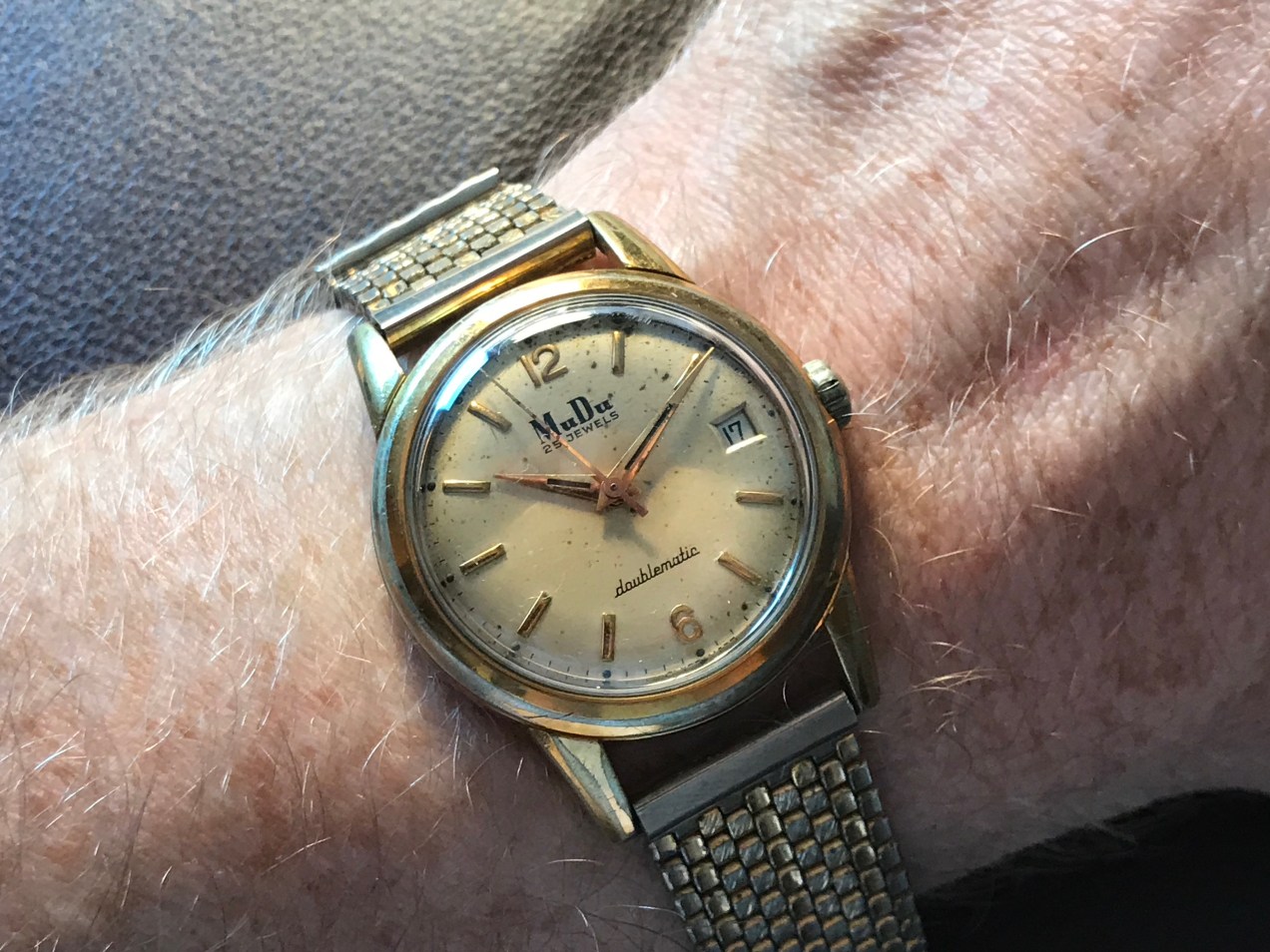
A 1950s MuDu Doublematic Watch
This is a 1950-60s (more likely 1950s) MuDu wristwatch with a 25 jewel Doublematic movement. It has a fairly unique metal mesh band that clasps securely around the wrist. It was gold-plated but most of that has worn off. I’ve had it cleaned, serviced and polished and it looks pretty good now. I’ve also had indentations refiled in the crown, because it had become so worn that I couldn’t adjust the time anymore. It works great now. I like MuDu watches, they’re affordable and fun to collect.
A research-based proposal for greening the world’s deserts
In a TED talk given a few years ago, a scientist named Allan Savory puts forth an interesting proposal for reversing desertification and climate change. After having worked in the field his whole life, the solution he found is an unlikely one: grazing livestock. They are commonly thought to destroy the land and contribute to global warming, but they can in fact, help restore its vegetation and thus begin to reverse global warming, if the grazing process is done correctly. Allan goes into more details in his talk, which I invite you to watch. What he proposes is a low cost solution that involves forming large herds and moving them over the land in a sigmoid pattern so they never overstay in one spot. His methods have successfully worked on multiple continents to reverse desertification and restore grasslands, so they’re proven. And even if his proposal has its detractors, who say the livestock will emit more greenhouse gases, you can’t argue with the results, which are an almost magical revival of plants, trees and water in those places where his methods are put into place.
More details here.
 Raoul Pop