
I’ll be offline for the next week or so, traveling through the northern part of Romania known as Bucovina. It’s a beautiful region, nestled among the Carpathian mountains, with many historic monasteries and other interesting places to visit. I’ll be taking lots of photographs, naturally, which I hope to process and publish in the coming weeks and months. Comments from new readers will be placed in the moderation queue until my return. Till then.
Monthly Archives: August 2009
Adrian Holovaty
It turns out Adrian Holovaty, the co-creator of the open-source Django Web framework, also plays the guitar. My wife found a few videos of him on YouTube and sent them to me. The videos aren’t recorded professionally — it’s him in front of a webcam, with a small mike placed on the table close to his guitar, but his music is great. From the looks of the background in some of his videos, it looks like some are recorded in his office at work — when you think about it, it’s pretty cool when you can play guitar at work, right?
Adrian creates his own arrangements for various songs, video games and TV shows, like Duck Tales (which I love, btw).
Adrian Holovaty – Duck Tales theme song
There’s also an acoustic version of the Super Mario Bros. theme.
Adrian Holovaty – Super Mario Bros. theme song
He’s got plenty of serious stuff if you’re not into cartoons and video games. For example, there’s his rendition of Beatles’ “Yesterday”.
Or how about “Hit the Road Jack”?
Adrian Holovaty – Hit the Road Jack
He also did the Monkees’ “Daydream Believer”.
Adrian Holovaty – Daydream Believer
Sometimes he does multitrack videos, like his rendition of Nola, a 1915 ragtime piano piece by Felix Arndt. Here he used the original Les Paul arrangement from the 1950s, where he recorded the lead guitar at half time, then sped it up 200%, to give it the classic high pitched sound.
While I’m on the topic of multitrack videos, he also did a gypsy jazz rendition of the Super Mario Bros. 2 theme song.
Adrian Holovaty – Super Mario Bros. 2 theme song
I love gypsy jazz, which Django Reinhardt popularized. Adrian did a multitrack gypsy jazz version of “All of Me”, which I think is great.
I’m going to close with Adrian’s rendition of Django’s “Tears”. He plays it with four fingers, unlike Django, who played it with two. Did you notice the Django Web framework shares someone’s name? Methinks Adrian is a big fan of the legendary guitarist.
Comfortable by Frankel
This is a song called “Comfortable” by a West Coast folk/pop band called Frankel. Courtesy of Elliot Glass, who’s been going out and recording various cool bands in their homes, as they play laid-back versions of their songs. There are more videos like this at Elliot’s Vimeo account. Know what else is cool? Frankel’s latest CD is available in vinyl on their website. You can listen to more Frankel songs on their MySpace page.
I like the clarity of the song (voice and music both), and the unexpected twists in the melody. I also like the video’s color grading.
http://vimeo.com/5939849
Frankel – “Comfortable” from elliot glass on Vimeo.
Tommy Emmanuel CGP
I found about about Tommy Emmanuel recently, from a YouTube video that showed him playing a wild and incredible version of “Guitar Boogie”. That particular video was afterward removed from YouTube due to a copyright claim from an entertainment company. Still, thanks to someone from that same entertainment company (see comment #1 below), I found another clip of him playing that same song. Try to follow the incredibly complicated fingerwork if you can. The amount of dexterity and virtuosity this man possesses is amazing.
Tommy Emmanuel – Guitar Boogie
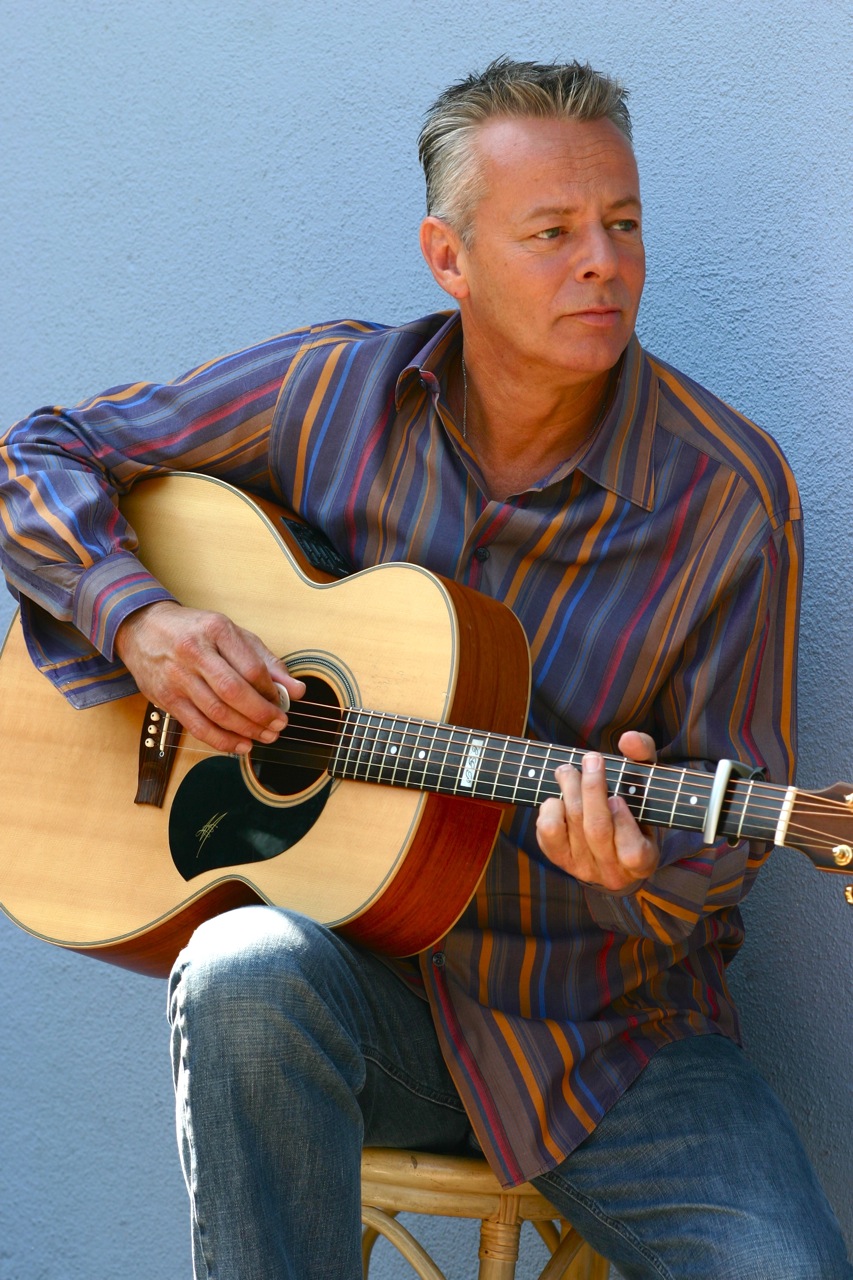
Photo used courtesy of tommyemmanuel.com
Tommy’s been playing guitar professionally for over 40 years, and is huge in his native Australia. He started playing at the age of 4, by ear, without formal instruction. Two years later, he was already working pro gigs. He plays guitar differently from most, using all ten fingers. He calls it “finger style”, and I’m sure you appreciated it on the version of “Guitar Boogie” shown above.
I found two other really nice videos with him, recorded when he did a show on Korean television. The first is “Since We Met”, and the second is “Angelina”. These are quieter songs, but the man’s talent is readily apparent. These two songs, instead of impressing with virtuosity, relaxed me, and that’s worth more to me than a little excitement. (I’m somewhat tightly wound, as regular readers might have found out by now…) The final proof of Tommy’s talent came when I showed the videos to Ligia (who is Conservatory-trained in voice and piano) — and she immediately said they’re great.
Want to know what the CGP in his name stands for? It’s “Certified Guitar Player” — a title given to him by the legendary Chet Atkins in 1999, for his lifetime contribution to the instrument. Awesome, don’t you think?
Life Inc – another perspective on today's society
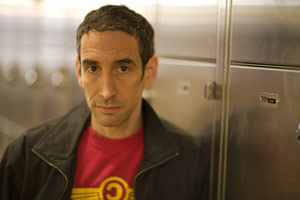 Douglas Rushkoff, an award-winning writer, documentary filmmaker and scholar, has written a book entitled “Life Inc”, where he delves into what he calls the “corporate mindset” of today’s society, and how to overcome it in order to make our lives and our world better.
I’ll let him tell you what the book is about in his own words:
“What I started to do was to look at the different ways we as modern Americans have become disconnected from one another, disconnected from the places we live, disconnected from the value we create, and even disconnected from our own sense of self-worth. I came to the conclusion that corporations, or what we call the corporate mindset, were really at the center of this phenomenon.”
“We’re living in a world where if you want to make money, you’ve got to work for a corporation.”
According to Rushkoff, it turns out this “corporate mindset” can be traced back to the Renaissance, which is when kings began to monopolize on the income created by people. Instead of letting them trade freely among themselves, they created charter corporations which had exclusive control over certain industries. The kings got shares of stock in those monopolies, thus income, and those companies got to make all the money there was to be made in those markets. This centralization of power continued right through to our own time.
“The society built through the Industrial Age was built to mythologize the mass-produced object, because we needed to create a society of consumers who thought buying all of this stuff would somehow make them happier.”
“Most of us spend so much time working and consuming that we have very little time left to do anything that has to do with other people.”
“The more we behave as individual actors in competition with one another, the harder it is to encounter one another in a friendly way.”
“People can start investing in one another and with one another, make their towns better, and earn returns that you’re not getting from your Smith Barney broker… and see the return of your investment in the place you actually live.”
“This [economic recession] isn’t just a crisis, it’s an opportunity. It’s the first moment in the last couple of hundred years that we’ve had to rebuild our society and our economy on principles that serve humanity instead of killing life.”
I agree with most of what he has to say, and it’s important to realize he’s not against corporations per se, but against the slow creep of the corporate mindset into everyday life. After all, it’s thanks to corporations that we have industrial design, which allows us to get products designed to exact specifications and high standards. And the concentration of capital and research at some corporations and organizations has resulted in amazing advances in technology that have benefited all of us. Yes, you can do a lot of things in your garage, and you can get a lot of stuff done with your neighbors and in your community, but you can’t build a highly sophisticated computer, digital camera or a modern car at home. (You might be able to assemble them from purchased parts, but those parts were made in factories, too.) There is plenty of value to what he has to say, and the book warrants a close read. We do need to become more human, more connected, more dependent on our communities.
There’s a 9-minute video summary of the book at his Vimeo account. He’s also posted video clips summarizing the main ideas of each book chapter there. I’ll post the main video summary and the first three clips below. There’s also more info on his website at rushkoff.com. You can get the book from Amazon.
Life Inc. The Movie from Douglas Rushkoff on Vimeo.
Life Inc. Dispatch 01: Crisis as Opportunity from Douglas Rushkoff on Vimeo.
Life Inc. Dispatch 02: Insulation Equation from Douglas Rushkoff on Vimeo.
Life Inc. Dispatch 03: Money as Debt from Douglas Rushkoff on Vimeo.
 Raoul Pop