How To

How to create a Fusion Drive on a mid-2011 iMac

Yes, you can enable Fusion Drive on older Macs. I’m not sure how this method will work with Macs older than 2011, but I know for sure that it works on mid-2011 iMacs, and quite possibly on other Macs made since then. I have just completed this process for my iMac and I thought it would help you if I detailed it here.

I like Fusion Drive because it’s simple and automated, like Time Machine. Some geekier Mac users will likely prefer to install an SSD and manually separate the system and app files from the user files which take up the most space, which is something that gives them more control over what works faster and what doesn’t, but that’s a more involved process. Fusion Drive works automatically once you set it up, moving the files that are used more often onto the SSD and keeping the ones that are accessed less often on the hard drive. This results in a big performance increase without having to fiddle with bash commands too much.

The hardware

My machine is a 27″ mid-2011 iMac with a 3.4 GHz processor and 16GB of RAM. I bought it with a 1TB hard drive, which I recently considered upgrading to a 3TB hard drive but decided against, given the fan control issues with the temperature sensor and the special connector used on the factory drive.

imac-basic-specs

I purchased a 128GB Vertex4 SSD from OCZ. It’s a SATA III (6 Gbps) drive and when I look in System Info, my iMac sees it as such and is able to communicate with it at 6 Gbps, which is really nice.


ocz-vertex4-ssd-128gb

ssd-specs

The hardware installation is somewhat involved, as you will need to not only open the iMac but also remove most of the connections and also unseat the motherboard so you can get at the SATA III connector on its back. You will also need a special SATA wire, which is sold as a kit from both OWC and iFixit. The kit includes the suction cups used to remove the screen (held into place with magnets) and a screwdriver set.
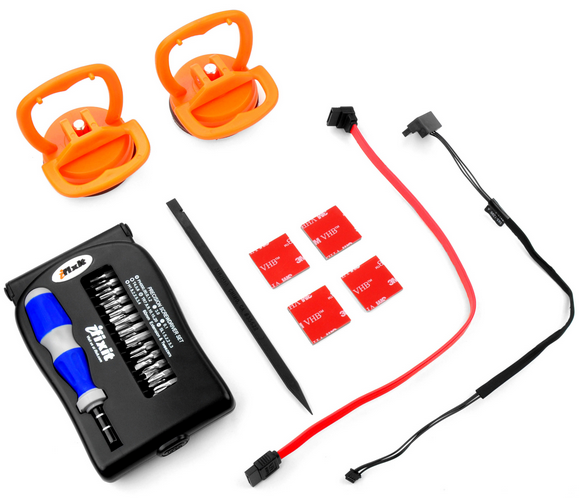
2nd-drive-ssd-kit

You can choose to do the installation yourself if you are so inclined, but realize that you may void the warranty on the original hard drive if something goes wrong, and this is according to Apple Tech Support, with whom I checked prior to ordering the kit. Here are a couple of videos that show you how to do this:

In my case, it just so happened that my iMac needed to go in for service (the video card, SuperDrive and display went bad) and while I had it in there, I asked the technicians to install the SSD behind the optical drive for me. This way, my warranty stayed intact. When I got my iMac back home, all I had to do was to format both the original hard drive and the SSD and proceed with enabling the Fusion Drive (make sure to back up thoroughly first). You can opt to do the same, or you can send your computer into OWC for their Turnkey Program, where you can elect to soup it up even more.

The software

Once I had backed up everything thoroughly through Time Machine, I used the instructions in this Macworld article to proceed. There are other articles that describe the same method, and the first man to realize this was doable and blog about it was Patrick Stein, so he definitely deserves a hat tip. I’ll reproduce the steps I used here; feel free to also consult the original articles.

1. Create a Mountain Lion (10.8.2) bootup disk. Use an 8GB or 16GB stick for this, it will allow you to reformat everything on the computer, just to clean things up. Otherwise you may end up with two recovery partitions when you’re done. I used the instructions in this Cult of Mac post to do so. The process involves re-downloading 10.8.2 from the Apple Store (if you haven’t bought it yet, now is the time to do so) and an app called Lion Diskmaker.

2. Format both the original HD and the SSD, just to make sure they’re clean and ready to go. Use Disk Utility to do this, or if you’re more comfortable with the command line, you can also do that (just be aware you can blow away active partitions with it if you’re not careful).

2. List the drives so you can get their correct names. In my case, they were /dev/disk1 and /dev/disk2.

diskutil list

3. Create the Fusion Drive logical volume group. When this completes, you’ll get something called a Core Storage LGV UUID. Copy that number, you’ll need it for the following step.

diskutil coreStorage create myFusionDrive /dev/disk1 /dev/disk2

4. Create the Fusion Drive logical volume. I used the following command:

diskutil coreStorage createVolume paste-lgv-uuid-here jhfs+ "Macintosh HD" 100%

5. Quit Terminal and begin a fresh install of Mountain Lion onto the new disk called “Macintosh HD”.

6. Restore your apps, files and system settings from the Time Machine backup using the Migration Assistant once you’ve booted up. Here’s an article that shows you how to do that. When that completes, you’re done!

The result

Was it worth it? Yes. The boot-up time went from 45-60 seconds to 15 seconds, right away. And over time, the apps and files I use most often will be moved onto the SSD, thus decreasing the amount of time it’ll take to open and save them.

At some point, I expect Apple to issue a utility, like Boot Camp, that will allow us to do this more easily and automatically. Until then, that’s how I set up Fusion Drive on my iMac, and I hope it’s been helpful to you!


Standard
Events

A freezing spell

Exactly six years ago to the day, there was a freezing spell overnight. It rained over fallen snow, then it quickly froze, encapsulating plants in a sheath of ice. This sort of thing is dangerous for trees, because it makes their branches so heavy that it can split them apart. Back in college, in Vermont, we had a serious freezing spell one winter that broke apart many of the trees on campus; thankfully, this wasn’t that serious. It helped that we were in Virginia at the time, where winters aren’t that rough.

Standard
A Guide To A Good Life

Answers to your shaving questions

Almost three years after publishing my original wet shaving video, the views and comments keep accumulating: over 280,000 views and 700 comments at the time of this post. I thought it a good idea to gather the top ten questions — the stuff that gets asked over and over, and the things that I should have made clearer in the original video — and make a follow-up video. That’s just what I’ve done here, but wait, there’s more… 🙂

In addition to answering the top ten questions, I also made another wet shaving video, this time making sure to include all of the pertinent advice that came to mind.

Thank you for the views and the likes, thank you for the comments, and I’m truly glad that I could help you learn how to shave! That’s a big responsibility, because it’s something us men have to do pretty much every day for the rest of our lives once we reach adulthood, so if I’ve contributed in any way, as many of you have told me I’ve done, I consider that a wonderful achievement.

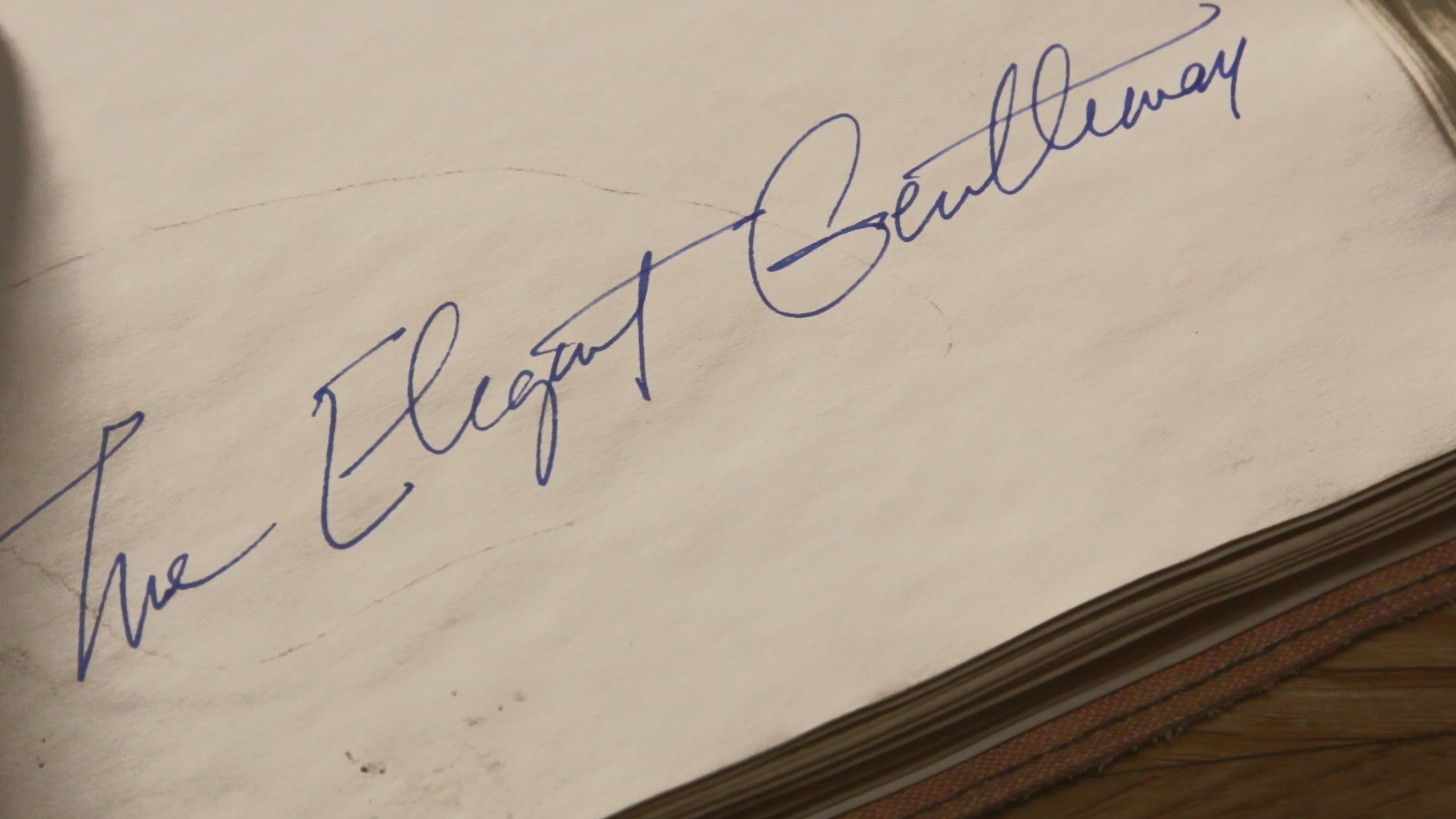
These videos are part of my new series, The Elegant Gentleman: a man’s guide to clothing, manners and the finer things in life. If you have any other shaving questions, please let me know in the comments below (or right on the video page at YouTube) and I’ll see if I can answer them.

The Elegant Gentleman

Standard
A Guide To A Good Life

A brief history of clothes

17th-century-clothes

“Vain trifles as they seem, clothes have, they say, more important offices than to merely keep us warm. They change our view of the world and the world’s view of us.” ― Virginia Woolf, Orlando

Clothing may have been around for hundreds of thousands of years, with some scientists proposing that it may have been in use even more than 650,000 years ago, though most agree that the first fabric uses occurred about 100,000 years ago.

These theories are based on studies of the human body louse, which according to genetic studies, diverged from its ancestor, the head louse, about 107,000 years ago. I hope you weren’t eating your lunch when you read that…

Flax fibers seem to have been the first used for textiles and fabrics, around 8,000 BC, with cotton following around 5,000 – 4,000 BC and wool around 3,000 BC. Starting around 6,000 BC, other fibers such as rush, reed, palm and papyrus were used together with flax (linen) to make ropes and other textiles. Silk also saw its introduction as a fabric around 4,000 BC, in China. Bark and hemp fibers were discovered to have been used in Japan around 5,500 BC.

The Silk Route, which began in 114 BC during the Han Dynasty, is credited in large part with the development of the great civilizations of China, Egypt, Mesopotamia, Persia, the Indian subcontinent and Rome, and thus helped to lay the foundations for the modern world. You wouldn’t normally think cloth can have such an incredible impact, but it did.

Dress in classical antiquity favored wide, unsewn lengths of fabric, pinned and draped to the body in various ways. When I look at depictions of clothing from the civilizations of Egypt, Greece and Rome, there are common traits: it was made to suit the weather, covering more of the body where it was colder and less of the body where it was warmer, becoming more ornate for the aristocratic classes or for those where certain articles of clothing were symbolic of power, such as those in certain government or religious functions. The fabrics commonly used for these clothes were linen, wool and cotton. The Egyptians used flax (linen) almost exclusively, while the Greeks favored linen and wool and the Romans used mostly wool, though they also used other fibers, such as hemp, linen and small amounts of silk or cotton (which were imported and more expensive). For more info on clothing in the ancient world, you may consult this page.

Clothing in antiquity

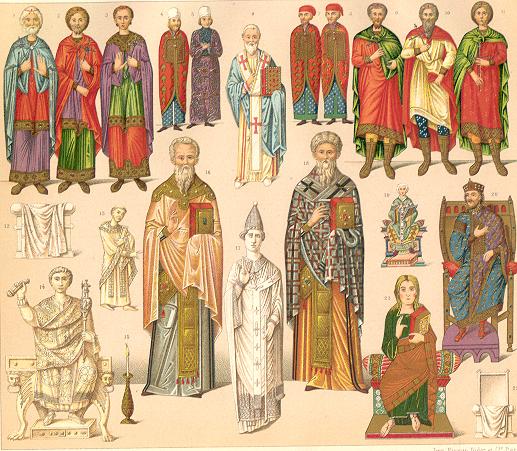
We owe the development of richly dyed, woven, patterned and embroidered fabrics to Byzantium and early medieval Europe. During the high middle ages, the development and dyeing of wool was developed more and more, and we began to see a clear differentiation between wool as outerwear and linen as innerwear. We all know that wool cannot be washed and dried without shrinking, which makes it unsuitable for garments that are washed often, like innerwear. That’s where linen works very well, as it also breathes quite easily. Cotton and silk were still being imported and therefore reserved for ornamentation, not as the main materials.

Byzantine clothes

We have the Crusades to thank for the diversification of textiles in Europe and soon afterward, for the emergence of fashion, which historians agree occurred in the mid 14th century. You wouldn’t normally think of the Crusades as a tool for the development of fashion, but there it is, war has a way of opening up new trade routes and new ways of life. I think of these unexpected developments as turdflowers springing up from… well, you know what…

From that time onward, clothes began to change in Europe at a pace unheard of in other places in the world, where styles remained the same for centuries while the Europeans began changing them every year. This is also the period when straight seams and draped garments began to be replaced with what were the beginnings of tailoring, such as curved seams, lacing and buttons.

Medieval clothing

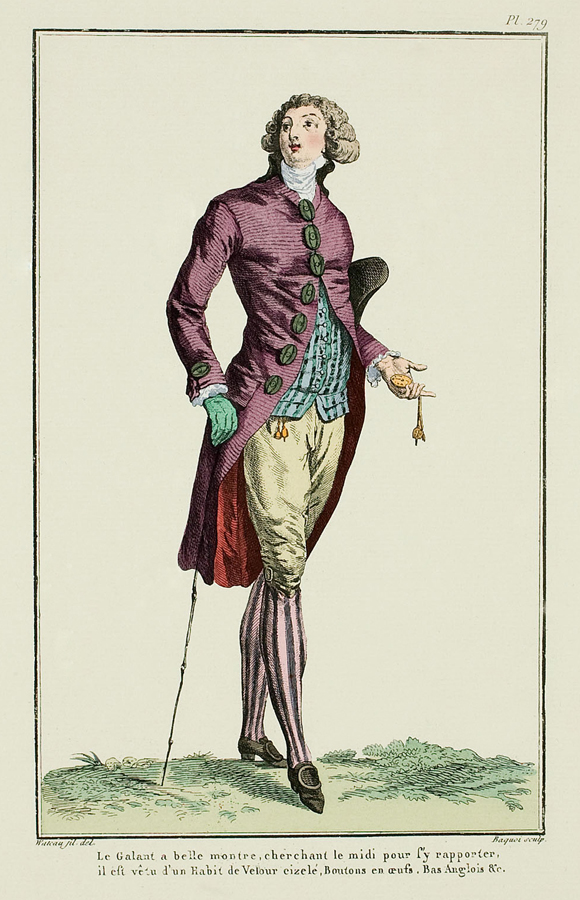
We began to see national variations in clothing during the 15th century. This is also when silk and velvet began to be used more prominently. During the 17th century, we find the origins of the three-piece suit — as the coat, waistcoat and breeches (pants, trousers) began to be made of the same cloth. The fellow in this illustration is not wearing a new-fangled three-piece suit, he prefers the foppish look.

18th century fashion

In the 18th century, fabric production began to be mechanized, but clothing was still being made by hand, as the complicated machines that cut and sew suits and dresses nowadays didn’t exist yet. In the 19th century, sewing machines were invented. We saw the introduction of synthetic fibers during the 20th century, and from the start of the 20th century going forward, we have seen the gradual decline of bespoke tailoring in favor of mass-produced clothes, most of them from synthetic fibers.

suit-factory

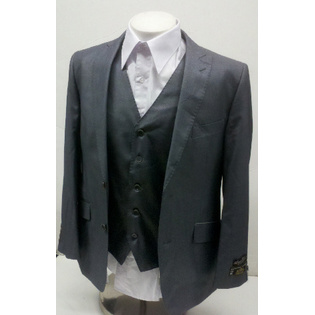
Good things have also occurred during this last century. As a result of mechanization and automation, fabrics have become much more affordable and there’s an incredible variety now, as manufacturers constantly experiment with threads, textures, colors and treatments. Clothes have also become much more affordable, and even though they’re made by machines, advancements in computer modeling and the collective data on human measurements gathered over the centuries make it much more likely for you to find an off-the-rack outfit that fits your body nicely now, rather than a few decades ago.

An off-the-rack suit

One of the goals of my project, “The Elegant Gentleman“, is to show the benefits of natural fibers and of custom-made clothes to those who are willing to listen. Natural fibers are simply better for the body and are renewable, as the sheep will grow wool every year and the cotton and flax will spring up as long as they’re well-tended, while clothes made to your measurements, to your body, will always fit, wear and look better than something you pick off the rack at the store. These two things are immutable.

For more information on the history of clothing, I invite you to check out these pages:

Make sure to also read my article on the various types of fibers that go into the making of textiles, fabrics and cloth.

Standard
Places

Photos from the US Botanic Garden in DC

Should you find yourself in DC, the US Botanic Garden should be on your list of places to visit. It’s right next to the Capitol so if you want a break from the buildings and the politics, step inside to look at the flowers and the plants, they’ll make for a welcome change.

And if you should find yourself in DC during winter time and you have children, then you should definitely visit, because they put on quite the toy train show there, every winter. I even recorded a video of it for you, which you can see in this post.

Enjoy the photos, there are 50 of them below!

Standard