Thoughts

Pitch black darkness

Last night, the power went out everywhere. Completely. I happen to be staying in a village in the province of Dobrogea, Romania at the moment, and just as I stepped out of the house to walk to my car, all the lights blinked out of existence. It was, as they say, a dark and stormy night, with nary a star in the sky, not to speak of the moon, which had probably been stuffed in thick sackcloth and kidnapped.

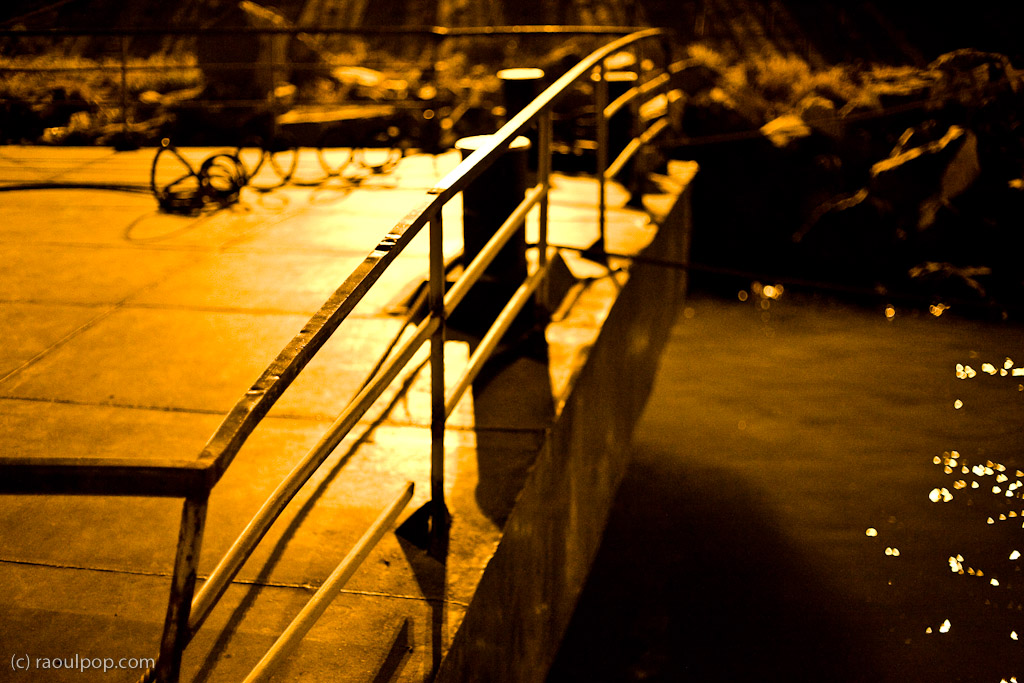
Do you want to know what things look like when you’re in the middle of a wide open field and everything goes pitch black? It looks something like this.

Pitch Black Darkness

It’s an eerie feeling, one that throws you for a loop, even if only for a few moments. I looked around, but there was nothing to see. I reached about me, and wasn’t sure where to reach for a wall or something to hold on to. Everything was black. Even the dogs went quiet. Then, someone in a house nearby stumbled over something and mumbled some sort of swear, then called out for a light from his wife. Others, elsewhere, called out to each other. Things came back to life, but it was still pitch black outside.

I pulled out my little spotlight, the same one I reviewed recently, and found my way to the car. I unlocked it, and the interior lights came on. I climbed in, sat down and turned on the engine. The dashboard lights came on, reassuringly. Then I realized something which sounds obvious to someone who doesn’t have to deal with a power failure, but is a downright epiphany when you’re in pitch black darkness: cars have standalone electrical systems; they do not depend on the grid for power; they make their own power. When the grid goes down, your car can still run, thanks to its battery and to the fuel that makes its alternator turn and charge that same battery. It’s an amazing system when you think about it. I don’t know what we’d do without it.

Shouldn’t homes have similar standalone electrical systems, just in case grids go down? Sure, we’ve made inroads with solar panels and wind turbines, and some homes do have batteries that charge up from the sun or the wind, but the overwhelming majority of homes in this world don’t have any sort of backup power. If the electricity goes down, they’re down as well.

We should really invest more into making each of our homes more self-sufficient. Each home ought to be able to function, at least for a period of time — say 4-8 hours — without grid power, in and of itself, from power stored in batteries or capacitors or in some other container of energy, so that people can carry on with their lives and at least have enough time to prepare for a prolonged power outage once the grid power goes out.
Standard
Thoughts

Obama wants to increase airport security tax

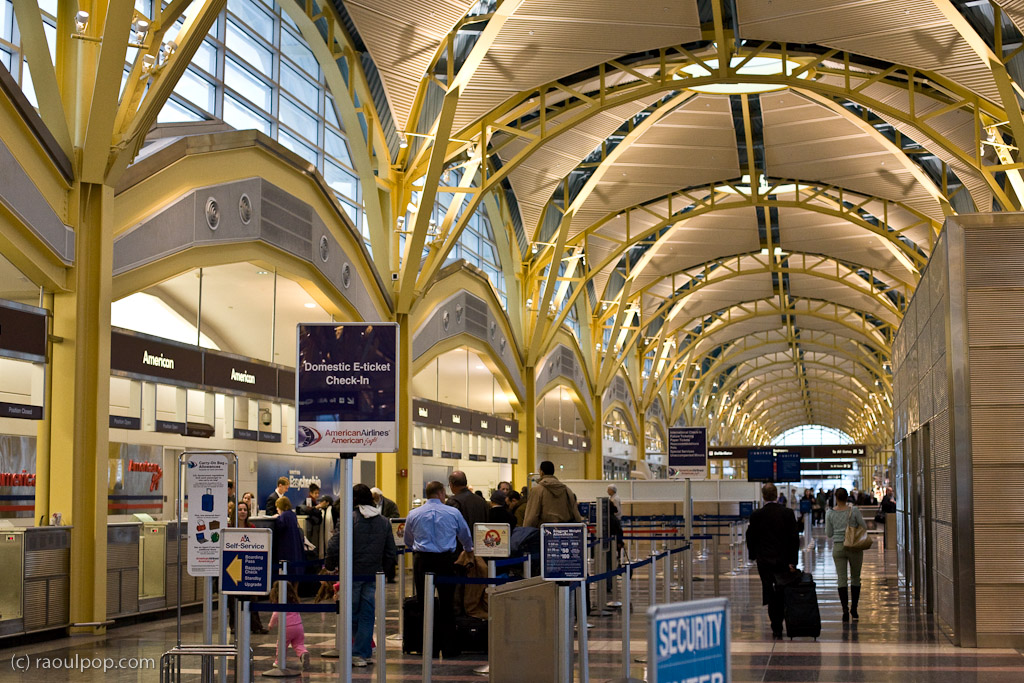
Waiting to check in

We’re currently getting charged $2.50 per passenger to go through the security theater* at our airports. Now the Obama administration wants to increase this fee. Quoting from this article at the Economist:

“The Homeland Security portion of Obama’s proposed 2010 budget (PDF) includes a plan to raise the fees by an as-yet-undisclosed amount in 2012. The increase, the White House says, is needed because the current fee only funds about 36% of airport security costs.”

So let me get this straight: not only do we have to go through the inane, annoying and useless experience of getting scanned, uber-prodded and turned over every time we want to board a plane, but now we’ll have to pay more for that unsavory experience as well? Thanks a lot, Mr. Obama. I can see my vote went to a good cause.

As I said before, I think we should be doing away with the whole darned thing. What happened to accepting the risk and moving on? That’s how the United States was founded and built. It wasn’t built by wimps who wanted to make sure no letter openers or nail clippers got on the plane with them. Why zap us with X-rays, make us take off our shoes, put us through air blowers to sniff us (I’ve half a mind to fart when I go through those things just to see what happens), open up our luggage, and generally speaking stink up the whole flying experience when we don’t really need any of it?

It’s shocking to hear that, isn’t it? Truth of the matter is we wouldn’t really need any of it if security were done right, and if people had the courage to step up and disarm the terrorists when and if they dared do something on a plane. Since the general populace is a bunch of pansies who’d rather have big-brother government do everything for them, now we have to put up with cretinous security checks and starting next year, with increased fees for said security checks. Hooray for democracy, where the majority rules with a pudgy, slightly damp and sweaty fist, tired from holding the remote control too long.

* Term coined by Bruce Schneier.

Standard
Thoughts

Another point of view about ferryboats

Nowadays, people think a ferry is a romantic way to get over a river, but in the 1930s, during the Great Depression, people used to think otherwise.

A ferry ride

A ferry ride

For a great look back in time, watch “Bridge Ahoy“, a Popeye cartoon released on May 1, 1936. In it, Bluto overcharges passengers for rides on his ferry, so Popeye, Olive and Wimpy decide to build a bridge and let people cross the river for free.

You see, when you’re the only way to get across a river, you’ve got a monopoly. You control the market and set your own price. Before monopoly laws, it’s probably what happened with ferryboats, and it didn’t sit well with the cash-strapped folks of the mid-1930s. If we had only ferryboats to get across rivers nowadays, we’d no doubt share the same feelings.

Things worked out in the cartoon and the three delivered a bridge made to order. Everyone was happy except Bluto, the ferryboat owner, which was as expected.

Of course, if we carry this solution over to modern times, it breaks down right away. You see, we get charged to go over bridges nowadays. Kind of makes the point of building a bridge to avoid ferry tolls moot, doesn’t it?

Standard
Thoughts

You simply can't depend on computers

Take it from someone with 15 years of experience in Information Technology — me. You cannot depend on computers.

Every single time in my life when I’ve had to depend on a computer to help me do something under a tight deadline, some glitch intervened. Something inevitably went wrong. Something didn’t work. I wasn’t able to get things done.

Generally speaking, it’s Windows computers that are more problematic, particularly when it comes to peripherals like printers or drives or USB sticks or webcams or whatever. Apple computers are slightly less unreliable, but I’d still say the same rule applies: you cannot depend on any computer for anything critical.

Need to print something in a hurry? The printer will inevitably not work, or the computer will slow up all of a sudden, or it won’t recognize the printer, or it’ll clam up, or the editing software will start acting up. Need to get to a document on a USB stick? Somehow, the stick will become unreadable. Or maybe it’ll work, but all of the apps on your machine will become so slow that you won’t be able to make the changes in time for the deadline. Need to edit something online? Your Internet connection will go down; if you’re on WiFi, that’ll go down or start cutting out. Or the remote servers will become unavailable even though other websites work just fine. Need to install an app in a hurry? Something will go wrong. Either you won’t have the right version for your OS, or the installer will freeze mid-install, or the site where you need to get the installer will stop working. Have to do a video chat? Guess what, if it’s an emergency, your webcam won’t work, or the chat will cut out mid-speech, or the sound will become garbled. Something will go wrong. It’s a given.

I don’t care if your computer is squeaky clean. I keep my machines that way, and yet I still have problems. There are no viruses, no spyware, no bloatware on my machines, and yet something always goes wrong when there’s a tight deadline involved.

The only way you can circumvent this rule is to have entire server rooms with IT staff standing by at your disposal. Even then, you can be sure that the weakest link in that chain will give, and right at crunch time, something will go wrong.

Take my word for it. I’ve worked in all levels of IT, from help desk up to the director position, and have put together computers and servers and server rooms. It pains me to say this, but after so many years in IT, I have to face the facts. You cannot depend on computers when you’re in an emergency. Don’t count on it. Computers are for entertainment purposes. They’re nice and they wow you when you’re playing around or doing normal stuff. But when it comes time for them to deliver under pressure, somehow they fail. It’s just the way things are. When they fail, and they will fail, deal with it. Try not to get a headache like the one I have right now. Go outside. Take a walk. Breathe deeply. Remember, it will pass.

Standard
Thoughts

Canon 5D Mark II soft focus due to camera or lens?

I reviewed the new 5D Mark II back in October of 2008, and my decision back then was to wait until they’ve worked out the bugs. It looks like I did the right thing. I’ve been hearing quite a bit lately about focus issues with the camera. It looks like it can’t focus properly. It’s slow to focus, and when it does focus, the images are soft. See this blog post for an example.

I’m still not sure what lies at the root of the focusing problems. People are comparing photos taken with the 5D Mark II against photos taken with the original 5D, but it’s sort of like comparing apples to oranges. To compare images accurately, you’d need to first downsize the resolution of the images from the 5D Mark II to 12.8 megapixels, to make them equal in pixel depth to those that come out of the original 5D. I have yet to see something like that.

I think what’s going on here is that we’re seeing either the limitations of Canon’s 9-point AF system, or the limitations of their lenses, and this is due to the sensor’s increased megapixel count. In effect, all those extra megapixels have run ahead of the camera’s AF capabilities. It’s like a bodybuilder who’s got huge muscles but hasn’t trained his joints. His tendons have remained weak, and sooner or later he’ll tear something.

The thing is, I’m getting soft images with my original 5D, and I get them quite often. Sure, most of the images I get are in focus, but I bet you that if my 5D were able to output 21 megapixels of resolution, those same seemingly sharp images would be just as soft as those that come out of the 5D Mark II.

It could very well be that the 9-point AF system can’t focus properly. It’s just not that good, and its focusing limitations are seen quite well at higher resolutions. In that case, I have a feeling that the 16 megapixel images that one can get with the EOS 50D would also show some soft focus issues. They wouldn’t be as apparent as those found in the 5D Mark II, since there’s a bit of difference between 16 megapixels and 21 megapixels, but they should be there. It looks like some people are noticing a soft focus with the 50D, so there might be something to my theory.

On the other hand, it could be that my lenses, and the lenses of these people complaining about soft focus with the new 5D, need to be sent in for calibration. There certainly are tons of complains about soft images gotten with Canon lenses of all kinds — that’s nothing new. Who knows, if they and I got to send in our lenses, and they got properly re-calibrated by knowledgeable technicians, the images would be sharper.

So there you have it. I’m not sure what to think. I’m leaning toward the side that says the 9-point AF system needs to grow up, but I’m open to suggestions. Perhaps Canon ought to license the 11-point AF system from Olympus. They put it in their E-3 DSLR, which came out at the end of 2007. It’s supposed to be the fastest and most accurate AF system on the market, and it’s meant to work well even in low light. After all, let’s face it, both Canon and Nikon have borrowed the Live View concept from Olympus — they were the first to come out with it. Why not borrow the AF system as well?

Standard