Thoughts

Speak softly and… what's that?

I guess when Theodore Roosevelt uttered his now famous phrase, “Speak softly and carry a big stick; you will go far,” he might have been thinking about something like this:

Punt Gun -- Washington, DC

It’s a punt gun. It would not have been used like pictured in the photo above, because the recoil action was too strong. It would have knocked both men on their backs and possibly dislocated the shooter’s shoulder.

There’s a demo video of one of these monster guns in action on YouTube. I recommend you see it to get an idea of the damage it can inflict. It was apparently used for shooting flocks (that’s right, entire flocks) of birds while mounted to the bow of a boat.

[via Shorpy]

Standard
Thoughts

Is it any wonder there's computer piracy in Romania?

If the US and other Western countries are looking at Romania and shaking their heads while wondering why there’s so much computer piracy there, perhaps this will help them get the picture.

In 2008, the median monthly salary in Romania was €285, or $353, as another source quotes it. The same source says that by 2014, the median salary will grow to $1,400, but that’s another story. I’ve heard a number of such predictions in previous years, none of which have yet come true.

Let’s look at Microsoft Windows, probably the most pirated piece of software in Romania. Vista Home Basic, which is really just XP dolled up a bit, is 325 RON, or around $101. The decent version of Vista, Home Premium, is 434 RON. When you convert the median monthly salary to RON, the Romanian currency, it comes out to about 1,120 RON.

Now, when you keep in mind that most people make less than 1,120 RON per month, do you think they’d give up a third of their gross monthly income (before taxes) so they can buy an operating system legally? Would you do it?

Say you made $40,000 per year in the US. Wikipedia says the median income for men in 2007 was roughly $45,000, and the median income for women in 2007 was roughly $35,000. If we use $40,000 as an example, that works out to $3,333 before taxes. If Windows Vista cost you a third of that monthly income, or $1,111, would you pay full price to get it?

Don’t think only software costs this much in Romania. I have on my desk right now two inkjet cartridges from HP, one color, one black. The black ink cartridge, a 338 Vivera, cost 67.75 RON, and the color cartridge, a 342 Vivera, cost 73.05 RON. Those prices are in line with what these cartridges cost in the US, but that’s the problem, isn’t it?

People in Romania don’t make the same salaries as people in the US or in Western Europe. Since the 1990s, prices in Romania have risen to match those in Western Europe, yet salaries have risen at a much, much slower pace. Romanians have to contend with paying Western European prices for food, clothing, utilities and fuel, yet they make a mere pittance compared to their European counterparts. It’s simply not fair.

When you have to decide between buying food or paying all your utility bills in the winter, or when you can’t buy adequate clothes or shoes because you have to pay your rent and other expenses, paying for software is the least of your worries. I for one don’t blame Romanians one bit for using pirated software. Considering the amount of money they’re making, I completely understand why they turn to cheaper solutions.

UbuntuDo you know what I advise my Romanian friends and family when they come to me for help? I tell them to use Ubuntu. It’s free and it’s legal. I’ven even installed Ubuntu recently on two computers, one for family and one for an acquaintance. So far, the reaction was positive. They’ve been able to work with their Office documents on Ubuntu thanks to Open Office, and they’ve been able to view and play their photos and movies as well. For most people, the Linux platform is the way to go, especially when you consider that they can’t afford to get the faster and more expensive hardware that’s needed to run Windows Vista.

Standard
Thoughts

FriendFeed now supports RSS enclosures

See this post on FriendFeed, from 1/26/09, where Benjamin Golub from FriendFeed discusses the difference between media RSS and RSS enclosures. He mentions that they’re working on a way to accommodate RSS enclosures in addition to media RSS tags. A day or so later, they pushed the upgrade to the live site, as he states in this post.

While this is great news for the feeds from my photography catalog, it’s also great news for everyone else who uses RSS enclosure tags in their feeds. It means their photos and potentially other media, such as audio and video files, will be readily displayed on FriendFeed, making for a more interesting feed browsing experience. More specifically, it means that people who use the RSS module for Gallery 2 in conjunction with FriendFeed, like I do, will be able to readily display thumbnails of their photos in their FF streams.

The thing that makes me happy is that I didn’t even have to lobby for this. I didn’t have to bug them. Ben jumped in to help me just because he’s a nice guy. Did I mention that Ben is also the one who pointed me to SliceHost when I had problems with my other web hosts? What can I say but to offer him a big thank you for all his wonderful help!

By the way, FriendFeed now also has a way for users to test their feeds before adding them to their accounts. It was back on 12/12/08, a month and a half ago, that Ben mentioned they were working on that feature at FF in an email to me. I’m really glad to see it has become available.

Standard
Thoughts

Please check to see if you're subscribed to the correct feed

This is an important message for my feed subscribers.

It’s been over a year since I changed my feed URL and domain name, and I now see, inexplicably, that over 35% of my subscribers still show up under the old ComeAcross feed.

My feed traffic has been redirected (with a 301 status message, which indicates a permanent change) for that same year, which means that if your feed reader hasn’t already changed your subscription over to my new feed, you’ll need to do it manually.

The old feed will go down in the very near future, possibly within days. It was set to be deleted one year after the redirection. Please check your feed readers to make sure you are indeed subscribed to feeds.feedburner.com/Raoul, which is my main site feed, or you will not receive future updates from my site.

For historical reference, I talked about the feed changes on 1/16/08, and on 1/29/08, I explained how I did the transfer of the content.

I also want to give you advance notice of another possible change to my feed URL, which may happen when I transition my feeds from FeedBurner to Google within the next 1-2 months. You may recall that Google bought FeedBurner in 2007. Now they’re at the point where they’re moving FeedBurner publishers to the Google infrastructure, and I’m not sure how they’re going to manage the process.

I thought the migration from FeedBurner to Google was going to be fairly smooth, but I’ve already run into a roadblock. One of my feed URLs is somehow in use on Google’s servers, and my migration fails every time I initiate it. I’m not sure how that’s going to be resolved, and I would appreciate any help from Googlers out there.

So, just to be on the safe side, do a manual check in your feed reader and make sure you see feeds.feedburner.com/Raoul. When I hear what the new Google feed URL is, I’ll be sure to let you know.

Standard
Thoughts

Predictions about computer drives in the future

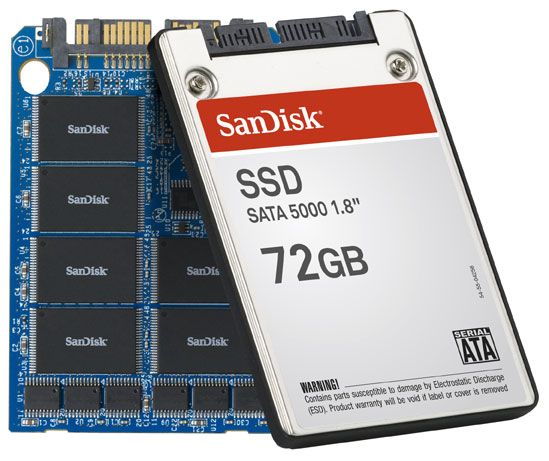
72GB SanDisk SSD SATA 1.8"

On 1/16/09, Computer World published an article where the author paints a future full of SSDs. He puts forth the idea that drives will not only be replaced by memory chips, but that these memory chips will be integrated into the motherboard, doing away with the SATA interface. There are a number of things I don’t agree with in that article, and I’m not the only one who’s annoyed. Others have called out the author for his statements as well.

For one thing, let’s remember that computer memory once relied on chips integrated into the central circuits. Going back to that sort of approach would be like going back in time. Weren’t we supposed to progress, not regress? The advantages have to be truly worthwhile, and I’m not convinced.

A claim made in the article is that of increased speed: “By making the drive part of a system’s core architecture — instead of a peripheral device — data I/O performance could initially double, quadruple or more.” I love these nebulous claims, don’t you? It could double, quadruple or more. Hey, why not 8x faster? Maybe 16x faster? Let’s just inflate the numbers, it looks great on paper…

From my experience, I noticed that transfer speeds to flash memory vary tremendously — based on how much used space there is on the memory itself, or the file size. Larger files transfer much faster than smaller ones. Sure, in my experience, there was a SATA or USB interface in the way, but that doesn’t change what happens with the flash memory itself.

We should also keep in mind that flash memory is limited in the number of write operations it can take before it expires. On the other hand, regular hard drives have a much longer life span. I for one don’t want to be in a situation where I have to replace an expensive SSD on my laptop because I’ve saved one too many files and it has just gone belly up.

That brings to mind another issue: will these SSDs be soldered onto the motherboard, or can I pull them out and replace them as needed, like I do with RAM modules? I think you can readily imagine how inconvenient it would be to have to service your computer if its SSD is soldered onto the motherboard.

How about space on the SSD? What do I do if I want to increase the space on my drive? Do I have to buy another full SSD? I’d much prefer we had SSD bays, like RAM bays, where I could stick additional SSD modules to automatically increase the space, just like it works with RAM. A partitioning tool integrated within the OS should then allow me to resize my existing partitions and spread them over the newly available space, or to create another partition out of that space.

I keep hearing people say that 250GB or 160GB is plenty of space for your laptop. That’s nonsense. I’m always maxing out my laptop’s hard drive when I go on trips, because I fill it with photographs and videos which I then unload to my external storage when I get home.

I find that for my needs, a 500GB or 1TB laptop hard drive is what I need right now. At some point in the future, I may need more. I haven’t started working with HD video for example. I know that’s a tremendous space hog. I think a 1TB drive would be the minimum I would need if I started to work in that arena.

With SSDs, price is still an issue, and so is space, at least for now. I just don’t find it practical to spend money on SSDs at the moment, and I don’t think my opinion will change unless their prices and storage specs start to match those of regular hard drives.While we’re on the subject of price, where in the world did Gartner get their figure of 38 cents per gigabyte? That’s the figure quoted in the article. I’m sorry, Gartner, but you folks need to check your math. I came up with 9 cents per gigabyte recently.

On the other hand, I do understand that the additional interface between the motherboard and the hard drive is a bottleneck. If we can do something to speed that up, I’m all for it. But you’ve got to prove to me (and to other consumers out there) that your technology is affordable and reliable and offers tangible benefits other than tech media hype.

I’m also excited about the possibility of increasing drive space on a modular basis, where I simply put in more SSD modules in expansion bays on the motherboard, like I do with RAM. But there’s no indication that we’re heading in that direction from the article itself. Until we get to that point, I’ll still continue to think that SSDs are aimed at the wrong market segment. Not everyone is a MacBook Air-toting management type. The bulk of computer users out there need affordable technology with plenty of storage, well made, and reliable over 3-4 years or more. SSDs just aren’t there yet.

Image used courtesy of SanDisk Corporation.

Standard