Thoughts

On the automation of surveillance

We are seeing an increased use of surveillance at every level of our lives (on the street, at work, online, on our phones, etc.), and we see increased use of automation (simple, algorithmic and AI) to sort through all our activities. It’s a worrisome trend. We should be asking questions such as:

  • Who’s surveilling us and why? It’s easy to answer this with two terms: government and big tech, but the answers can be and should be much more granulated.
  • Who’s keeping track of that data? Exactly who are the players who have access to our data, who are running analysis on it and who are storing it, backing it up, etc.
  • How long is our data kept and where?
  • When algorithms decide our human fate, is that just? Should we tolerate it?
  • Who wrote the algorithms and are they skewed in some way? Given the recent censorship issues on Facebook and Twitter, I think algorithms are clearly written with an agenda in mind and they can be easily skewed to fit the needs and wants of the companies who apply them.
  • And many more questions like this…

I’d first like to point out the following: we live in a human world, and we’re meant to relate to each other in human ways; it doesn’t work well otherwise.

However, as I’ve pointed out in past posts, the world is too full of humans, and there are many complications that arise from that. Chief among them is this: an unusually large proportion of them aren’t relating to their fellow humans in human (or humane) ways and they are engaging in violence, murder, kidnappings, rape, pedophilia and other perversions, vandalism, theft, looting, corruption at all levels, drugs, road rage, terrorism, con schemes, etc.

That’s when law enforcement and governments, unable to keep track of every one of these so-called “humans” with existing personnel, turns to computers, mass surveillance, facial recognition, algorithms that identify suspicious behavior, etc., in an effort to sort through the mass influx of human faces, some of which are engaged in criminal/inhuman activities. The issue of why personnel cannot be ramped up in these institutions so that humans can sort through and keep track of these activities is up for debate, but I think we can all agree that when surveillance and automation are used to flag and identify the activities listed above, so that humans can sort through them, it is probably okay, and it is probably to be expected.

It is not okay when automation of surveillance is used to:

  • Spy on our private activities simply for the purpose of keeping track of everything we do, “just in case” we do something wrong,
  • Restrict freedom of speech, such as when social media algorithms simply won’t allow us to post certain links or words on our accounts, or will outright censor certain subjects or people,
  • Dig through our online activities and disqualify us from obtaining a job simply for having posted something questionable in the past, or to destroy our lives altogether, as today’s cancel culture and supposed race inequality movement is actively trying to do to so many people,
  • Monitor all our communications, such as our messages, emails and telephone calls, in the name of national security,
  • And the list can probably go on and on…

Here’s my understanding of the direction of this trend so far: as long as humans will continue to grow in number and to present a very complex environment where it’s thoroughly difficult or outright impossible for a limited number of people involved in law enforcement to keep track of illegal activities, the arguments for the use of automation in surveillance (to the point where artificial intelligence will handle a large part of it) will continue to mount. Also, as long as hidden agendas will continue to be tolerated in government, in the media and in academia, hidden surveillance will continue, for various nefarious purposes, such as persecution, extortion, a building up of arguments to support certain policies, etc.

The solution as I see it is to decrease the world population till we stop being numbers and countless faces and we become communities once more, where we know everyone who lives around us, where we are not one nameless face in a mass, in a ridiculously large throng of people, but a meaningful, contributing member of a neighborhood, a village or a town. That’s when surveillance and its automation will no longer matter. It won’t even be an issue anymore. We’ve got to stop multiplying like rabbits. We’ve got to stop focusing on large numbers. We’ve got to focus on quality, not quantity. We’ve got to focus on meaningful human interactions and meaningful numbers when it comes to our communities and our towns. To those of you who live in smaller communities, what I’ve just said is obvious, but to those who still prefer to live in large cities, I think my words will sound quite strange. And for them and because of them, mass surveillance and the automation of surveillance will continue…

Standard

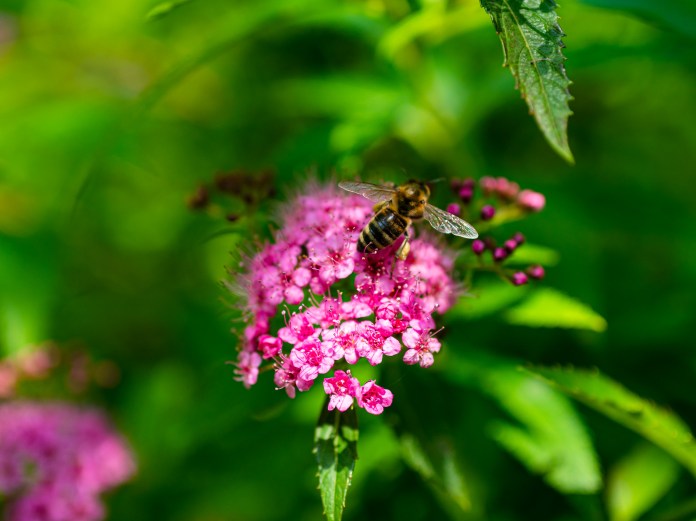
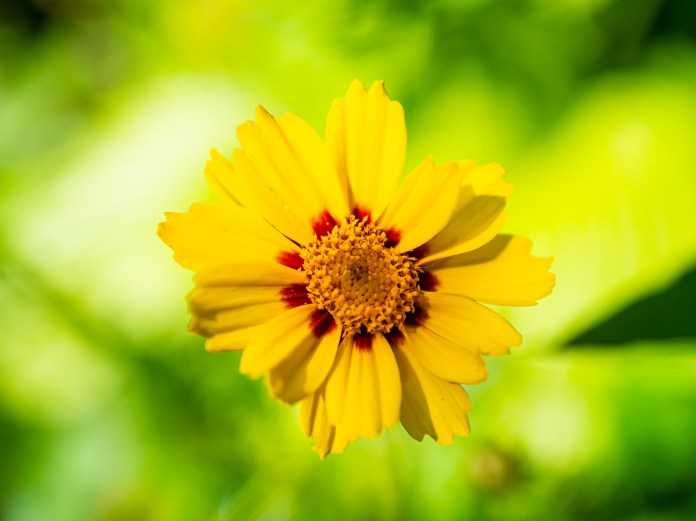
These are photos of summer and autumn flowers from our garden.

Places

Today’s images

Gallery
20 Years
Thoughts

Twenty years

This website turned 20 on the 7th of August. I didn’t notice, nor did I remember, although I’d looked forward to this milestone since its 12th anniversary back in 2012. Life has a way of refocusing one’s attention, and this year, of all the recent years, I think we can all say has been… a little nuts (or completely crazy, depending on where you live in the world).

For those of you interested in how this website came to be, they details are listed on my about page (scroll down to the last paragraphs there).

That’s all: I get a virtual pat on the back — from myself — and we’ll all carry on. Thanks for being a subscriber (where applicable)!

Standard
Thoughts

Once again, on the problem of noise

I’ve written repeatedly about noise issues in distant and recent past. Noise is something that affects me deeply and not in pleasant ways, so it’s an issue that’s always boiling beneath the surface, so to speak. Particularly during the quarantine, I was able to enjoy such quiet times, that I found the contrast between that period and these once-again too-busy times extremely jarring. I’m writing about it this time because I may have come up with a better way to word the noise laws, for those that are interested. There are two parts to it, as detailed below.

First, here are three posts I’d like to point out:

I was prompted to think about this by a recent incident, where the noise violator took advantage of a loophole in the Romanian laws against noise violations. It’s an optional loophole that the police can choose to apply in cases where the violator has relations on the police force or the local government, namely to require the use of a special device that measures the decibel level of the noise, which in Romania involves scheduling a visit from a special police team from another city, instead of relying on the complaints of a person or persons, or the observations made by the police officers who’ve responded to the call. In short, if you’re bribing someone at the mayor’s office or on the police force, you can get away with some serious noise violations. I hope you can also see how not solving a noise violation on the spot and requiring a scheduled site visit from a police team with special equipment is clearly a loophole that’s meant to be misused. In this particular recent case, I’m talking about a habitual noise violator with a history of more than 8 years of disturbing the peace of the historic city center.

Part 1

My proposed wording for noise violations is this: if the noise can be heard outside the perimeter of the noise violator’s property, it must be fined; by the same principle, if the noise can be heard outside of the noise violator’s car, it must be fined. This would force these callous, incredibly insensitive people to adjust the volume of their music, events and/or arguments so that their neighbors cannot hear the noise. If it can be heard, it can and should be fined. The only loophole I would put in is for construction or other work noises, which I find to be the only noises that are justifiable. Construction must occur, whether it’s new construction, renovation or restoration, and work such as mowing the lawn or doing various house repairs must also go on and is, I would say, necessary, so it must be tolerated and understood, within reason. But any of the non-work stuff must and should adhere to the simple principle of not disturbing the neighbors, whether they’re in the house next door or the car in the next lane, or passersby trying to enjoy a quiet walk through town. I think the current schedule of “quiet hours” that exist on the books in most countries, such as 10 pm – 8 am and a “siesta” from 1 pm – 2 pm in the afternoon, is a good schedule and should be kept, but it should be literally enforced by the book, not left up to the interpretation of corruptible policemen and local governments. And I think that even if a noise violation occurs outside of those quiet hours, as long as it meets the very simple criteria described above, it still qualifies as a noise violation and it must be fined. Someone else’s loud music or screaming is still extremely bothersome, no matter if it happens at 3 pm or 3 am. Should they want to blow out their eardrums, let them do so with the aid of headphones, not loudspeakers.

Enforcing the new wording should also be very simple: using the guidelines above, first-time noise violators must get a written warning. Any time after that, no matter what, they get fined, by the book. In other words, noise violators with a long history of breaking the law should never get a break. They should always get fined. The time for warning them has long since passed.

Part 2

I would also suggest a restriction on the use of amplifiers and speakers for public events organized by local governments to only those venues that are specifically equipped for noise abatement and/or are physically distanced from residential areas, such as concert venues. This would do away with loud events that are heard throughout entire neighborhoods or towns. I’m not saying public concerts shouldn’t happen in town squares, or that musicians shouldn’t be allowed to play on the streets, but the noise they generate must not be amplified artificially. It must be generated solely by analog musical instruments or their voice. No microphones, no speakers. That way, it simply wouldn’t travel as far and as artificially as the deafening stuff blared through loudspeakers, and would become a more natural sound that can be enjoyed within its physical context.

I think those governments that are so inclined to apply these rules would quickly see a much-needed improvement in the noise levels in their cities, and I know for a fact that most working people would appreciate having more quiet time to focus on their tasks.

Standard
Thoughts

A pandemic of laziness

The rhythm of life in a temperate climate with four seasons is, understandably, cyclic. Spring is when nature thaws and outside work begins. Summer is when the work goes on in earnest, with a view of the cold seasons to come. Building work, for example, requires the summer heat for foundations, masonry, painting, etc. Agricultural work is spread out through the three warmer seasons. Autumn is when nature begins to wind down and withdraw into itself, and people tend to do the same. The focus of the work shifts to gathering and getting ready for the winter that is almost in sight. The coming freeze is made inescapably clear by the cold, frosty mornings of autumn. The signs are all there and no one can deny them.

As I worked on our NGO’s charitable projects last year, which involved a lot of landscape and building work, I saw certain signs as well. By the end of the summer and in the fall, it was undeniable to me. Wherever I went, people just didn’t want to work. The concept of an honest day’s work got lost on most people. Somehow, it’d become esoteric to them. I have already attempted to exorcise it back into something known and unmysterious, through a post I wrote on the very subject.

Then, winter came and with it came a certain time when we all had to put… time… aside for reflection (or drivel, as the case may be). We all call that time now “the coronavirus pandemic”. It stretched on and on through spring and just as summer came round the corner, we were free (almost) once again to resume our work. The pace did indeed become frenetic, given the prolonged pause we were all forced to partake, but to my dismay, most people did not choose to engage in productive work, re-confirming last year’s observations.

I would have thought that economic activity would begin with a fury, with people wanting to make up for lost time, especially given the dim prospects of facing more waves of restrictions and economic troubles in the fall and winter but no, the frenetic pace was set mainly by people trying to organize parties and barbeques, to find places to vacation and by those eager to protest and vandalize anything and everything under the sun. I think I can best describe this frenetic post-quarantine activity with one phrase: no rhyme or reason whatsoever — wild flailing of arms and tongues, mad goings to and fro, but ultimately meaningless.

As I pointed out in a previous post, pent-up frustrations will out, and perhaps I’ll write a future post on the anarchic, asinine, “bite the hand that feeds you and shit your own bed” tendencies of the current post-modern ideologies that are driving these protests, or rather driving the people brainwashed into believing them into utter chaos and certain disaster, but for now I’d like to focus on an epidemic of much larger proportions than the coronavirus epidemic: rampant, universal laziness. At some point, this might have been called endemic, but we can safely call it epidemic, and we could even go so far as to call it a pandemic: a global pandemic of laziness. Many more people are infected with it than COVID-19 and with no cure in sight, many will die from it as well.

When I look at the generations of today that are of working age, what I mostly see is a blithe indifference to the inescapable, undeniable fact that life must contain a certain proportion of work. I’m talking about real work, hard work, an honest day’s work, backbreaking work, drudgery, sweaty bits and bobs, wet back, red neck kind of work. It simply must. Our mammalian bodies need this physical work in order to stay in condition. Going to the gym for an hour or so a few times a week is a poor substitute for proper physical work. Life requires work. Achievements require work. Even the pleasurable bits of life consist of physical labor, as horny teenage boys with sweaty palms will surely attest, several times a day.

And yet, once the people of today reach working age, they begin to assume, wrongly, that life can somehow function without work. Never mind us working, the robots will do our work and the government will pay us a universal basic income that will free us from the torture of work and allow us to focus on our creative sides, such as scratching our balls and asses as we watch television, or liking absolutely inconsequential posts on Facebook or Instagram. Let’s just do a bit of shopping with that free government money, let’s throw in a bit of work on the car, like upgrading the subwoofers or mufflers (for the completely tasteless), maybe get a little tattoo here and there, a bite or ten of fast food, and life is good and complete for probably 90-95% of people.

While this kind of stuff may allow various societies to slide by for a number of years, coasting on the hard work of a few motivated individuals, things will inevitably slip from existence to subsistence, and that is where the civilized world is headed if people don’t start doing some proper work.

Nobody wants to do physical labor anymore. Everyone wants to click around on a computer screen all day for greater pay. Most of the “white collar” work has become a joke, with everyone pretending to work but actually doing as little of it as possible, and very few people willing to do “blue collar” work, which is actually what builds and maintains civilizations. I’m not saying that blue collar work builds the arts and humanities or the sciences, but our physical world requires blue collar work in order to build and maintain the infrastructure that supports the higher endeavors. Let me put it to you this way: someone’s gotta lay the internet cables, build the routers and assemble the phones and tablets that you use to faff around all day while pretending to work. How about the obsession of modern man with food, which must be stuffed into their mouths at all times, in all sorts of forms? Out of the population of any civilized country, the percentage of people engaged in agriculture is ridiculously tiny, and in my view, it’s not because of agri-giants, it’s because no one wants to do the back-breaking work of tending to the lands and the farms. Thank goodness there’s farm machinery available that allows fewer people to still do all of the farmwork that’s needed to keep all those office workers well-fed to the point of morbid obesity, because we’d all be in for a seriously rude wake-up call otherwise.

I look around me and I see so few people willing to work hard, willing to put in an honest day’s work. I don’t care what their excuses are. Even if it’s just for a crummy, humdrum job, someone with a backbone will want to put in some good work so they can sleep well at night. Apparently, a lot of people have lost their backbones, because most of them aren’t doing good work. Look around you. Out of your circle of friends and acquaintances, how many of them put in an honest day’s work? Don’t tell me, just figure it out for yourself. Isn’t it worrisome once you do the math? Heck, look at yourself and be honest, you don’t have to tell me, you just have to admit it to yourself: have you been putting in an honest day’s work, day in and day out, in recent years? Please don’t post a comment to brag about how much work you’re doing. Just do a bit of self-assessment and be brave enough to admit to yourself where you stand.

I’m not saying we should be working to the point of breaking down our bodies, day in and day out. We should have a balance. Those of us who predominantly do office work should have 1-2 full days of proper physical labor each week, in order to keep things in balance. Those of us who predominantly do physical labor should have 1-2 full days of restful work each week, once again in order to keep things in balance. And wouldn’t you know it, that’s what weekends are good for? Office workers should, for their own health and personal satisfaction, engage in serious physical labor during the weekends, around their houses or in volunteer work with various organizations in their communities. Factory workers and those who do mainly physical labor should, for their own health and personal satisfaction, spend their weekends educating their minds by reading or watching documentaries on various subjects, meeting with friends and having meaningful conversations (not getting drunk and stuffing their stomachs).

I for one am having such a hard time finding people to help us with our physical work. About the only people who are willing to work, from my experience, are the older generations who’ve grown up under very different circumstances than today’s working youth and adults, and active or ex-military folks, who’ve served and know what it means to work hard. All the rest of them are just fluff. They simply can’t handle a full day of physical work. Most people I’ve seen are ready to fall down after a half hour of serious work, and that’s so problematic, in so many ways. The youth are the worst: they’re pampered little simps who parade in and out of coffee shops, instagramming their meaningless, unproductive lives, unable to read or write properly, subject to every whimsy of their “influencers”. I have seen so few of them that know the value of work. If I were to estimate, I think less than half a percent would be a fairly accurate figure. Everyone’s trying to make a fast buck without the work. It simply doesn’t bode well for the future of work and for our future as the human race. If things keep going this way, I truly hope that robots will become advanced enough and affordable enough so they can do the hard work, because everyone will simply be too old, too fat or too frail and out of practice to do anything worthwhile.

PS. I realize the youth critique is historically repetitive, and that virtually every older generation decries the state of their youth, yet I look at how much the older generations have accomplished and I am in awe. With every passing generation, we are accomplishing less and less, and we’d be in seriously bad shape if leaps in productivity, invention, automation and mass production didn’t offset the gradual and certain loss in elbow grease. Less and less people are doing the work that carries our civilization forward. Most are sitting back and benefitting, without having contributed. I look at what the young generations are accomplishing right now (triggered SJWs, influencers flogging shit left and right, carpentry faffers on YouTube more concerned with sucking up the dust in their workshops than doing any substantive woodwork, etc. ad nauseam), and I shudder.

Standard