A couple of weeks ago, my jaw dropped as I browsed Twitter. SNL had put together a skit lampooning a new show on CBS called “Undercover Boss“. I didn’t even know the show existed, much less that it had been on SNL.
Since the show’s launch after the Superbowl, it turned into a nationwide hit, because it struck a vein with viewers. Several powerful themes are at work in each show, themes which I knew would make the show a success when I thought of it, such as the contrast between the rich and the poor, the proverbial desire to “be in someone else’s shoes”, and the will to find out what’s wrong and right it.
Don’t get me wrong. No one stole my idea. There was no foul play involved. I was simply late to the table. When I thought of the idea, the show was likely already in development. By the time I was looking for a production company to help me develop the show, “Undercover Boss” was already in production. Two different people had the same idea — well, almost the same idea, because my concept was slightly different, as I’ll explain in a bit — but one of them had it sooner than me.
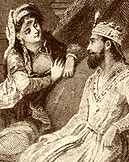
 My concept of the show differs somewhat from what is currently in production. I thought of it from a different angle perhaps. I’m not sure how many of you are familiar with the story of Scheherazade, the mythical Persian queen and the teller of “One Thousand and One Nights“, but I read those stories avidly as a child, and I still remember them.
A recurring theme in some of her stories is that of the caliph (ruler or king if you will) disguising himself in different ways and going out into his country by himself, or accompanied by a trusted servant, to see first hand how things are going, and what he must do to make things better. There’s a certain element of thrill in taking on a different position in life, particularly for someone who’s been accustomed to the royal treatment all his days, and clearly, there’s a benefit to his subjects if he gets to know how they live and is motivated to change things for the better.
Nowadays, there are very few kings left, and they haven’t got much power, unfortunately. Presidents don’t need to disguise themselves to find out how things are, because in those countries where there is enough freedom of speech, everyone is eager to tell them just what needs to be fixed. Even in countries where there is little freedom of speech, like Iran, people will risk life and limb in order to voice their beliefs.
However, there are clearly places where people are afraid to speak their minds for fear of retribution, and that is in corporate environments. In small companies, the owner or director generally knows what’s what, but in large companies, particularly multi-national ones, there are so many layers between the workers and the top guy or gal that many of them only know their company through the figures that filter up through the ranks. If someone has an idea about how to do things better, or is unhappy with something, they’ll likely keep their mouth shut for fear of losing their job, particularly in these tough economic times. So how is the CEO to know what’s really going on, and how his or her policies affect each John or Mary that works at their companies? They can’t, unless they, too, do what the caliphs used to do.
So far, so good, right? Well, I didn’t want to have camera crews follow the “new guy” around all day long. That’s pretty much a dead giveaway and doesn’t encourage true reactions. I wanted to film with concealed cameras and microphones. In situations where that wasn’t possible, we could have planted cameras in concealed locations, or used “co-workers” who were really production crew members, carrying the concealed cameras themselves. I also wanted to film an entire season without airing a single episode, so word wouldn’t get out about what we were doing. Then after filming a whole season, and doing as many of these shows as possible, we would have started to air the episodes. Now that would have been truly amazing.
But I’m not the one with show running on CBS, am I? I’m just the guy with the me-too idea — this time, anyway — so the important thing is the folks who had the idea first got it made, and it’s successful, and that’s good, not just for them, but also for the American worker, because I believe in the power of this show to encourage positive changes in America’s corporate environment, changes that can make things better for the average worker.
I have a few more good ideas like this one. If you’re a serious production company with the resources to help me develop and pitch a hit show to a TV channel, please get in touch with me. I’d like to move fast on my other ideas, so I won’t be left in the dust again. I look forward to talking with you!