This weekend, Ligia and I participated at an event called “Tabăra lui Andrei”, put together by the team at Țara lui Andrei. They organize these wonderful camps for underprivileged children every summer in the village of Bran, in order to provide training, employment opportunities and personal development courses for these children. Each camp lasts about a week, with teams of about 60 children brought in to learn how to grow into productive, well-balanced people who like what they do in life. They do miracles! Normally, you’d say you can’t do much with someone in a week, but you’d be surprised at the results they get!
This week’s camp was for chefs and waiters. At the end of the week, after a lot of on-the-job intensive training and motivational seminars, they organized, cooked and served a three-course meal to a group of Romanian celebrities, notables and government officials invited to attend the dinner party.
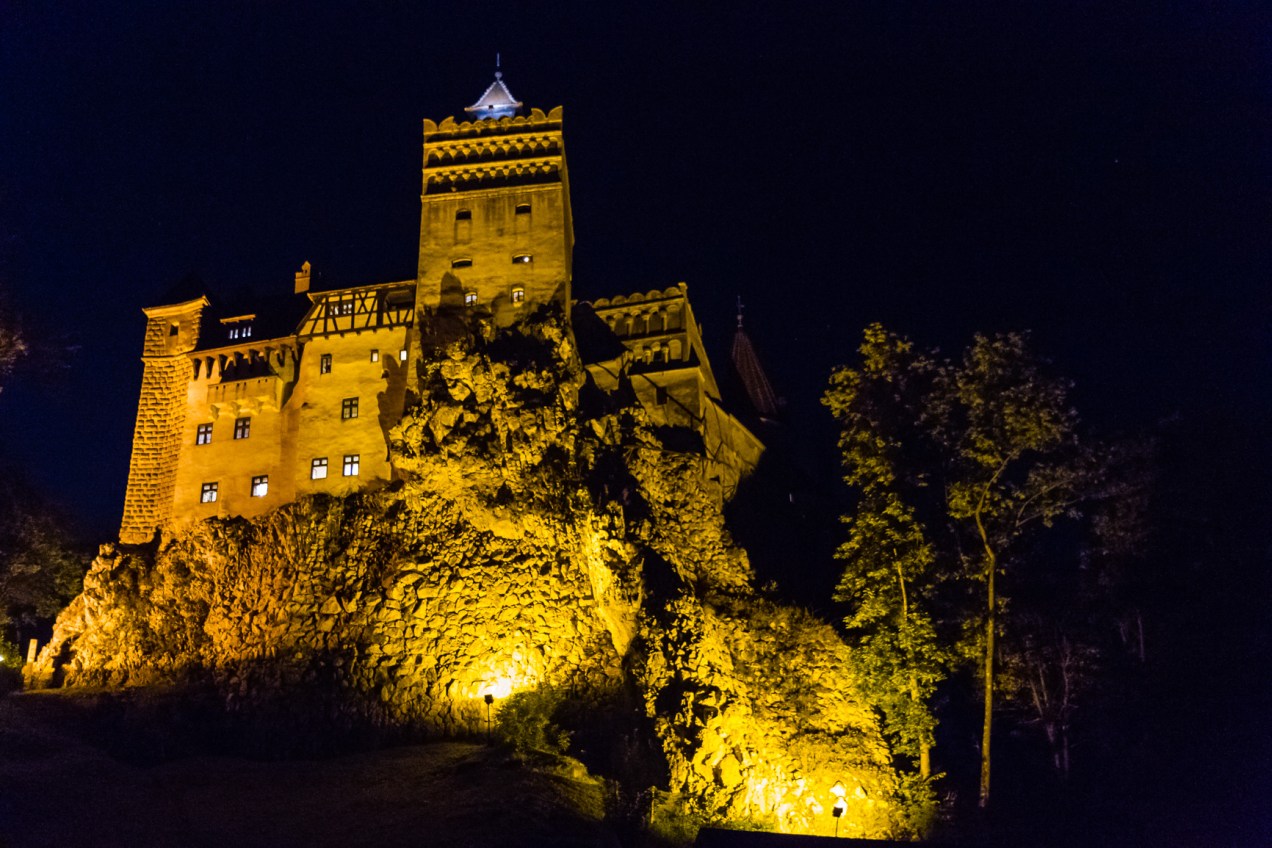
We, the dinner guests, were treated to a wonderful event and were blown away by the professionalism of these children of high-school age. The evening started with appetizers, continued with a private tour of Bran Castle and culminated with this special dinner, served in the newly opened Castle Tea House.
I’d like to take this opportunity to thank the good people at Țara lui Andrei for the amazing, life-changing work they’re doing and for the impact they have on the lives of these children who get to see life through a different lens, even if only for a little while, and then get employment opportunities and a chance at a better life. I’m so proud that this kind of work is going on in Romania!
I also made a video where I talked a little more about this, and there’s a photo gallery here as well.
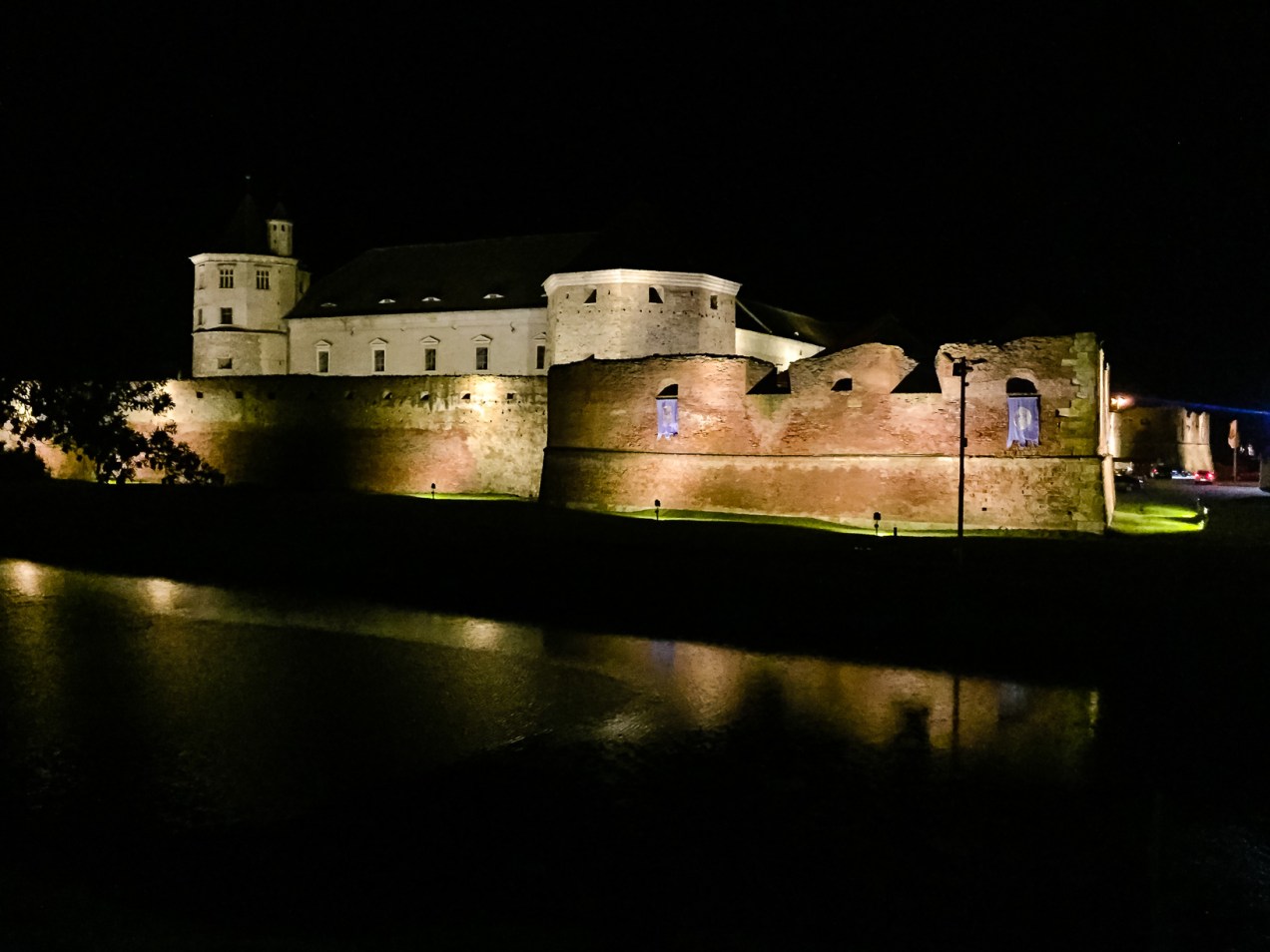
Ligia and I were in attendance at a wonderful event last night, organized by the good folks from Proud To Be Romanian at Cetatea Făgărașului, a medieval fortress whose construction began in 1310 and continued through various repairs and improvements well into the 1630s.
It goes without saying that I love medieval fortresses and castles. I feel right at home whenever I visit one. I loved the architecture here, the various tunnels and cellars that run under its walls, the beautiful, grandiose rooms and hallways but most of all and perhaps a little odd, the window encasements which were made of carved stone. They were so beautifully and delicately made and were perfect for the style of the castle.
We got there a little before the entertainment started. Being there ahead of time gave us the opportunity to explore the castle and take some photos, which you’ll get to see here. The evening’s festivities involved wine and champagne tastings, hors d’oeuvres, some networking, a ceremony celebrating those who are doing good things in Romania (Ligia was among those who were feted) and a concert in the castle’s inner courtyard.
La evenimentul “Proud To Be Romanian” organizat la Cetatea Fagaras pe 22 iulie 2017
La evenimentul “Proud To Be Romanian” organizat la Cetatea Fagaras pe 22 iulie 2017
La evenimentul “Proud To Be Romanian” organizat la Cetatea Fagaras pe 22 iulie 2017
La evenimentul “Proud To Be Romanian” organizat la Cetatea Fagaras pe 22 iulie 2017
La evenimentul “Proud To Be Romanian” organizat la Cetatea Fagaras pe 22 iulie 2017
La evenimentul “Proud To Be Romanian” organizat la Cetatea Fagaras pe 22 iulie 2017
La evenimentul “Proud To Be Romanian” organizat la Cetatea Fagaras pe 22 iulie 2017
La evenimentul “Proud To Be Romanian” organizat la Cetatea Fagaras pe 22 iulie 2017
La evenimentul “Proud To Be Romanian” organizat la Cetatea Fagaras pe 22 iulie 2017
La evenimentul “Proud To Be Romanian” organizat la Cetatea Fagaras pe 22 iulie 2017
La evenimentul “Proud To Be Romanian” organizat la Cetatea Fagaras pe 22 iulie 2017
La evenimentul “Proud To Be Romanian” organizat la Cetatea Fagaras pe 22 iulie 2017
La evenimentul “Proud To Be Romanian” organizat la Cetatea Fagaras pe 22 iulie 2017
La evenimentul “Proud To Be Romanian” organizat la Cetatea Fagaras pe 22 iulie 2017
La evenimentul “Proud To Be Romanian” organizat la Cetatea Fagaras pe 22 iulie 2017
La evenimentul “Proud To Be Romanian” organizat la Cetatea Fagaras pe 22 iulie 2017
La evenimentul “Proud To Be Romanian” organizat la Cetatea Fagaras pe 22 iulie 2017
La evenimentul “Proud To Be Romanian” organizat la Cetatea Fagaras pe 22 iulie 2017
La evenimentul “Proud To Be Romanian” organizat la Cetatea Fagaras pe 22 iulie 2017
La evenimentul “Proud To Be Romanian” organizat la Cetatea Fagaras pe 22 iulie 2017
La evenimentul “Proud To Be Romanian” organizat la Cetatea Fagaras pe 22 iulie 2017
La evenimentul “Proud To Be Romanian” organizat la Cetatea Fagaras pe 22 iulie 2017
La evenimentul “Proud To Be Romanian” organizat la Cetatea Fagaras pe 22 iulie 2017
La evenimentul “Proud To Be Romanian” organizat la Cetatea Fagaras pe 22 iulie 2017
Simona-Mirela Miculescu, Ligia and Valentina Vasile in the throne room of Cetatea Fagaras. La evenimentul “Proud To Be Romanian” organizat la Cetatea Fagaras pe 22 iulie 2017.
La evenimentul “Proud To Be Romanian” organizat la Cetatea Fagaras pe 22 iulie 2017
La evenimentul “Proud To Be Romanian” organizat la Cetatea Fagaras pe 22 iulie 2017
La evenimentul “Proud To Be Romanian” organizat la Cetatea Fagaras pe 22 iulie 2017
La evenimentul “Proud To Be Romanian” organizat la Cetatea Fagaras pe 22 iulie 2017
La evenimentul “Proud To Be Romanian” organizat la Cetatea Fagaras pe 22 iulie 2017
La evenimentul “Proud To Be Romanian” organizat la Cetatea Fagaras pe 22 iulie 2017
La evenimentul “Proud To Be Romanian” organizat la Cetatea Fagaras pe 22 iulie 2017
La evenimentul “Proud To Be Romanian” organizat la Cetatea Fagaras pe 22 iulie 2017
La evenimentul “Proud To Be Romanian” organizat la Cetatea Fagaras pe 22 iulie 2017
La evenimentul “Proud To Be Romanian” organizat la Cetatea Fagaras pe 22 iulie 2017
I also shot some 360° video with my Giroptic camera (it’s embedded below and may not display properly in certain browsers like Safari on a Mac). I have to apologize for its quality. While the novelty of this kind of video kind of makes up for the camera’s technical inability to record proper HD video, it’s not enough to recommend it. And when you hear the bad sound recorded with its microphones, you’re even more put off. Again, sorry… If any of you know how to improve the quality of the video captured with this camera, please let me know.
But enough whining! The event was great, the champagne and the wine were great and the castle was amazing! We loved it! One of the people we got to meet was Mrs. Simona-Mirela Miculescu, Representative of the UN Secretary General and Head of the UN Office at United Nations (you’ll see her in one of the photos with Ligia) and you should have seen my face when she said she knew me and liked my show, Romania Through Their Eyes… 😳
Thank you Adriana and Rob for putting this wonderful shindig together!
I’d like to help those of you who like me, are dealing with anger issues, and I also want to add a few original pieces of advice to the growing body of self-help articles and techniques for anger management. That is why I made this video.
What follows is a close transcript of what I said in the video.
First, you’ll want to ask what anger is, because the definition varies based on the kind of anger you feel.
There’s normal anger. It’s normal for everyone to get angry every once in a while. That kind of anger can even be used for good, such as to spur you on to make changes for the better in your life.
There’s also the bad kind of anger, the kind that takes over you, makes you ready to explode and hurt someone. It’s the kind where you lose control and do things you regret afterwards. It’s the kind of anger that scares others and even yourself, because you don’t know what you’ll do once it takes over. This is the bad anger. You have to take care of this anger, you have to fix yourself so you don’t get this angry anymore, before you do something that you might regret for the rest of your life.
The first step when you find yourself angry is to get on top of the anger. Realize you’re still in control. That’s why we have these large brains with a very well developed cortex. We have the power to get on top of our base instincts. It takes a lot of effort but it can be done. If you feel you can’t do it, do the next best thing: get away from the situation. Walk away, get as far away as you need in order to stop feeling the tension of that situation and begin to calm yourself down.
Once you’re calm, you may choose to have a discussion about what caused the anger. Obviously, this only works in situations where the other person or persons are available and amenable to such things. Stay objective, DO NOT BLAME the other but express what triggered your anger and what you and the other person can do to avoid that sort of trigger in the future.
You can also choose to work out your anger through physical exercise. I’ve done this myself but let me tell you, it only works when you’re not that angry. When you’re so angry you’re bordering on mad, you can work out all you want, the anger will still be there and you may also risk physical injury to yourself, because you’ll be tempted to push your body beyond its limits in order to spend that anger inside you.
Anger is disruptive at best and can be lethal at worst — lethal to you or to others. You can easily have a heart attack or a stroke when you’re angry and the effects of those incidents can be temporary or permanent. You can also easily injure or kill others when you’re in a fit of anger, because you’re not in control of yourself, you’re pumped up on fight or flight hormones and capable of greater physical strength than normal.
So it behooves you to control your anger, to find out what triggers it and to work on yourself in order to find out the underlying causes for your anger. It may be that you’re just naturally irritable, it may be that your upbringing caused you to be angry, because you were abused or mistreated or your family dealt just as terribly with anger, giving you a bad example that you’re now mirroring.
Look for a good CBT (Cognitive Behavioral Therapy) practitioner. CBT has been proven, time and time again, to work much better than medication. Something that helped me is Ferasa. It’s an ancient Arabic face reading practice. The Ferasa practitioner is trained to look at the subtle movements of the muscles in your face and to sense what you are feeling, then he will ask you questions that will cause you to eventually find your problems and face them. The thing is, you can’t hide what you’re feeling or thinking from a knowledgeable Ferasa practitioner. He will continue to ask you probing questions until you are forced to deal with your problems.
The point is not to ball up in a fetal position and cry about how much of a victim you are. That’s not productive and it won’t solve your anger. The point is to find out what’s causing your anger and acknowledge that cause to yourself, fully. You want to own that cause and you want to say to yourself, over and over, until it sticks, that what happened is in the past, that you accept it, that you forgive yourself and the others involved, and that you’re moving on. That you’re an adult now, that you have a good life, that you are a good person and that you are choosing to behave rationally and considerately, each and every day.
It will also help to have a regular physical exercise schedule, at least 2-3 times per week, and it will also help you to meditate at least 5 minutes in the morning. It’s much better to do it in the morning, because you’ll be starting your day by calming yourself down. And you may also find that you’ll want to do a 5 minute meditation at night, to close out the day, where you acknowledge the good and the bad situations that happened that day and you promise yourself to do better the next time.
I am happy to let you know that things are underway within the EU to ensure that products will last longer and will be easier to repair in the future. These are proposed measures at the moment, they’re not law, but they soon could be. The idea, according to the EEB (European Environmental Bureau) is to:
Extend the lifetime of products
Extend the availability of repair services
Improve consumer information and rights
Make these measures binding, not voluntary
If you live within the EU, I encourage you to contact your representatives to the EU Parliament and to ask them to support these proposed measures.
Even if this isn’t law yet, I am happy to see my own feelings on the matter mirrored by those in a position to do something about it. You may recall that I wrote an article called “Truly sustainable computing” back in August of 2015, where I proposed that desktop computers have a projected lifespan of 20 years and laptops and mobiles phones have a projected lifespan of 10 years.
The proposed EU measures would apply to every category of products, not just to computing devices, so things like cars, electronics, appliances would all be covered by the new regulations, ensuring we would once again have quality products that last a long time.
I say “once again” because those of you who are younger than me may not recall we had this sort of thing before the 1970s. The idea of “planned obsolescence” was introduced in the 1960s by manufacturers and that’s when things started to go downhill for products in terms of durability, repairability and build quality. You could still get kitchen appliances made in the late 1960s that looked and worked perfectly even in the late 2000s. You can no longer do that with today’s appliances.
It’s irresponsible in so many ways for us to generate mountains of e-waste every year and it’s doubly irresponsible for manufacturers to make them, one because they’re using the Earth’s resources without any regard for the future and two, because they make them easily breakable and disposable, contributing to the enormous amounts of waste that we generate as a race. It’s time we did something quantifiable and legally binding about this!
Back in March, Ligia and I attended a retreat organized by Do Good Academy on a mountaintop in the region of Brasov, Romania. At that retreat, I sat down with the co-directors of the Hippocrates Health Institute, Brian Clement and Anna Maria Gahns-Clement, for an interview that focused on the questions asked most frequently about raw food by Romanians. The interview was then featured in the July episode of De Vorba cu Ligia, one of our web shows here in Romania. Since the interview was recorded in English, I thought you might enjoy it as well.





 Raoul Pop