Reviews

Two feature requests for Apple’s Pages

I sent the following enhancement request to the Pages team via the Apple website and figured it’d be a good idea to share it here as well. Perhaps you have some suggestions for me, something that could help me in the meantime?

  1. Better memory management. My wife and I write graphics-rich books (recipe books, piano methods etc.). Currently, there is no way to layout an entire book in a single Pages document, because after 5-7 pages or so containing digital photographs imported at print-ready resolution, Pages runs into a memory management bottleneck and every keystroke takes 1-2 seconds. We’re forced to either work on individual pages as separate files, which makes pagination and text flow a real hassle, or to divide the book into sections of a few pages each and basically run into the same pagination and text flow issues.
  2. Support for offset printing in Pages. It’s great that I can export to digital book formats (ePub, PDF) but what I really need is support for export to offset printing methods. When I export to a PDF from Pages, the text is never 100% black. It’s a mixture of colors, which is a disaster in the making for offset printing and necessitates a lot of work on the resulting files after they’re exported from Pages, just to get them offset-ready. Please include a one-click PDF export for offset; call it what you will, but make it work.
I know Pages is not supposed to be a full-featured design and layout application, but it could almost fill those shoes if these two things were resolved.

Standard
Thoughts

Rampant piracy in Romania

Not sure if you know this, but Romania is a virtual no man’s land when it comes to movies, books and music. Romanians often get to watch movies before they’re in theaters in the US, and there’s a large loophole in Romanian copyright law that makes it nearly impossible to prosecute those who break the law and share digital copies of movies, books or music online.

I consulted with our IP lawyer, and the gist of it is that in Romania, you’re allowed to make a copy of a “book” for “private, home use”. But since there’s no reference to movies or music or anything else in the law, courts extend that same privilege to them. And by “copy”, the courts have come to understand digital copies as well. As long as you don’t charge for them, the courts consider them “private” copies. So that leaves the door wide open for all uninformed (and informed) people to share “private copies” of movies, music and books all over the net.

Back in 2009, I wrote an article about software piracy in Romania, explaining that when software costs $300 to buy (i.e. Windows), a typical Romanian won’t be able to afford it, because that’s their monthly salary. My advice back then, to those who wanted to do the right thing, was to look at Ubuntu, which is free, friendly and completely legal. Now I can add OS X to the list. At $29, it’s certainly affordable for a Romanian, and for the tech savvy people, it shouldn’t be too hard to put together their own Hackintosh. Although not entirely legal, as pointed out in this comment, it’s still a better alternative to running a pirated copy of Windows.

Something I cannot condone though is the piracy of books, movies and music. Their price is affordable to the typical Romanian. A book costs somewhere between $10-30, often even less than that. A movie can cost anywhere from $1-5 to rent and $5-20 to buy — or you can subscribe to Netflix and watch all the movies and TV shows you want for $7.99/month. Music costs $0.99-1.99 per song. There is no excuse for stealing these. Most anyone can save 20-50 RON in order to buy a book or a movie, if they really want it, and anyone can most definitely spare 3 RON to buy a song. And yet, most Romanians don’t. They willfully elect to download pirated movies, music and books whenever they can.

When did it become acceptable to steal something just because you can’t afford it? If you can’t afford it, then you can’t have it. Save up for it and get it later, you’ll appreciate it a lot more than if you steal it.

Want to hear the sad part? It’s not the poor Romanians who are stealing books, movies and music. No, it’s people who have the means to buy these things in the first place, who could afford to part with a few RON in order to get the latest song from their favorite artist, or to see the latest movie. Their lame and legally/morally invalid excuse is that the artist/movie studio/writer is already rich or that everybody’s doing it, because society’s progressing and the old ways no longer work. Which old ways would that be? The need to pay for a service or a good? Well, when I can pay for my utility bills or my mortgage with a movie I downloaded from a torrent website, that’s when we’ll talk about the old ways no longer cutting it.

Since when did someone who has no idea about the hard work that goes behind making a song or a movie or writing a book and getting it published, get to make a judgment about the artist’s financial health or about whether or not it’s okay to steal their work? When did it become okay to steal? This is tantamount to stealing a piece of clothing from a store, or a chocolate from a supermarket.

These same people who complain they have no money then go out and eat at restaurants, they have vacations at sea side resorts, they spend their weekends in the mountains. That is hypocrisy. Ever since my wife and I came to Romania, I keep hearing there’s a financial crisis going on, and everyone’s complaining about how little money they’re making, but whenever I travel the country, mountain resorts are full, seaside resorts are booked up, restaurants are full, coffee shops are full, marketplaces, supermarkets, stores and malls are full of people, everyone’s barbecuing, there are tons of cars on the streets, and money’s flying left and right. Where’s the financial crisis? 

I don’t care if the law’s not up to snuff, stealing’s never okay. Romanians always brag that they’re good Christians. If they were good Christians, they would know the eighth commandment says, “Thou shalt not steal.”

Standard
Events

C&O Canal photo on cover of poetry book

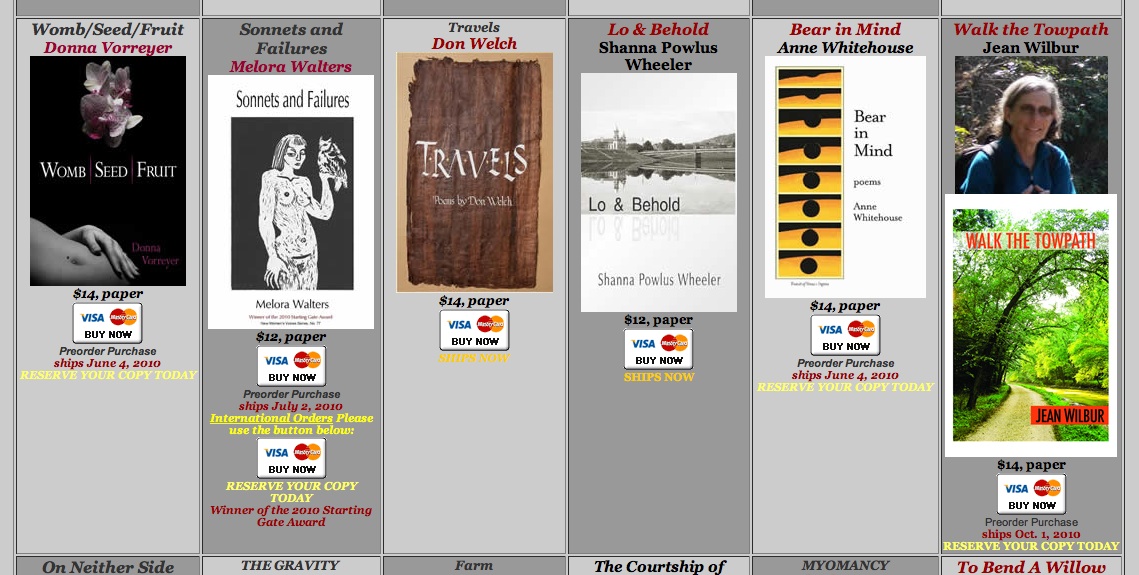
One of my photos from the C&O Canal has made it onto the cover of a poetry book to be published this year, written by Jean Wilbur. The book is called Walk the Towpath, and it can be pre-ordered from Finishing Line Press.

Here is the photo.

Here’s what it looks like on the cover of the book.

From Ms. Wilbur’s bio:

“Jean Gleason Stromberg, who writes under her maiden name, Jean Wilbur, has been writing most of her life, primarily in the service of others. She grew up in Northern California where she learned to love the outdoors, was educated at Wellesley College and Harvard Law, and practiced corporate law for many years. She is increasingly focused on writing, especially poetry, for herself. She walks on the C&O canal towpath in all seasons. She lives with her husband, Kurt Stromberg, in Washington DC and on a houseboat in Sausalito, California. Her sons have settled in Northern California.”

Standard
Reviews

Amazon Kindle now comes with international wireless coverage

amazon-kindle-3

The newly redesigned Kindle from Amazon now comes with both US and International wireless coverage built right in. This means you can use it as you travel in most of the civilized world and not have to worry about internet access. It’ll automatically find a wireless network it can use, you won’t pay anything extra, and it’ll let you browse and get books from Amazon, or deliver your daily newspaper and blog updates to you.

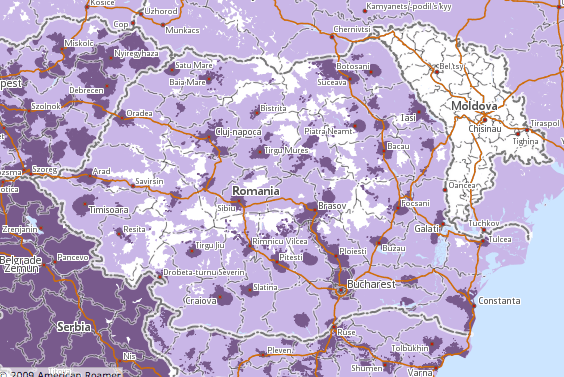
I checked to see if there was coverage in Romania, where I am at the moment, and sure enough, there is. Pretty cool.

kindle-coverage-romania

Having seen how clunky the 1st generation Kindle looked, I’m glad to see Amazon took the time to re-design it and to build in extra features like this one. Sure, it helps them too, since they get to sell more stuff to you, but I know just how annoying it can be to travel internationally and have to deal with different cellular plans. They put in the work needed to make sure the Kindle would just work wherever there was a serious wireless company available to provide coverage, and that’s definitely not something that happens overnight.

amazon-kindle-1

amazon-kindle-2

Standard
Reviews

Life Inc – another perspective on today's society

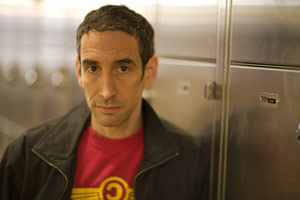
Douglas Rushkoff Douglas Rushkoff, an award-winning writer, documentary filmmaker and scholar, has written a book entitled “Life Inc”, where he delves into what he calls the “corporate mindset” of today’s society, and how to overcome it in order to make our lives and our world better.

I’ll let him tell you what the book is about in his own words:

“What I started to do was to look at the different ways we as modern Americans have become disconnected from one another, disconnected from the places we live, disconnected from the value we create, and even disconnected from our own sense of self-worth. I came to the conclusion that corporations, or what we call the corporate mindset, were really at the center of this phenomenon.”

“We’re living in a world where if you want to make money, you’ve got to work for a corporation.”

According to Rushkoff, it turns out this “corporate mindset” can be traced back to the Renaissance, which is when kings began to monopolize on the income created by people. Instead of letting them trade freely among themselves, they created charter corporations which had exclusive control over certain industries. The kings got shares of stock in those monopolies, thus income, and those companies got to make all the money there was to be made in those markets. This centralization of power continued right through to our own time.

“The society built through the Industrial Age was built to mythologize the mass-produced object, because we needed to create a society of consumers who thought buying all of this stuff would somehow make them happier.”

“Most of us spend so much time working and consuming that we have very little time left to do anything that has to do with other people.”

“The more we behave as individual actors in competition with one another, the harder it is to encounter one another in a friendly way.”

“People can start investing in one another and with one another, make their towns better, and earn returns that you’re not getting from your Smith Barney broker… and see the return of your investment in the place you actually live.”

“This [economic recession] isn’t just a crisis, it’s an opportunity. It’s the first moment in the last couple of hundred years that we’ve had to rebuild our society and our economy on principles that serve humanity instead of killing life.”

I agree with most of what he has to say, and it’s important to realize he’s not against corporations per se, but against the slow creep of the corporate mindset into everyday life. After all, it’s thanks to corporations that we have industrial design, which allows us to get products designed to exact specifications and high standards. And the concentration of capital and research at some corporations and organizations has resulted in amazing advances in technology that have benefited all of us. Yes, you can do a lot of things in your garage, and you can get a lot of stuff done with your neighbors and in your community, but you can’t build a highly sophisticated computer, digital camera or a modern car at home. (You might be able to assemble them from purchased parts, but those parts were made in factories, too.) There is plenty of value to what he has to say, and the book warrants a close read. We do need to become more human, more connected, more dependent on our communities.

There’s a 9-minute video summary of the book at his Vimeo account. He’s also posted video clips summarizing the main ideas of each book chapter there. I’ll post the main video summary and the first three clips below. There’s also more info on his website at rushkoff.com. You can get the book from Amazon.

Life Inc. The Movie from Douglas Rushkoff on Vimeo.

Life Inc. Dispatch 01: Crisis as Opportunity from Douglas Rushkoff on Vimeo.

Life Inc. Dispatch 02: Insulation Equation from Douglas Rushkoff on Vimeo.

Life Inc. Dispatch 03: Money as Debt from Douglas Rushkoff on Vimeo.

Standard