Reviews

Camera preview: Canon PowerShot G11

On August 19, Canon announced the launch of the new flagship PowerShot digital camera, the G11. Having shot extensively with a G10 this summer, I’m ambivalent about upgrading to the G11.
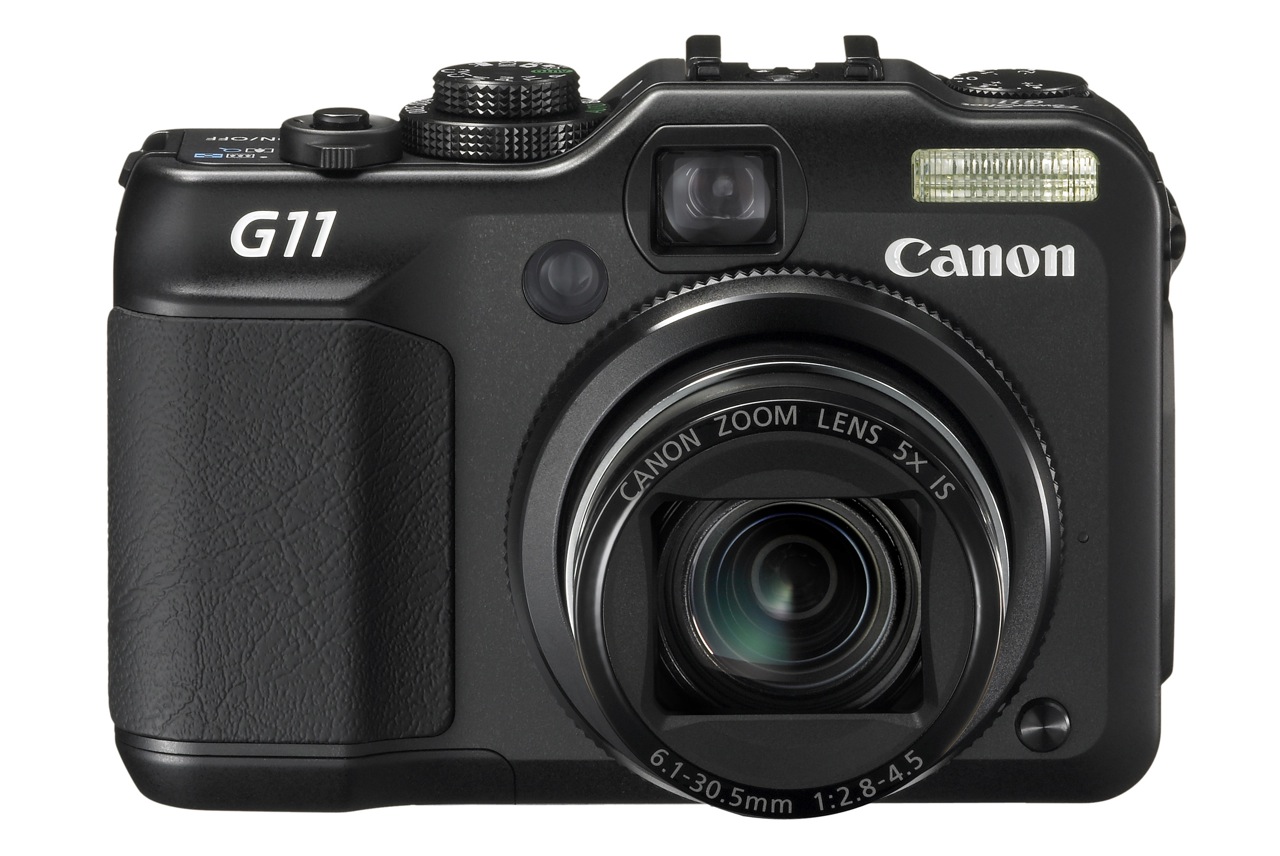
For one thing, I welcome the better low light capabilities. While the G10 showed some noise when shooting in low light, it was acceptable when I compared it with other non-DSLRs on the market. If the G11 improves on that, great.

But the G11 is no different from the G10 when it comes to video recording. It still only shoots SD video (480p, 30fps), when other comparable cameras on the market have long since moved to HD video (720p, 30fps). Even other PowerShot cameras from Canon, like the SX20 and the SD980 and SD940, which cost less than the G11, are able to shoot HD video (720p, 30fps). Why has Canon decided to hamstring the G11, unless perhaps they feel that, with its superior collection of features, it cuts into their HD video camera sales? (If that’s the case, then it’s a sorry excuse, because they’d be putting profits before customers.)

The G11 also has lower resolution than the G10 (10 megapixels instead of 14.7 megapixels). I’m no fan of gratuitous resolution, so I’m reserving my judgment on this until I get my hands on a G11. Canon says they did it to improve low light capabilities, and I believe them — if the low light claims prove to be accurate. There’s only so much resolution you can squeeze out of the same sensor size before noise becomes an issue, even at lower ISOs.

What I’d also like to see from the G11 is a better dpi setting. One of the main differences between DSLRs and consumer-grade digital cameras is the dpi setting of the images they output. A regular digital camera will output its images at 72 dpi, which is the equivalent of screen resolution, while most DSLRs output their images at 240 dpi. That’s why — unless you tinker with the dpi setting in an image editing program — you can get a larger print from a 10 megapixel DSLR image than you can from a 10 megapixel regular digital camera image. The Canon G10 and G11 output their images at 180 dpi. That’s pretty good compared to 72 dpi, but it’s still not 240 or 300 dpi. I would love to see the G11 give me 240 dpi, right out of the camera, without needing to change that setting in post-processing.

The G11 is also slightly more sluggish than the G10 when it comes to shooting speed (1.1 fps vs. 1.3 fps). It’s probably due to the extra computations it performs on each image, but one would think shooting speed would at least stay the same, if not increase, with each camera generation.

The G11 also has a smaller screen than the G10 (2.8 in vs. 3.0 in). I understand this is due to its nature (swivel vs. fixed), but having that larger screen on the G10 was really nice. Still, the swivel screen should allow for more creative angles, so that could count as a plus.

Battery life is also a bit of a downer. On the G10, the specs say the battery lasts for about 400 shots. In real life conditions, it last much less (about 200-300 shots, depending on how sparingly you use the optical zoom). On the G11, the specs say the battery life is about 390 shots, and is likely to be much less than that in real life conditions as well. Couldn’t Canon have used a different battery or done something to improve the battery life? After all, the display is slightly smaller as well, so that should take less juice to power up. Sure, the battery life is said to be markedly better when using the viewfinder, but have you tried using the viewfinder on either the G10 or the G11? It’s more like a fuzzy rangefinder. It’s terrible.
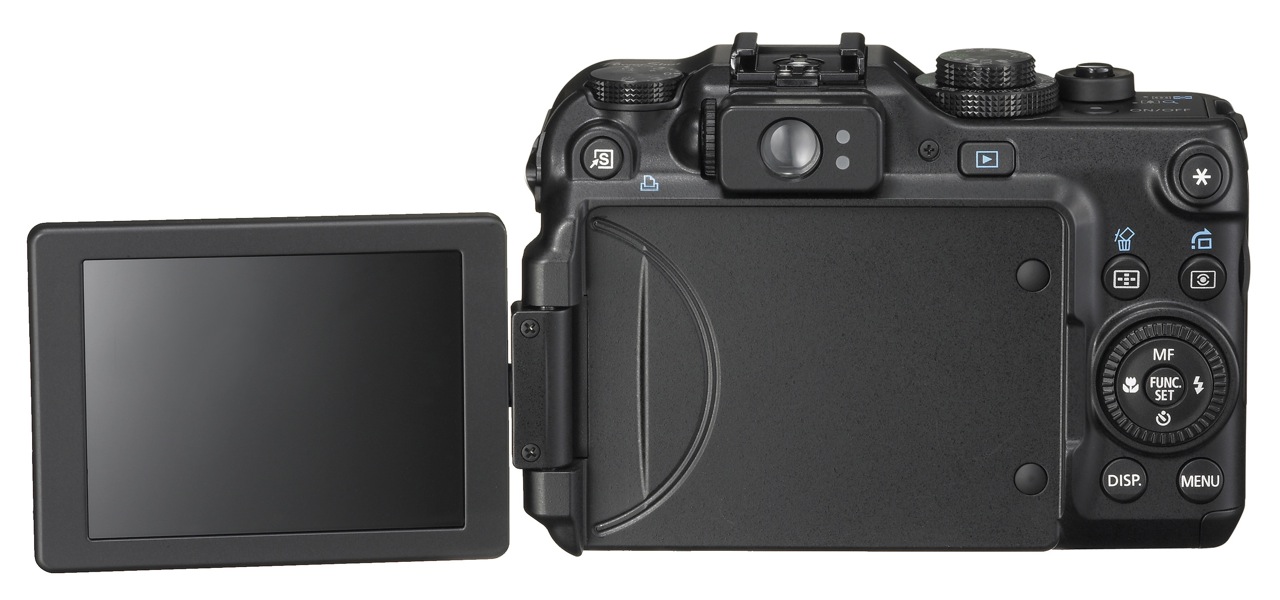
So there you have it. Not much to brag about when it comes to the G11. Nothing revolutionary when it comes to the upgrades, and let’s face it, not even something that I, along with many others, expected, like HD video. The better low light capabilities sound interesting, and if the camera delivers enough on that end to compensate for the decrease in resolution, the G11 may be worth your money. I did like the G10. It’s a great camera with many advanced capabilities. Let’s hope the G11 can live up to its predecessor.

If you’d like to buy the G11, you can do so from Amazon or B&H Photo.

Images used courtesy of Canon.

Standard
Reviews

Checking in with Energizer's Advanced Lithium Batteries

I can finally report on the battery life of the Energizer Advanced Lithium Batteries given to me in late January. I wrote about them on February 4th, and put them in my Canon EOS 5D’s battery grip a week or so after that. They worked until this past Saturday evening, April 25th. When I did the tally, I saw that I’d taken 1,872 photos with them. That’s not a typo. The vertical grip stayed on my 5D all the time, from the time I put the batteries inside it to the time I took them out, and that’s how many photos I got with the batteries.

While that battery life is very impressive, given the 5D’s 500-600 shot battery life with one of its single rechargeable batteries, or 1,000-1,200 shots or so with two rechargeable batteries in its vertical grip, it doesn’t tell the whole story. There are a few things I need to clear up first:

  • During these past few months, I’ve been shooting mostly landscapes. That means I didn’t take lots of photos in one sitting, which would have drained the batteries faster. I would expect that if I shot events, the battery life would have been significantly less.
  • For some reason, and I’m still not sure whether my vertical grip is to blame or the batteries, the battery life sensor kept giving a low battery notice the whole time the batteries stayed on the camera, from the time I put them in to the time I took them out. Sometimes the battery life sensor would even flash the really low battery signal, indicating the batteries only had a few shots left in them. Regardless, they kept on working until Saturday evening. Not sure whether this was because the camera expected 1.5V out of each battery, not 1.2V, or whether my battery grip, which had been sitting in a box, unused, for several months before this, is at fault, but that was my experience.
  • Related to the two bullet points above, the batteries gave out while I was shooting an event. It’s possible that they would have lasted even longer if they hadn’t been put through prolonged, continuous use. It’s also possible that if I stick them back in the camera, they might have enough life in them to let me squeeze off another several shots, but that would go against the conditions of my test, where I wanted to see how long they lasted without taking them out of the camera.

Whatever your mileage may be (and I encourage you to do your own testing), I’m very impressed with the battery life. While it was a hassle to keep the vertical grip on my camera the whole time (I prefer to shoot without it unless I’m doing events), it was an interesting experiment. I would recommend keeping a set of these batteries in your bag as a backup, just in case your regular batteries run out of juice. They have a long shelf life, and they won’t self-discharge like rechargeable batteries.

I also promised in my initial post that I would use them in my 580EX II speedlite. I’m keeping that promise. I’ve been using them in it since February, and they’re still doing fine. Again, I haven’t used the speedlite very much, because I’ve been shooting mostly nature stuff, but I did shoot a wedding recently and it worked flawlessly the whole time. I’ll let you know when those run out and I’ll tally up their shot life, too.

Standard
Reviews

In-camera HDR now here

Back in November of 2006, I had a few ideas about taking foolproof photos. I predicted that it wouldn’t be long before we might see in-camera HDR. That feature is now here. Let me show you two cameras that have recently become availble. They both do in-camera HDR.

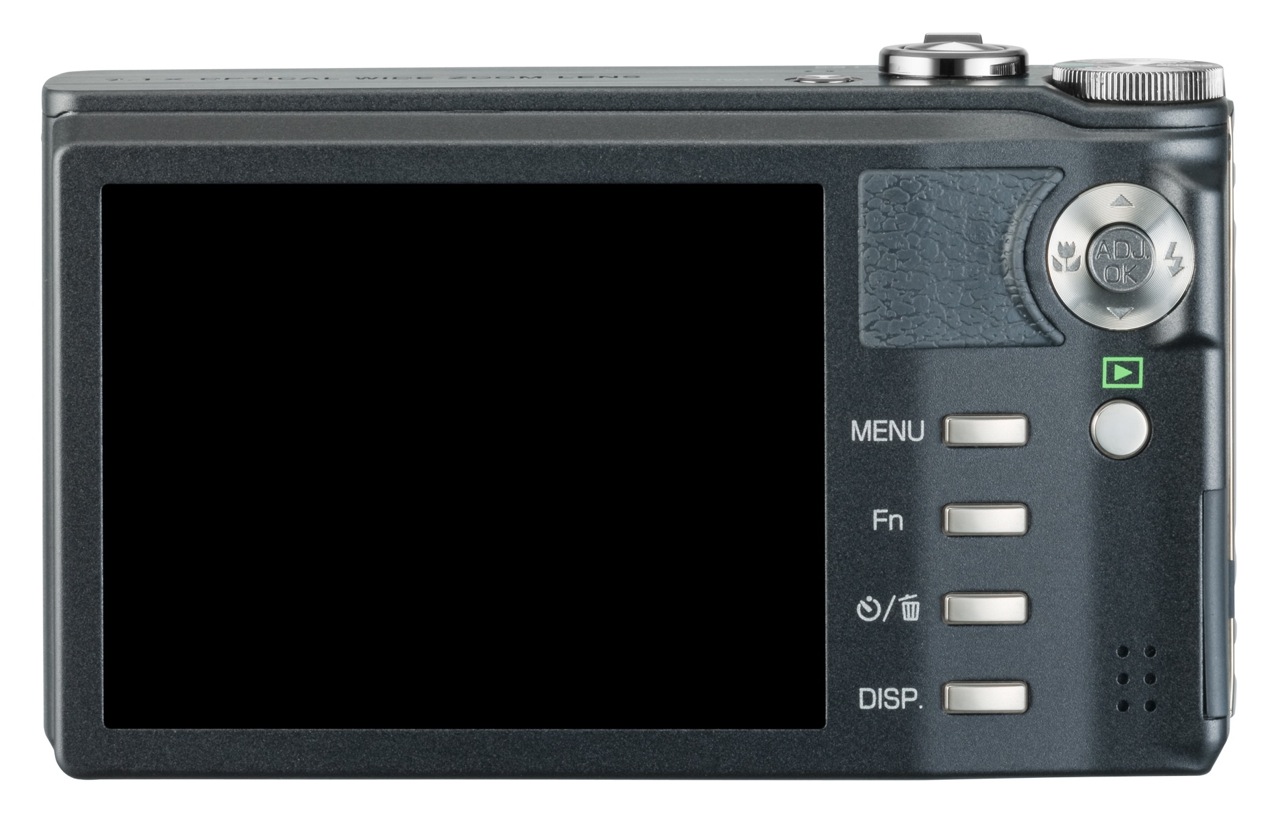
Ricoh CX1

Ricoh CX1 - 1

Here’s what Ricoh says about their in-camera HDR feature:

“It can be difficult to photograph scenes in which the level of brightness varies greatly. With dynamic range double shot mode, the CX1 shoots, consecutively at high speed, two still images with different exposures, and then it records an image that combines the properly exposed portions of each. Expanding the dynamic range up to a maximum equivalent to 12 EV makes it possible to record images that give an almost naked-eye impression.”

Ricoh CX1 - 2

[via Ricoh]

FujiFilm FinePix F200EXR

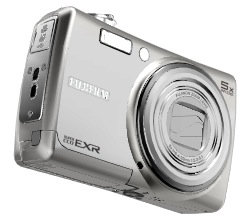
FujiFilm FinePix F200EXR - 2

Here’s what FujiFilm says about their in-camera HDR feature:

“Just as your eye sees the full range of shadows to highlights in high-contrast scenes, “D-range Priority” simultaneously captures two images to produce a single image with Wide Dynamic Range up to 800%, revealing subtleties in shadow and eliminating washout of the bright areas.”

FujiFilm FinePix F200EXR - 1

[via FujiFilm]

It looks like both companies use a two-exposure method, where one is underexposed to capture the very bright areas, and the other is overexposed to capture the dark areas. The two exposures are combined in-camera to create a single photo that contains the proper details from each exposure. You have to specifically turn on this feature — the camera won’t do it automatically — but the nice thing is that you only press the shutter button once.

I’m really glad to see this feature come to market. In some ways, it’s similar to a feature found on Canon DSLRs, called Auto Lighting Optimizer, except that feature adjusts the sensor signals within a single exposure to render a better photo instead of combining two photos. I imagine the dynamic range compensation obtained through that technique isn’t as pronounced as the in-camera HDR done by Ricoh and FujiFilm.

Standard
Thoughts

Canon 5D Mark II soft focus due to camera or lens?

I reviewed the new 5D Mark II back in October of 2008, and my decision back then was to wait until they’ve worked out the bugs. It looks like I did the right thing. I’ve been hearing quite a bit lately about focus issues with the camera. It looks like it can’t focus properly. It’s slow to focus, and when it does focus, the images are soft. See this blog post for an example.

I’m still not sure what lies at the root of the focusing problems. People are comparing photos taken with the 5D Mark II against photos taken with the original 5D, but it’s sort of like comparing apples to oranges. To compare images accurately, you’d need to first downsize the resolution of the images from the 5D Mark II to 12.8 megapixels, to make them equal in pixel depth to those that come out of the original 5D. I have yet to see something like that.

I think what’s going on here is that we’re seeing either the limitations of Canon’s 9-point AF system, or the limitations of their lenses, and this is due to the sensor’s increased megapixel count. In effect, all those extra megapixels have run ahead of the camera’s AF capabilities. It’s like a bodybuilder who’s got huge muscles but hasn’t trained his joints. His tendons have remained weak, and sooner or later he’ll tear something.

The thing is, I’m getting soft images with my original 5D, and I get them quite often. Sure, most of the images I get are in focus, but I bet you that if my 5D were able to output 21 megapixels of resolution, those same seemingly sharp images would be just as soft as those that come out of the 5D Mark II.

It could very well be that the 9-point AF system can’t focus properly. It’s just not that good, and its focusing limitations are seen quite well at higher resolutions. In that case, I have a feeling that the 16 megapixel images that one can get with the EOS 50D would also show some soft focus issues. They wouldn’t be as apparent as those found in the 5D Mark II, since there’s a bit of difference between 16 megapixels and 21 megapixels, but they should be there. It looks like some people are noticing a soft focus with the 50D, so there might be something to my theory.

On the other hand, it could be that my lenses, and the lenses of these people complaining about soft focus with the new 5D, need to be sent in for calibration. There certainly are tons of complains about soft images gotten with Canon lenses of all kinds — that’s nothing new. Who knows, if they and I got to send in our lenses, and they got properly re-calibrated by knowledgeable technicians, the images would be sharper.

So there you have it. I’m not sure what to think. I’m leaning toward the side that says the 9-point AF system needs to grow up, but I’m open to suggestions. Perhaps Canon ought to license the 11-point AF system from Olympus. They put it in their E-3 DSLR, which came out at the end of 2007. It’s supposed to be the fastest and most accurate AF system on the market, and it’s meant to work well even in low light. After all, let’s face it, both Canon and Nikon have borrowed the Live View concept from Olympus — they were the first to come out with it. Why not borrow the AF system as well?

Standard
Thoughts

Energizer's new Advanced Lithium batteries

In early January, I was contacted by an ad agency on behalf of Energizer. Would I be willing to get the word out about their new Advanced Lithium batteries, as a blogger and photographer? Sure, but I’ll need to try them out first, I said. I promised I would use them in my Canon 5D’s vertical grip and in my 580EX II speedlite, and see how long they last.

Energizer Advanced Lithium Batteries

Well, I just got the batteries. I picked them up at the post office a couple of days ago, and it’s time to try them out. I’ll let you know how things turn out in a little while. Just to keep things on the level, I was not paid to write about them. All I got from the agency was the batteries, as review units.

In the meantime, if you have something to say about the batteries, feel free to do it, either here on my site, or on the forum that Energizer’s already set up.

Standard