Reviews

Watch "The Future of Food"

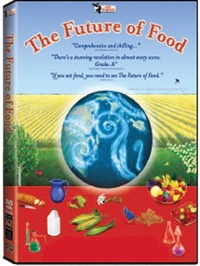
If you have not yet heard of a documentary called “The Future of Food” (2004), or haven’t yet watched it, please take the time to do so. It is vital that you know what’s going into the food that you eat, and it’s vital that you know it now, before it’s too late.

What’s been happening over the past 20 years here in the States is that our food supply has been slowly taken over by biotech companies who are interested only in their bottom line. They have used tactics akin to racketeering practices in order to get farmers to use their seeds and only their seeds. They have placed their executives in key government positions, in order to ensure that their policies go through. They have done and are doing everything in their power to get us to eat their genetically modified foods, without regard for safety, common sense, decency or ethics. I’m not saying this by myself. The documentary itself will prove it to you.

All that is bad enough, but what’s really appalling is that they are patenting genes. They have patented plant genes, and now they want to patent animal genes and even human genes. They are trying to get the market in their tight snare, so they can squeeze profits out of everywhere and ensure they control our food supply completely. They have even patented one of the genes involved in breast cancer, then sued researchers who had been doing working on it, to force them to pay exorbitant licensing fees. Needless to say, research on that gene has been significantly curtailed, directly due to their malefic influence. That’s the sort of “work” they engage in.

When I call them racketeers, I have a great frame of reference in mind. It’s a short crime drama made in 1936, entitled “The Public Pays“, which won an Oscar. It depicted a protection racket that preyed on the local milk distribution in one American city, and the people’s successful fight against them. The biotech goons may not beat up people and physically destroy their milk trucks and containers, but they have legal “procedures” which wield the same sort of power and yield the same horrible results. This time, they’re working hand in hand with specially-placed government officials who make sure the biotech rules get enforced and the little guys get screwed royally — not to mention that the consumers, and the marketplace in general, are manipulated to no end as well.

Don’t believe me? Watch the documentary. And if you can find “The Public Pays”, watch that as well and compare the two to see the striking similarities. What’s more, if someone can assure me that “The Public Pays” is now in the public domain, I’ll gladly post it online, either at Google Video or somewhere else.

As you get to the end of the “Future of Food” documentary, you’ll get heartened by the organic farming efforts, which are great, but keep in mind that Whole Foods now sells mostly non-organic fruits and vegetables, and also imports supposedly organic foods from China, whose food supply is so laden with pesticides it’s not even funny. Yet Whole Foods still dares to hold the same high prices on their stuff, which means they’ve cut costs and are pocketing the difference. Lesson learned: don’t shop at Whole Foods. Go to Trader Joe’s or MOM’s, if you have them in your neighborhoods.

Seek REAL organic foods, and make sure to vote with your wallets. Where you buy your food, and what sort of food you buy, determines our food supply’s future. Write to your congressmen and demand that the proposed law (introduced by Dennis Kucinich) to label genetic foods as such be finally approved.

My wife just chimed in with some great advice. It turns that while we wait for foods to be properly labeled as GM or not, there’s an easy way to tell already. Fruits and vegetables all have little stickers on them, with numeric codes (4 or 5-digit numbers). It seems that if those numbers start with 4, they’re conventionally-grown, but not genetically modified. If they start with 8, they’re GM — stay away from them! And if they start with 9, they’re organically grown and are safe to eat. Not sure if this is officially true, but she says that’s usually been the case, at least for the organic foods that she buys.

Here’s how you can watch the documentary:

  • Google Video (free, but quality isn’t that great)
  • YouTube (free, but in multiple parts): start here
  • Netflix (instant streaming, DVD quality, but requires subscription)
  • Amazon (you can purchase the DVD)
Standard
Lists

Condensed knowledge for 2007-05-10

Like chicken soup, but full of plump bits of juicy data:

  • The Cellar is running a few shots of a nasty deer accident in IotD. Kinda graphic, but thankfully the driver was okay. Watch for those deer, folks! Drive slower when you’re in wooded areas. You never know when one of them will jump out in front of you.
  • There’s a city called Raoul in Georgia (State of Georgia, that is). Funny to me.
  • I’ve posted a Star Wars “Mahna Mahna” mashup yesterday. I’ve also been driving Ligia crazy singing the song at home. I’ve even IM’d her with links to that video. 😀 Now it’s time to post the original video. Ah, good old Mahna Mahna! Jump down to see the video directly, or use the link to view it over at YouTube.
  • DailyMotion’s got a neat video called L’image parfaite (the perfect image). It’s packed full of visual illusions that peel away to reveal sad truths.
  • Fulgerica.ca has a nice compilation of videos and images about and from Romania. I blogged (separately) about those images and videos here and here, some time ago, but it’s nice to revisit them.
  • New Scientist has a great post about spying on other people’s computer displays by tuning into the radiation emitted by the monitors themselves (CRT) or the wires (LCD). Interesting research.
  • Dark Roasted Blend has some really neat photos of newborn hedgehogs. Cute!
  • Urologists have approached the study of erectile dysfunction with engineering tools. The results are… interesting. [via Kottke.org]
  • BlogCritics is running a post on the proposed gas boycott of 5/15. I got news of this via email from my mom a few days ago. It sounded silly from the get-go. Remember that far-fetched idea of last year, when some people suggested we not buy gas on a certain day? What did that do? Absolutely nothing. Now they propose we stop buying from the two largest corporations: Exxon and Mobil. They say it’ll drive prices down. Not only is this silly, but it’s very short sighted. Even if it works, and I’m not saying it will, it’ll only be a short-term patch. Gas prices will still rise. I for one am happy about that. Let them rise. It’ll force people to purchase more fuel-efficient cars, and will provide a much-needed market drive toward the production of even more fuel-efficient cars. Incidentally, it’ll also encourage people to drive less and plan their trips better. I might also mention that it’ll provide added incentive for the oil and energy companies to explore new fuel alternatives, many of which are not financially viable unless the price of gas rises to match the production costs for the other fuels. So forget the boycott, and focus on the long-term solutions instead. It’s smarter and more effective.
  • I had no idea that Bill Gates was a bully at the office. But that’s his management style apparently. And, he curses, too. Who’d have thought? An ex-product manager at MS serves up the goods on his blog. [via Kottke.org]
  • This is absolutely awesome. If you haven’t heard of the movie Baraka, you should watch it. It uses time lapse sequences to explore life. This 10 minute segment published to Google Video is fantastic. You can also watch it below. I could write a whole essay about that segment alone. No wonder they say an image speaks a thousand words. The director looks at modern life and its dehumanizing aspects with a fantastic eye. Just watch the video and you’ll understand. [via Kottke.org]
  • Mental_floss has a post about a new re-telling of Dante’s “Divine Comedy” in modern terms. It features striking paintings by Sandow Birk, and it’s animated in a very captivating way using cutouts. There’s even a trailer you can watch, and I’m making it available below as well.

http://video.google.com/videoplay?docid=-7877306475042790908

Standard
Lists

Documentary video clips

I’ve been saving a few documentary clips from YouTube, and wanted to share them with you. The first, included below, is a glimpse into the world of prescription drug marketing, and it’s a trailer for a movie called “Side Effects”.

Have you heard of Lake Peigneur? It disappeared into an underground salt mine (along with part of a town nearby) in 1980, when an above-ground drilling operation went horribly wrong.

There’s a revolution going around, and it’s called the Internet. Have you heard of it?

http://www.youtube.com/watch?v=1n4fDgmrF3o

This one’s been making the rounds on blogs and sites lately. It’s called “Did you know?”, created by Karl Fisch to help explain what’s going on with the Internet to his local school board.

If you’ve never been taught to Duck and Cover, c’mon, you gotta learn! Just do what Bert the Turtle does. He’s smart!

http://www.youtube.com/watch?v=qxeN5fn3qAY

This one will gross you out (Ligia told me never to show her videos like this… 🙂 ). It’s called “We are not alone”.

http://www.youtube.com/watch?v=dBU6-XK2v54

What is this Web 2.0 stuff? Michael Wesch put together a great video that explains it in under 5 minutes. You’ve probably only seen the Beta versions of this video if you’ve seen it before. This is the final version. Yup, he did the unthinkable and took it out of Beta. No Gamma, he went straight to final release! 🙂

Standard
Reviews

The Fog of War (2003)

Just saw The Fog of War (2003), a documentary of Robert S. McNamara’s time as US Secretary of Defense, and was blown away by the behind-the-scenes look at what goes on during troublesome times. What strikes me is how lonely, how isolated, these people who hold key positions of responsibility must feel. Sure, there are plenty of people advising you, but in the end, if you’re the one making the decision, it’s an utterly heavy responsibility that is solely yours.

How do you decide to kill 100,000 people, or even less than that? Could you live with yourself afterward? Can you make a decision like that even when there’s a chance the data is faulty and/or its interpretation is wrong? How many politicians currently vying for top spots would be ready to make these decisions? Do they know that’s what they might have to do? Do they know everyone else around them will fade into the background and the decision will hang, like a millstone, around their necks? When do you decide to cut the cord?

I’m also impressed by the need to be more forgiving of the decision-makers of today. I can’t imagine the pressures of power have changed. If anything, they’re even more stressful nowadays. Yet so few people take the time to understand the issues before they start criticizing. I’ve been guilty of it myself. Robert S. McNamara makes a very good point in the documentary. One of his principles is that you should empathize with your enemy, in order to understand him. I’m not saying politicians are our enemies, but I think we should take the time to really understand where they’re coming from and the situations they’re facing before we, too, declare war against them, and yell for a change of office. The fact is, everyone makes good and bad decisions, and when the pressure of office is on, it’s even harder to sort through all of the conflicting information and do what’s right. You’re going to get some things right, and some things wrong, no matter what. We’re human, and we err. We can’t trust our senses and our perception of events is often wrong. It’s a wonder we don’t mess up more often.

What’s also true is that war as we know it is no more. It’s been evolving into some shapeless mass that rears its ugly head here and there, only to disappear before we can bonk it on the head and dispatch it. The frontlines of war are non-existent. We can no longer point out the enemy by their uniform, and Iraq is a perfect example of it. I say this because some people say there are plenty of “lessons learned” that could be applied. Perhaps, in some aspects of war, they prove useful. But when war has changed so much, and we still don’t know our enemies like we should, can we fault our leaders for making the wrong decisions? A lot of criticism out there is mere political posturing. We, as responsible citizens, should do our homework before we pick up the next critical catchphrase and hurl it at whoever’s in power.

I’m left with a feeling of surprise after watching the movie, and it’s because of this: political and world events are so complex, and wars are such ugly beasts, that I’m amazed we haven’t bombed ourselves out of existence yet. I’m thankful that calmer minds have prevailed, and that we’re still alive.

Standard