Reviews

Tablets not quite ready for mainstream computing

The new tablet from Apple, the iPad Pro, which comes in two sizes as of this year, is quite impressive. I’m sure they’re fast, and the addition of a stylus for more precise control is an interesting and fitting choice (which also hearkens back to the first tablets Microsoft made, years and years ago).

Apple’s push to market them as mainstream computing devices, as replacements for laptops and desktops is also interesting and worthwhile (and it also mirrors Microsoft’s past efforts in this area).

Yet I have to say that the time hasn’t yet come for it. Oh, we’re close — we’re very close — but trying to do all of one’s computing on a tablet is still an exercise in frustration, and it will continue to be so until tablets are robust enough to handle serious computing and more importantly, mobile apps evolve to the point where they offer all of the options of desktop apps. That will involve a concerted effort from both hardware and software makers of all shapes and sizes.

apple-ipad-pro

I’m glad that Apple’s picked up the ball on this and is running with it, but in my book, they haven’t won the game yet. Tablets are still a niche market when it comes to laptop and desktop replacement and let’s face it, most people use them to go on Facebook, YouTube or Netflix (hardly something that qualifies as work).

I’ve tried repeatedly to use an iPad as a desktop replacement, and while it works quite well for dawdling on the websites mentioned in the previous paragraph, even there the options offered by the mobile apps are limited.

For example, the Facebook Pages app doesn’t let me manage my pages the way the desktop version of Facebook lets me do it, because it doesn’t give me all of the options available to me there. So I still have to remember what I can’t do on my tablet and go back to my desktop to do those things. The YouTube app won’t let me access all of my comments and block offensive commenters. So when I’m traveling without access to my desktop, that’s a frustration. But some of you will say, “Why don’t you access those websites through the mobile browser and take care of things that way?” Because I’m automatically directed to mobile versions of those sites and I still don’t have access to the options I need.

I tried editing short videos on my iPad, and while the performance of iMovie app was pretty good, my tablet got pretty warm and ran through the battery as I edited simple clips, making me wonder what would happen if I tried to edit multiple camera angles and longer videos on it. Oh, wait, I can’t do that, because in the mobile iMovie app, there are no such options and of course there isn’t a mobile Final Cut Pro app. There’s no sound to video synchronization, the options for cutting soundtracks in and out are very limited, and the list goes on and on.

But surely you can work on a book on an iPad, right? Well, my wife tried to do that on one of her new books and she couldn’t. It’s just a text file at this point, somewhere between 100-200 pages. The iPad should have been able to work on it just fine but nope, it kept choking on it. The cursor would barely chug along as she typed, forcing her to take frequent breaks and allow it to catch up. The diacritics were all screwed up. After about half an hour of this nonsense, she gave up and went back to her laptop, which is an aged, mostly toothless beast, an 8-year old MacBook Pro with all the speed of a constipated sloth, but it still fares better than a tablet when it comes to editing books.

Well, what about the Photos app? Surely you can at least edit photos on it? Well, I downloaded photos from one of my DSLRs on my iPad (with the aid of this little gadget), and it got hot and ran through half the battery just importing them and generating previews. As I started to browse through them, it would take 5-7 seconds just to let me see a crisp version of each photo. Granted, these were raw files and I have an iPad Air, not an iPad Pro, but I can’t imagine things being too different on the newest, shiniest Pro tablet. I’ll give credit to the Photos app when it comes to editing photos taken with the iPad or the iPhone. It’s plenty fast on those. But the idea of replacing the notebook or a desktop means you’ll be editing photos taken with other cameras as well. And it’s just not there yet.

So where are we? Simply put, tablets are great for fiddling around on the internet but they just aren’t up to par when it comes to replacing notebooks and desktops, at least in my own experience.

That’s not to say I don’t yearn for the day when that happens! I’d love to only have to carry a tablet and a portable keyboard with me as I travel. Even at home there’d be huge benefits in terms of energy use (we’re talking tens of times less than notebooks or desktops), carbon footprint and other aspects. I do hope Apple (and others) continue to push the envelope on this. I particularly want to see mobile apps become full-fledged working apps for power users. Once that happens, hardware is bound to catch up with the needs of the software and we’ll be in business.

Standard
Thoughts

Electricity in Romania

Here’s what I keep saying to every friend and acquaintance who visits my house: you definitely need a voltage stabilizer if you live in Romania.

voltage-stabilizer

Around midnight last night the current started fluctuating wildly. Our UPS units were going crazy, clicking and kicking on and off, trying to contain the power fluctuations and cutoffs. After quickly shutting off all important equipment in the office, I went to see the voltage stabilizer down in the basement. It was going nuts as well trying to keep the current to our house stable, its arms moving quickly back and forth across the copper coils, barely containing the madness. I shut off all current to the house, fearing the stabilizer would burn out.

As I write this, it’s past noon (the following day) and the current still isn’t back on. Oh, it’s been back on and off sporadically, but nothing reliable to speak of. And I found out from one of our neighbors that the scrambling and bungling Electrica (that’s the power company) employees reversed the polarity on one of the phases in the neighborhood, which means they potentially burned out some people’s electrical appliances. As a matter of fact, another neighbor said his heating furnace shorted out and almost caught fire from all the electricity problems during the night.

This is part of the price one pays for living in Romania. It’s a beautiful country, but as they say, caveat emptor.

You may recall unreliable electrical power was partly to blame for a massive data loss that occurred to me a few years ago, before I replaced all wiring and fuses in the house and added the voltage stabilizer. The Drobo units I was using then simply didn’t have the capability to keep the data uncorrupted when experiencing multiple power failures within a short amount of time. They’d simply lose track of some bits, and then the corruption would spread across the drives, eating more and more data, to the point where the Drobo would cease to mount. Nowadays, Drobos come with built-in batteries that allow them to safely complete data operations and shut off in case of a power failure, and they also have some algorithms in place to ensure that data corruption is kept at bay, but it’s hard to trust a device meant to keep your data safe once it’s lost about 20% of your most treasured data, isn’t it?

Standard
Thoughts

Accountability for Syria

I want to point out a few more things related to my previous post about the Syrian refugees. Things such as the lack of accountability within foreign governments for the actions and strikes they authorized and which have contributed to the severity of the situation in Syria.

Here’s a video put together by Hans Robling that talks about the numbers:

And here’s an article on the need for accountability and responsibility in the actions of those who hold positions of power, with a short quote from it:

In short, the Romans honored the man who held absolutely nothing back — who put all he was as stake in everything he did and said.

Conversely, the man with nothing to lose, who risked nothing in his speech and behavior, was considered to be literally shameless (that is, unable or unwilling to be shamed). A shameless man acted without the check of honor and was thus regarded as contemptible, dangerous, and unworthy of trust. His whole being was considered a vanity; as Roman writer Petronius put it, a man who would not submit himself to test and challenge became nothing more than a “balloon on legs, a walking bladder.”

Finally, here’s a brief timeline that shows the escalation of the conflict. Allied forces condemned Assad, then negotiated with him, then armed and helped the militants, then started bombing them. This horrible flip-flopping and side-switching only made the situation worse and ultimately led to the situation we now see in Syria, with over 12 million people who have been forced to leave their homes by the fighting.

Is it just me, or have the United States been meddling long enough in the Middle East? I’d love to find out at least one instance during the last 60-70 years when their meddling in that region of the world led to something good.

Some may say, but we needed to go in, they were using chemical weapons. Maybe they were, maybe they weren’t. False flag events have been used before to trigger wars. The main point here is that a stable regime was in place in the country, a regime where most people could live their lives in relative safety. Now, after foreigners meddled there, the country is in shambles and we have seen the uprising of yet another radical terrorist group who’s literally having a blast, killing people and blowing things up left and right.

So I say those countries who’ve meddled directly in Syria should be the ones now responsible for fixing the situation. Instead of the EU having to shoulder the burden of integrating Syrian refugees, the United States and the other countries who triggered this horrible situation in one way or another should do it. It’s high time we instituted a certain level of responsibility in international affairs. If you break it, you fix it.

I don’t want to hear a peep about the chance of putting a “democratic” regime in place in that country. Look how effed up the situation is in Iraq and Afghanistan, where allied coalitions brought “democracy” a few years ago. I mistrust the Arab Spring movement, I’m not so sure it’s genuine. I think it’s orchestrated. It’s time we all realized democracy can’t work everywhere. Some regions of the world are best led autocratically, and as long as most of the people are doing okay, we shouldn’t stick our noses in their business, even if that autocrat doesn’t want to play nice with us.

Right now, what the US and its allies in the strikes on Syria need to realize is that they’ve got a terrorist group on the loose there that they’ve helped arm and strengthen and more to the point, this terrorist group is recruiting new members right from Western Europe, so it’s using Westerners to fight Eastern conflicts. That’s very screwed up and the West is directly or indirectly (depending on how you want to look at it) responsible for it.

Finally, this stupid meddling has displaced over 12 million Syrians from their homes, has exposed them to countless dangers, both in their own countries and abroad, as they try to get to safe places, and has created yet more bad blood between the East and the West. This stuff will haunt us for generations to come, and it’s all thanks to irresponsible politicians who aren’t being held accountable for their actions. 

Standard
Thoughts

Truly sustainable computing

Plenty could be written about this subject. I just want to call for change in two areas, because I believe they’d have the greatest impact here and now:

  1. Desktop computers should have a projected life span of 20 years.
  2. Laptops and mobile phones should have a projected life span of 10 years.

Why 10 years for laptops and mobile phones? Because they’re portable, they get banged up more and chances are they’re not going to look that good after 8-10 years, but they should be made to last that long nonetheless. Even if you won’t want to use them after a few years, you can sell them and someone else with a smaller budget will be happy to use them for as long as they last.

This means internal circuitry, which is most often the culprit in computing, should be made to last a looooong time. This is doable. There are cars and planes in use today with circuits made 15-20 years ago, which are still functioning properly. I think hardware meant for personal computing is purposely made to stop working after a few years, because computers are always upgraded and hardware manufacturers plan for obsolescence from the get-go.

There is a better way. Enclosures for all computing devices should be solidly made and finished. They should be stunningly beautiful and their design should stand the test of time. They should be easy to open and the innards serviced. And internal components should be made in such a way that they stand the rigors of heavy use through two decades, even if they become obsolete, market-wise. I think we’ve gotten to the point in computing where even if a computer is no longer desirable by someone who wants a fast machine, it’s still good enough for daily use by someone who does basic computing tasks.

I may live to eat the words in this paragraph, but surely USB 3.0, Thunderbolt, PCIe, 4K resolution and other goodies that are currently available should suffice for a while. I can’t imagine word processing applications or web applications requiring more than this, even 10 years from now. And if they do, a solid, serviceable enclosure and upgradeable hardware with backward compatibility for widely accepted standards and protocols should be enough to keep a computer going… and going… and going…

And once we pass that 20-year mark, why not make our next goal even bigger? Let’s plan for 100-year computers and let’s start doing it right now. Wouldn’t it be great if we could have machines made in 2015-2016 still in daily use in 2115-2116?

If you work in hardware, I’m sure you can think of plenty of reasons why this isn’t doable. It’s pretty easy to find reasons not to do something, and this applies to just about anything. But I want to challenge you to find ways to make this work, because it’s what we need to do in order to survive in the future. We can’t go on trashing the planet and taking from it indefinitely. We need to start conserving and giving back to it. We should focus on making it clean and beautiful.

I don’t know about you, but I’m sick and tired of phones I have to throw away after 2-3 years because they turn into unusable crap. I’m sick and tired of computers and external hardware that start to break down after 3 years, some of them right after their warranty expires. And if would see what a mess we’ve made of this world, with destructive mining for rare earth minerals used in our electronics and with mountains of electronic trash polluting the ground and water tables in many places around the world, you’d be sick and tired of this as well.

There are much better ways of doing things. FairPhone is pointing the way for mobile phones. iFixit is helping too, with online service manuals and parts. But the bulk of the work still hasn’t been done. I still don’t see 20-year computers and 10-year laptops in stores. Where are they? Who’s making them? I’d like to buy one.

Standard
Apple Wireless Keyboard
Thoughts

White keyboards and cleanliness

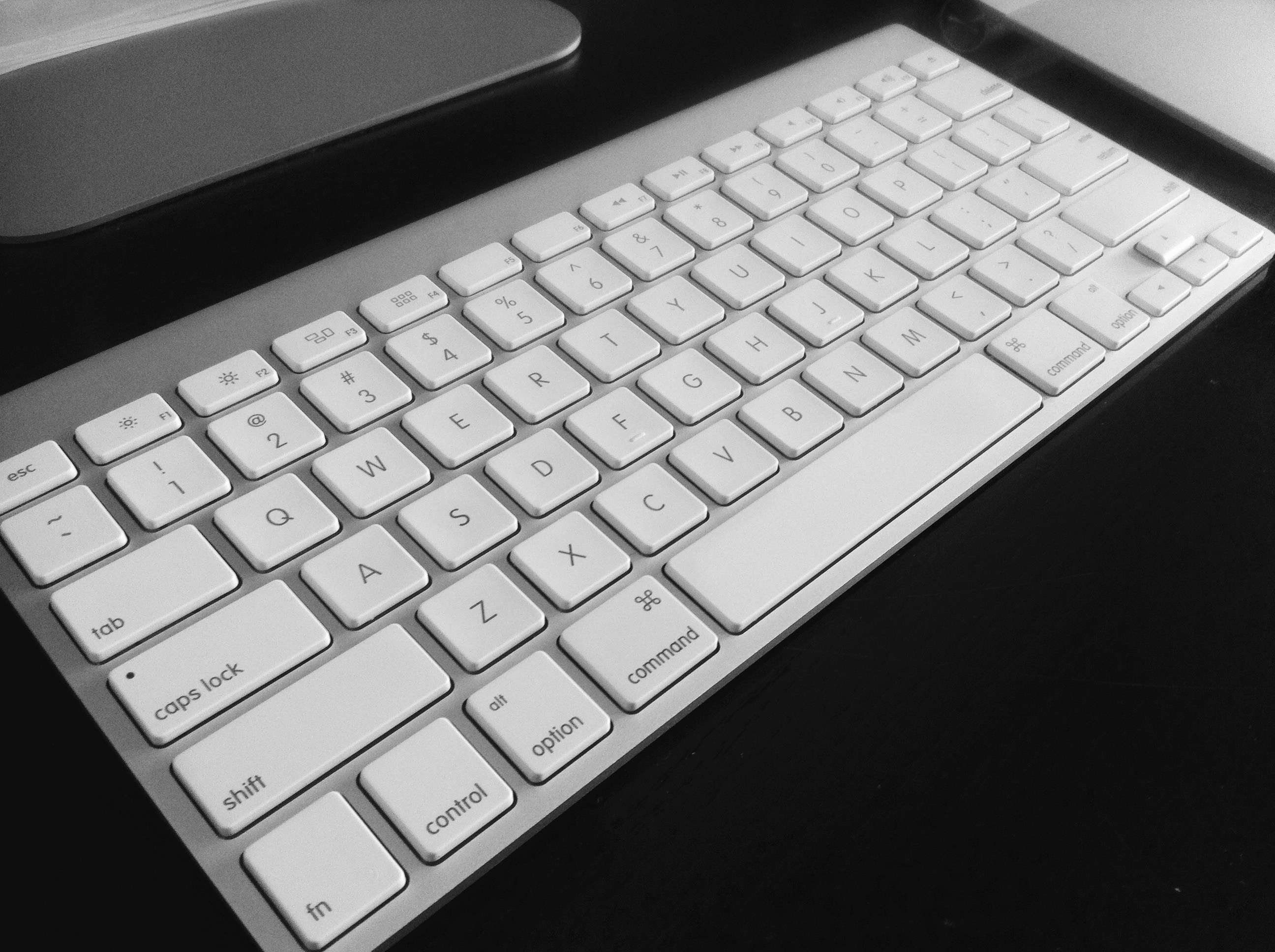
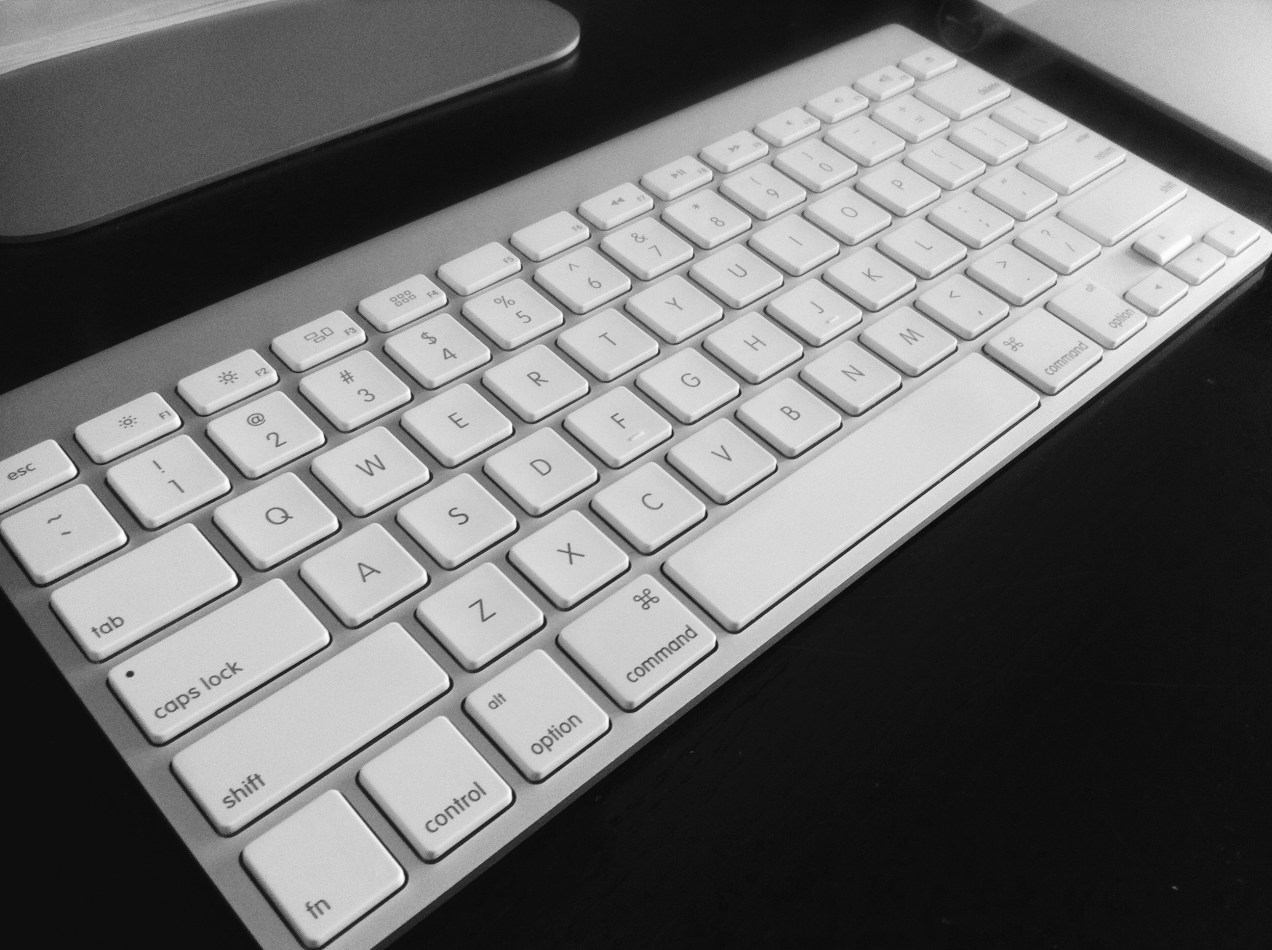
Back when Apple came out with white keyboards, I was annoyed. I appreciated the white aesthetic, the clean design, but they got dirty so quickly. Within a few weeks of normal use with clean hands, there was a visible layer of grime on the keys used most. It was like a heat map drawn with dirt. Yuck. I wash my hands every time I go to the bathroom, so that’s 7-8 times a day or more, and my keyboards still get dirty.

I found myself cleaning my keyboards often, and every time I did it, I asked myself two questions. I kept repeating them like a mantra, annoyed with the amount of time I was spending doing menial stuff:

  1. How could so much grime collect on my keyboards?
  2. Why didn’t they make black keyboards?

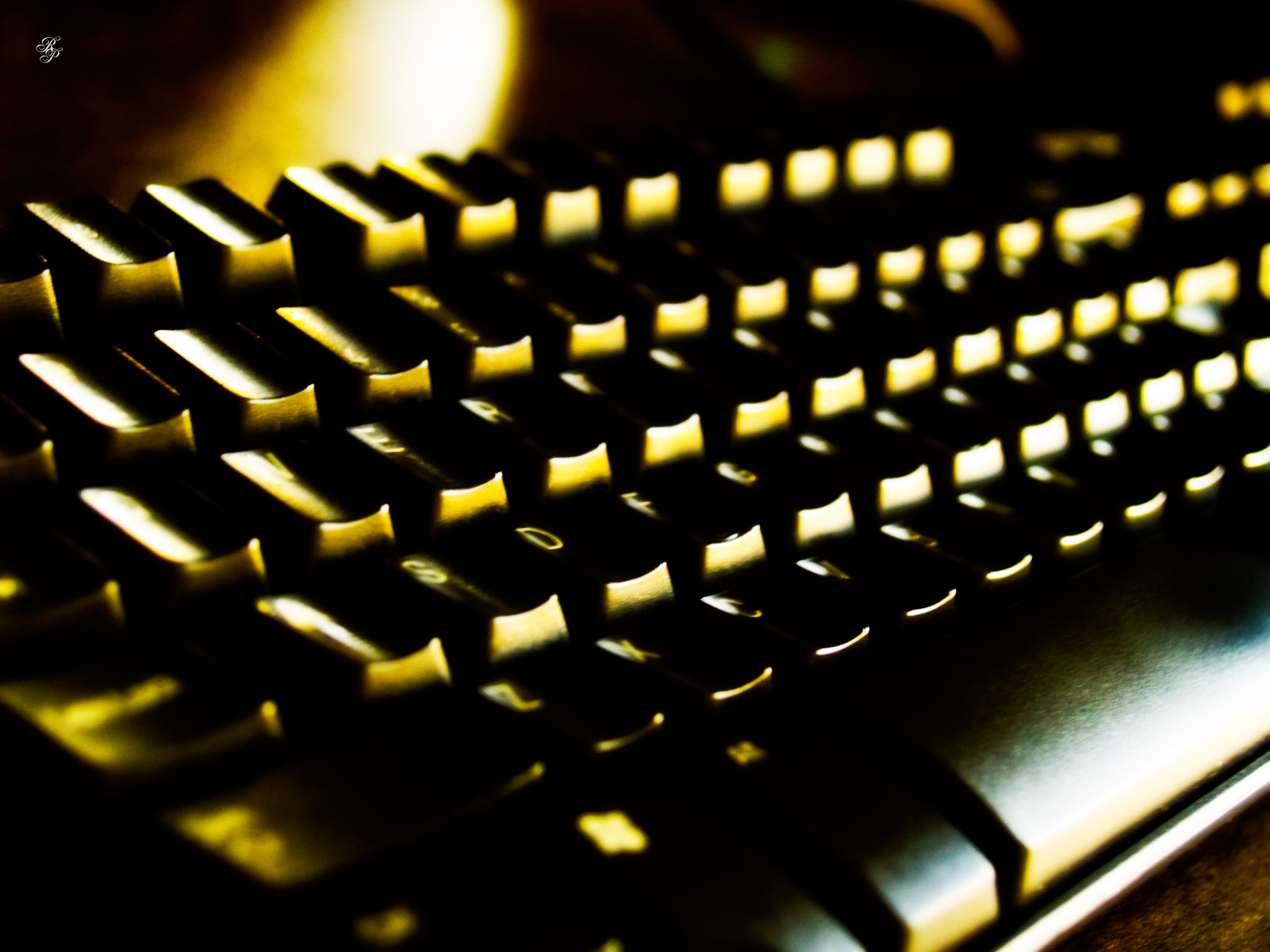
A black computer keyboard.

Of course, the answer was staring me in the face, every time I used my keyboard. See this and this. Keyboards and mice are breeding grounds for all kinds of nasty bacteria. And because most of them are black, we don’t see how dirty they are and we don’t clean them often, although we should. I bet that’s exactly why they went with white (beside the fact that their design kick at the time involved a lot of white and silver). They wanted to give us a simple visual reminder of the state of our keyboards and make us clean them, lest we look filthy to our families, friends and co-workers. It was a bit of a pill to swallow, but it was (and is) for our own good.

Apple Wireless Keyboard

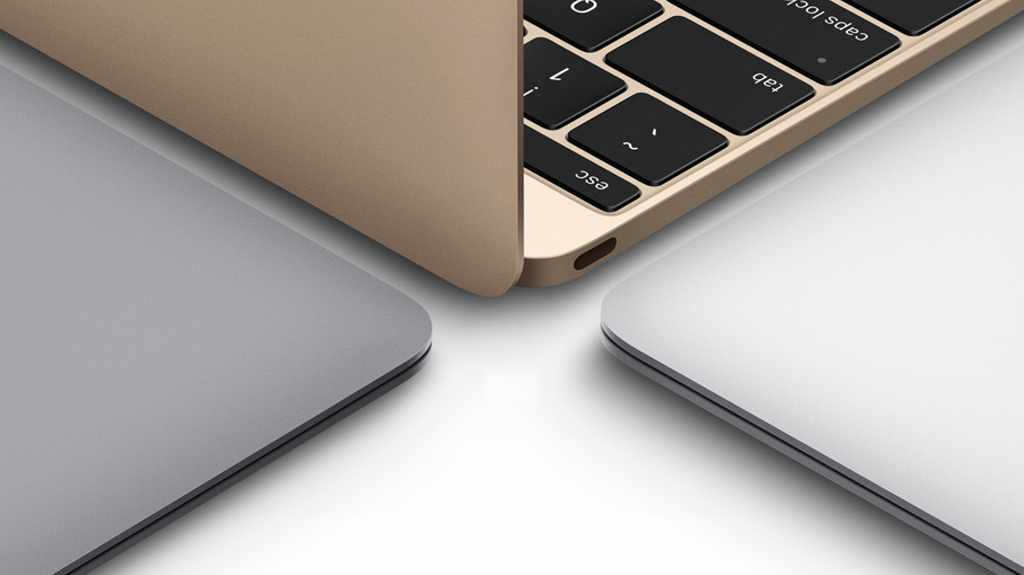
In recent times, Apple has gone to black keyboards on their laptops. Rumor has it they’re also going to make black keyboards for their desktops. While I get the practicality of it, I can’t help thinking people are going to just let the filth accumulate on their keys now that the stark visual reminder is gone. Let’s face it, we’re all so damned busy these days (mostly with drivel) that we’re going to forget to clean our keyboards. We won’t do it until they’re sticky, and by that point… yuck.

New MacBooks

Just in case you’re wondering how I clean my keyboards, I typically use Q-tips dipped in rubbing alcohol, they work great. In the past, I also came up with more inventive ways to clean them, such as putting the keys in the dishwasher. That method doesn’t work so well with the newer Bluetooth keyboards, it’ll cook the circuitry, because there’s no way to remove the keys unless you pry the case open.

Standard