Reviews

Stuart Little and Stuart Little 2 (1999, 2002)

Ligia and I really loved the first two Stuart Little movies. They both combined live action with 3D computer animation, and back in 1999, this was an achievement. By today’s standards, we can tell the animation’s a bit dated, but still, the overachieving, little white mouse is a lovable character and you soon gloss over the flaws in the animation that couldn’t be helped back when it was made.

The first movie deals with Stuart’s adoption by the Little family, and his adventures while fitting in with both the Little’s only child, George, and the family cat, Snowbell, voiced by Nathan Lane. We find Stuart befriending a little canary named Margalo and gaining a little independence from his overly protective mother in the second movie.

I must admit that I was bothered a bit by Stuart’s introduction to the audience in the first movie. Yes, this is a children’s story, and we’re supposed to suspend disbelief, and I’m more than willing to do that, but still, for such a pivotal plot point, the screenwriters might have done a better job explaining why the Littles would adopt a mouse instead of a child, and why it didn’t seem odd to them that a mouse spoke and read, or was treated as one of the children at the orphanage.

My impression was that Stuart dominated the first movie as a character, but Snowbell blew everyone else away in the sequel. Nathan Lane’s whiny voice was the perfect complement for the lazy, spoiled Snowbell, who comes through in a big way for both Stuart and Margalo. I would also be remiss if I wouldn’t recognize Michael J. Fox’s contribution to the two movies. His voice was the right choice for Stuart.

I would not recommend the third installment in the series, made in 2003. It was a complete departure from the first two movies. While still featuring the voices of the original actors, it was completely (and poorly) animated in 2D, thus losing that winning combination of live action and 3D animation that really made the first two movies. The Stuart Little in that third movie looks so unfamiliar, and the animation is so choppy and un-lifelike, that it’s really nearly impossible to bond with the characters. Only children unfamiliar with the first two movies might enjoy it.

More information:

Standard
Reviews

Robots (2005)

Robots (2005)Having just watched Robots (2005) for the first time, I’m amazed I didn’t go see when it came out. I don’t know what I was thinking, but now I know I’d have enjoyed it thoroughly.

The plotline sounds familiar: a small-town boy goes to the big city and makes good, in spite of all odds. But as we all know, it’s not the yarn, it’s how you spin it that makes it interesting. This story is told in a quirky, entertaining way that makes it worth our time. The boy is a robot, who goes to the big city to follow a dream, and in the process, saves all Robot World from certain disaster while instilling hope in the hearts of countless other robots.

That big metal world is brought to life on-screen, and although we’re constantly reminded the characters are robots, we personify and identify with them. A wonderful benefit of the robotic nature of the characters is the ability to pull countless gags, which is where the screenwriters leave no stone unturned. Fender, played by Robin Williams, is the main go-to character for gags, and he delivers on every one. Although Robin Williams’ riffs and improvisations are too much in real life, they’re perfect for voice-overs. He was great in all of Disney’s Aladdin movies, he was great in Happy Feet (2006) and he’s great in this movie as well.

Mel Brooks fit into the role of Bigweld surprisingly well. But other than him, I had a hard time recognizing the voices of the other famous actors employed for the voice over work. And that begs the question, other than the bragging rights, why hire famous actors for all of the major roles in a movie like this? It’s probably more expensive, and there are plenty of voice talents waiting in the wings who’d welcome the chance to shine.

I liked the animation, and loved the details on the robots, like the little rust spots, the almost real bolts, the glassy eyes, and the tinny, yet moldable faces. Like I said, the way the story’s told really makes it worth our time. Ligia and I were swinging along to “junk” by the end of the movie. You’ll know what I mean once you watch the movie! 🙂

More information:

Standard
Reviews

The Ambassador's Daughter (1956)

The Ambassador’s Daughter (1956)We watched it tonight and liked it. It’s a funny romantic comedy full of light laughs. The script’s somewhat thin at times — some of the plot twists are sewn with white thread, as they say — but the acting’s great, in particular that of Olivia de Havilland, who plays the title role. What’s also a rare treat is the location: Paris in the 50s — need I say more about that? The movie’s in color, in spite of the black and white screenshot (which was the only one I could find).
Overall, the movie’s easygoing, and it’s really a wonderful movie for a quiet evening at home. It’s about an innocent, unlikely romance between the daughter of the American ambassador to Paris and an American soldier on leave. It starts out as an experiment for her, but ends up serious, and with a very happy ending.

The movie also has Myrna Loy, and that’s a treat as well. If it only had Bill Powell, too, but you can’t have everything, can you? John Forsythe plays the American soldier. I’d never heard of him before this movie, but he played his part very well.

Pick it up and relax with your significant other while you watch it. It’s a quiet, nice little movie that’ll let you have a peaceful night’s sleep afterwards.

More information:

Standard
Lists

Condensed knowledge for 2007-08-21

  • Knight News Challenge: Round 2 Launches. The Knight News Challenge, in which winners get grants ranging from tiny to huge, is in its second year. It awards big money for innovative ideas using digital experiments to transform community news. The contest is run by the John S. and James L. Knight Foundation. Last year’s winners won awards ranging from $15K to $5 million. If you’ve got a worthwhile idea that’s news-related, by all means, submit it!
  • ProBlogger.net has a great post that points out five WP plugins that can help with managing your comments and responding to readers.
  • Brian Auer of the Epic Edits Weblog has a post on the differences between exposing for highlights, shadows or midtones.
  • A couple of Russians put together a wry video where they demonstrate a new product, the Americanizer. Their English accent is a bit thick, so pay close attention.
  • On the same blog, English Russia, you’ll find another post with HDR photos of the Moscow sewers. These are pretty well done, and I do believe I spotted a crocodile in two of them…
  • The top tech blogs are revolting against Wikipedia’s “no follow” link policy by using the same rel=”no follow” tag in their outgoing links to Wikipedia. Alright! Wikipedia’s been getting a lot of link love for years, and I think they’ve been entirely ungrateful by not responding in kind.
  • Sal Marinello, writing for BlogCritics, has a few words to say about the famed “300 Workout”, the physical regime that prepared the actors for their roles in that movie. A lot of people got it wrong. Also very worth checking out is the site of the physical trainers that put together that workout and trained the actors, Gym Jones. Have a look at the Video section. Very different stuff from what you see in gyms today, but you can’t argue with the results.
  • Mental_Floss has a GREAT post on life before air conditioning. Why is it great? Because it points out why today’s construction is so horribly shoddy — our overreliance on air conditioning lets builders get away with using cardboard and plywood for what passes for homes in the DC area. The homes of old were built with thick insulation, out of stone or brick, and they could do just fine without A/C. If we’d be without A/C nowadays, we couldn’t live in our homes. Kind of makes me sad for all these people buying McMansions on River Road and Georgetown Pike and the like. I see the way they’re built, and it’s an insult to millenia of good building practices…
  • The Daily Mail has an article on spotting illness by looking at our faces.
  • On a similar note, Deputy Dog has a post on the 5 scariest medical mistakes. Don’t read it during lunch…
  • Have you ever wondered about the 100 Inuit words for snow? Here they are.
  • Hans Rosling gave a speech at TED this year, and they’ve posted it to their website. It’s really, really good stuff. You will not regret the 19 minutes spent watching it, I guarantee it. It’s about poverty and developing countries, but he’s got a very different take on things.
Standard
Reviews

Talk of the Town (1942)

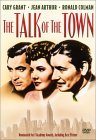
Talk of the Town (1942)This movie features two of my favorite actors: Cary Grant and Ronald Coleman. I thought I saw every one of the Cary Grant movies till I discovered this one at Netflix. When I added it to my queue, I had no idea Ronald Coleman was in it. Imagine my surprise when I started watching it!

Jean Arthur rounded out the cast. While I don’t much care for her looks or voice, I have to appreciate her comedic talents, which had me laughing the whole movie through. Her scenes with Ronald Coleman at the start of the movie are some of the best comedy I’ve seen in a long time.

The plotline goes like this: Leopold Dilg, played by Cary, is unjustly accused of burning down a decrepit old factory and supposedly causing the death of the foreman as well. Only things aren’t that way. Knowing he’s going to get a dud trial, he escapes from jail and hides in a house just outside the town. The house belongs to Nora Shelley (Jean Arthur). She agrees to help him hide out in the house, but unfortunately she has already rented it to Michael Lightcap (Ronald Coleman).

Lightcap is a distinguished professor and dean at an unnamed Boston law school. He arrives early, and hilarity ensues. Meanwhile, the town is whipped into a frenzy by the factory owner, who burned down the factory himself while in cahoots with the foreman. Leopold hides out at the house while disguised as a humble gardener, and works out a plan with Nora to convince Lightcap to take part in his defense. I won’t spoil the rest of it for you. All I’ll say is that we gave it five stars at Netflix.

It was a treat to watch these three talented actors carry scene after scene so elegantly. Cary looks a bit funny as the town activist. It’s always a odd to see him in roles that change the image we’ve come to know and love, even temporarily. I didn’t think I’d gotten so addicted to his classier roles, but there I was, wincing as he put on ordinary clothes. Grant’s darker side also comes through at the start of the movie, and for a few tense seconds, he’s so believable we’re not sure what to think.

The movie also makes a powerful commentary on social justice, and the importance of adhering not only to the letter but to the spirit of the law. The ongoing debate between Leopold and Lightcap throughout the movie serves to outline the differences between these two sides very well. I was glad to see true justice prevail, and to see Lightcap’s metamorphosis from dry scholar to lawman. The truly wonderful thing is that this commentary is all accomplished while the audience is kept laughing. That’s a testament to the great direction of George Stevens and the wonderful story by Sidney Harmon and screen adaptation by Dale Van Every, Irwin Shaw and Sidney Buchman.

More info:

Standard