Reviews

Lens review: Canon EF 24-105mm f/4L IS USM Zoom Lens

I’m going to talk about the Canon EF 24-105mm f/4L IS USM Zoom Lens in this review. It’s a wonderfully versatile L series zoom with surprising image quality and great image stabilization built right in. I’m also going to show you lots of photos I took with this lens, to illustrate the various points I’m about to make.

If you’re interested, I also wrote a comparison of this lens and the EF 24-70mm f/2.8L zoom. It might help you decide which lens to get if you’re interested in purchasing either of them.
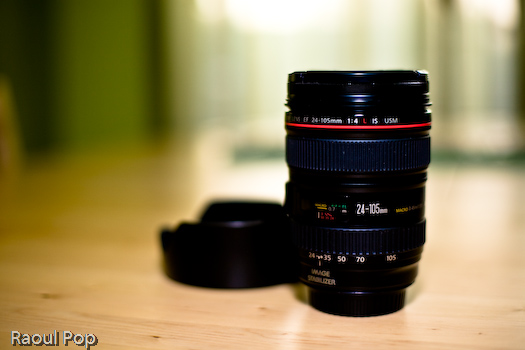
EF 24-105mm f/4L IS USM Zoom Lens

So, that’s the lens, right there on my table. It’s not as tall as my 100mm macro, but it’s also heavier, which is to be expected. There’s a lot more glass in zoom lenses. When you turn the zoom ring, the barrel extends outward. There’s some zoom creep, but that’s pretty much a “feature” on all zoom lenses I’ve tried, including other, more expensive zoom lenses.

I found its range to be just what the doctor ordered. At the wide end, the 24mm is great for landscapes or other interesting compositions, like you’ll see below, and at the tele end, 105mm is great for portraits and for bringing in distant details. Believe me, there’s a ton of difference between 70mm and 105mm when you’re trying to focus on some distant object. That extra reach is great! (By the way, I just dropped a hint in this paragraph. Did you catch it? It has to do with the 24-70mm f/2.8L zoom… There’s a review of it coming soon.)

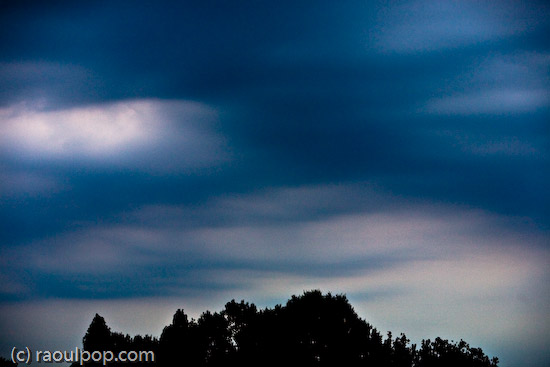
The photo below was taken at 24mm after sunset, on a tripod.
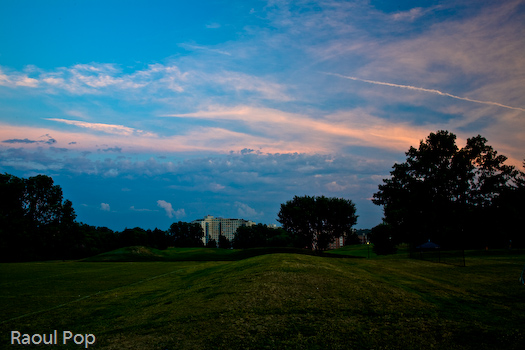
Dusk

This one was taken from the same spot, but at 105mm. See how versatile the focal range really is?
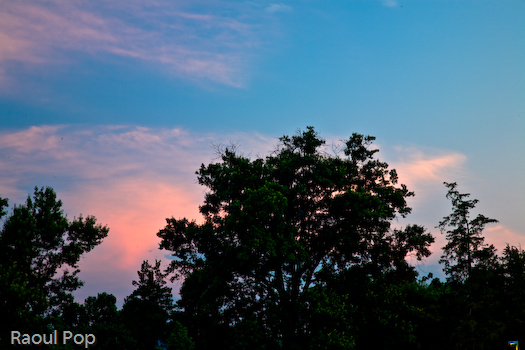
Dusk II

I mentioned something about interesting compositions at wide angles above. Here’s one:
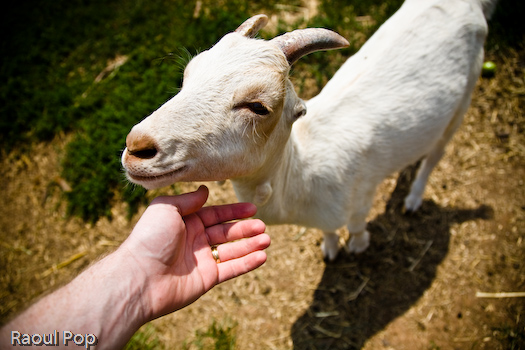
Goaty

I had doubts about this lens. After all, the 24-70mm L series zoom costs the same, yet it has no image stabilization and the focal range is shorter. How could a lens that packs in a longer focal range plus IS be as good as the other and at the same price? Let’s not also forget that Canon offers this lens as a kit lens for the 5D. Granted, it is an L series, but still… right? Well, prepare to be surprised.

I went to downtown Bethesda at night, and shot handheld, with the IS turned on. Keep in mind that the widest this lens will go is f/4.
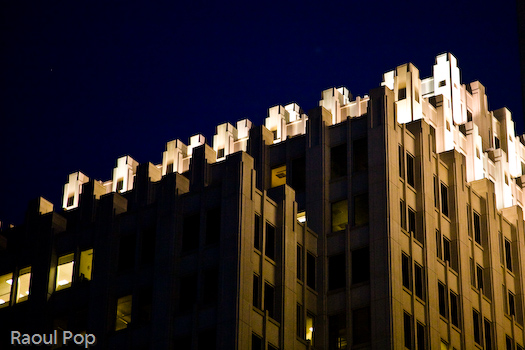
Crenels

The photo above was taken at a shutter speed of 1/15th sec, handheld. At 1:1, those crenels are still sharp. But wait, that’s not all… The photo below was taken at a shutter speed of 1/8th sec — I propped my elbows on a balustrade to take it:
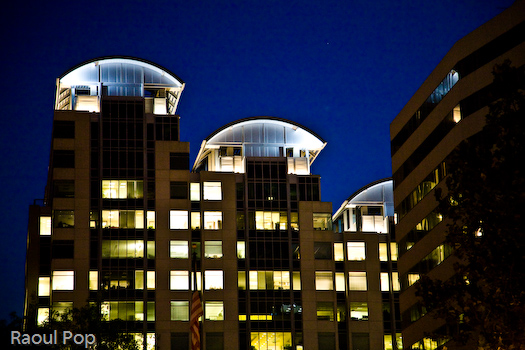
Arches

The details here are even sharper than in the previous photo. In my book, this means the lens is great in low light for a zoom. Nothing can beat my 24mm or 50mm primes at f/1.4, but there’s no mistaking the fact that the IS built into this lens does a great job of compensating for the smaller maximum aperture.

What about the contrast, sharpness and bokeh, you ask? Well, let’s look at a few photos:
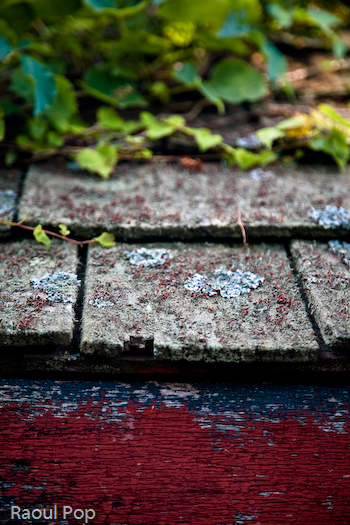
Tiled

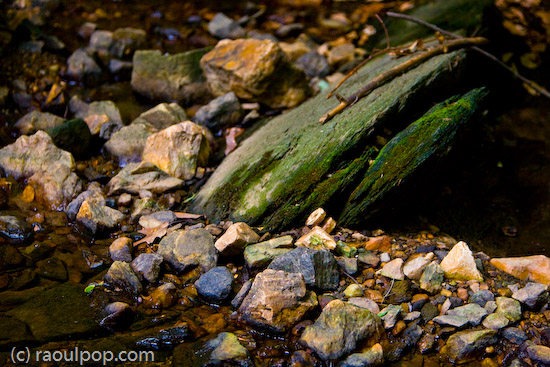
The photo above was taken at close range, almost macro range. I believe I switched to manual focus when I took the shot. I was so close the AF stopped working. I did very little post-processing to the shot, and certainly didn’t alter the colors. The lens plus the camera did most of the work, including enhancing the colors present on that old barn. Having been there in person, I know the colors were more faded.

Here’s another photo taken at close range:
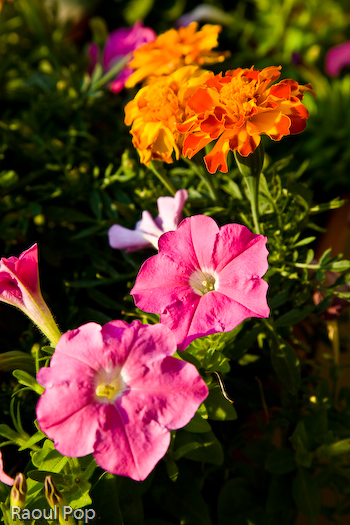
Waking up to this

Look at the photo of the cat below. When I downloaded the photos from my 5D and looked at it, I was struck by how 3D it felt. The sharpness is all there, even at 1:1, the contrast is beautiful, the colors are great. That’s when it hit me: this lens is really good!
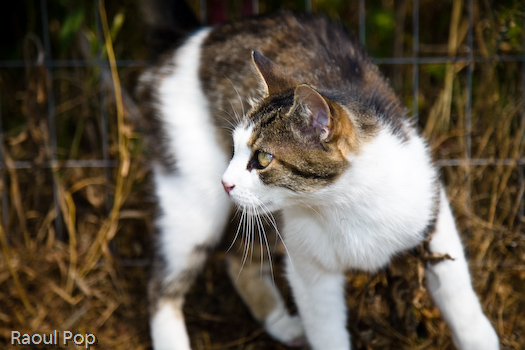
Mr. Whiskers

Let’s talk bokeh. Every lens has its approximate sweet spot when it comes to it. Stray from that proper distance to focal range ratio, and the bokeh looks all screwed up. Some lenses are better than others, and produce great bokeh across a larger focal range. I think this is one of those lenses. The bokeh isn’t entirely creamy, like you’d get with a fast prime opened up all the way — remember, it can only open to f/4 — but the bokeh’s there, and it does its job, which is to bring out the subject and fade out everything else pleasantly. Have a look at the photos shown below, and you be the judge:
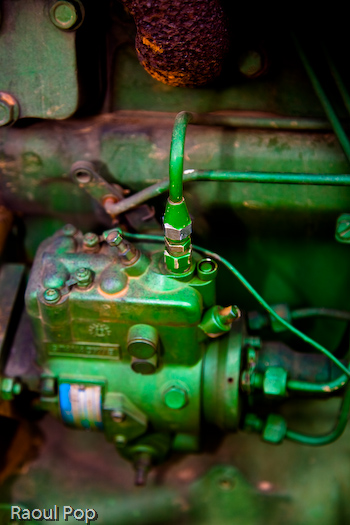

Thingamajig

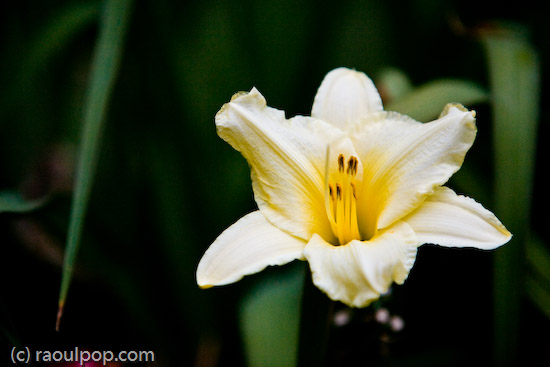
Lily

Blackberries

I really appreciated its versatility. I love my primes, but let me tell you, there’s nothing more annoying than missing a shot because I have to switch lenses. Primes are great for controlled conditions — nothing beats them there — but when you’re out and about, you don’t want to be futzing around in your camera bag, looking for your lenses, while your photo op passes by.

Have a look at these next few photos. It felt great not to have to switch lenses and still be able to take all of them.
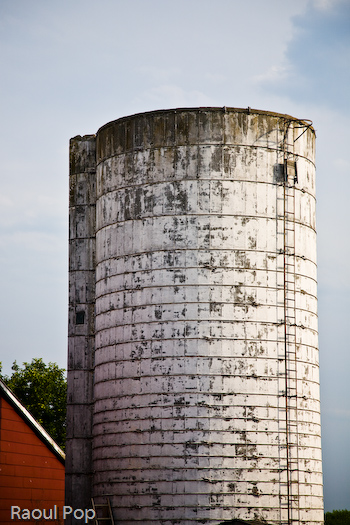

Silo

She thinks my tractor’s sexy

Lazying about

This is one lens that does not disappoint. It’ll likely stay on your camera body for 70-80% of the time. It’s an L series, so you know it’ll perform over a long period of time. It’s lighter than other L series zooms with similar focal ranges, and the image stabilization works just as I’d expect it. If you’re in the market for one, buy it.

You can find it at:
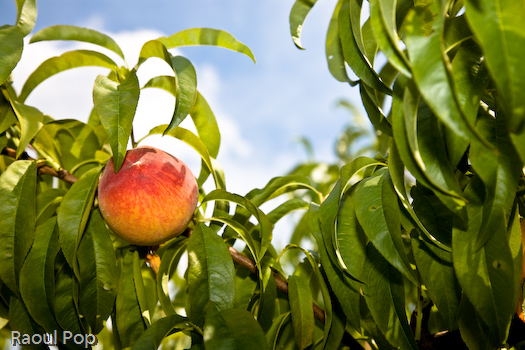
Peachy

Standard
Reviews

Camera preview: Olympus E-3 DSLR

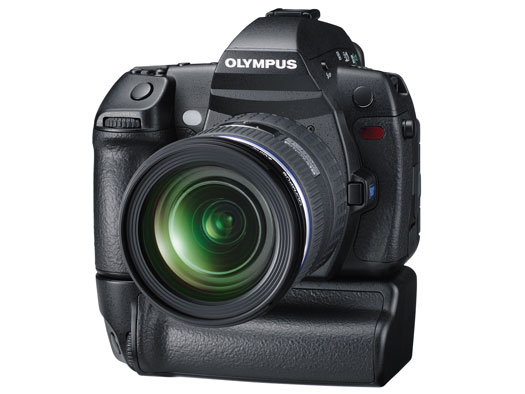
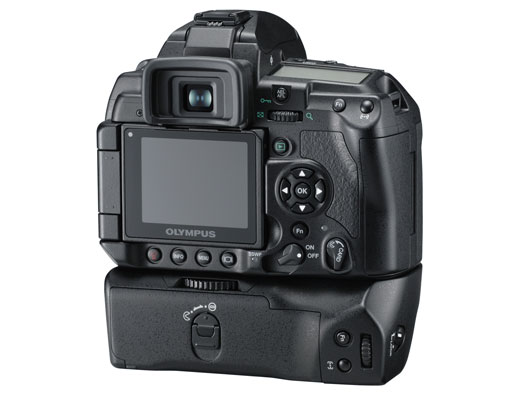
Olympus has been working on their new flagship DSLR, the “new E-1”, now called the E-3, for some time, and word is that it’s going to be launched later this year, possibly in November, or sooner. I’ve seen some concept photos of the new E-3 body, and it looks pretty sweet. They’re not the final version of the camera, but still, I think the E-3 will look pretty close to the photos you see below.

New E-1 (side)

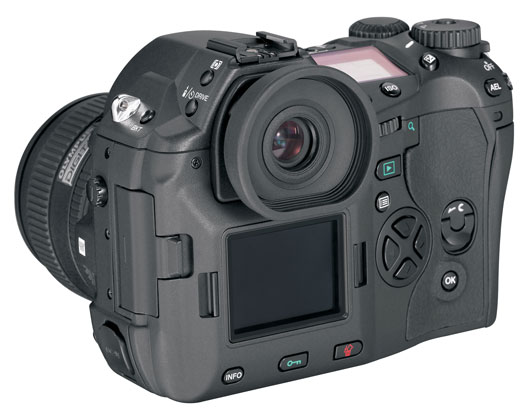
At the Olympus press event I attended on 8/1, I got to play with an old E-1 that belongs to Gene Hirschel of Internet News. The body was surprisingly light and sturdy, and I liked the various on-camera buttons that gave me direct access to functions like ISO, bracketing, white balance, etc.

I really liked the shutter action. It was unlike any other DSLR shutter I’ve tried. The movement was soft and made very little noise. It was muffled, but it felt great to keep pressing the shutter button. I took quite a few photos with it in the span of a few minutes. This is the body of the old E-1:

Old E-1 (front)

Have a look at the rest of the photos posted below and compare the existing E-1 body with what could be the new one. I’ll be very interested to test and review the new E-1 when Olympus launches it this year.

As you can see, the old E-1 came with a round eyecup, but the new one will likely get the more standard rectangular eyecup. The LCD screen will also be bigger, and quite possibly swivel out, since it will have the innovative Live View feature.

New E-1 (back)

Old E-1 (back)

It also looks like the new E-1 will have a recessed function dial, like Canon DLSRs. I really do think that’s more useful than the fully exposed dial. Having it right there, next to your index finger, saves time, as you don’t need to take your hand off the grip to adjust settings. As a matter of fact, it looks like both function dials will be recessed, which is something I haven’t seen on other cameras. I also like the new On/Off switch.

New E-1 (front)

I also spy an on-camera flash, which would be a new addition. The old E-1 had no flash, much like the Canon 5D. Personally, I prefer no on-camera flash. It’s always better to use an external speedlite, but I guess it is useful for most people to have a simple little flash they could use if they needed it.

All in all, I’m pretty excited about it. If it looks anything like the concept body in these photos, it should be a wonderful design.

Standard
Reviews

Camera preview: Olympus Stylus 770 SW

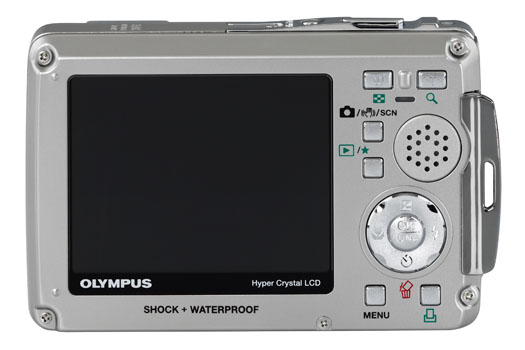
At the same Olympus PR event I attended last week, Michael Bourne from Mullen demonstrated the new Olympus Stylus 770 SW (Shock and Waterproof camera). It’s a very sturdy camera, enclosed in an all-metal housing that can not only withstand drops from up to 5 feet and water pressure up to 33 feet, but can also take up to 220 lbs. of physical/mechanical pressure. Ligia and I have been looking for a new point-and-shoot, and this looks like it might be the camera we want.

While were were talking, Michael casually raised and dropped the camera right onto a concrete ledge, leaving me with a case of drop-jaw. Then he picked it up as if nothing happened, and took some photos with it. Wow! Then, to drive the point home, he dropped it to the ground again, and stood on it with one foot, putting his entire body weight on top of the camera. Again, he picked it up and it was just fine! Here’s a triptych showing that little sequence of events:

Standing on an Olympus Stylus 770 SW

I got to use it a bit as well, and it’s got just the right weight for its size. It doesn’t feel flimsy at all. When you grip it, you know you’re gripping something well-made. The all-metal housing looks really nice, and the shutter lag isn’t bad considering that it’s a point-and-shoot. I got to handle it inside a dimly lit store as well, and when I bumped up the ISO to 1600, the photos still looked decent on screen, even when zoomed in. It’s certainly a whole lot better than our current point-and-shoot camera, the Kodak EasyShare v610, which was all the rage in July of last year (2006) due to its dual lenses and in-camera photo stitching capabilities.

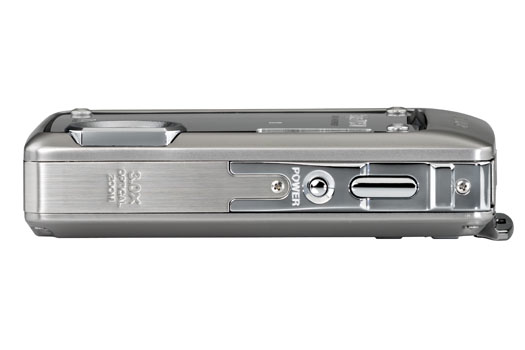
Here are a few more photos of the camera (these ones are courtesy of Olympus USA). Notice the sleek lines. If you read my blog regularly, you know I’m a sucker for good design, and I think Olympus did a great job here.

Olympus Stylus 770 SW -- Front

Olympus Stylus 770 SW -- Top

Notice how nicely laid out the buttons are. There’s no confusion about their function, like on some cameras (Samsung, I’m talking about you here). The on-screen menus are also easy to navigate. I had no problem finding my way around the menus as soon as I went in.

Olympus Stylus 770 SW -- Back

All in all, this little camera’s one hot contender in the point-and-shoot market, and a virtual shoe-in for our next ultra-portable digital camera.

More information:

Standard
Reviews

Lens review: Canon EF 70-200mm f/2.8L IS USM Zoom

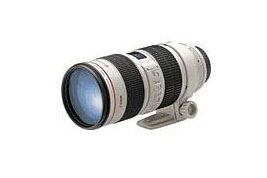
Canon EF 70-200mm f/2.8L Zoom Lens

I rented Canon’s premier mid-range zoom lens, the EF 70-200mm f/2.8L IS USM, and had the chance to play with it for a day. I put it through its paces: daylight, dusk, low light and early morning light. The result: I love it and plan to buy it. This lens works better for my needs than the EF 100-400mm F/4.5-5.6L IS USM, which I rented and reviewed recently.
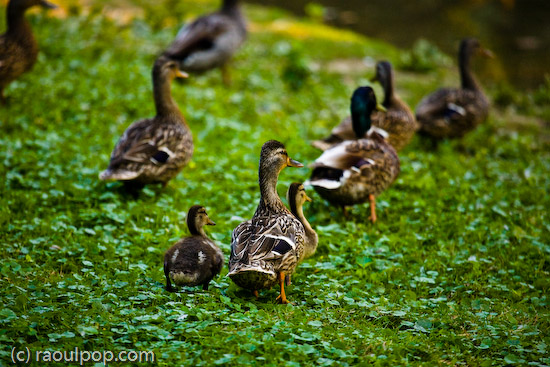
Created beauty

Oh, I rented the EF 1.4x II Extender along with this lens as well, and it worked great. It’ll decrease the aperture from f/2.8 to f/4, but I didn’t find that to be too much of a problem, even in lower light, while shooting handheld. I simply boosted my ISO and switched to Shutter Priority, to make sure my shutter speed stayed above 1/60th of a second.

Deposit

On a full-frame sensor like my 5D, I got exactly 70-200mm, and 98-280mm with the aid of the 1.4x extender. On a cropped sensor like that in the 30D or the Rebel, you’ll normally get 112-320mm, or 157-448mm with the extender. Those are pretty nice ranges indeed.

Slanted

Even though I shot mostly handheld, and for most of the time, in fairly low light (thick forest, ground-level), the image stabilization built into the lens worked great, even with the extender attached. I was able to get clear shots while keeping the shutter speed even below the focal range of the lens. We probably all know about that simple rule of thumb of keeping the shutter speed equal to the focal length, right? Well, I was able to get crisp shots at 1/80 while the focal length was over 100 mm and more. For example, the shutter speed of the photo enclosed below is 1/100 while the focal length was 150mm (with the extender attached). Still, the photo is plenty sharp at 1:1, and that’s pretty good to me.

Taking a break

I have only praise for this lens. It works great! I love the short travel of the focal length selector. It’s amazingly short given the large focal range. I love how crisp and sharp my photos come out. The bokeh is great. The lens handles just like it should, and autofocus times are pretty small. But, it is heavier than the 100-400mm zoom. A LOT heavier. You won’t realize just how heavy it is until you go out there and use it for a couple of hours. Your biceps will get a workout!

Harried hare

I plan to buy it at some point in the future. At $1,500-1,600, it’s not cheap, but it sure is great!

White lily

Nature, unruly

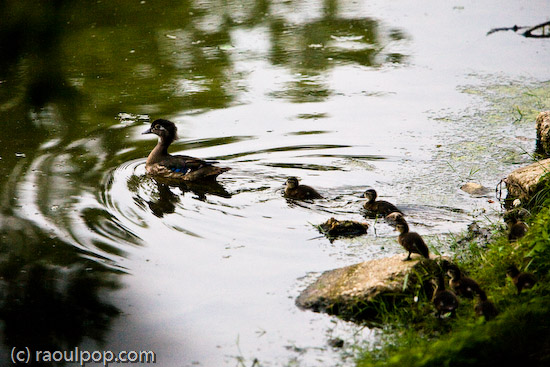
Just ducky

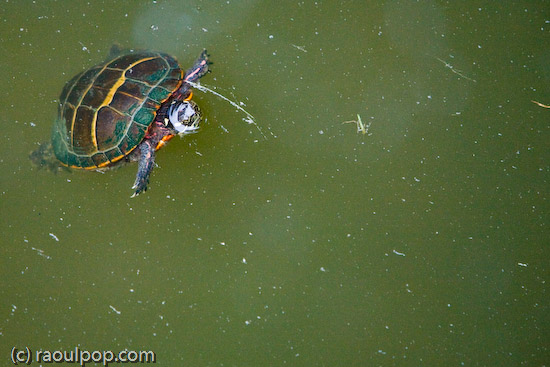
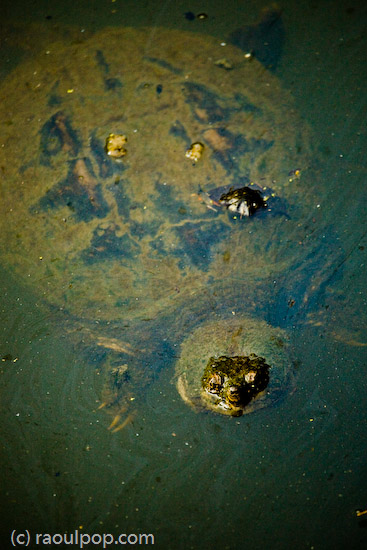
Mr. Turtle comes up for air

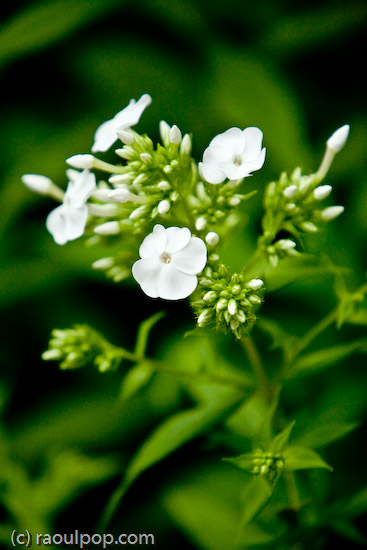
White flower bokeh

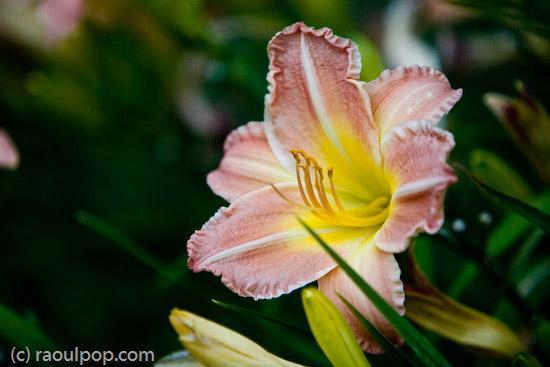
Burgundy lily

More information:

Standard
Reviews

Lens review: Canon EF 100-400mm f/4.5-5.6L IS USM Zoom

Canon EF 100-400mm f/4.5-5.6L IS Zoom Lens

I had a chance to play with Canon’s affordable 100-400mm L series zoom last week. I rented it for a day from Penn Camera at Tyson’s Corner, mounted it on my 5D, and ran out to chase wildlife as soon as I got home from work. As the sun began to set, I took it up to the roof, set it on my tripod, and took photos of the horizon. In the morning, I snuck out onto the terrace at sunrise and got photos of that as well. All in all, I put the lens through its paces, shooting in daylight, dusk and dawn conditions, handheld and on a tripod. Even though I only used the lens for a day, albeit a pretty full one, I’m fairly comfortable with what I’m about to say.

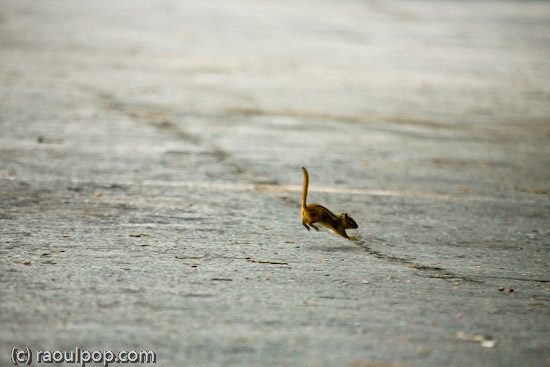
Leap year for Mr. Chipmunk

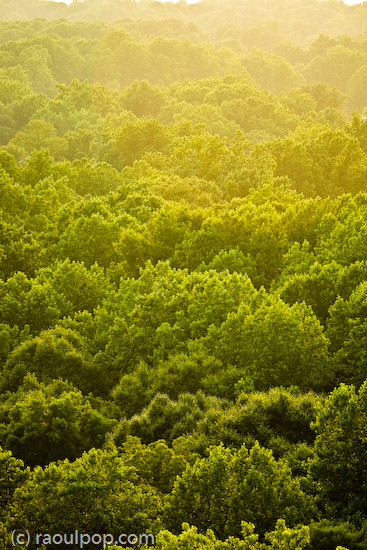
Tree cover at sunset

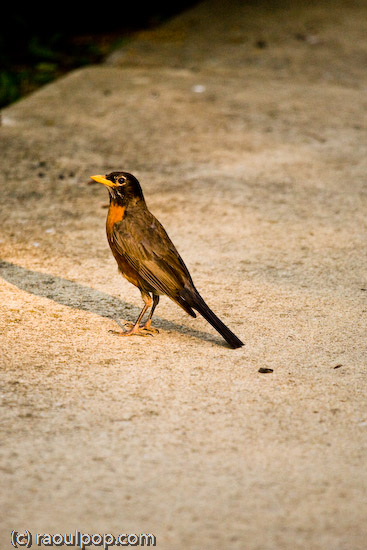
The robin examines me

I liked it. The 100-400mm range is a versatile range, and the fact that you can get this L series lens at around $1,400 makes it a bargain. The lens isn’t as heavy as the 70-200mm L series zoom (which I played with today), and it’s fairly comfortable to hold for moderate amounts of time. It has a push-pull mechanism for extending the focal range, and that has its benefits and drawbacks. The benefit is that it does make it a bit easier to get through the large focal range a little faster. It’s also necessary in order to make the lens affordable. Push-pull lenses are cheaper to make than regular zooms, and require less glass as well, making them lighter.

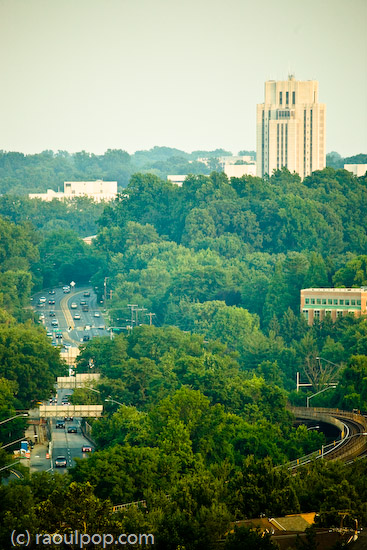
Bethesda, as seen from the top of Grosvenor

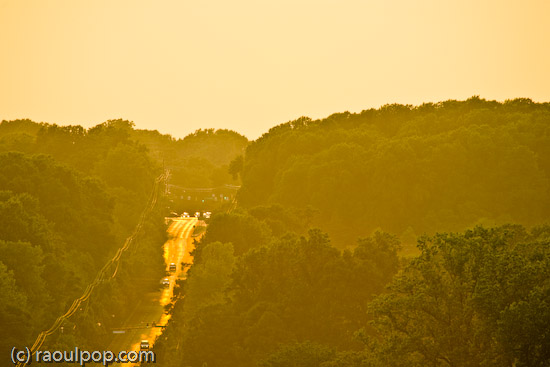
Tuckerman Lane at sunset

➡ Updated 7/4/07: Erik Persson asked me two relevant questions this morning via private email. One is about how the autofocus handled, and the other was about whether autofocus is possible at all with an extender, or whether manual focus needs to be used. Autofocus was a bit slow, but that’s to be expected. This is a big zoom that can focus over a large distance. There is a focus limiter switch that decreases the focusing distance. You tell it to focus either from 1.8m to infinity or 6.5m to infinity. If you know you’re only going to shoot things farther away than 6.5m from you, then set the switch to that, and the autofocus will be a little faster. I’m not sure how to answer Eric’s second question. He suggests autofocus on EOS models up to the 5D is possible only up to f/5.6, and Mark 1D models can autofocus up to f/8.0. Not sure about that. I can only point you to this lens chart at Canon, which talks about the compatibility of the extenders with various lenses, and tells you what the expected aperture will be, and whether or not autofocus will be possible at all. I checked the specs for the 5D and 1Ds, and can’t find the upper f-stop limits for either models. Perhaps a call to Canon will clear this up, but it is the 4th of July today, and I doubt they’re open. Maybe one of you who has more information is willing to comment on this.

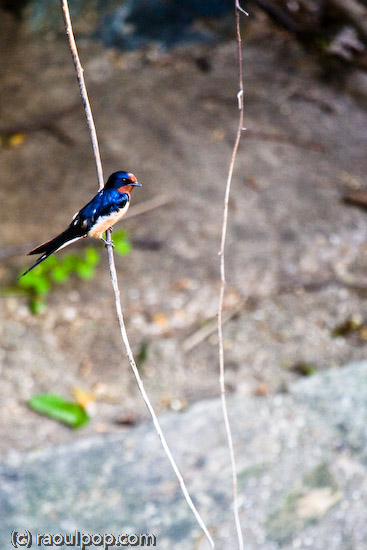
Beautiful swallow

Ugly one awaits

➡ Updated 7/6/07: Erik got back to me once more with a link to a review by The Digital Picture, where the AF to aperture specs are discussed. Furthermore, he provided a link to specs from Canon for the EOS 1v SLR (film camera) where the bit of information about being able to use AF with lenses that only open to f/8 is provided. So it looks like you’ll have to use manual focus if you stick extenders on the 100-400mm zoom. Thanks Erik! You know, you could just as well use the comments instead of sending me emails, but whatever works for you. 🙂

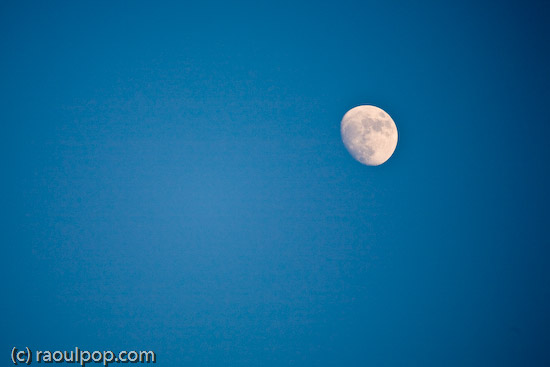
Moon rises over Grosvenor

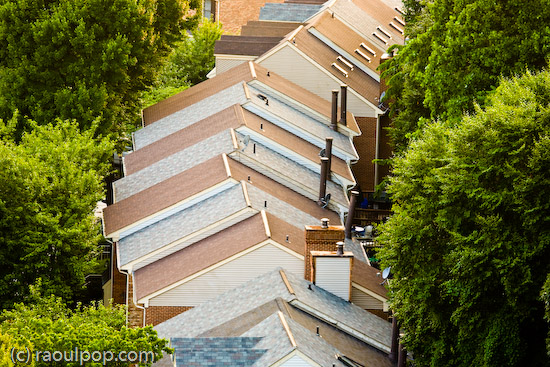
Grosvenor rooflines

If you’ve been looking at the 400mm f/2.8L tele, which retails around $6,500, and you’re wondering why this lens is so inexpensive, you should know there is a reason for the price difference — but I doubt you needed me to tell you that. I stated the reasons in the paragraphs above, and they are: less glass, push-pull mechanism for the EF 100-400mm zoom lens. I haven’t tried out the 400mm tele myself yet, but I have a feeling it’s a great deal sharper and has more contrast than this lens.

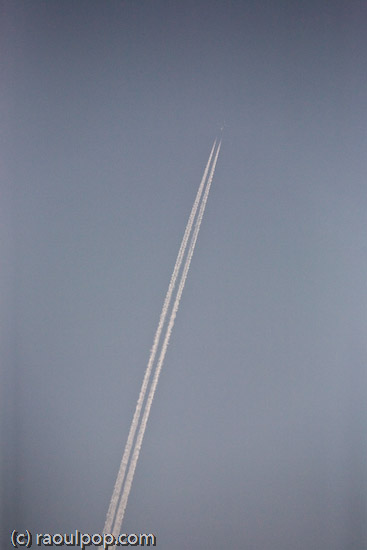
Early morning contrails

Clarity

I think you can already guess what my two complaints are: the details are a bit soft when the photos are viewed at 100%, and the push-pull mechanism creates a sort of vacuum between the camera and the innermost lens. Every time I extended or contracted the lens, air rushed in or out through the crevices. I’m sure things are isolated pretty well and dust doesn’t get sucked in, but it feels odd, and it makes it difficult to stop at say, 300mm. It’s certainly a lot easier to either pull the lens all the way out to 400mm or push it all the way back in to 100mm. You know how they say that zoom lenses are soft at either ends of the focal range? Well, it would have been nice to have some sort of limiter switch that could let me stay between 110-390mm, or something like that. With the push-pull mechanism, it was hard to get the focal length just below or above its limit in order to avoid softness.

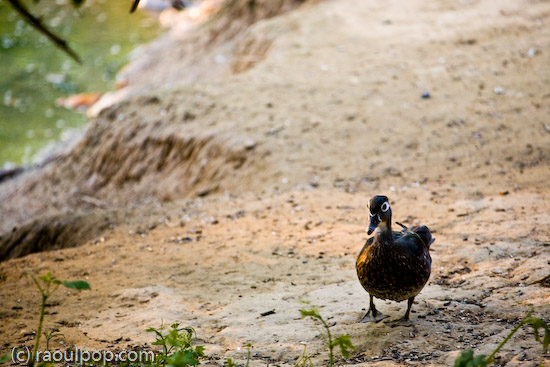
Wood duck advances

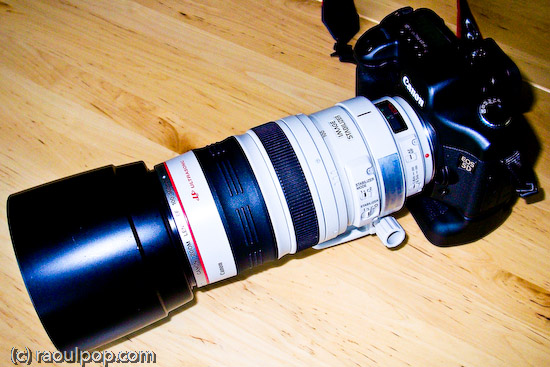
EF 100-400mm lens, wide

Having said all this, let me reassure you that this lens is a bargain at its price. If you’ve had your eye on it, get it. Realize you won’t get the results you might get with a more expensive tele, but you won’t pay through the nose for it either. This lens will definitely shine on cropped sensors like those found in the 30D and Rebel, where the effective focal range will be 160-640mm. How else can you get in the 600mm focal range without spending a ton of money? What’s more, with extenders like the 1.4x or the 2x, you can get up to 800mm on a full sensor or up to 1260mm on a cropped sensor. That’s pretty amazing!

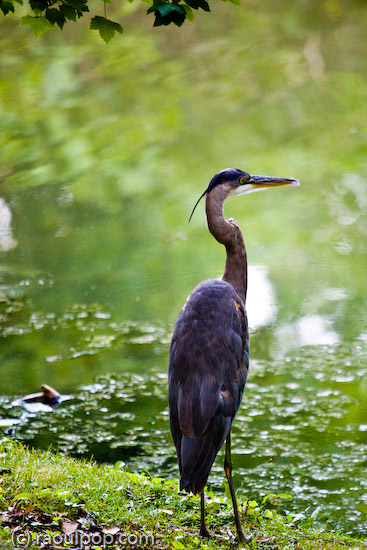
Heron at Grosvenor Lake

Afternoon traipse

There are a few other things to keep in mind though. The maximum aperture at 400 mm is f/5.6, and that means you’ll need pretty good light in order to shoot handheld with it. If you stick an extender on it, the effective aperture will get even smaller, so you’ll either need serious daylight or a tripod. But, as I’ve already said, you get amazing range with this lens, and it’s inexpensive for an L series zoom. If you’re willing to live with the few issues I’ve outlined, then get it.

Many lives

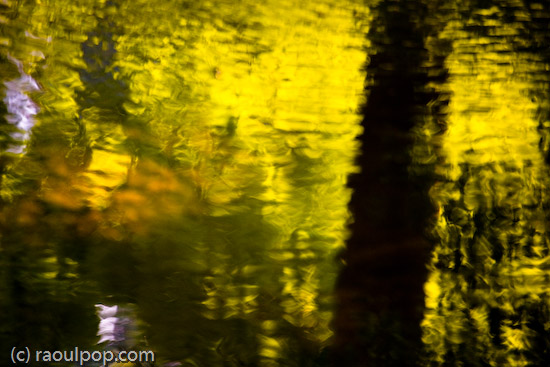
Waterside

Buy the lens

Sun sets over Grosvenor

Standard