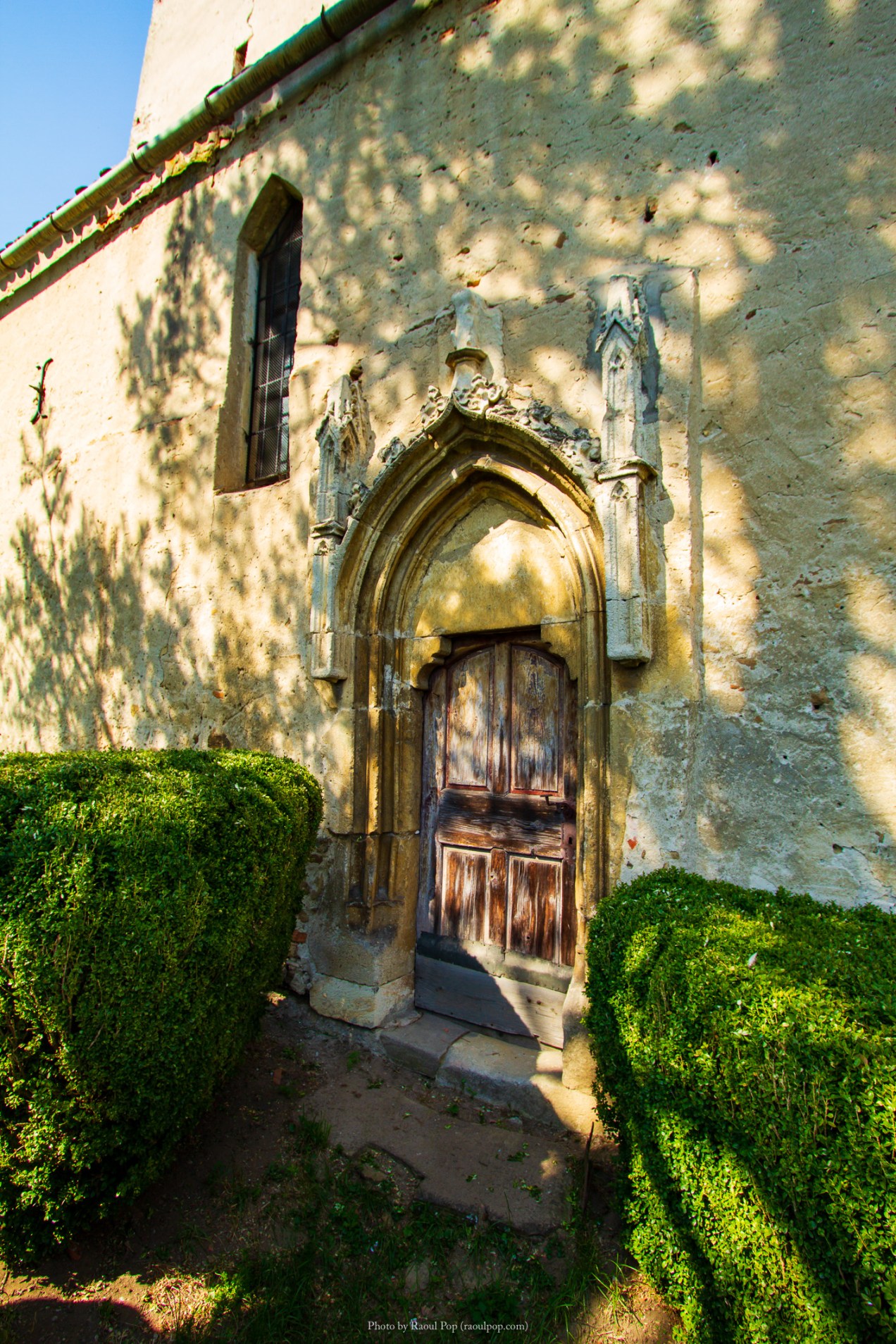
Having already visited about twenty-five fortified churches in Southern Transilvania, I can say that one of the most underrated fortified churches in this region is the one in Curci. It’s sad that it’s so, because it is quite beautiful, both on the outside and on the inside. Its outside is truly picturesque and its inside, though white-washed, as is the case with most reformed churches, still shows remnants of its more colorful gothic past, with green men on its walls and ceilings and murals hidden beneath multiple coats of lime paint.
When we visited in the spring of 2011, its caretaker told me no one had visited it for over 5 months. How can anyone miss a church like this one? It is a truly beautiful place.
Curciu, also known as Criș in Romanian, Kiertš or Kirtsch in German and Küküllőkőrös, Szászkőrös, and Kőrös in Hungarian (that’s right, three separate names), is an old Dacian settlement that was once called “La Fântâni”, itself built over yet older settlements from the bronze and iron age (source). It is first mentioned in written documents in 1332, and we also find it in court documents in 1337 alongside the name of a Saxon, Petro de Keuruz, who was called to testify as a witness about a legal matter. Curciu is also the place where my grandfather on my mother’s side was born.
The construction of the Saxon church was completed in the first half of the 14th century and took about 50 years. A lot of river rocks were used in its walls, as you’ll see in the photographs. The structure underwent modifications in 1425-1430, when the choir loft was added and again sometime in the 1450s. The church’s organ was built in 1844 by Wilhelm Maetz and it is still intact and undamaged to this day.
It isn’t a big church, but there are so many interesting architectural details that clearly point out a master at work. When you look at it as a whole (its chosen location, its perspective from all points of view, the way the architect chose to express the various functions of the building and the spaces used), it is a thing of wonder. It made me want to explore every little nook and cranny, and come back to it in the future.
If you’d like to visit this church, the village of Curciu is about 12 km away from Medias. You’ll need to take a paved country road toward the village of Darlos, pass through it, and follow the sign toward Curci.u Once there, you’ll need to ask around for the way to the caretaker’s house, who will then give you a personal tour of the domain.
Enjoy the photographs!

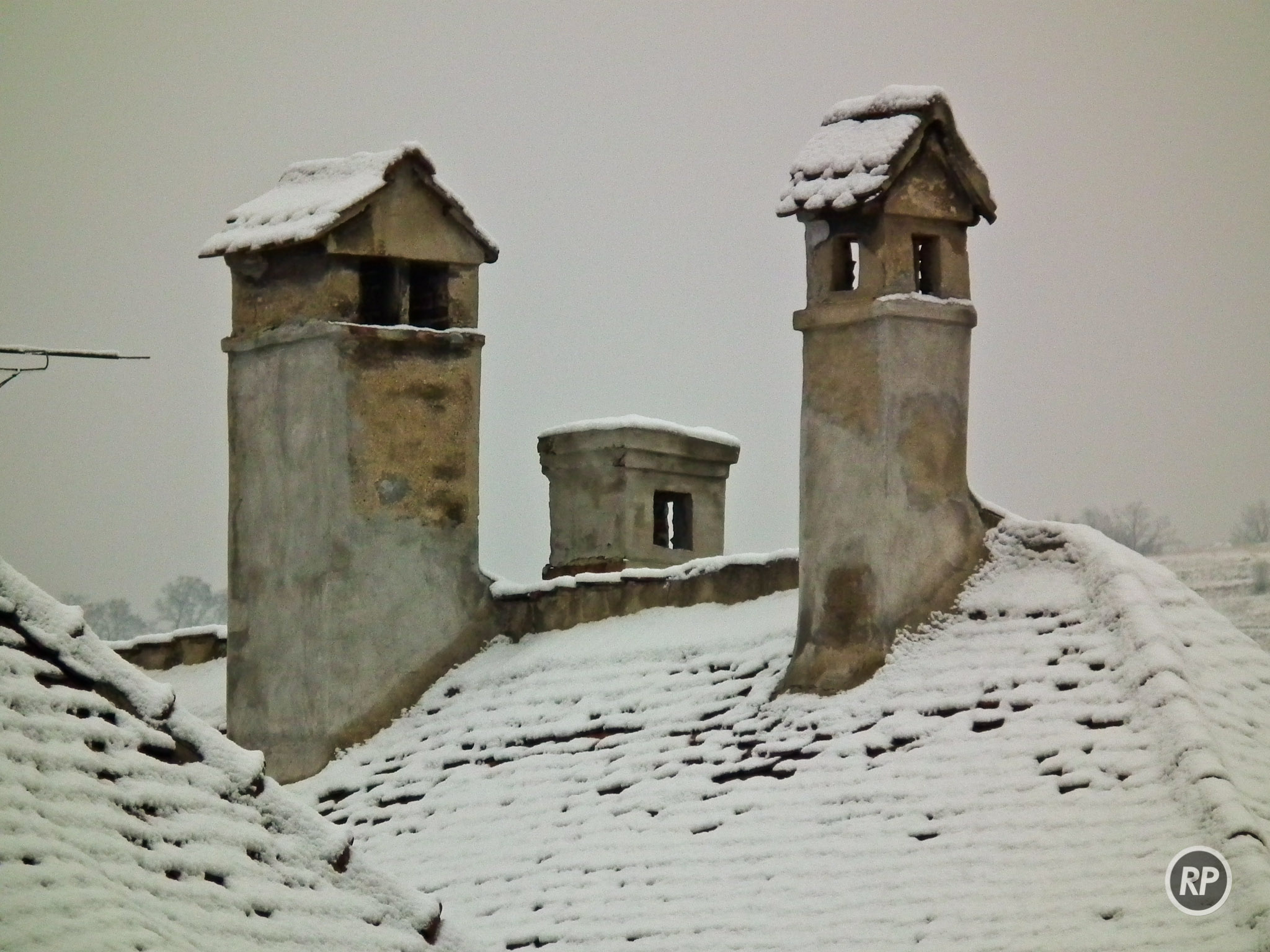
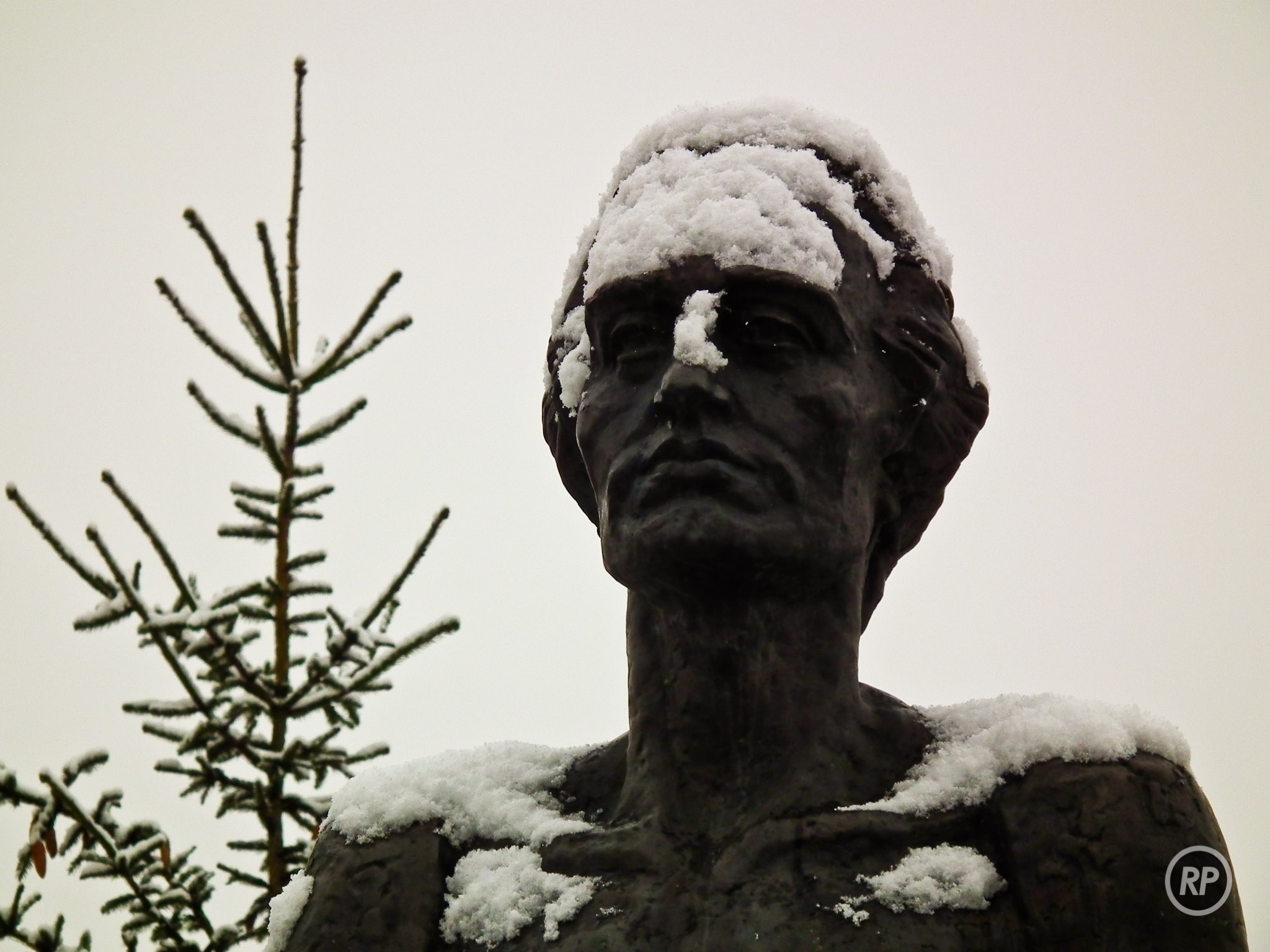
At the fortified Saxon church in Curciu, Transilvania, Romania

At the fortified Saxon church in Curciu, Transilvania, Romania

At the fortified Saxon church in Curciu, Transilvania, Romania

At the fortified Saxon church in Curciu, Transilvania, Romania

At the fortified Saxon church in Curciu, Transilvania, Romania

At the fortified Saxon church in Curciu, Transilvania, Romania

At the fortified Saxon church in Curciu, Transilvania, Romania

At the fortified Saxon church in Curciu, Transilvania, Romania

At the fortified Saxon church in Curciu, Transilvania, Romania

At the fortified Saxon church in Curciu, Transilvania, Romania

At the fortified Saxon church in Curciu, Transilvania, Romania

At the fortified Saxon church in Curciu, Transilvania, Romania

At the fortified Saxon church in Curciu, Transilvania, Romania

At the fortified Saxon church in Curciu, Transilvania, Romania

At the fortified Saxon church in Curciu, Transilvania, Romania

At the fortified Saxon church in Curciu, Transilvania, Romania

At the fortified Saxon church in Curciu, Transilvania, Romania

At the fortified Saxon church in Curciu, Transilvania, Romania

At the fortified Saxon church in Curciu, Transilvania, Romania

At the fortified Saxon church in Curciu, Transilvania, Romania

At the fortified Saxon church in Curciu, Transilvania, Romania

At the fortified Saxon church in Curciu, Transilvania, Romania

At the fortified Saxon church in Curciu, Transilvania, Romania

At the fortified Saxon church in Curciu, Transilvania, Romania

At the fortified Saxon church in Curciu, Transilvania, Romania

At the fortified Saxon church in Curciu, Transilvania, Romania

At the fortified Saxon church in Curciu, Transilvania, Romania

At the fortified Saxon church in Curciu, Transilvania, Romania

At the fortified Saxon church in Curciu, Transilvania, Romania

At the fortified Saxon church in Curciu, Transilvania, Romania

At the fortified Saxon church in Curciu, Transilvania, Romania

At the fortified Saxon church in Curciu, Transilvania, Romania

At the fortified Saxon church in Curciu, Transilvania, Romania

At the fortified Saxon church in Curciu, Transilvania, Romania

At the fortified Saxon church in Curciu, Transilvania, Romania

At the fortified Saxon church in Curciu, Transilvania, Romania

At the fortified Saxon church in Curciu, Transilvania, Romania

At the fortified Saxon church in Curciu, Transilvania, Romania

At the fortified Saxon church in Curciu, Transilvania, Romania

At the fortified Saxon church in Curciu, Transilvania, Romania

At the fortified Saxon church in Curciu, Transilvania, Romania

At the fortified Saxon church in Curciu, Transilvania, Romania

At the fortified Saxon church in Curciu, Transilvania, Romania

At the fortified Saxon church in Curciu, Transilvania, Romania

At the fortified Saxon church in Curciu, Transilvania, Romania

At the fortified Saxon church in Curciu, Transilvania, Romania

At the fortified Saxon church in Curciu, Transilvania, Romania

At the fortified Saxon church in Curciu, Transilvania, Romania

At the fortified Saxon church in Curciu, Transilvania, Romania

At the fortified Saxon church in Curciu, Transilvania, Romania









 Raoul Pop