Thoughts

The answer to a great many questions of today

This post will seem to fall right out of nowhere for you, mainly because you haven’t been privy to my thoughts in recent years — how could you be, after all? It may also strike you as highly inconsiderate and you may even become angry with me. Let it be so. You will inevitably calm down and you may also agree with me in a few months or years. 

The pompous title may lead you to think I’m going to philosophize. Nope, it’s just a little bait meant to entice you to read on. I’m going to speak plainly, because this must be said plainly and repeated loudly, for all to hear and understand: the answer to a great many questions of today is “too many people”

Go ahead, ask a question about the state of the world or the state of the planet. Any question at all. The answer, if you dig right down to the core, is inevitably overpopulation

Shall we have a go right now? Here are a few examples; keep in mind you already know the answer: 

  • Scarcity of clean drinking water?
  • Disappearing forests?
  • Disappearing fish? 
  • Disappearing animals?
  • Garbage piling up everywhere?
  • Pollution?
  • Overconsumption?
  • Poor quality of manufactured goods?
  • Poor quality of foods? 
  • Traffic jams?
  • Growing numbers of lonely and depressed people in large cities? 
  • Filled up cemeteries that are now contaminating water tables and surrounding land?
  • Crowded schools?
  • Crowded hospitals?
  • Crowded nursing homes?
  • Crowded mass transport? 
  • Crowded buildings/smaller apartments/taller buildings/feeling like a sardine in a tin can?
  • Natural beauty ruined by poorly planned and poorly made modern development?

I could go on and on, I suppose, but I would also get sadder and sadder as this list grew bigger. It’s daunting to face up to the problems we’ve created for ourselves, simply because we collectively thought there should be more of us. “Sure,” we thought, “let’s go on f*****g, it feels good and we’re making babies. The world needs babies…” 

It turns out, the world doesn’t need that many babies. Babies of all species are absolutely adorable and they melt your heart with their cuteness, but the overpopulation of any species is a real threat to the species itself and to the planet as a whole. 

In the past, people thought the answer to many questions were more people. How do you solve a labor shortage? How do you fund social security? How do you gather enough revenues as a government in order to build and maintain a modern infrastructure and have enough employees to take care of it all? How do you grow the economy? We thought “more people” was the answer. Well, it turned out not to be so. 

Paradoxically, at over 7.2 billion people, we still have massive labor shortages, social security and other social safety nets are in the dumps, it turns out that governments can never have enough revenues, and most puzzling of all, that economies and companies do and must stop growing. As a matter of fact, the very economic model that drives every economy in the world is based on constant growth. We can talk about “boom/bust cycles” and “contagion” and “recovery” all we want, but in the end, it’s about growth. And you can’t have growth forever. At some point it stops. It has to stop. You either run out of people or you run out of resources. To pick an example out of recent memory, there are only so many smartphones that people will buy. Given the limited resources available on Earth, there are only so many TVs/cars/houses/pieces of furniture you can make before you turn the whole Earth into a dug-up wasteland. 

This is a huge topic: an immense “minefield” that we’ve built and that we’ve got to wade through and “disarm” if we want to have a sustainable future. It’s filled with “hot potatoes” that no one wants to touch or step on, because there’s a real price to pay in the real world if you are a person of any clout and you dare talk about these things publicly. But these things must be said and someone must make the hard decisions, or else… 

Shall I tell you what you’re thinking? If you’re a parent, the basic question swirling through your mind right now is: “How dare YOU tell ME whether or not I should have MY children?” How dare I even bring up the question of procreation, which most people, at some level or another, conscious or subconscious, believe is their God-given right and even more so, God-given blessing? 

I wonder though, should God ever truly speak to us — if He or She or It would even deign to speak to an arrogant, dirty, criminal and avaricious species like ours — would would be said? We don’t know. God isn’t speaking to us, in spite of what some deranged “religious leaders” seem to think on the topic. We are left to figure this out on our own. 

I think it boils down to egotism. We are all so caught up in ourselves, most of us much more so than we realize, that we believe the world would be deprived of something if we didn’t have children, as if our exact chromosomes will combine to create a super-child that will solve the problems of the world. Let me assure you, right here and now, that collectively, the world won’t miss a beat if any one of us stops having children. It might even breathe a sigh of relief, as in “Thank God, I’ve been spared another mouth to feed!” And no, your “super-child” won’t solve the problems of the world. YOU need to work on solving them RIGHT NOW, so STOP procrastinating and passing the buck to future generations! 

What about the other egotistical question, “But who will take care of me when I’m old?” Does it always have to be about you? Must you be a burden to your children in old age? How about you figure out some other way, such as taking care of yourself and your money, so that you reach old age in relatively good shape? That way you can be independent and function well, living from your own resources. Why, you might even be able to give back to society, through volunteering and donations, instead of being a feeble shell of your old self, depending on social security and being carted around by a nurse. 

Is it any wonder that the rate of birth among well-read, well-educated folks all around the world is declining rapidly? As people better themselves and start to think beyond their bellies and their willies, they begin to see that all is not well with the world, and they choose to have less or no children. 

When I think of the people who are having more children, it is unfortunately those who shouldn’t be having them. Let me make it CLEAR here that I am NOT talking about RACE. What I am talking about is: livelihood, education, household resources, strength of the couple’s relationship, geographical location, available opportunities and so on. Let me make it plainer: a child born to a couple who abuse each other physically and verbally, living on government aid or in poverty, or in a country roiling in upheaval and conflict, will have limited or no opportunities and will have a poor quality of life. That child will likely be abused by its parents, perhaps even sexually — certainly and at the very least emotionally — and will grow up just like them, stunted, tortured, a stump of a human being that will likely continue to hurt others, just as it was hurt, knowing no better way in life, unable to do better in life even when shown and helped. That mother and father should give serious thought as to whether they should be having children at all, because they cannot provide for them, but unfortunately they give no thought to this at all and typically have them in droves. Is that the right thing to do? 

The solution is simple in theory but near-impossible to implement: we must each of us choose to have but one child or no child. It must not be forced upon us, or else it’ll feel horrible. We must make that choice. If all the families in the world would choose to make this decision, for the sake of our world as a whole, the world population would enter a steady and unforced decline, a very welcome decline that would allow us to slowly plan and become accustomed to an ever-decreasing population and re-work our economic and government models in order to account for it. 

I cannot state how dire the situation truly is. In developed countries, it’s easy to get lost in the abundance of it all, even if you’re poor. You can still dream about “having it all” and you think it’s going to be like this all the time. But we are on the precipice. We have been for some time, our end postponed for a little longer and a little longer. Mind you, I’m not talking about Biblical stuff here. I’m talking about the planet shaking and scratching us off like a bad case of fleas, but it’ll certainly feel Biblical to us. I’m talking about us doing it to ourselves, because as a species, we are all of the stuff I said we are in the paragraphs above. And it’s so easy to solve this peacefully, slowly, without the use of force and fear and horror, if we act now and we act collectively. 

I am sorry to dump this on you so near to Christmas. I’ve been mulling over this stuff for years and I’ve alluded to it here and there, but I haven’t come out and said it outright so far. Since most of us will have some downtime and our bellies full this year-end, it might be a very good time to think on these things. 

I remain hopeful. Who knows, in the near future, instead of bugging newlyweds for grandchildren, parents might ask them instead, “Have you thought about not having kids?” or “Isn’t one child enough, honey?” Wishful thinking, I know… 

Standard
Exercise

Dr. Eugster on aging, work and exercise

If you’re not familiar with Dr. Charles Eugster, he’s 93 years old and began working out when he was 80-something. He’s a living, breathing example of the kind of life we could all have when we’re older. In this TED Talk, he offers enlightening truths about aging as it currently is throughout the world, and as it could be.

Standard
Thoughts

The problem of human trafficking

Shenzhen Police Crack Down On Prostitution And Gambling

Human trafficking is a practice I condemn deeply, particularly the practice of sex trafficking or sexual slavery, because it could have touched very close to home. My wife went to college in the city of Constanta, Romania, which is one of the main cities in the country where abductions and other crimes of sex trafficking occur. When we met, she still had about two years before graduation. Because we were apart for long periods of time, and she was and is very beautiful, I had this constant fear of her being a target for sex traffickers. Thank goodness nothing happened.

My fear may sound absurd to you, but it was real to me, and it’s real to the parents of girls in that city and in other large Romanian cities. Constanta in particular, being a port city on the Black Sea, invites a lot of unwanted attention from criminals of all varieties. Girls are routinely abducted there and carried off to Middle-Eastern countries, where they’re either made part of some filthy Arab’s harem or forced into prostitution.

Romania is one of the major trafficking source countries for women and children in Europe, among others such as Albania, Moldova, Bulgaria, Russia, Belarus and Ukraine. Just next door to Romania, the Republic of Moldova, Bulgaria and Ukraine also have the dubious distinction of being among the main trafficking sources for the world, along with Thailand, China, Nigeria, Albania, and Belarus. So you see, the entire Eastern Europe region around the Black Sea is a hot spot for human trafficking. I’m not saying this of myself, but many statistics bear this out. Check out the reference links at the bottom of this article and see for yourselves.

Girls and children abducted or manipulated into going abroad may be taken through a transit country like Mexico or Israel, or end up in a destination country, which is usually rich enough for the “customers” to be able to afford the human trafficking “products”. The list of the biggest destination countries is as follows: Thailand (also a major source), Japan, Israel (also a transit country), Belgium, the Netherlands, Germany, Italy, Turkey and the US.

After talking with people in Romania, I found out that a lot of girls from the country end up in Germany and Turkey. Not all are physically coerced into going there. Criminals exploit lack of opportunities, promise good jobs or opportunities for study or marriage, and then force the victims to become prostitutes, or they may abduct them outright. Through agents and brokers who arrange the travel and job placements, women are escorted to their destinations and delivered to the “employers”. Upon reaching their destinations, some women learn that they have been deceived about the nature of the work they will do; most have been lied to about the financial arrangements and conditions of their employment and find themselves in coercive or abusive situations from which escape is both difficult and dangerous. They are psychologically manipulated by skillful, experienced traffickers into the practice of prostitution and are kept in that lifestyle by any means necessary, such as continual psychological or physical abuse or drugs.

Another tactic is for a trafficker to seduce a girl, pose as a couple as they go abroad, then, while the girl is still in love with him, get her to sleep with other men in order to make money while they “start from scratch”. He’ll keep saying he can’t find a job yet, she’ll keep sleeping with other men for money, and before she knows it, she’s a prostitute, and he’ll waste no time calling her one, each and every day, beating her down psychologically till she’s too broken down to resist the sordid lifestyle. When she’s broken, there’s no need for the captor to pretend they’re a couple, so he’ll revert to the job of an outright pimp.

The girls’ families usually know nothing of their girls’ whereabouts and doings. The girls tell them they’re going abroad for jobs, then, when they’re already caught in the web of prostitution, will lie to them and tell them they’re working somewhere, out of shame for what they’re doing. The girls are usually over 18, they’re going willingly, the police can do nothing about it, and once they’re abroad, it’s too late. Some people I talked to were pragmatic, even downright dismissive. “They’re old enough to know what they’re getting into,” they said. “If that’s what they want to do with their lives, it’s their business.”

The vile practice of human trafficking is a profitable one. People in Romania can usually finger the ones who are doing it, and can tell you how quickly they got rich, how many houses and cars they have, and so on. The sad part is that there’s little the police can do, unless abductions are involved. Even then, since the victims are taken to other countries, any moves require close cooperation with police forces in those countries, who may or may not care at all, so authorities are stuck.

Human trafficking is condemned and forbidden by the Protocol to Prevent, Suppress and Punish Trafficking in Persons, especially Women and Children (also referred to as the Trafficking Protocol), which is a protocol to the United Nations Convention against Transnational Organized Crime. The protocol defines human trafficking as “the recruitment, transportation, transfer, harboring or receipt of persons, by means of the threat or use of force or other forms of coercion, of abduction, of fraud, of deception, of the abuse of power or of a position of vulnerability or of the giving or receiving of payments or benefits to achieve the consent of a person having control over another person, for the purpose of exploitation.”

While the UN and many civilized countries condemn the practice, and many celebrities have signed on to the cause of fighting human trafficking, little headway is being made. In part, this is because collaboration between police forces in various countries is difficult, as few protocols with too few teeth are in place for this sort of thing. Also, governmental organizations set up for the purpose of fighting human trafficking are busy bickering among themselves over the definition of human trafficking. Finally, what makes this a difficult fight is that at least where sex trafficking is concerned, the majority of the girls go willingly, because they’re duped into it. Some are even okay with prostitution, though they may not be aware of the real working conditions until it’s too late.

Human trafficking is the fastest-growing criminal industry in the world. The US estimates the market at up to $9 billion, while the EU laughs at that estimate and states it to be around $42.5 billion. No country, rich or poor, civilized or not, is immune from the problem of human trafficking, which can take many forms, but is most often identified with the exploitation of women and children for the purposes of prostitution.Victims of traffickers are usually transported over state borders, though it’s not a pre-requisite, since they can be also coerced and manipulated in their own countries.

Still, good news exists when it comes to catching the criminals involved in this practice. Just a few years ago, while living in the DC area, I heard that a brothel disguised as a massage parlor, staffed by South-Asian women, was closed down, but not before the investigation revealed that prominent politicians and other men of supposed standing in the local community frequented the place, some quite often. In October of 2009, US authorities broke up a child prostitution ring where 52 children were recovered and 60 alleged pimps were arrested, during a three-day operation, tagged Operation Cross Country IV. Law enforcement actions were taken in 36 cities across 30 FBI divisions nationwide. It was part of the FBI’s ongoing Innocence Lost National Initiative, which was created in 2003 with the goal of ending sex trafficking of children in the United States.

The movie “Taken”, released in 2008, starring Liam Neeson, does a good job of showing what an abduction situation for the purposes of sexual trafficking looks like, how one can begin to tackle the situation, and how entangled the whole web of human trafficking really is, with many interested parties holding significant stakes in the matter, including the police, who are often on the take in order to turn a blind eye toward the matter. In the movie, Brian Mills, the main character, manages to track and save his daughter as she is exchanged through the hands of several captors, though in real life, this seldom happens. I’m not knocking the movie — I loved seeing all those sex traffickers get maimed, tortured and killed, because it’s what should happen to all of them — but the people who do this usually prosper while countless women, children and men suffer at their hands.


“Taken” (2008) Trailer – YouTube

The Vancouver Film School also put together a short documentary about human trafficking, which they recently released to the web.


“Traffic” (2009) – Vancouver Film School

In the end, I think the problem of human trafficking can be tackled along multiple avenues:

  • Prostitution and other forms of human trafficking should be made illegal. On one hand, I can understand arguments for making prostitution legal, such as the ability to provide medical care to prostitutes and to check on things a little better. On the other hand, you’d be legalizing a business whose product is the exploitation of women as sex objects. A bad practice shouldn’t be made legal just because some people choose to engage in it.
  • The burden of the punishment for human trafficking should be on the shoulders of those who are behind the scenes — not the prostitutes or human slaves themselves, who should be helped to reintegrate into society — but those who organize the business of selling them to the public and “recruiting” them. The human traffickers themselves should bear the heaviest legal punishments that can be meted out, probably on par with murderers. The clients themselves should have to pay significant fines if caught trying to solicit prostitutes or purchase human slaves. Heavy fines are a great deterrent for this sort of thing.
  • So that the bickering can stop over the definition of human trafficking and ways to combat it, separate organizations ought to be set up that deal with each category of offenses that have been grouped under this umbrella. In other words, sex crimes ought to have their own set of laws and organizations that fight them, and other kinds of human trafficking offenses ought to be separated under their own sets of laws and organizations. For example, I think someone that sells women as sex slaves ought to be punished differently and more severely than someone who sells men or women into indentured servitude, and someone who sells children into sexual slavery ought to be punished most severely.

These are just a few of my thoughts on the matter, but if you have anything to contribute, please comment below. For more information on human trafficking, please consult the following resources, on which I drew for facts and figures as I wrote this article:

Standard
Reviews

Amazon Kindle now comes with international wireless coverage

amazon-kindle-3

The newly redesigned Kindle from Amazon now comes with both US and International wireless coverage built right in. This means you can use it as you travel in most of the civilized world and not have to worry about internet access. It’ll automatically find a wireless network it can use, you won’t pay anything extra, and it’ll let you browse and get books from Amazon, or deliver your daily newspaper and blog updates to you.

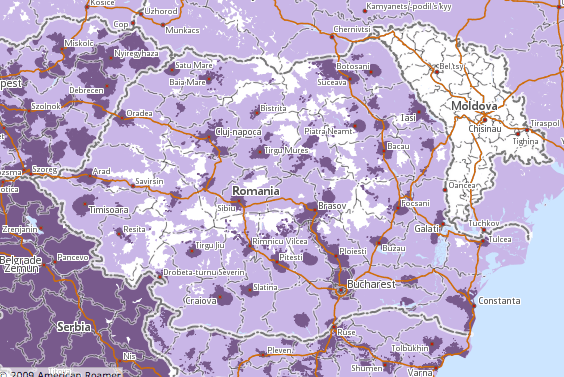
I checked to see if there was coverage in Romania, where I am at the moment, and sure enough, there is. Pretty cool.

kindle-coverage-romania

Having seen how clunky the 1st generation Kindle looked, I’m glad to see Amazon took the time to re-design it and to build in extra features like this one. Sure, it helps them too, since they get to sell more stuff to you, but I know just how annoying it can be to travel internationally and have to deal with different cellular plans. They put in the work needed to make sure the Kindle would just work wherever there was a serious wireless company available to provide coverage, and that’s definitely not something that happens overnight.

amazon-kindle-1

amazon-kindle-2

Standard
Thoughts

Turning trash into usable products

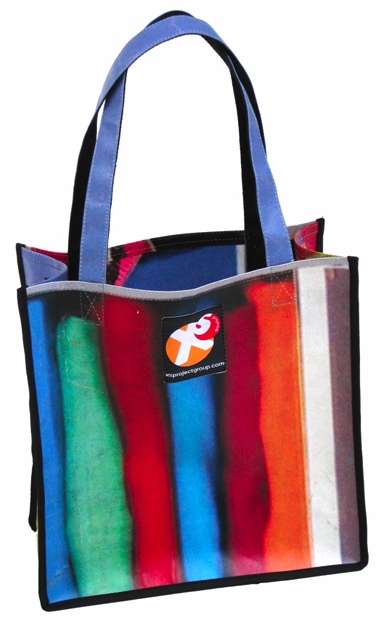
Ann Wizer from XSProject Foundation (as in “excess”) is making custom-designed bags and other products from non-recyclable plastic waste found in Indonesia and the Philippines. She buys the raw materials from trash pickers, whom she pays at above-market rates, and, using trained artisans, creates beautiful products from trash that would be clogging landfills, streets and waterways in those countries.

Through its work, the Foundation is protecting the environment, reducing poverty, and teaching locals how to sustain themselves through the work of their own hands. The end results are beautiful, as you can from the photos and the embedded video below. The cause is noble, the work is noble, the means are innovative, sustainable and ennobling, and so I think Ms. Wizer and her XSProject Foundation deserve our applause for the wonderful work they’re doing.

Embedded video from CNN
Turning trash into usable products (CNN)

xsproject-bag-1

xsproject-bag-2

xsproject-bag-3

* I would have linked to their online catalog of products, but at the time of writing this, it seems to be down.

Images used courtesy of XSProject Foundation.

Standard