Thoughts

Is global warming a cyclical event?

While most agree that global warming is occurring, they do not agree on the root cause. Some say global warming is caused by man, mainly by CO2 emissions, while others say it is part of a larger picture of cyclical global warming and cooling events that have occurred throughout history. Unfortunately, the debate is mostly one-sided, with man-made global warming proponents getting most of the media coverage, and the cyclical global warming proponents ostracized and denigrated as false scientists.

A new salvo was launched recently against the man-made global warming side, with the publication of an article by Danish professor Henrik Svensmark, entitled “While the Sun Sleeps”. As the title alludes, Mr. Svensmark believes the sun shows reduced magnetic activity and is about to go into a period of hibernation, which means a period of global cooling will likely begin soon. The full translation of the article from Danish to English is available on Anthony Watts’ blog, and I encourage you to read it. Here’s a quote:

When the Sun is active, its magnetic field is better at shielding us against the cosmic rays coming from outer space, before they reach our planet. By regulating the Earth’s cloud cover, the Sun can turn the temperature up and down. High solar activity means fewer clouds and and a warmer world. Low solar activity and poorer shielding against cosmic rays result in increased cloud cover and hence a cooling. As the Sun’s magnetism doubled in strength during the 20th century, this natural mechanism may be responsible for a large part of global warming seen then.

That also explains why most climate scientists try to ignore this possibility. It does not favour their idea that the 20th century temperature rise was mainly due to human emissions of CO2. If the Sun provoked a significant part of warming in the 20th Century, then the contribution by CO2 must necessarily be smaller.”

As for me, I’m still on the fence about this, but I’m leaning toward what Svensmark says. It makes more sense to me. While there’s little doubt that the Earth has been warming for the past few decades, that weather patterns are screwed up, and that pollution and emissions are running rampant and must be reduced drastically or eliminated where possible, I’m still not sure we’re behind the global warming phenomenon.

What tilts the balance of my opinion further away from man-made global warming is the face being used for the campaign — that of Al Gore. Try as I might, I can’t stomach the guy. When I think about his claim to inventing the internets, and his electricity-chugging lifestyle (which goes in stark contrast to what he’s saying when he speaks publicly), and his face, which just isn’t the face of a man that should be trusted — I’m sorry, I just have to look for more proof before I believe what he’s got to say. I’m also still in shock that the man got a Nobel Prize for the stuff he talks about — after all, he’s little more than a pusher of carbon credits, which are dangerously close to a green, global Ponzi scheme in my book.

Who knows, I might be wrong about Al Gore — he may be genuine for all I know — and in that case, I hope the agenda he and his supporters are pushing goes through, but right now, I believe global warming is cyclical, and only time will tell for sure who’s right.

More importantly, I believe global pollution must be addressed regardless of who’s right and wrong on global warming. Our environment is on the verge of collapse due to all the crap we’ve been pouring into it since the 1800s. Pollution is a real threat to our survival, as countless studies have shown. Let’s do something about that, right away.

Standard
Thoughts

The pain and importance of communication

During the past several months, I’ve had to work with people much more than before, and I learned a few things, one of which is the importance of communication.

Ligia and Raoul, talking

It’s one thing to sit in front of the computer all day and communicate via email and the occasional meeting, as it happens in IT work, and it’s quite another to only do it in person, face to face, explain concepts and ideas, try to get your vision across, then see how well others understood and delivered on the stuff you needed. More often than not, I’ve been disappointed, but I’m told that’s par for this course.

So where does communication help?

Where there’s tension, it helps deflate anger and potential conflict. I’ve been in situations where the tension had built up so much the hair stood up on my back and I was ready to punch someone, and yet if we were able to communicate rationally for a few minutes and hash out the various problems that we faced, all of that pent-up anger literally melted away. Of course, if the other person can’t communicate rationally, that’s another story altogether…

I can’t overemphasize the importance of communicating with each other as you work on a project with other people, particularly when it’s new territory for either one of you. Most people aren’t good communicators. They’d rather just do their work, but if they’re not taking the time to understand what it is you want them to do, being faced with an end result that differs from your expectations can lead to bad situations all around. So what I’ve had to do is to initiate communication most of the time, and to get these people to explain to me each stage of the work they were doing, several times a day, just to make sure they’re on the right track.

In the past, when I worked on IT projects, I had to do the same thing sometimes, but more often than not, I got too frustrated with the capabilities of others and brushed them aside, preferring to do the work myself, knowing I could do it faster and better. That wasn’t possible this time. I’ve been involved in construction/renovation work, and even though I could do the work myself, I couldn’t allow myself to do it because I needed to get results on a tight schedule. Doing things myself would have meant pushing deadlines into the future, and that wasn’t an option. The teams I worked with could deliver the stuff on time, but I had to make sure we were communicating properly. It was a real challenge, and I gained a new-found respect for general contractors and project managers. It’s very stressful and exhausting to work on construction projects and ensure everything gets done according to plan and to your vision when you’re dealing with people. Unfortunately, until we invent robots that can do all manner of construction work to spec — and I doubt that’ll ever happen — that’s what we have to work with.

In IT work, if something isn’t right, you can go back in and change things. You erase or modify the code, re-adjust the software options, etc. You’ve only wasted time, not materials. (Yes, you can also waste resources and others’ time, but let’s not bring that into the equation for this analogy.) In construction work, you not only waste time, you waste materials, and that can really add up. There’s also the painful cost of tearing down stuff that wasn’t built right and starting from scratch, and you pay for this in more stress.

So yeah, communication is vital, but there are some serious flip sides to it.

I’ve found out that you can still be misunderstood and judged even when you do your best to communicate as much as possible — and here I’m not talking about construction work, but life in general. Your every action can be perceived as the opposite of what you meant it to be. You’ll try to help someone else and they’ll think you’re trying to hurt them. You’ll do a good deed and it’ll get mocked or your kindness will be abused when others seek to take advantage of you. It is so painful to deal with this crap, and yet there’s no way around it unless you go live someplace away from everybody — and let me tell you I’m sorely tempted to do it.

There is so much potential in each of us to create, to do good things, lasting things, beautiful things, to achieve lofty goals working in harmony, but we’re stuck using language to communicate what’s inside us. There’s no better way to transfer information and ideas between us. Unfortunately, words can be sorely lacking in the power to transfer information and vision, in most situations where it’s really important for them to convey that. And yes, this is coming from a writer, someone who loves using words. It’d be so much easier if we could communicate what’s in our hearts, unequivocally, when we needed to do it, so there would be no doubt in the mind of the other person of what our true intentions really are. Of course my vision is somewhat utopic. After all, many people simply don’t aspire to do good things. Their goals stop at the ordinary or downright sordid aspects of life, and you can’t do much good with those people. You’re better off avoiding them, unless you welcome extra stress in your life.

I suppose one antidote for all this pain caused by living and working among people is to not care. By this I don’t mean we should be callous. I mean we shouldn’t care what others think of our actions or of us. We should stand rooted in our morality and do what we know is right, treat others the way we want to be treated, and let others think what they will of us. As long as we’re true to our own moral compasses, nothing else should matter. Right? But somehow it does, doesn’t it? And it’s so damned painful, too.

Standard
Reviews

Life Inc – another perspective on today's society

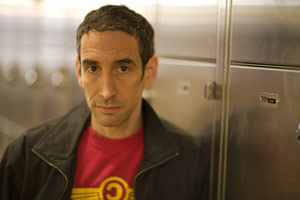
Douglas Rushkoff Douglas Rushkoff, an award-winning writer, documentary filmmaker and scholar, has written a book entitled “Life Inc”, where he delves into what he calls the “corporate mindset” of today’s society, and how to overcome it in order to make our lives and our world better.

I’ll let him tell you what the book is about in his own words:

“What I started to do was to look at the different ways we as modern Americans have become disconnected from one another, disconnected from the places we live, disconnected from the value we create, and even disconnected from our own sense of self-worth. I came to the conclusion that corporations, or what we call the corporate mindset, were really at the center of this phenomenon.”

“We’re living in a world where if you want to make money, you’ve got to work for a corporation.”

According to Rushkoff, it turns out this “corporate mindset” can be traced back to the Renaissance, which is when kings began to monopolize on the income created by people. Instead of letting them trade freely among themselves, they created charter corporations which had exclusive control over certain industries. The kings got shares of stock in those monopolies, thus income, and those companies got to make all the money there was to be made in those markets. This centralization of power continued right through to our own time.

“The society built through the Industrial Age was built to mythologize the mass-produced object, because we needed to create a society of consumers who thought buying all of this stuff would somehow make them happier.”

“Most of us spend so much time working and consuming that we have very little time left to do anything that has to do with other people.”

“The more we behave as individual actors in competition with one another, the harder it is to encounter one another in a friendly way.”

“People can start investing in one another and with one another, make their towns better, and earn returns that you’re not getting from your Smith Barney broker… and see the return of your investment in the place you actually live.”

“This [economic recession] isn’t just a crisis, it’s an opportunity. It’s the first moment in the last couple of hundred years that we’ve had to rebuild our society and our economy on principles that serve humanity instead of killing life.”

I agree with most of what he has to say, and it’s important to realize he’s not against corporations per se, but against the slow creep of the corporate mindset into everyday life. After all, it’s thanks to corporations that we have industrial design, which allows us to get products designed to exact specifications and high standards. And the concentration of capital and research at some corporations and organizations has resulted in amazing advances in technology that have benefited all of us. Yes, you can do a lot of things in your garage, and you can get a lot of stuff done with your neighbors and in your community, but you can’t build a highly sophisticated computer, digital camera or a modern car at home. (You might be able to assemble them from purchased parts, but those parts were made in factories, too.) There is plenty of value to what he has to say, and the book warrants a close read. We do need to become more human, more connected, more dependent on our communities.

There’s a 9-minute video summary of the book at his Vimeo account. He’s also posted video clips summarizing the main ideas of each book chapter there. I’ll post the main video summary and the first three clips below. There’s also more info on his website at rushkoff.com. You can get the book from Amazon.

Life Inc. The Movie from Douglas Rushkoff on Vimeo.

Life Inc. Dispatch 01: Crisis as Opportunity from Douglas Rushkoff on Vimeo.

Life Inc. Dispatch 02: Insulation Equation from Douglas Rushkoff on Vimeo.

Life Inc. Dispatch 03: Money as Debt from Douglas Rushkoff on Vimeo.

Standard
Events

Rob Thomson: around the world on skateboard and bicycle

New Zealander Rob Thomson recently complete an around-the-world journey (25,000 kilometers) on skateboard and bicycle. Along the way, he set a new Guinness World Record for skateboarding the entire width of China.

End of the Road for 25,000km Around the World Journey from Rob Thomson on Vimeo

Part Ten – Guinness World Record Skateboard Journey from Rob Thomson on Vimeo

You can see more about his incredible 2-year journey on his website. There’s an article (among many) that talks about his skateboarding world record.

Standard
Thoughts

Child rape survivor saves young girls in Zimbabwe

So happy to hear about the good work Betty Makoni is doing in Zimbabwe. She’s put together a support network for rape victims.

Child rape survivor saves ‘virgin myth’ victims – CNN.com

Witch doctors (so-called traditional healers) have spread the rumor that a man can be cured of AIDS if he rapes a virgin. So you have all these HIV-infected men with no scruples and no morals whatsoever who are raping young and younger girls — even babies. Unfortunately Zimbabwe’s culture makes it very difficult to get support after rapes occur, but this woman, Betty Makoni, has organized a country-wide network of support for the poor girls.

I say the filthy men who do this sort of thing, and the witch doctors who spread the unconscionable advice, ought to be rounded up and raped by prison gangs. Either that or they should be castrated, without anesthesia. Let the punishment fit the crime.

Standard