Thoughts

I guess black squirrels really are more aggressive

First I noticed more black squirrels in our neighborhood. Then I read this article in the Daily Mail, which says they’re more aggressive and thus compete better for food. Then I saw this, a brawl between a black squirrel and a grey squirrel, during a walk on Beach Drive.

A black squirrel and grey squirrel fight for food

The black squirrel attacked the grey squirrel repeatedly, in spite of the fact that the grey squirrel held its ground. It just couldn’t accept defeat, and came back time after time after time. I counted 6 attacks, then they noticed me and paused until I left.

Granted, this isn’t a study, just a single empirical observation, but it confirms existing research, and it is valid.

While I’m on the subject of squirrels, what’s going on with the fur of this squirrel in downtown DC? I made a triptych of the same animal, but there were three of them with the same coat color, in the same meadow, at the time. Their fur looks like it’s bleached. Or is it their winter coat? It’s out of the ordinary for me, so I hope someone can clear things up.

Standard
Thoughts

How pressure changes a man!

Take a look at these two photographs of President Abraham Lincoln. One was taken in the midst of the Civil War. The other was taken after the Gettysburg Address, and after North had won and managed to keep the country together. Slavery had been abolished, and the goals that had been set out at the start of the war had been achieved.

Can you guess which is which? More to the point, can you believe how much pressure changes a man? In the second photo, Lincoln looks older, more frail, literally spent after the long war effort, but is smiling. Amazing.

Photos are public domain, and were taken by Alexander Gardner. Courtesy of the Library of Congress.

Standard
Reviews

Watch "The Future of Food"

If you have not yet heard of a documentary called “The Future of Food” (2004), or haven’t yet watched it, please take the time to do so. It is vital that you know what’s going into the food that you eat, and it’s vital that you know it now, before it’s too late.

What’s been happening over the past 20 years here in the States is that our food supply has been slowly taken over by biotech companies who are interested only in their bottom line. They have used tactics akin to racketeering practices in order to get farmers to use their seeds and only their seeds. They have placed their executives in key government positions, in order to ensure that their policies go through. They have done and are doing everything in their power to get us to eat their genetically modified foods, without regard for safety, common sense, decency or ethics. I’m not saying this by myself. The documentary itself will prove it to you.

All that is bad enough, but what’s really appalling is that they are patenting genes. They have patented plant genes, and now they want to patent animal genes and even human genes. They are trying to get the market in their tight snare, so they can squeeze profits out of everywhere and ensure they control our food supply completely. They have even patented one of the genes involved in breast cancer, then sued researchers who had been doing working on it, to force them to pay exorbitant licensing fees. Needless to say, research on that gene has been significantly curtailed, directly due to their malefic influence. That’s the sort of “work” they engage in.

When I call them racketeers, I have a great frame of reference in mind. It’s a short crime drama made in 1936, entitled “The Public Pays“, which won an Oscar. It depicted a protection racket that preyed on the local milk distribution in one American city, and the people’s successful fight against them. The biotech goons may not beat up people and physically destroy their milk trucks and containers, but they have legal “procedures” which wield the same sort of power and yield the same horrible results. This time, they’re working hand in hand with specially-placed government officials who make sure the biotech rules get enforced and the little guys get screwed royally — not to mention that the consumers, and the marketplace in general, are manipulated to no end as well.

Don’t believe me? Watch the documentary. And if you can find “The Public Pays”, watch that as well and compare the two to see the striking similarities. What’s more, if someone can assure me that “The Public Pays” is now in the public domain, I’ll gladly post it online, either at Google Video or somewhere else.

As you get to the end of the “Future of Food” documentary, you’ll get heartened by the organic farming efforts, which are great, but keep in mind that Whole Foods now sells mostly non-organic fruits and vegetables, and also imports supposedly organic foods from China, whose food supply is so laden with pesticides it’s not even funny. Yet Whole Foods still dares to hold the same high prices on their stuff, which means they’ve cut costs and are pocketing the difference. Lesson learned: don’t shop at Whole Foods. Go to Trader Joe’s or MOM’s, if you have them in your neighborhoods.

Seek REAL organic foods, and make sure to vote with your wallets. Where you buy your food, and what sort of food you buy, determines our food supply’s future. Write to your congressmen and demand that the proposed law (introduced by Dennis Kucinich) to label genetic foods as such be finally approved.

My wife just chimed in with some great advice. It turns that while we wait for foods to be properly labeled as GM or not, there’s an easy way to tell already. Fruits and vegetables all have little stickers on them, with numeric codes (4 or 5-digit numbers). It seems that if those numbers start with 4, they’re conventionally-grown, but not genetically modified. If they start with 8, they’re GM — stay away from them! And if they start with 9, they’re organically grown and are safe to eat. Not sure if this is officially true, but she says that’s usually been the case, at least for the organic foods that she buys.

Here’s how you can watch the documentary:

  • Google Video (free, but quality isn’t that great)
  • YouTube (free, but in multiple parts): start here
  • Netflix (instant streaming, DVD quality, but requires subscription)
  • Amazon (you can purchase the DVD)

Standard
Places

Photos from Antietam Battlefield

Last weekend, on a fiercely hot Sunday, my wife and I visited the Antietam Battlefield, located near Sharpsburg, MD. It’s quite easy to get to it from DC. You take 270-N to 70-W, then keep going on 70-W until you see the signs for Antietam. Once off the highway, you’ve got another 8 miles or so till you get there. You can’t miss it. There’s a big National Park Service sign by the side of the road. All in all, it’s about a 1 hour and 30 minute drive, give or take 15 minutes, and the history lesson is priceless.

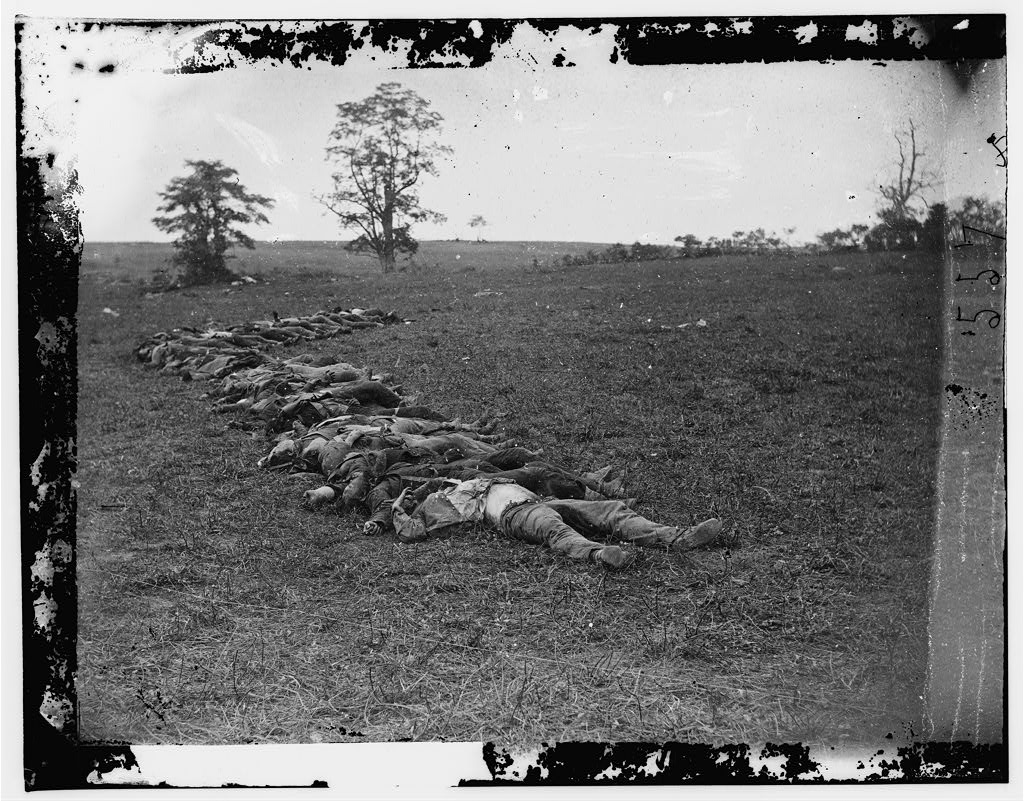
Antietam is “the bloodiest one day battle in American History”, according to the official NPS website. In 12 hours of “savage combat”, over 23,000 soldiers were killed, wounded or missing. Six generals were killed during this battle. The human price of this battle was driven home by a photographer: Alexander Gardner. His haunting photographs of the dead at Antietam were said to have brought them “to our doorsteps” by the New York Times. And it’s true. It’s one thing to sing of battles won and of bravery on the battlefield, and it’s quite another to stare at the dead in front of you and see the horrible price of that thing you call victory.

What always strikes me when I look at war is how senseless it all is. Even when I’m far removed from it, by a century and more, I can’t help shivers from running down my spine when I think the ground I stand on is the same ground where countless men lost their lives.

Why? How many more people need to die horribly until humanity as a whole realizes war is bad? Forget humanity as a whole, how about the United States alone? When will we get it? Ever? At the first sign of trouble somewhere (preferably in the Middle East), we’re more than happy to send our soldiers in there to die for some trumped up cause, and to spend trillions of dollars and bankrupt our economy as well. At least the Civil War had a good reason. The country needed to be kept together, and slavery abolished. Still, in spite of those good reasons, far too many people died during that dark time in American history: around 360,000 lost their lives, and countless more were injured or maimed for life.

I’m going to show you how Antietam looks today. But I want you to have a look at the way it was back then, too, especially through Gardner’s eyes. Never mind the fact that the dead bodies may have been arranged in a photo or two. Death is still death, and it’s still just as grim and nasty regardless of the pose.

First, the Library of Congress has a LOT of scanned negatives from the Civil War — an amazing resource. Here is their collection of Civil War photographs. That’s where I got the few photos shown below (taken by Alexander Gardner). Most of the photos are in the public domain, which means they can be used freely, although it would be nice to give the LoC credit for their work in scanning, archiving and curating the photographs. It’s also worth looking at the October 1862 issue of Harper’s Weekly, which features illustrations and reports by eyewitnesses to the battle.

This is Abraham Lincoln at Antietam, after the battle ended.

Abraham Lincoln with two generals at Antietam

Assorted photos of dead soldiers, in the aftermath of the battle.

Gardner’s notable photographs from the battlefield are listed in an album on the NPS website. Have a look at them, and even download them, should you want to have your own archive.

What does it look like today?

Dunker Church is the spot where truce was called at the end of the battle. If you’re interested, there’s a nice historical summary available.

The church is visible in this photo taken by Gardner as well.

The approximate spot where those soldiers died is now the site for a war monument. I hope you won’t find me irreverent, but I find war monuments woefully inadequate at paying back the men that gave their lives in battle. They’re pretty much useless at teaching people lessons against war as well, since they usually depict some victory symbol, or men charging, or some other idiotic thing like that.

What is that supposed to mean?! Tens of thousands of men died here, and we have an eagle on a column? Whoopee…

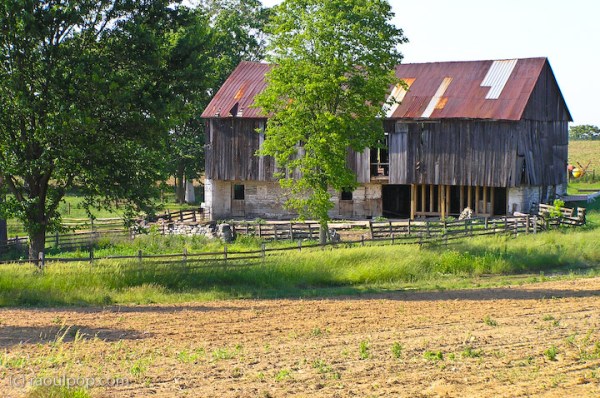
You know the expression “war on the doorstep”? Well, the people who had farms at Antietam got to know it full well during that battle.

Just remember, the next time a politician makes the case for war, this is really what he or she means. Those are going to be your sons and daughters.

Historical photographs courtesy of the Library of Congress. Photographer: Alexander Gardner. The recent photographs are naturally, my own.

Standard
Reviews

A glimpse at the new Snow Leopard from Apple

Snow Leopard, the new version of Mac OS X, was announced at the 2008 WWDC in San Francisco. It’s an important release for the following reasons:

  • Builds upon existing technologies and perfects them. It introduces few new features, but will allow Apple to really focus on delivering a very good OS by developing further the technologies introduced with Leopard. I for one am glad to see Apple slow down their frantic development cycle. That sort of rhythm can’t be sustained and leads to burned-out employees.
  • Optimized for multi-core processors. Truth is, most applications and operating systems aren’t optimized for multi-core processors. They’re not even multi-core aware. So while multi-core technology is here to stay and has already made it into all processor makes and models, applications are still hobbling along, relying on built-in chip technology for a sort of multi-core experience, not the real thing. I’m glad to see Apple pursue this seriously and make it easy for developers to build their apps for multi-core systems.
  • OpenCL programming. You know about OpenGL, right? Well, OpenCL will let developers take advantage of the amazing processing power of graphics cards (measured in gigaflops) to do computations previously reserved only for graphics applications. To get an idea of how powerful graphic card processing has become, have a look at FASTRA, a supercomputer built with 8 GPUs.
  • RAM limit raised to 16TB. I did a double take when I read that. I first thought they were talking of 16GB, which would have been impressive, but also a misprint. The Mac Pro can do up to 32GB right now if I’m not mistaken. But 16TB, wow! That’s amazingly high for RAM. Most machines don’t even have that much hard disk space, much less memory. That’s going to be very useful when building supercomputers with Macs. Keep in mind that 32-bit Windows operating systems (the prevalent ones on the market) STILL have a 4GB limit on RAM. Microsoft’s 64-bit OS versions (XP and Vista) are not usable yet, because there are plenty of compatibility issues with drivers and applications. For a clarification of this point, make sure to read my comment below.
  • Quicktime X. Apple’s venerable Quicktime will get an overhaul which will make it much more efficient, and will allow it to support more audio and video formats. Perhaps now we can look forward to Quicktime movie exports taking less than 24 hours? 🙂 Joking aside, I like Quicktime, and I hope it sticks around for a long time.
  • Faster Safari. It will use a new webkit that will make it 53% faster. Nice! I should mention that all the JavaScript used on AJAX-heavy pages like Google’s Gmail or Apple’s new MobileMe is what’s slowing down our browsers. The new Safari webkit is supposed to be able to render JavaScript a whole lot faster.
  • Native support for Microsoft Exchange. In spite of grumblings from various Apple fans, this is a biggie, and it will finally ensure that Macs play nice in Microsoft Shops. In addition to being able to network properly on Windows domains, which they could already do, now they’ll do exactly what Outlook is able to do on PCs, without having to bother with the kludgey Entourage. Mail, Address Book and iCal will communicate directly with Exchange, making it a whole lot easier for corporations to use Macs instead of PCs.
  • Faster OS, smaller footprint. Apple promises the new OS will work faster overall, and will also take up less space on our hard drives. Amen to that. OS bloat is not a welcome thing (just look at Vista), and a faster OS is always a good thing.
  • No support for PowerPC processors (source). According to documentation handed out to developers at WWDC, Apple will indeed break with the PowerPC line on this Leopard upgrade, as rumored. That means my iMac G5 won’t be able to use it. By that time, it’ll be outside its projected 3-year lifespan, but still, it would have been nice…

Image used courtesy of Apple, Inc. More information about Snow Leopard can be found in Apple’s original press release, and on the Snow Leopard website.

Standard