Places

Chasing RFI Waves – Part Five

Here is part five of my non-fiction work about the National Radio Astronomy Observatory in Green Bank, West Virginia. You can also read parts one, two, three, four, six and seven.


Senator Robert Byrd

Senator Byrd (1917-2010) was a consummate politician. He was from a very poor state – West Virginia. He served in the Senate for over 50 years. He was the longest-serving senator and the longest-serving member in the history of the United States Congress. While in office, he used his seniority to help his home state. As such, there are a lot things in West Virginia named after him. He was directly responsible for obtaining the funding for the GBT.

The actual shovel used during the groundbreaking ceremony for the GBT by Senator Byrd is encased in a display box in one of the NRAO lobbies. If you happen to see it and notice it’s a bit short and also very shiny, here’s why: Senator Byrd used a normal, brand new shovel at the ceremony; afterwards, NRAO chromed it and also had the handle shortened, so it could fit in the display case.

I’ll let Mr. Sizemore tell what happened at the ceremony, as it portrays Senator Byrd quite nicely:

“Senator Byrd went up to the podium and gave his dedicatory speech. He is a very good speaker. He frequently cites the Bible during his speeches. While you sit there, wondering where he’s going with all the stuff he talks about, he draws it all together in the end and it starts making sense to you. The National Science Foundation dignitaries were gathered there, as well as some of the local politicians, and also all of the NRAO big wigs.

A public reception was held at the site after the ceremony, where the local population was invited. All of the suits gathered quickly around the Senator at the reception, trying their best to hobnob. The Senator’s reaction was priceless. He laid his hand on the NRAO Director’s shoulder, and said, “George, take all these people away and leave me alone!” He would not let any politician or dignitary come within 20 feet of him the rest of the day. He stood in the sun, on the pavement, for 2 hours, and shook hands with every local person that was there. Meanwhile the suits went over to a table set up for them and pouted. Well, as the reception drew to a close, Senator Byrd pulled out his fiddle and played with one of the NRAO employees, then stood up and left.

The night before, he stayed at one of the local hotels. The old gentleman got up at 5 in the morning, and went down and had breakfast with the kitchen staff. Now, can you imagine whose votes he got? “Hey, mom, guess who I had breakfast with this morning!” He got their votes, and their families and friends’ votes! The man is a consummate politician!”

The total funding for the telescope came to 75 million. Fifty-five million went to the contractor for building it to the NRAO specs, and NRAO got the rest of the money to build the receivers, monitors, and other equipment that went along with it. After the telescope was built, NRAO needed to go into binding arbitration because the contractor wanted more money – 20 million more to be exact. In the end, they got almost 4 million – not their ridiculous figure – thanks to the arbitrator.

Here’s Mr. Sizemore’s take on basic research and general politics:

“The main problem with basic research, not just radio astronomy but physics, chemistry, mathematics, is the mindset of society. People want immediate gratification. They’re not willing to put in the long-term effort required for projects on which the return is 20, 30 or even 40 years. We are very short-sighted. We can’t see past the next election.”

The GBT Control Room

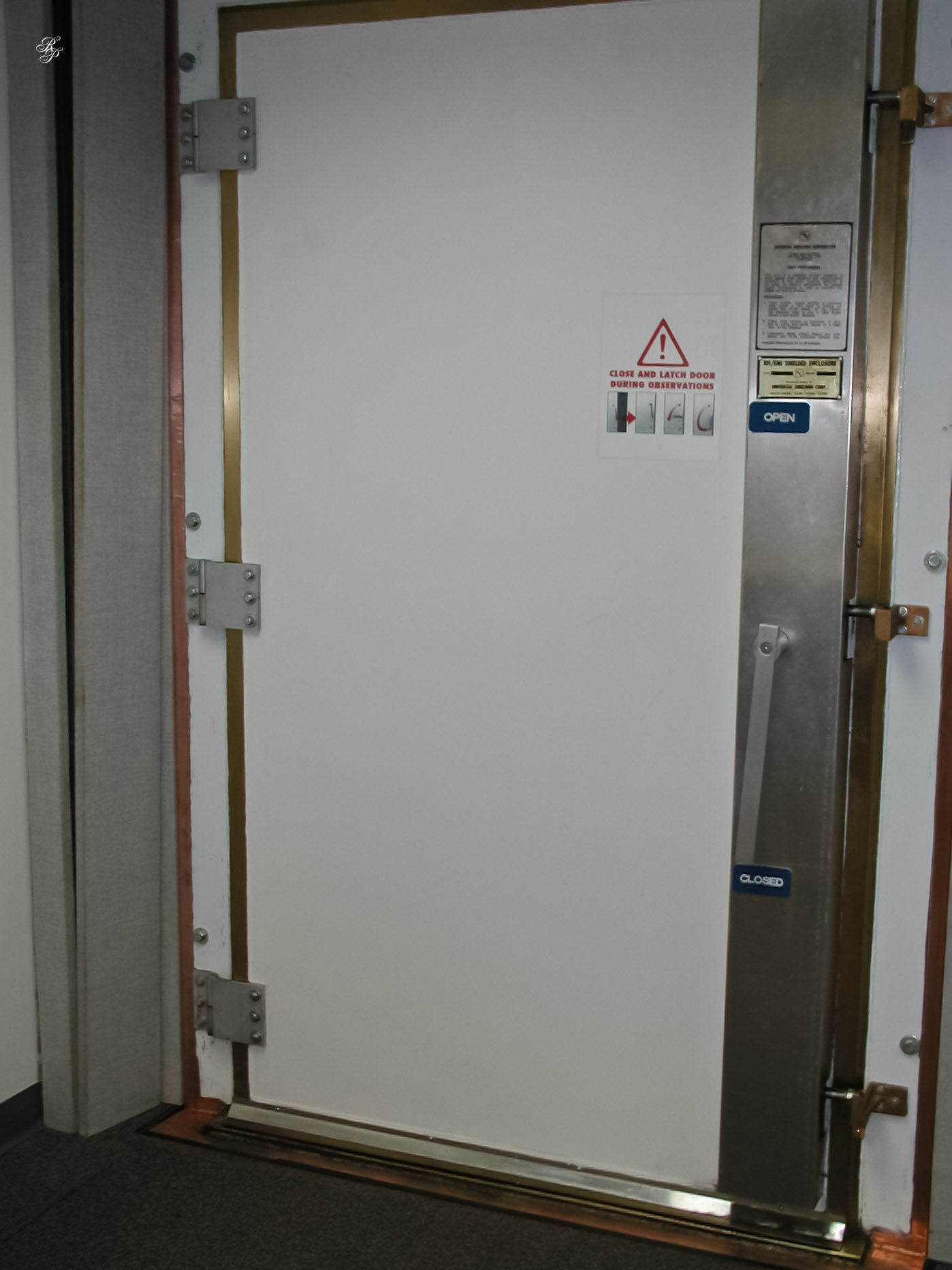
The whole room is enclosed in copper sheeting and copper fabric – the walls, ceiling, floors and even windows have copper over them. The room is what they call a Faraday Cage. It attenuates signals inside by 60 dB at 1 GHz. That’s not sound waves, it’s radio waves. You can also measure radio waves in decibels.

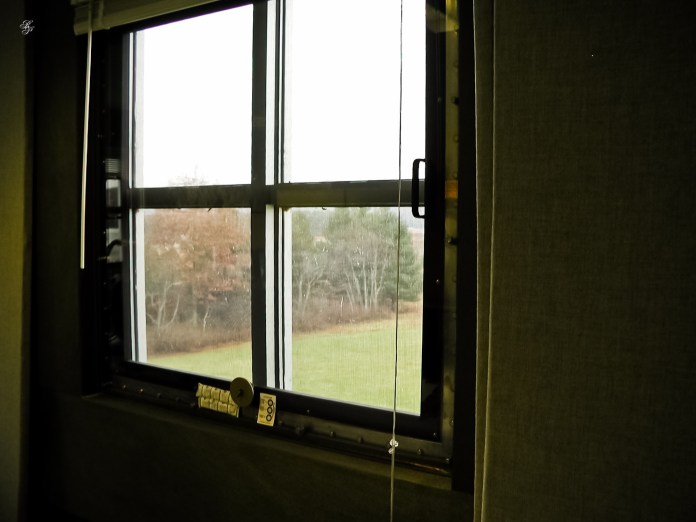
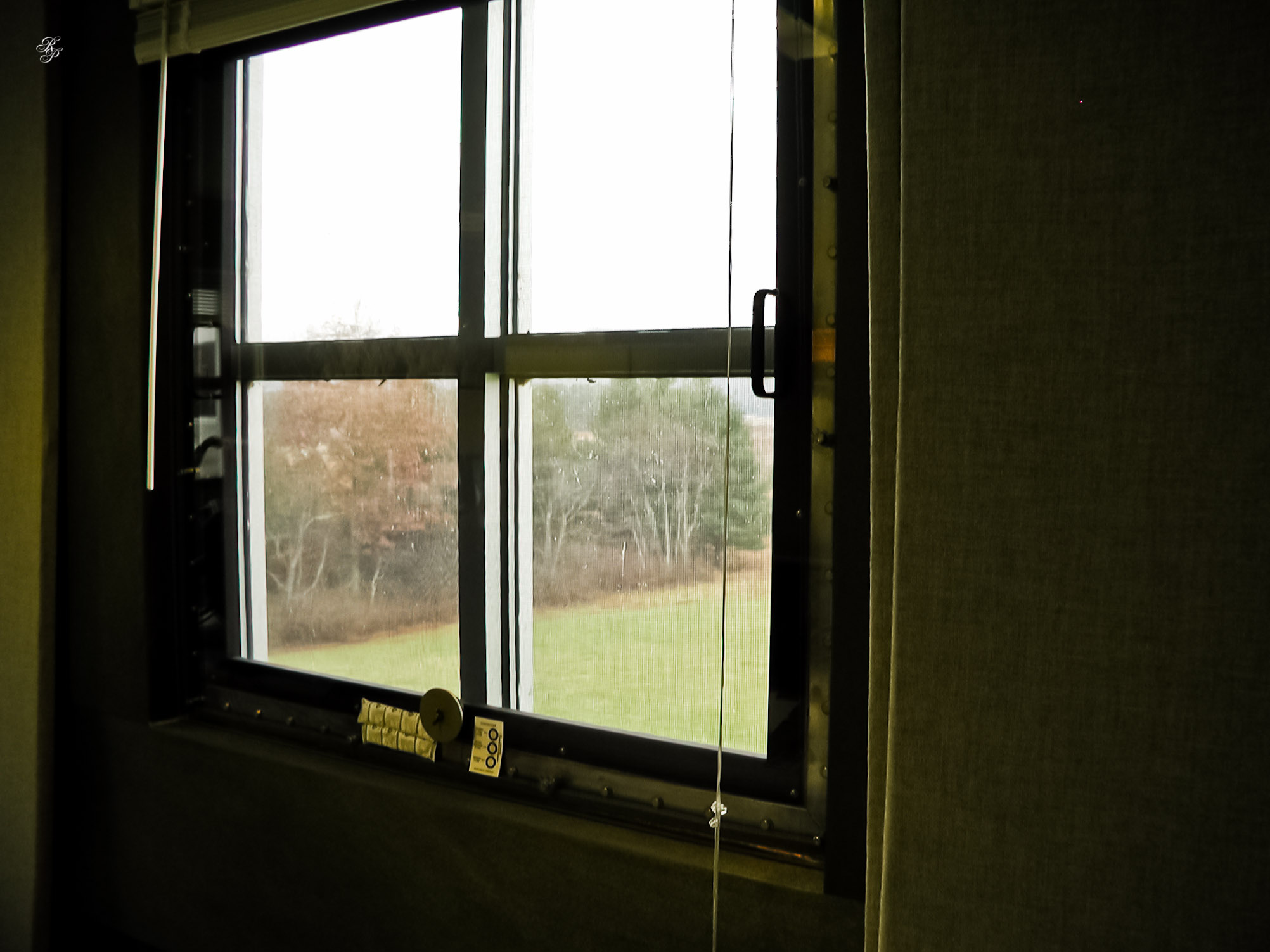
The windows have a thin brass wire lattice, so light can penetrate. Here we get into some more murky ground. To most radio waves, the lattice wire is a solid wall. The smaller the wavelength, the more likely it is that the radio signal will pass through. As computer processors increase in power, the wavelength of their radio signals gets smaller, since the frequency of the processors increases. That means that soon enough the wire lattice for the windows won’t suffice anymore to block out the radio waves generated by next-generation computers.
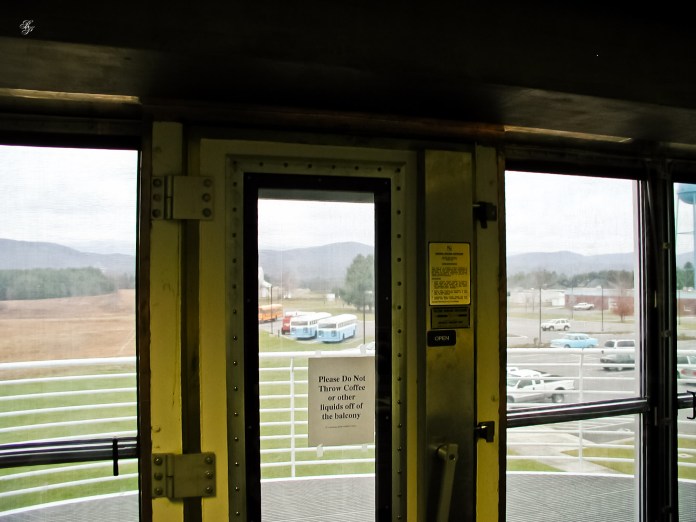
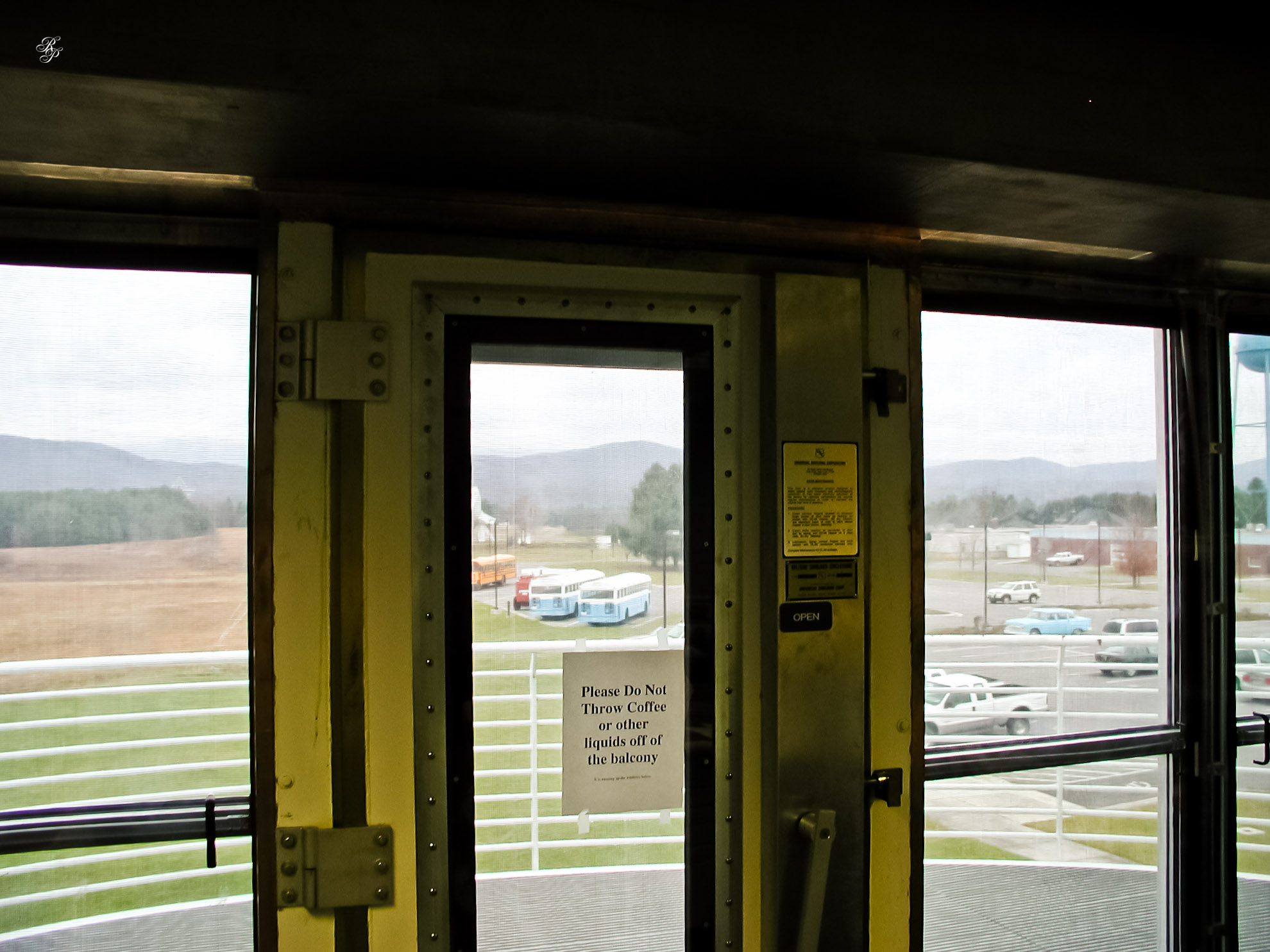
Even the door is made of copper and has a brass doorstep, on which Mr. Sizemore cautioned me not to step – apparently they need a tight seal and brass is pliable. Stepping on it would dent it. There are also copper “fingers” between the door and the doorstep. They need good contact between the two, and denting or dirt from your soles will prevent it — that’s another reason why it’s best to step over it as you enter or exit the room.
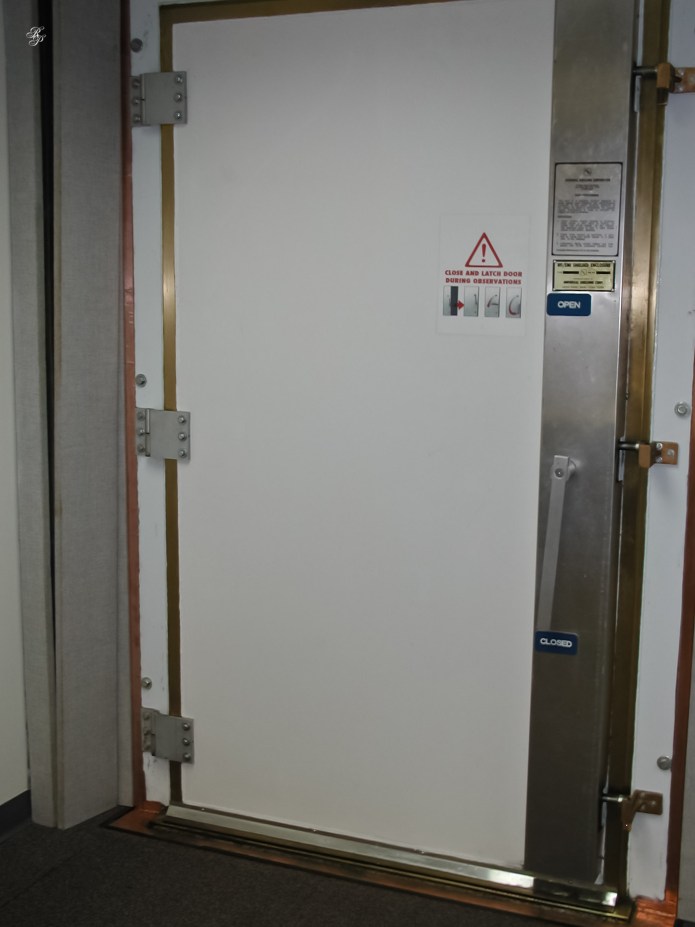
The reason for this is that the equipment generates radio interference. Since there’s a direct line of sight from the control room to the GBT, the only way to minimize that is to make the room into a Faraday Cage.

Here’s a tale of woe about the windows. The contractor “screwed up the execution of the design in any way possible”. One of the main problems was the use of copper fabric on the walls. They applied it to the wall with a water-based adhesive. Now the fabric is slowly turning green. The copper is turning into copper oxide, which is not as conductive and is also poisonous. Around the windows, they don’t have that problem, they have another, which is worse.

The contractor put copper and zinc together in the framing. The metal parts were zinc-plated. When you put those two elements together and add a little moisture from the sweating of the windows, you get a battery! The windows immediately corroded. You couldn’t just plug your Walkman into the windows and run it off the electricity generated, but they did have a lot of corrosion, so that was a major problem that needed to be taken care of immediately. In Wesley’s words, “watch contractors, they’ll mess it up in any way possible.”

Nathan, one of the technicians, and Mr. Sizemore had to re-do all of the windows. They had to take all of the windows apart down to the metal and send all of the framing off to have it nickel-plated. They also replaced the copper fabric on the walls around the windows with nickel fabric. If you put nickel and copper together, the electrolytic action isn’t as bad and it doesn’t corrode.

When they were refitting the windows in the GBT control room to do away with the “battery effect”, they had to do a lot of banging. As they started away in the morning, they banged at the frames for about a half hour or so, until Phil Jewell, the Deputy NRAO Director, whose office was directly underneath, walked in to see what was going on, with a confused look on his face. Nathan couldn’t resist: “Hey Phil, did we wake ya?” he spouted, a huge grin spreading across his face. Wesley was quiet as a mouse, not knowing how Phil would react to Nathan. Thankfully, Mr. Jewell just grinned and walked away.

They still had a problem with the sweating on the windows, which they needed to alleviate, since they were still made of metal that could corrode over time, though at a much slower rate than before. Some of the scientists on-site got together and offered a bunch of “solutions”. One of them was to put Plexiglas over the windows to keep air circulation to a minimum. But then another decided to drill holes in the Plexiglass to keep the air circulating through, since the sweating still occurred. They then used a fan to blow air over the windows to cut down on the circulation. Not very practical!

The final solution was offered by one of the technicians, who happened to live in a mobile home. For those of you who haven’t had this experience – including me – windows sweat a lot in mobile homes. He went to the general store in town and got a little window kit from 3M. It’s film that is applied to the windows and shrunk with a blowdryer. After the fix was proven, the 3M film was replaced with plexiglass with a resealable access hole to allow desiccant packs to be inserted between the window and plexiglass covers.

Each window now has a round hole at the bottom that is used to exchange the dessicant packs once in a while, and also a moisture indicator that points out the approximate time when the packs need to be changed.

Sometimes it’s a little hard to see the forest for the trees. It helps to stop over-analyzing things sometimes. It certainly becomes less of a headache when the problem is far less complex than originally thought!

In the Control Room, the GBT operator constantly monitors the equipment from the Control Console. The operator is responsible for two main things: the safe operation of the telescope, and the implementation of the different observing programs that various astronomers use. The observation is done in various modes. Normally most astronomers come and “babysit” their programs to make sure they’re getting the data they need, although the trend nowadays is to observe more and more by remote access. The advantage with being there is they can change their program on the fly if adjustments need to be made. Other programs are run over and over, so there’s no need for the astronomer to be there. NRAO operators record the data and ship it off to the astronomers.

In some cases, people that do research there win the Nobel Prize. In other cases, there are people who look at their data then chuck it to the circular file and try again. Some of the research pans out and some of it doesn’t. NRAO is a basic research institute and that means a lot of effort is put in to look at things that only matter down the road.

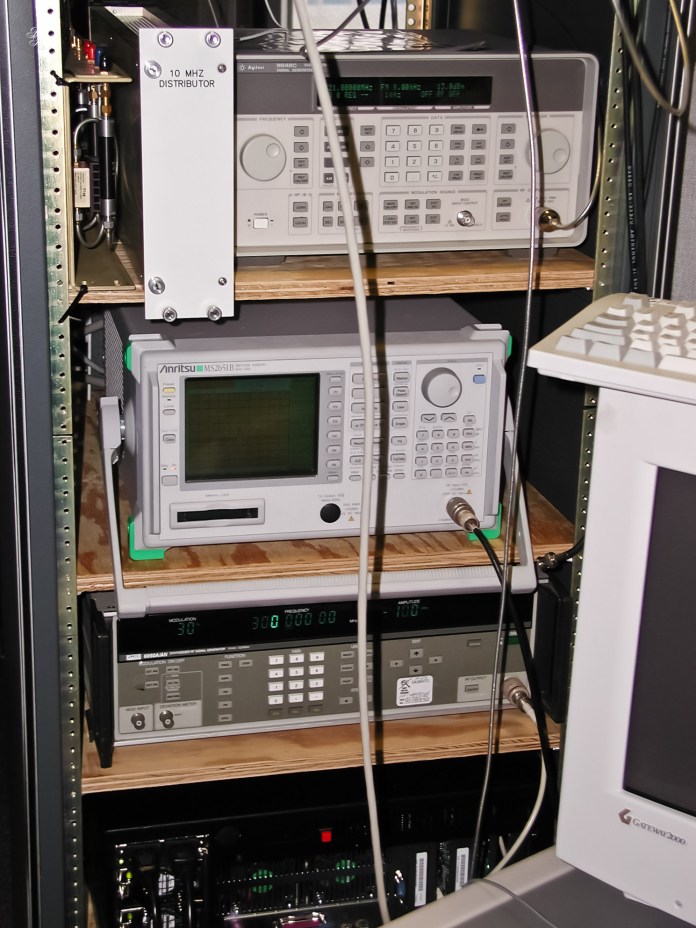
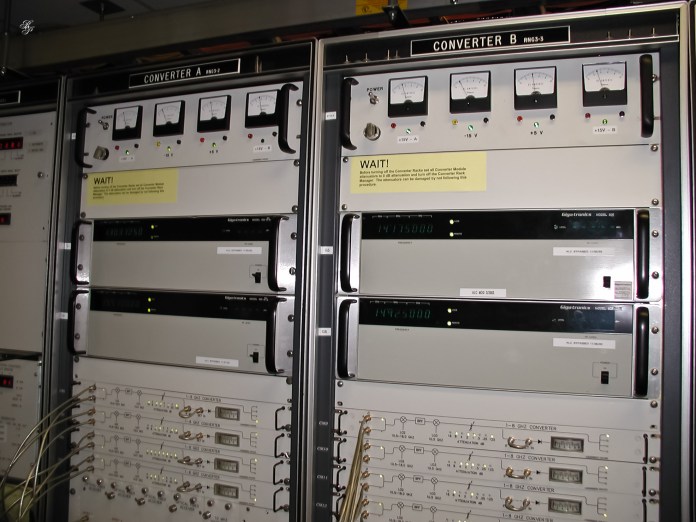
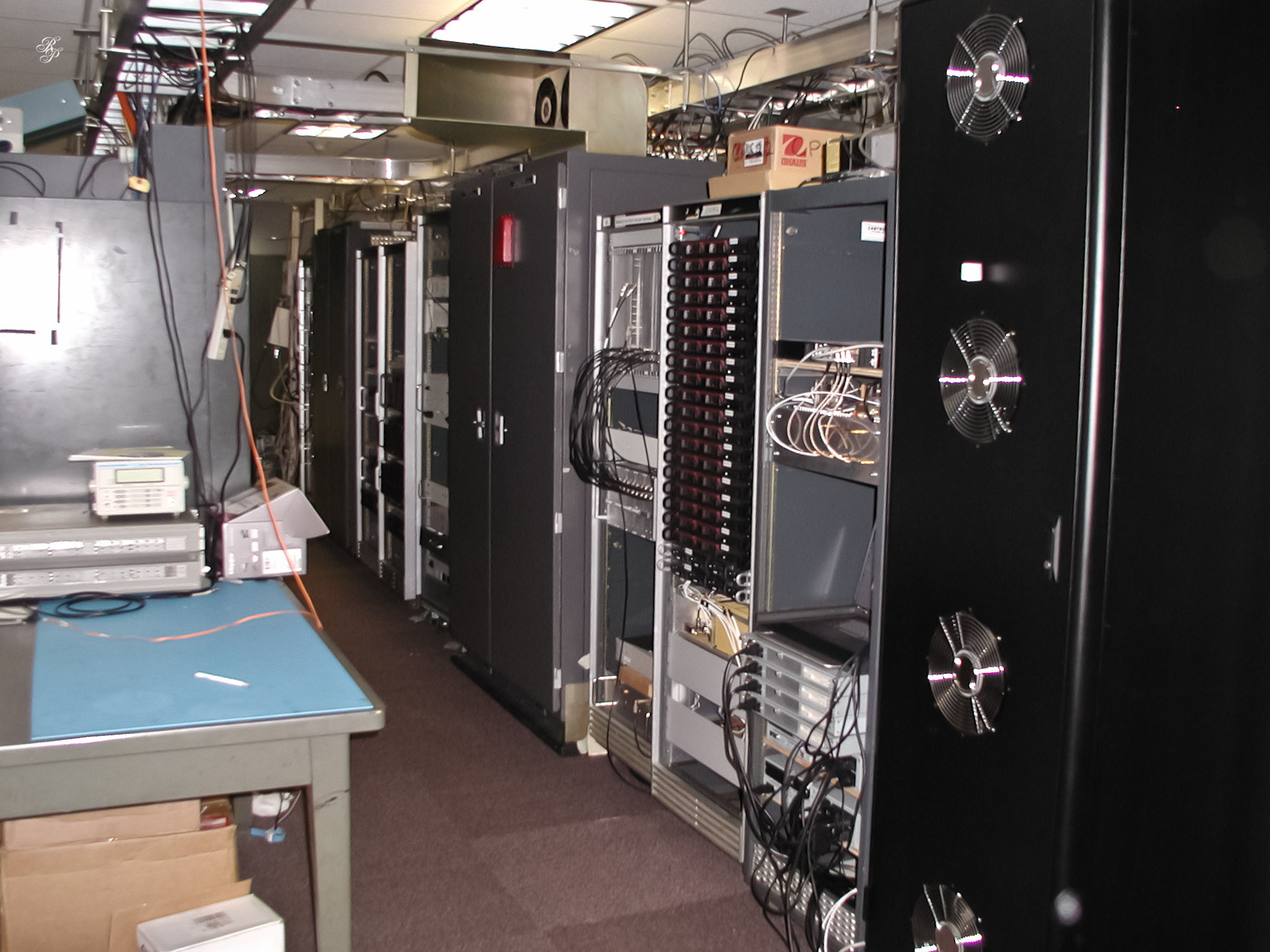
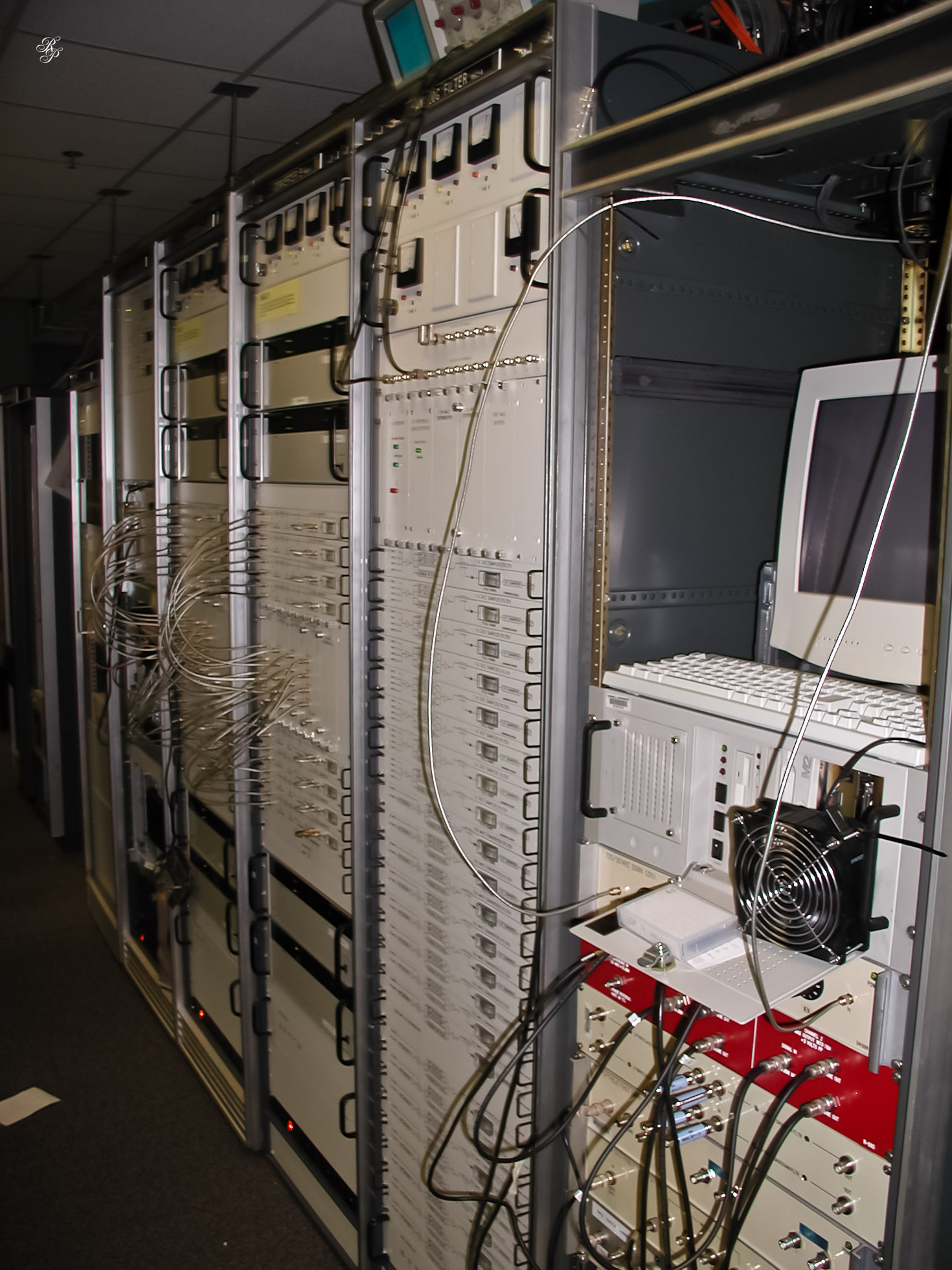
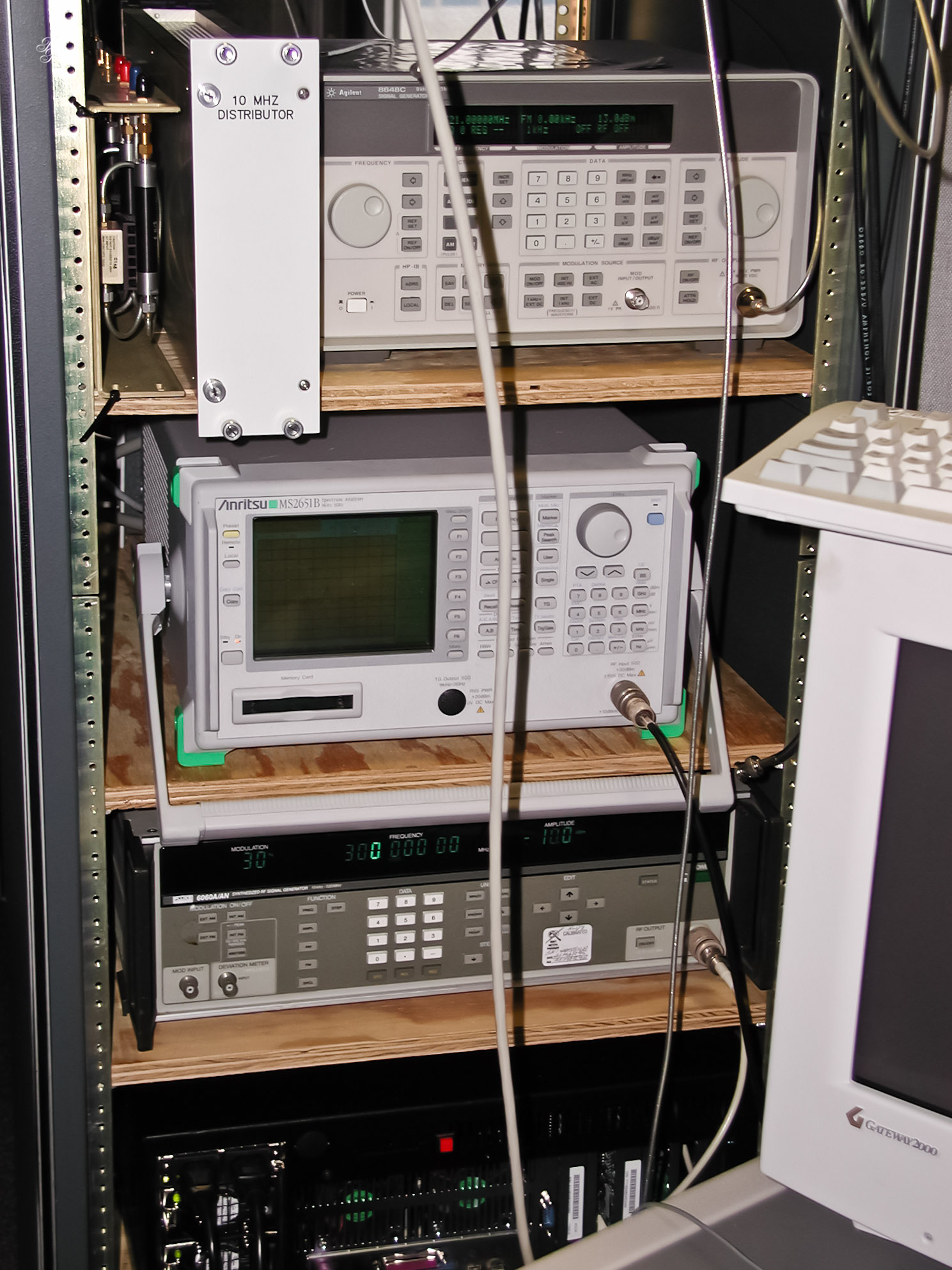
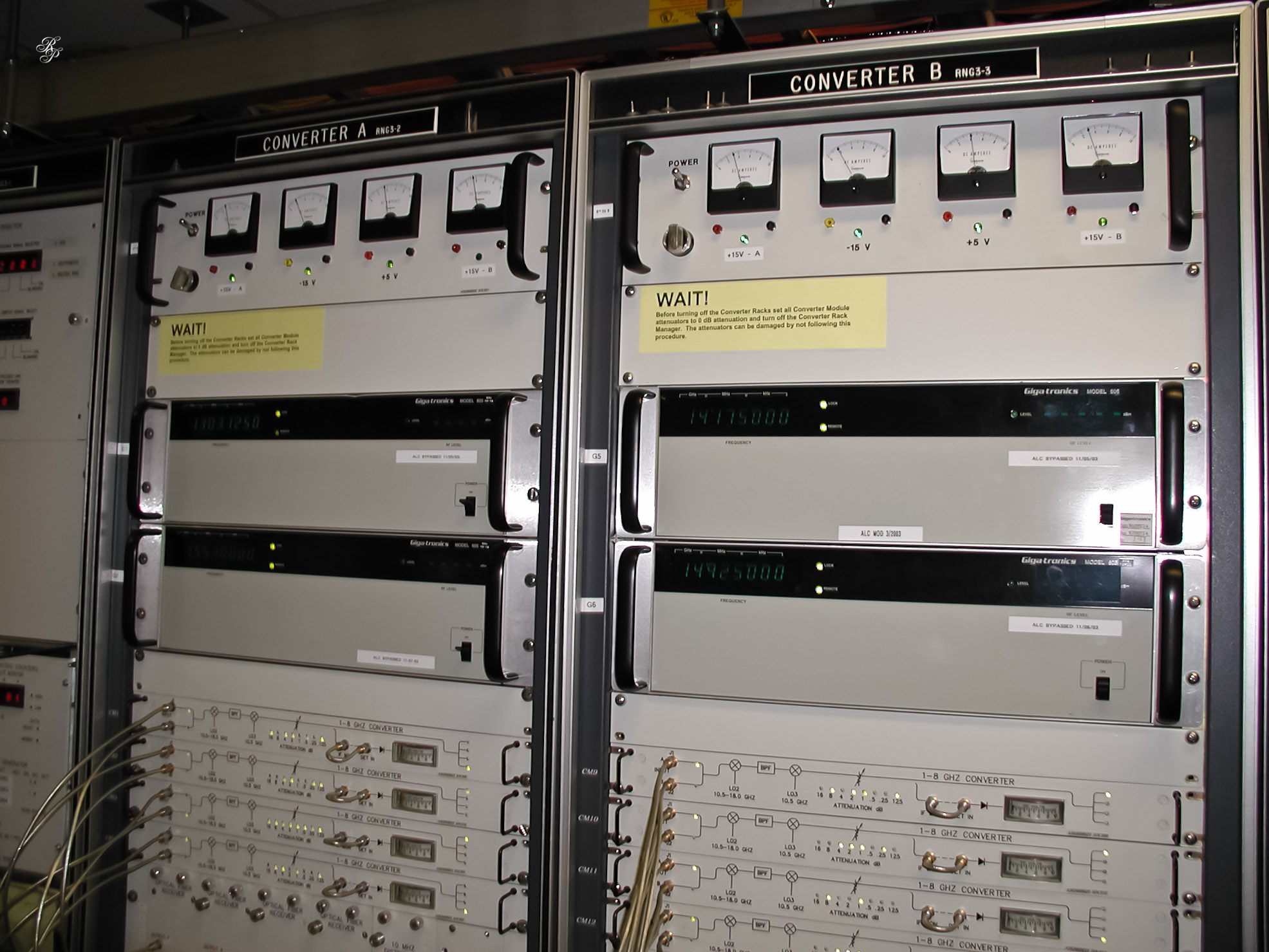
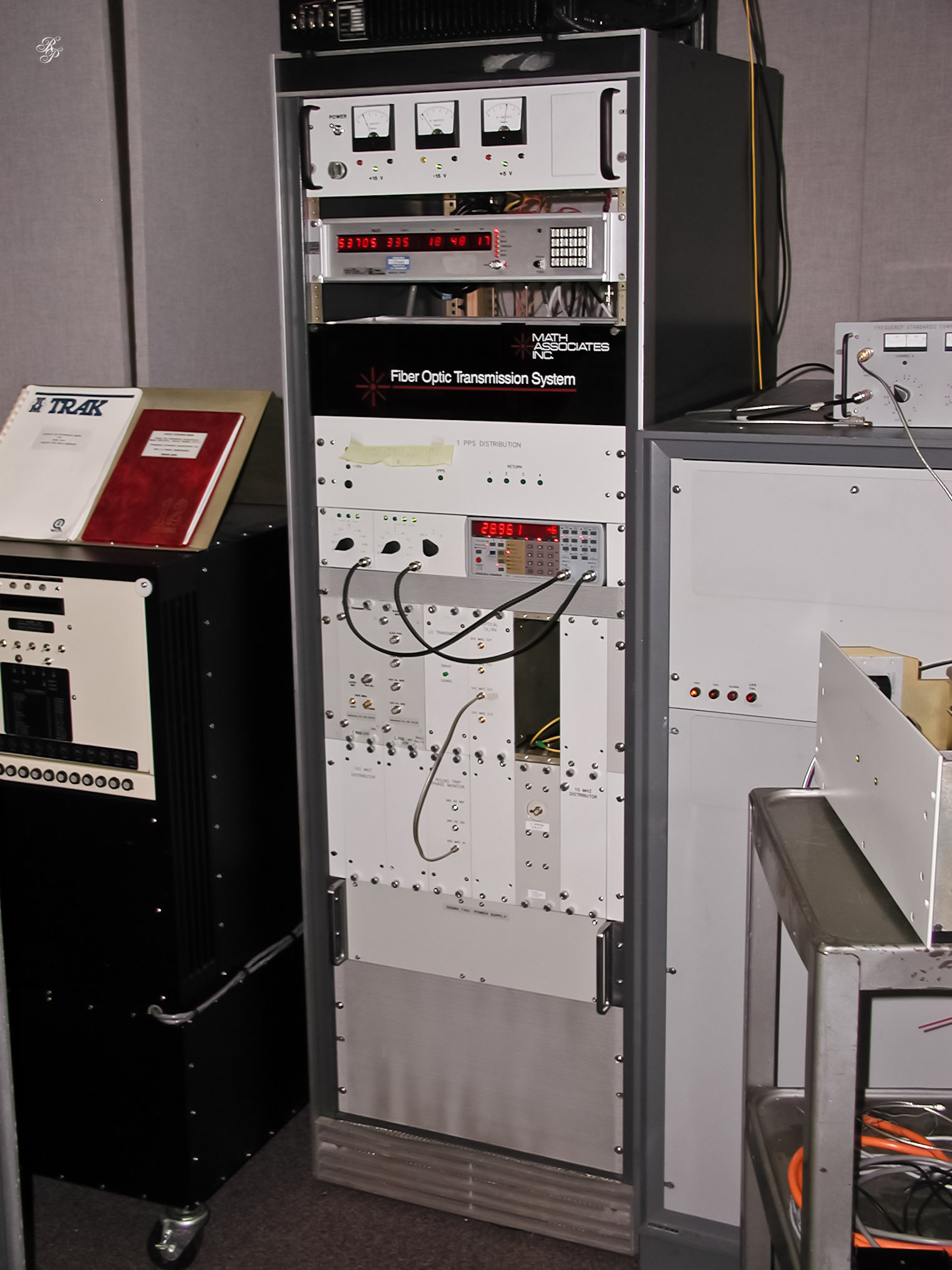
In the computer control room, separated from the main area by a glass wall, the collective whir of each of the computers adds up to a somewhat deafening noise. The interesting thing about NRAO is that it has a good mix of both old and new technology. Nowhere is this more apparent than in this room. Most of the equipment in there is one of a kind. The pictures here are worth a thousand words. The synthesizer filters, the front panels, the painting of these panels, is all done in-house.
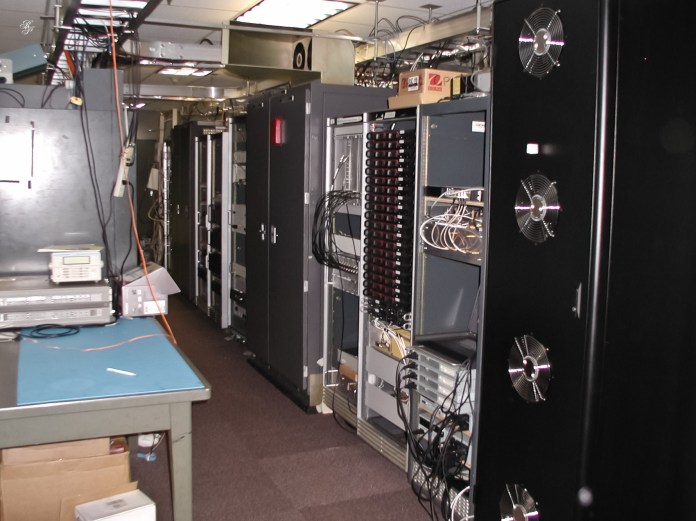
All of the fiber lines from the GBT come right into the equipment room, where the optical signal is converted back into a radio signal.
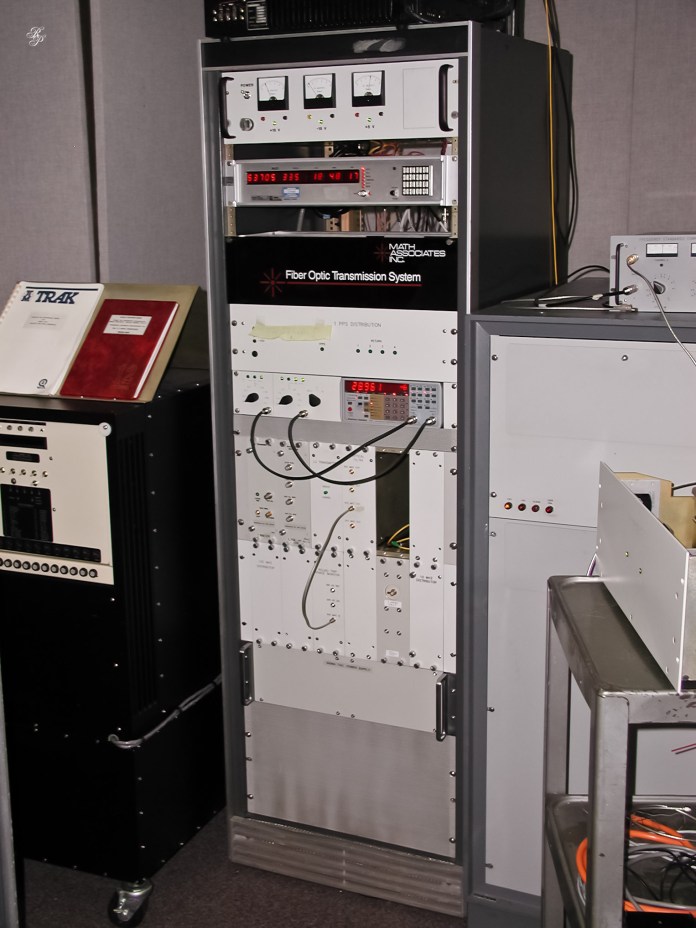
The spectral processor is another big piece they have in the room. Wesley told me to think of it as nothing more than a big radio. It takes the radio signals it receives and splits them into 1,024 different channels. Then if they have interference on one channel, they can drop it and still reclaim part of the data, provided the interfering signal is not strong enough to overload the first amplifier. The newer spectral process has over 250,000 channels and the technology gets better with each year.

If the signal is strong enough to overload the cryogenic amplifier, and drives it into a non-linear portion of its amplification, then everything in the entire band is lost. The data has to be collected again once the interference is done away with. If the interference is there but not strong enough to overload the first amplifier, then they may be able to drop that interference provided it doesn’t occur precisely on the astronomical signal you’re looking at: same frequency/wavelength. That’s what the spectral processor is good at.
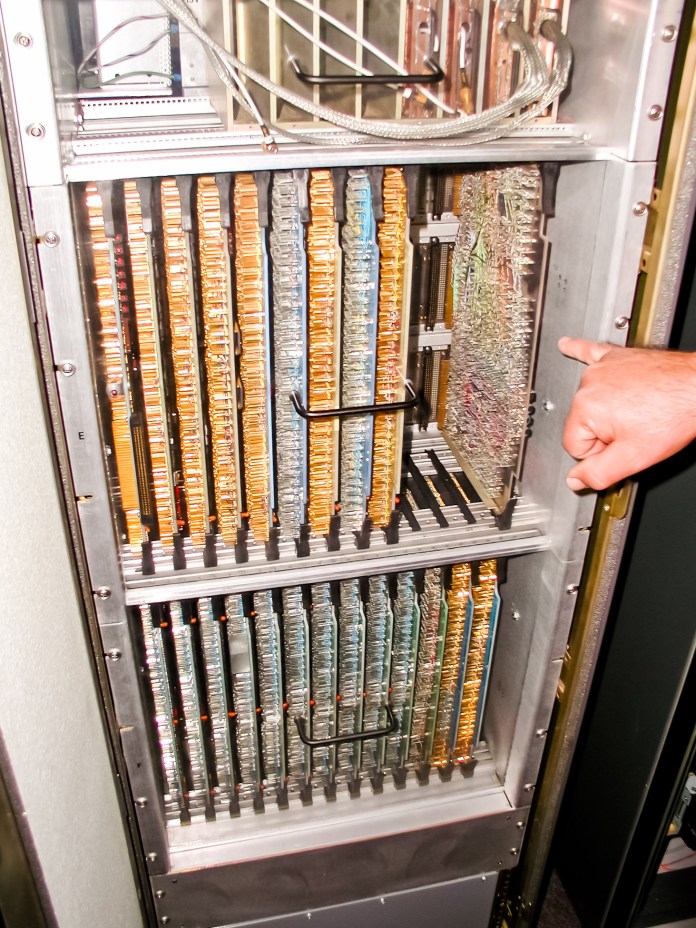
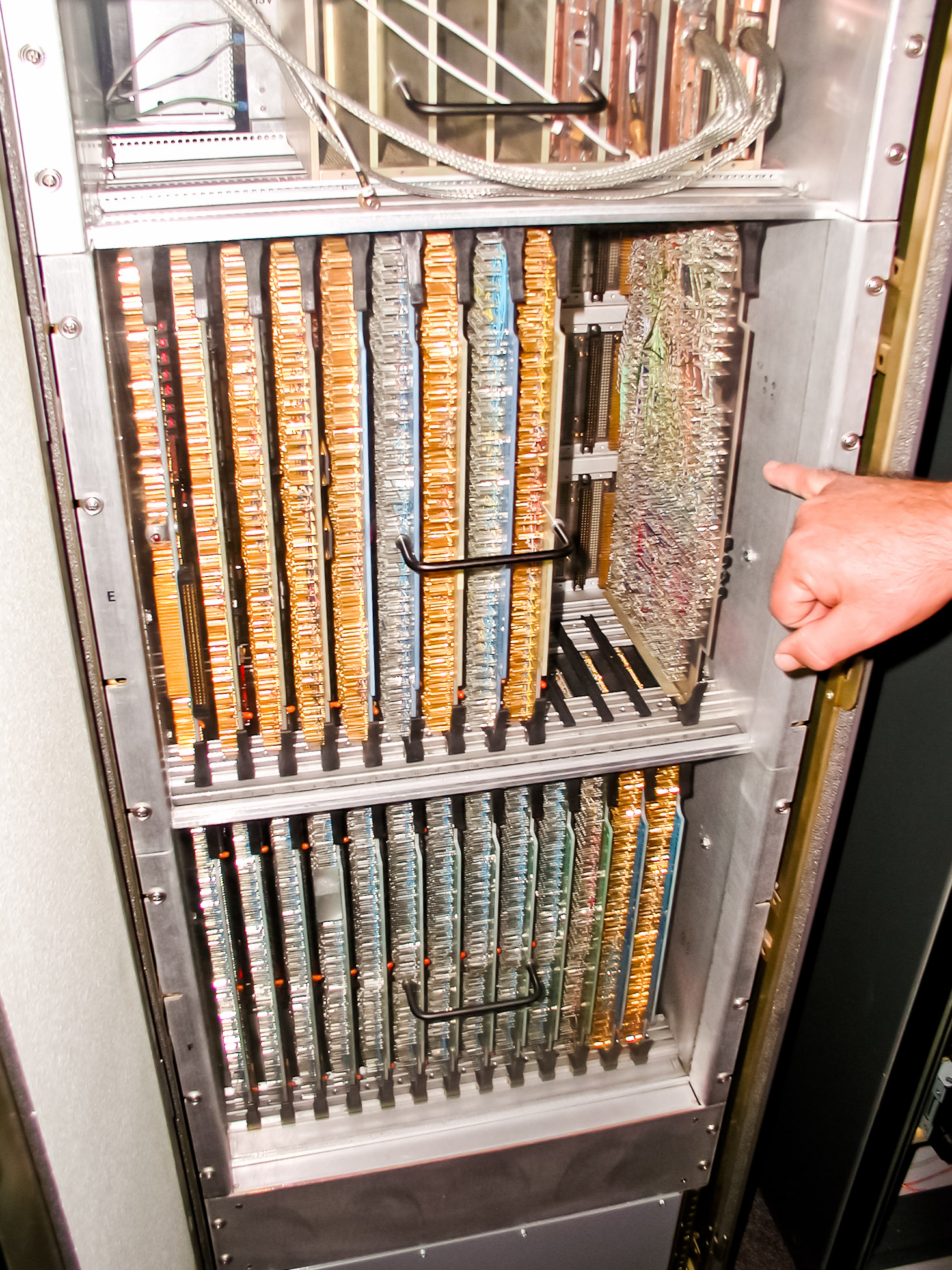
Inside the spectral processor you’ll find another oddity that’s part of that mix of unique, old and new equipment. The circuit boards aren’t printed (they don’t have the circuits embedded into them) but they are wire-wrapped. The cards have little posts sticking out of them, and wires are run from post to post to post. It’s very old technology, but it works great. It’s something NRAO has a lot of experience with, it’s very robust, and it’s cheap to do one card that way. If they were going to do dozens of cards, they would ship them out and have them done as printed circuits.

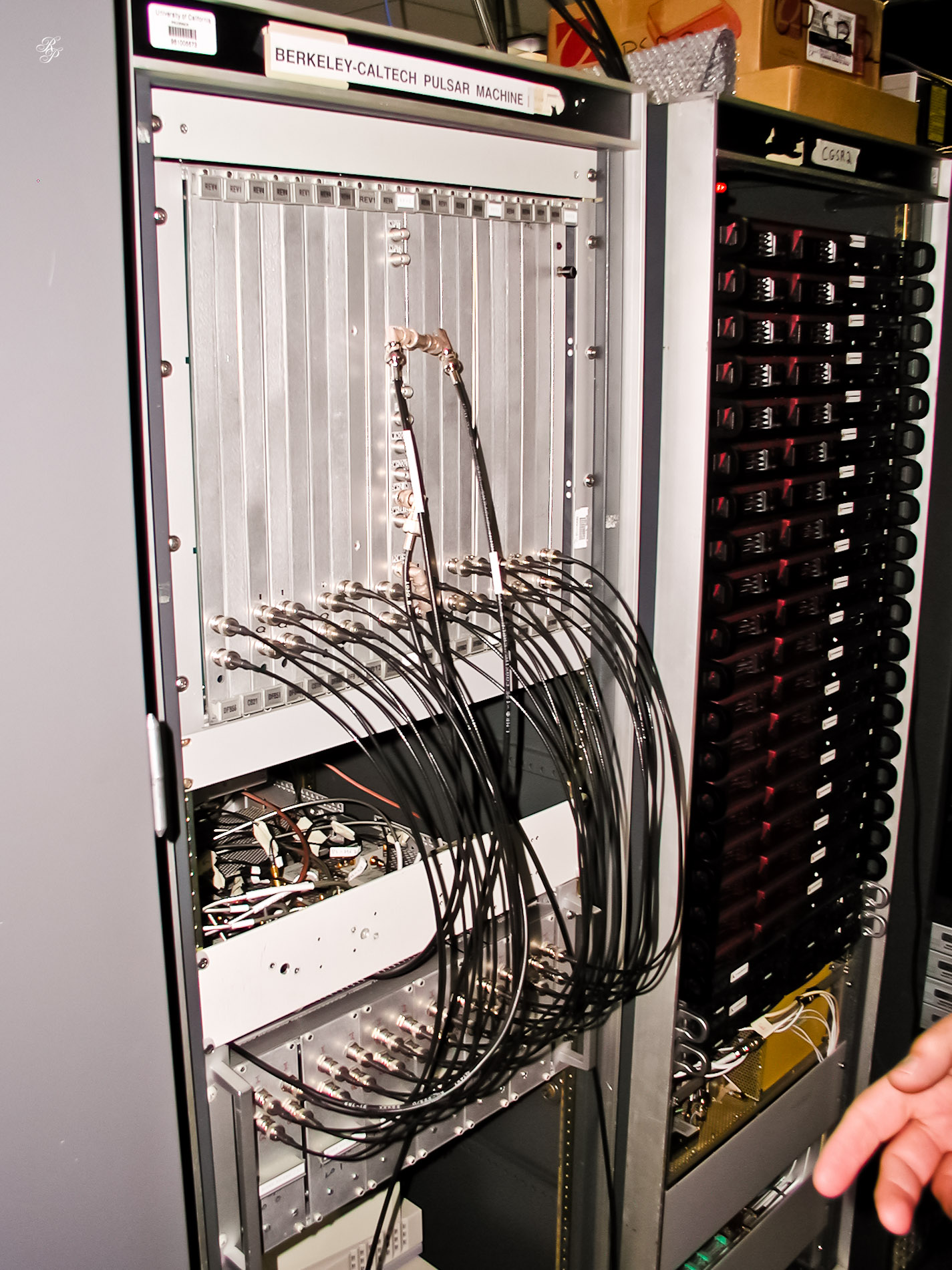
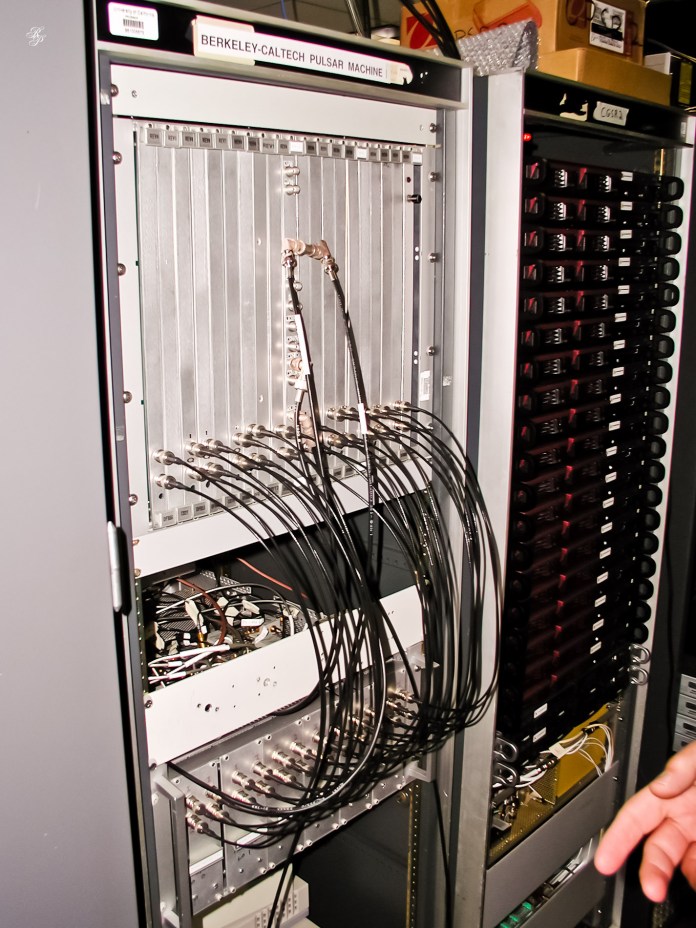
They also have equipment manufactured by other organizations. For example, they have a CalTech Pulsar machine. They get very picky about the equipment brought on-site. They have to be careful that it doesn’t interfere with the other equipment there, and especially not with the telescopes.
NRAO operates frequency and time standards on the site. Because of the sensitivity of their work, they have to have very accurate frequency standards. They operate a hydrogen maser, a machine that gives them very accurate 5 MHz readings that are piped all over the site. Everything then gets slaved to that signal.

They also operate an atomic clock on site that gives a very accurate time standard. The clock may go away in the future, since a time signal just as accurate can be obtained from the GPS satellites.

Here Mr. Sizemore pointed out a common point of confusion for many people. Stores sometimes sell atomic clocks or watches. They aren’t atomic clocks as scientists define them. A real atomic clock has a Cesium atom movement in it. The movement of those atoms is used to drive it. The clocks one can buy at Radio Shack or Sharper Image are normal digital clocks with a radio receiver built-in that can tune into the time signal transmitted by our government and set itself. Not quite the same thing.

One of their research efforts involves trying to excise interference from the astronomical data, provided, of course, that the amplifier isn’t overloaded. They are looking at a real-time solution, one that would involve an antenna that receives and records only the interference, and the normal dish would record all of the signals. The two recordings would then be spliced together and the interference would be excised. It sounds simple, but it gets more complicated in practice. At any rate, one of the NRAO scientists is working on that very project.


And that’s the end of part five. You can also read parts one, two, three, four, six and seven.

Standard
How To

My bed frame comes to life in Latvia

Armands PodoÄĽskis, a reader from Latvia who saw my bed frame article and watched the videos where I showed how I made it, wrote to me recently:

I would like to thank you very much for your videos of how to make bed frame. They were very useful. I used them to make bed myself. I’m from Latvia, EU country. This is great that you can share something valuable and others can use it in the other side of the world 🙂

You’re welcome Armands, I’m glad I could help!

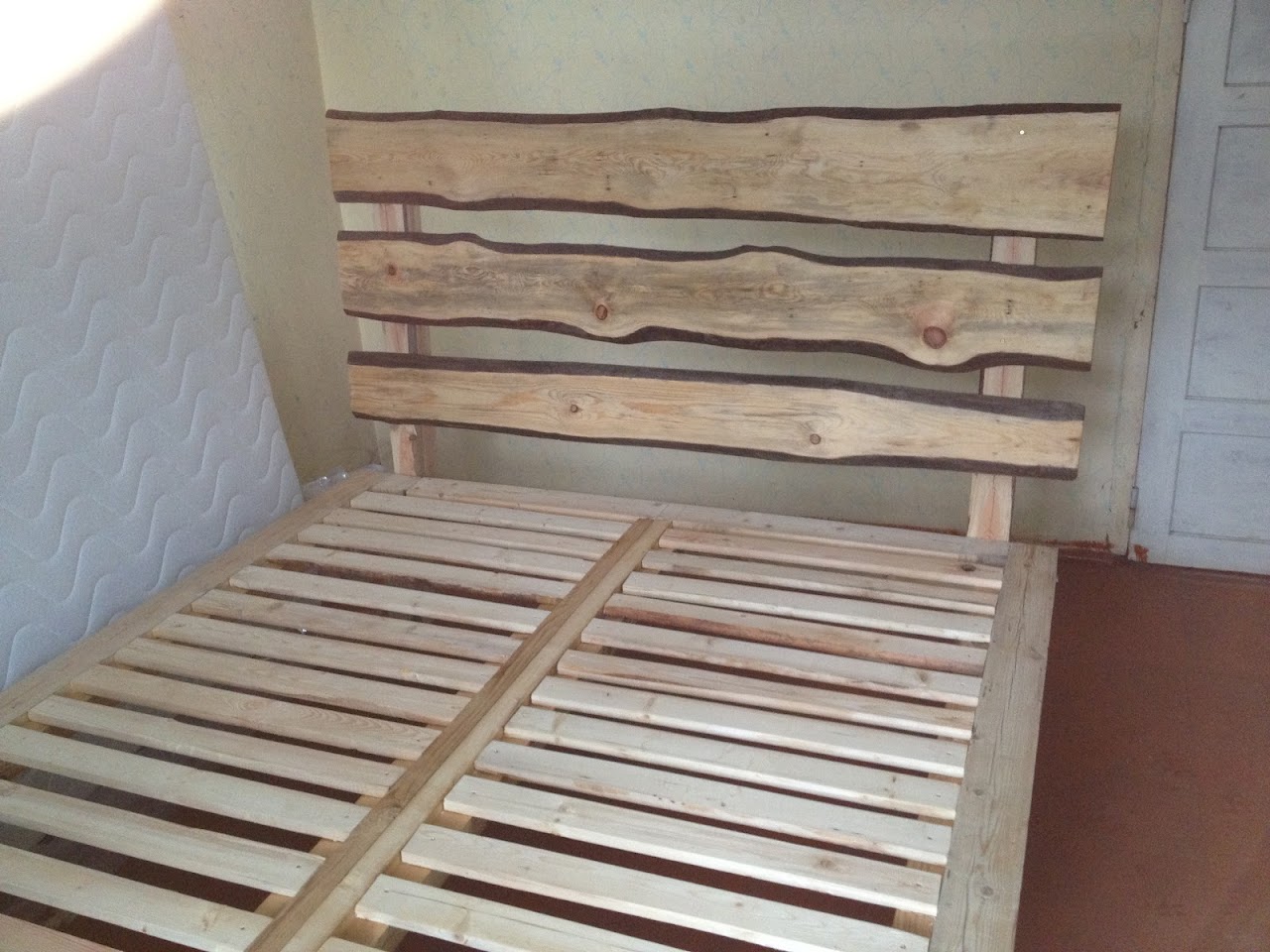
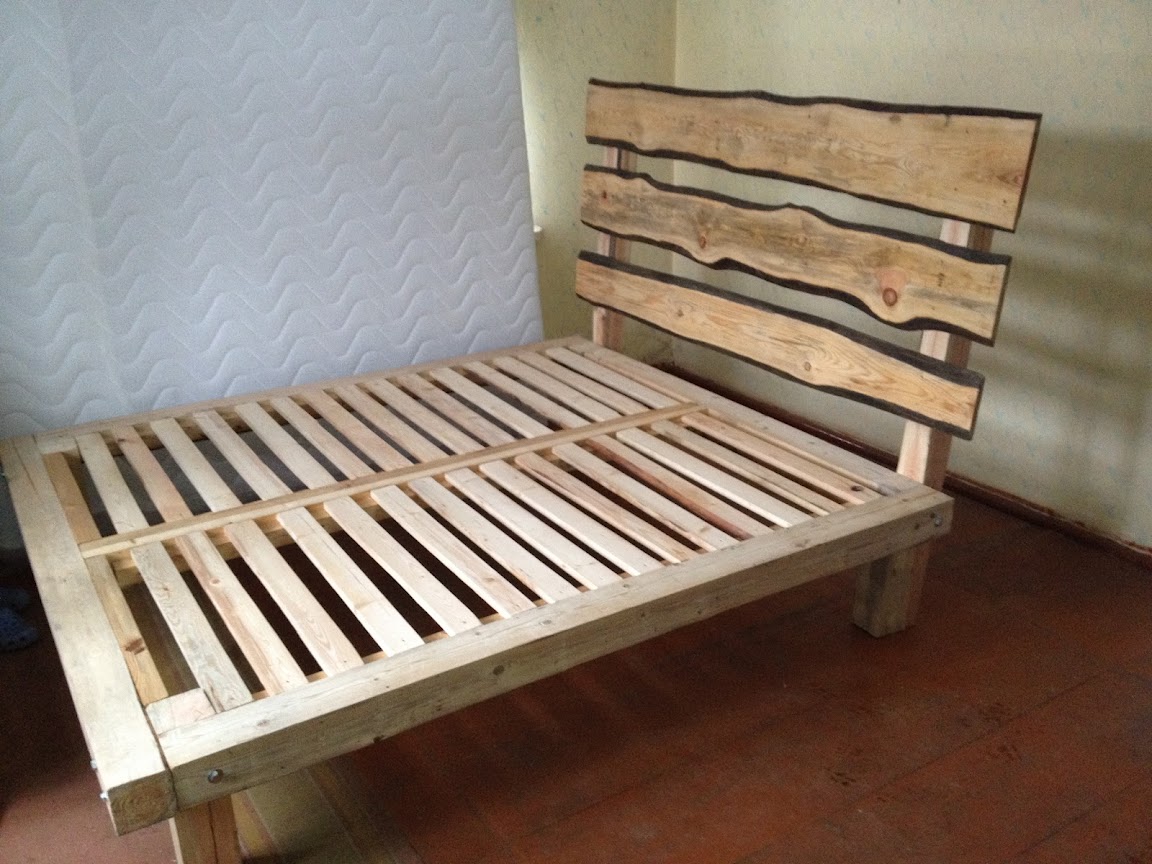
With his permission, here are a couple of photos of his bed frame.

If you’d like to make a bed like this one, feel free to do so. Read through my original article and watch the two videos I posted in it as well. (Just don’t ask me for the plans and exact dimensions of every part, because I lost them during some renovation work.) It’s easy, inexpensive, a lot of fun and you’ll end up with a very sturdy bed!

Standard
Places

Fall colors in Rock Creek Park

These are photos from a wonderful walk we took in Rock Creek Park (on the Maryland side) in the fall of 2006. It was a beautiful autumn day, the light was wonderful, and the fall foliage was a delightful sight.

This is the oldest tree in Maryland. It’s an oak that dates back to even before the time of the American Revolution. Even though there’s a plaque next to it explaining this, it seems to be a well-kept secret, because in all the years we lived in the DC area, we lived near this tree and we seldom saw people stopping by it.

Standard
Places

Chasing RFI Waves – Part Four

Here is part four of my non-fiction work about the National Radio Astronomy Observatory. You can also read parts one, two, three, five, six and seven.

A Walk Through the Jansky Lab

This is the place at NRAO where all of the circuitry is put together for the observatory. It was named after Karl Jansky.

First, let’s understand their particular kind of telescope. We normally think of a lens-based device when we hear the term “telescope” but in NRAO’s case, a telescope refers to a large radio antenna that helps them “see” radio signals that are emitted far away.

A radio telescope operates in two different fashions. In the first, radio signals come from space, hit the main reflector, the sub-reflector, and are then are beamed down to the receiver room. For the second type, a boom is swung out above the dish, and the signal is reflected directly into the receiver that gets mounted on the boom. For both types of telescopes, the signal is fed into a receiver through a feed horn that’s machined out of aluminum and anodized. The receiver is housed in a vacuum.

The observatory has a complete machine shop, where they make their own circuits and components. The feedhorn is a funnel for radio signals. It’s ridged, and there’s a very good reason for that. The explanation is complicated – too complicated for me to understand – but the net effect is that it clarifies the radio waves; it breaks up different modes of propagation within the feed horn itself. The point is that you want to funnel the signal without affecting it. Mr. Sizemore’s droll statement about feed horns is as follows: “I’m not a feed engineer, I don’t want to be a feed engineer, there is entirely too much math involved.”

The feed horn isn’t made from layers, it’s a single machined piece, milled from the inside. Feedhorns vary in size, but they fulfill the same purpose every time: they funnel the radio waves into the receiver.

Inside the receiver, they’ve got a wave guide, which is nothing more than a metal conduit, but it’s a very special conduit, that drives the signals directly to the amplifier through the vacuum chamber, which is called a “dewar vessel”.

An ortho-mode transducer “straightens out” the radio waves. If you look at the antennas in your neighborhood, you might see they’re pointed either vertically or horizontally. Most of the man-made radio signals are transmitted with a linear polarization. They’re either horizontal or vertical. The ortho-mode transducer takes circularly polarized astronomical radio signals and splits them into horizontal and vertical radio signals. These transducers also vary in size depending on the telescope where they’re used.

All of the receivers are housed in vacuum chambers equipped with refrigerator pumps. All of the components are built in-house. The amplifiers, for example, are made in the Central Development Lab in Charlottesville, VA. Because the operations at the observatory are so unique, there are no companies making certain parts, and NRAO has to manufacture them. I gathered from talking to Mr. Sizemore that most every time they relied on outside contractors to do work at the observatory for certain projects, the results were much less than satisfactory, even with close supervision. In the end, more time, effort and money was spent with contractors, when it would have been quicker to do things in-house. The rule now is that they do everything they can do, unless it’s not feasible or practical.

NRAO has gotten more involved with fiber optics. Interference problems in the past weren’t necessarily caused by the feed from the receiver, but from the cables that connect the receiver to the control room. What NRAO now does is to convert the radio signals to optical signals and bring them to the control room that way, unaffected by line noise. It’s converted back to a radio signal there, without any loss.

Long cables act just like antennas, and pick up signals unwittingly. That’s why the quality of your cable TV signal improves if you use higher quality coaxial lines (thicker copper, more shielding). That’s also why Monster Cable is doing so well. They’ve managed to convince most folks that it’s worth it to pay extra for higher quality cables if you want less interference. Same concept. The difference there is that you experience little to unnoticeable interference for short cable runs like the ones from your TV to your amplifier, for example, so unless you’re using really poor cables, your signal will barely suffer.

Another analogy is the use of optical fiber lines to connect buildings on a common LAN (Local Area Network). The signal would simply die out or incur too much interference if it would be carried through regular CAT5 cables from building to building, especially if they’re spread apart, so what’s done is the electrical signals from the CAT5 cable are converted to optical signals in a switch room, then carried through a fiber optic line from one building to another, where they are once more converted to electrical signals in another switch room. What people have now started doing is to forgo fiber optic lines altogether and simply transmit the signal through laser from one building to another. It’s still an optical transmission; it’s like shining a flashlight and seeing the beam. Here you’d need a clear line of sight, and during inclement weather, the quality of the connection would decrease or drop out altogether.

Usually, an engineer and a technician are assigned as a team to take care of a receiver. This photo shows the work being done on the W band receiver, which is a high-frequency receiver. NRAO hopes to be able to receive the high-frequency band in late spring or early summer of 2006, which is when I hope this book will be published [sic]!

The higher in frequency folks get, the harder it gets to focus the waves, because they are so small that any irregularities in the dish shape can smear them, or put them out of focus. As work is being done on the higher-frequency receiver, they’ve got to be really careful about what they’re doing, or things won’t work properly.

Most of your current devices have something called Field Effect Transistors. NRAO uses High Electron Mobility Transistors, which are the next generation of transistors. NRAO happens to be the proving ground for new technology. The first transistor they used cost about $50,000. Its manufacturer, a company in Japan, gave it to NRAO for free, asking them to try it. If NRAO would be happy with it, they’d know everyone would be also. Why? Nobody works to the standards of NRAO, in terms of signal fidelity, clarity, etc. If an electronics company can satisfy NRAO, they’ve just satisfied everybody in the world. For that reason, it’s not seldom that companies contact NRAO and offer them products to try. All that they ask is for data in return. How did the product behave? What are its limitations? What can be improved? It works out very well for both parties. That’s one of the direct spin-offs for NRAO’s work. Everyone in the world benefits indirectly from the work they do.

Most amplifiers at NRAO start out as solid pieces of aluminum. They’re machined by them, on-site. Nowadays, the amplifiers are made at the Central Development Lab in Charlottesville, VA, also part of NRAO. Again, the rationale is very simple. That sort of a product simply can’t be bought commercially. It’s not available, just like most of NRAO’s components – they are one of a kind.

One of the other things that NRAO has gotten involved with is the surface-mount technology for different electronic components. Some of them are so small that if you were to sneeze around the technician, it would very likely mess up his work.

Each little cubbyhole, people are building different components. In one, folks are at work on the Alma Array, which is getting built in the Chilean Atacama Dessert. JD, a technician, and one of the engineers, are working on the little cards (circuits) that will process the signals received there. The Array will employ many telescopes and many cards will be needed.

It’s a good working environment at NRAO. It’s a rural area, so by nature people try to maintain good relationships. In Wesley’s words, “the guy you piss off may be the guy you need to help you get out of the ditch in the winter,” so there are extra incentives to maintaining friendly relationships. There are some downsides, as well. For major shopping, the closest towns are 1 ½ hours away, like Harrisonburg or Roanoke.

Interferometers and the GBT

The United States is not the only country involved in radio astronomy. There are observatories throughout the world. There are maps in one of the NRAO lobbies showing the locations of such observatories. The unique thing about the Greenbank observatory is that it is protected by the National Radio Quiet Zone. This is the only area where folks are compelled to coordinate all radio frequencies with NRAO. There are some other areas in the world such as Puerto Rico, where limited frequencies are controlled.

Incidentally, the Puerto Rico telescope was used in one of the James Bond movies. The NRAO folks are waiting (but not holding their breaths) for the Green Bank Telescope, the GBT, to be used in one of the science-fiction movies. It’s just so out of this world, in both its proportion and look, that it’s bound to end up in a sci-fi movie sooner or later.

Some of the telescopes are single dishes, and some are arrays. Why do you need an array of dishes? Well, why do you have two eyes instead of one? The answer is depth perception.

The term in radio astronomy is spatial resolution, but it’s the same thing. You want the large collecting area of the single dish in order to get the weak signals. You want the arrays of telescopes in order to get the depth perception. Ideally, NRAO would like to have an array of GBTs, but it’s not economically feasible. In those cases, the GBT can be used as one part of an interferometer – that’s another word for arrays. That way you can get the best of both worlds. You can have a large collecting area – for signal strength – and a remote telescope, somewhere else, that gives the astronomers the base line signal, for spatial resolution. The further your “eyes” are spread apart, the better you perceive “depth”.

For telescopes that are close together, technicians can use wave guides to gather signals from each, but for telescopes that are far apart, it becomes impossible. So what NRAO does is to use GPS signals. Each one of the telescopes records the data individually and marks it with GPS ticks from GPS satellites. The data then gets sent to the Array Operations Center, where all of the data is brought together and synced using the GPS timing ticks.

One of the first interferometers built was at Green Bank. It was a three-element interferometer. It worked great, so they got some money together and built the array in New Mexico, which is currently an array of 27 telescopes and will be expanded to 35-40 telescopes in the near future.

They got even more excited about the capabilities of interferometers and decided to make a very long baseline array of 10 telescopes. They used 8 telescopes in the US, one in the Virgin Islands, and one in Hawaii.

The long baseline array also worked very well, so they set to work on building an even bigger array. Unfortunately, the found out it couldn’t be done on the face of the Earth. If the telescopes are too far apart, they can’t see the same object at the same time. The solution to the problem is to put a radio telescope in orbit around the Earth. NRAO actually did a project with Japanese researchers, where they put a telescope in an elliptical orbit around the Earth, and NRAO used the GBT to get the best of both worlds. They had the large collecting area for signal strength and a huge baseline for spatial resolution.

Let’s carry the situation even further. “What about sticking one on the moon?” I asked Mr. Sizemore. “We would like to,” he said. There are plans to do that. Ideally, it should be located on the dark side of the Moon, because it’s never toward us – the Earth. It always faces toward space, and thus would incur significantly less interference from radio signals coming from the Earth than terrestrial telescopes. The stepping-stone to that would be to put a telescope at the LaGrange points, the gravitational balance points between the Earth and the Moon or the Earth and the Sun.

This is the 300 ft telescope that fell down some time ago. It was a perfectly calm night, there was no wind, no weather at all. When it collapsed, they decided to do a finite element analysis on it, and discovered (after the fact) that indeed it would have fallen down sooner or later. At the time it was built, it was designed to the best of the available technology. Unfortunately it simply reached the end of its useful age. Nobody was at fault. What actually happened was that a gusset (a joining place) cracked, and when it failed, it took about 12 seconds for the entire telescope to crash down. They were able to determine that from watching the temperature data on the receiver. The temperature went up as the telescope went down, and then the data simply stopped recording as the sensors and wires got destroyed. Remember, the receiver’s kept in a refrigerated vacuum, and it stopped functioning when the structure started coming apart. NRAO sold the telescope for $10,000 for scrap metal, then it cost them $30,000 to clean up the asbestos damage in the building. “We actually lost on that deal,” said Mr. Sizemore.

He went on: “Senator Byrd, bless his heart, was able to get an emergency one-time appropriation to rebuild the telescope. NRAO used that money to build the Green Bank Telescope (GBT), which is a very unique piece of machinery.”

The GBT has several innovations. The most obvious innovation is the offset feed. If you look at the other telescopes on site, you will see they all have the boom holding the receiver in the center of the reflector. Not so with the GBT – it has its receiver off-center. With a center-mounted feed, man-made signals will get reflected by the legs of the boom and cause interference. The GBT doesn’t have that problem. All of the astronomical signals get correctly reflected into the sub-reflector, then into the receiver, and from there get transported into the Control Room.

Another unique innovation about the GBT is that it’s fully adjustable. All of the panels – and there are over 2,000 panels – can be moved individually. The moving weight on the telescope’s track is about 17,000,000 pounds. NRAO believes the GBT is the largest moving object on ground, and no one has disputed that yet. The only larger moving object on Earth is a ship at sea. The tipping weight on the elevation axle this year is around 13,000,000 pounds.

When you tip that much weight, gravity will tend to sag the reflecting surface and distort it. NRAO needs to keep that reflector as accurate to a parabolic shape as possible, because that will dictate their efficiency at high frequencies, where the wavelengths are shorter.

The dish is built in such a way that they can adjust each individual panel to take out any deformations in the overall shape. The original plan for solving this problem was to use a laser ranging system. Twelve lasers were set up around the dish, giving them a known reference plane. They would then use additional lasers pointed at the dish, at the feed arm, and other different points on the structure. Any movement of the structure could be monitored that way. By doing this, they found out that the gravity deformation was not as serious as the thermal deformation. The structure was getting heated and cooled at different rates depending on where those parts were located. The chief culprit was the sun. It would shine only on certain portions and not on others, subsequently causing thermal expansion in those exposed parts. So NRAO stopped relying on the laser sensors, and started using thermal sensors. They mounted about 20 such sensors around the structure, in order to compute the thermal variations and use that data to correct the focus of the receiver and the positions of the individual plates in the dish. They are still working out the details of the thermal sensor monitoring and adjustment. Once they work this part out, they’ll go back to the laser sensors for the fine tuning. Their goal is to keep the 100-meter dish within 1/5,000th of an inch of the horizontal plane. That’s the thickness of a sheet of paper. Amazing, isn’t it?

Because of the fine adjustments they can make, they are able to advance to higher frequencies such as 50 GHz and soon, 100 GHz. They are doing science that hasn’t been done before. They are finding things that could not be found with any other instrument in the world.

Mr. Sizemore showed me photographs of the construction of the dish. What many people don’t know is that it was built three times! It was put together once, at the manufacturer site, then it was taken apart and shipped to NRAO. Once there, as many of the parts as possible were assembled on the ground. A large crane was then used to lift them into place.

One of the other unique innovations of the structure is that it is a continuously welded structure. There are no bolts supporting weight in the GBT. They will never build a structure like this that is bolted together, including bridges. When the 300-foot telescope collapsed, they did an analysis and found out that the collapse was caused by a tiny crack in the material that had gotten larger over time. Engineering studies have actually shown that any time one punches a hole in metal, one makes a stress fracture that will propagate over time. What one must then do to avoid these fractures is to never punch holes in metal that is supporting weight. It must be welded.

In building the GBT, over 50 tons of welding wire were used. About 300 welders tested for the job, and only about 30 of them passed. The welding needed to be very precise and very accurate. Some of the passes they had to weld involved dozens and dozens of back and forth welds to fill up large gaps. Of course, NRAO does constant testing of the structure. All of the welds are inspected, radiographs are also taken, and all of the constant maintenance ensures the structure remains in great shape.


That was part four. You can also read parts one, two, three, five, six and seven.
Standard
Places

Sandy Point State Park in autumn

Sandy Point State Park is on the northwestern shore of the Chesapeake Bay in Maryland. We visited it one windy autumn day and walked on its beaches, gathering seashells and admiring the view. I hear the park is packed during the warm months, so if you’re looking for a bit of peace and quiet as you stroll through there, you’ll want to brave the cold like we did.

This is one of my favorite photos of us, even though it’s terribly overexposed.

In the parking lot, we met two friendly ducks, whom we filmed.

Standard