Thoughts

The pillaging of Romania’s natural resources

The following are a couple of examples of what’s going on in Romania right now.

Romania’s largest petroleum reserves (famous since WWII) were recently sold to OMV (Österreichischen Mineralölverwaltung Aktiengesellschaft).

Petrom, Romania’s state-owned petroleum company, now belongs to OMV, and every time I fill up my car at Petrom, the receipt says OMV Petrom. I talked to someone today who told me OMV sells roughly 4 Billion Euros of Romanian petroleum every year. And they’ve also got a contract to sell Romanian natural gas, of which they move roughly 2 Billion Euros’ worth every year.

That’s about 6 Billion Euros of sales from Romania alone (they have holdings in other countries and their total annual sales are around 23 Billion Euros per year).

Do you know how much Romania makes from these sales of its own natural reserves, per year, according to the contract drawn up by its own government? 100 Million Euros. That’s an incredibly paltry sum compared to the money OMV makes.

Could Romania have made more? Absolutely. Would OMV have paid more for the right to sell Romania’s oil and gas reserves? Absolutely. I think half and half would have been equitable. Did Romania even need to make a deal with OMV? No.

But when the political environment is such that you can pay a few million Euros to a few corrupt politicians and get the contract drafted with much more favorable terms, of course a corporation will take the easier way. Corporations are out to make money, not to watch out for the common good. Governments are supposed to watch out for the common good. In Romania, the government doesn’t do that.

Here’s another case.

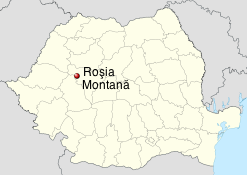
You may have heard about a little region in Romania called Rosia Montana. It’s been famous since Roman times (two thousand years ago) for its gold reserves. It still is.

For several years, Rosia Montana Gold Corporation, a gold mining corporation with investors like George Soros, has been trying to get its claws on it. They’ve been promising all sorts of things to the Romanian government and to the local people in Rosia Montana, but they’ve met with unexpected and forceful grassroots resistance against the deal, and rightfully so.

When you look at the facts, the deal they want the Romanian government to sign is this: they get 96% of the finds and Romania gets 4% of the finds.

Someone’s getting thoroughly shafted and I bet it’s Romania itself. The Romanian government is ready to sign on the deal, because they’re thoroughly corrupt and select politicians stand to make millions, but lots of Romanians (and foreigners concerned with the environmental impact of the project) are saying no, so for now, the deal’s hotly debated.

Romania’s own president, Basescu, wants the deal to go through, because the gold found there will supposedly “replenish Romania’s gold reserves”. He’s either a moron or he stands to make a personal fortune if the deal goes through. If there’s “gold in them thar hills”, then for goodness’ sake, get some unemployed Romanian miners in those mines, take 100% (not 4%) of that gold and get it into the state vaults, pronto. What do you need Rosia Montana Gold Corporation for? Say you do need a foreign investor to help you mine the gold? Then make the revenue sharing more equitable! Again, half and half would be the right choice.

Naturally, the Romanian government would disagree, and TV pundits are talking the issue to death on all the news channels. Talk solves nothing. Ever since 1989, Romanian newspapers and independent TV and radio stations have been uncovering corruption after corruption in Romania’s political dealings, and oftentimes, they’ve given clearcut financial proof of the wrongdoings. Have any of the truly guilty gone to jail? No, some of their cronies went to jail, while the real bastards have gotten richer and re-elected. The judicial branch has never been able to convict and send to jail powerful Romanian politicians, in spite of all their corruption, theft of government money, manipulation of government contracts and… the list of crimes goes on and on.

On the other hand, and this is the saddest part, if these contracts with foreign corporations were equitable, do you think all that money would benefit the Romanian people? Do you think it would be used to rebuild Romania’s infrastructure and to spur innovation and small business growth? You’d be a fool to think so. After all, this is Romania, not Sweden, Norway, Iceland or New Zealand. Logic and rational thinking have no place here, nor does equitable behavior. All that extra money, all those gobs and gobs of extra money would likely line the pockets of the same bastards who are screwing the country right now.

I don’t know what’s to be done. Well, I do know, but my solution involves legal superpowers and weapons and I’m pretty sure it’s illegal in the EU and most of the countries in this world…

Standard
Thoughts

The Unseen Sea

A lovely timescape (time lapse) video by Simon Christen, featuring photographs taken over the course of a year in the San Francisco Bay Area. I like the soundtrack, too.

Standard
Events

How Fritz earned his ‘Wonder Bunny’ moniker

As mentioned previously, Fritz’ full name is Fritz the Wonder Bunny from Brazil. We named him that on a whim, because it sounded cute, but he proved it true. So how did he earn it? I’ll tell you how.
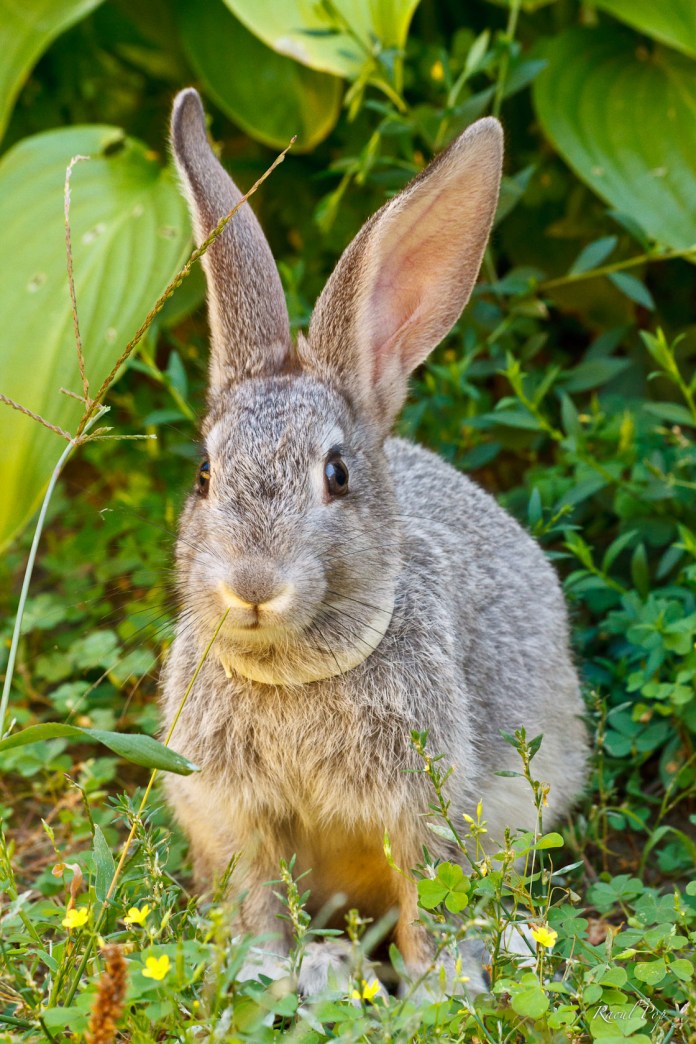
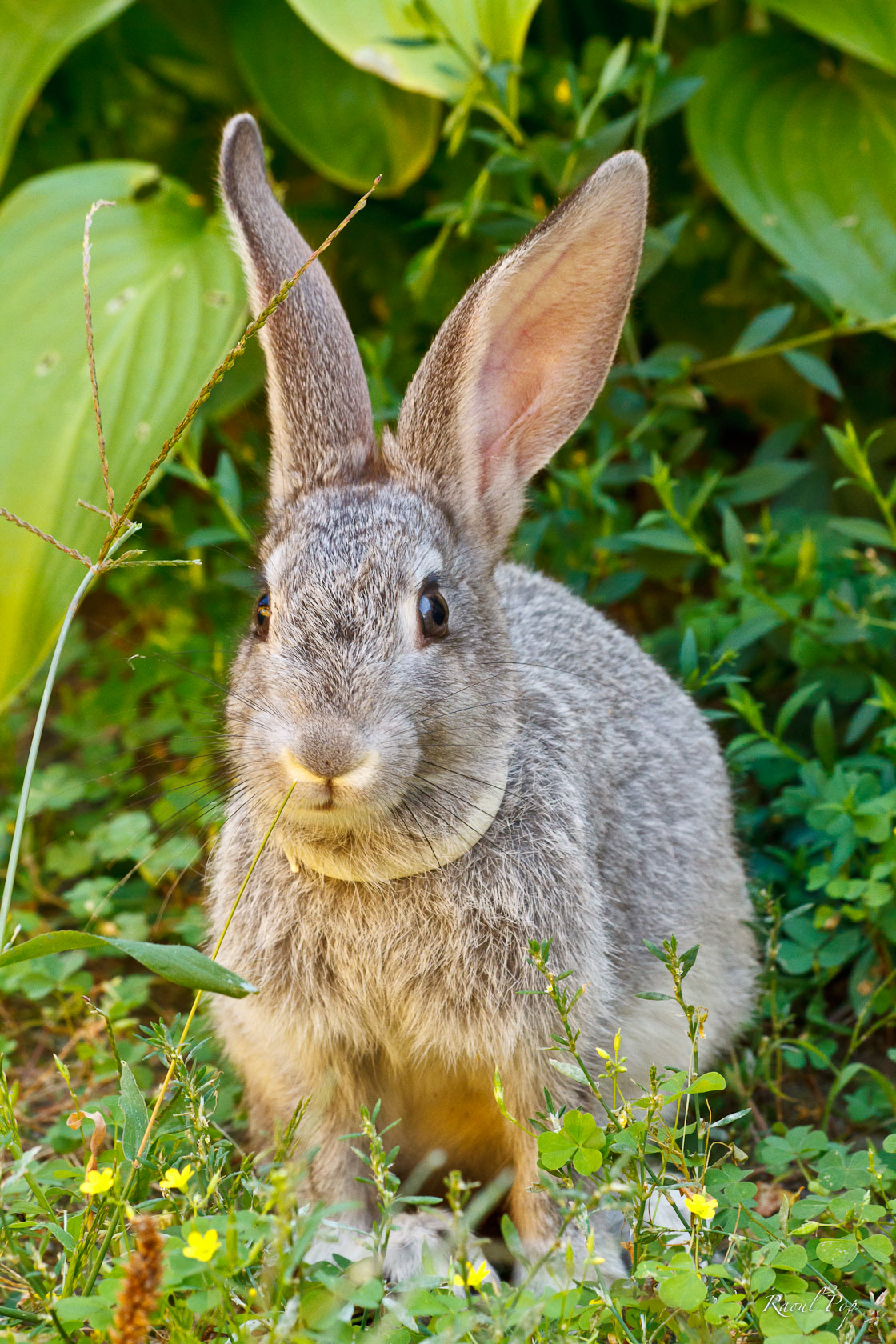
Fritz, being a curious bunny and also a silly one, as young bunnies tend to be, found a spot inside the engine of our car where he liked to sleep undisturbed. He’d disappear for hours on end and we figured he’d made a burrow somewhere in the garden or he found a comfy and shady spot under one of our rhubarb bushes.

During one such afternoon when Fritz was nowhere to be found, I needed to run an errand that involved using the car. I looked under to make sure no one was sleeping there, opened the gate, got in and left. I drove for a couple of kilometers, parked the car on a street, then came back to it after a half hour or so, got in and drove back home. So far, so good.

Instead of parking the car inside our courtyard, as I usually do, I left it outside, on the street, because I knew I’d use it again later that same day.

Back inside our yard, Ligia and I started looking for Fritz. He was still nowhere to be found. He’d been gone for a few hours and we started to get worried. Where could he be, the silly bunny?

After we looked everywhere, we gave up. We figured he either found a great hiding spot or he decided to up and go. After all, our pets are all free to go if they so desire. They’re free and we wouldn’t have it any other way. Our cats can climb over the fences any time they wish, and we also have a cat-sized hole in our gate, if they want to explore our street and socialize with other cats.

A few more hours passed by, and we started to get really worried. We’d only had the little guy for a few weeks, but we’d gotten attached to him. The thought of losing him saddened us deeply. We started thinking about scenarios.

What if Fritz had been eaten by a hawk? But we saw no hawks hanging about that day. What if Fritz might have climbed into the engine? That happened to us before, when two of our cats had kittens — but we thought the possibility so remote and the chance of his survival so slim if he did so, especially after I drove the car through town, that we put it out of our minds. We also didn’t have the heart to look inside the engine and see Fritz splattered all over, in case that was what had happened.

The time came for me to run out for another errand, and I left with a heavy heart, by this time realizing that we’d probably lost Fritz for good. I walked out of the house, opened the gate and to my astonishment, who do you think I found nibbling the grass next to my car but Fritz himself!

The little fur ball was covered in oil and dust and was quite scared. I called Ligia to my side and we caught him and put him back in the yard, where, in spite of his clearly harrowing experience, he dug right into a fresh red beet root while glancing about with his big eyes and twitching his soft bunny nose.

So what had happened? Short story, he climbed into the engine bay. That much we know for sure. I still don’t know what spot he chose, but it’s obviously a very good one, and that was his saving grace. He was inside the engine when I started the car and he stayed inside the engine the whole time, while I drove through the town and while the car stayed parked on a public street, kilometers away from our home. Did I mention the day was particularly hot, with temperatures above 30 degrees Celsius?

He continued to stay inside the engine as I drove the car back home and he stayed either inside the engine or under the car as the car stood parked on the street outside our home for more than four hours. We assume he continued to stay with the car all that time because it was the only familiar thing in unfamiliar surroundings.

I don’t know what went through his tiny little bunny mind during all that time. It must have been a terrible experience, being caught up in a big metal monster that made a lot of noise and a lot of heat, moving about with all sorts of unfamiliar smells and somehow avoiding being crushed by all the belts and fans in the engine bay. Then, when the car stopped for good, he climbed out of the engine, his fur full of oil and dust from the car’s innards and he found himself in yet another strange place with all sorts of unfamiliar smells. He must have figured that if he waited there long enough, something would happen that would make things right again and sure enough, it did!

Now do you see why he is rightfully called Fritz the Wonder Bunny? It’s a wonder he’s still around! As far as we’re concerned, he’s a Super Bunny!

We’re hoping he won’t have to take a trip to Brazil in order to prove the last part of his name, but you never know. The future will reveal all! 🙂

Standard
Thoughts

Meet Fritz, our new bunny

At the end of July, we brought home an addition to our pet family: a fluffy little grey bunny we called Fritz. His full name is actually Fritz the Wonder Bunny from Brazil. You might think his name’s unusual, but he’s done a great deal to earn it, as you’ll see in a future post. Let’s meet him!

He truly was tiny. He fit into the palm of my hand — a scared little grey furball with a heartbeat so fast I thought he was going to burst.

After he calmed down and ate some kale leaves and carrots, we introduced him to our cats (we have four of them), and watched carefully to make sure they got along. The kittens were all quite curious to see who (and what) he was.

Zuzu (the black one) made her “I don’t like this” face. See how her ears are turned back? Zuzu does that quite often, but she’s friendly as can be. Bubu (the one in the lower left corner) was very curious. He wanted to smell Fritz and touch him and play with him, but Fritz was understandably a little scared of a cat about four times his size (Bubu is a big tabby). Tira (the one on the right) approached Fritz first, touched him with her paw and smelled his scent.

Fritz stood there in the grass, small as he could make himself, probably thinking he’d get gobbled up, but our kittens are those kinds of cats. They’re nice and friendly. They do tend to get a little mischievous at times, but they didn’t want to hurt Fritz.

Next up was Bubu, who could barely contain his curiosity. He wanted to jump on Fritz and play with him, but we managed to calm him down somewhat.

Fritz got accustomed to his surroundings fairly fast, and was soon up and about, smelling the various grasses in our yard and picking what he wanted to eat (he’s quite picky, but in a good way; he’s a veritable gourmand).

It’s now been about a month since we brought Fritz home, and he’s doing great! We kept him in a little cage for most of the day and all of the night during his first few weeks, because there were a couple of hawks and an owl who had their eye on him. Now that he’s bigger and he’s shown us that he can take care of himself, we let him roam freely through our yard and garden. He’s already found a few great hiding spots. Not even we can find him sometimes. He comes out when he wants to eat and socialize. And he gets along great with all of our cats.

Contrary to popular belief, he hasn’t made short change of our vegetable garden. He’s shown little interest in it so far. He prefers to eat certain kinds of grasses and weeds.

Just so he wouldn’t get lonely, we recently got him a girl companion we called Rita, a fluffy little white bunny whom he already adores; there’ll be more about that soon. Unfortunately for him (and fortunately for us), when he matures a little more, we’ll sterilize him, because, you know the old adage, they’ll be multiplying like rabbits if we don’t…

I’ll leave you with a little rough footage of Fritz eating grass in the yard, shot with my cellphone (so I apologize in advance for the poor video quality). I’ll have better video of Fritz soon!

Standard
Thoughts

The boring sameness of Romanian restaurants

Romanian cuisine was (and still can be) wonderfully varied and delicious. Not only are there different dishes in each region of the country, but even the basics, the staple traditional dishes, are prepared differently from region to region. Visiting Romania should be a delectable experience for one’s palate — the potential and the means to bring it about are there.

Sadly, if you should walk into more than one restaurant in Romania these days, your chances are better than 95% that you’ll see the same limited menu — the same soups, the same entrees, the same salads, the same meat dishes, the same desserts, the same drinks etc ad nauseam… It doesn’t matter if the restaurant is part of a two-star, three-star or four-star hotel or pension or if it’s a standalone place in a mountain or seaside resort or just some place alongside the road. Beside a few dishes or drinks that sometimes vary, they share the same boring menu.

They all have vegetable soup (most of them don’t know how to make it). They all have tripe soup (in varying degrees of stomach-turning oiliness). They all have fried trout, most of it bland beyond belief to the taste. They all have, of course, lots of pork, beef and chicken dishes (the same fattening dishes across the board), so it’s no wonder most Romanians are starting to look like potbellied pigs. They all have the same salads, and most seem to compete in using the most withered vegetables, drowned in a sea of oil and topped with nose-turning vinegar.

The question then arises, can you find decent food as you travel through Romania? Sure, if you manage not to get sick of eating the same dishes… We’ve traveled a lot through the country (we’d like to travel some more) and we have come across a few restaurants that do some dishes well. We’ve also seen a few restaurants that have impressed us by straying from the boring sameness with different and delicious dishes. But these places were few and far between, and when you’ve been on the road all day and you walk into a restaurant only to see the same menu, it’s a very disappointing experience.

There’s also another factor that adds a certain degree of difficulty to our search for food. We’re raw vegans, which means we prefer to eat raw, uncooked vegan foods. When we don’t have a choice, we’ll eat cooked vegetarian dishes, such as soups, side dishes or salads. But that doesn’t mean we don’t look at the whole menu, just to see what a particular restaurant is offering to the general public, and that’s when the disappointment sets in.

Having grown up in Southern Transilvania, my palate is naturally accustomed to Southern Transilvanian foods, which include Romanian, Saxon and Hungarian dishes. Those dishes were, surprisingly enough (by today’s standards) mostly vegetarian dishes (ovo-lacto-vegetarian). As I grew up, we ate meat once a week (on Sunday), and it was most likely chicken. We ate beef very seldom (I remember only a few occasions during my childhood), but we did eat pork quite often (to my chagrin) in winter-time. I loathed the stuff, but that’s what we had in the pantry, so that’s what I ate.

If you should go to a restaurant in Southern Transilvania these days, their menu won’t reflect the traditional cuisine of the region at all, even if they say they’re a traditional “Transilvanian” restaurant. (Somehow the stupidity of calling a restaurant “Transilvanian” when it’s located smack-dab in the middle of Transilvania escapes the owners…) They have the same dishes you’ll find everywhere else, prepared in mostly the same ways. And they’ll have mostly meat dishes. Where are the traditional soups, entrees and dishes I grew up with? They’re certainly not on the menu!

My grandmother used to make a delicious sweet potato soup. She also made a sour potato soup with tarragon and milk that makes my mouth water even now. She also made cabbage soup, a nice thick soup with dill and all sorts of condiments, completely unlike the pig food they call cabbage soup in restaurants these days. In the spring, she’d make a wonderful sour salad, watercress or wild garlic leaf soup. Her noodle soup was the best. And she’d also make a dumpling soup that had me licking my fingers and begging for more dumplings.

The meal that had me begging for more was chicken drumstick stew with mashed potatoes. That was the best. But she only made that once a week, on Sunday. She also made a delicious mushroom stew. Oh, and her pea stew was so good! Her fried onion sauce, usually served with mashed beans or whole bean stew, sure made my mouth water. She also made a mean potato stew with sweet sauce. Her fries were amazing, particularly when she sprinkled a little grated cheese on top! I can’t even find proper fries in restaurants these days! Most restaurants decided it’s better (for them, not for the customers) to buy frozen, pre-cut fries and warm them up instead of making them from fresh potatoes, as is the rule.

For dessert, my grandmother also made “gomboti” (a sort of dumpling) filled with plums, apricots or peaches. Or she made “clatite” (a small crepe) filled with fruit jam or honey. She made a lot of desserts as well (layered cakes and more) all of them delicious, unlike the cakes you find in pastry shops these days.

My mother and my wife both cook (my wife is a raw food chef) and they both make their own versions of the vegetarian dishes listed above. They’re all delicious. And as we visited various Romanian friends during my childhood and later life, I got to eat some pretty interesting variations on these same recipes.

When we go to restaurants, I can’t find any of these traditional dishes. Instead, what we’ll find is lots of bland, badly cooked side dishes and lots of meat dishes. And when we go to restaurants in other parts of the country (Moldova, Muntenia, Dobrogea), we can’t find any of the traditional dishes from those regions, either.

When did Romanians start to eat meat every day? That was certainly not the case 15-20 years ago. And look at them now, as a nation… They’re almost as fat as the Americans. Most Romanian men over 30 have pot bellies, which they proudly display and rub as if they’re some treasure. Hey, guys, I got some news for you, big bellies are nothing to brag about. In fact, they’re a sign you’re overeating and they’re also a precursor to erectile dysfunction. Think about that as you gulp down steaks and other fat-laden dishes…

My questions for Romanian restaurant owners are these:

  • Where are the foods that set Romanian cuisine apart?
  • Where are the traditional dishes we know and love?
  • Why do you all have the same menus?
  • Will you serve more vegetarian dishes? 

I’m curious to see what answers I’ll get (if any).

Standard