Thoughts

Why can't I use AirTunes from my iPod or iPhone?

For those of us with an AirPort Express, this question comes up at some point: why can’t I play directly to it from my iPod touch or iPhone, using the same AirTunes technology that is available through iTunes?

apple-air-tunes

After all, an iPod touch or iPhone has WiFi, and AirTunes works through WiFi. If I can do it from my Mac, it stands to reason that I should be able to do it from my iPhone, doesn’t it?

Apple iPhone 3G

Instead, we get a hamstrung app like Remote, which is neat, but somewhat pointless. Think about it: you’re using a device which already has your music library stored on it (iPod touch) to play and control the same music, stored on your computer. Why the middleman? Why not go direct?
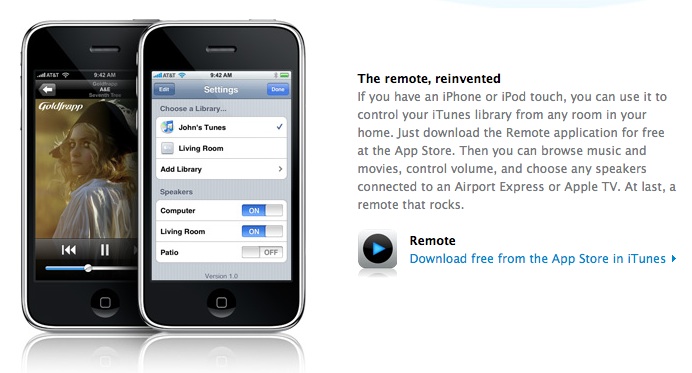
apple-remote-app

Sure, the Remote app is useful in the living room, if you also have a music library stored on your Apple TV. You can then control the playback of that music or videos without using the Apple Remote, which has a much longer battery life, is smaller, and much easier to use… eh, wait a minute, that doesn’t sound like it’s better, does it?

Given Apple’s commitment to the environment, I have to wonder why they insist on using the laptop or desktop machine when it’s not necessary.

apple-environment

I realize using AirTunes to play music directly from the iPod touch or iPhone will drain the battery much faster than playing the music through headphones or through a dock connected to a speaker, but hey, we should at least have that choice, right?


Standard
Places

Rose leaves in autumn

Standard
How To

The cat house – part 8

This is part eight of a personal carpentry project whose stages were recorded on video: building a cat house for our two kittens. Here are the other parts:

In this post, you’ll see the finished cat house, hear a bit more about the thinking behind the project, and find out my final opinion about what I’ve built. At this point, the cat house is pretty much complete, although a couple of small touches — like a frame around the window and a rubber door at the entrance — still need to be done. This means there will be a part 9 at some point in the near future, likely within the next 1-2 months.

As mentioned in the videos and in one of the first parts, the cat house was built using both leftover and reclaimed wood and thermal insulation. Pretty much everything I used in its construction I already had lying around my yard from ongoing renovations to our home. The only things I bought specifically for it were the two casters, the asphalt roof tiles, and the wood screws, which added up to a cost of 100 RON or about $33.

See this video on blip.tv, SmugMug or YouTube.

Standard
Thoughts

A mummified rat

In the process of replacing our roof tiles, I found a mummified rat. It’s stiff, fairly well preserved, and it’s the second one I found (I threw away the first one out of disgust). It’s probably the combination of the warm and dry air in the attic that kept it like this. I don’t know how old it is. It could be only several years old, or it could be hundreds of years old. (Our house is over 200 years old.) It looks like it’s going to hold together for another several decades, if not more. You may not want to look at the photos if you’re easily disgusted.

mummified-rat-skeleton-1

mummified-rat-skeleton-2

Standard
How To

The cat house – part 7

This is part seven of a personal carpentry project whose stages were recorded on video: building a cat house for our two kittens. Here are the other parts:

In this video, I’ve already completed all of the carpentry work and the cat house is assembled. It’s also been stained and it’s about to be treated with wood wax. Lots of details about what’s been done and what’s about to be done are offered in the video, such as what I’m going to do about the entrance and how the roof has been mounted and how it seals against heat loss.

See this video on blip.tv, SmugMug or YouTube.

Standard