Reviews

Comfortable by Frankel

This is a song called “Comfortable” by a West Coast folk/pop band called Frankel. Courtesy of Elliot Glass, who’s been going out and recording various cool bands in their homes, as they play laid-back versions of their songs. There are more videos like this at Elliot’s Vimeo account. Know what else is cool? Frankel’s latest CD is available in vinyl on their website. You can listen to more Frankel songs on their MySpace page.

I like the clarity of the song (voice and music both), and the unexpected twists in the melody. I also like the video’s color grading.

http://vimeo.com/5939849
Frankel – “Comfortable” from elliot glass on Vimeo.

Standard
Reviews

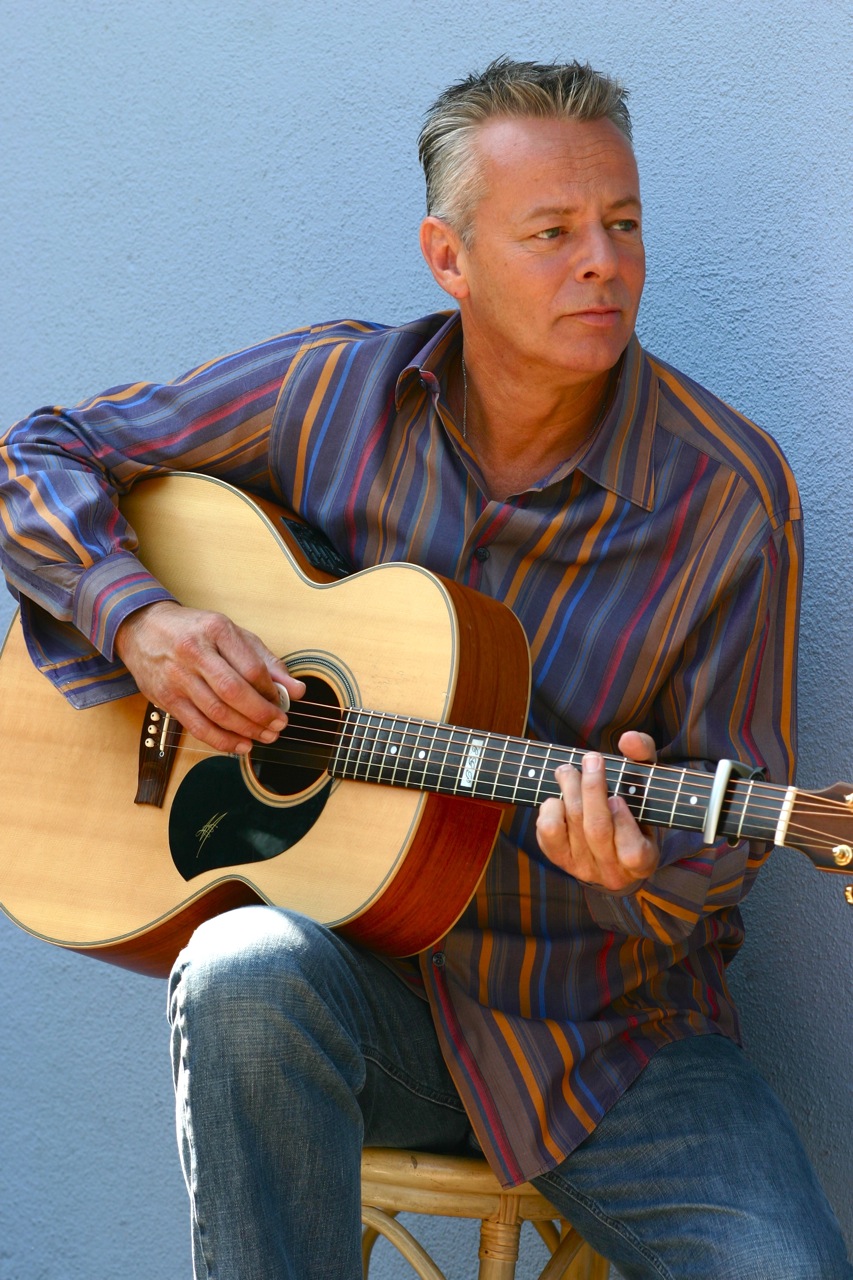
Tommy Emmanuel CGP

I found about about Tommy Emmanuel recently, from a YouTube video that showed him playing a wild and incredible version of “Guitar Boogie”. That particular video was afterward removed from YouTube due to a copyright claim from an entertainment company. Still, thanks to someone from that same entertainment company (see comment #1 below), I found another clip of him playing that same song. Try to follow the incredibly complicated fingerwork if you can. The amount of dexterity and virtuosity this man possesses is amazing.


Tommy Emmanuel – Guitar Boogie

Tommy Emmanuel

Photo used courtesy of tommyemmanuel.com

Tommy’s been playing guitar professionally for over 40 years, and is huge in his native Australia. He started playing at the age of 4, by ear, without formal instruction. Two years later, he was already working pro gigs. He plays guitar differently from most, using all ten fingers. He calls it “finger style”, and I’m sure you appreciated it on the version of “Guitar Boogie” shown above.

I found two other really nice videos with him, recorded when he did a show on Korean television. The first is “Since We Met”, and the second is “Angelina”. These are quieter songs, but the man’s talent is readily apparent. These two songs, instead of impressing with virtuosity, relaxed me, and that’s worth more to me than a little excitement. (I’m somewhat tightly wound, as regular readers might have found out by now…) The final proof of Tommy’s talent came when I showed the videos to Ligia (who is Conservatory-trained in voice and piano) — and she immediately said they’re great.


Tommy Emmanuel – Since We Met


Tommy Emmanuel – Angelina

Want to know what the CGP in his name stands for? It’s “Certified Guitar Player” — a title given to him by the legendary Chet Atkins in 1999, for his lifetime contribution to the instrument. Awesome, don’t you think?


Tommy Emmanuel – Questions

Standard
Reviews

Life Inc – another perspective on today's society

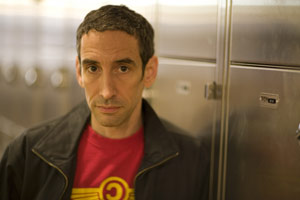
Douglas Rushkoff Douglas Rushkoff, an award-winning writer, documentary filmmaker and scholar, has written a book entitled “Life Inc”, where he delves into what he calls the “corporate mindset” of today’s society, and how to overcome it in order to make our lives and our world better.

I’ll let him tell you what the book is about in his own words:

“What I started to do was to look at the different ways we as modern Americans have become disconnected from one another, disconnected from the places we live, disconnected from the value we create, and even disconnected from our own sense of self-worth. I came to the conclusion that corporations, or what we call the corporate mindset, were really at the center of this phenomenon.”

“We’re living in a world where if you want to make money, you’ve got to work for a corporation.”

According to Rushkoff, it turns out this “corporate mindset” can be traced back to the Renaissance, which is when kings began to monopolize on the income created by people. Instead of letting them trade freely among themselves, they created charter corporations which had exclusive control over certain industries. The kings got shares of stock in those monopolies, thus income, and those companies got to make all the money there was to be made in those markets. This centralization of power continued right through to our own time.

“The society built through the Industrial Age was built to mythologize the mass-produced object, because we needed to create a society of consumers who thought buying all of this stuff would somehow make them happier.”

“Most of us spend so much time working and consuming that we have very little time left to do anything that has to do with other people.”

“The more we behave as individual actors in competition with one another, the harder it is to encounter one another in a friendly way.”

“People can start investing in one another and with one another, make their towns better, and earn returns that you’re not getting from your Smith Barney broker… and see the return of your investment in the place you actually live.”

“This [economic recession] isn’t just a crisis, it’s an opportunity. It’s the first moment in the last couple of hundred years that we’ve had to rebuild our society and our economy on principles that serve humanity instead of killing life.”

I agree with most of what he has to say, and it’s important to realize he’s not against corporations per se, but against the slow creep of the corporate mindset into everyday life. After all, it’s thanks to corporations that we have industrial design, which allows us to get products designed to exact specifications and high standards. And the concentration of capital and research at some corporations and organizations has resulted in amazing advances in technology that have benefited all of us. Yes, you can do a lot of things in your garage, and you can get a lot of stuff done with your neighbors and in your community, but you can’t build a highly sophisticated computer, digital camera or a modern car at home. (You might be able to assemble them from purchased parts, but those parts were made in factories, too.) There is plenty of value to what he has to say, and the book warrants a close read. We do need to become more human, more connected, more dependent on our communities.

There’s a 9-minute video summary of the book at his Vimeo account. He’s also posted video clips summarizing the main ideas of each book chapter there. I’ll post the main video summary and the first three clips below. There’s also more info on his website at rushkoff.com. You can get the book from Amazon.

Life Inc. The Movie from Douglas Rushkoff on Vimeo.

Life Inc. Dispatch 01: Crisis as Opportunity from Douglas Rushkoff on Vimeo.

Life Inc. Dispatch 02: Insulation Equation from Douglas Rushkoff on Vimeo.

Life Inc. Dispatch 03: Money as Debt from Douglas Rushkoff on Vimeo.

Standard
Events

120th Anniversary of the Eiffel Tower

Eiffel Tower under construction, 1878

Built between 1887 and 1889 by French engineer Gustave Eiffel, the tower has since become the most recognizable landmark (and the most visited) in the world. For its size, the tower is amazingly light — its mass is less than the mass of the air contained in a cylinder of the same size. For its time, the system for joining the metal girders together was truly innovative, and was inspired by the design ideas of a Romanian engineer named Gheorghe Panculescu.

Eiffel Tower Girders, 1889

The shape of the tower was dictated purely by mathematics, and the primary design goal was wind resistance. Eiffel and the other engineers wanted to make sure it could withstand strong winds, being at the time the tallest building in the world. Being a very tall building, made almost entirely of metal, it’s also a very large lightning rod, which attracts amazing lightning bolts, as you can see in this photo from 1902.

Lightning striking the Eiffel Tower, 1902

Also interesting is the use of the tower as a radio antenna. Over time, antennas were mounted to the tower, or the tower itself was used as a large antenna for radio communications. In 1910, the first cosmic rays were observed with the aid of the tower by Father Theodore Wulf. Nowadays, 9 radio and TV stations broadcast content with the aid of the tower.

This year, the French celebrated the tower’s 120th anniversary on Bastille Day. A concert by Johnny Hallyday was held at night, while fireworks blazed forth from the tower. It was an amazing lightshow, captured fittingly by Alta Media Productions and Toys Prophet, two Vimeo users. You can see their videos below. Taken from different vantage points, one focuses on the Paris nightscape and the tower lightshow, while the other captures the interaction of people with the evening’s events.

http://vimeo.com/5621455
Eiffel Tower on Fire from Alta Media Productions on Vimeo.

-SPEED OF LIGHT- ….. ESSAI N°5.1 from toys prophet on Vimeo.

I haven’t yet visited the Eiffel Tower, and I look forward to doing it someday. It’s a structure unlike any other. When you think of it in the context of architectural design, it fits into no category. Its design is pure engineering, with no allowances for the niceties of normal architecture. Sure, it’s been adapted for human use over time, and you can even eat there now, but these are all add-ons, insignificant to the initial design goals. It didn’t fit within the times when it was made, in spite of some of the Victorial wrought iron work it faintly resembles, and it still doesn’t fit within any normal design constraints today, even in post-modernist times. And yet it has become a symbol of architectural design, of Paris, and of French culture, odd as it may be. If nothing else, Gustave Eiffel had serious guts to undertake such a work and to withstand all of the criticism leveled at him during and after the construction of the tower. He was right all along.

Eiffel Tower by briandeadly on Flickr.

Eiffel Tower by briandeadly on Flickr

Historic photos of the Eiffel Tower used here are public domain, obtained courtesy of Wikimedia Commons.

Standard
Lists

Condensed Knowledge – August 2, 2009

This is a summary of articles I read and found interesting during this past week. The list is shared from among my feed subscriptions:

Standard