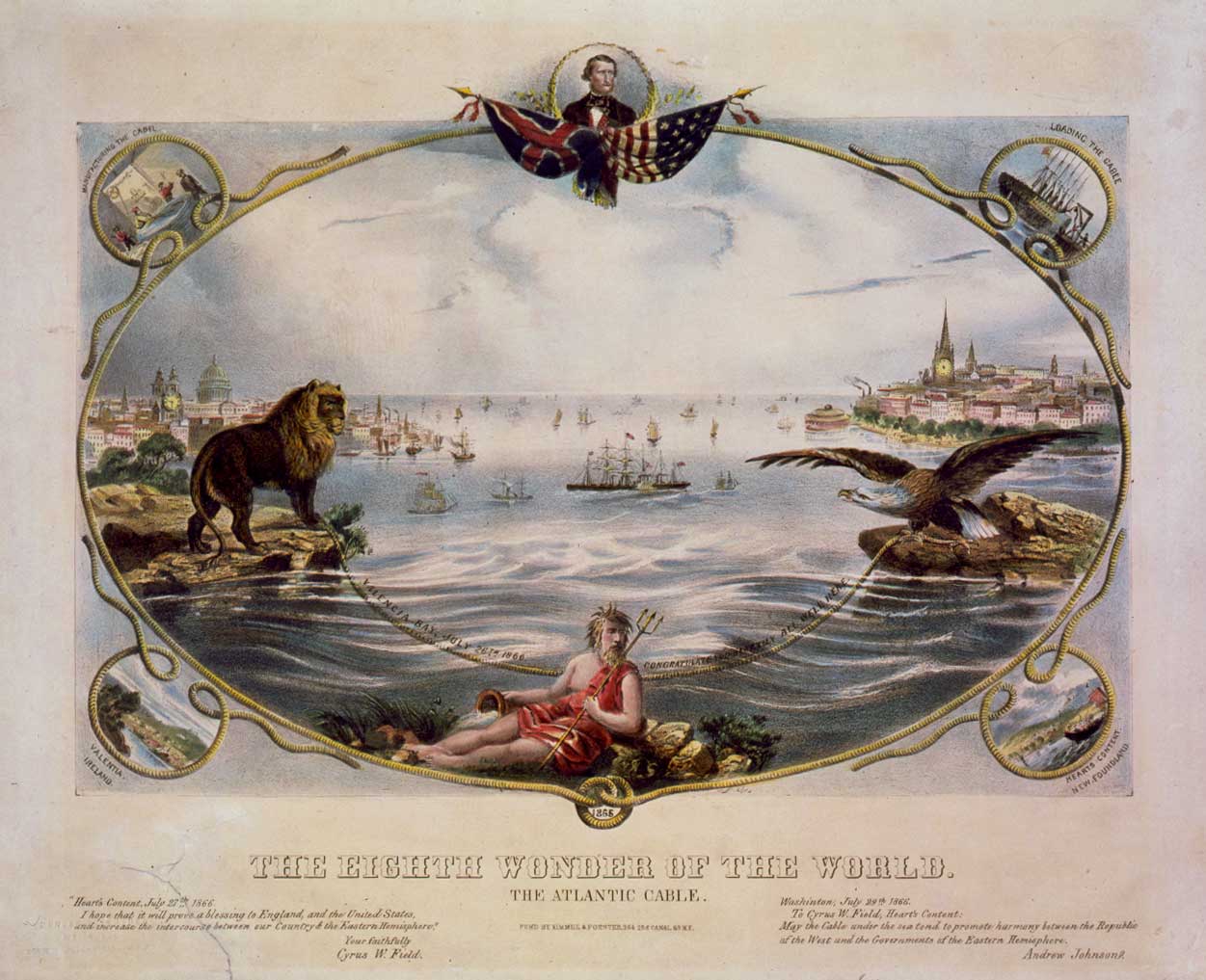
In July 1866, after the successful completion of the project which undertook to lay a single undersea cable through the North Atlantic, from Newfoundland to Ireland, this following commemorative print was created:
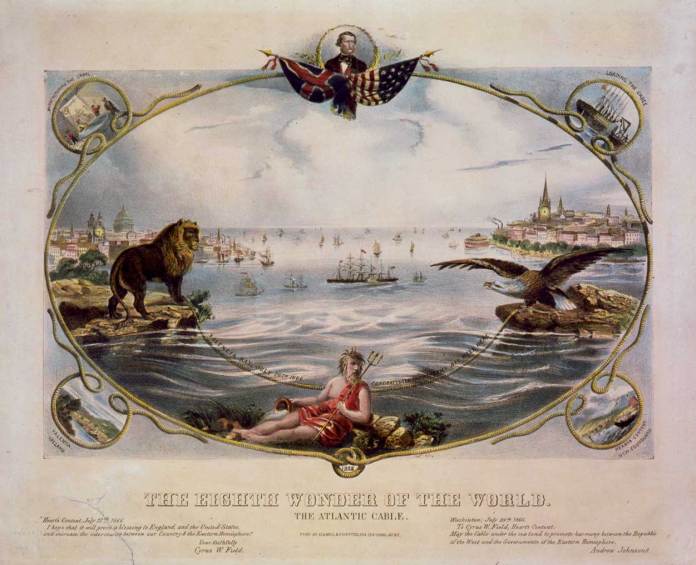
The Atlantic Cable was the idea of the New York merchant and financier Cirus W. Field, who wanted to communicate with Europe in hours, not weeks, and in 1854, conducted the first trial of laying a 2,000 mile cable between the US and Europe. The first three attempts were not successful, but in 1866, his persistence paid off, and his cable worked. Needless to say, he was showered with due praise and honors for his efforts — one of them being this print.
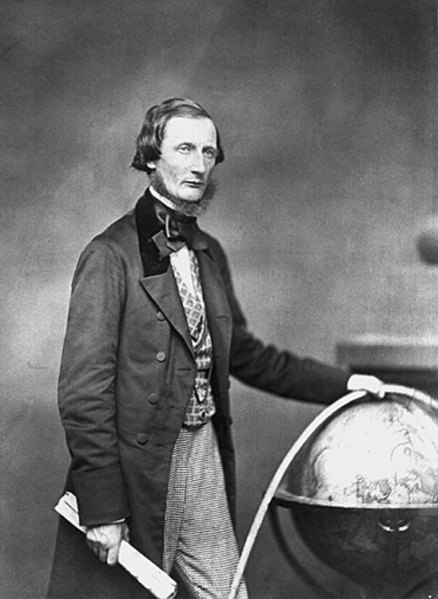
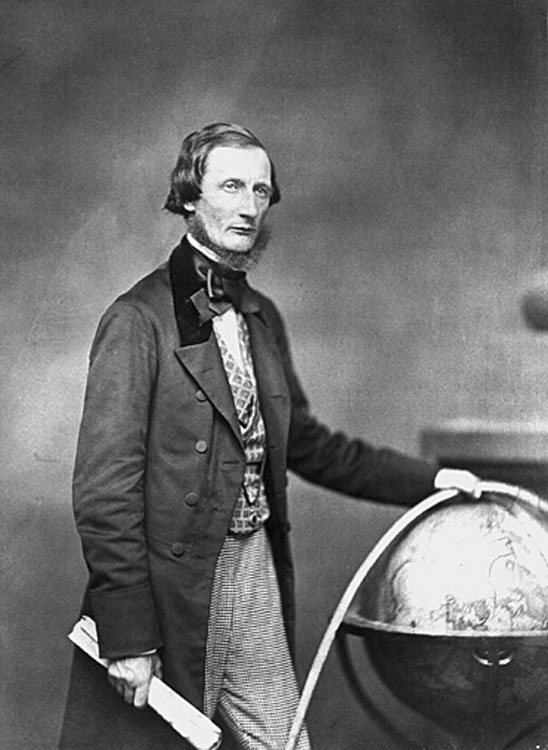
When you look at Cirus W. Field, the man, he wasn’t that imposing. He seems to have been of average height and thinner build, and yet, this is the man that laid the foundation of long-distance communication. Isn’t it wonderful what one person can achieve if they set their mind to it?
Just how did those trans-Atlantic telegraph cables look? You can see longitudinal and transverse sections of each size in this print:
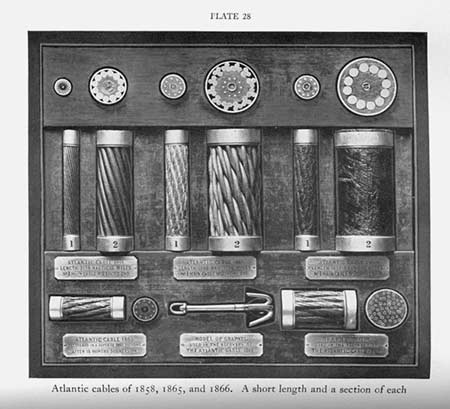
The cables are quite complex, as you can see above. When you think that 2,000 miles of these cables had to be made, from scratch, in the mid 1800s, it’s no wonder they were at the time called the Eighth Wonder of the World.
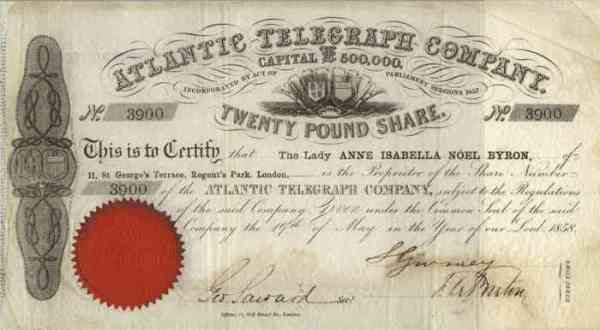
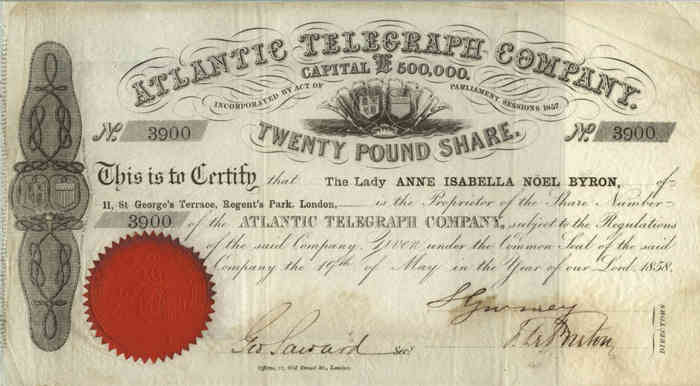
The failures to lay working cables before 1866 attracted controversy. You see, Cyrus Field didn’t finance the matter himself. He’d have been bankrupted many times over. He used other people’s money by selling shares in the venture. Here’s one such stock certificate, sold to Lady Anne Isabella Noel Byron, Lord Byron’s widow. This certificate lost most of its value after the failure of the 1858 cable, then became worthless until the formation of the companies which handled the laying of the 1865 and 1866 cables.
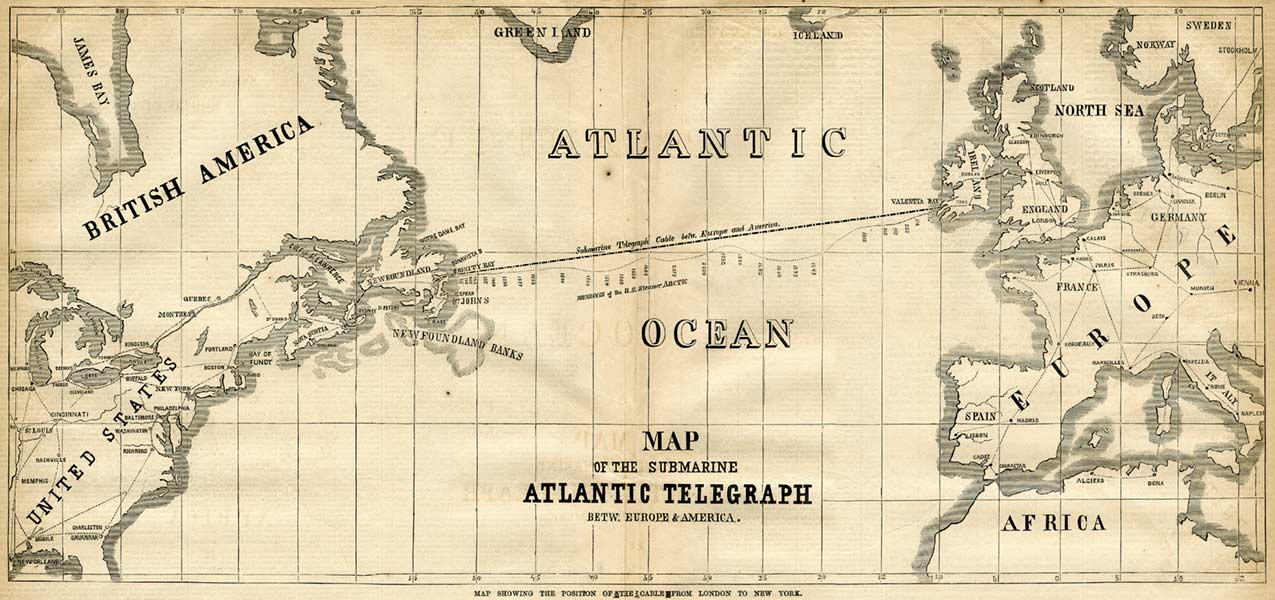
The route of the 1858 cable can be seen in the map included here:
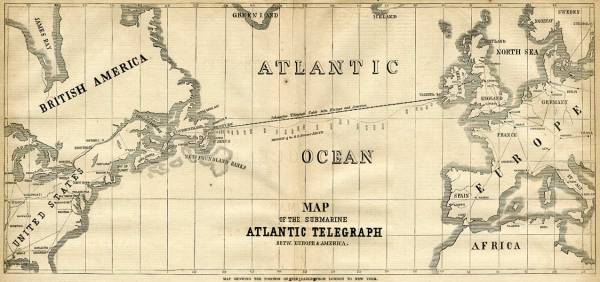
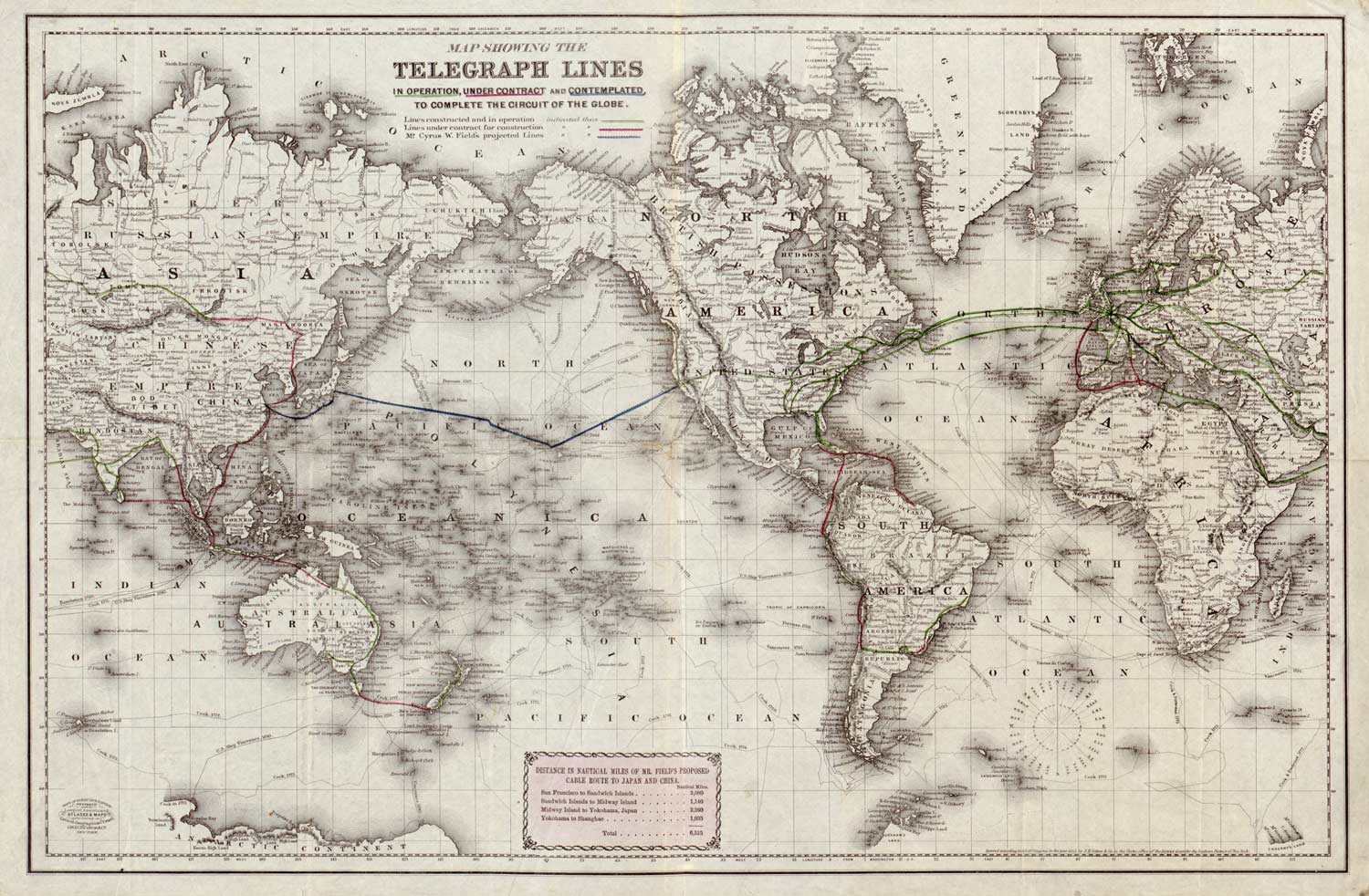
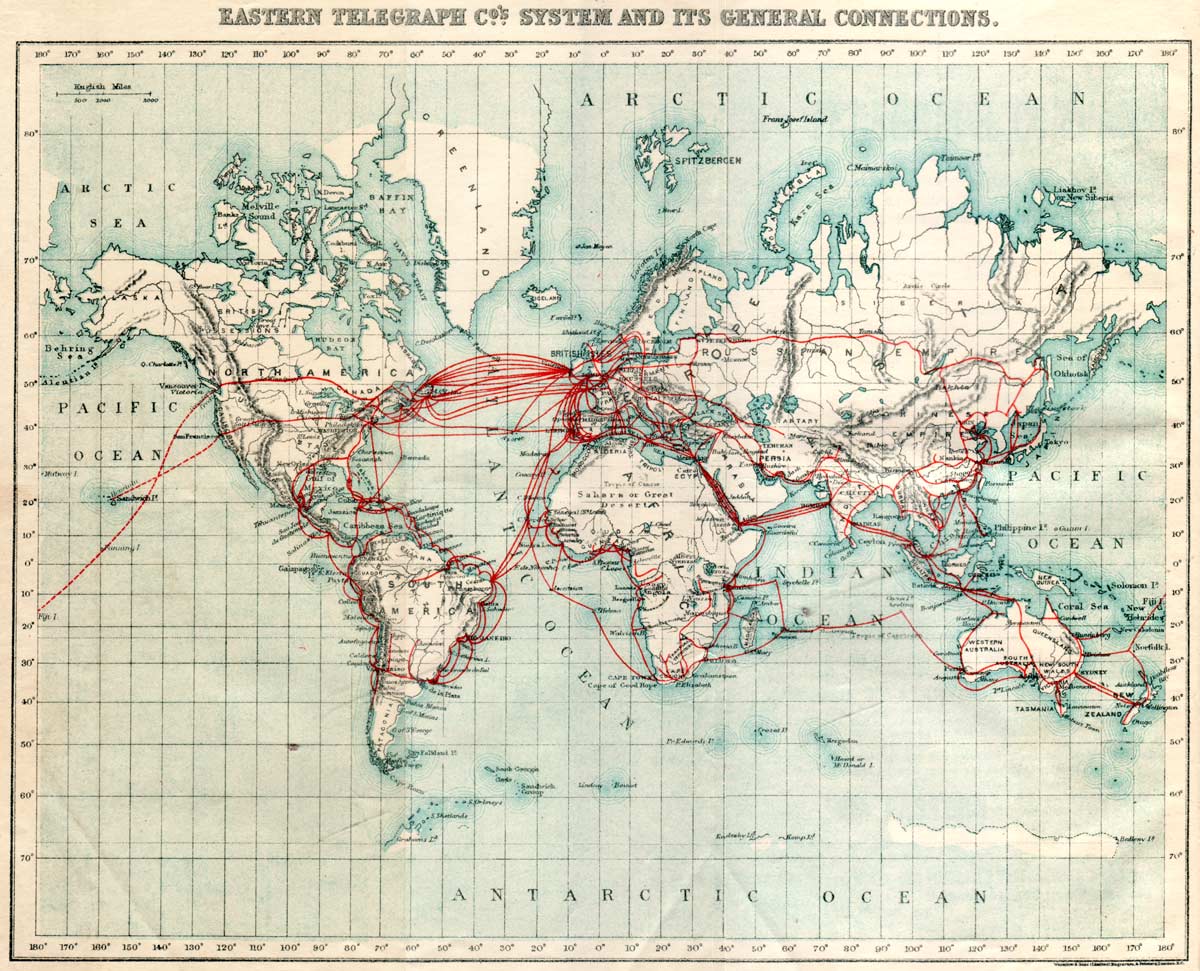
The routes of the cables available in 1870 can be seen on this map:

Pause here for a bit and think about this: in the late 1800s, these were all of the communication routes available in the entire world. That was it. There was no internet, no telephone, no TV, no radio, only written letters and telegraph. Oh yes, they also had Indian smoke signals, but they weren’t as widely used, and those communication lines aren’t marked on these maps as each transfer hub was assembled and disassembled on the fly.
It’s easy to complain about how much faster and more reliable our Internet access could be, but the fact of the matter is that we’ve made amazing strides in communication over the past century and a half. As I write this, I’m sitting at a desk in a village in rural Dobrogea, Romania, and am storing these letters or bits or whatever you want to call them on my server back in the United States, instantly, each and every time I press the “Save Draft” button in my WordPress Editor. That’s amazing, in and of itself.
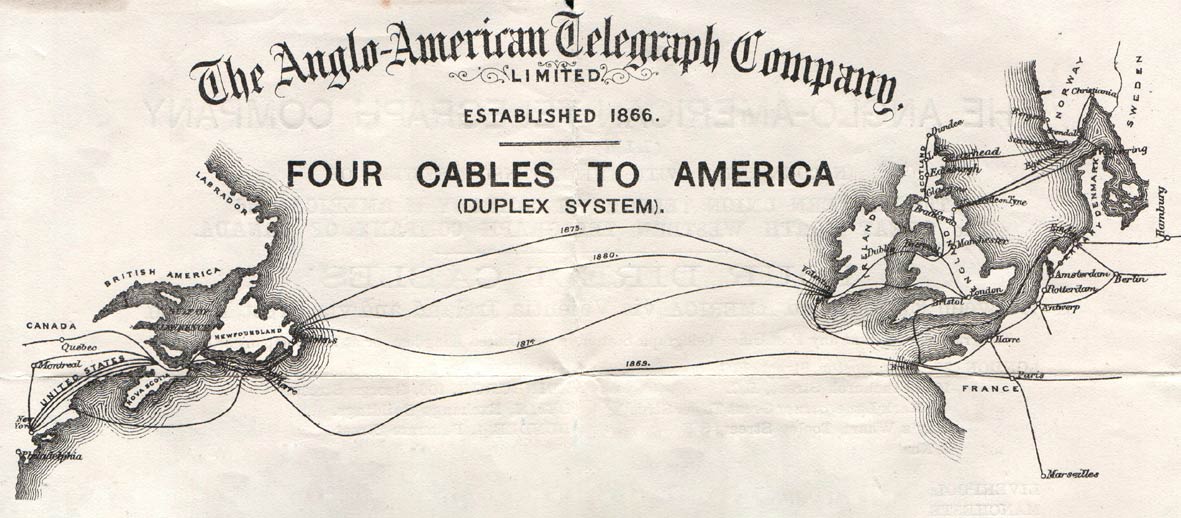
Let’s fast forward and see how fast things progressed from that single cable laid in 1866. By 1880, there were four cables already.
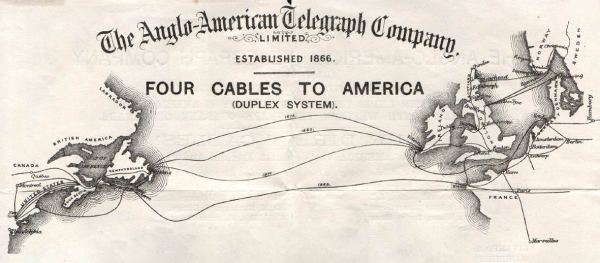
By 1901, there were 14 cables. That’s right, fourteen, from four just 20 years earlier.
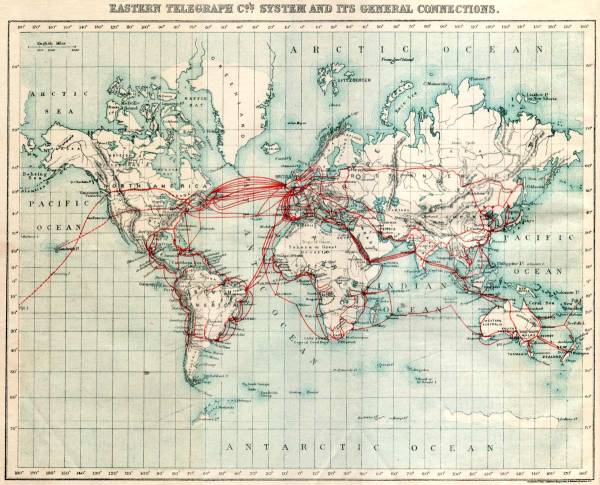
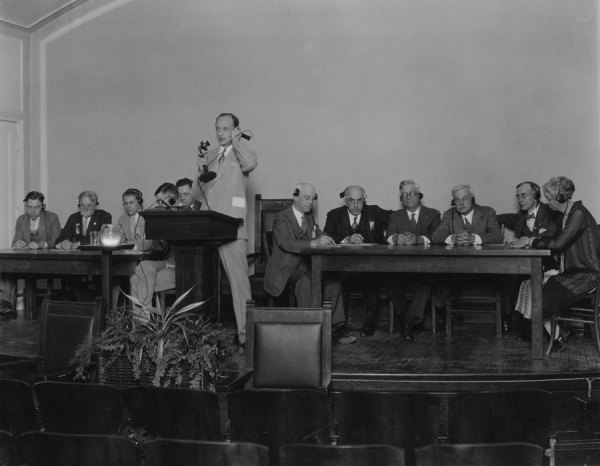
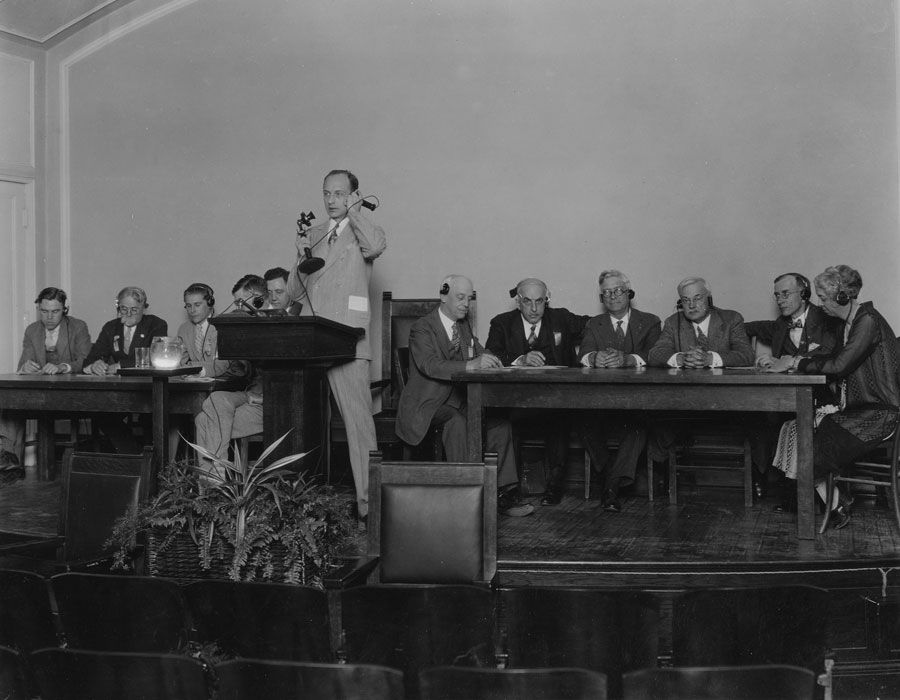
Although trans-Atlantic telegraph communications progressed quite fast, the first trans-atlantic telephone call did not occur until 1927. It was made from Columbia, Missouri, to London, lasted six minutes and cost $162, which was quite a large sum for that time.
Just think, now we can talk anywhere in the world for pennies a minute, or do audio or video chats with applications like Skype or iChat for free. We sure have come a long way!
Sources
Images used courtesy of the History of the Atlantic Cable & Undersea Communications and Missouri School of Journalism Archives.






 Raoul Pop