Reviews

Build your own web site the right way, using HTML & CSS by Ian Lloyd

This Sitepoint release, written by Ian Lloyd, proves to be a worthwhile addition to the library of a budding web designer or even that of a complete novice who’d like to build his own site. Ian takes the reader through a complete tour of HTML and CSS, plus a few goodies, and leaves no stone unturned in making sure they can build a good, solid foundation of knowledge.

For those of you not in the know, Ian is a member of the Web Standards Project, and is a self-confessed addict for web standards, accessibility and usability. That means that any reader that picks up this book and follows it will end up with a lot of very useful knowledge on that subject, and that’s good nowadays, when web standards are the norm, not the exception.

As is the case with most computer books, book follows the development of a fictional website, this time for a UK diving group called Bubble Under – and when I say it starts at the bottom, I mean it: the first chapter deals with browsers! But that’s what’s great about it. It’s thorough, from cover to cover! And the emphasis on CSS is very welcome! I remember the HTML books of my day… and of course there was no such thing as CSS back then. Well, this book is modern and up to date, and thankfully so! CSS-based page designs are emphasized, and the reader is taken through a natural transition from pure HTML to CSS integration. Along the way, standards are plugged in, also naturally, and the more advanced elements like images and forms are also nicely presented.

Another indication of the book’s relevance is the chapter on blogs, which talks about the various solutions on the market, and then focuses on how to set up a Blogger account and integrate it into a website’s existing design. Other goodies are stats, search, blogrolls, and discussion forums. The book ends nicely with a good discussion of XHTML, and an XHTML glossary is included to boot.

What more can I say? If you’re in the market for a good book that will help you get started with designing your own site, get this book. It’ll be perfect for you!

Standard
Reviews

Object-Oriented PHP: Concepts, Techniques, and Code by Peter Lavin

“Object Oriented PHP: Concepts, Techniques and Code”, by Peter LavinCan a single book get web designers to start writing better, reusable PHP code? Peter Lavin makes a go of it in Object Oriented PHP, and it comes out pretty darn well.

The gist of the book is this: would you rather write code that does the same sort of stuff over, and over, and over, and over, and… so on and so forth, or would you rather write a piece of code you can plug into any of your pages or sites when you need to do a certain thing? The object-oriented way involves a little more time upfront, but it pays off time and time again. Because let’s face it, none of us enjoys coding the same boring stuff unless we’re gluttons for punishment.

Some may say, “What?! What’s this nonsense about OOP with PHP?”, and I will duly point them to the specs for PHP 5. That’s when OOP techniques were truly made possible. I tell you, even I started reading Peter’s book with skepticism, because heck, PHP is “just” a scripting language, and besides, Dreamweaver can write a lot of the code I need for me. But as I went through the book, I realized an object-oriented approach is a scalable approach. It can be applied to multiple projects. In essence, that’s what Dreamweaver’s doing when I tell it to write a recordset for me, and Macromedia’s not doing too bad as a company… There are obviously benefits to be reaped from OOP in web development.

Peter’s book is great, because it walks you through and explains how OOP in PHP should work. He first explains the basics of OOP, then applies them to PHP, and provides real-world techniques and code to illustrate his points. He touches on AJAX, XML, RSS, thumbnail images, PDO, and other cool things, in an approachable and understandable manner.

It’s funny, but the illustration on the cover of the book says it all. Would you rather code a waffle from scratch, or code the wafflemaker, and make yourself waffles whenever you want them? That’s the difference between just writing code and object-oriented programming. It gives you the power of reproducibility and scalability. So what are you waiting for? Get cooking with OOP!

Standard
Reviews

Suse Linux by Chris Brown

Suse Linux, by Chris BrownHave you been itching to try Suse Linux but didn’t know how to get started? Okay, I confess: I know I have. I tried installing Suse once several months ago, then chickened out of using it. (Just FYI, the installation went just fine.) Not sure why, but Suse looks a little more intimidating than Ubuntu, and it isn’t. That’s why Chris Brown’s book is great, because it shows how easy it is to get going and up to speed with Suse.

Suse is one of the most popular Linux distributions available today. Novell claims “over seven thousand installations” of Suse each day, and that’s nothing to sneeze at. ‘Cause if you do, you might just miss one (it works out to one every twelve seconds.)

This book covers it all, and at a hefty 430-some pages, I do mean all. Thankfully, it’s got some great sections, so just jump to the one that interests you. I was particularly interested in section 4 (Using Linux on Your Laptop), especially in configuring wireless networking and Bluetooth devices. Section 7 (Network Services) was also pretty darn good. It covers setting up DNS, NFS, Samba, DHCP, Apache and Mail. Let’s also not forget how to provide a secure remote login with SSH, in section 8. Of course, the section most Suse beginners will definitely use is section 9, because it covers setting up dual-boot systems, and running multiple operating systems.

Let’s face it, we Linux newbies want to try Suse, but are too afraid to let go of Windows or Mac OS X. But that’s okay, this book makes it easy as pie to run both Linux and your other OS. So, what are you waiting for? Jump in, the water’s fine!

Standard
Reviews

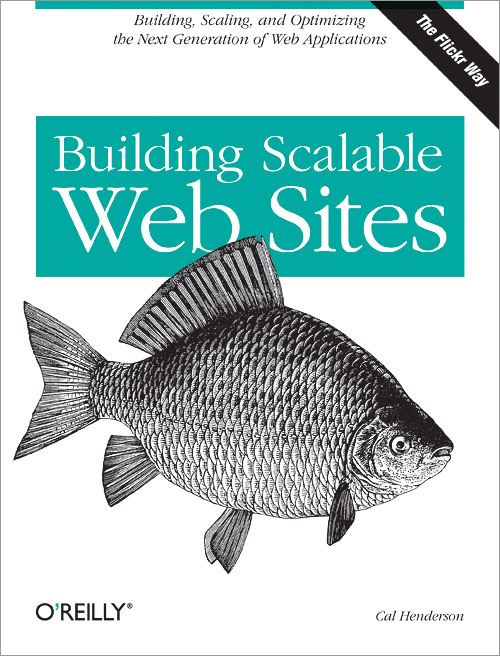
Building Scalable Web Sites, by Cal Henderson

I love this book! There, I’ve given away the clincher already.

Truth is, the writing is addictive. Once I picked it up, it was hard to tear myself away. Perhaps it’s because I’m fascinated with the subject matter, but boy, the writing style ain’t too shabby either. It’s easy on the eyes, and easy on the brain. You just start reading, and go on reading. There are no stumbling blocks, just nice, smooth writing that encourages you to keep moving on as you’re reading.

Let’s face it, which web developer out there doesn’t want to find out how to build scalable websites? Don’t we all dream that our sites or web apps will hit it big, and we’ll have to start planning how to expand? Well, this book will show you how. No, this book won’t show you how to code such sites. There are so many languages out there, it’d be impossible to do that in a book. And besides, code and its structure varies wildly based on the application you’re building. The load imposed on the server varies as well, based on the nature of your application. Some require more RAM, others crave more disk space, others are cuckoo for I/O… you get the point.

What this book will do is to set you straight: what is scalability, and how it’s done, from scratch to finished product, from hardware planning to software planning. It’s all laid out, and it’s easy to understand. Oh heck, Cal even explains what a web application is. And he’ll shatter a few myths, such as this: scalability and performance aren’t the same thing. And, PHP can be used in scalable applications. What?! The heresy! Only Java is scalable, right? Nope.

You’ll also learn things such as… Which scaling (vertical or horizontal) is more cost and resource-effective? How do you load balance with both software and hardware? What in the world is involved when exposing web services? Well, it’s not about nerds flashing in the server room, that’s for sure. How should you react when someone pulls an RPC on your XML? Should you wash it with SOAP, or should you cry API Abuse? Is a data cache a good thing? Should you worry about your database slaves? Should you buy cheap machines like Google, or should you spend your cash on real servers? Read the book, and find out the answers to all these captivating questions.

By my estimate, most people interested in the subject will manage to read the book in less than a week, and that’s with leisurely reading in the evenings. That’s more than I can say about many tech books, where you get bogged down trying to understand the code and what it’s doing. This book is instructive, entertaining, and intellectually enriching. Cal has a lot of knowledge in building scalable websites, and there’ll be no mistaking that when you pick up the book. This fellow speaks from personal experience. Do yourself a favor, and don’t build a hamstrung site. Read this book first!

Standard
Lists

The Best of the Joy of Tech!

If you like JoT, or if you like comics and/or Macs, then you’ll love this book! 🙂 And at $16.95, it’s a steal.

The Best of the Joy of Tech book

Standard