Reviews

Hardware preview: DroboElite

Drobo Pro side

Updated 1/14/19: I have revised my opinion of Drobo devices. After experiencing multiple, serious data loss events on multiple Drobo models, even recent ones, I no longer consider them safe for my data.

Today, November 23, 2009, the new DroboElite becomes available from Data Robotics. It’s the top of the ladder when it comes to their product line: it’s the fastest, biggest, most configurable SAN they’ve got, and it eats terabytes for breakfast. It’s got multi-host support, dual Gigabit Ethernet ports, and it can have up to 255 Smart Volumes.

Background

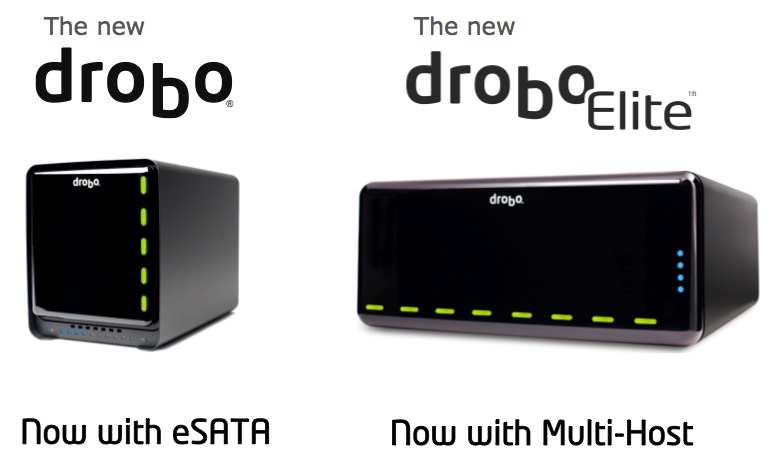
Data Robotics launched the original Drobo in mid-2007, then upgraded that to what we call the Firewire Drobo toward the end of 2008, introduced the DroboPro in April 2009, and now they’re launching the DroboElite, which you can see here, and the Drobo S, addressed in a separate post, also published today.
drobo-s-and-droboelite

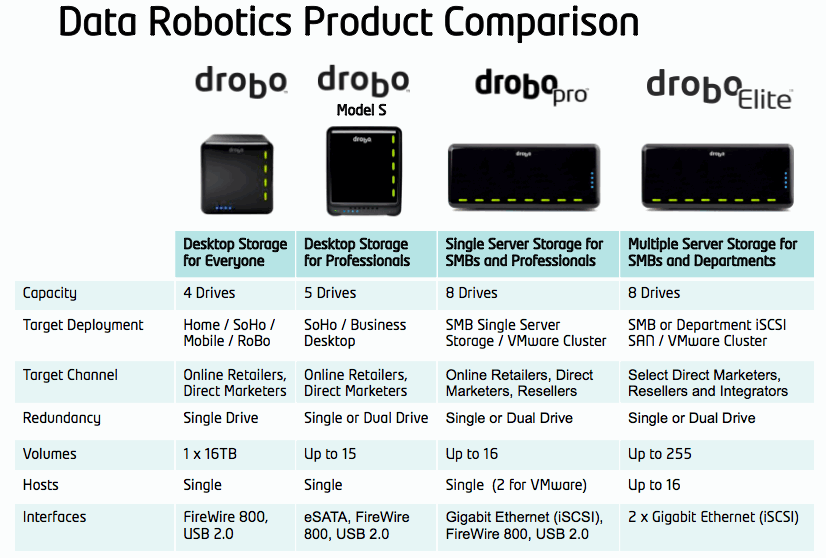
This means the company now has four great pieces of hardware in their product line, geared toward different groups of consumers, starting with the desktop storage needs of the media-heavy consumer and going all the way to companies’ server rooms:

  1. Drobo,
  2. Drobo S,
  3. DroboPro and
  4. DroboElite

Design

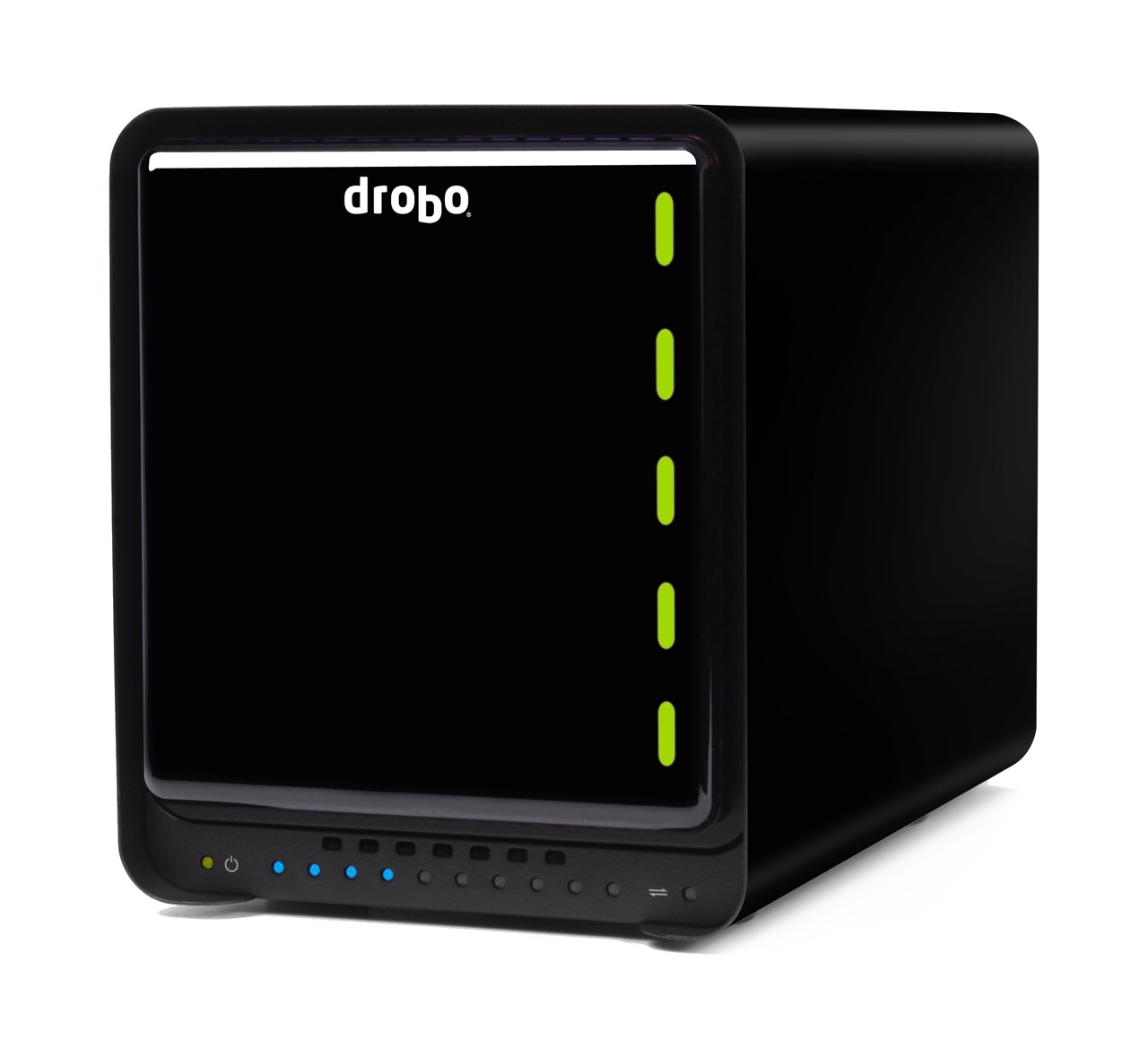
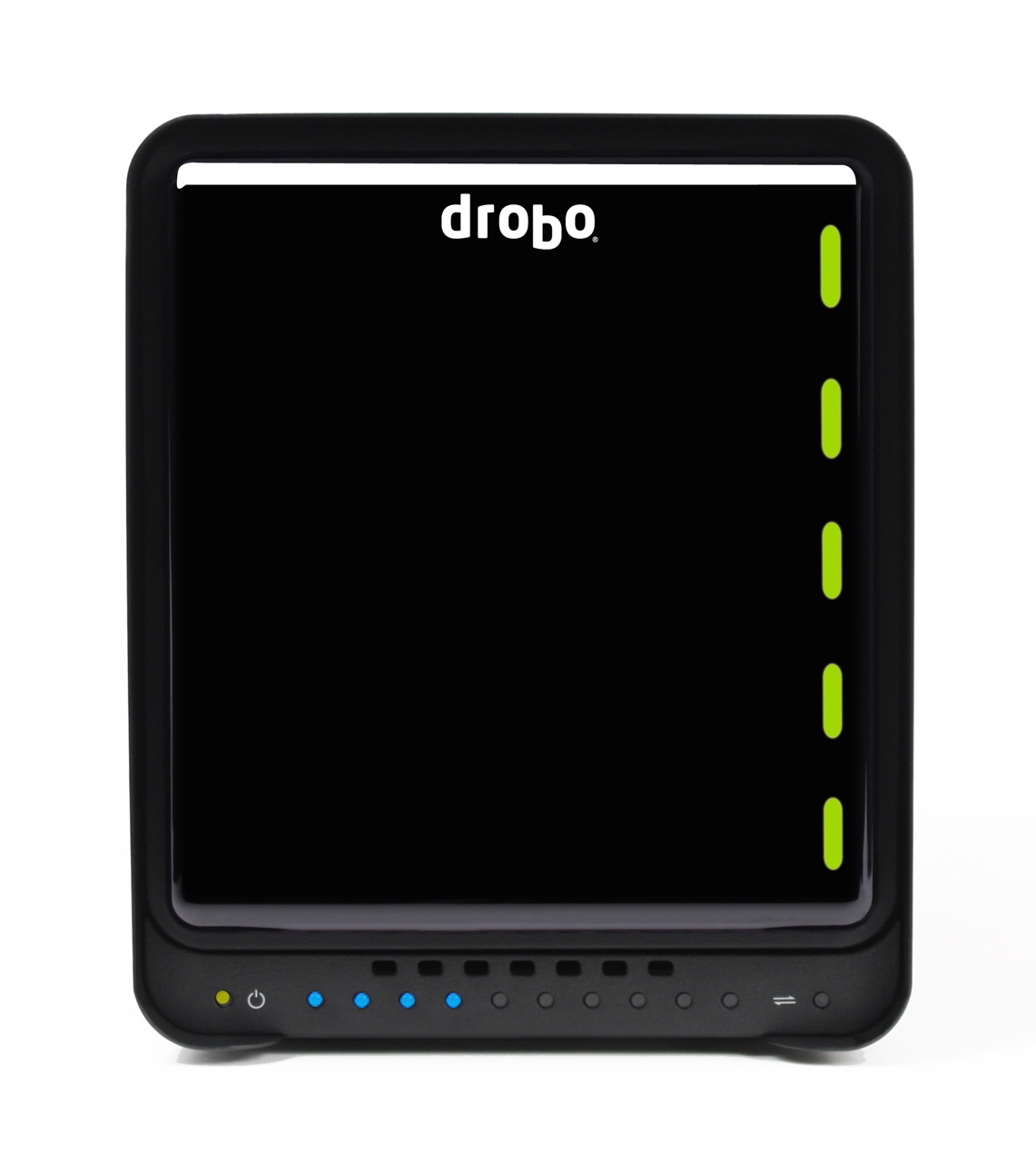
The front of the DroboElite is identical to that of the DroboPro. The dimensions are the same — and they’d have to be, since it needs to fit into a 3U rack space and take the same rack mounting kit as the DroboPro. The weight is also the same: 16 lbs. 3 oz.
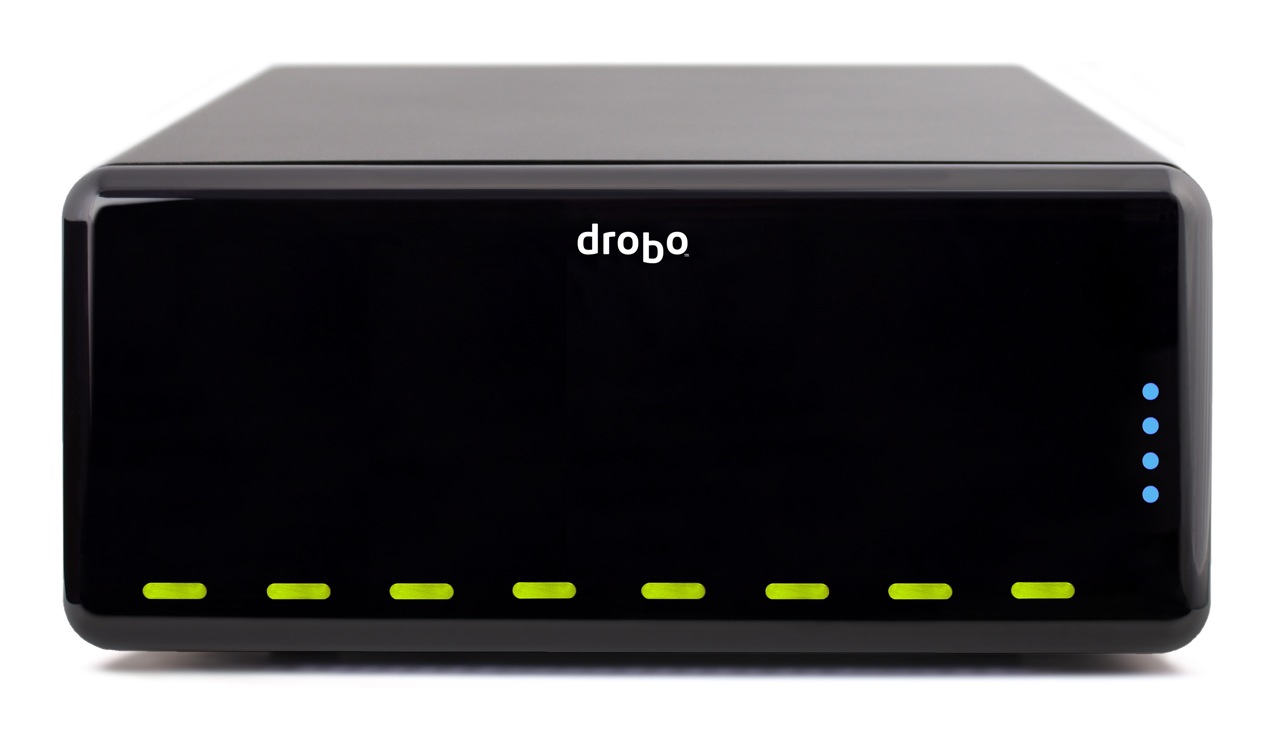
Drobo Pro top

Things are different in the back though. What you’ll see there is a lack of Firewire and the addition of a second Gigabit Ethernet port. The USB port has also been downgraded to the role of diagnostics. As you’ll see in a bit, there’s a reason for this change.
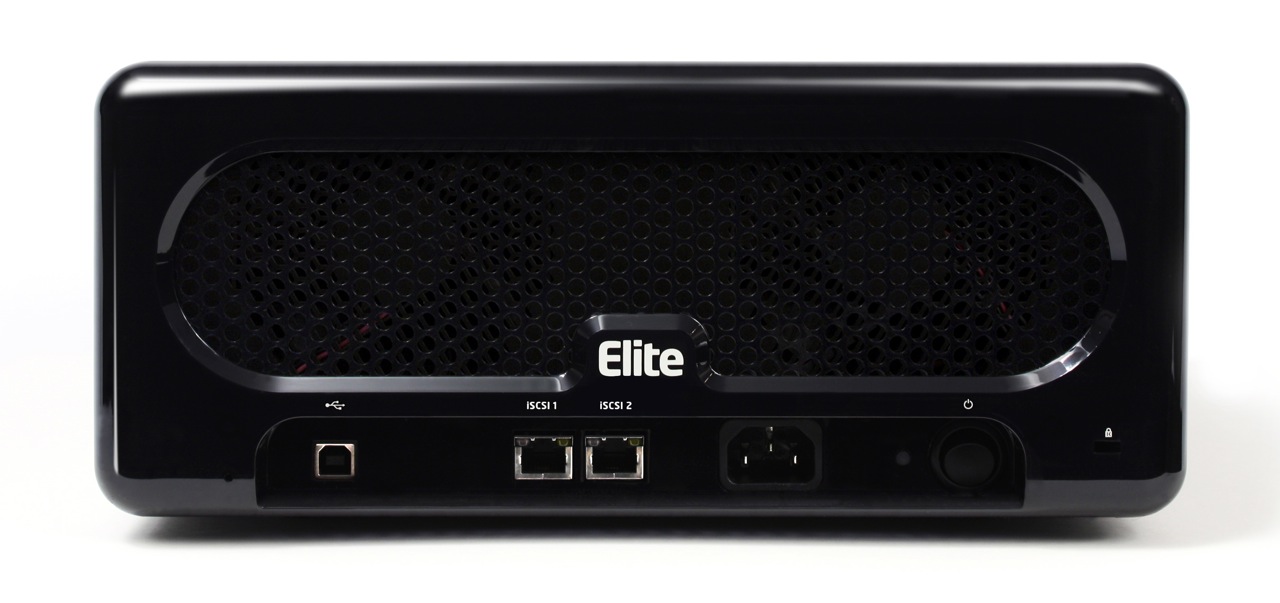
A side-by-side comparison of the backs of the DroboPro and the DroboElite makes the changes even clearer.
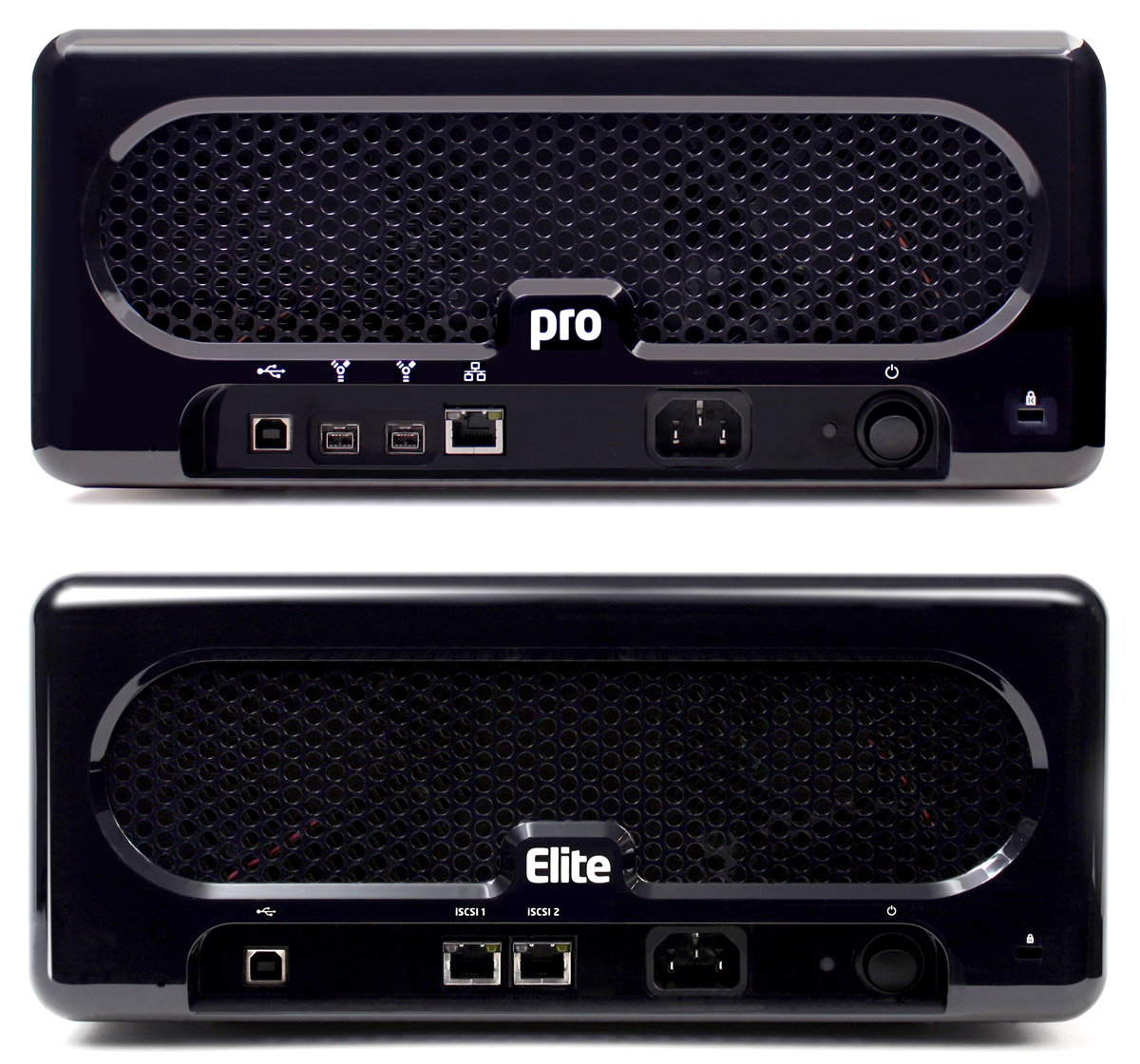
drobo-pro-and-drobo-elite

The inside of the DroboElite is once again identical to that of the DroboPro. There are eight drive slots, arranged vertically, plus the usual power, activity and action indicator lights.
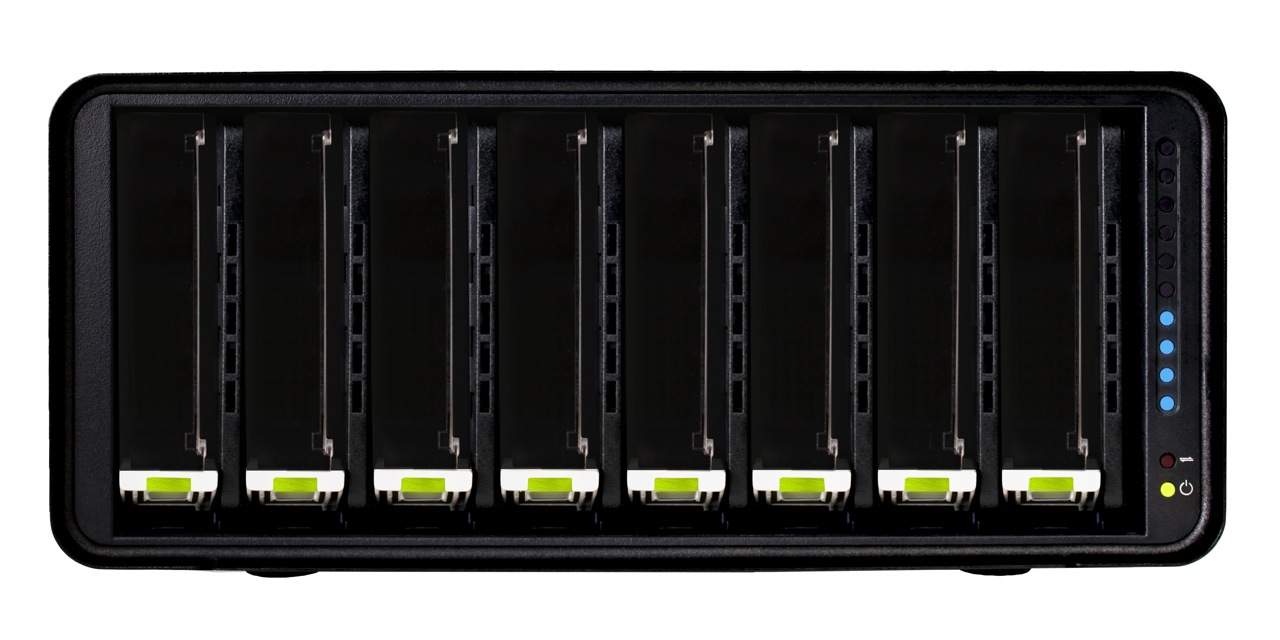
Drobo Pro cover off

Performance

The DroboElite, like the DroboPro, is aimed toward SMBs, who are facing increasing data storage and virtualization needs, increasingly complex systems and limited budges. Also like the DroboPro, the DroboElite aims to make reliable storage dead simple. The eight-drive array in these two devices is self-managing and self-healing, and can be configured in single or dual-drive redundancy. It’s scalable, and with Smart Volumes, incredibly flexible. There’s no need for partitioning or file system expansion — a serious problem with traditional SANs.

droboelite-thin-provisioning

Having dealt with the problem of rigid LUN configurations, which lead to frequent and cumbersome free space issues, the Drobo’s ability to use a common drive pool for its Smart Volumes, and to reclaim deleted data blocks without any intervention from system admins is a Godsend.

For those of us familiar with the Drobo, it’s easy to overlook its amazingly easy upgrade path, where SATA drives of any capacity and brand can be added at any time, resulting in lower costs and no time and effort lost for needless data migrations.

If you’ve looked at the DroboPro, and now you wonder what the DroboElite brings to the table, there are three significant advantages to the latter:

  1. Multi-host connectivity: whereas the DroboPro could only be connected to a single host (two if using VMware), the DroboElite can connect to 16 different hosts.
  2. Higher performance: thanks to its dual Gigabit Ethernet ports, a host of advanced capabilities were put in for the express purpose of speeding up its bandwidth. The DroboElite offers up to 50% faster throughput than the DroboPro. That’s also the reason the FireWire interface was dropped, and the USB interface was downgraded to diagnostics-only. This machine was built to run on a fast Gigabit network and to give you the most speed possible through it, up to 200 MB/sec, as a matter of fact, which trumps any other sort of current interface, by far.
  3. More Smart Volumes: the Drobo Pro can only accommodate up to 16 SVs, but the DroboElite will let you configure up to 255 SVs, all of them using a common drive pool and automatically reclaiming deleted disk space.
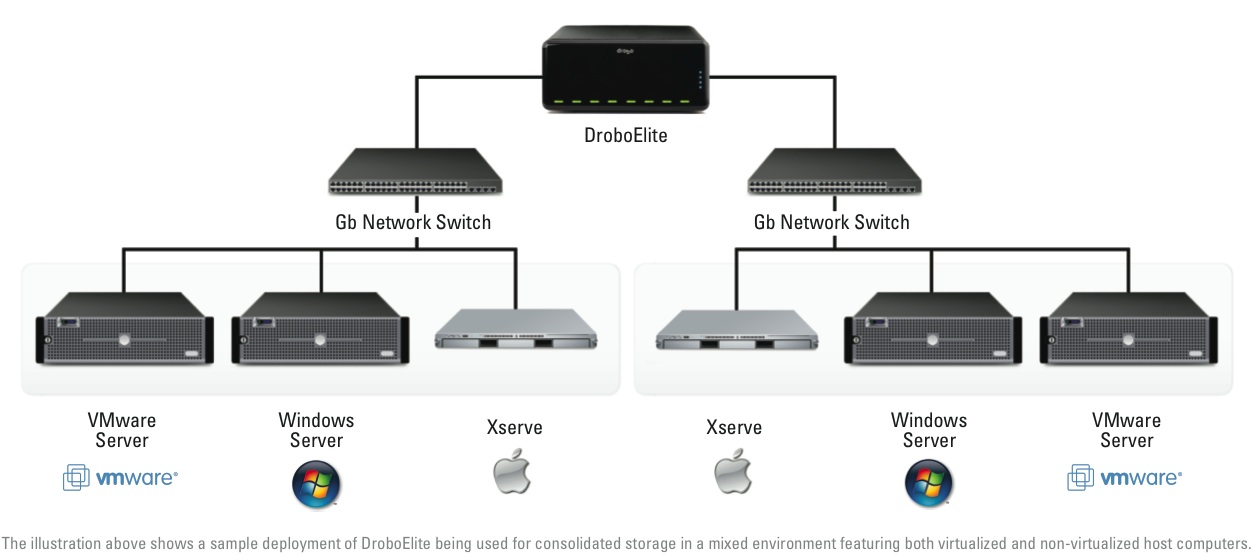
droboelite-consolidated-storage

If we look toward the future and other possible improvements to the DroboElite, perhaps Light Peak might play a role in that (see my Drobo S review for more on Light Peak and the Drobo). Still, since this is a network device, and networks are still Gigabit at best, even if direct DroboElite-to-host connections are made with Light Peak, there’s still the Ethernet bottleneck. It’ll be interesting to see how this gets resolved over time, and I’m sure plenty of people are already at work on this problem already.

Pricing and Availability

The DroboElite has a suggested price of $3,499 by itself, or $5,899 with an 8×2 TB drive bundle, for a total capacity of 16 TB. Because it’s a more specialized product, it will only be sold through select direct marketers, resellers and integrators such as Synnex, Bell Micro and Ingram Micro. It is available for purchase immediately, provided initial stocks aren’t sold out.

The DroboElite is also available with a rackmount kit, just like the DroboPro. The whole assembly will take up 3Us in a standard 19″ server rack.

Drobo Pro rackmount kit

drobo-pricing-and-availability

The DroboElite is available for purchase from Amazon or B&H Photo and other retailers.

Images used courtesy of Data Robotics. Side-by-side comparison shots were created by me, using press images from Data Robotics, so please obtain my permission if you’d like to use them elsewhere.
Standard
Reviews

Hardware preview: Drobo S

Drobo_S_Right_Hi

Updated 1/14/19: I have revised my opinion of Drobo devices. After experiencing multiple, serious data loss events on multiple Drobo models, even recent ones, I no longer consider them safe for my data.

Today, November 23, 2009, the new Drobo S says hello to the world. It’s a supercharged, triple interface version of the 2nd-generation (FW800) Drobo, with eSATA, FW800, USB 2.0, a faster processor, 5 drive bays and dual drive redundancy. It combines the best of both worlds — the smaller form factor of the regular Drobo with the larger capacity, speed and data protection of the DroboPro. Data Robotics summarizes this as “more capacity, more protection and more performance”.

Excuse my little pat on the back here, but when I first heard that Data Robotics was getting ready for a new product launch, an eSATA interface was the first thing that came to my mind. I’m glad to see I was right.

Background

Data Robotics launched the original Drobo in mid-2007, then upgraded that to what we call the Firewire Drobo toward the end of 2008, introduced the DroboPro in April 2009, and now they’re launching the Drobo S, which you can see here, and the DroboElite, addressed in a separate post, also published today.

drobo-s-and-droboelite

This means the company now has four pieces of hardware in their product line, geared toward different groups of consumers, starting with the desktop storage needs of the media-heavy consumer and going all the way to companies’ server rooms:

  1. Drobo,
  2. Drobo S,
  3. DroboPro and
  4. DroboElite

data-robotics-product-comparison

Design

Let’s first look at the exterior of the new Drobo S, to see what’s changed there. On its front side, you’ll notice the bezel is different. Whereas the trademark magnetic cover was flush with the metal bezel of the enclosure, now it’s recessed and no longer covers the entire front surface. The capacity meter was kept at the bottom of the enclosure, but it’s no longer underneath the plastic cover, which was kept square rather than made rectangular, to fit the now-taller Drobo. The power and transfer lights were also made visible and placed inline with the capacity meter. A row of vents was added above the capacity meter, to pull in cool air for the drive bays.

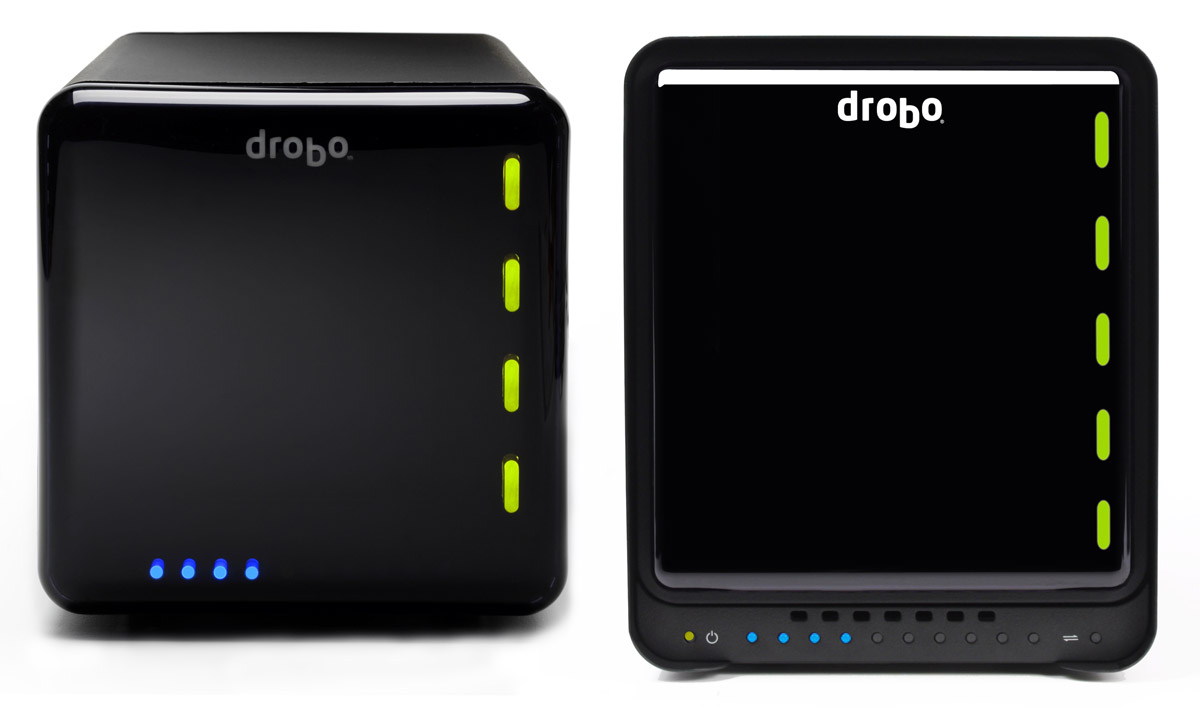
The new dimensions are 5.9″ wide x 7.3″ tall x 10.3″ long, as compared to the regular Drobo’s 6.3″ wide x 6.3″ tall x 10.7″ long. This makes the new Drobo S thinner and shorter than the regular Drobo, in spite of its 5 drive bays and the new eSATA interface. It is taller, though only by a single inch (2.54 cm). That’s an achievement in my book, and I’m sure the Drobo engineers spent quite a bit of time planning out the hardware layout. Kudos to them. The differences are made readily apparent when we look at the regular Drobo and the Drobo S side-by-side. Keep in mind the scale may be a bit off in real life, since I took two separate images and put them together in Photoshop for this article. This image isn’t an official one from Data Robotics, though the individual images are.

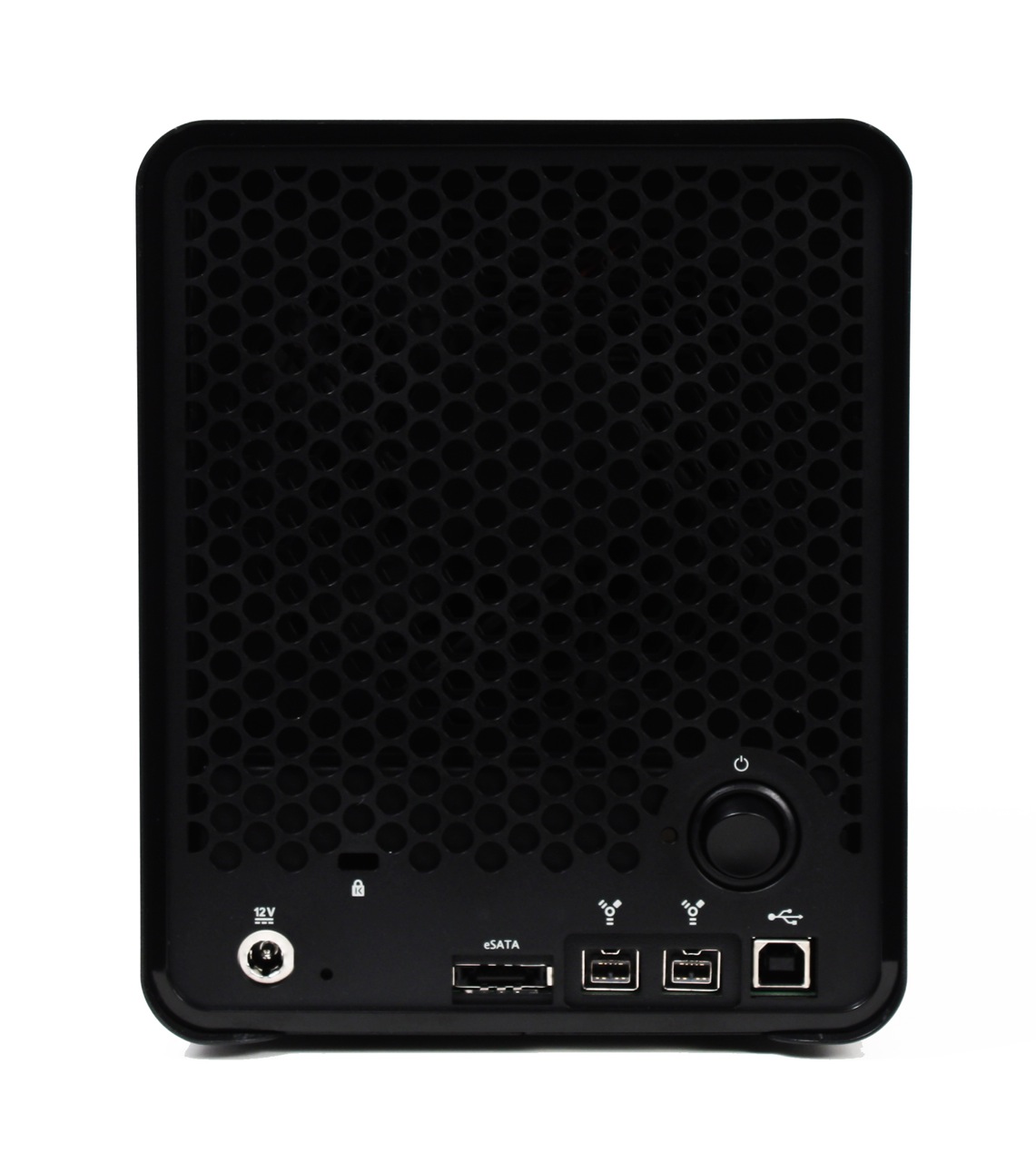
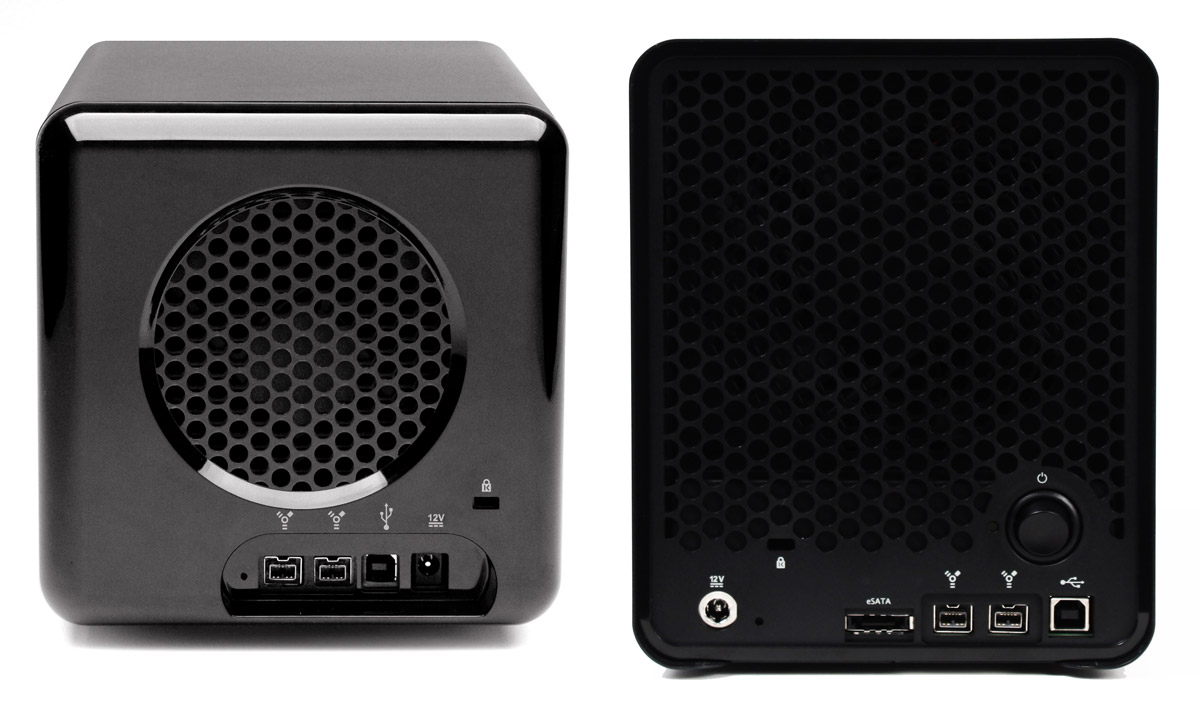
On the back of the new Drobo, we can see a much larger cooling grille, which makes sense given what we’ve discussed above. We also see something new, something which I’ve only seen on the DroboPro so far: a power switch. Then we see the rest of the stuff we expected, like the power connection (which is now marked by a shiny metal circle), the reset switch, the cable lock slot, and, of course, the triple interfaces: eSATA, Firewire 800 and USB 2.0.

Let’s look at a side-by-side comparison of the backs of the Drobo S and the regular Drobo, so we can see the differences in the design.

drobo-and-drobo-s-back

When I look at the Drobo S from all these angles, I’d say its design is much sleeker and more streamlined than that of the regular Drobo. There’s no doubt about it, I love it. I felt from the start that Drobo made storage sexy. There are very few storage enclosures on the market that look really good, and Drobo has looked great from the start. When you combine those looks with its amazing capabilities, the result is well worth my money.

You know what else? I think a future iteration of the regular Drobo’s enclosure will include the design elements of the Drobo S. I also believe at some point this same, newer design philosophy will be carried forward to the DroboPro and the new DroboElite.

Let’s look behind the front cover, to see how things look over there.

Drobo_S_Open_Hi

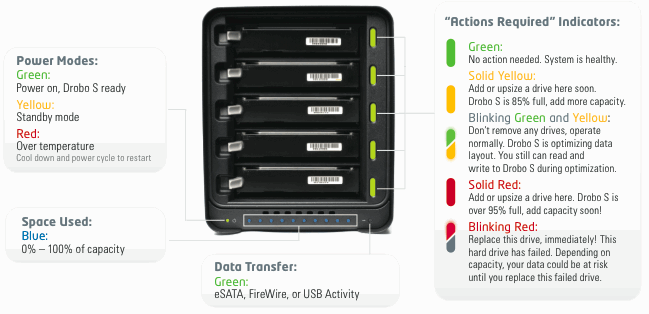
The five drive bays are clearly visible here, as well as the five action indicator lights, as Data Robotics calls them. On the Drobo S, the indicator lights give more status messages than on the regular Drobo, because each light is capable of displaying two colors at the same time. You can see what I mean by looking at this indicator scheme.

drobo-s-lights

Performance

Now let’s talk about performance. Clearly, with an eSATA port, the new Drobo S must also have the capability to stomach all that data that comes at it. It must be able to process all of it and write it to the drives fast enough to make the new interface worth getting. I haven’t tested the Drobo S in person (yet?) but Data Robotics says the new eSATA interface is “up to 50% faster than FireWire 800“. On the Drobo S, the FireWire 800 interface is also faster than on previous hardware, “up to 25% faster“. All these speeds are due to a new, faster processor that can crunch all of those data bits just as quickly as they get to it, writing each of them across the five drive bays.

In my phone conference with Mark Fuccio from Data Robotics, I asked him why Data Robotics hadn’t included a Gigabit Ethernet interface so that Drobo S could also be a NAS device. He explained that the direct-attach market is 4x bigger than the NAS market, so DRI will always go for that market first, and second, the eSATA interface on the Drobo S is faster than is possible going through file sharing protocols like Windows SMB or Apple’s AFP. The Drobo S has “performance ranges between 70-90 MB/sec or approximately 80-90% of the performance of the DroboPro’s iSCSI connection”.

I also asked him what he thought about Light Peak, and if we might see that in the Drobo as another interface next year. He didn’t say no, but he also didn’t promise anything, which was expected. He said it’s likely that DR will build it into the Drobo when and if Intel finalizes the specs and starts to make it available to companies.

It’s important to mention two features of the Drobo S which are just plain wonderful. One is the dual-drive redundancy, which is a feature borrowed from the DroboPro and is so important for those of us who absolutely must protect our data, or else. You can switch back and forth between single-drive and dual-drive redundancy at any time, but keep in mind there’s a capacity trade-off in dual-drive redundancy mode — that is, you get less available free space since the Drobo must now make sure your data is protected against two drive failures.

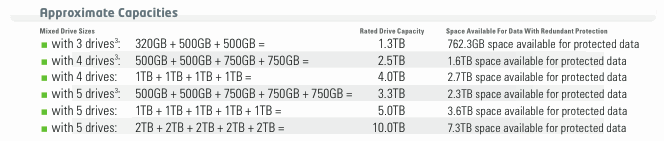
Dual drive redundancy is something Data Robotics was able to offer because it included five drive bays on the Drobo S. It would have been overkill on a four-drive unit, because it would have meant even less available space. Another effect of this dual drive redundancy is more capacity, up to 10 TB, as a matter of fact, given current hard drive specs. With five 2 TB drives in the Drobo S, you would indeed have 10 TB of space, but only 7.3 TB would be available for your data; the rest would be kept for data redundancy. Consult the handy chart below to see approximate capacities given typical drive combinations.

drobo-s-capacity

The second feature worth mentioning is the self-healing technology included with the Drobo S (also available in the DroboPro and DroboElite), which works as follows:

Even when sitting idle, Drobo S will continually examine the blocks and sectors on every drive, flagging questionable areas. This preemptive “scrubbing” helps ensure your data is being written only to the healthy areas of your drives, and that your data is always safe. Even if a drive fails, Drobo S keeps your data in the safest state possible, utilizing the available space on the remaining healthy drives.

I’d like to know if you get that with any other storage device on the market today. Compare it with RAID 0, where even if your drives don’t fail, any hardware or processor mistake in writing the correct bit sequences to the stripes will cause data corruption, leading to data loss.

Drobo_S_Left_Hi

Pricing and Availability

I was told the Drobo S will be available right away, as of today. It’s possible that initial supplies will be sold out, but more units will become available later. Suggested retail price is $799 for the Drobo S itself, or $1,799 for the Drobo S loaded with 5×2 TB drives. Although the price may seem high, keep in mind that at 10 TB capacity, it’s only 18 cents per GB for the Drobo S and the drives, together.

The Drobo S is available for purchase from Amazon or from B&H Photo.

Images used courtesy of Data Robotics. Side-by-side comparison shots were created by me, using press images from Data Robotics, so please obtain my permission if you’d like to use them elsewhere.
Standard
Reviews

Drobo Dashboard 1.5.1 sends alerts via Growl

Drobo owners who are also Mac users are in for a nice surprise when they upgrade to the new version of the Drobo Dashboard software (1.5.1). They now have the option to see Drobo alerts via Growl.

drobo-dashboard-advanced-controls

Another neat option is the ability to rename the Drobo and its volumes from within the Dashboard software, as you can see above. The interface itself has also been made cleaner. I like it.

drobo-dashboard-151

Standard
How To

Connect two Drobo units to your computer at the same time?

Updated 1/14/19: I have revised my opinion of Drobo devices. After experiencing multiple, serious data loss events on multiple Drobo models, even recent ones, I no longer consider them safe for my data.

One of my readers asked me a little more than a month ago if I could post some screenshots of the Drobo Dashboard with two Drobos connected at the same time. Sure, no problem. It’s easily doable, and the Dashboard software automatically differentiates between each of them and displays the proper stats for each, even if they’re name the same. I haven’t tried it yet, but you could probably connect three Drobos at the same time if you wanted to.

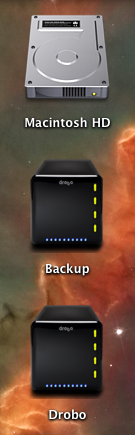
Here’s what the drive icons look like on my MBP’s desktop.

mbp-drive-icons

The main screen inside the Drobo Dashboard software will display buttons for each connected Drobo, allowing you to switch between them as needed.

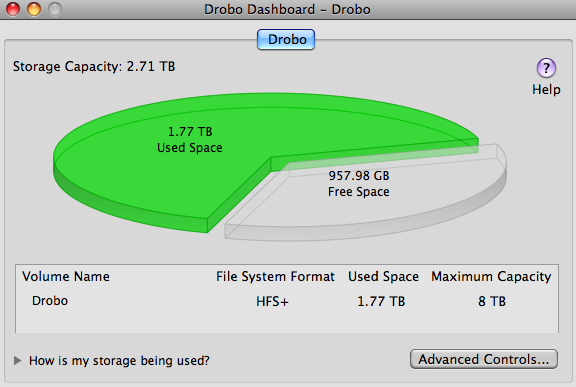
drobo-dashboard-drobo

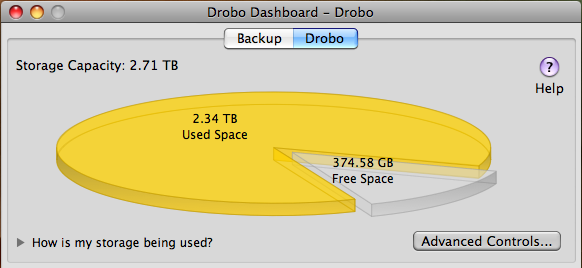
drobo-dashboard-backup

As you can see, I need to either free up some space on my main Drobo or get some new drives. Using the Drobolator, it turns out I’d need to get two new drives (either 1.5TB or 2TB each) in order to see any increase in the available space.

The Advanced Controls screens inside the Drobo Dashboard show the drive layouts inside each Drobo.

advanced-controls-drobo

advanced-controls-backup

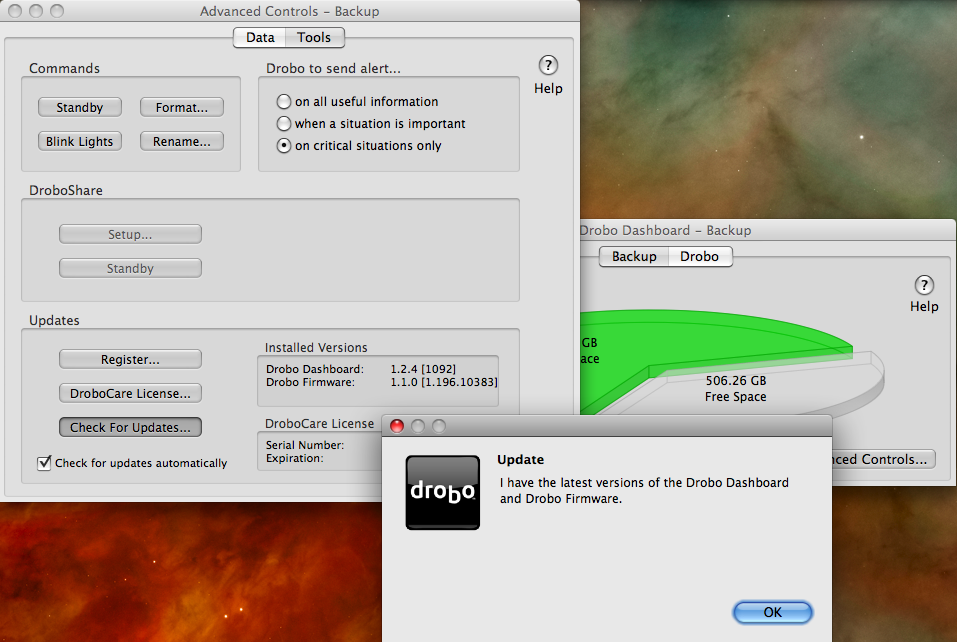
I’d like to point out a possible bug in the Drobo Dashboard software while I’m at this. As you can see on the following screenshot, when I click on the Check for Updates button to see if there’s a firmware upgrade for my Backup Drobo, which is a USB-only unit, I get a message which tells me both the Dashboard and the firmware are up to date, when I know that the firmware is out of date, as you can see from the firmware version itself. I’ve often had to perform manual firmware upgrades to my Drobos, because I keep getting this message in error. I hope this bug can be resolved at some point.

drobo-dashboard-check-for-updates-error

Other than that, the Drobo Dashboard software works as expected, and can work with multiple Drobo units as well. No problems there.

Update: After doing a manual upgrade to firmware version 1.2.4, the automatic check for updates from within the Drobo Dashboard worked, and when my Drobo rebooted, I was prompted to upgrade to 1.3.0. After an initial unsuccesful attempt, I was able to upgrade just fine. One less item on my to-do list. Good.

drobo-dashboard-new-firmware-notice

Standard
Reviews

Hardware preview: DroboPro

Updated 1/14/19: I have revised my opinion of Drobo devices. After experiencing multiple, serious data loss events on multiple Drobo models, even recent ones, I no longer consider them safe for my data.

Updated 11/23/09: The new DroboElite is now available. It differs from the DroboPro because it offers two Gigabit Ethernet ports instead of one, multi-host support, and up to 255 Smart Volumes.

Today, April 7, 2009, Data Robotics launches a new product aimed at professionals and SMBs: the DroboPro. I got a preview of it yesterday. Let me share what I learned with you.

Drobo Pro top

The DroboPro has some really cool features, some of which I, along with others, anticipated and looked forward to seeing. As I wrote in my review of the Firewire Drobo, Data Robotics was looking at making an 8-drive Drobo, possibly rack-mounted. I also thought they might introduce the capability to safeguard against two drive failures. And, as I wrote in this comment on that same review, in response to a reader’s wishlist for the Drobo, I thought they might at some point build networking capabilities right inside the Drobo.

Well, the new DroboPro does all those things and more!

  • 8 (eight) drives
  • 2 form factors: desktop and rackmount
  • Dual drive redundancy
  • Gigabit ethernet
  • iSCSI
  • Smart volumes: create up to 16 different virtual volumes, each of which can grow to 16TB
  • Price is $1,299 for entry level DroboPro or $3,999 for a loaded model with eight 2TB drives
  • Instant $200 rebate with customer loyalty program

Let’s dive into those new features a bit. Keep in mind my knowledge is as yet limited, since I haven’t seen the full specs; I only had a phone briefing.

8 drives

You know how the drives are arranged horizontally in the regular Drobo? They’re arranged vertically in the new DroboPro, which is about the same height, and a little less than twice the width of the original.

Drobo Pro cover off

Two form factors

The DroboPro comes in a desktop form factor which is 12.17″ wide, 5.46″ high and 14.1″ long. The length is about 3″ more than that of the original Drobo. I think the extra space houses the additional circuitry for the network, power supply and other features.

The other form factor is a rackmount with a 3U height. If I understood correctly, the rackmount kit can be attached and detached as needed, so you can interconvert between the two form factors if you like.

DroboPro dimensions

Drobo Pro rackmount kit

Built-in power supply

One thing that’s easy to miss if you look at the back of the DroboPro is that it no longer has a DC adaptor port, but a regular 120-240V connector. Have a look and see. This means the power brick which converts 120-240V AC to 12V DC has been eliminated. You’ll also notice a power switch on the back. That’s new too.

Drobo Pro back

Dual drive redundancy

As it was explained to me, the DroboPro comes standard with single drive redundancy, and the dual drive redundancy is an option that can be turned on at any time. In case you’re not familiar with the concept, this means two of the drives inside the Drobo can fail, and your data will still be safe.

Gigabit ethernet

Business-class networking is now built right into the DroboPro, along with enterprise-class features, like iSCSI with automatic configuration. The ethernet port on the DroboPro does not replicate the functionality of the DroboShare, as I initially thought. It only works through the iSCSI protocol, which means it needs to be mapped directly to a host, like a server or workstation, which can then share it among multiple servers or workstations. In that sense the DroboPro is not a NAS (Network Attached Storage), but a SAN (Storage Area Network).

iSCSI

If you’ve set up iSCSI volumes in the past, then you know how much of a headache they can be, and how bad the performance can be if it’s not set up correctly or if the hardware isn’t working as it should. I know firsthand about this. With the new DroboPro, the iSCSI setup is automatic. It’s as easy as plugging it into the network. The Drobo Dashboard software then finds it and mounts it as a volume on your machine via iSCSI. The work is done behind the scenes so you don’t have to worry.

For Windows, the DroboPro uses the Microsoft iSCSI initiator, and for the Mac, the folks at Data Robotics wrote their own iSCSI initiator. Those of you who work with Xserve and Xsan use Fibre Channel technology to connect to the network volumes, and you may wonder why Data Robotics went with iSCSI. It’s because iSCSI is more utilitarian. It doesn’t require special network hardware to work; it can use the existing ethernet network infrastructure, so there’s a lower cost of entry and maintenance.

I was assured that iSCSI throughput on the DroboPro is very fast. I guess it’s up to us to do some testing once the DroboPro starts to ship, so we can see just how fast it is. See the iSCSI guide on Drobo’s website for more details.

Smart Volumes

With the DroboPro, you can create up to 16 different virtual volumes, each of which can grow to 16TB. This is very important for the enterprise market, where companies want to be able to separate the data onto separate volumes and assign separate access privileges to each. Those of you who are network admins can readily appreciate how useful this is. Those of you who are creatives can also appreciate being able to assign a volume for Time Machine backups, one for videos, one for photos, and so on. Furthermore, each volume can be resized as needed, which is a huge leap forward compared to the difficulty of resizing LUNs set up over RAID volumes.

Price

The entry level DroboPro (enclosure-only) costs $1,299. The high end DroboPro, which includes the rackmount kit, two drive redundancy and is pre-loaded with eight 2TB hard drives for a total of 16TB of space, costs $3,999. There’s also a handy customer loyalty program which will give you an instant $200 rebate if you’ve purchased a Drobo in the past.

Those of you who might balk at the price should compare the features and ease of use of the DroboPro with other comparable products on the market. I’m going to walk you through a different kind of comparison, one that looks at the cost of the original Drobo and the cost of the new DroboPro.

Think of the DroboPro as two regular Drobos in one. The original Drobo is $499 for the enclosure, so that brings the price to $998. The difference between $998 and $1,299 is made up by the additional networking features and the complexity of the circuitry and auto-management algorithms of an 8-drive array. Keep in mind the DroboPro has enterprise-class features like dual drive redundancy, iSCSI and smart virtual volumes. Those features alone warrant charging several hundred dollars to thousands more for it, as other companies who make similar products have already been doing.

Drobo Pro side

Summary

The DroboPro is a fantastic addition to the Drobo line. Its enterprise-class features, its incredible ease of use, and its unmatched storage flexibility make it the perfect external storage solution for busy professionals with serious storage needs or business server rooms. Users will appreciate all of the space it makes available for their work, and system admins will appreciate how easy it is to set up and maintain. From a design point of view, it’s a drool-worthy beauty. Having been a Drobo user for almost 1½ years, I can tell you it is my storage solution of choice, and I look forward to upgrading to a DroboPro some day.

Images used courtesy of Data Robotics.

Standard