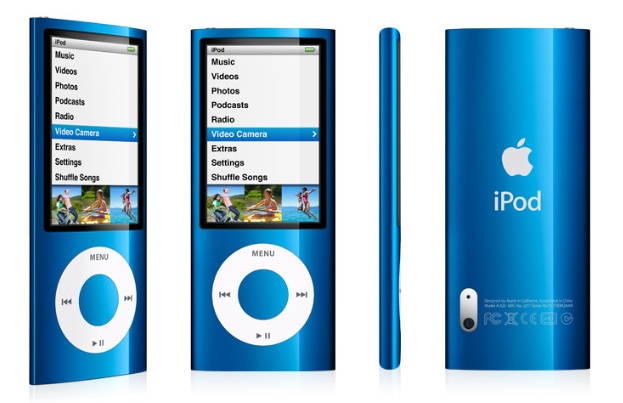
Finally got around to watching the Apple Special Event from 9/9/09, and was very glad to see Steve Jobs back at the helm. As I mulled over what I’d seen, two questions came to mind:
If Apple could place a niftly little camera in the new iPod Nano, why couldn’t they do it sooner for the iPhone? Why so much hedging on that issue? After all, it’s not like video cameras in smartphones were such an exotic item, even back when the first generation iPhones came out.
If the iPod touch and the iPhone are such great gaming platforms, and they run a pared down version of OS X, why can’t I play those same games on my MacBook Pro or my iMac? Granted, I could understand they’re not made for the higher resolutions of a laptop or desktop machine, but still, they’d be running on much better hardware, so they should be screaming fast. Apple’s always had a bad rep for not being a good gaming platform. Seems to me like an easy flick of the switch to let people run those same iPod touch and iPhone games on their Macs and get more bang for their bucks. Or is this coming down the pike in the near future?
Built between 1887 and 1889 by French engineer Gustave Eiffel, the tower has since become the most recognizable landmark (and the most visited) in the world. For its size, the tower is amazingly light — its mass is less than the mass of the air contained in a cylinder of the same size. For its time, the system for joining the metal girders together was truly innovative, and was inspired by the design ideas of a Romanian engineer named Gheorghe Panculescu.
Eiffel Tower Girders, 1889
The shape of the tower was dictated purely by mathematics, and the primary design goal was wind resistance. Eiffel and the other engineers wanted to make sure it could withstand strong winds, being at the time the tallest building in the world. Being a very tall building, made almost entirely of metal, it’s also a very large lightning rod, which attracts amazing lightning bolts, as you can see in this photo from 1902.
Lightning striking the Eiffel Tower, 1902
Also interesting is the use of the tower as a radio antenna. Over time, antennas were mounted to the tower, or the tower itself was used as a large antenna for radio communications. In 1910, the first cosmic rays were observed with the aid of the tower by Father Theodore Wulf. Nowadays, 9 radio and TV stations broadcast content with the aid of the tower.
This year, the French celebrated the tower’s 120th anniversary on Bastille Day. A concert by Johnny Hallyday was held at night, while fireworks blazed forth from the tower. It was an amazing lightshow, captured fittingly by Alta Media Productions and Toys Prophet, two Vimeo users. You can see their videos below. Taken from different vantage points, one focuses on the Paris nightscape and the tower lightshow, while the other captures the interaction of people with the evening’s events.
I haven’t yet visited the Eiffel Tower, and I look forward to doing it someday. It’s a structure unlike any other. When you think of it in the context of architectural design, it fits into no category. Its design is pure engineering, with no allowances for the niceties of normal architecture. Sure, it’s been adapted for human use over time, and you can even eat there now, but these are all add-ons, insignificant to the initial design goals. It didn’t fit within the times when it was made, in spite of some of the Victorial wrought iron work it faintly resembles, and it still doesn’t fit within any normal design constraints today, even in post-modernist times. And yet it has become a symbol of architectural design, of Paris, and of French culture, odd as it may be. If nothing else, Gustave Eiffel had serious guts to undertake such a work and to withstand all of the criticism leveled at him during and after the construction of the tower. He was right all along.
Eiffel Tower by briandeadly on Flickr
Historic photos of the Eiffel Tower used here are public domain, obtained courtesy of Wikimedia Commons.
In May, I mentioned CableJive’s new iStubz sync cable in my review of their SoundDock cable, which I’d purchased last year, and I was contacted by Zack, one of the folks at CableJive, who offered to send me an iStubz cable for review. In the interest of full disclosure, please know that the cable I received was a review sample that I got to keep.
Would I have bought one otherwise? Yes. I think that at $7.95 for the 7cm size or at $8.95 for the 20cm size, these cables are a great deal. They fulfill a real need for those of us with iPods and iPhones — namely the need the declutter our desks. They’re much shorter than the standard sync cable that ships from Apple, they work just as well, they’re made from the same materials — thus, they’re perfect for quickly connecting our Apple peripherals to our laptops.
I got my cable in late May, and have been using it ever since. I opted for the 20cm size. I packed my old sync cable and put it away from the very first day after that. It’s useless to me now. The iStubz cable is much more convenient to use, and in terms of design, it comes closer to Apple’s design philosophy than Apple’s own cable.
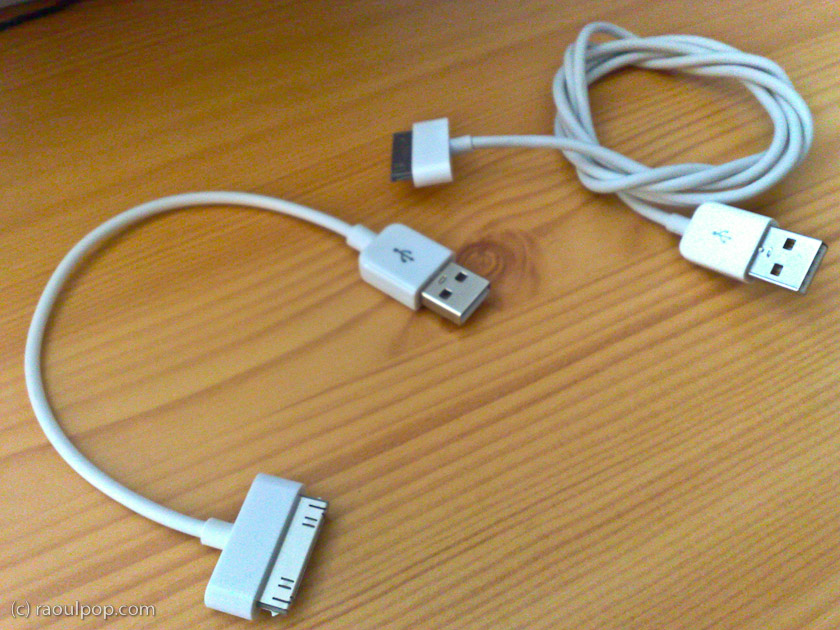
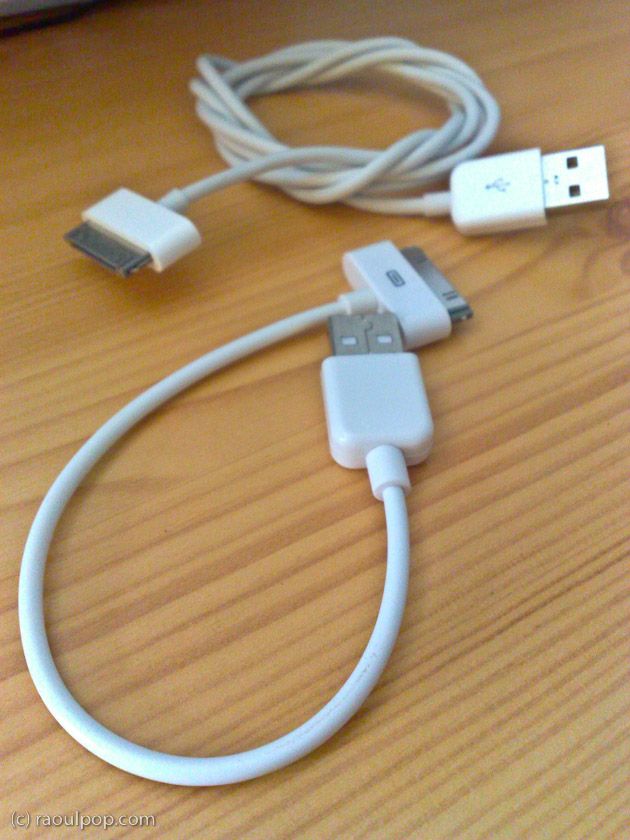
The cable I have can be seen the right side of the picture shown above, or in the two photos shown below. The longer cable, the one used to connect the iPhone to the laptop, is the 20cm one, and the shorter cable, the one used to connect the iPod to the laptop, is the 7cm one.
I had some issues with the sturdiness of my 1st gen SoundDock cable, as you can see if you read my review of it, but these iStubz cables are nothing like it. These are mass produced and very likely made to the same quality standards as the Apple sync cables. I wouldn’t be surprised if they’re made by the same manufacturer.
I took a couple of photos of my own to show you the difference between the iStubz cables and Apple’s standard sync cable. While I’ll agree that sometimes it’s better to use the standard sync cable, such as when you have a desktop computer with USB ports on the back, in most situations, the iStubz cable is all you need to connect your iPod or iPhone to your laptop.
If you want to buy the iStubz cable, you can get it directly from CableJive.
Here is this week’s list of seven cool gadgets. Sorry I couldn’t publish a Gadget Monday edition last week; my schedule was too hectic to accommodate the several hours of research and preparation that are required for each one of these posts.
Sea-Doo Seascooter Explorer
Made for scuba divers, the Seascooter Explorer will pull you through the water at speeds up to 3.3 mph. It has a three-stage speed control, it can dive up to 160 feet, and it’s powered by a rechargeable electric battery that lasts up to two hours. It looks like it’d be fun and easy to use. See the demo video. You can get one for $640.
Lunocet
As long as I’m talking about scuba gear, here’s another cool gadget, the Lunocet. It’s a dolphin-inspired fin for divers that will supposedly allow you to swim at speeds of up to 8 mph underwater. That’s a pretty hefty claim. There’s a demo video on YouTube. I don’t know, with a fin that big, it looks to me like it’d be pretty easy to get muscle cramps if you’re not well trained, and with both feet stuck together onto the fin, you’d be hard-pressed to surface quickly. But, if you know what you’re doing, it should be a pretty cool toy, albeit at the substantial price of $975.
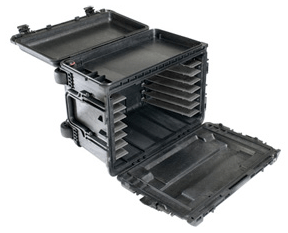
I love tools, and this mobile tool chest from Pelican has me drooling. It’s tough, stackable, can hold up to 150 lbs. of tools, has all sorts of fancy features like pressure equalization valves and the ability to keep tools in place even when it’s turned over, and more. It is somewhat expensive though, at $500.
This decorative rain barrel looks great and has a built-in planter on top as well as a spout on its side. It’s an easy way to save money on your water bills and keep your garden irrigated.
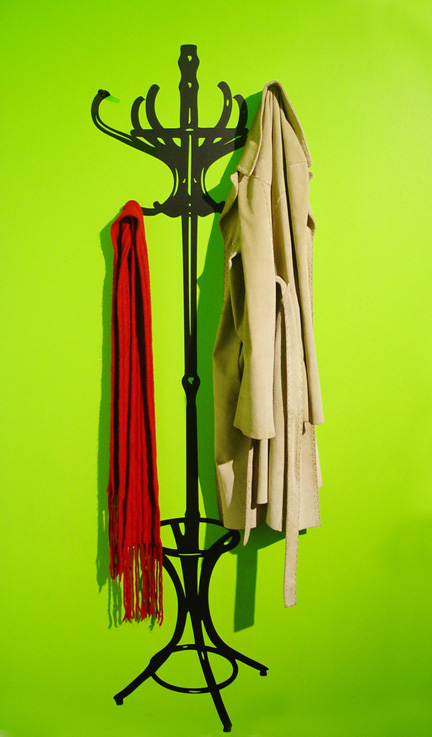
This 2D coat tree is essentially a sticker you place on your wall. It comes with a few hooks that you can install into the wall at specific points where they’re masked by the design, essentially turning the sticker into a usable coat tree. It’s a neat idea, but the price is well-peppered at $109. I guess you’re paying for the design, not the hardware, which is minimal indeed.
This special mug has a separate top compartment that fills up when you tip the mug, allowing you to cool a small portion of the liquid inside the mug before you drink it. It’s a neat idea. You tilt it, then sip it. There’s a demo video that shows you how this works. It sells for $20.
Lamenting the absence of a practical, usable solar car…
In an episode of The Raccoons which aired in 1985, entitled “The Evergreen Grand Prix“, Cedric, one of the protagonists and Cyril Sneer’s son, comes up with a design for an innovative solar car that Cyril promises to mass-produce in a new deal struck with a big car manufacturer, a Mr. Mammoth. Once the manufacturer hears the car is solar-powered, he objects, because he sells other tie-in products like gasoline and oil, and they can’t be used when the fuel source is sunlight.
Cyril quickly changes his mind, trashes his son’s brilliant design, and builds a road-hog prototype instead. When it comes time to demonstrate his prototype’s abilities publicly, Cedric and Bert come up with a surprise. They rebuild the trashed solar car and propose to Cyril that the two prototypes race together to see who wins.
Mr. Mammoth is eager to see what happens, and gives the okay. Naturally — or, I suppose, unnaturally, given the current status quo — the solar car wins, to Cyril’s dismay. The manufacturer then agrees to mass-produce self-assembly kits of the solar car, which goes on to be a great success.
So I ask, given that this episode saw the light of day in 1985, has anything progressed in the area of solar cars since then? After all, it’s been 29 years. That’s a long time, during which many new developments could have been architected. The answer is sadly no.
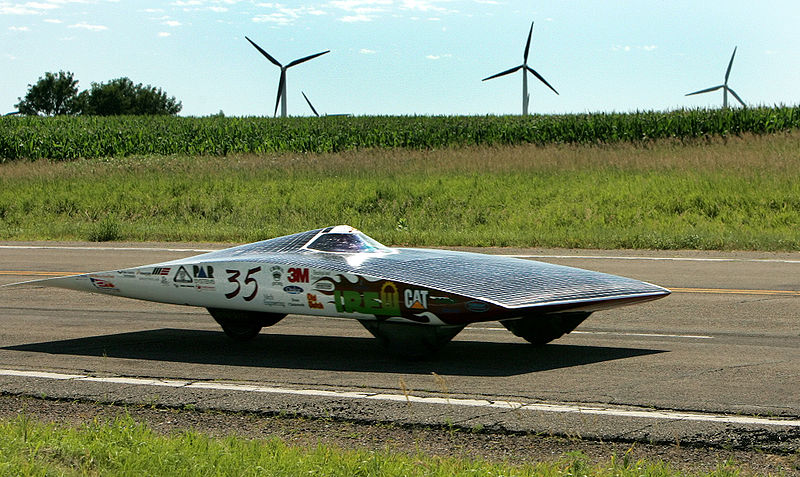
To put things in perspective, the Solar Coaster used a single rectangular solar panel which also doubled as a rear spoiler, and it was enough to make the car “peppy”, as one of the lines in the show went. Today’s solar cars (actually, all solar cars since their inception, sadly) have placed photovoltaic panels over the entire top of the car, and it’s still not enough. They have had to adjust the design radically in order to increase the top surface area, so the cars have no side height at all. They’re basically tapered tops and bottoms, packed full of solar cells, and yet their performance cannot be described as peppy.
I realize the Solar Coaster doesn’t exist. It’s only the fancy of the show’s writers, but still, it’s a good standard by which to judge the solar car’s progress within the last three decades, simply because the idea has been around for that long, if not longer. From my point of view, R&D in photovoltaic cells has stagnated sadly, and this is what’s holding back the solar car. Incredible leaps have been made in computer technology, building technology, and even the performance of petrol-fueled cars, but unfortunately the solar car is still the sickly step child no one likes to play with. To paraphrase Terry from “On the Waterfront”, it could have been a contender; it could have been somebody. [Sorry for the cliché.]
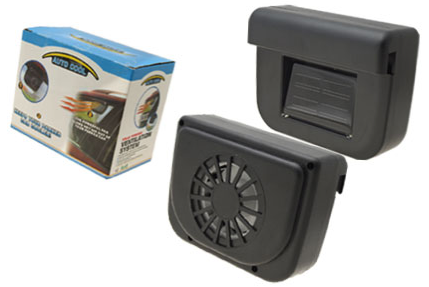
Instead of a serious contender, we’re offered a glorified solar fan in the form of the 2010 Toyota Prius, whose solar cells will be used to cool the car while it’s parked. Thanks, but we’ve had that stuff around since the 80s too.
If you want to watch the full “Evergreen Grand Prix” episode, it’s available on Youtube in three parts: part 1, part 2 and part 3. If you’re seeing this on my site, not on my feed, you can also watch the videos below.











 Raoul Pop