Places

The mole cricket – with better video

Back in May, I wrote about the mole cricket — one of the pests that we have to deal with in our garden — and I posted a short video clip.

Last week, I had the chance to shoot footage of another mole cricket that my wife caught in our garden, and this time I used a camera that could record video in macro mode. The result is definitely worth it — at least I think so. You can see the mole cricket in all its nasty, creepy splendor. Let’s hope you won’t get nightmares. Just think, this little monster can fly. One of them could land on your face at night…

Enjoy!

Standard
Places

The mole cricket

Q: What insect from the Gryllotalpidae family burrows around people’s gardens and eats the roots of freshly planted vegetables?
A: The mole cricket.

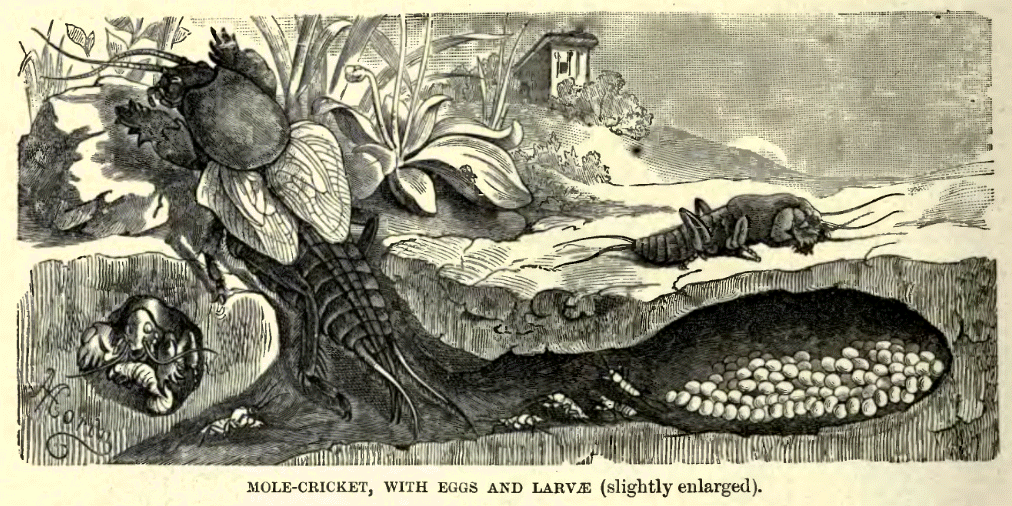
mole-cricket

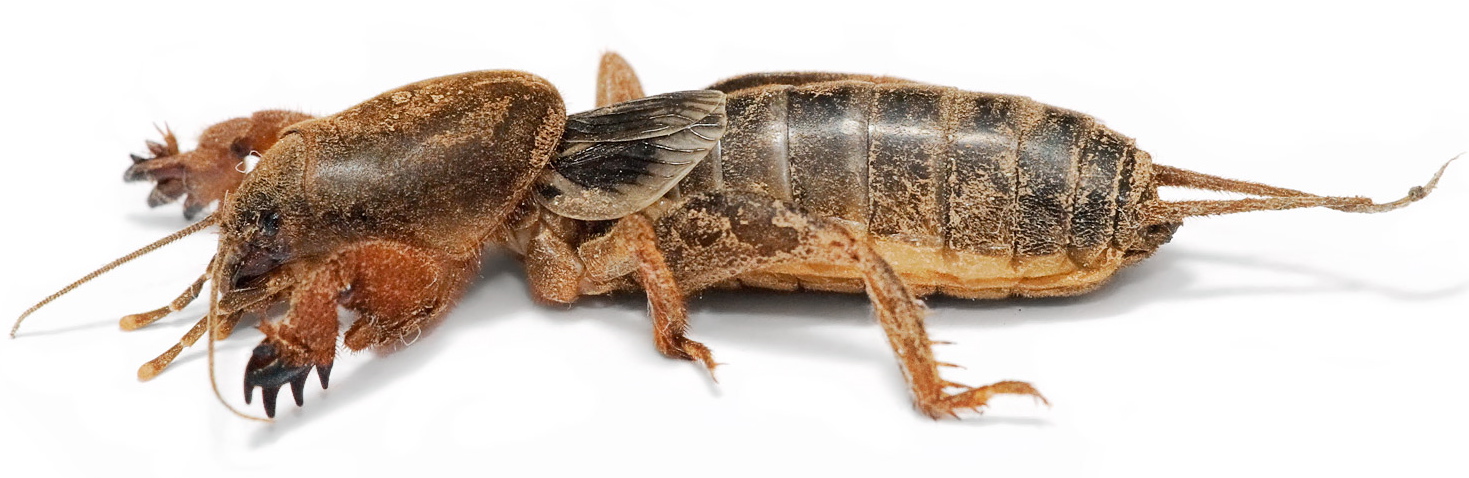
This nasty critter, which grows to 2 inches or more in length (I’ve seen some that were over 3 inches), has strong forelimbs that it uses to dig around in gardens here in Europe. They’re supposed to be omnivores, and they feed on whatever they find. In the spring, they feed quite a bit on the roots of the planted seedlings of tomatoes, peppers, spinach, cabbage and other common garden vegetables and fruits, which means the seedlings die.  They wither and dry out, unable to extract food from the ground since their roots are gone. This also means that your crop, which you, as a gardener, took great care to plant and nourish, is wiped out by some filthy creepy-crawly thing that gives nothing in return and only gets fatter and uglier with each seedling root it shoves in its ravenous mouth.

It is for this very reason that these ugly critters are considered garden pests, and people do what they can to get rid of them. Some put out pesticides, but then you’ve got poisons on your vegetables, and that’s not healthy. Others, like my grandfather, used to go out at night with a flashlight and squash them when they reared their heads from their burrows. Thankfully, they have plenty of natural predators, though you wouldn’t want most of those guys around your garden either — I’m talking about rats, skunks, foxes, armadillos and raccoons. Birds are another of their predators, and they’re definitely welcome in my garden.

My wife caught a mole cricket recently (they’re called “coropisnite” in Romania), and I recorded a short video clip. Sorry the focus isn’t that great — my Nokia N95 doesn’t focus very well in video mode at close distances.

http://vimeo.com/4445113

Updated 7/6/09:

Images used are public domain. Source: Wikipedia.

Standard
Places

National Arboretum

This past May, Ligia and I visited the National Arboretum here in DC. We try to go there at least once a year. The grounds are huge, and they have both outdoors and indoors facilities. Admission is free, and the grounds are open from 8 AM to 5 PM daily, every day of the year except on Christmas.

The National Arboretum was established in 1927 through an Act of Congress. It is administered by the US Department of Agriculture’s Agricultural Research Service. Its mission is to “serve the public need for scientific research, education, and gardens that conserve and showcase plants to enhance the environment”. It sits on 446 acres and has 9.5 miles of roads.

Among its gardens are:

  • Single-genus: azalea, boxwood, daffodil, daylily, dogwood, holly, magnolia, maple, and peony.
  • Major gardens: aquatic plants, the Asian Collections, the Fern Valley Native Plant Collections, the Flowering Tree Collection, the Flowering Tree Walk, the Friendship Garden, the Gotelli Dwarf and Slow-Growing Conifer Collection, the Introduction Garden, the National Bonsai & Penjing Museum, the National Capitol Columns, the National Grove of State Trees, and the National Herb Garden.

If you’re in the area and you haven’t been yet, please visit, it’s worth your time.

Standard
Places

My grandfather's garden

My grandparents on my mother’s side always had a garden, no matter where they lived. They were city folk, and even when they lived in an apartment, they managed a nice little plot of land in the back of the building, where they grew fruits and vegetables. Later, they moved in a house with a big garden, and my grandfather’s obsession with gardening was finally given free rein. He planted everything in there: grapes, tart cherries, cucumbers, tomatoes, rhubarb, berries, parsley, onions, garlic, salad, potatoes, apples — the list could go on, but I can’t find the English words for some of the things that grew (and still grow) there.

Just a few short weeks ago, I visited my grandfather and got to walk through the garden once more. It was bittersweet this time. My grandmother has passed away, and the place is lonelier and more melancholy. But it’s still beautiful, and it’s full of memories for me, since I practically grew up there.

Shortly after taking this photo, I took a pair of scissors, cut down a few bunches and ate them. They were delicious, of course.
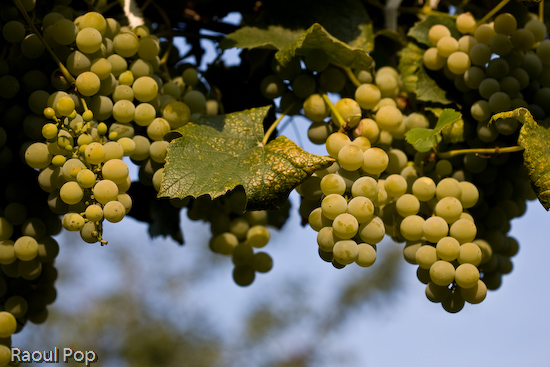
Ripe and ready for the picking

This flower shone so pure and white with the rays of the falling sun passing through its petals, that I just had to photograph it.

Pure white

The name of this plant in English escapes me at the moment. In Romanian, it’s “busuioc”. Not so long ago, women in the countryside would take bunches of dried up “busuioc” with them to church. Its fragrance would fill the place.
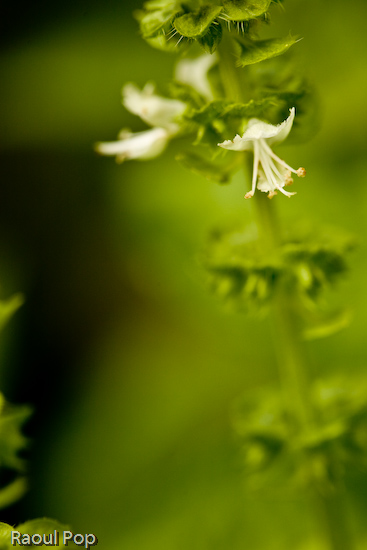
Busuioc

I believe this flower is of the same kind as the white flower pictured above, but its petals are red. I’m terrible with plant names (actually, I’m terrible with names of any kind), so I don’t know what it is. But I really liked the shape and color of the petals. If passion could be photographed, I think it would look like this.

Passionate

I’ve got so many beautiful photographs from Romania — many more from my grandfather’s garden, the various cities and places I visited — but so little time to process them. Oh, how I wish I had a few months to spend curating my photo library…

Standard
How To

The best tomatoes are homegrown

You can go to Whole Foods, Trader Joe’s, MOM’s, Safeway, Giant, Publix — you name it — and buy the most expensive tomatoes, but they’ll still taste just as flat as the cheapest ones you’ll find. I don’t care if they’re organic, hydroponic, vine-ripened or whatever — they still have no taste.

It’s a fact of life in America. I don’t know what our farmers do to their fruits and vegetables, but nothing tastes good when you buy it from the store. Most stuff tastes like cardboard, and if you’re lucky, it might have a semblance, a sad little ghost of the taste of the real thing. I call it the great American taste theft. It doesn’t matter if the stuff is cheap or expensive, it still tastes like crap. While I expect the cheap stuff to taste like that, I find it offensive and downright thieving to charge $3-7 dollars for a pound of tomatoes that tastes just like the ones that cost $1-2 dollars. If you don’t know what I’m talking about, then you haven’t gotten around much.

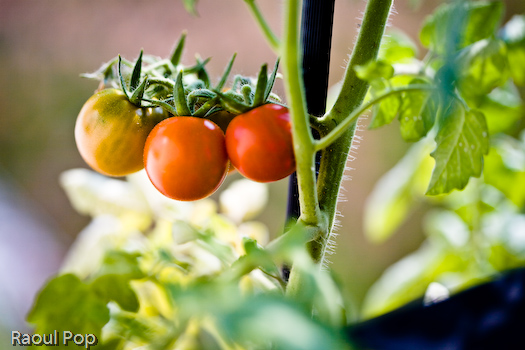
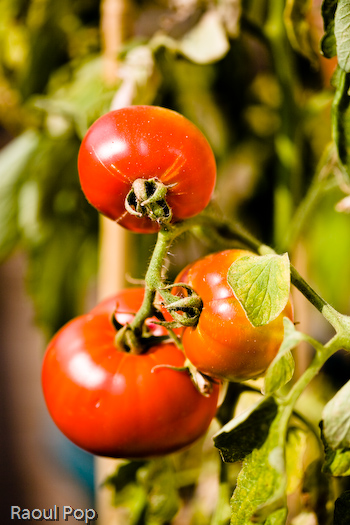
Our families have always grown their own vegetables, even when they lived in cities. Now that Ligia and I are on our own, and we’ve only got a terrace, we still grow a few vegetables, mostly tomatoes, every year. Let me tell you that there’s a world of difference between the tomatoes you grow at home and the ones you buy at the store. The ones over there might look better, cosmetically-speaking, but the ones you grow with your own love and care, without pesticides or fertilizers, are the ones that will blow you away every time you taste them. They may have a few blemishes, they may not be as big or pretty as the ones in the store (you know, the ones full of hormones and all sorts of crap that’s not good for you) but when you bite into one, that fragrance and taste explosion you’ll feel is proof of their pedigree.

Homegrown cherry tomatoes

Trust me, there’s no substitute. You don’t know what you’re missing if you don’t try it out. You may lose a few tomatoes to disease, but if you let them fend for themselves, and only feed them water, till the ground once in a while and prune them carefully, you’ll come to find out what I mean.

Homegrown tomatoes
Standard