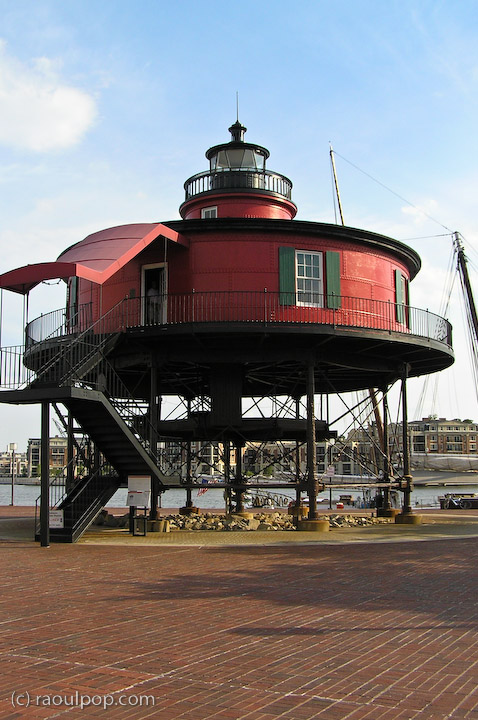
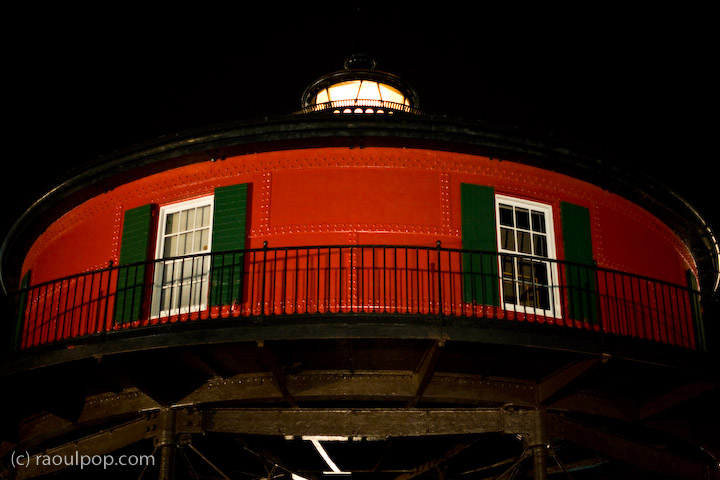
The Seven Foot Knoll Lighthouse is the oldest surviving screw-pile lighthouse on the Chesapeake Bay. It was built in 1856 (before the Civil War), and installed at the mouth of the Patapsco River, where it marked the shoal known as Seven Foot Knoll for 133 years. We visited it during our recent trip to Baltimore.

The lighthouse used an innovative design called the screw-pile, which looks like a large-scale, big-head drill bit. The screw-pile is also described as a “system of cast-iron pilings with corkscrew-like bases”. It eliminated the need for underwater masonry foundations, which were (and still are) hard to build on muddy bottoms. The screw-piles could be screwed into the sea-bottom, and a construction developed on top of them.
The Seven Foot Knoll Lighthouse was the second screw-pile lighthouse on Chesapeake Bay, and was used from 1856 until 1987, although keepers lived in it only until 1949, when it was automated. By the second half of the 1960s, the lighthouse started to show serious signs of aging, and it was thankfully moved to the Inner Harbor in 1988.
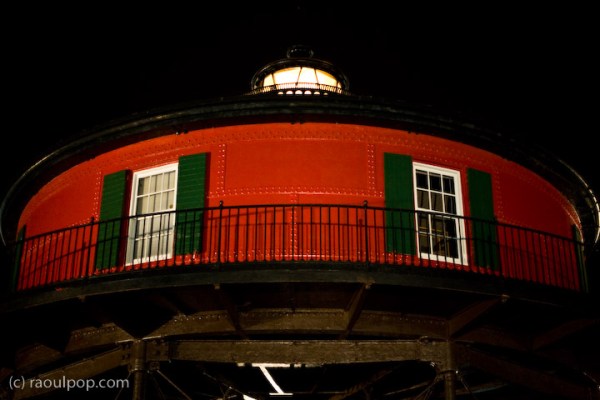
From 1856 until 1919, keepers lived in the lighthouse along with their families, but life was very hard in the lighthouse, particularly in the winter, when ice sheets threatened to topple it. Over the years, various pilings and rock barriers were put up to protect the lighthouse from the ice and from ships in distress who might bump into it, but it was the ice that posed the biggest problem, which was never quite solved. Every single winter, families lived in immediate peril there, and even had to be evacuated a few times as the lighthouse bent precariously in the face of advancing ice sheets. From 1919 until 1948, the Coast Guard recognized the hazardous nature of the lighthouse work, and allowed keepers to work in pairs, with each receiving 8 days of shore leave per month.
There’s a courageous event recorded on August 21, 1933, when Keeper Thomas J. Steinhise risked his life to rescue the crew of a sinking tugboat named Point Breeze. There was a terrible storm that night, with fifteen-foot seas and 90-mph winds, and yet Thomas Steinhise fired up his small motor boat and navigated in the direction of distress whistles to save the lives of five crewmen. He was awarded the Silver Lifesaving Medal for his heroic deed.
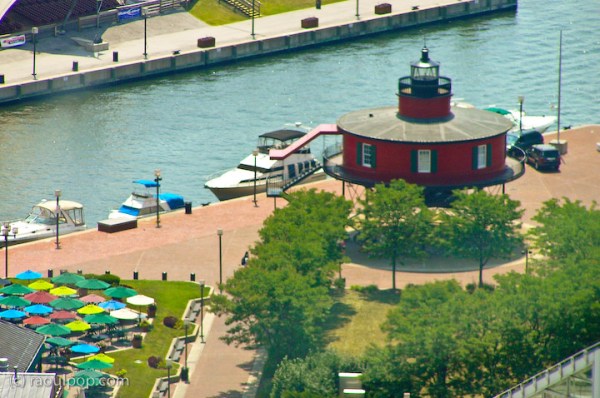
After the lighthouse was moved to the Inner Harbor in 1988, the Coast Guard donated it to Baltimore City, and in 1990, a lighthouse restoration project, completed with grants and the aid of volunteers, was completed. In 1997, the lighthouse became part of the Baltimore Maritime Museum.
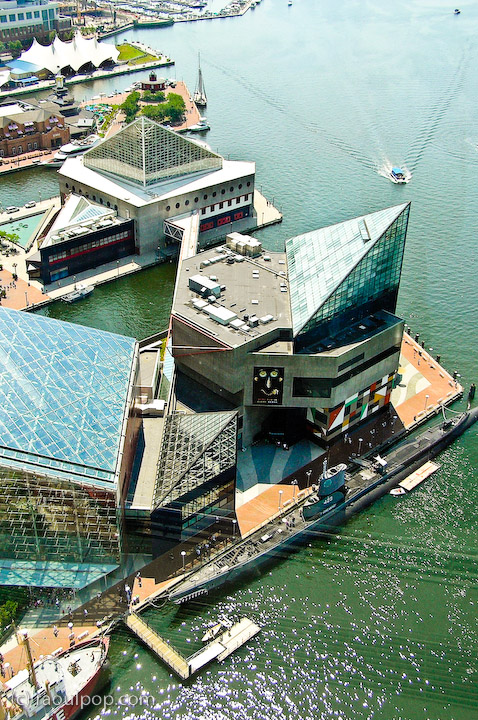
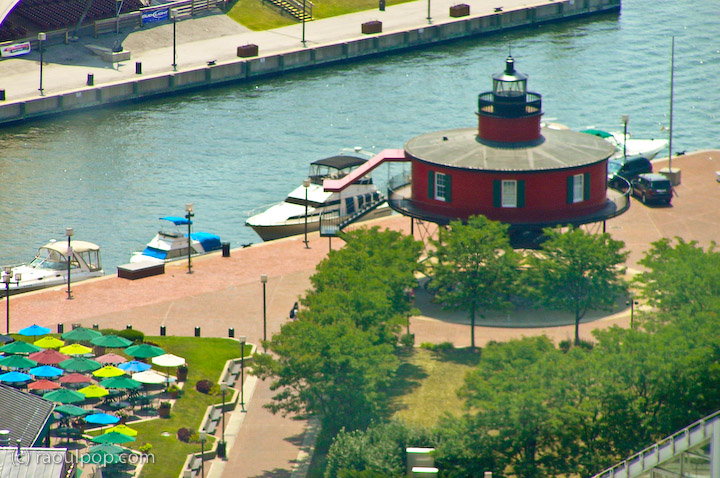
The lighthouse’s current location is more clearly seen in these two photos taken from the top of the World Trade Center in Baltimore. I’m sorry for the poor quality of the photos, but I had to shoot through the thick (and dirty) glass of the visitor center at the top.
26.011201
-80.149490












 Raoul Pop