It definitely pays to watch out for bed bugs, because a rare bite or two may turn into hundreds of bites per night, after the filthy little critters begin to multiply. The National Geographic put together a video that shows how bed bugs crawl out of the walls to bite people right before dawn, when they’re in their deepest sleep period of the night.
And here’s a video that shows what a serious infestation of bed bugs looks like. It’s the stuff of horror movies, and one definitely wouldn’t want to live in such a place, ever. Yet those poor old folks are stuck there, getting bitten by the bugs every day and every night.
So, it looks like the thing to do you see the first bed bug is to go all out. Get the strongest pesticide you can get, apply it to all the crevices where the critters could be, squash all the ones you can see, and hope you’ve staved off an invasion. Get all the help you can get, don’t give them an inch.
Back in May, I wrote about the mole cricket — one of the pests that we have to deal with in our garden — and I posted a short video clip.
Last week, I had the chance to shoot footage of another mole cricket that my wife caught in our garden, and this time I used a camera that could record video in macro mode. The result is definitely worth it — at least I think so. You can see the mole cricket in all its nasty, creepy splendor. Let’s hope you won’t get nightmares. Just think, this little monster can fly. One of them could land on your face at night…
This morning, I took my trusty Olympus C-770UZ into our garden here in Romania and shot some video footage in super macro mode. I love the bokeh I get that way, and how close I can get to things.
I found an iridescent beetle sunning itself on some parsley leaves, a butterfly resting on some spinach leaves, two beetles getting it on, a bee collecting pollen on a squash flower, ants drinking nectar on a raspberry blossom, and more.
Q: What insect from the Gryllotalpidae family burrows around people’s gardens and eats the roots of freshly planted vegetables?
A: The mole cricket.
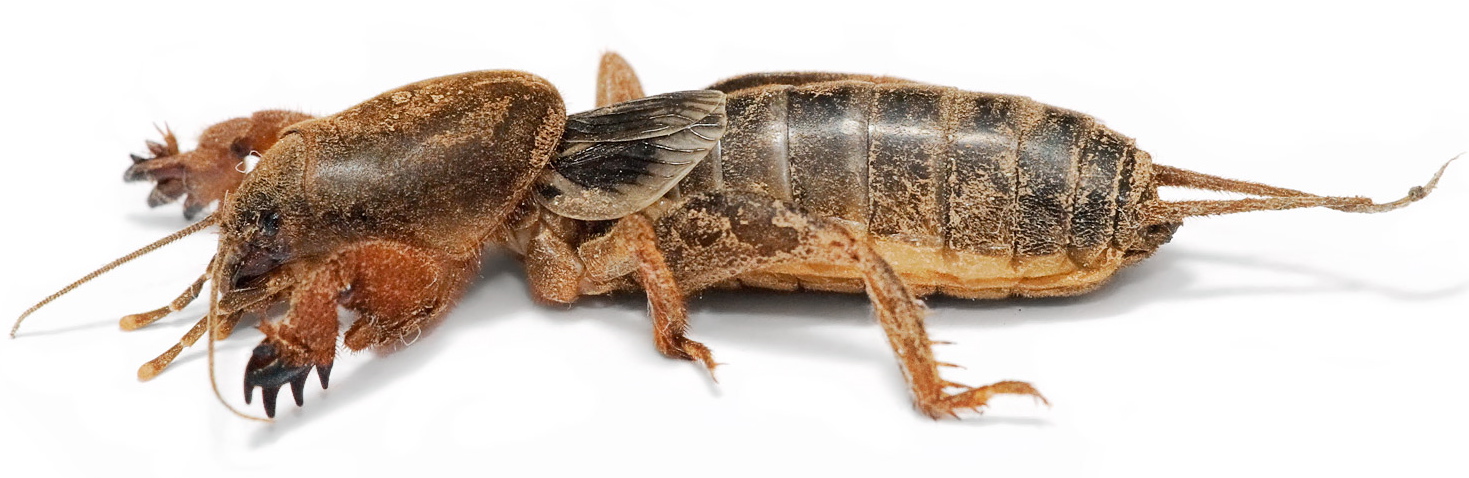
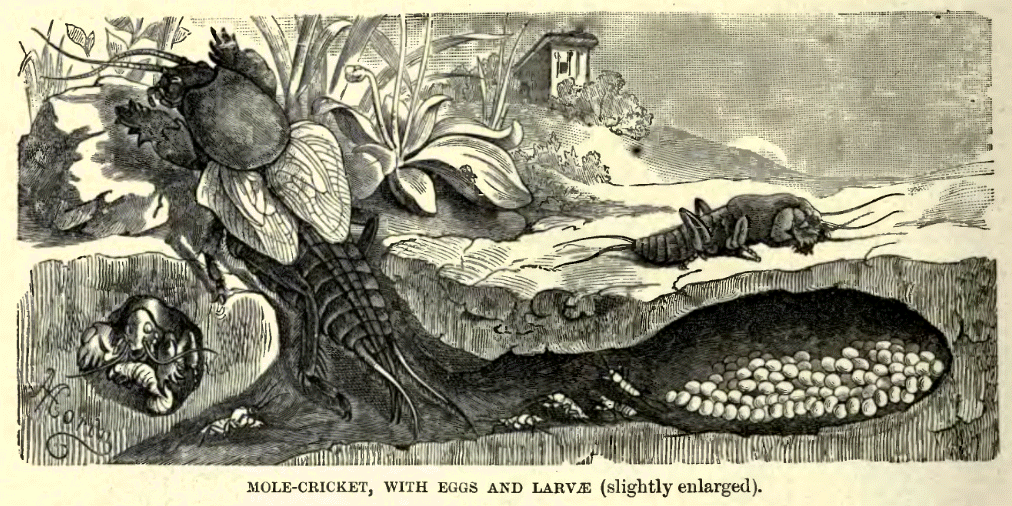
This nasty critter, which grows to 2 inches or more in length (I’ve seen some that were over 3 inches), has strong forelimbs that it uses to dig around in gardens here in Europe. They’re supposed to be omnivores, and they feed on whatever they find. In the spring, they feed quite a bit on the roots of the planted seedlings of tomatoes, peppers, spinach, cabbage and other common garden vegetables and fruits, which means the seedlings die. They wither and dry out, unable to extract food from the ground since their roots are gone. This also means that your crop, which you, as a gardener, took great care to plant and nourish, is wiped out by some filthy creepy-crawly thing that gives nothing in return and only gets fatter and uglier with each seedling root it shoves in its ravenous mouth.
It is for this very reason that these ugly critters are considered garden pests, and people do what they can to get rid of them. Some put out pesticides, but then you’ve got poisons on your vegetables, and that’s not healthy. Others, like my grandfather, used to go out at night with a flashlight and squash them when they reared their heads from their burrows. Thankfully, they have plenty of natural predators, though you wouldn’t want most of those guys around your garden either — I’m talking about rats, skunks, foxes, armadillos and raccoons. Birds are another of their predators, and they’re definitely welcome in my garden.
My wife caught a mole cricket recently (they’re called “coropisnite” in Romania), and I recorded a short video clip. Sorry the focus isn’t that great — my Nokia N95 doesn’t focus very well in video mode at close distances.
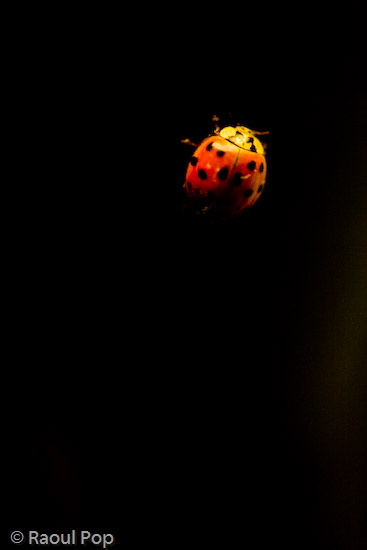
Just as I was getting ready to download the photos from my camera last night (I’d been out photographing the wonderful fall foliage), a ladybug flew by me, and stopped to rest on one of our lamps.
I have no idea how it got inside our home, since we have screens at our windows and doors, but they always seem to find a way, don’t they? It must have been woken up from its hibernation by the unusually warm weather we had (over 60F). I realized that I’d never gotten macro shots of a ladybug before, so this was my chance.
There was no time to set up a tripod, so I took these handheld, at 1600 ISO, with my 100mm macro lens. There was some overhead light from the lamp, just enough to get the right atmosphere. The poor thing still had fuzz on it from who knows where. They find the strangest places to spend winter…
It’s Thanksgiving today here in the US, so if you celebrate it, I hope you have a wonderful one!



 Raoul Pop