Lists

Condensed knowledge for 2007-05-02

I can’t resist sending interesting links through email to my close contacts, or publishing them to my Twitter page. But I thought it’d be a good idea to collect them every once in a while and publish them on my blog as well. Hope you find them as interesting as I do!

  • Have you been unable to get a mortgage or to rent a place lately? You may be on one of the government’s many terrorist lists. The Treasury Department has started to release names of suspected people to private businesses. They’re supposed to check against these lists when doing business with normal folks like you and me. The sad part is, the lists are inaccurate and there are many false matches. It’s also a serious invasion of our privacy. See “Ordinary Customers Flagged as Terrorists“, in the Washington Post.
  • If you use FeedBurner, you’ll be glad to know they’ve released a Twitter Feed Flare that will let your site visitors automatically submit a link to your blog posts on their Twitter pages.
  • Have you been getting hassled about your photography in public places? You’ll get a laugh out of this What The Duck comic.
  • The Japanese are doing some pretty cool things to save energy in their country, and in many ways, are on the leading edge of energy efficiency and conservation.
  • The FBI abuses its right to use gag orders when they investigate suspected crimes.
  • Got money to burn, no common sense, and a desire to possibly pee in your pants while eating dinner? Great, then have dinner in the sky.
  • Hey look, here’s a really cheesy Bollywood movie featuring a dancing Superman and Wonder Woman…
  • The last WWI combat veteran, Ret. Army Cpl. Howard V. Ramsey, has died. Rest in peace, brave soldier!
  • Russia has formed a super agency that will control what the media says and does. Gee, what does this remind me of? Oh, I know, communism…
  • Just what is Supermarket 2.0? Watch it and see.
  • I always thought the Art Lebedev Studio made products that bordered on useless, but this is just not right. Although, given the date when it was released, I have a feeling it’s an April Fool’s joke.
  • A very cool dog saved its owner’s life by jumping on her chest as she choked on a bit of apple. It worked! There’s a video as well.
Standard
Reviews

Dictionary of Information Security by Robert Slade

Dictionary of Information SecurityHave you ever wondered just what the jargon of information security specialists really means? What are all those arcane words they throw around to scare us into submission as they lock down our computers even tighter? “What do you mean, we can’t even install a screensaver now?! Can I at least use the bathroom without your permission?”
Unfortunately, there are a lot of dumb Information System Security Officers (ISSOs) at corporations and organizations. I’ve known a few myself. These are the folks that barely know what they’re talking about, and go by the latest article they read. Their reaction to a new piece of software is to lock down the system and disallow it even before they research it properly. Case in point: was Skype shut down at your place of business or at a friend’s workplace? That was a dumb ISSO in action. They also know so little that they simply throw words around, and anyone with a little knowledge of computers can tell when they mess up. “No, ROM is not RAM, and no, it’s not a 300 Gigabit hard drive, it’s a 300 Gigabyte hard drive.”

That’s why books like this Dictionary of Information Security really help. We can educate ourselves, and know when they’re wrong. We can tell when they’re BS-ing, and when they’re telling the truth. My experience has been that they BS for 80 percent of the time, and don’t know what they’re talking about for the other 20 percent. “No, RSS doesn’t stand for Really Scary Stuff, it stands for Really Simple Syndication. And yes, it’s okay for us to subscribe to RSS feeds. Really.” Or, “No, this is a perfectly harmless screensaver. It’s not a RAT (Remote Access Trojan). You’re a rat, for all I care.” I could go on and on…

I love this book. Robert Slade did a great job putting it together, and the terms are explained in language that anyone possessing a cursory knowledge of computers can understand. I’m amused by the forewords, acknowledgments and preface. They’re abnormally long for a book this small, but that’s to be expected. This is, after all, the first Dictionary of Information Security, and a precedent has to be established, so to speak. But once you get down to the terms, you forget about all of the beginning sections, because if knowledge is power, this book packs a wallop.

Get it, and read it. I know it’s hard to believe, after all, who’d read a dictionary, but I’d read this one. And keep it around for reference. And when your ISSO gets on your nerves, start encrypting all your emails with PGP if he doesn’t stop scanning them. Or, if he doesn’t stop blocking access to your webmail account, set up a VPN connection to your home network and do all your web surfing through that. That’ll knock his SOCKS off! Let the fun begin!

Standard
Lists

Oldies, but goodies

As news go, these are weeks, and even months-old, but they sure are good. Stumbled onto them in a folder full of bookmarks. Enjoy!

  1. Full of nostalgia for the 80’s? Try Engadget, cca. 1985.
  2. Want to donate your old computer? Better wipe that drive first!
  3. The generational gap can be seen in the workplace, too. Seriously, it’s rude to get up and walk out in the middle of a conversation.
  4. Kawaii Not – the web comic for cute gone bad! Cute indeed, and witty to boot!
  5. Want to get a small PC?
  6. The 25 worst tech products of all time, according to PC World.
  7. Ever thought of public spaces as dance floors? “You’ve got to move it, move it… MOVE IT!”
  8. Check out photos of Chicago from the 40’s to the 90’s.
  9. Want to get the scoop on classic movies? Then check out Reel Classics.
  10. In love with USB? Check out this list of flashy USB accessories, like a bra with a USB clasp.
  11. Want the latest in wiretapping devices?
  12. How will the newspaper look in just a few short years?
  13. You thought invisibility cloaks were a sci-fi thing, right?
  14. Great advice on advancing your career as you start over, move, take a part-time job or have money problems.
  15. Video sites, comically analyzed and summarized.
Standard
Reviews

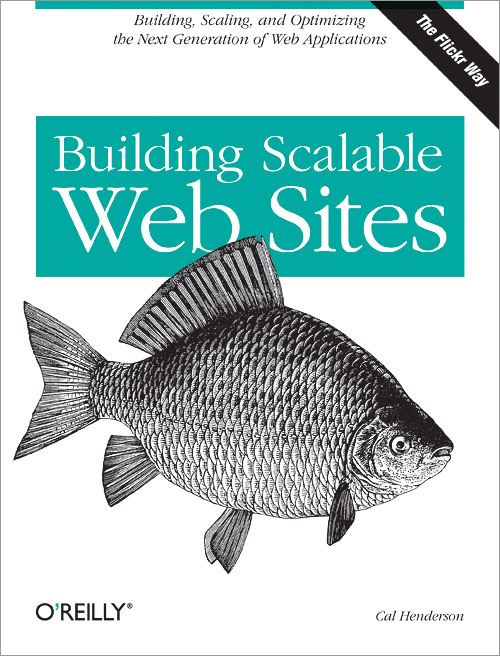
Building Scalable Web Sites, by Cal Henderson

I love this book! There, I’ve given away the clincher already.

Truth is, the writing is addictive. Once I picked it up, it was hard to tear myself away. Perhaps it’s because I’m fascinated with the subject matter, but boy, the writing style ain’t too shabby either. It’s easy on the eyes, and easy on the brain. You just start reading, and go on reading. There are no stumbling blocks, just nice, smooth writing that encourages you to keep moving on as you’re reading.

Let’s face it, which web developer out there doesn’t want to find out how to build scalable websites? Don’t we all dream that our sites or web apps will hit it big, and we’ll have to start planning how to expand? Well, this book will show you how. No, this book won’t show you how to code such sites. There are so many languages out there, it’d be impossible to do that in a book. And besides, code and its structure varies wildly based on the application you’re building. The load imposed on the server varies as well, based on the nature of your application. Some require more RAM, others crave more disk space, others are cuckoo for I/O… you get the point.

What this book will do is to set you straight: what is scalability, and how it’s done, from scratch to finished product, from hardware planning to software planning. It’s all laid out, and it’s easy to understand. Oh heck, Cal even explains what a web application is. And he’ll shatter a few myths, such as this: scalability and performance aren’t the same thing. And, PHP can be used in scalable applications. What?! The heresy! Only Java is scalable, right? Nope.

You’ll also learn things such as… Which scaling (vertical or horizontal) is more cost and resource-effective? How do you load balance with both software and hardware? What in the world is involved when exposing web services? Well, it’s not about nerds flashing in the server room, that’s for sure. How should you react when someone pulls an RPC on your XML? Should you wash it with SOAP, or should you cry API Abuse? Is a data cache a good thing? Should you worry about your database slaves? Should you buy cheap machines like Google, or should you spend your cash on real servers? Read the book, and find out the answers to all these captivating questions.

By my estimate, most people interested in the subject will manage to read the book in less than a week, and that’s with leisurely reading in the evenings. That’s more than I can say about many tech books, where you get bogged down trying to understand the code and what it’s doing. This book is instructive, entertaining, and intellectually enriching. Cal has a lot of knowledge in building scalable websites, and there’ll be no mistaking that when you pick up the book. This fellow speaks from personal experience. Do yourself a favor, and don’t build a hamstrung site. Read this book first!

Standard
How To

Getting back to Archimedes

In 1906, a German scholar discovered some of Archimedes’ long lost works in a medieval prayer book. A 10th century scribe had transcribed them from an even earlier manuscript, but in 1229, the pages were erased and used to make a prayer book. Normally, I haven’t got anything against prayer, but I think a priceless piece of history is worth more than a medieval prayer any time, period.

At any rate, science can now rectify this reckless destruction of knowledge. Using a synchrotron, which accelerates electrons to nearly the speed of light to produce x-rays, and has only a 50-micron wide beam, Stanford physicists can read under the misbegotten prayers to get at the hidden knowledge of the Greek mathematician. Gives a new meaning to reading between the lines!

Standard