Thoughts

The boring sameness of Romanian restaurants

Romanian cuisine was (and still can be) wonderfully varied and delicious. Not only are there different dishes in each region of the country, but even the basics, the staple traditional dishes, are prepared differently from region to region. Visiting Romania should be a delectable experience for one’s palate — the potential and the means to bring it about are there.

Sadly, if you should walk into more than one restaurant in Romania these days, your chances are better than 95% that you’ll see the same limited menu — the same soups, the same entrees, the same salads, the same meat dishes, the same desserts, the same drinks etc ad nauseam… It doesn’t matter if the restaurant is part of a two-star, three-star or four-star hotel or pension or if it’s a standalone place in a mountain or seaside resort or just some place alongside the road. Beside a few dishes or drinks that sometimes vary, they share the same boring menu.

They all have vegetable soup (most of them don’t know how to make it). They all have tripe soup (in varying degrees of stomach-turning oiliness). They all have fried trout, most of it bland beyond belief to the taste. They all have, of course, lots of pork, beef and chicken dishes (the same fattening dishes across the board), so it’s no wonder most Romanians are starting to look like potbellied pigs. They all have the same salads, and most seem to compete in using the most withered vegetables, drowned in a sea of oil and topped with nose-turning vinegar.

The question then arises, can you find decent food as you travel through Romania? Sure, if you manage not to get sick of eating the same dishes… We’ve traveled a lot through the country (we’d like to travel some more) and we have come across a few restaurants that do some dishes well. We’ve also seen a few restaurants that have impressed us by straying from the boring sameness with different and delicious dishes. But these places were few and far between, and when you’ve been on the road all day and you walk into a restaurant only to see the same menu, it’s a very disappointing experience.

There’s also another factor that adds a certain degree of difficulty to our search for food. We’re raw vegans, which means we prefer to eat raw, uncooked vegan foods. When we don’t have a choice, we’ll eat cooked vegetarian dishes, such as soups, side dishes or salads. But that doesn’t mean we don’t look at the whole menu, just to see what a particular restaurant is offering to the general public, and that’s when the disappointment sets in.

Having grown up in Southern Transilvania, my palate is naturally accustomed to Southern Transilvanian foods, which include Romanian, Saxon and Hungarian dishes. Those dishes were, surprisingly enough (by today’s standards) mostly vegetarian dishes (ovo-lacto-vegetarian). As I grew up, we ate meat once a week (on Sunday), and it was most likely chicken. We ate beef very seldom (I remember only a few occasions during my childhood), but we did eat pork quite often (to my chagrin) in winter-time. I loathed the stuff, but that’s what we had in the pantry, so that’s what I ate.

If you should go to a restaurant in Southern Transilvania these days, their menu won’t reflect the traditional cuisine of the region at all, even if they say they’re a traditional “Transilvanian” restaurant. (Somehow the stupidity of calling a restaurant “Transilvanian” when it’s located smack-dab in the middle of Transilvania escapes the owners…) They have the same dishes you’ll find everywhere else, prepared in mostly the same ways. And they’ll have mostly meat dishes. Where are the traditional soups, entrees and dishes I grew up with? They’re certainly not on the menu!

My grandmother used to make a delicious sweet potato soup. She also made a sour potato soup with tarragon and milk that makes my mouth water even now. She also made cabbage soup, a nice thick soup with dill and all sorts of condiments, completely unlike the pig food they call cabbage soup in restaurants these days. In the spring, she’d make a wonderful sour salad, watercress or wild garlic leaf soup. Her noodle soup was the best. And she’d also make a dumpling soup that had me licking my fingers and begging for more dumplings.

The meal that had me begging for more was chicken drumstick stew with mashed potatoes. That was the best. But she only made that once a week, on Sunday. She also made a delicious mushroom stew. Oh, and her pea stew was so good! Her fried onion sauce, usually served with mashed beans or whole bean stew, sure made my mouth water. She also made a mean potato stew with sweet sauce. Her fries were amazing, particularly when she sprinkled a little grated cheese on top! I can’t even find proper fries in restaurants these days! Most restaurants decided it’s better (for them, not for the customers) to buy frozen, pre-cut fries and warm them up instead of making them from fresh potatoes, as is the rule.

For dessert, my grandmother also made “gomboti” (a sort of dumpling) filled with plums, apricots or peaches. Or she made “clatite” (a small crepe) filled with fruit jam or honey. She made a lot of desserts as well (layered cakes and more) all of them delicious, unlike the cakes you find in pastry shops these days.

My mother and my wife both cook (my wife is a raw food chef) and they both make their own versions of the vegetarian dishes listed above. They’re all delicious. And as we visited various Romanian friends during my childhood and later life, I got to eat some pretty interesting variations on these same recipes.

When we go to restaurants, I can’t find any of these traditional dishes. Instead, what we’ll find is lots of bland, badly cooked side dishes and lots of meat dishes. And when we go to restaurants in other parts of the country (Moldova, Muntenia, Dobrogea), we can’t find any of the traditional dishes from those regions, either.

When did Romanians start to eat meat every day? That was certainly not the case 15-20 years ago. And look at them now, as a nation… They’re almost as fat as the Americans. Most Romanian men over 30 have pot bellies, which they proudly display and rub as if they’re some treasure. Hey, guys, I got some news for you, big bellies are nothing to brag about. In fact, they’re a sign you’re overeating and they’re also a precursor to erectile dysfunction. Think about that as you gulp down steaks and other fat-laden dishes…

My questions for Romanian restaurant owners are these:

  • Where are the foods that set Romanian cuisine apart?
  • Where are the traditional dishes we know and love?
  • Why do you all have the same menus?
  • Will you serve more vegetarian dishes? 

I’m curious to see what answers I’ll get (if any).
Standard
Thoughts

A lot of teachers in Romania shouldn’t be teaching

It’s been a couple of weeks or so since high school students in Romania had to take their graduation exams — the Bac, as it’s known over here. The whole thing was a huge controversy this year, because for the first time ever, there were strict rules in place to ensure no cheating occurred on the exams.

Not sure if you knew this, but there’s a lot of cheating in Romanian schools. It occurs on a massive scale. 

It got this way in the past twenty years, as the school system got worse. Teachers were paid less, working hours got longer, the classrooms got bigger, and a lot of teachers stopped caring. That’s not to say they were paragons of teaching before that. I met my fair share of horrible persons in the teaching ranks before I left the country to live in the States. Now that I’m back, it seems they’ve multiplied.

Abroad, Romanian students are known as hard-working and studious — downright nerdy, brilliant at the sciences, etc. That (small) group is still around, but it’s gotten smaller. Many of the students with great grades get them because they cheat these days. They have it down to a science. Forget the little pieces of paper we might use to scribble down a few formulas when we were in school. These kids have cellphones with apps that store textbooks. Or they take photos of hard-to-remember pages with their cellphones, and zoom into those photos during tests. Or they text their buddies, naturally. In some classrooms where the teachers have stopped caring altogether, the students simply open their textbooks, lay them on the desks and copy away. In the vocational high schools, they don’t even bother with cheating anymore. They simply write the answers on the blackboard, to make sure they pass everyone.

Is it any wonder that the younger generations in Romania are so easy to manipulate, when they remain uneducated as they go through schools? A dumb population is what every despot wants, because they’re easiest to control. You just have to give them a cheap bread with one hand and point them to a scapegoat with the other, and they’ll obey. Is it any wonder then, that we have such a corrupt political class in charge of the country?

So for this round of graduation exams, the minister of education set a goal: no more cheating. They had proctors in every classroom, and they had video cameras. Anyone caught cheating would be disqualified and would be kicked out.

I think you can guess what the results were: deplorable. A LOT of kids didn’t pass, because they couldn’t cheat. A LOT were caught cheating, and were disqualified. The pass rate in Bucharest (the capital) was under 50% (somewhere around 43-44%). In some school districts, the pass rate was under 30%, and in some really problematic districts, no one passed. Now can you begin to realize the scale of the cheating that took place in previous years?

Naturally, there’s blame to be thrown on someone, and right now, parents and students and teachers and politicians are busy trying to see who’s to blame. I think the teachers are to blame.

Before I tell you why, let me just point out that I interview students from Romania for admission to Middlebury College (my alma mater back in the States). I’ve been an interviewer for years. When I lived in the States, I interviewed American kids. Now that I live in Romania, I’ve offered to interview Romanian kids. How do you think this cheating scandal has affected the reputation of Romanian kids abroad?

How can the folks back at Midd or Yale or Stanford know which Romanian kids applying to their schools cheated to get those grades, and which ones didn’t? I’m not clairvoyant, so I have no way of knowing myself. I’d love to be able to look at the face of a kid I’m interviewing, like Cal Lightman in Lie to Me, and know that they’re lying about not cheating, but I don’t have those abilities (yet?). So this is why I’m very glad to see a general crackdown on cheating in Romania, and I hope this crackdown translates into long-term changes in the education system to ensure no more cheating. That’s because when I look at a kid’s grades, I want to know they’re honest grades, not inflated through deception and through the theft of other kids’ hard work.

The teachers set the tone in their classrooms. They knew when cheating took place. No one can tell me teachers don’t know when you’re cheating. If they’re good teachers and they care about their students, they know. They can see it on your face right away.

But the teachers stopped caring, so the cheating got endemic. More students saw that it was easier to cheat than learn, and that high grades were within easy reach, so they started doing it too. And it’s the teachers’ fault. Instead of doing their jobs properly, and instilling a love of learning in their students, instead of encouraging them to learn and showing them how interesting the subject matter can be, they resorted to cheap tactics (tactics which should be made illegal) of forcing students to memorize paragraphs and pages from the textbooks and repeating them outloud (or writing them) during exams. What kind of a lazy, pompous bum do you have to be in order to force kids to do that instead of explaining the concepts to them?

As a child, I was beaten (slapped hard, my hands beaten with a ruler) by our grade school math teacher, who was having an affair with one of the other teachers. When rebuffed by his lover, would come to class piss-drunk and would beat the kids. He’d beat me, along with other kids, because we couldn’t remember math formulas when he screamed at us, or that we couldn’t do calculations fast enough.

Or what about the many vindictive teachers I’ve had, who if they had it in for you, for whatever reason, would use every opportunity to belittle me or the other students, and give us all low grades? I met just such a teacher recently and I was blown away by how much anger she had for people who didn’t share her view of things, and how far she’d go to blackball them. Can you imagine these people teaching children? What kind of an example are they for our kids? What do you think those kids will learn from them? Hate, anger, vindictiveness and methods of punishment? Or what about unquestioning submission to the classroom despot? Are those the things we want them to learn?

Have you heard of the teachers (and professors) that will give you low grades if you don’t quote their books when you write your papers? They’re such egotists that if you don’t pay homage to their books, you won’t pass their course. Never mind that many of them copy their books outright from foreign textbooks, stealing the intellectual property of others so they can embellish their own curriculum vitae and hang on to their posts or get promoted.

What about the filthy perverts who ask for sex in order to let you pass their courses? Yes, that happens as well. They caught one such pervert recently in a girl’s dorm room, partially undressed and ready to seal the deal — thankfully, the girl managed to get away, but how many girls to do you think submit to this sort of thing just so they can get their diploma?

All I have to do to get more horror stories like this is to go out and ask any grade school, high school or college student to share their own experience. I for one am amazed that we still have so many qualified students graduating from Romania’s schools — these are cogent, thoughtful people, who’ve managed to rise above all the crap that goes on in those places and decide to do something good with their lives. Kudos to them for sticking it out, because it was a tough journey!

My suggestion to the Romanian government is to get to work right now on reforming education in Romania and to eliminate all the bad teachers right away. The more they leave the inadequate specimens in the classrooms, the more they’ll infect the young generations’ minds.

Standard
Romania Through Their Eyes

Romania Through Their Eyes – Paul Hemmerth

This (long-awaited) episode presents the story of Paul Hemmerth, a Saxon born and raised in Romania during Ceausescu’s regime, who emigrated to Germany with his family at the age of fourteen, and who came back, drawn inexplicably by the land of his birth, to spend as much time as he can, each year, in the Romanian countryside.

Paul has a website called SlowlyPlanet, where he promotes slow tourism — travel at a leisurely pace, where you can take in all that you see. We filmed the episode at Casa Noah, his B&B in Richis (Reichesdorf), a village near Medias in Southern Transilvania.

Various occurrences (some of which couldn’t be helped) delayed the release of this episode. The hard drive on my editing computer died, and the repairs took almost a week. We also had some scheduled travel abroad, and that delayed us by another week. Further shooting for the episode introduced an extra day or so to the workflow, and the extra editing time introduced by the show’s new format added another three full days to the schedule.

I really do hope you’ll enjoy the new format. It’s a lot more work for me during the filming and especially during the editing, because of the two-camera setup, but it makes the show more engaging. Just to give you a quick idea of the data behind the show, the raw footage comes to about 44 GB of 1080p video. The final version of the episode is 4.3 GB of 720p video, and it’s about 55 minutes long.

Enjoy!

Episode RTTE-005-DE-HD
Released 6/19/11

There’s an official Facebook page for the show, so head on over and give it a Like if you want to be kept up to date with day-to-day details about the filming of RTTE. There’s also an official website for the show. Also don’t forget to subscribe to my YouTube channel, where the show’s episodes are posted, along with other interesting videos I create.

Standard
Reviews

CFR still doesn’t get it

I last wrote about CFR (Caile Ferate Romane) — the government-run railroad company — in 2006, and — in spite of the repeated government bailouts and consulting firms who have been called in to help them re-structure, and the IMF directives for their improvement — things have gotten no better.

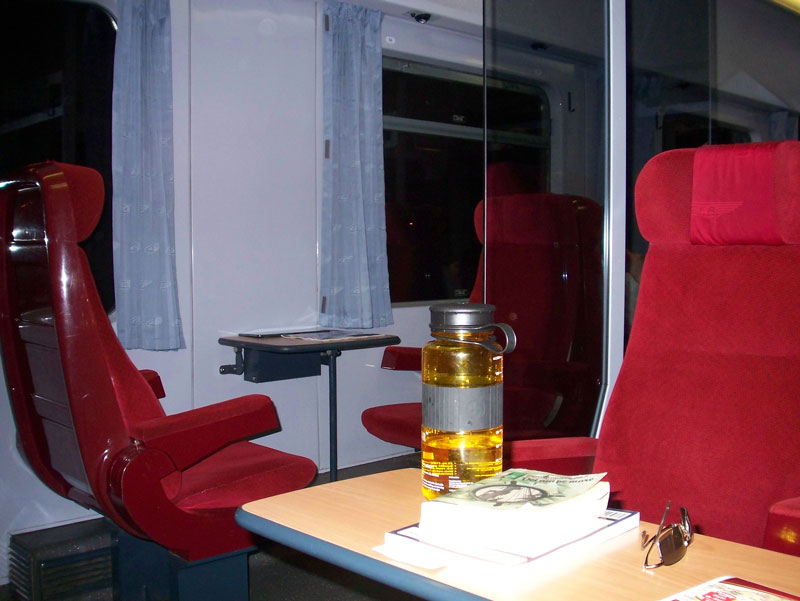
Ligia and I rode on an InterCity train today, from Cluj to Medias, in what was supposed to be 1st class. In my last article on the matter, I concluded that at least 1st class on the InterCity still meant something. It did, back in 2006. Now it no longer does.

This is how the 1st class wagon looked back then.

1st class no longer looks like this

Now they’ve done away with the glass dividers, and with most of the tables between the chairs. They’ve also faced most of the chairs forward, so they could fit more of them into the wagon. It looks like you’re riding in a bus. They’ve killed 1st class.

Another thing which I dislike is a cheap populist move on the part of Romanian politicians, whereby they granted old folks the privilege of riding 1st class for free. So what you end up with is paying 1st class prices for the questionable privilege of being stuck in the same wagon with a bunch of rude, loud (and smelly) old people from all walks of life, who love to complain (loudly) about everything during the trip.

I can understand the need to make travel more affordable for older folks who live on a limited income, but when you also kill 1st class in the process, which is the place where you make your better profit margins, that’s just not smart, nor is it in any way polite or respectful to the people who pay their own way for 1st class and expect to get clean, deodorized wagons and a little peace and quiet during their travels.

Things have gotten so bad with the CFR that 1st class is no longer a luxury — it’s almost a necessity. Riding in 2nd class or 3rd class on most trains means putting up with ungodly stenches, filthy chairs, smelly people and bathrooms you’d rather burn than use. Any way you split this hair, the people in charge of the CFR end up looking like a right bunch of ninnies.

To top things off, 1st class seems to also be the place for the conductors to take their uniforms off and relax after making their rounds — and talk loudly while they’re at it, with no regard for the passengers — as was the case today. Because obviously what the tired business passenger wants while they’re trying to sleep is to hear a conductor’s country bumpkin accent, complaining about cellphone rates. That’s the CFR way…

It seems to me the CFR management has had tons of time to turn the company around. They’ve been offered countless opportunities to mend their ways. But the more time and opportunities they get, it seems the more determined they are to run the company into the ground. It’s a painful realization for me, because I like train travel, and I have had wonderful experiences traveling by train as a child — you know, back when 1st class was actually a luxury, 2nd class was clean, and 3rd class was presentable.

Standard
Places

The Roman-Catholic church in Dumbraveni

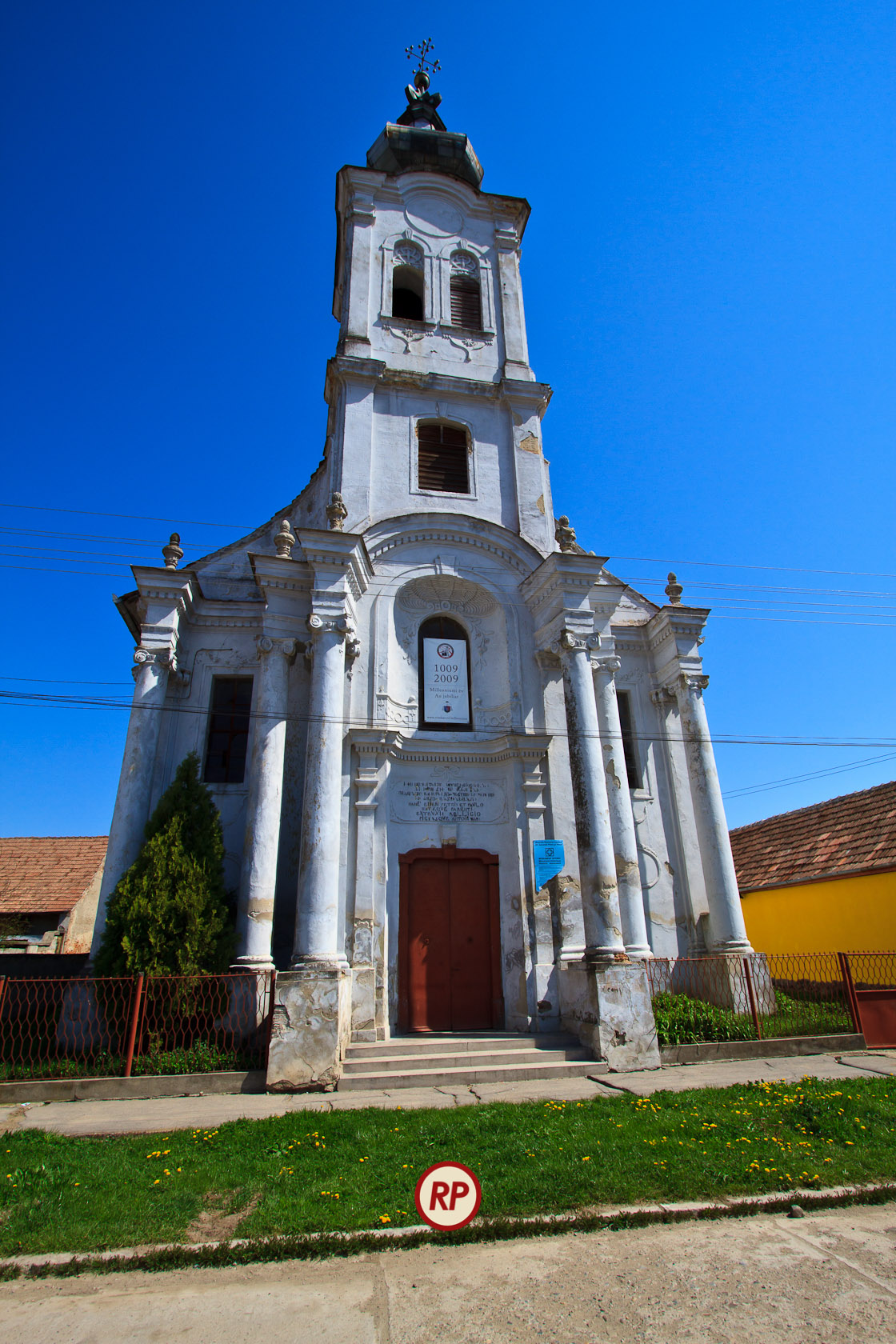
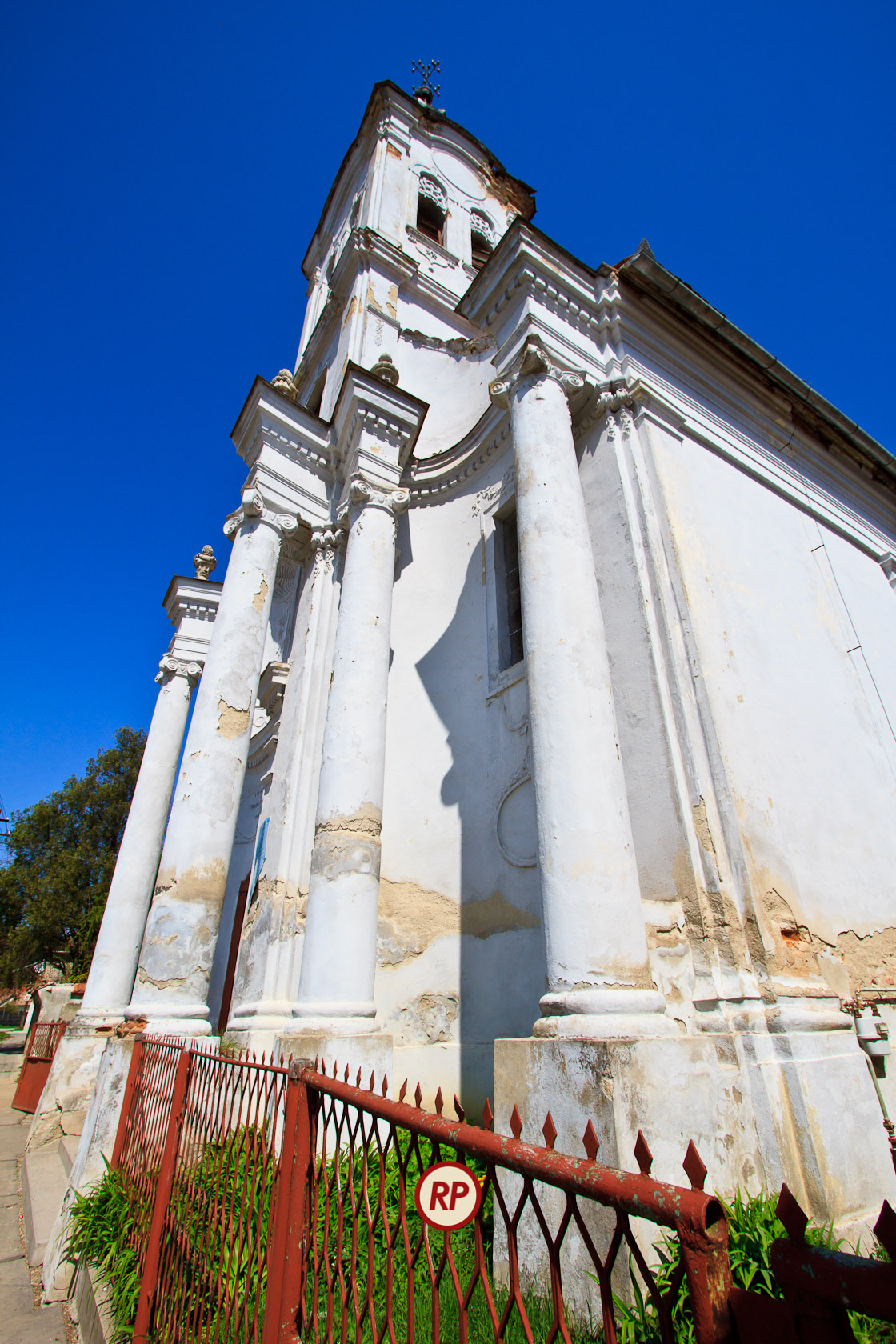
On a side street in Dumbraveni, Romania, in a neighborhood full of gypsies, you’ll find the city’s old Roman-Catholic church. It’s over 1,000 years old, and it’s not being properly maintained, as is the case with many of Romania’s historic buildings. Looking at the building itself, it’s hard to believe it’s stood there for a millenium, but there it is. Sure, there are architectural details which date the building, but it’s not imposing, certainly nothing of the scale of the Armenian-Catholic church just a few blocks away from it.

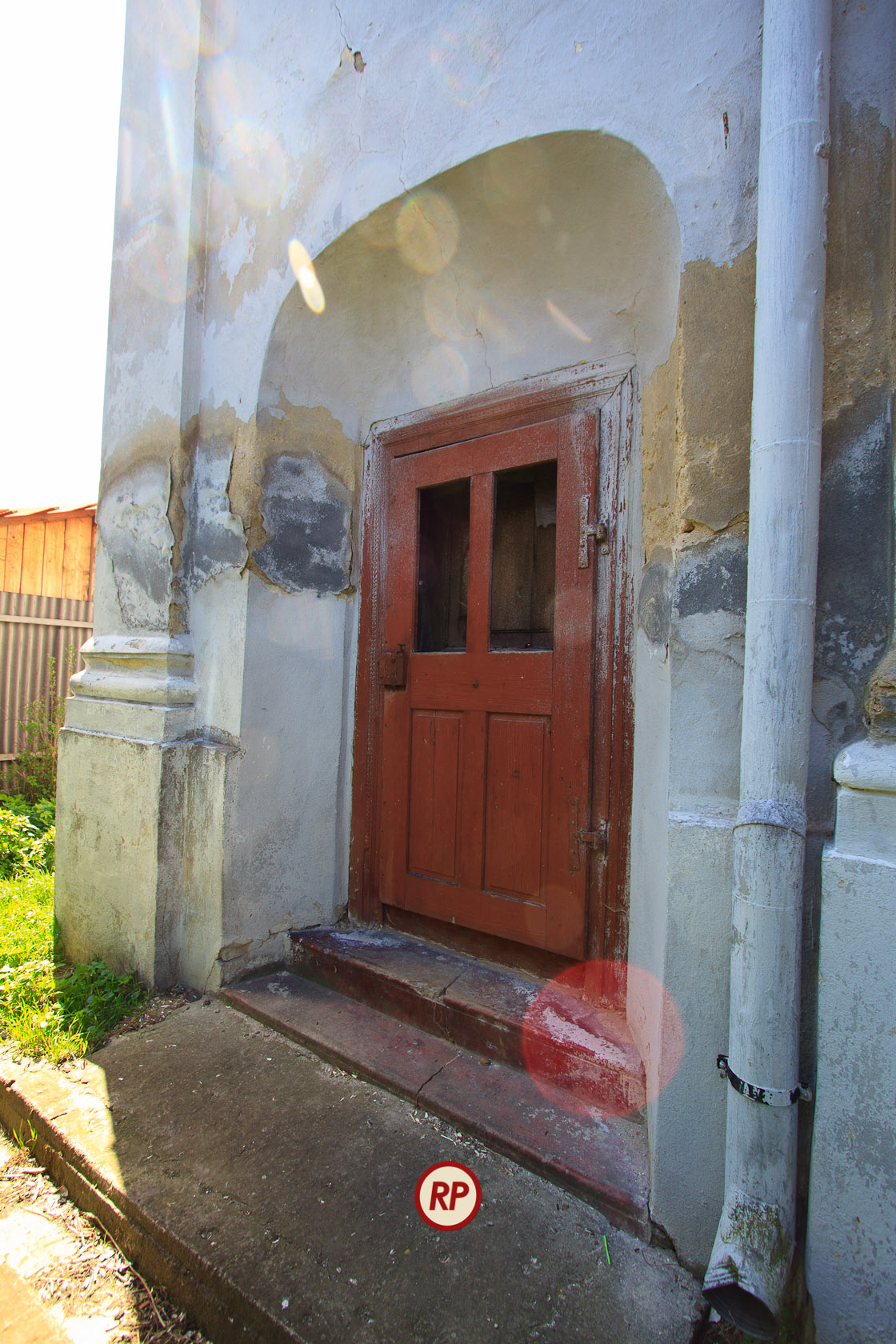
When we got there, it was locked up. The front door — now made of iron — was bolted. The sign marking it as an historic monument was torn. The back doors were nailed shut, and so were the windows. One of the doors was even walled in.

I walked around the building, trying to avoid human feces that marked the grass courtyard, and noticed that even though the cellar doors were nailed shut, I could pry one of them ajar and squeeze through.

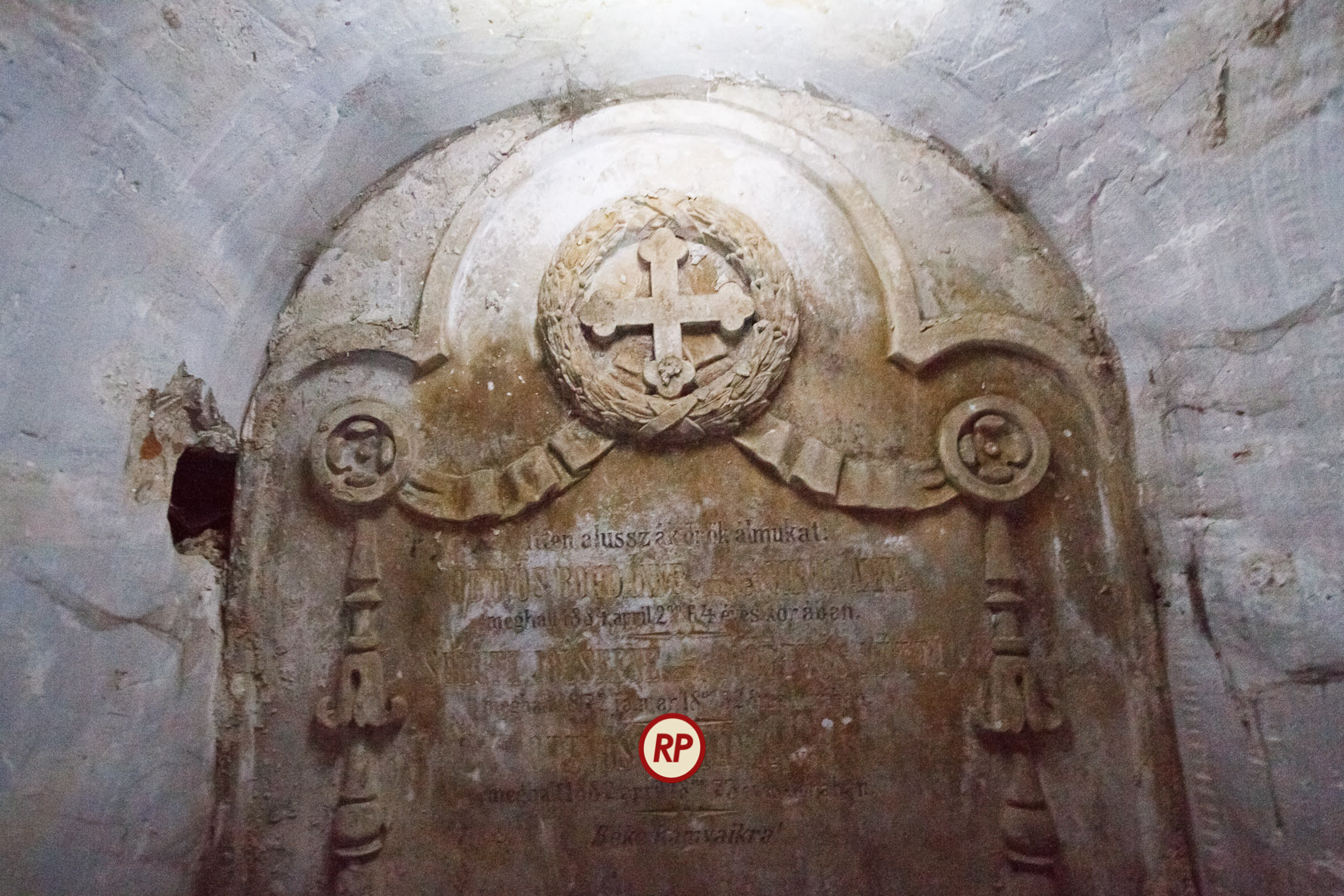
My sense of adventure got the better of me, and I went ahead. I grabbed a little LED flashlight from the car, and headed inside. It was clear the vaults underneath the church had been looted and vandalized, numerous times. There were countless footsteps in the sand, and trash left there by hooligans. Important architectural details, like the columns you see in one of the photos, were either shattered and on the floor, or downright missing.

The grave you see below, one of several built into the supporting walls of the vaults, has been desecrated, along with others. If you look carefully, you’ll see human bones among the rubble.

There was an iron door with intricate relief work, which leads to an inner sanctum. It was bolted shut, and I could see a serious amount of time has passed since it was opened.

There is a lower level to the vaults, partially uncovered here. I’m not sure if the walls below are stable enough for someone to go inside. I would have doubts about venturing there.

The intricate design of the mold on the vault walls is a possible indication that they were painted once.

There you have it. I’m not sure of this church’s fate. No caretaker was in sight when I was there, nor were there visible signs that the church was being cared for.

Standard