
The province of Dobrogea is quite different from anything else you might see in Romania.
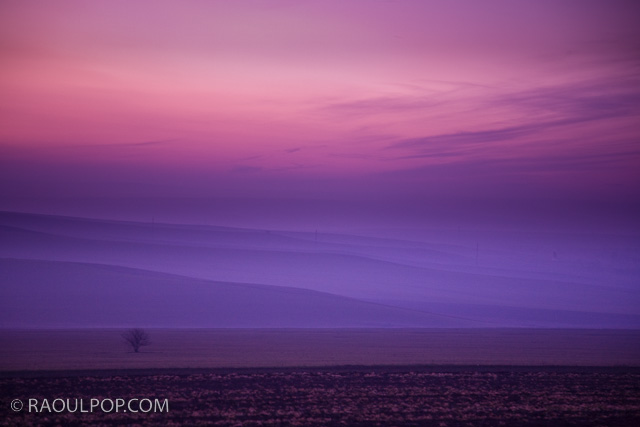
To the North, you’ll find the delta of the Danube River, the biggest and best-conserved European delta.
The province of Dobrogea is quite different from anything else you might see in Romania.
To the North, you’ll find the delta of the Danube River, the biggest and best-conserved European delta.
In this video, you can see the beauty of Romania in 1964, through the excited eyes of visitors from the British Pathe agency. I found it on YouTube as well.
In it, Romania certainly looks like a beautiful, happy country, but the truth lay somewhat to the right of that picture. Romania was under the complete control of a totalitarian Communist regime, which took over at the end of WWII, under the tutelage of the USSR. Its leaders changed over the years, as they tried to slowly dig themselves out from under the heavy boot of the Soviets, and they succeeded to a certain extent to maintain a somewhat independent stance. It all came tumbling down in 1989, while under the rule of Nicolae Ceausescu, Romania’s last dictator, in what is now known to have been a coup d’état.
What the viewers likely did not know, and may not have known even if they visited Romania, was that the camera crew was closely monitored. Everyone who was allowed to be on camera was warned ahead of time to smile and say nothing bad about the regime… or else they’d be persecuted or put in prison.
Among the many persecuted by the Communist regime were Corneliu Coposu, Ticu Dumitrescu, and Traian Dorz (a friend of my father’s). In my family, my grandfather (my father’s father) was imprisoned because he owned too much land, according to the Communists. They called him a “bourgeois” (he was an honest, hard-working farmer), took away all his land, and put him in prison for a year. My father was expelled from school for the entire 5th grade when that happened, because his father was a “bourgeois”.
Romania wanted to appear friendly to foreign eyes. It flirted with foreigners because it wanted their currency. It also wanted to fend off international critique, because it was playing a double game. On one hand, it was trying to distance itself from Russia, to whom it was paying heavy tribute by the trainloads, every week, so it had to court Westerners, but it had to do it slowly, so as not to anger the Russians, or they might risk retaliation and a leadership change. Meanwhile, they were keeping a very close eye on everything going on in Romania. Any dissension was quashed with an iron fist.
This video will give you a better idea of what was really going on at the time.
Also, here’s a this typical propaganda video for the country’s “beloved leader”, Nicolae Ceausescu. Romanians had to watch staged bull like this daily, because all media was controlled by the state. All foreign content was heavily censored, and Romanian movies would go through multiple approval processes in order to get made, shown in cinemas and on TV. The only things I could look forward to on TV as I grew up in Romania were a half hour documentary on Saturday evening, then a movie later that night, and on Sunday morning, 10 minutes of cartoons. Sometimes they’d play Tom and Jerry cartoons, which were my favorite. Most of the time, it was Romanian or Russian cartoons.
Here’s another video from British Pathe, this one from 1961, detailing a fishing trip to the mountains and to the Black Sea. It also shows the idyllic countryside and the beauty of the Romanian wilderness, which can still be seen today. There’s historic value in these British Pathe videos. They show that Romania was a beautiful country indeed. It’s still beautiful today, and that’s why I love to travel and stay in it.
Remember this article of mine, where I shared my thoughts on why broadband speeds are so far behind just about every other country in the USA? Well, the difference has just gotten even greater.
A little under two months ago, I helped my parents in the US upgrade their broadband from AT&T’s unreliable and slow ADSL to Comcast’s digital cable. This means they went from speeds of 2-3 Mbps down and 512 Kbps up (with AT&T) to 15-16 Mbps down and 3-4 Mbps up with Comcast. That was a huge improvement, but it’s still nothing compared to what is available in Romania at the moment.
Here, Birotec (my ISP) has increased their broadband speeds ten-fold this month. That means I just went from 3 Mbps to 30 Mbps. We went by their store today to pay our bill, and while talking with the customer service rep, I found out about the upgrade. She said it quite matter of factly, as if it was no big deal. It’s a huge deal to me! With Birotec, I can get speeds up to 100 Mbps if I want to. And the broadband speed is almost symmetric upstream and downstream, because it’s built on a fiber optic backbone. I went to speedtest.net and tested my speed today. I’m getting even greater download speeds than advertised, which is amazing. I get speeds up to 54 Mbps downstream!

Do you want to know the best part? It still costs me only €10/month for all this blazing speed, and I get a free telephone plan thrown in as well, with my own number. In the US, it costs my parents over $50/month for internet access with Comcast, and if they wanted a phone plan, the price would go up by another $30-40.
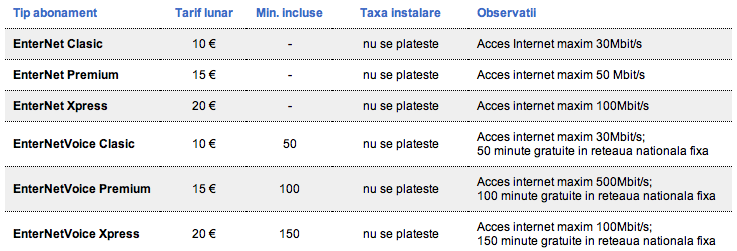
Romtelecom, Romania’s largest telephone and internet provider, has also increased their broadband speeds. They’ve begun using a new DSL technology called VDSL, and they’re offering broadband plans at speeds up to 30 Mbps downstream and 6 Mbps upstream. Incidentally, their largest plan (30 Mbps) also costs about €10/month, but you’ve got to keep in mind it’s still DSL and the uplink speeds are slower. Plus, phone service will cost you extra.
I’d love to know which companies can offer the same speeds in the US, and at similar prices. Short of Verizon’s fiber optic network, which is only deployed in limited metro areas, and still costs more, what else is there?
And that begs me to repeat my original question: why are broadband speeds so slow in the US?
Vasile Stoica is the first Romanian to have traveled around the world on a wheelchair.

Born paralyzed from the waist down, he spent the first thirteen years of his life mostly in hospitals, enduring numerous operations which were supposed to enable him to walk, too poor for a wheelchair, forced to drag himself along the floor. When he got into his first chair, it felt like flying to him. Since then, he’s set ever higher goals for himself. He started making trips through Europe, then prepared for his trip around the world.
He completed his first round-the-world journey in 1998, and that’s also when he entered the record books as the person who traveled the longest distance by wheelchair. Since then, he plans different routes and travels with his special Kuschall wheelchair each year, hungry for new places and new challenges.
Here he is after he completed a grueling 5,250 km trek across Europe, in 2006, at Finisterre, Spain.

The man who traveled the world by wheelchair doesn’t get any respect in his own country, along with the other disabled people who live there. In a short video that he and his friends put together, he demonstrates how hard, or even impossible, it is for him to get around on his wheelchair in Romania, because of the lack of disabled access to public buildings, such as ramps or elevators — this in spite of laws that have been on the books for years.
Photos used courtesy of Vasile Stoica.
The first people to have traveled the world by wheelchair were Patrick and Anne Simpson, who published their account of the journey in 1997, in a book entitled simply “Wheelchair Around the World“.
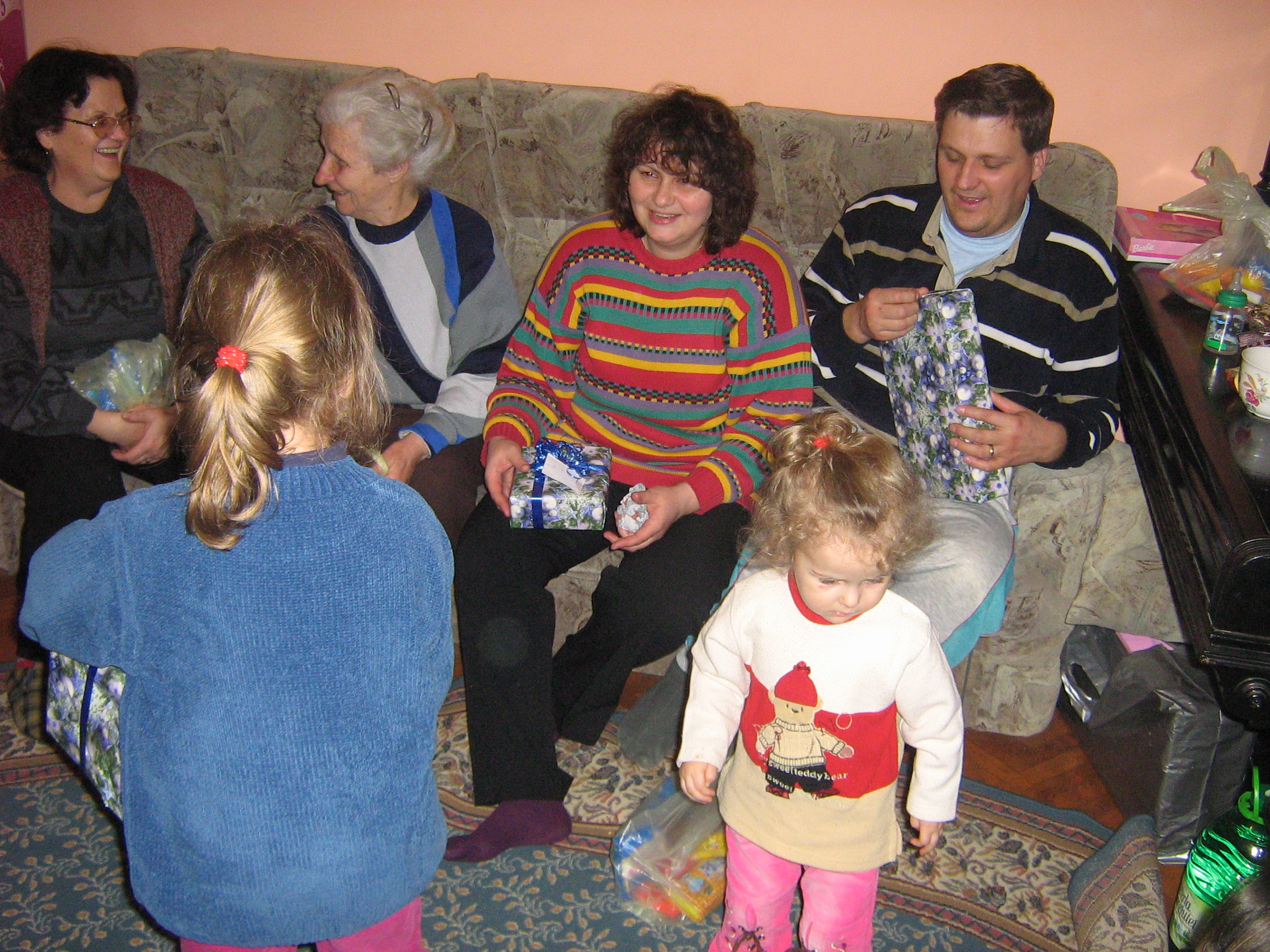
My wife’s cousin (her name is Estera, or Esther in English), has suffered from the effects of Hepatitis C, and is in Stage III-IV of the disease, which means her liver is pretty much shot to pieces. Doctors say she’s got to get a liver transplant this month or next month, or it’ll be too late to do an operation. You can see her and her two daughters in this photo. Estera is the third from the left, on the couch, next to her husband, Adrian.
Estera has already placed herself on a liver transplant list long ago, and has waited patiently, but time is running out. Her blood type is also rare (O1), and that makes it doubly hard to find a donor.
As you may know, the liver regenerates itself, so whatever bit you give will grow back. The bit the doctors transplant into her will, in time, and if everything goes according to plan, grow into a full-size liver. You’ll end up with an incision above your liver and the priceless knowledge that you helped a mother see her daughters grow up.
If you or someone you know is interested in doing this, please get in touch with Adrian, Estera’s husband, at adydrobota@yahoo.com. Since Estera lives in Romania, we’re looking for someone who lives in Romania or at least in Europe, so it’ll be easier for them to travel to her, but we’re not going to turn away any willing donor.
If you’re Romanian, make sure to read this post on my wife’s blog as well.
Thank you.
 Raoul Pop