Thoughts

Multitasking and digital gadgets are making us less productive

Here’s a neat infographic that clearly shows how multitasking and the various gadgets we own and use throughout the day are making us less productive and stressing our brains and our hearts.

Frequent multitasking makes us unable to focus properly, to make good decisions, set goals and retrieve memories from short and long-term memory. It also makes us less empathic and decreases the amount of grey matter in our brains; it keeps us in a constant state of “fight or flight”. This is NOT good for us. It can take as long as five days for the harmful effects of our digital lifestyle to wear off and for our bodies to return to normal, if we decide to cut ourselves off from it or reduce it drastically.

So, focus on only one thing at a time when you’re at the computer. Limit the amount of time you spend browsing websites and/or switching between them. And take breaks from the computer. If it’s not your job to be at it all day long, don’t spend your day glued to it. Use it as little as possible. Make your life as analog as possible. You’ll be healthier and smarter for it.


Digital Stress and Your Brain
Via: OnlineUniversities.com

Standard
Thoughts

A look at what’s ahead in terms of resources and the economy

The TED channel published two interesting videos recently which present two points of view about the Earth, in terms of its resources and economy. The first is from Paul Gilding, entitled “The Earth is full“, and the second is from Peter Diamandis, entitled “Abundance is our future“.

I invite you to watch both points of view, which are at first in seeming opposition but after some consideration, are both saying pretty much the same thing, namely this:

Our current economic models, based on carbon forms of energy, will soon reach their lifespan, and we have some choices to make ahead as we transition to other economic models and other ways of generating our energy and making our stuff.

We can have a smooth transition or we can have a rocky one, with elements of anarchy and possible energy and water wars.

What’s clear on both sides is that we need to something about it and we need to start doing it now.

The wonderful thing is there are solutions to our energy and pollution problems emerging now and if they’re implemented correctly, we will not only avert any potential crises but we will come out ahead of the curve.

What are we waiting for? Let’s do it!

Standard
Video Log

The need for true craftsmen

I filmed a short vlog today about the need for true craftsmen, which is becoming more apparent in developed countries pretty much everywhere. The more emphasis is placed on white collar jobs, IT and college degrees, the less people you have going to vocational schools in order to learn how to become craftsmen. Countries don’t run on computers alone. We need people doing real, physical work, building the infrastructure and taking pride in their jobs, building with the best methods and to the highest quality available to them, otherwise fields like construction are going to get worse, not better. (Have you looked at the build quality of the sheds we call “homes” these days?)

I hope you take a few minutes to watch the entire video and do your part to encourage your children or your students in schools to become real craftsmen. They can make a good living, even a great living, doing craftwork, and they can do it without going into debt by the tens of thousands of dollars, getting college and post-graduate education which isn’t going to be useful to them. If you’d like a list of good, honest trades and crafts, this article which lists 19th century occupations alphabetically should help.

I’m not alone in my views. You can also watch Mike Rowe, host of “Dirty Jobs”, give a testimony before Congress where he urges the US government to encourage our children to choose to go to vocational and tech schools, because there’s a real need for these kinds of people in the US economy.

Standard
Reviews

My thoughts on Sigma DSLRs

I made a video follow-up to my past articles on Sigma DSLRs (see this and this), where I talk about where Sigma is today and why I think they’re lagging behind the market by 2-3 years.

Sigma’s R&D has not developed new DSLRs fast enough to keep up with market demands and the wonderful capabilities of the Foveon sensor are not put to proper use.

The Foveon sensor is remarkable in that it captures RGB color at each pixel due to its three plates (vs. a single plate in regular sensors). It is supposed to give much more accurate color reproduction than regular sensors.

Unfortunately, because Sigma has not worked fast enough to create DSLRs that can truly compete with those made by more popular camera makers such as Canon and Nikon at all leves (including, but not limited to low light performance and HD video), its DSLR arm now finds itself in a terrible slump.

Their latest offerings, the SD15 and the SD1 have not sold well, and I hope they do something soon in order to catch up with consumer expectations.

Standard
Thoughts

Good stuff coming from IBM

I had lost track of IBM after they spun off their consumer hardware arm (now known as Lenovo). I didn’t get their software offerings, still don’t, so I wrote them off. But then I found out stuff like this, which has reminded me of their great hardware achievements in the past and made me glad they didn’t spin off their hardware R&D.

IBM and 3M have just announced 3D semiconductors: layers of silicone chips sandwiched up to 100 chips high with special cooling glue, to form a “brick” chip that’s up to 1,000 times faster than any microprocessor on the market today. ETA for this is 2013, so not that far off.

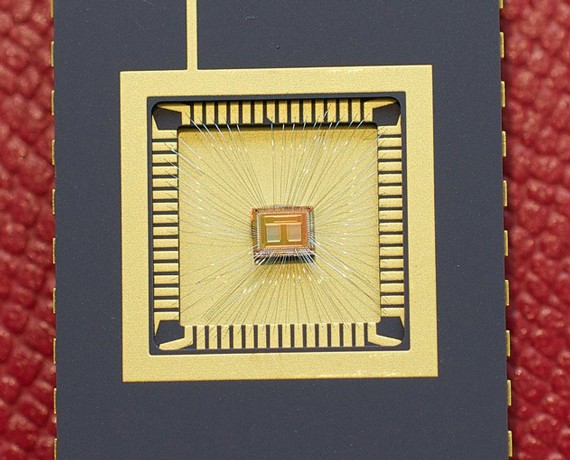
Now couple this discovery with their super-fast PCM (Phase Change Memory), which they announced back in June. It writes data at speeds up to 100 times faster than any flash memory on the market today.

ETA for it is 2015, so a couple of years after the 3D semiconductors, about the same time as Intel’s Silicon Photonics, a silicon and laser link between devices that enables data transfers at up to 50 Gbps.

Standard