Thoughts

Gotta give them something to do

It’s easy to decry TV, movies and sports as nothing more than a time suck, as a constant push toward looser morals and a consumer culture, but they also provide a benefit that’s not often discussed — that of giving people something acceptable to do with their time. Among other things, they redirect energy that would be spent on real life behaviors into vicarious behaviors, and in some ways, that’s a good thing in today’s world.

You look back through recent history, and you’ll see that as societies became more civilized, people distanced themselves from nature and segmented their existence not only in terms of time but also in terms of space. When economies were based solely (or mostly) on agriculture and crafts, people had plenty to do all day long. Life and work followed a natural cycle, and they intermingled. (You see some of that these days with telecommuting.) People had homes, and they had land, and they worked on that land and around their homes all day long. They put in long hours during the spring, summer and autumn, and relaxed during winter, at home with their families. Nowadays, very few people still live on that cycle. Most people have office jobs and live in apartment buildings, particularly in the larger cities where the costs of owning a home are prohibitive. When they get home at night, what’s there to do? Little, really. When you have an apartment, what are you going to do? Stare at the walls? Vacuum the floors? Re-organize your sock drawers? I suppose that’s how the need for mass entertainment developed, first with sports, then movies, then TV. When you have (roughly) five hours of free time per day, you’ve got to spend it somehow, so why not become a sports fan, or why not watch movies or TV?

As one follows the progress of their favorite sports team or TV show, they live in that world, through those characters or stars, and experience the highs and lows of that microcosm. Some would say that’s a form of population control, of dumbing down the population, of occupying their time with nonsense so they don’t wake up and start something. In some ways, it is, but it’s also needed. What would people do with the energy and time they spend on sports and TV if those outlets didn’t exist? Some would spend it in positive ways — with their families, on books, arts, hobbies, games, newspapers, trips and the like — and yet others (and this is a number that can’t be quantified) would spend it in negative ways — and the variety of those ways is something that would boggle the mind. For that group of people, the fact that they spend their time in front of the TV or in the stands, cheering for their sports teams, is undoubtedly a good thing.

So, beside the fact that there are very real benefits to TV networks and advertisers as more people tune in to see TV shows and sports matches, or to movie studios as more people go to see their latest creation, or to sports teams when fans fill their stadiums, there are arguable benefits to be gained for society in general as more people tune out the outside world and turn on their TVs. The issue is clearly more complicated than that, and I’m oversimplifying things, but I wanted to point out this particular aspect. It’s but one view among many that can be taken when you talk about this subject. The more I think of this, the more I realize its complexity can’t possibly be explained in a single post, so don’t expect an overarching conclusion here — just an observation.

Standard
Thoughts

Meet Buttons, the cutest kitteh ever

The one with the tiny nose

Sorry for the baited title. This post is really about how web users interact with written content on the Internet, and how people in general interact with the news these days. But read on anyway, you might find this useful, and there’s even another cute kitty photo at the end.

I’ve been sitting on the sidelines lately, looking at the way people interact with items on FriendFeed, and I realized it’s all part of how people in general interact with the world these days. In a word, it’s superficial. On the web, there’s barely any interaction with items that have no thumbnails. If there’s no image to be digested quickly with a news item, then it gets buried, fast. That particular news item might be truly meaningful, it could have real value, it could be worth at least a few minutes of someone’s time, but users just don’t take the time to click through and find out what’s going on if there isn’t an image to go along with it. It’s like they’re little kids and they gotta have pictures in their story books. Whatever happened to being adults?

I’m not talking about my own articles, and I’m not talking about FriendFeed per se. I’m talking about the bigger picture. You can see this on TV as well. In the US nowadays, instead of showing the person who is talking, whether that be a news presenter or a person being interviewed, the stations overlay the audio on top of looping footage of the things the person is talking about, or they run the audio on top of marginally related video, ostensibly to keep a spastic audience glued to the set. In Romania, where I’ve been staying these past few months, they divide the TV screen in half. They show the commentator in one half, and they show video footage in the other. Your eyes keep jumping from one spot on the screen to the other, to make sure they catch all the action. And they also scroll text and stock and weather alerts on the bottom of the screen. It’s nuts. You just don’t get the chance to digest what the person is saying, because your attention is continually grabbed and pulled in many different directions.

If you are reading this on FriendFeed or in a RSS reader that shows media content thumbnails, do you know why you clicked on it? Likely because I had a photo of a cute kitten to draw your attention, not because you wanted to do some actual reading. It would have been much better if I showed some woman in a bikini — many more people would be reading this article right now, or at least skimming it, hoping for more photos.

Isn’t it sad though? For a person who likes to write, and wants to communicate through writing, it’s so disappointing to see the audience drifting from adult food to baby bites, to cute or sexy photos with (preferably) one or two sentence captions, instead of real articles. Whatever happened to sitting down and reading something?

Don’t tell me it’s because you’re busy. I don’t buy it. You’re lying to yourself and you’re lying to me. People have always had lots of work to do. Sure, it wasn’t computer work a few decades ago, but it was chores or factory work, and it took just as much time and much more effort. But they knew how to relax. They could sit down with a magazine or newspaper in hand, tune out everything else, and read something they found interesting.

You still have that ability. Stop being immature and clicking on everything, and pick the stuff you want to spend your time on carefully. There’s only so much time in one day, and you can’t keep up with a thousand RSS subscriptions and still do other things. Thin out the stuff you want to see on the web every day. On a larger scale, thin out the stuff you want to do every day, because you can’t do it all. Decide on what’s important to you, and stick with that. Maybe if more people took this advice, the world would be a saner place for those who write on the web, like me. We wouldn’t have to go nuts trying to get the word out about our content, because people would take the time to find interesting stuff and stick with it.

If you’re a FriendFeed user, let me tell you it’s not cool to subscribe to tons of people just so you can watch news items stream by you in real time and feel good about keeping up with everything that’s going on in the world, because that’s not the case. In the end, you’re just as superficial as the guy who looks at a magazine cover and thinks he knows everything inside it. Instead of wasting your time doing that stuff, pick the people you find interesting, weed out the rest, and really sit down to see what they have to say.

Now, just because you read/skimmed this far, here’s another photo of kittens, this time two of them, playing together. See, I’m not such a bad person.

Games kittens play

Standard
Reviews

I like "The Saint"

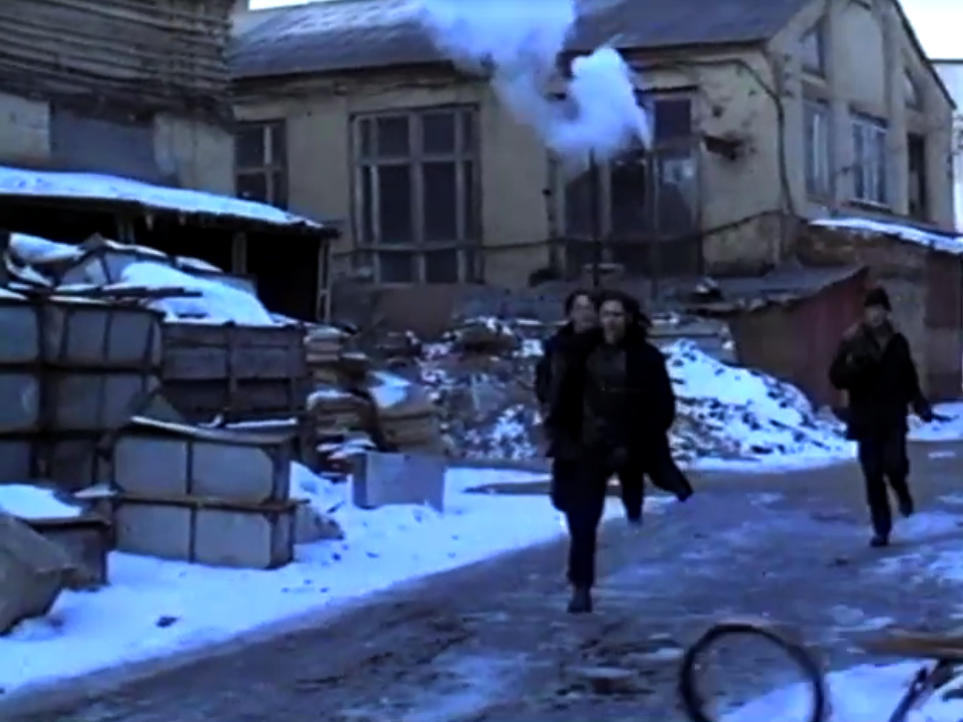
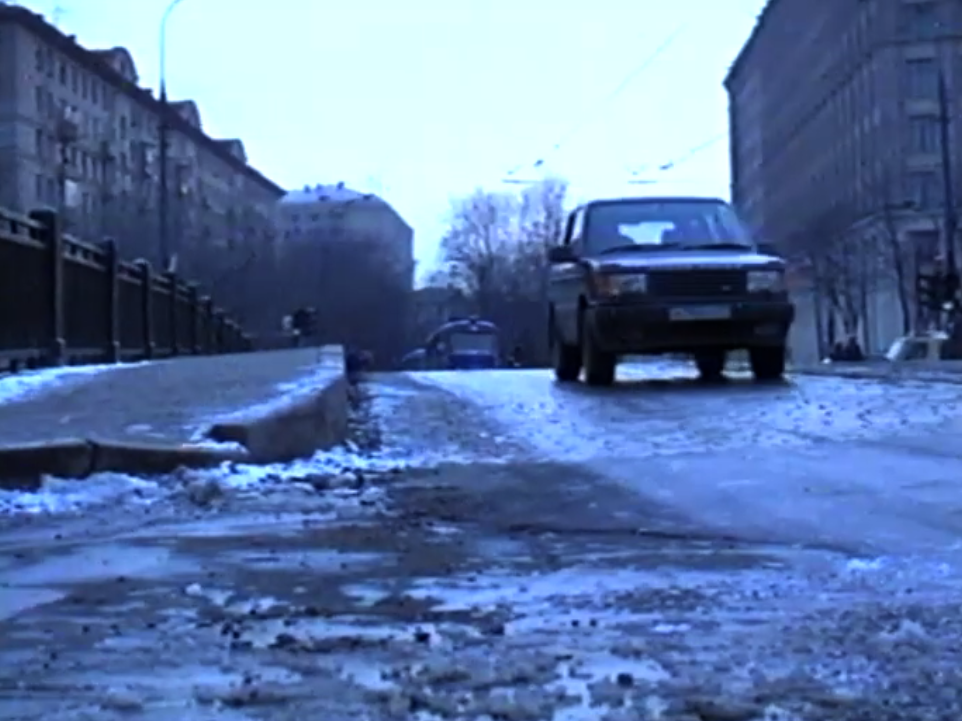
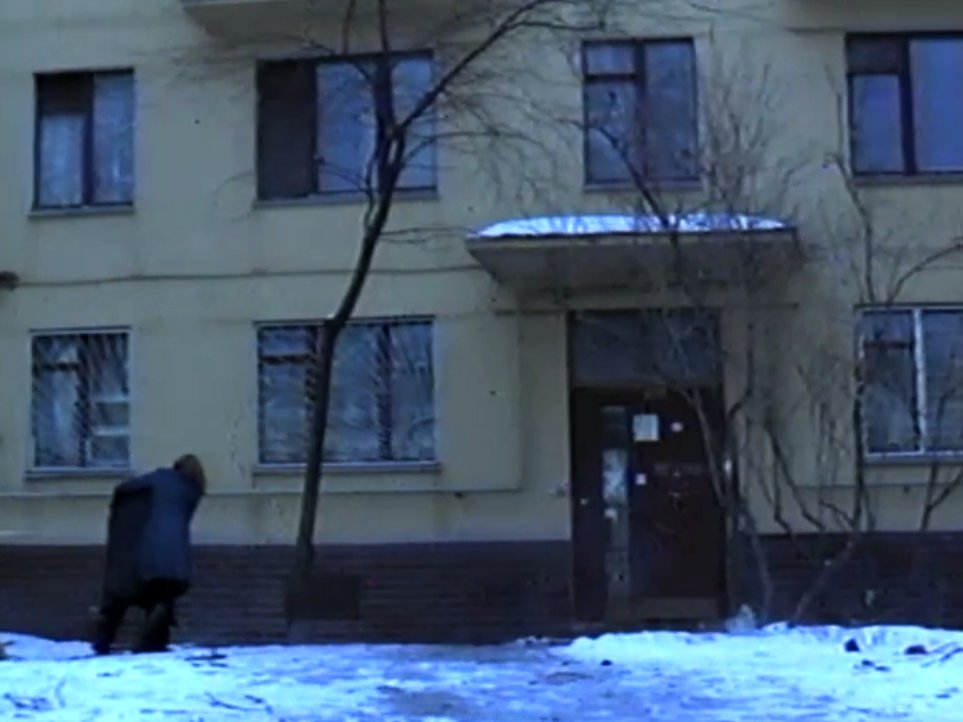
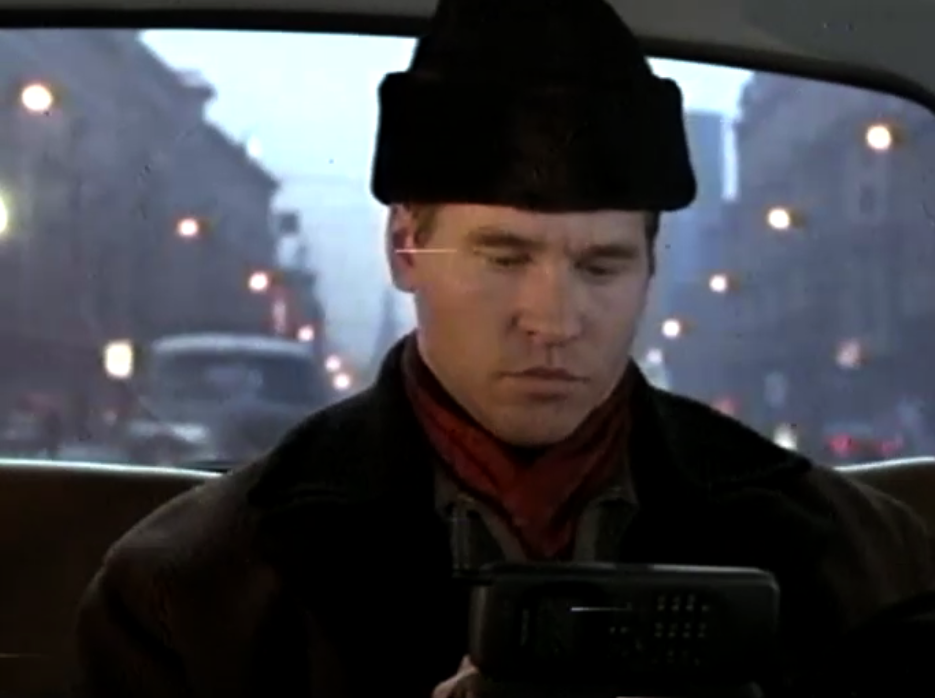
It got panned by the critics. Val Kilmer’s acting was indulgent at times. It was somewhat cliché. What was up with those knee-high socks that Elizabeth Shue’s character wore throughout the movie? Those are some of the things that come to mind when I think of “The Saint” (1997). But it struck a chord with me, from the first time I saw it, and I like it even after all these years.

I think it evokes the feel of that time in Eastern Europe very well. I visited Romania in December 1998, for the first time since I’d left in 1991. The movie and the impressions from my trip match. It was cold, snowy, in many ways dreary, there was poverty all around, but still somehow enchanting, inspiring, in a way that made you feel you could do almost anything, as if the slate had been wiped clean and people were free to start things over.

moscow-scene-1

moscow-scene-2

moscow-scene-3

Simon Templar, the character played by Val Kilmer in the movie, has a long heritage that started in books in 1928. The character itself has been played in movies and on TV by several other actors, Roger Moore being one of the more notable ones. I remember watching Moore in the Saint series as a child growing up in Romania. The films were gripping and I loved seeing a modern-day Robin Hood escape from dangerous situations, just as I enjoyed seeing Kilmer’s character escape from similar situations in this latest installment.

Given the character’s long history, Kilmer had some big shoes to fill in this movie. For example, I thought there were too many close-ups of him. Perhaps the director was trying to establish character, and the close-ups were meant to give us an insight into what S.T. was thinking, but at times, I could see the actor hamming it up behind a thinner-than-usual mask. Still, I always thought Kilmer was charismatic and I don’t begrudge him the less than stellar acting here. Every actor goes through a ham stage in his or her career — most notably of all, the famous John Barrymore, who quite possibly illustrated the very phrase in some of his later film roles.

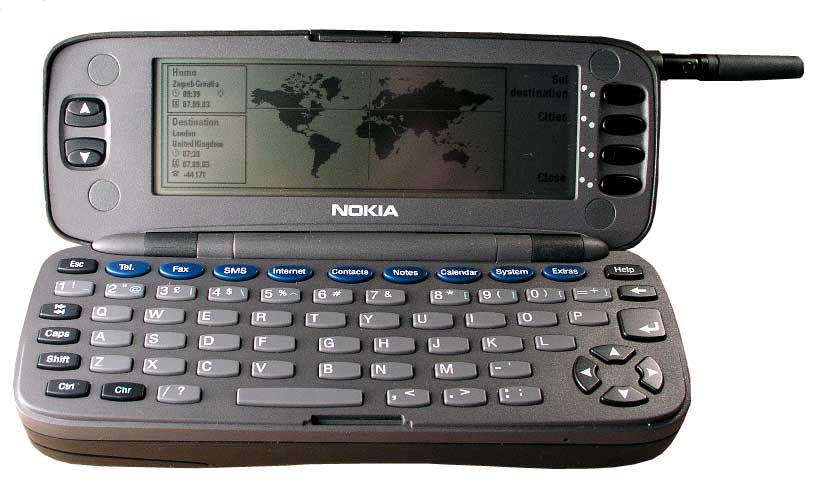
The film’s tech was amazing for its time. Simon Templar’s phone in the movie — that Nokia phone was something else. It blew me away. I think it could do everything modern phones could do — at slower speeds, naturally — except play movies. I learned it was a Nokia 9000 Communicator, thanks to the Saint.org website. And to think, all of that technology was available in 1997! Nokia was very happy about the phone’s appearance in the movie and even issued a press release about it that same year.

nokia-9000-communicator

nokia-9000-communicator-in-movie

All in all, “The Saint” is one of a handful of movies in my library that I’ve watched multiple times, and will probably watch again. I like it.

Standard
Reviews

Checking in with Energizer's Advanced Lithium Batteries

I can finally report on the battery life of the Energizer Advanced Lithium Batteries given to me in late January. I wrote about them on February 4th, and put them in my Canon EOS 5D’s battery grip a week or so after that. They worked until this past Saturday evening, April 25th. When I did the tally, I saw that I’d taken 1,872 photos with them. That’s not a typo. The vertical grip stayed on my 5D all the time, from the time I put the batteries inside it to the time I took them out, and that’s how many photos I got with the batteries.

While that battery life is very impressive, given the 5D’s 500-600 shot battery life with one of its single rechargeable batteries, or 1,000-1,200 shots or so with two rechargeable batteries in its vertical grip, it doesn’t tell the whole story. There are a few things I need to clear up first:

  • During these past few months, I’ve been shooting mostly landscapes. That means I didn’t take lots of photos in one sitting, which would have drained the batteries faster. I would expect that if I shot events, the battery life would have been significantly less.
  • For some reason, and I’m still not sure whether my vertical grip is to blame or the batteries, the battery life sensor kept giving a low battery notice the whole time the batteries stayed on the camera, from the time I put them in to the time I took them out. Sometimes the battery life sensor would even flash the really low battery signal, indicating the batteries only had a few shots left in them. Regardless, they kept on working until Saturday evening. Not sure whether this was because the camera expected 1.5V out of each battery, not 1.2V, or whether my battery grip, which had been sitting in a box, unused, for several months before this, is at fault, but that was my experience.
  • Related to the two bullet points above, the batteries gave out while I was shooting an event. It’s possible that they would have lasted even longer if they hadn’t been put through prolonged, continuous use. It’s also possible that if I stick them back in the camera, they might have enough life in them to let me squeeze off another several shots, but that would go against the conditions of my test, where I wanted to see how long they lasted without taking them out of the camera.

Whatever your mileage may be (and I encourage you to do your own testing), I’m very impressed with the battery life. While it was a hassle to keep the vertical grip on my camera the whole time (I prefer to shoot without it unless I’m doing events), it was an interesting experiment. I would recommend keeping a set of these batteries in your bag as a backup, just in case your regular batteries run out of juice. They have a long shelf life, and they won’t self-discharge like rechargeable batteries.

I also promised in my initial post that I would use them in my 580EX II speedlite. I’m keeping that promise. I’ve been using them in it since February, and they’re still doing fine. Again, I haven’t used the speedlite very much, because I’ve been shooting mostly nature stuff, but I did shoot a wedding recently and it worked flawlessly the whole time. I’ll let you know when those run out and I’ll tally up their shot life, too.

Standard
Events

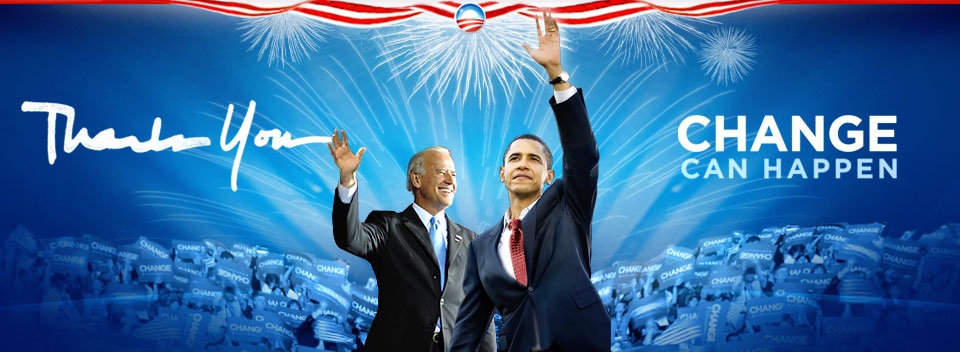
Congratulations, President Obama!

We have seen democracy in action, and we have achieved something amazing, as a country: we have elected the first African-American president. That’s something that goes a long way to wipe the wrongs of the past, and is something that would have probably made some of our country’s founders proud, had they been able to witness it.

http://video.google.com/videoplay?docid=-7811491813839468741

There’s a long road ahead, and it’s paved with incredible challenges. I believe our new president is equipped to deal with them, and that’s why he got my vote and my wife’s vote. I hope he does what he promised to do, and that he brings positive change to this country. We’re in a huge mess, and we need someone to clean house.

Our federal government will now be a Democrat government, from top to bottom, which is something I’ve not seen yet. I hope they use their collective legislative power to do good things, and they don’t get caught up in bureaucracy or infighting. I think the next four or even eight years could be used to build our country up in an historic way, not unlike the period after WWII. The opportunity is there, but the right people need to do the right things, and they need to support our new president as he charts our country’s course.

One thing I also hope is that they’ve beefed up the security around him. I don’t want to see anything tragic happen. It would be disastrous. It is very unfortunate that there are still people in the US who can’t get over someone’s skin color even when that person is rational, intelligent, respectful and kind. But those people are around, and I’m fairly sure that they’re not dealing with this Obama win in any sensible manner. Let us hope the Secret Service does their job and neutralizes any threats before they arise.

I want to end on a positive note and wish Barack Obama and Joe Biden all the best in the years that lie ahead. I hope and pray they will meet every challenge rationally, calmly, and decisively, and that they’ll hold true to the promises they made during their campaign.

Image used courtesy of Barack Obama.

Standard