
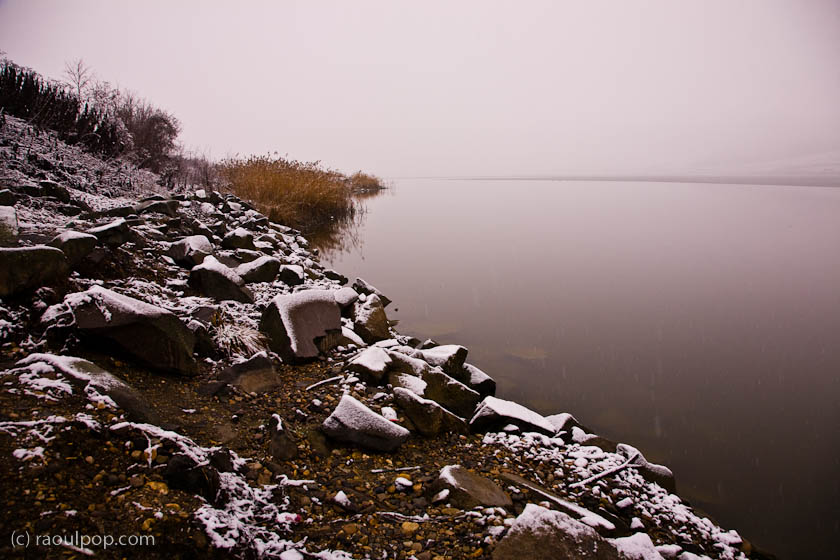
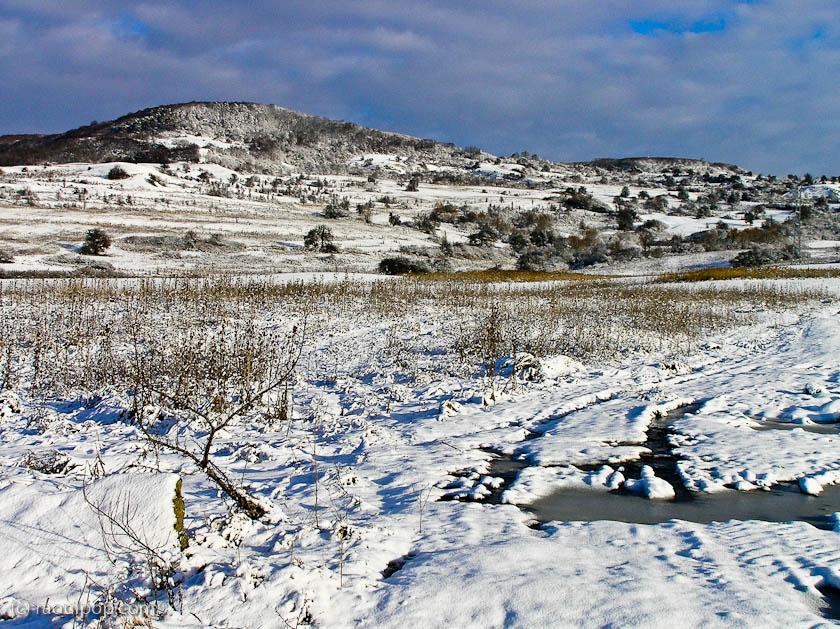
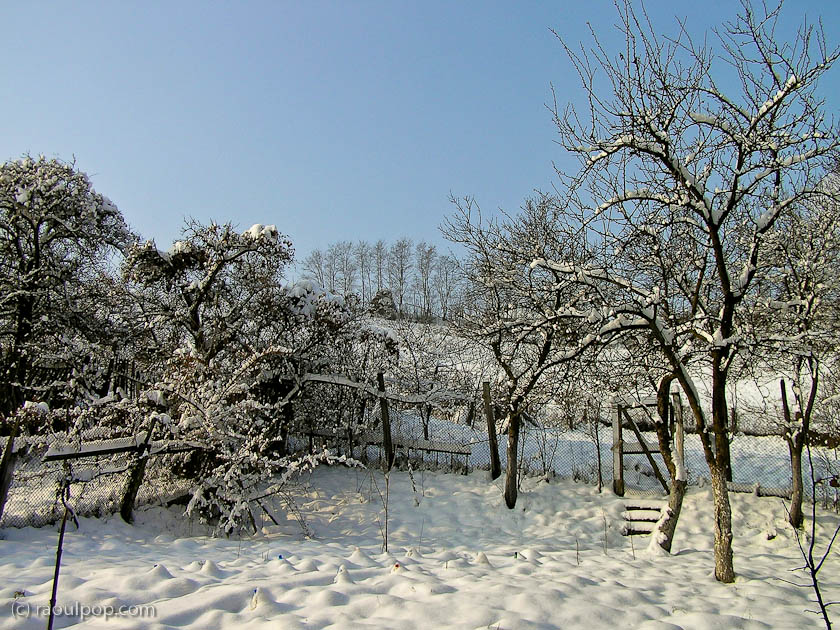
On the rocky shore of a fishing lake during a winter snowfall. In countryside of Transilvania, Romania, in the lake and hill region located somewhere between the cities of Ludus and Apahida, in the county of Cluj.
A beautiful and historic region of Romania
On the rocky shore of a fishing lake during a winter snowfall. In countryside of Transilvania, Romania, in the lake and hill region located somewhere between the cities of Ludus and Apahida, in the county of Cluj.
After a cross-country trip through Romania to visit family for Christmas, our car’s on-board computer told us we logged 1,560 km (969.34 mi). I was already a big fan of our VW Jetta TDI, but now I like it even more. Our average fuel consumption was 6.1 l/100 km (38.6 mpg) while our average speed was 63 km/h, though we traveled around 90-100 km/h (62 mph) when the roads allowed it. Our total fuel cost was roughly 300 RON (about $100). Total driving time over a period of a week or so was 24 hours and 54 minutes. Although there were two trips whose time was around 9 hours and 30 minutes, somehow small trips here and there added an extra 6 hours to our driving time.
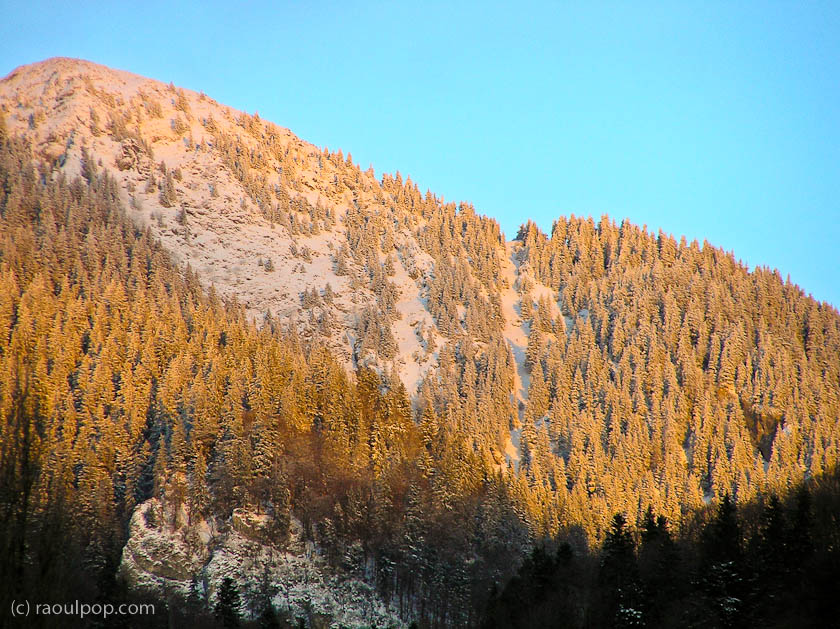
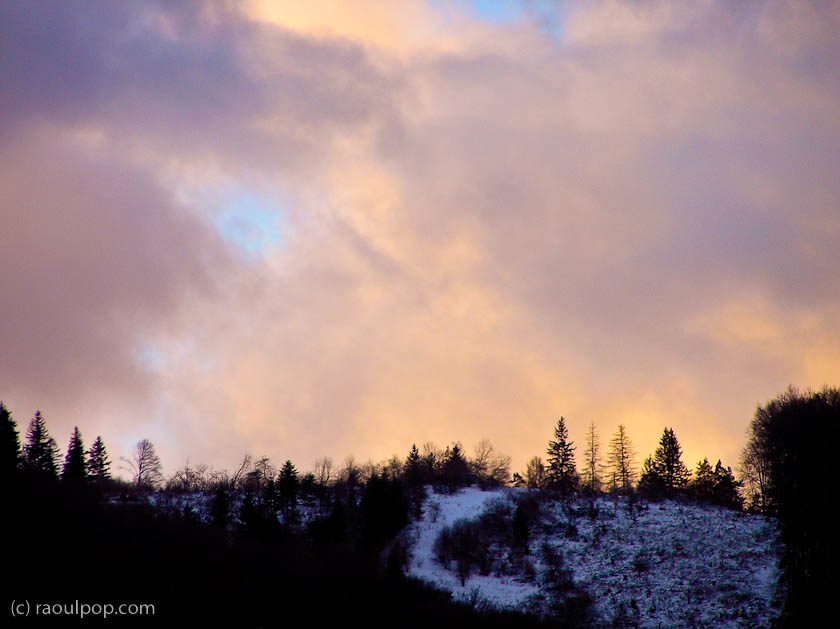
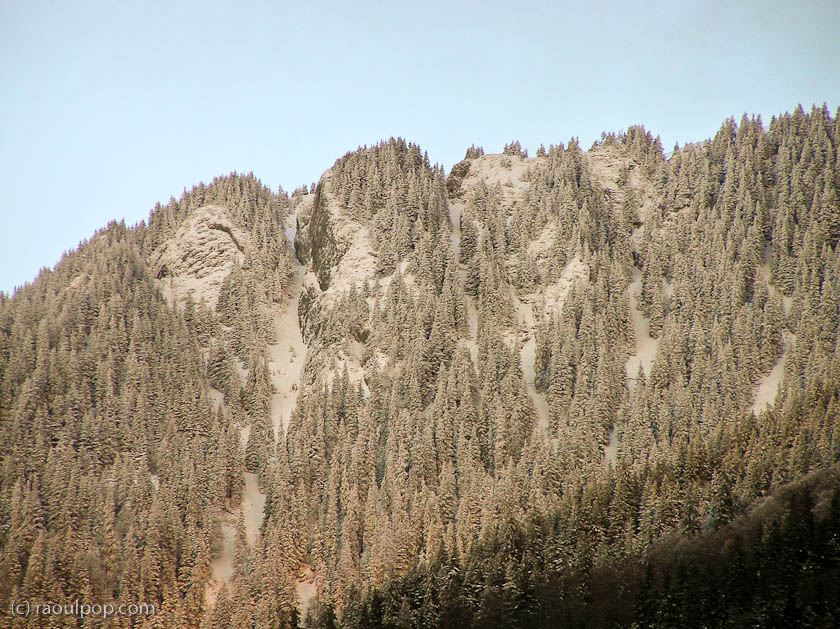
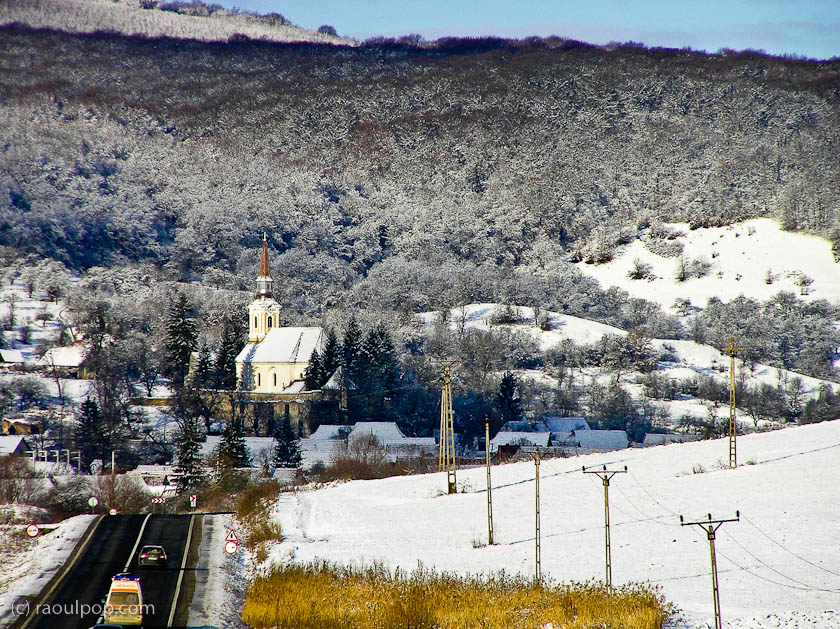
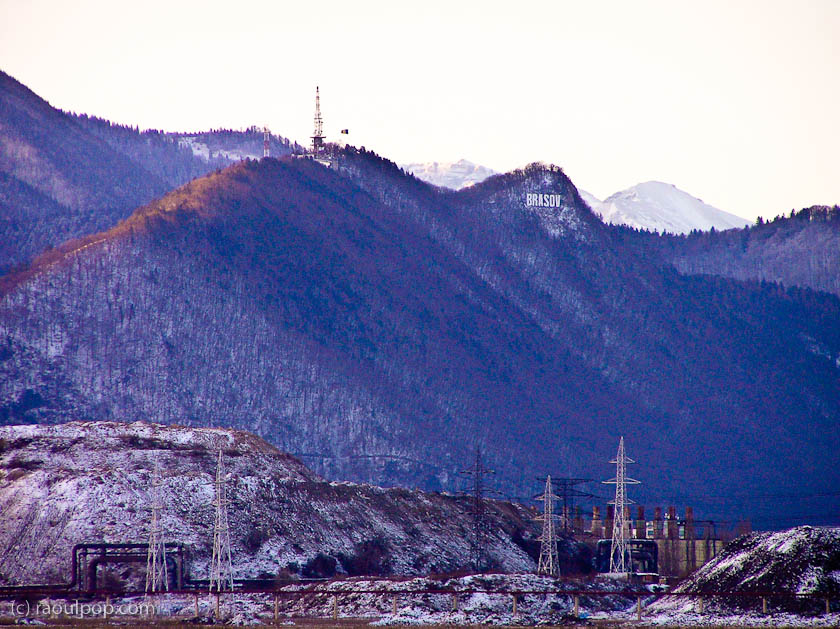
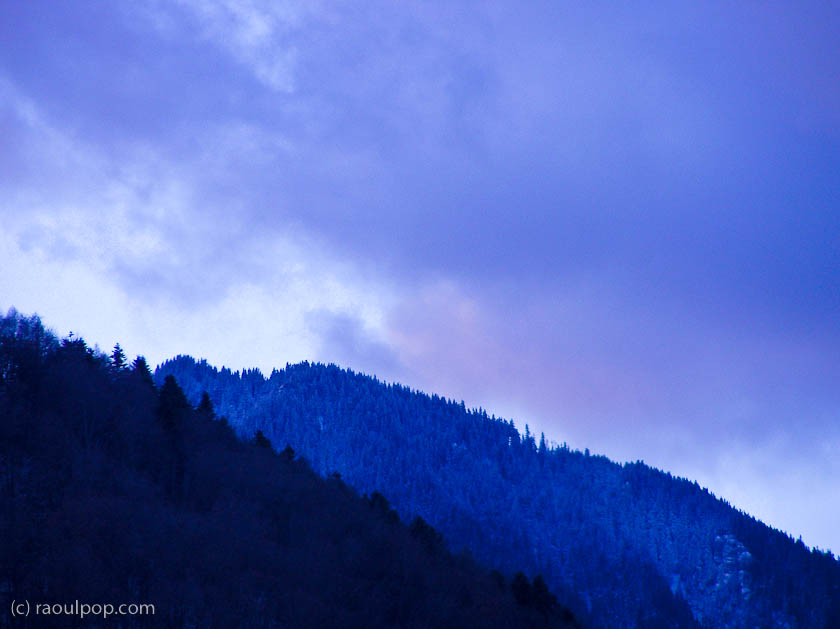
We left as a recent snowfall was melting and the weather had turned dreary, and we came back through fresh snow and clear, sunny skies. As we crossed the Carpathian mountains, we found ourselves in a winter wonderland. Trees and mountain slopes as far as the eye could see were decked in pure white snow, lit up by the most gorgeous morning hues of orange and purple light. I took photos, and also recorded a driving video. I hope you’ll enjoy them, they’re posted below.
If you plan to travel on A2 (Autostrada Soarelui), the Romanian highway between Bucharest and Constanta (which is still unfinished and only goes to Cernavoda,) be aware of two things. First, they’ve started charging 10 RON for the use of the highway, so it’s become a sort of a turnpike, although it’s the only highway in the region, so that’s not right, and two, it’s full of potholes. During our drive from Cernavoda to Bucharest, during the night, we not only had to deal with black ice, but with over 40 potholes, each over 20 cm in diameter and 5-10 cm deep. If we had been traveling at the posted speed limit of 130 km/h (81 mph), our suspension would have blown up long before we reached Bucharest. Instead, we drover 80-100 km/h, weaving in-between potholes while trying to guess which portions of the road had black ice. And yet the people who administer the road have the gall to charge money and ruin our car at the same time.
Still, we weren’t going to let a thing like that spoil our trip. The weather was truly beautiful on our return, and the snow made everything look gorgeous, particularly once we approached the Carpathian Mountains. We got close to them at daybreak, and by the time we were crossing them, the golden-pink hues of the dawn light made each snow-covered peak look magnificent. The mountain forests were glorious. Branches everywhere were laden with snow, and the crisp mountain air made each roadside stop memorable. You’ll see what I mean if you watch the video, which is about 10 minutes in length.


Ligia and I wish all of you a Wonderful and Merry Christmas! Should you happen to celebrate something else, then Happy Holidays to you and yours!
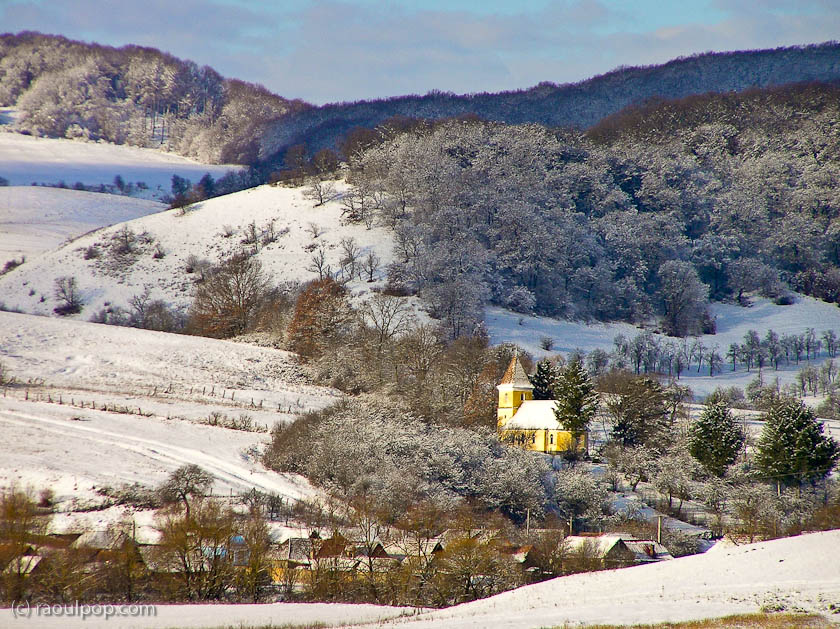
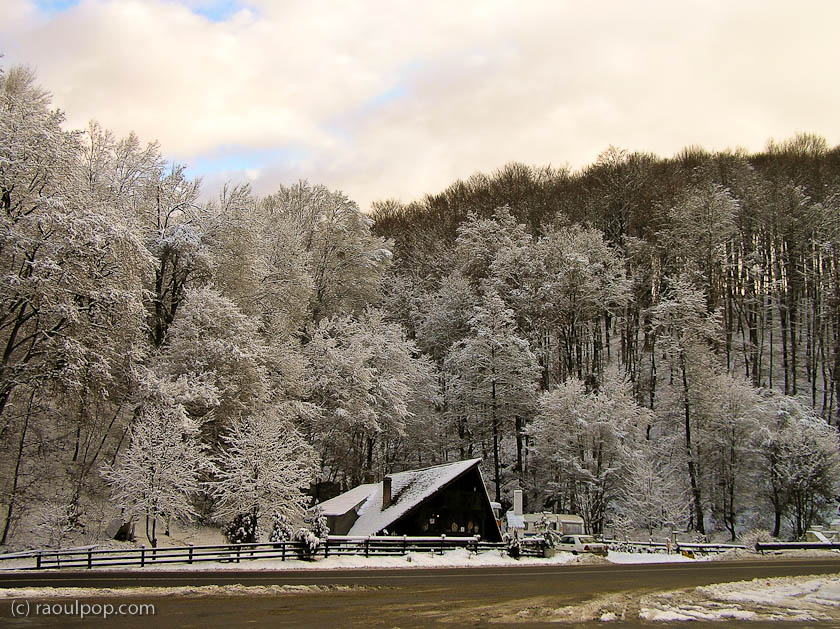
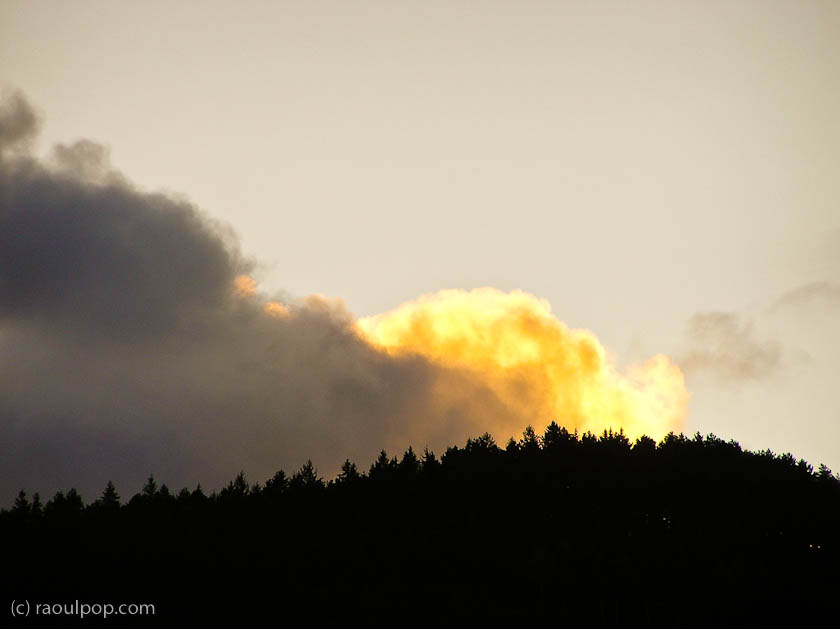
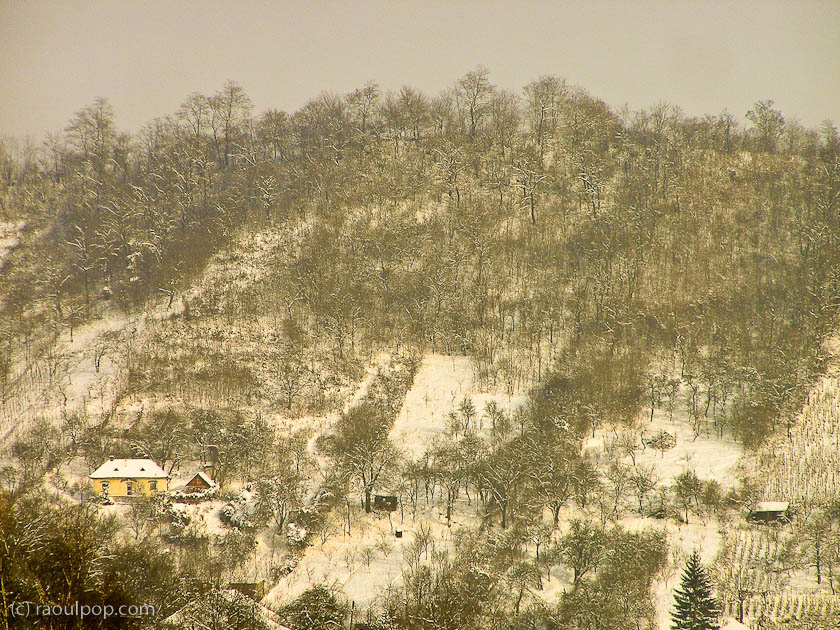
These are photos I’ve taken in the province of Transilvania, during the past several days, after a beautiful early winter snowfall blanketed most of Romania.


If you’d like to see Christmas photos from past years, here are my posts from 2007 and 2006.
As announced, we returned last week from a road trip that took me through northern Maramures, Bucovina, Moldova and northern Transilvania. (These are all provinces in Romania, by the way.) Ligia, my parents and I packed into our car and spent about 1 ½ weeks on the road, visiting various places, mostly in Bucovina. We visited several monasteries (the region has some of the most important in Romania and Eastern Europe), most of which we’d visited back in 1991, so it was interesting to see how they, the places around them, and the people living there changed over the years. Along the way, as we meandered through the Carpathian Mountain chain, we got to see amazing vistas like these ones.
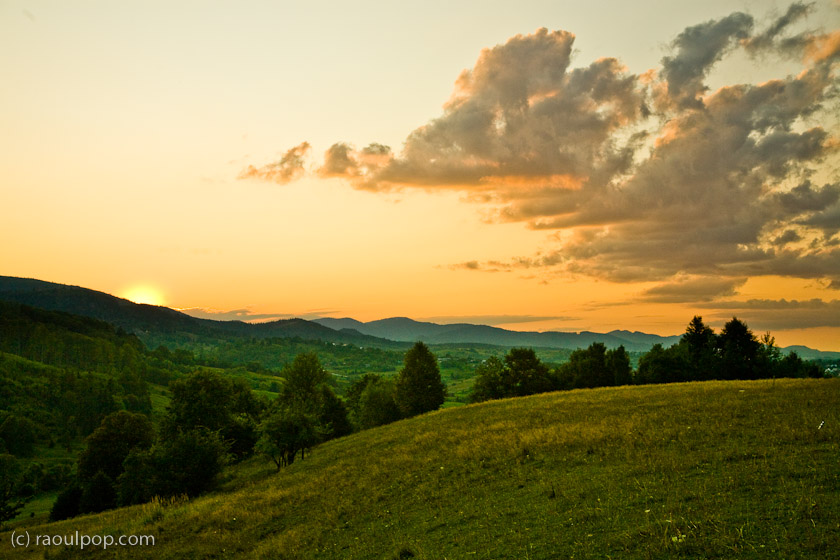
A sunset in Bucovina
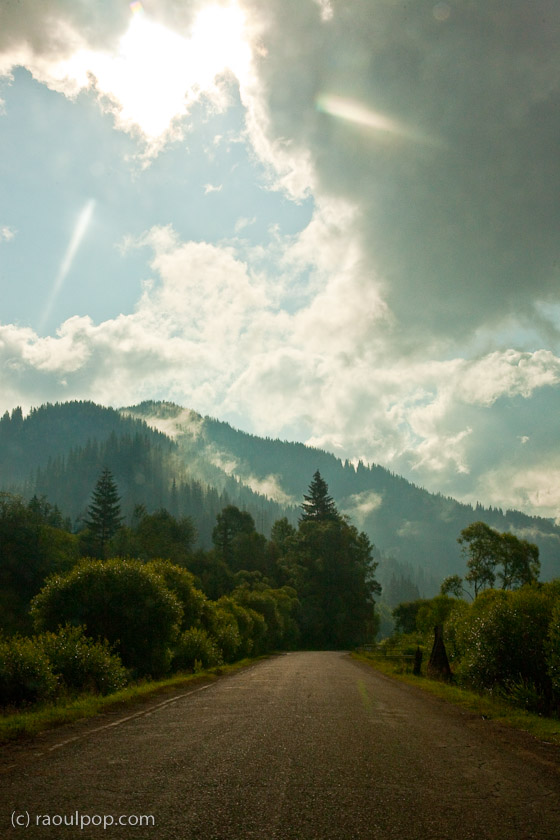
Rising fog in the morning hours, on the road in Bucovina
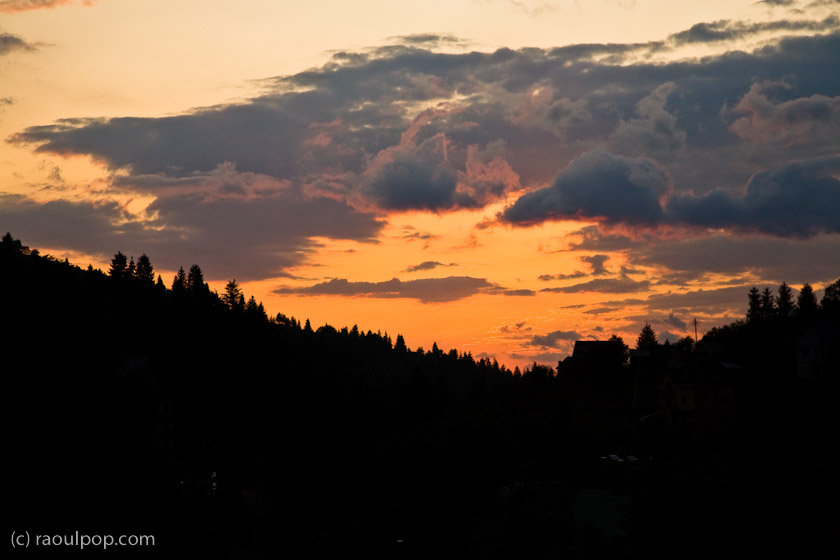
A sunset near Borsa
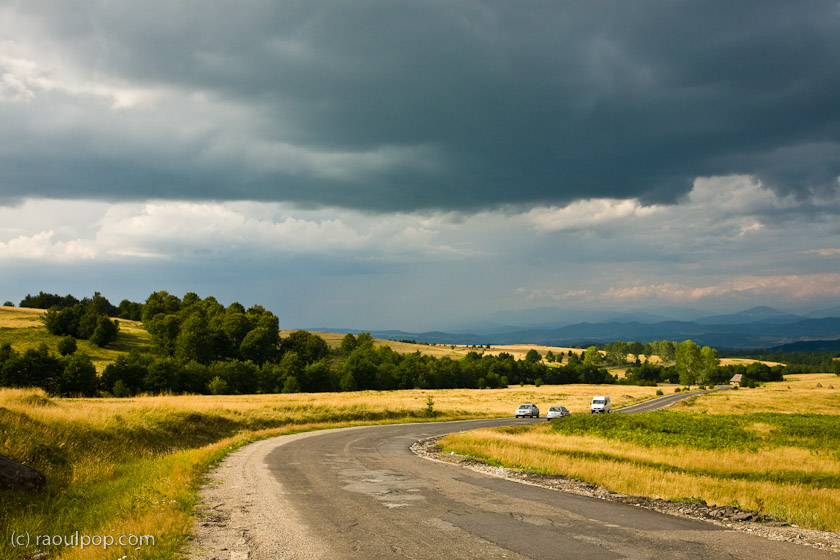
At the edge of northern Maramures, about to cross into Bucovina

In the hills outside the village of Vama, in Bucovina

In Maramures. Do you notice the start of a rainbow in the lower right corner?
We started with a quick stop in Baia-Mare, in Maramures, where we walked in the newer, more (relatively) modern town center. The historic town center is a few kilometers away from where this photo was taken.

Downtown Baia-Mare, Maramures
From Baia-Mare, we headed North, toward Sighetul Marmatiei, then West, into Bucovina, crossing over the Northern part of the Carpathian Mountains. While still in Maramures, we visited the tallest wooden church in the world, Biserica de Lemn “Sfintii Arhangheli Mihail si Gavriil”, in a village called Surdesti.
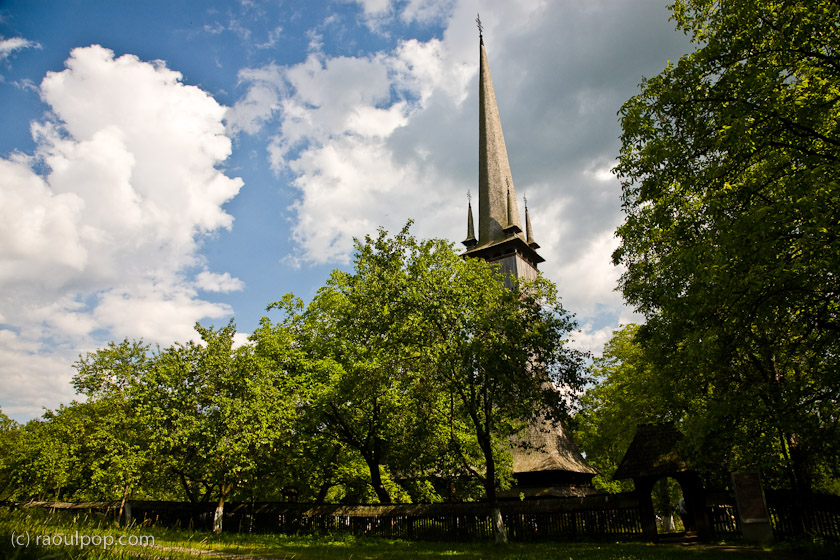
Biserica de Lemn "Sfintii Arhangheli Mihail si Gavriil"
Night came upon us as we drove over Mt. Prislop, the main crossing point from Maramures into Bucovina. There was no lodging available in Borsa, a mountain resort (what economic crisis?!), so we drove on and found a cabin at the very top of the mountain. We stopped there, hoping for a memorable overnight stay. Unfortunately, the accommodations left a lot to be desired — the bathrooms in particular — so I spent most of the night mulling over my thoughts and taking photos, unable to sleep. This is one of the ones I made that night.

About 2 am, right on the very peak of Mt. Prislop, in Bucovina
The next morning, we moved on and wound our way into the heart of Bucovina. The first stop was the resort town of Vatra Dornei, which is famous for its natural springs. Here’s one of them below.
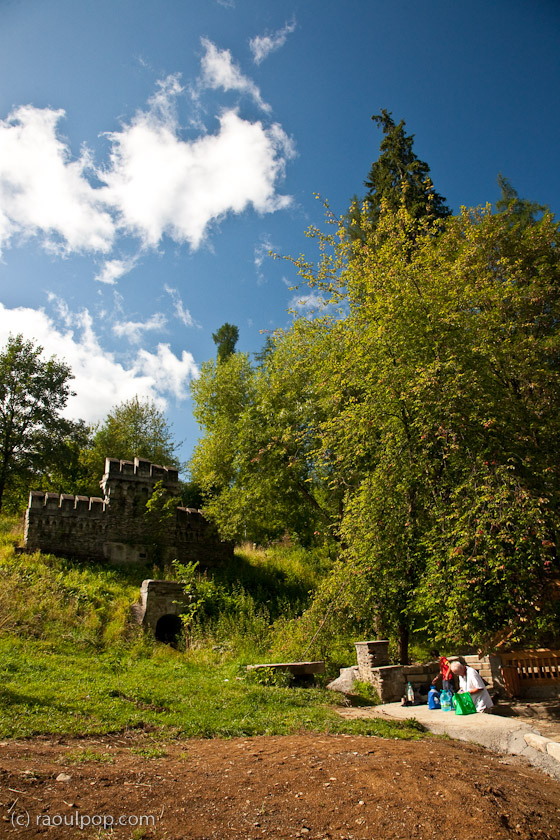
Vatra Dornei, Romania
The monastery at Moldovita was next on our itinerary.
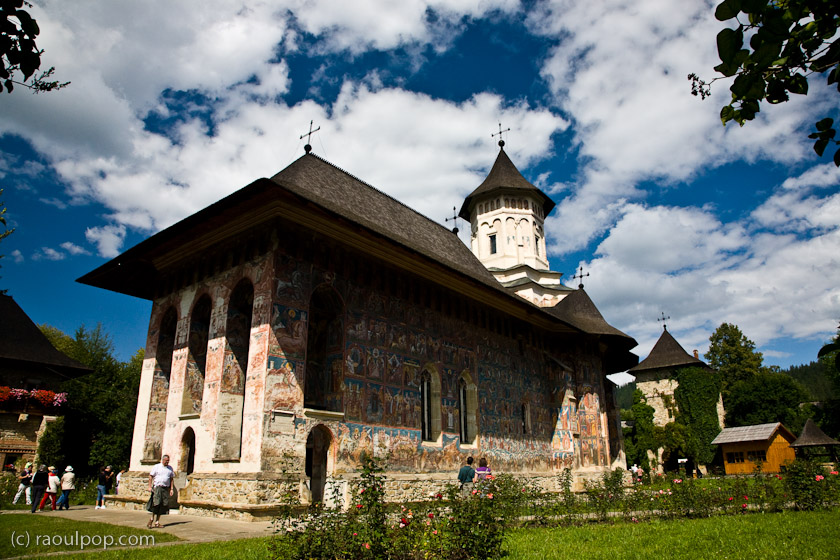
Manastirea Moldovita, Bucovina, Romania
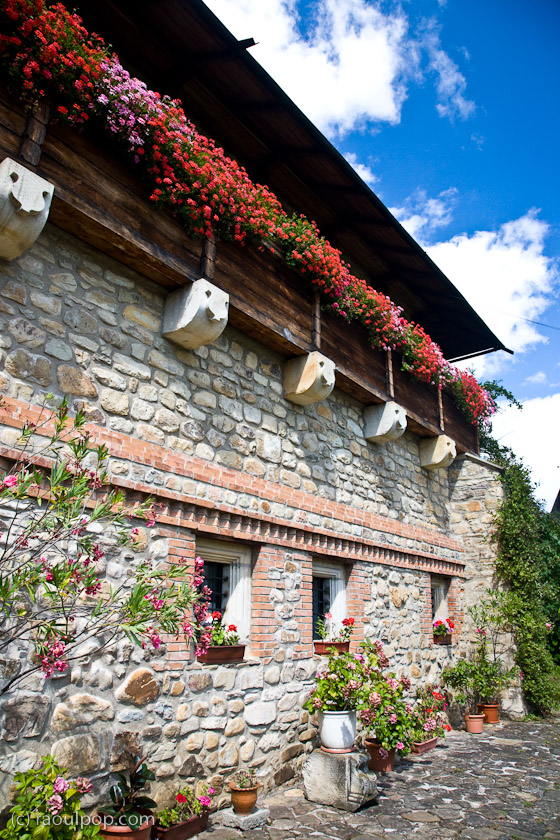
Manastirea Moldovita, Bucovina, Romania
The second monastery we saw was Sucevita.
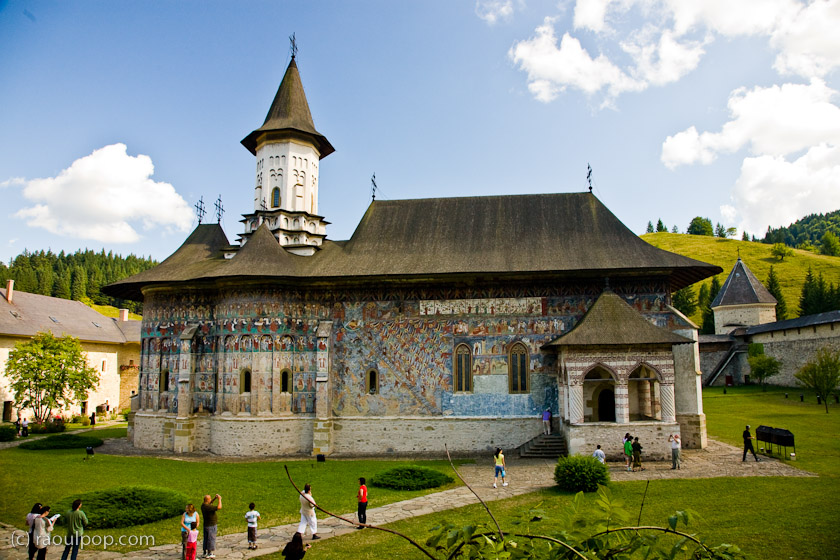
Manastirea Sucevita, Bucovina, Romania

Manastirea Sucevita, Bucovina, Romania
After not sleeping very well the previous night, and given the lodging crisis, we decided to start looking for a room around 5 pm. To our disbelief, all lodging in the area of the monastery (about 2 hotels and 3 pensions) was taken. I have no idea what economic crisis they keep talking about on TV and in the newspapers, because when I go out in the world, I don’t see any difference. Lodging was either full or close to full at most every place we visited, even in remote locations. Mountain resorts like Borsa, Durau, Vatra Dornei and Borsec were all full.
Since no lodging was to be found in the area, we drove to Radauti, one of the main towns in the province of Bucovina, hoping to find something there. We were looking for a 4-star place, either a hotel or a pension, and we were about to leave town, disappointed, when we decided to ask a gas station attendant who pointed us to David House, a 4-star pension nearby. Let me just tell you that while 3 stars may cut it in the US, it’s not enough in Europe, not by US or my standards, anyway. Read through our experience with hotels in Italy for more details on this topic, and trust me when I say that you want to look for 4-star hotels or pensions in Romania, if you can afford it. I’ll write more about David House in a future post, but let me just tell you our lodging experience there was superior to all of the other places we stayed at in Romania, and the price was great for the quality of the accommodations.
While in Radauti, we walked on one of its streets. This is one of the scenes we saw. I love the character of this run-down traditional house and the cat perched on what used to be a windowsill.
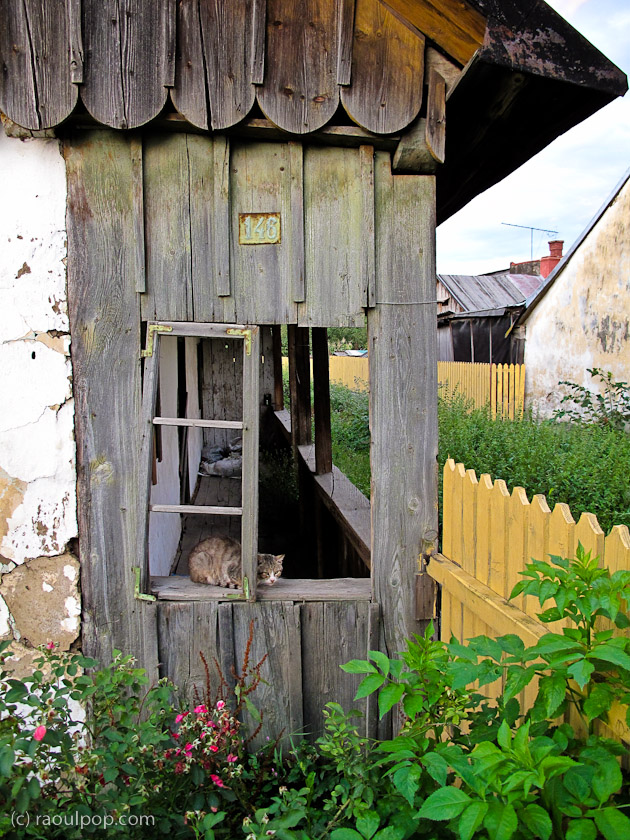
On the streets of Radauti
The next day, we visited the cave of a famous hermit called Daniil Sihastrul, who figures prominently in the history of the provinces of Moldova and Bucovina. He was the spiritual advisor of Stefan cel Mare, one of Romania’s great rulers.
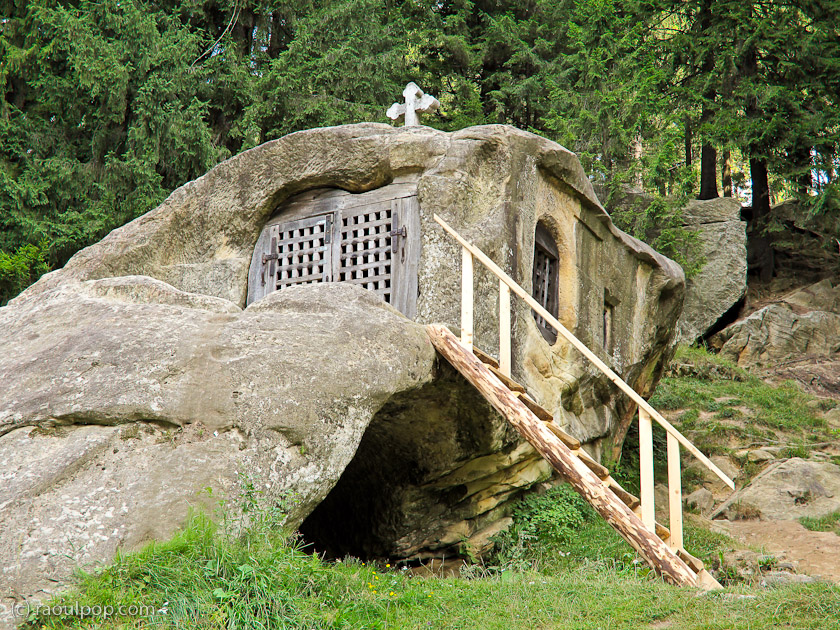
Chilia lui Daniil Sihastrul
After that, we visited Manastirea Putna — an old and large monastery, built in the 15th century. It contains the grave of Stefan cel Mare inside its church.
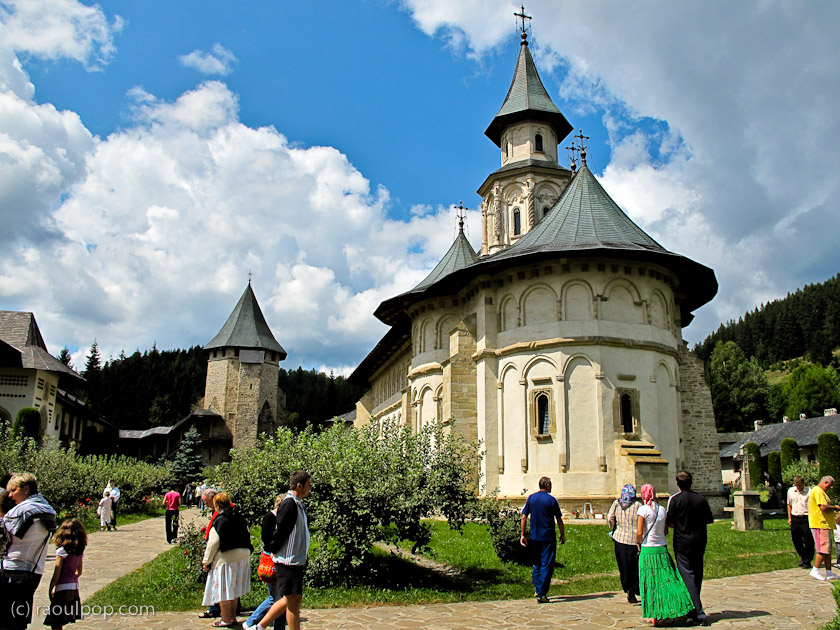
Manastirea Putna, Bucovina, Romania
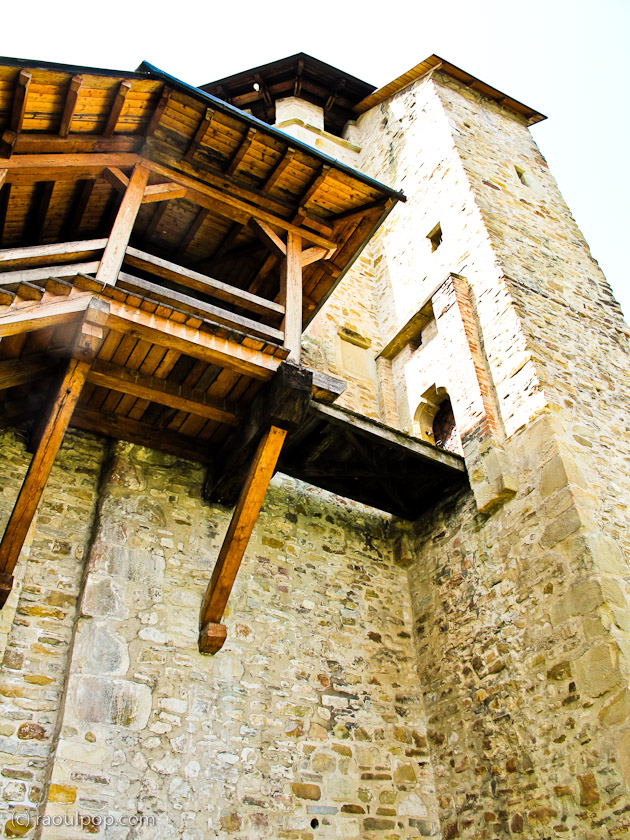
Manastirea Putna, Bucovina, Romania
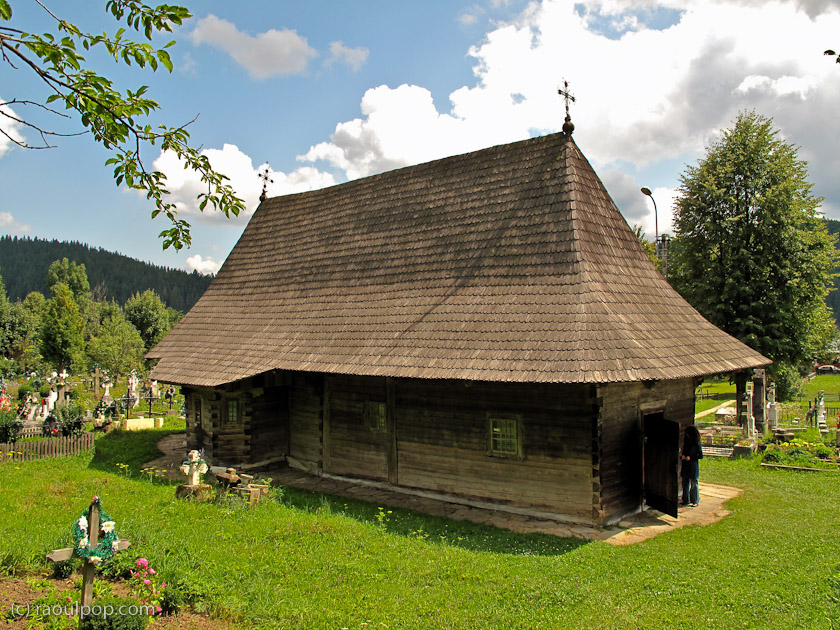
Very near Manastirea Putna, you’ll find the oldest wooden church in Romania, called Biserica de Lemn “Dragos Voda”. It dates from the 14th century.
Manastirea Voronet was next. Historically speaking, it’s considered the most important example of medieval religious painting from the Moldova province. The exterior frescoes also distinguish themselves through a particular blue pigment that has withstood the passage of time particularly well.
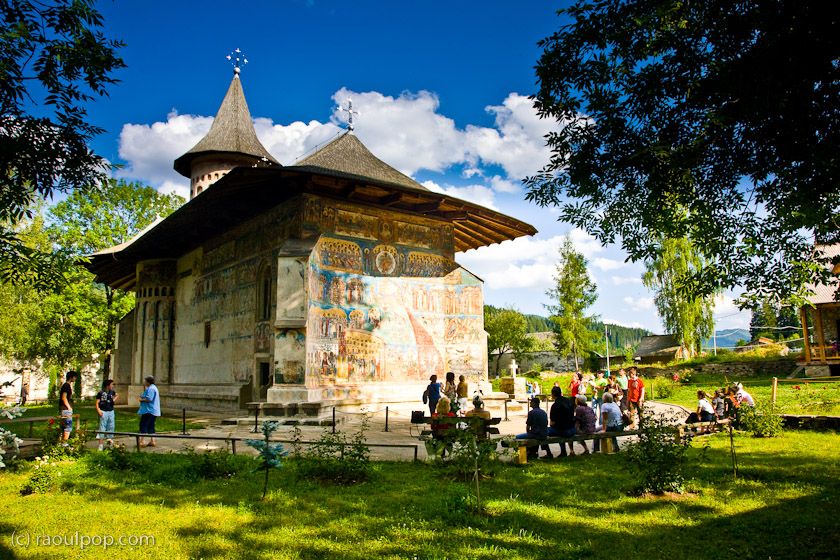
Manastirea Voronet, Bucovina, Romania.
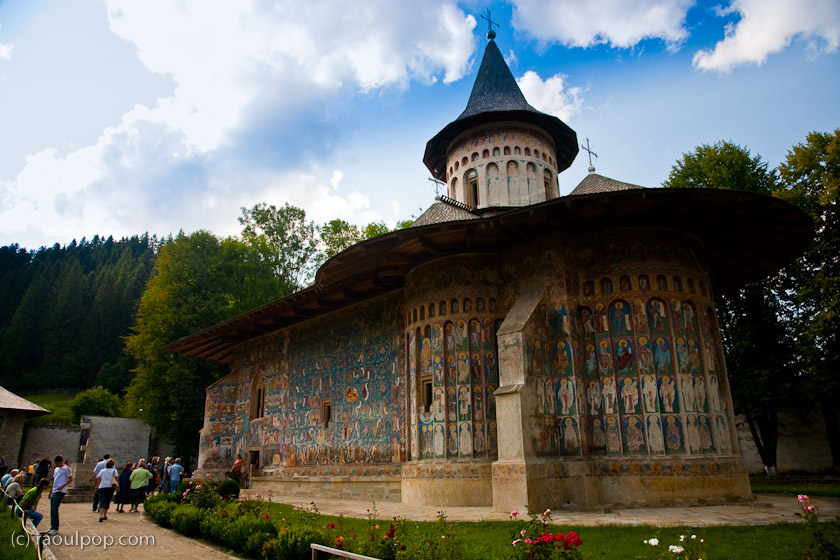
Manastirea Voronet, Bucovina, Romania
The last monastery we saw that day was Manastirea Humorului, which Ligia and I both liked very much. Perhaps it had to do with the way the sun’s rays fell on the buildings and gave them a golden hue, perhaps it had to do with the air, which was cleaner than in other places. All I can say is that we liked it.
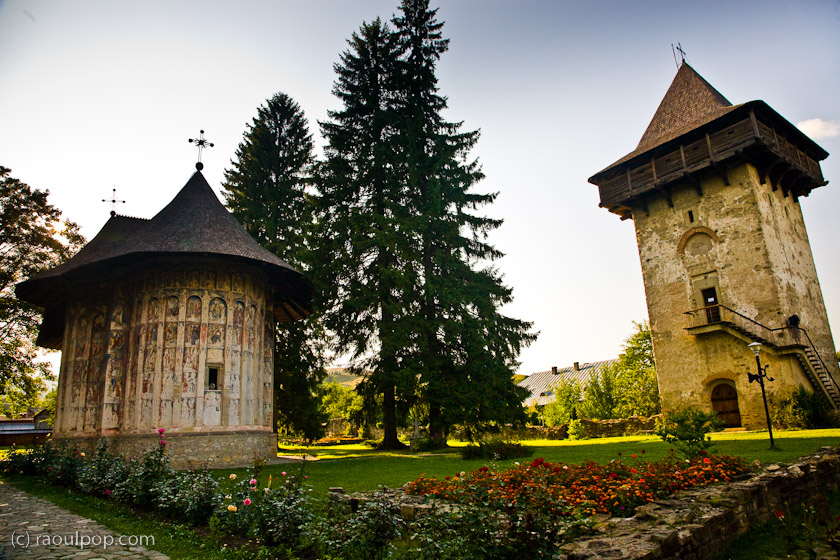
Manastirea Humorul, Bucovina, Romania
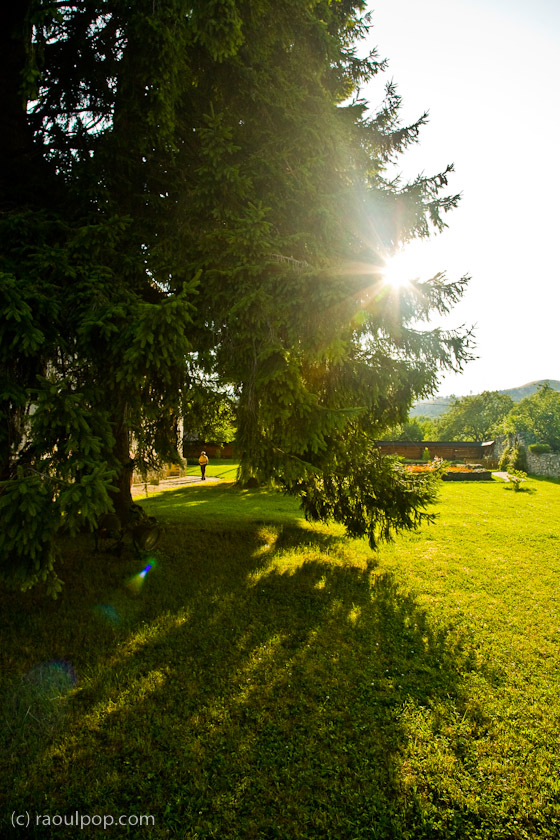
Manastirea Humorul, Bucovina, Romania
In the market near the monastery, artisans sold traditional handmade linen shirts, called ii. Each shirt takes anywhere from 1 week to 1 month or more to make, by hand. Ligia, my parents and I all bought several ii for each of us. They’re incredibly beautiful, and perfect for summer wear. Linen is wonderful to wear when it’s warm, because it airs much better than any other material, allowing the body to stay cool.

Handmade linen shirts, Gura Humorului, Bucovina, Romania
We didn’t want to chance sleeping at another place that night, so we headed back to the David House pension in Radauti. The next day, we visited Manastirea Arbore, which is not currently used as a monastery, but as a church. It is also undergoing renovations to the interior, but its interior frescoes are incredibly beautiful, and unlike many I’ve seen, have a more real feel to them.
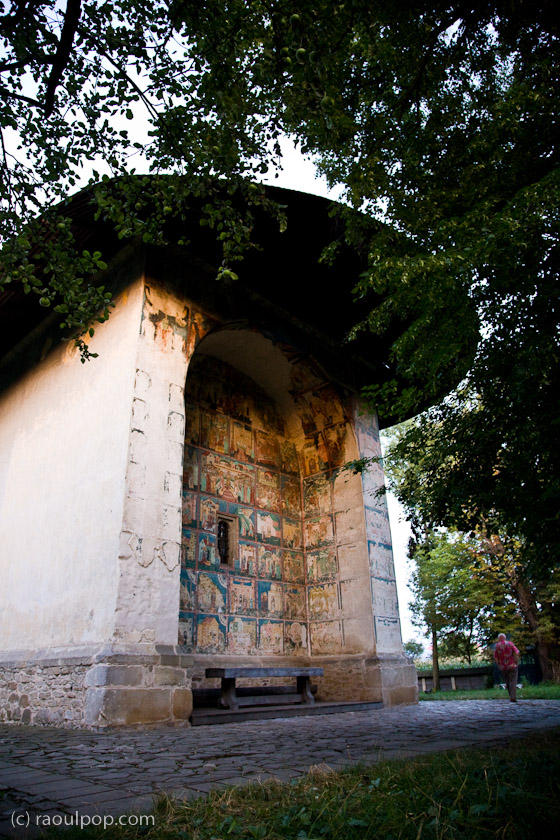
Manastirea Arbore, Bucovina, Romania
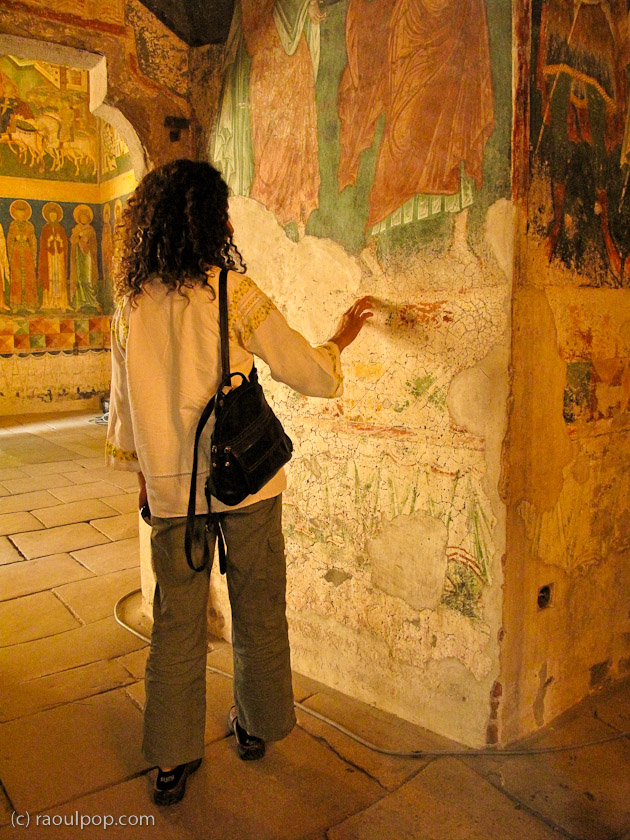
Manastirea Arbore, Bucovina, Romania
Near the village of Arbore, where the monastery resides, there’s a forest of tall conifers which begins as a sort of park on the main road but extends up the hillside and continues into a full-fledged forest beyond.

Walking in a conifer forest
From there, we headed toward Suceava and the famous fortress where many rulers defended their country against foreign invasions. On the way, we stopped on a particularly scenic hilltop where a farmer’s family was harvesting hay. You can see them in the lower right corner of the photograph below.

Gathering hay in Bucovina

Ligia picks wildflowers
The official name of the fortress in Suceava is Cetatea de Scaun, translated roughly as the Castle of the Ruler. It is named so because Moldavian voevods considered it their capital, so to speak. They had other castles where they lived and ruled, but returned to Suceava for the important periods of their rule.
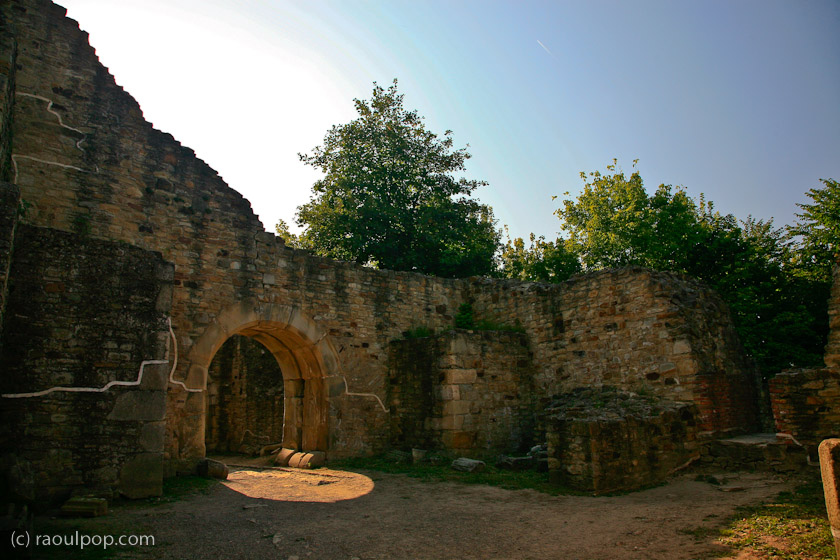
Cetatea de Scaun la Suceava
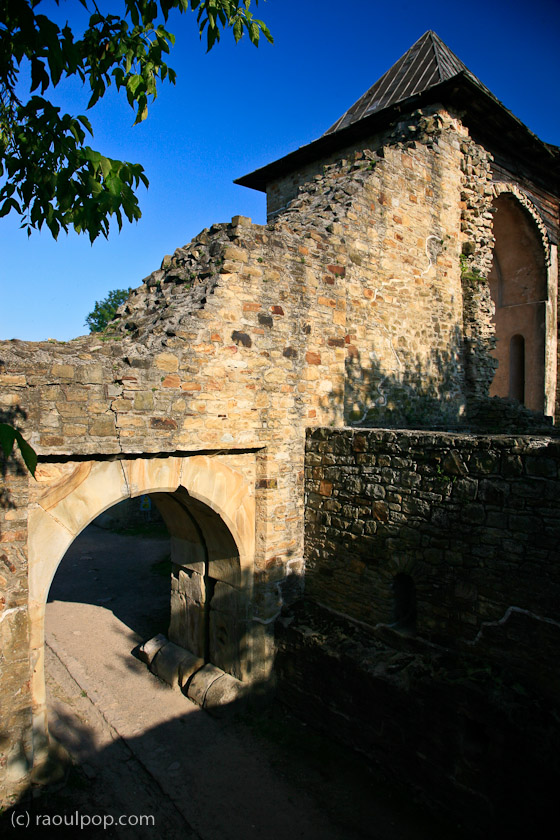
Cetatea de Scaun la Suceava
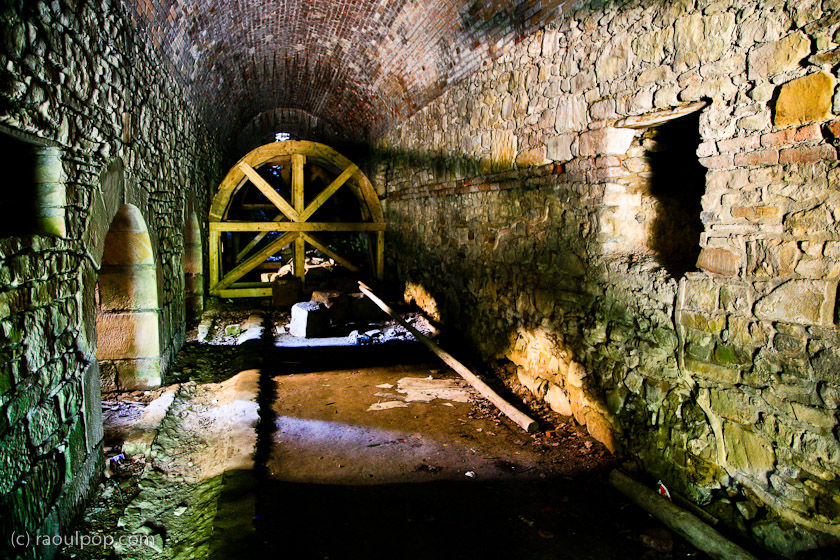
Cetatea de Scaun la Suceava
The last stop that day was at Manastirea Dragomirna and a nearby hermitage. Dragomirna’s architecture is wonderful, and the monastery’s renovation efforts really show. The place looks great, and is being actively used by nuns.
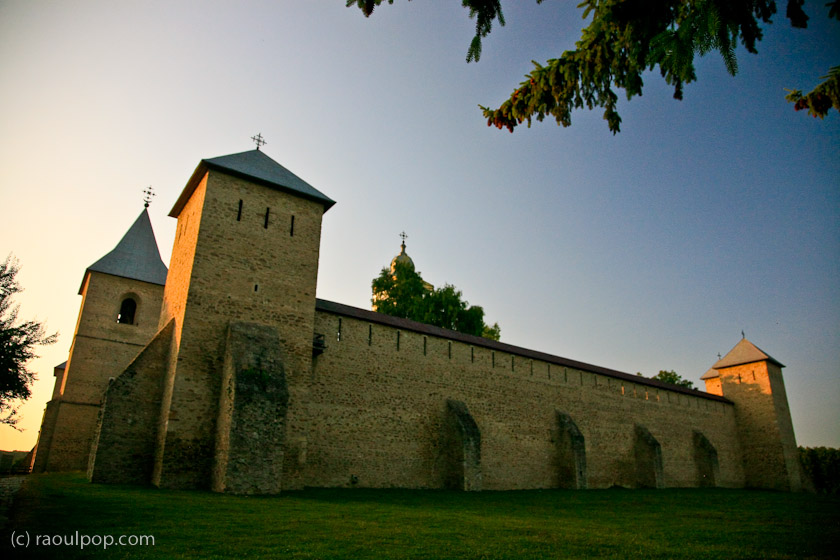
Manastirea Dragomirna
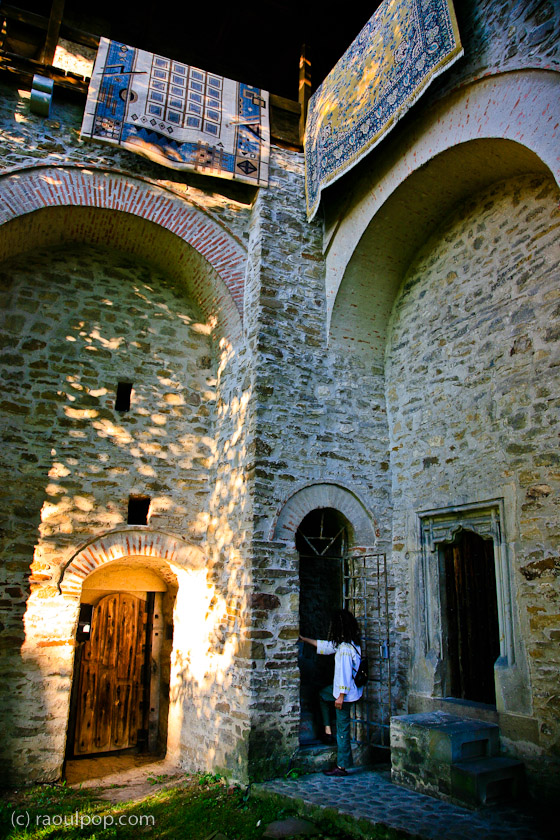
Manastirea Dragomirna
That night, we were unfortunately unable to find suitable lodging. Every place we found was 3 stars or below, and out of sheer desperation, around 11 pm, stopped at a pension on the outskirts of Tg. Neamt. It was a decision we regretted as soon as we began to unpack our bags, but the deed was done. The next morning, we went on our way with bleary eyes to visit Cetatea Neamt, a famous historical fortress located in that city. Here, recent renovation efforts (completed in January 2009) had also paid off handsomely. The place looked great, and it was a real treat to be able to visit many of the castle’s rooms — something that was impossible at Cetatea Suceava, which was in tatters, with all its upper floors destroyed by the passage of time.
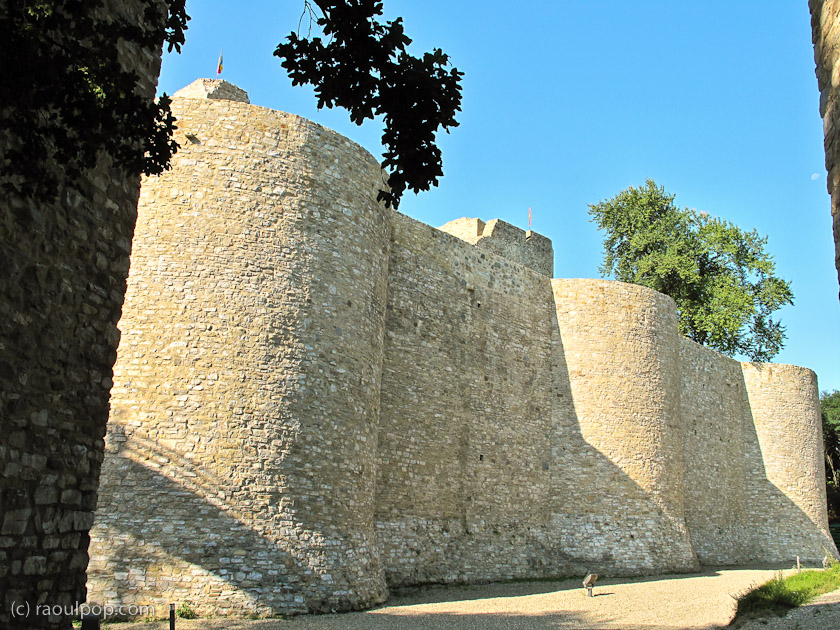
Cetatea Neamt

Cetatea Neamt
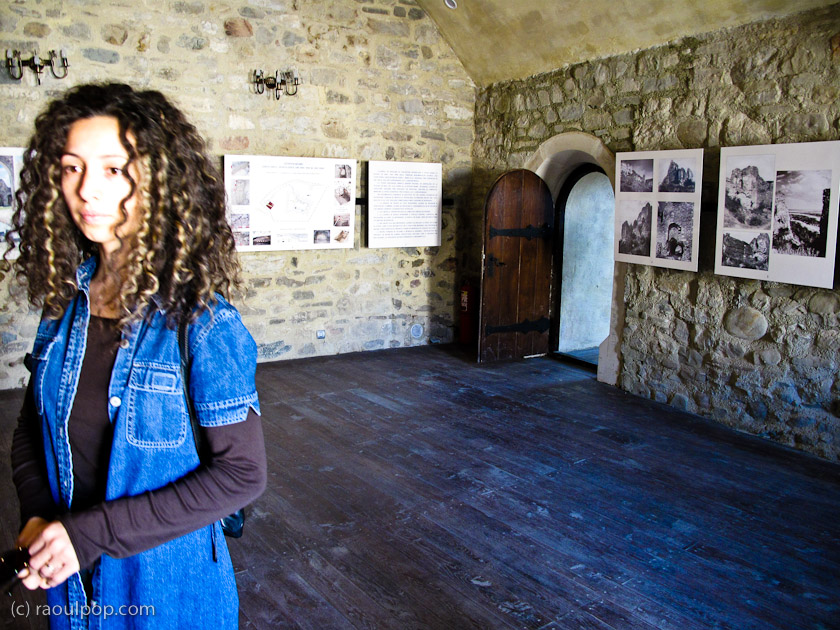
Cetatea Neamt
Manastirea Agapia was next. It’s run by nuns, and it’s got an interesting setup. The cells of the nuns are spread through the village surrounding the monastery instead of being concentrated within. The monastery itself is famous for its interior frescoes, done by the famous Romanian painter Nicolae Grigorescu. The monastery is also infamous in more recent times for the renovation work done to the cells of the nuns by Diekat, a Greek construction company. They used green, untreated wood, which through their shoddy workmanship, was exposed to the elements over the winter and developed a fungus that caused several nuns to fall seriously ill. They charged 2 million Euro for the work, never finished the job, and were never held accountable by anyone for their crimes. [source] May God punish them to the fullest for what they’ve done.
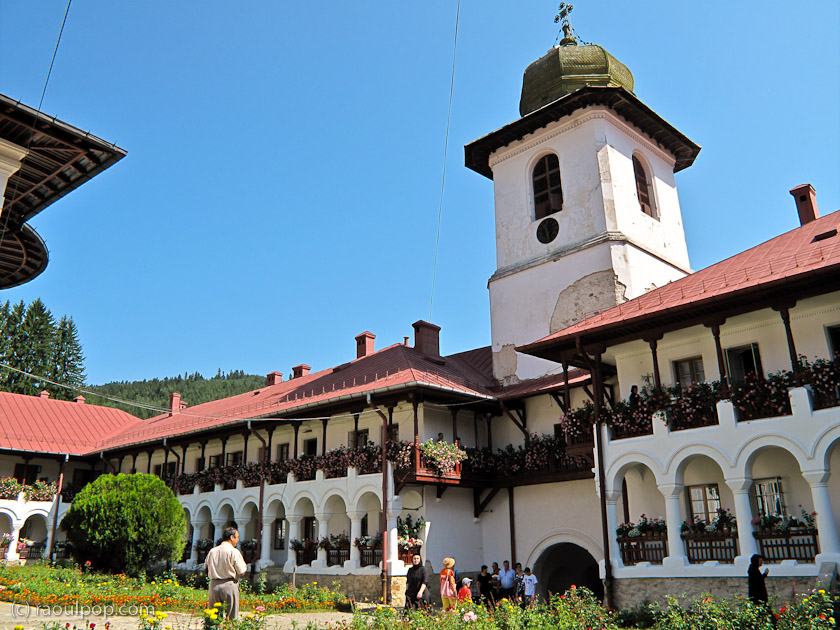
Manastirea Agapia

Manastirea Agapia
Manastirea Varatec, nearby, is also a nice place to visit. It’s of more recent origins than Agapia and others we visited.

Manastirea Varatec

Manastirea Varatec

Manastirea Varatec
After lunch in town, we moved on to Manastirea Neamt, which is the ruling body for all monasteries in the provinces of Bucovina and Moldova.
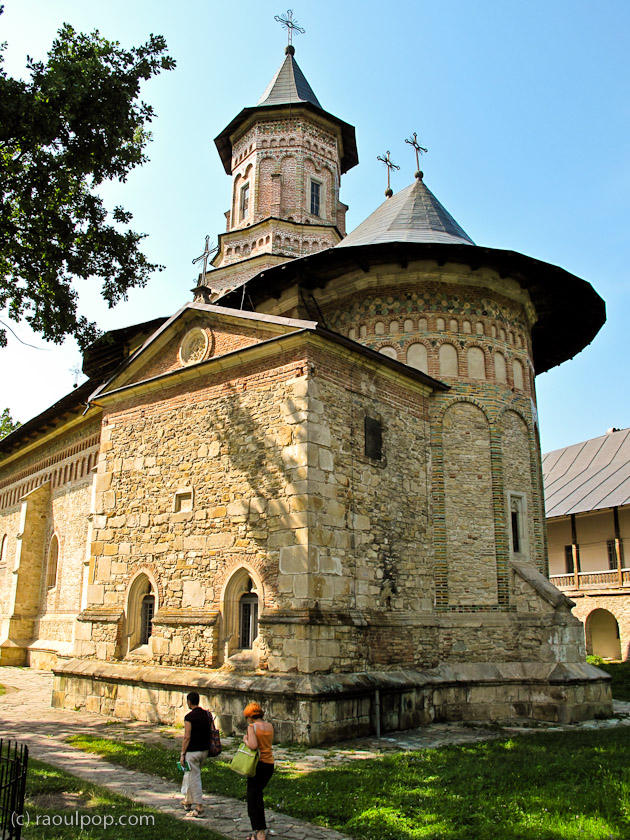
Manastirea Neamt
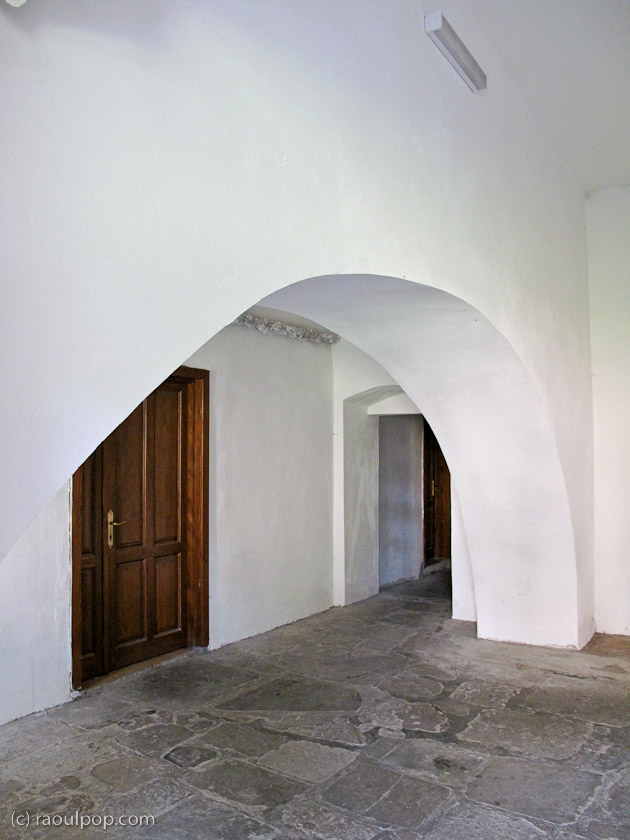
Manastirea Neamt
The monastery has a somewhat unusual feature: an ossuary where certain of the bones of the more notable monks are kept. Their skulls are inscribed with their names, a detail or two about their lives, and their year of death. This is one of them.
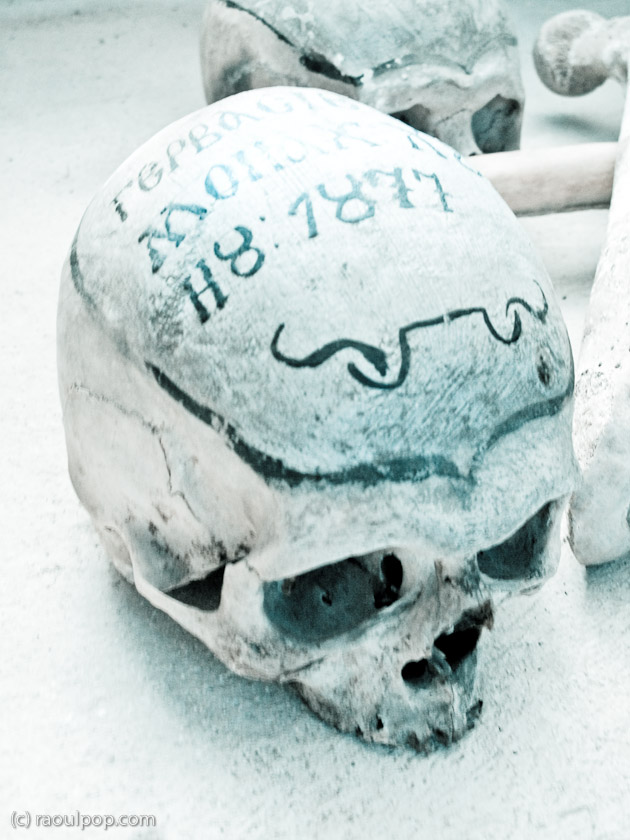
Manastirea Neamt
While on the road to Manastirea Secu and Sihastria, we found a nature preserve for aurochs, also known as European bison. These are the ancestors of our domesticated cattle, or so the story goes. I wanted to get some up-close photos, but the aurochs (known as zimbri in Romanian) weren’t cooperative. They insisted on resting on a muddy cliff well removed from me and my camera, as it was a hot afternoon.

Rezervatia de Zimbri si Fauna Carpatina "Dragos Voda"
The last two monasteries were a daze for me. We’d all seen a few too many for such a short time, but since we’d planned to go, we went, by golly…
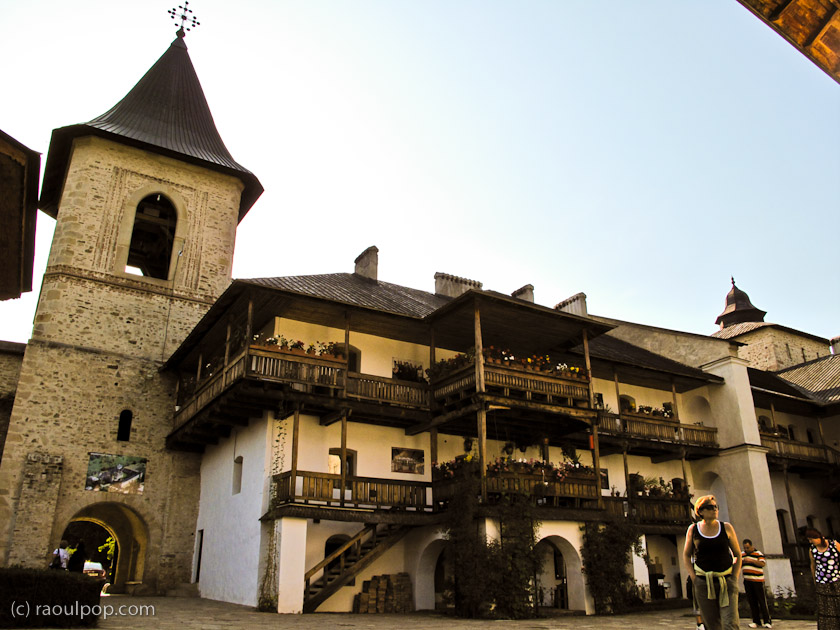
Manastirea Secu

Manastirea Secu

Manastirea Sihastria
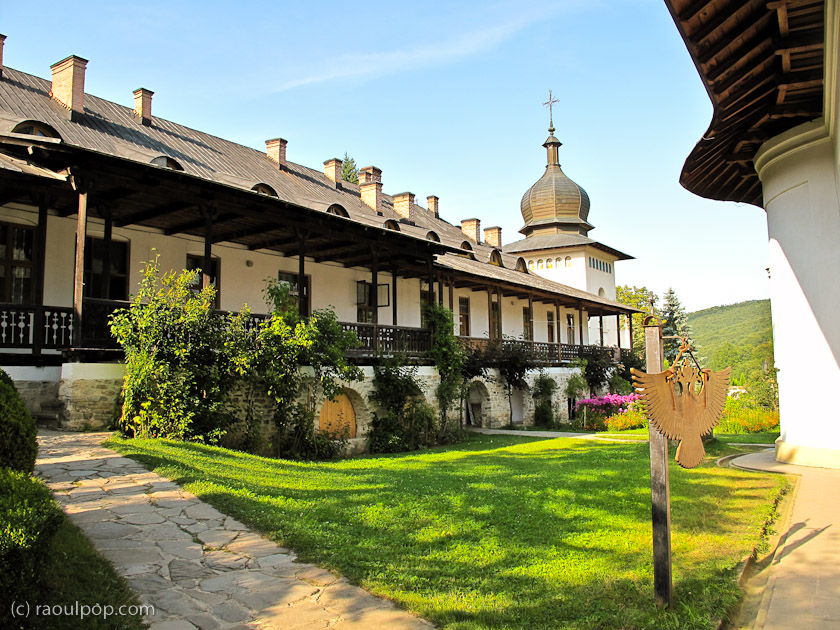
Manastirea Sihastria
We were incredibly exhausted after this short and intense trip, and rushed to find lodging for the night. Again, everything was booked, so we kept driving on, hoping against hope to find some 4-star pension or hotel before nightfall. Finally, we did. It was a place called Vila Ecotour, in the village of Ceahlau, near Durau, on the shores of Lacul Bicaz. The pension was perched on the slope of a tall hill and had amazing views of the village, the lake and the adjoining mountains. What a wonderful location!

On a slope overlooking Lacul Bicaz, in Ceahlau
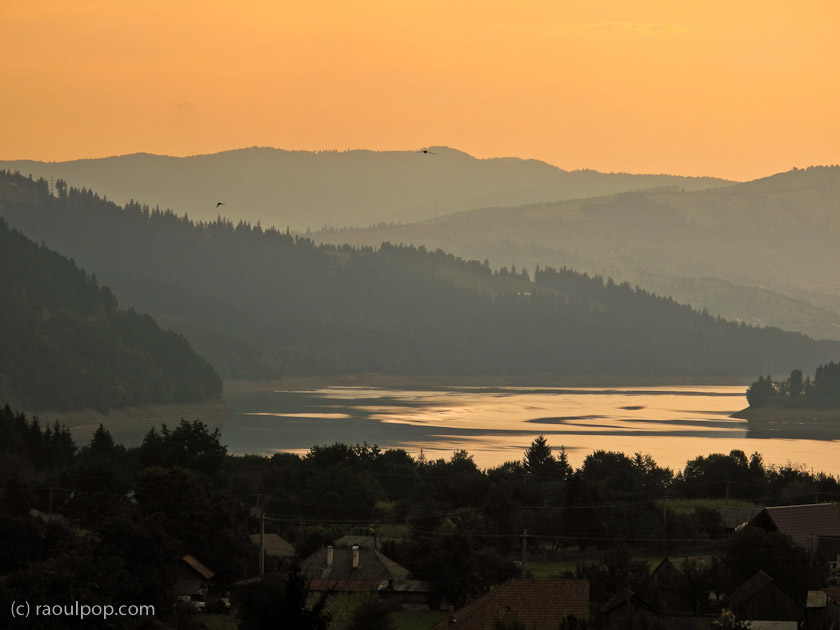
Dawn on Lake Bicaz
The last day was spent making our way back to Baia-Mare, still tired, sick of driving, but richer for having seen and experienced such natural and man-made beauty.
I plan to post more photos from each place we visited in separate articles, so stay tuned for that.
This morning around 4 am, Ligia and I started a cross-country drive through Romania. We started in the county of Sibiu, Transilvania and finished in the county of Constanta, Dobrogea. I’ve driven the approximate route from start to finish several times, but I only drove this particular route once before. I wanted to take photos during that previous time, but weather conditions and other circumstances conspired against any sort of worthwhile photographs.
It was different now. The weather was with me. It was cold, bone-chillingly cold at higher altitudes, but the sky was relatively clear, and the sun came out as it should. Coupled with the advantage of starting very early in the morning thanks to a bout of insomnia, it meant conditions were right. I looked forward particularly to the dawn, which I wanted to photograph somewhere in the Carpathian Mountains, wherever it might be that it caught up with us.
The first traces of light began to paint the sky in lighter grays and blues as we began to ascend the mountains. I spied a clearing ahead, but I just didn’t have a good view of the horizon, so I moved on. The forest began to thicken once more, and I was afraid I might lose the daybreak and end up with nothing. Fortunately, trees gave way to bushes, then shrubs, and finally, a plateau opened up in front of us. I stopped the car and took this photo.
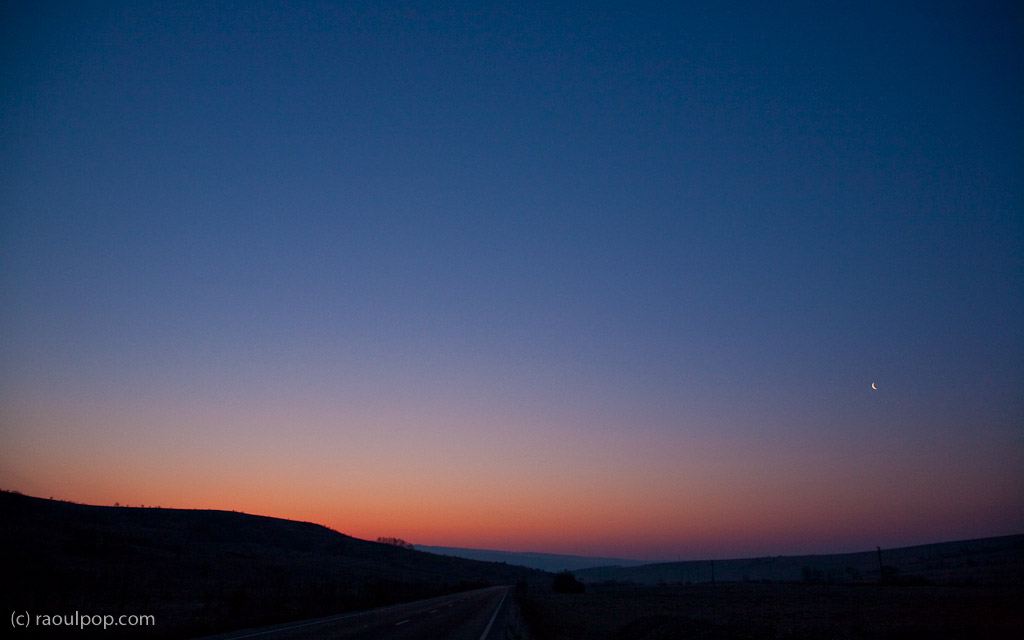
The dawn looked imminent, but 10 or 15 kilometers down the road, the sun was still not visible, thanks to a chain of distant mountains masking its ascent. A calm lake appeared on the side of the road, and the water reflected the increasing light beautifully. How could I resist that? I stopped the car once more.

A little while down the road, the mountains gave way and the red winter sun, tired from its steep climb upward, rested on their shoulders for a bit — just enough for me to take this photo.
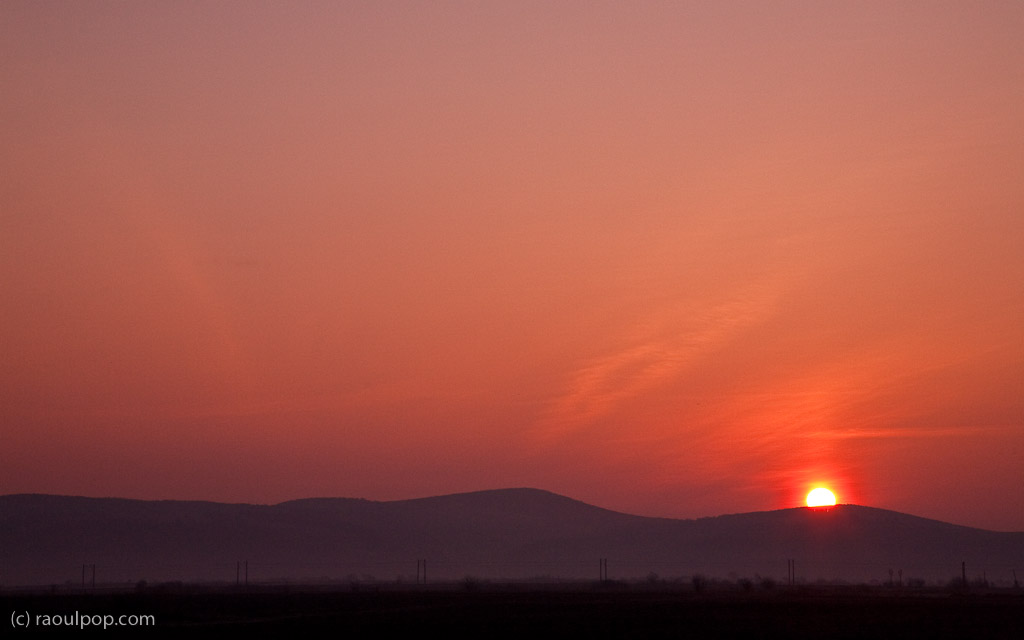
I think we were about 30-40 kilometers from the city of Brasov when I took that photo. We soon passed through it and were on our way to the winter resort of Predeal. We spent a weekend there this winter, and I took these photos. I should have a detailed article about Predeal published in the near future — illustrated with plenty of photos, too. This morning, I wanted to show what folks driving on the main (and only) road that takes you through those parts get to see when they drive through the town. Just FYI, there is always a police car waiting for visitors at the intersection in the lower left corner of the photo. Make sure you drive properly, otherwise you will get stopped.
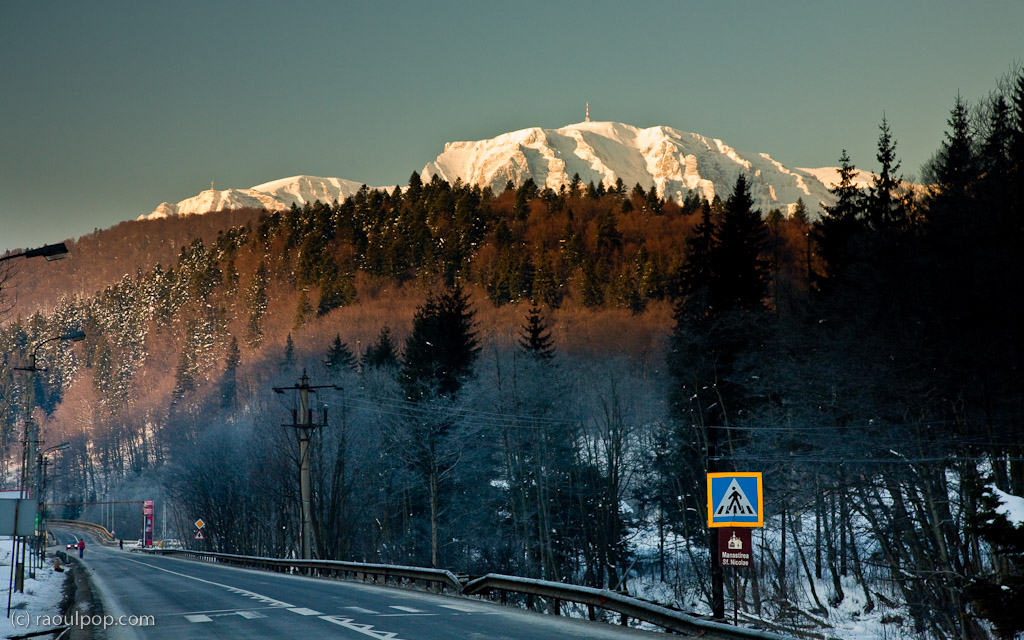
The cities of Predeal and Brasov are part of the province of Transilvania. Soon after Predeal, we entered the province of Muntenia, where you can find more beautiful winter resorts: Azuga, Busteni and Sinaia. The king of Romania keeps a palace near Sinaia, so it must be a beautiful place, right? Well, it is, and I took photos there as well. I still need to develop them. Meanwhile, here’s what we saw this morning as we drove through Azuga and Busteni.
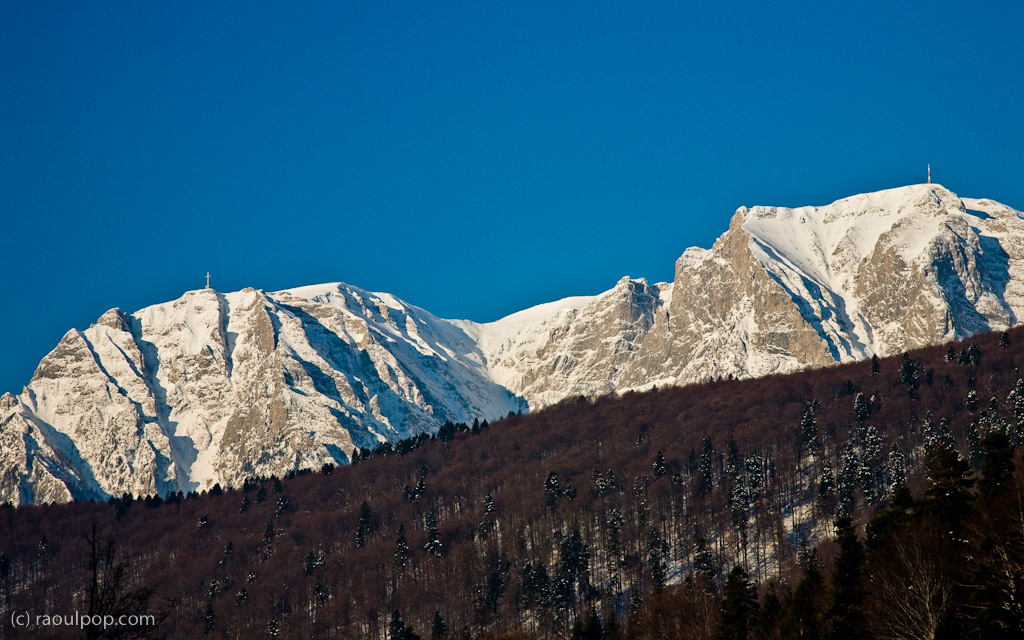
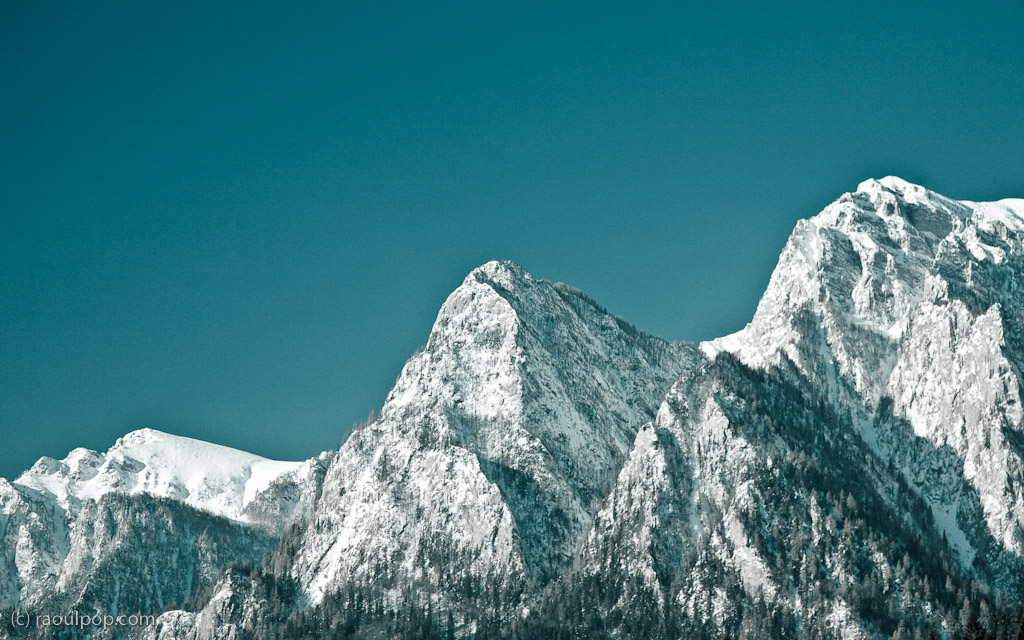
You can’t see the vista from Busteni shown above from the main road — you have to turn onto one of the side roads and climb higher till you find a nice clearing. Buildings and other things obstruct (somewhat) the view from the city, but of all the winter resorts (Predeal, Azuga, Busteni and Sinaia), Busteni has the best view of the mountains right from the main road. They’re literally right there in front of you. It’s quite amazing.
After this the light turned hazy and unclear. The sun hid behind a few clouds, and I put my camera away. Besides, the flatlands beneath the mountains are just that — flat — and they hold little interest to me unless there are crops coloring the landscape. It’s too soon for that yet. I turned to driving and focused on getting to Bucharest and then to Constanta, on the country’s main highway, A2. Little else occupied my mind other than driving until we pulled off the highway near the city of Constanta.
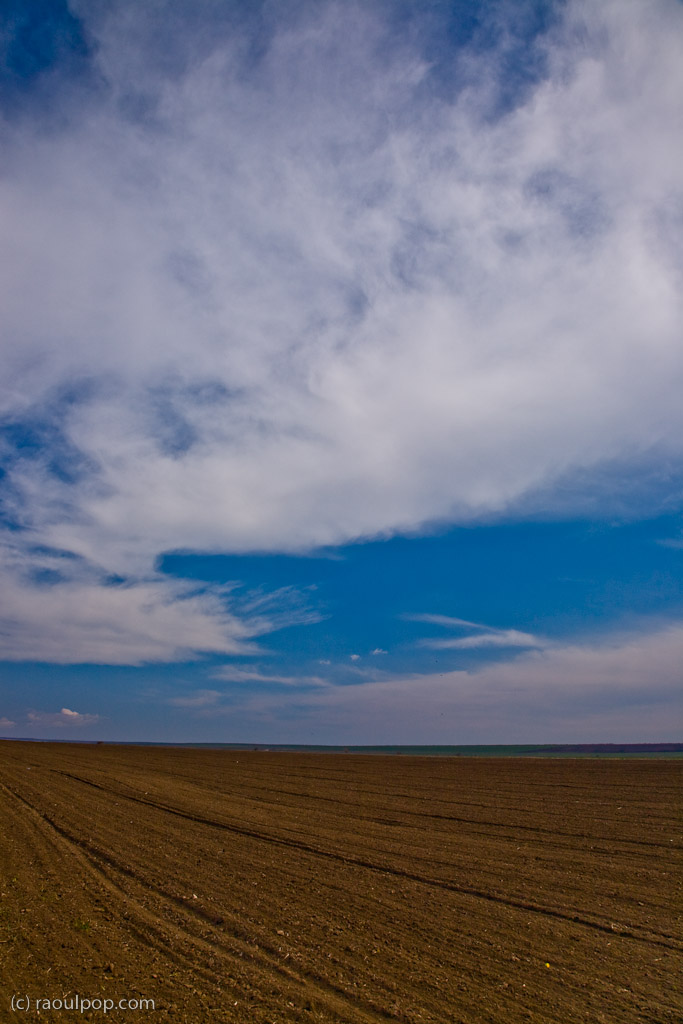
We decided then to turn to some country roads and see some sights. We wanted to visit Cheile Dobrogei, a natural gorge with rock walls up to 40 meters in height. On the way there, we stopped by some farmland.
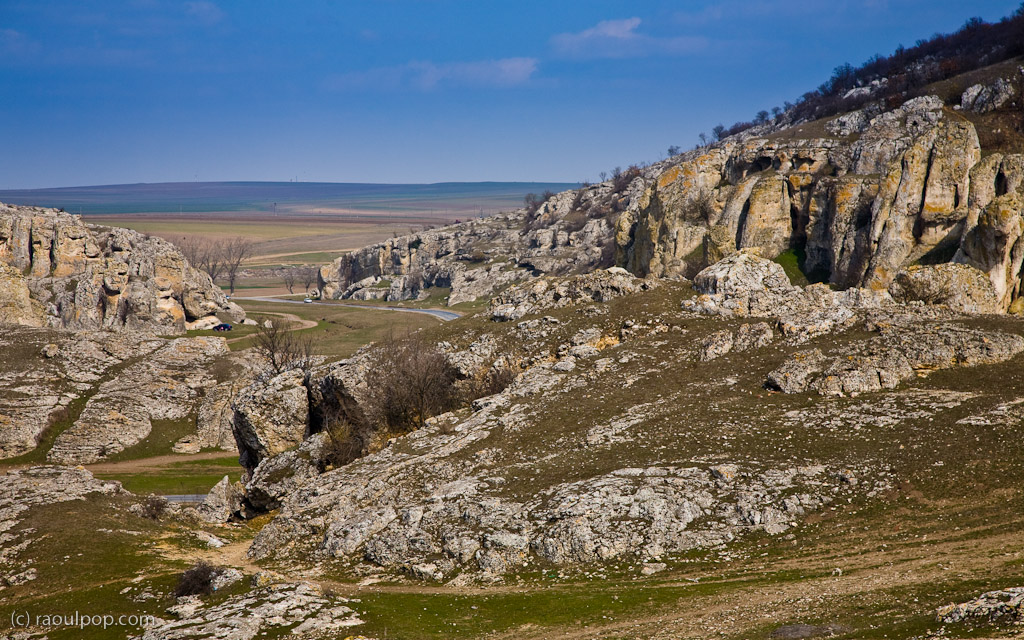
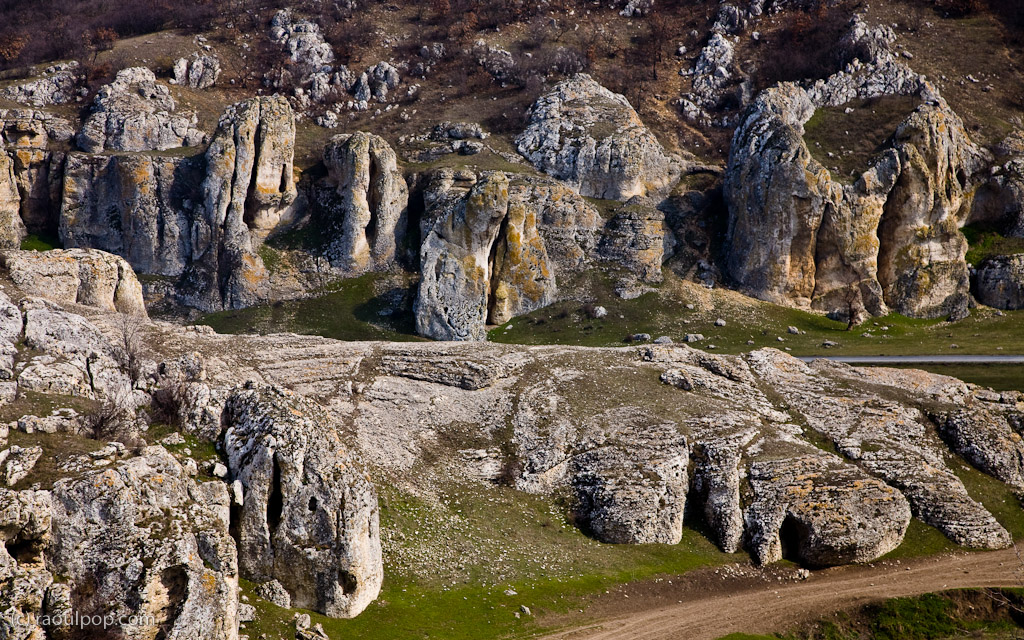
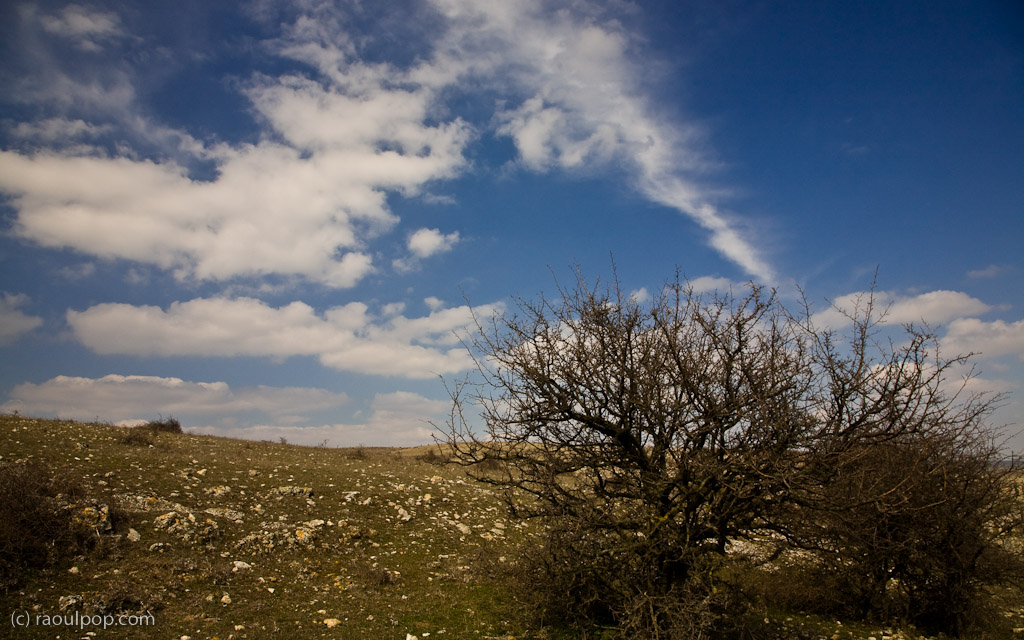
Cheile Dobrogei is a beautiful region where the ground literally breaks up in front of you, revealing its stony skeleton underneath the tough flatland grass and thorn bushes. The walls are perforated with little caves, and below, the cavity lies flat, allowing the road to snake right through. I parked the car on a dirt road and bolted out, running up the slope, full of excitement. (I’d visited the place before, but couldn’t take photos because the weather was dreary.) I get a natural high when I’m climbing hills and mountains. I can’t explain it; I just love it. I ran from place to place on one of the peaks in the gorge, looking around for good photo ops. Here are a few of the scenes I captured.
After a while, it was time to get to our destination. I drove the car carefully over the stones and uneven terrain in the gorge’s valley until I reached the road, then pressed forward through the countryside till we got to the place where we’re staying. The whole trip took about 9 hours, with breaks for various stops and for taking photos. Not a bad time for about 550 kilometers, and I obeyed the posted speed limits, too.
It’s evening now and the insomnia is catching up to me. Since I didn’t sleep a wink last night, this makes it about 36 hours without sleep. I had the hardest time editing these photos and writing this article. It’s time to get some rest, and I hope nothing interferes with that tonight.
On a side note, I don’t normally rush to edit photos and write about them right away, but that amazing daybreak this morning impressed me so much I wanted to share it with you as soon as I could.


 Raoul Pop