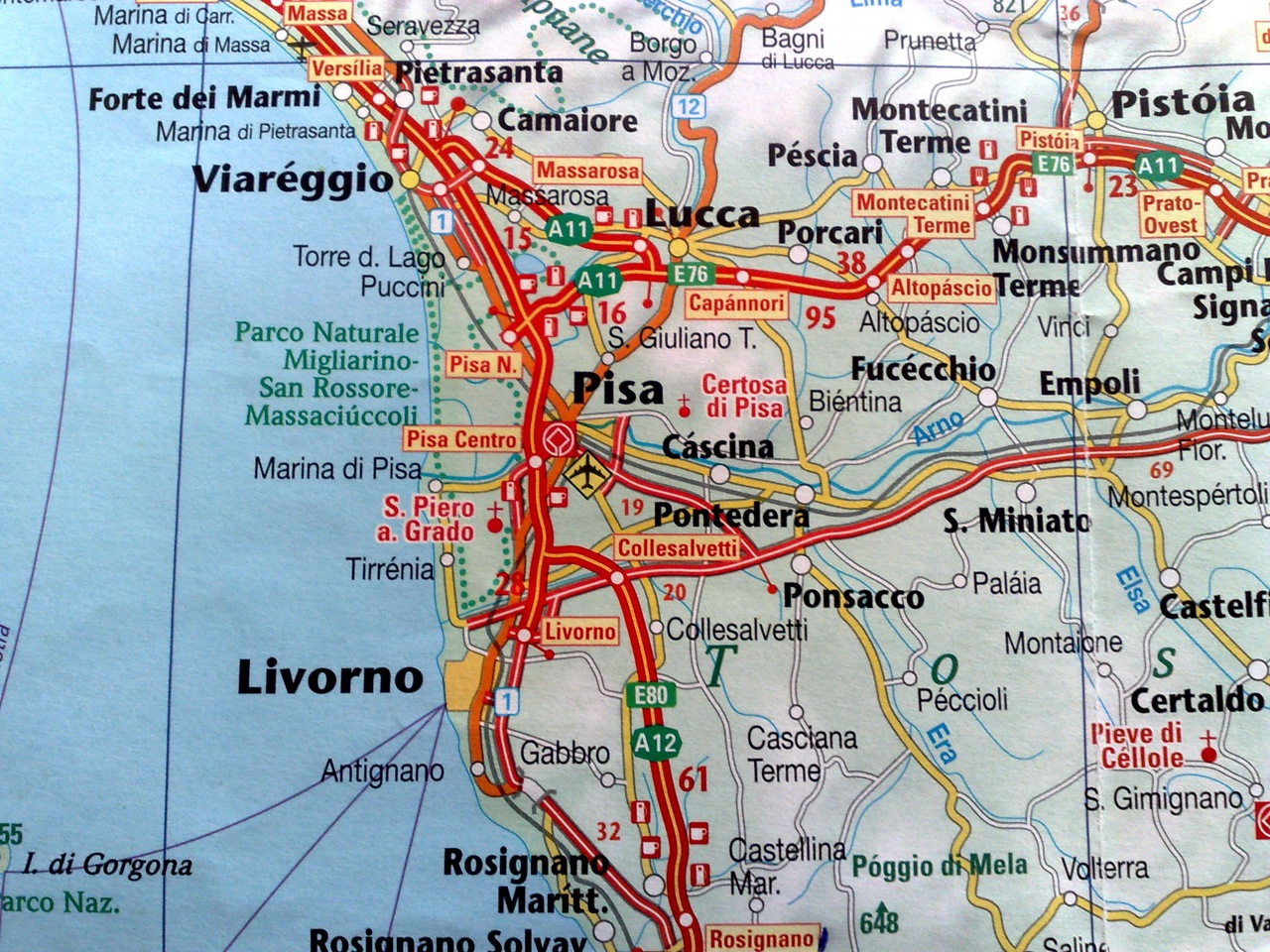
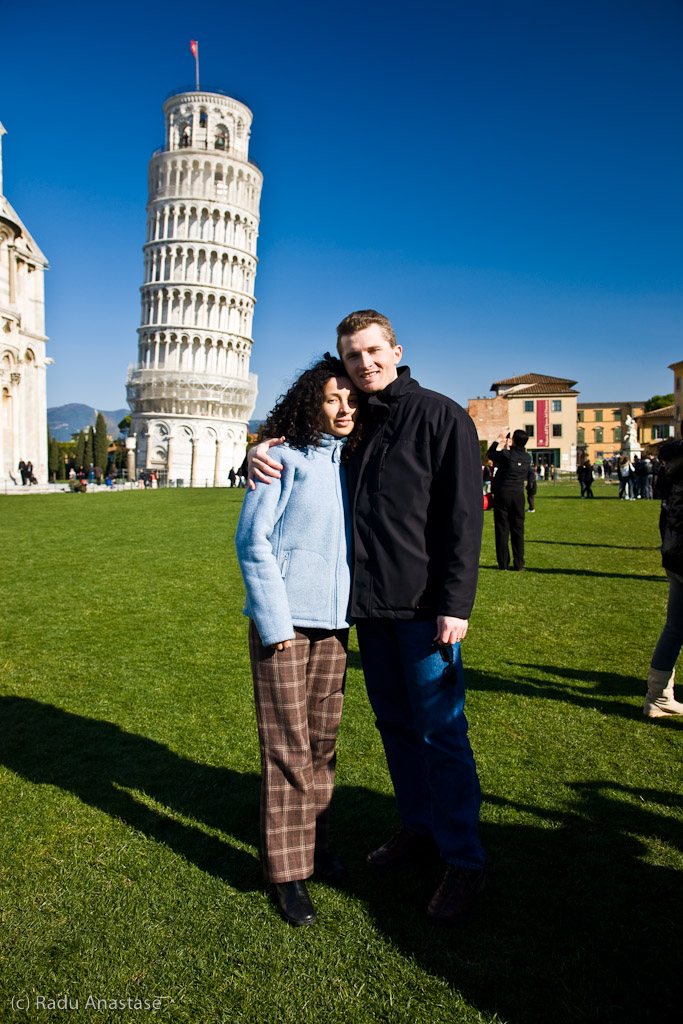
We came back yesterday morning from a wonderful week-long road trip through Italy. We started out in Pisa last Wednesday, February 18th, and returned from that same city yesterday, on February 25th. Before we left, we mapped out a circular route that cut through the following regions: Toscana, Emilia Romagna, Veneto, Marche, Abruzzo, and Lazio.
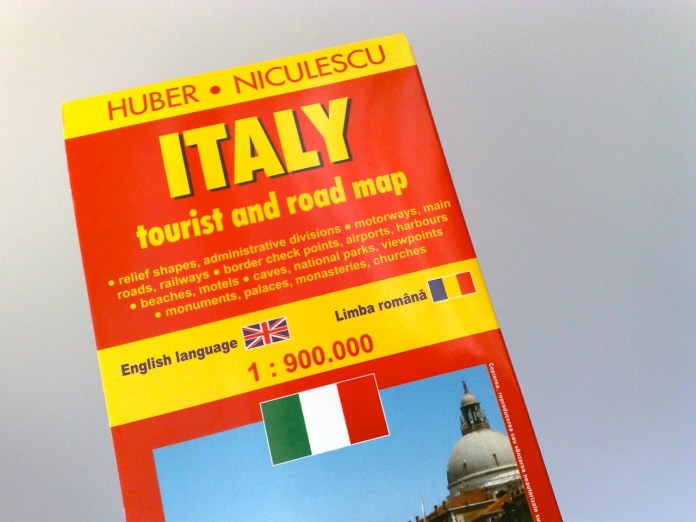

I traveled to Italy in 1999, 10 years ago, and stayed in Rome for three weeks. I also visited Florence for a day. Lots of things have changed in Italy since then. Here’s what happened this time around.
The route
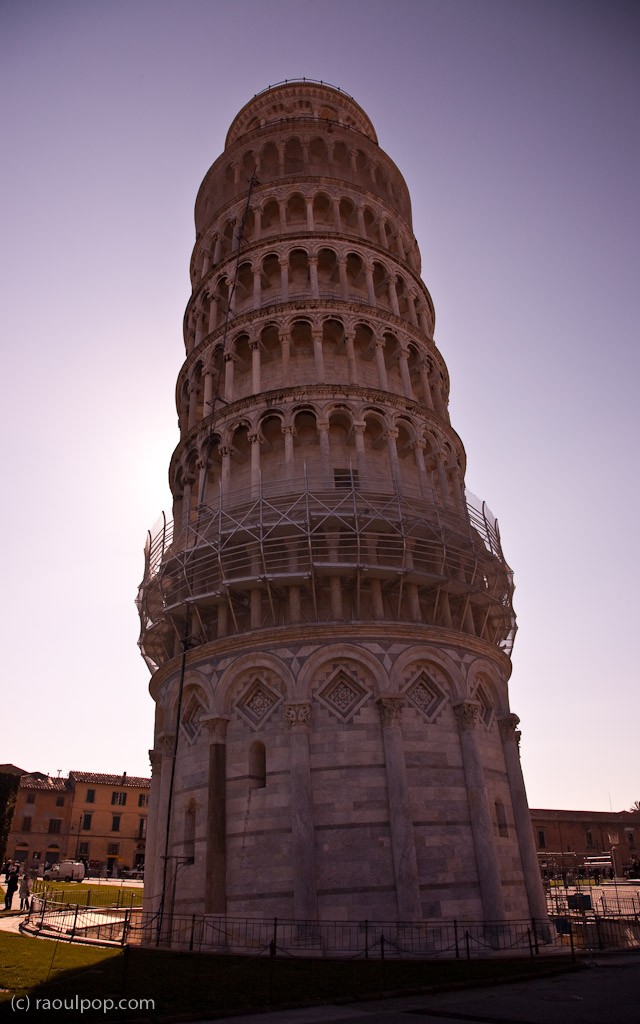
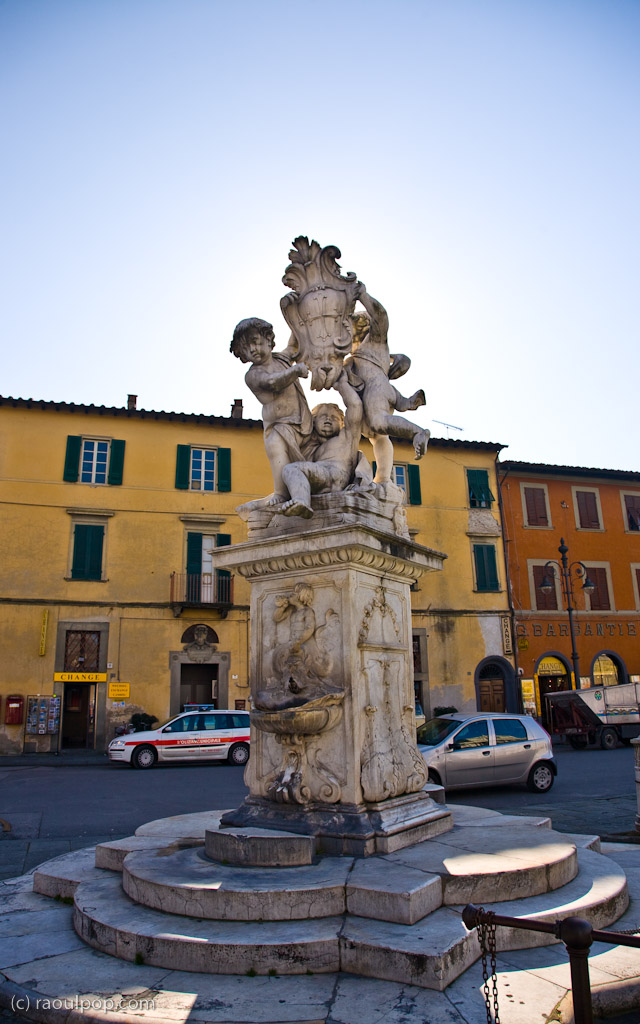
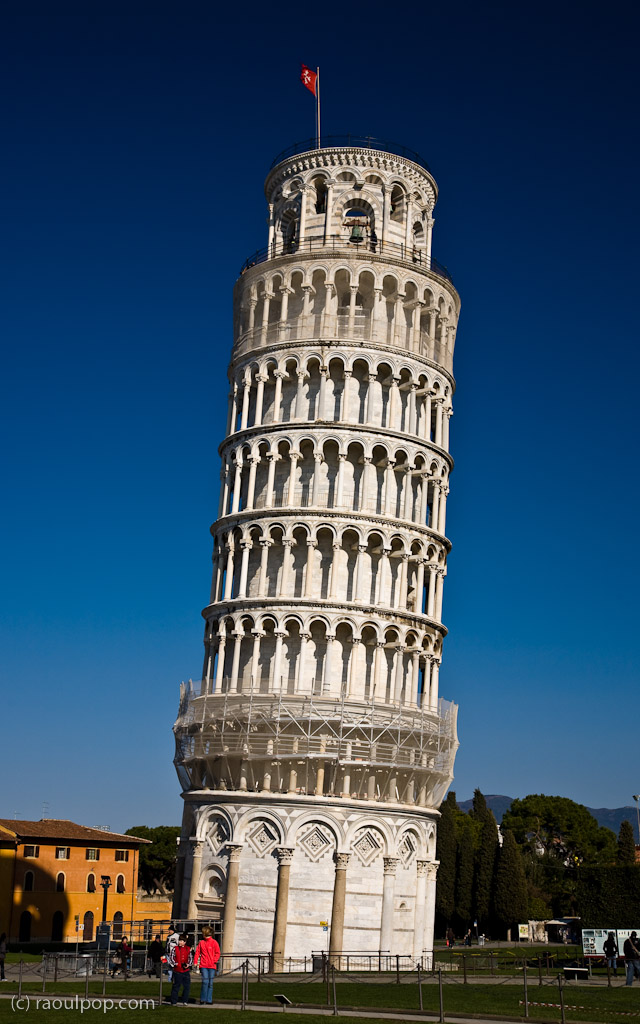
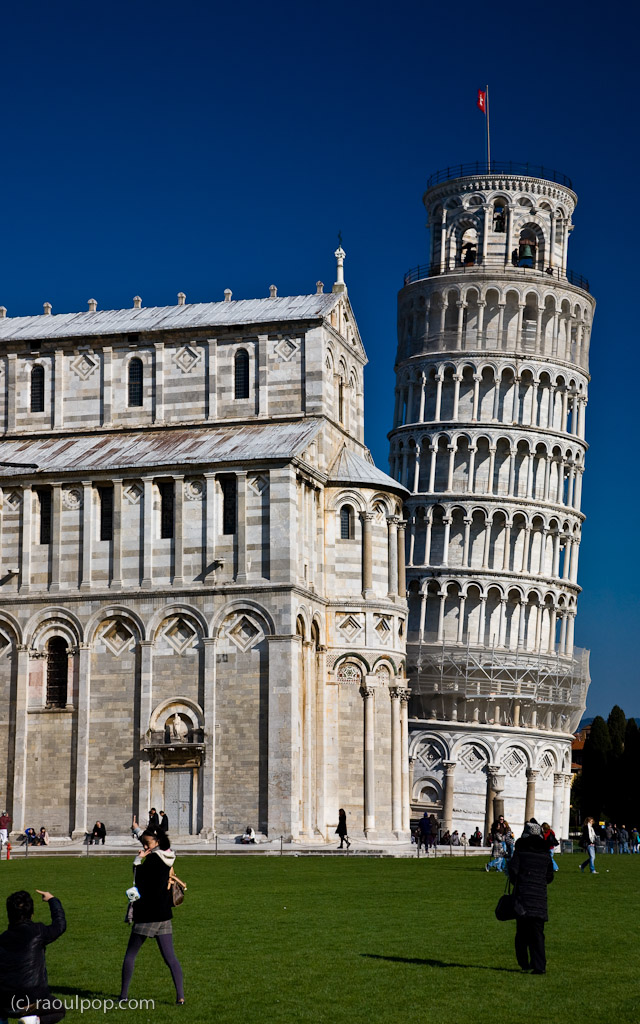
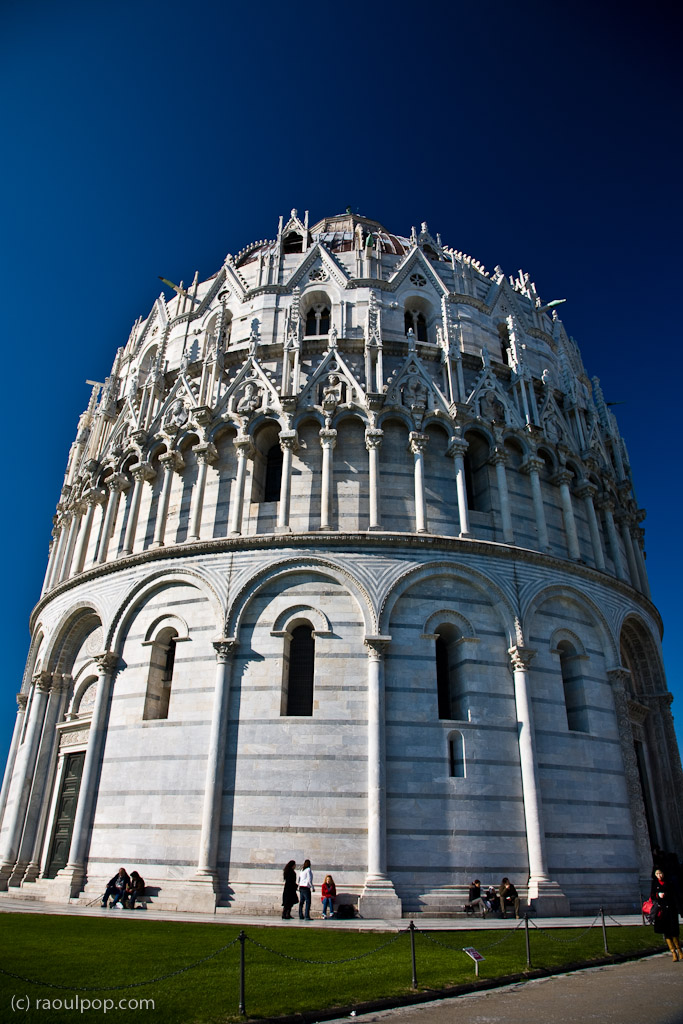
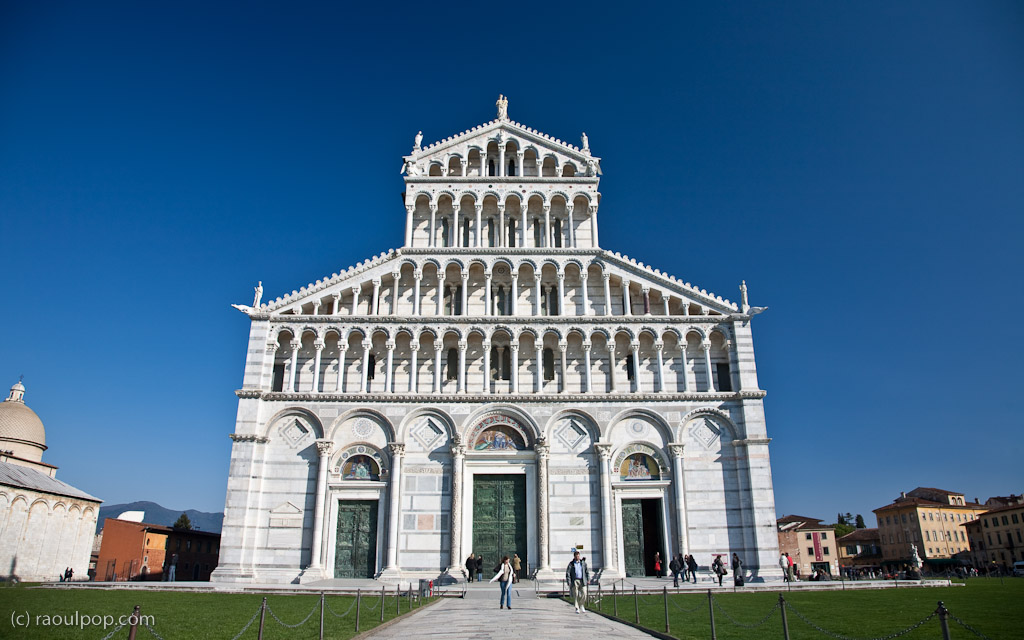
The towns we visited were, in chronological order: Pisa, Firenze, Venezia, Ravenna, Rimini, Grottammare, Tivoli, Roma, Ladispoli, Capálbio and Rosignano Marittimo. All in all, we drove about 1,300 km. It was a fairly large amount of ground to cover, and I was even told it couldn’t be done in a week, but I knew that if we stuck to the route and were disciplined about the amount of time spent in each city, we could accomplish our goal. We did, and even had time to make unscheduled stops in towns too beautiful to pass by, such as Grottammare, Capálbio and Rosignano Marittimo.
Unbeknown to us, we passed right by the Lamborghini factory in Sant’ Agata, near Modena. It was evening, and we drove through the little village on our way to Ferrara. We wondered what in the world the red Lamborghini brand was doing on a glass-encased rectangular building that lined the road, and about an hour later, the jigsaw puzzles came together and it finally dawned on me what we’d seen. D’oh! We didn’t have time to go back, or else I’d have tried to get a tour. That would have been fun!
My intent is to write individual articles about each city we visited, each illustrated with plenty of photos, so stay tuned for that. I will add links to those articles below as they are published.
The weather
It was February, which is technically winter, but we stuck to the warmer regions of Italy, so we had beautiful, spring-like weather. Temperatures ranged from 1 – 19° C while we were there, and it was mostly sunny, with little rain.

There was no snowfall, although if we’d ventured further north, I’m sure we’d have gotten some. There were times when we passed through mountains, particularly on our way from Pescaro to Rome, that the weather got downright freezing and snow was clearly visible on the mountain tops.

The prices
We visited during the off-season. Not many people go to Italy in February, so prices are less than in high season.
Expect to pay about €10-20 per plate for lunch and about €15-30 per plate for dinner at restaurants. Even a restaurant located right on the main canal in Venice or near the Basilica di San Pietro in Rome won’t cost you more, for lunch anyway. Of course, you can also go into a buffet and get a slice of pizza or some spaghetti or something, and it’ll be a lot less, but it’s nice to know going to a restaurant won’t break the bank. Make sure to always ask for a menu before being seated if you’re uncomfortable getting up from the table once you find out what things cost.

Going to a supermarket and buying bread, fruits, vegetables and various kinds of cheeses and other delicatessen is even less expensive than going to a buffet or cafe. You can eat the food up on a hilltop, or in a forest, or even in your hotel room if you’re rushed for time — just not in public parks, because it’s not allowed there. It’s healthier and a lot lighter on the wallet. But make sure not to litter if you eat out in nature. Bring an empty bag along and take all your trash with you. It’s the civilized thing to do.
The hotels were also not as expensive as we thought — at least the ones we looked at. Rooms ranged in price from €50/night at a two-star hotel to €90/night at a four-star hotel for a double room with the usual amenities, including breakfast.
Fuel prices ranged from €1 to €1.30 per liter for regular diesel, which is what our rental car used.
The people
We had nothing stolen from us this time, unlike what happened to me in 1999, and on the whole, the people were a lot friendlier than I remembered them. Even if I could only speak a little Italian, they were willing to help me and we got along in fragments of mixed English and Italian. I found the people in the smaller cities and villages were a lot nicer than those who lived in the larger cities. It looks like my theory about larger cities being too stressful for healthy living is true — not that I’m the first to think of it.
The transportation
We rented a Ford C-Max 1.6L Diesel. I liked it a lot. It’s the European version of an American station wagon. It can seat five people and their luggage comfortably for long stretches of time. The ride was smooth, the gear shifting was smooth, braking was strong but not crude, and things worked as they should. It had decent acceleration for a 1.6L diesel engine loaded down with five passengers and a full trunk, even going uphill.

I liked its many storage compartments, and the fold-out trays behind the front seats, which can be used for light meals inside the car. I liked the windshield wipers, and here’s why: when you squirted wiper fluid onto the windshield, they did a few passes, then stopped for a few seconds to wait for the last beads of fluid to pour down the glass, and did one last pass to get them. It’s a clever little touch that means a lot to me, because I always found myself having to do that last pass manually on other cars.
I also liked the car’s light fuel consumption. On average, it did 6.1 liters per 100 km, and oftentimes it did even less, even when I drove over 100 km/h, which is pretty good considering the load it carried and the car’s size.
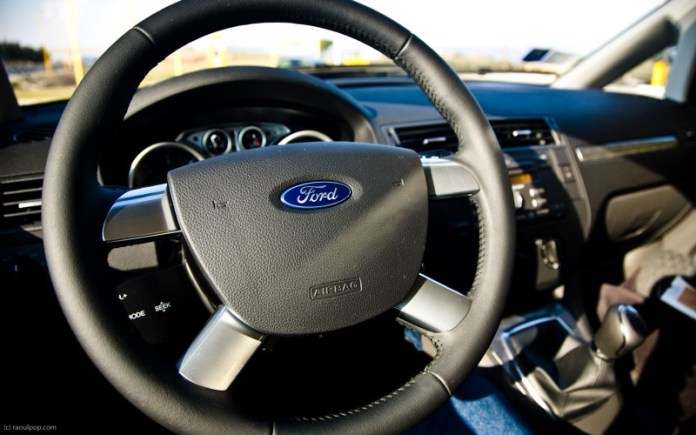
One thing that bugged me about the car was the safety belt beeping. If you didn’t put your belt on right away, it started to beep annoyingly every few seconds. That really got on my nerves, and it seems like most newer cars bug you like this. One reason I like my MINI so much is because it doesn’t beep. All I get is a red light on the dashboard. That’s plenty for me.
Another thing was the somewhat soft steering at higher speeds. I didn’t go faster than 130 km/h with it because of that very reason. It just seemed like it wouldn’t do very well if I had to do a quick swerve to avoid something, so I didn’t push my luck.
Would I rent this car again? Definitely. I even took it offroad, and it’s so well-built underneath that you can’t break your exhaust pipe on a rock or crack your oil drum, like you can with other cars. Everything is neatly tucked away above the car’s steel frame. Even though ground clearance isn’t high, you can take it over uneven ground and it’ll do just fine, within reason.
Driving and traffic
The drivers are civilized and slow-paced in the smaller cities or villages, but fairly crazy in the larger cities like Florence and Rome. They’ll make four lanes out of two at stop signs or roundabouts — that’s if they stop at all. You really have to keep on your toes when you drive there, or you might run into another car or a pedestrian, who will step out into the road at a crosswalk and expect you to stop, which is not what happens in the US, but is what you should do in Italy. Honking and cutting in front of other cars without warning is quite common and should be expected there.
While this style of driving was a shock to my system at first, I quickly got used to it and found it quite advantageous in the end. You see, I had to constantly pick my way through the cities by following the maps and street signs, and if I was a little late with a turn, I could cut through the traffic my “elbowing” my way in, so to speak, just like the others did. They might honk at me and shake their hands at me, in typical Italian fashion, but I’d just shrug my shoulders and smile — and they’d let me pass.
I didn’t see a single case of road rage in Italy, unlike in the US, where some doofus is liable to pull out their gun in the middle of the street. The Italians might get angry, but it’s only surface anger — a small reaction to the situation which quickly gets forgotten as the annoyance disappears. If they honk at you, it’s to get your attention, not because they’re truly angry. If they shake their hands at you, they’re not swearing, it’s just the way they react. Really, it’s not as bad as it seems. Just go with the flow.
Roads and street signs
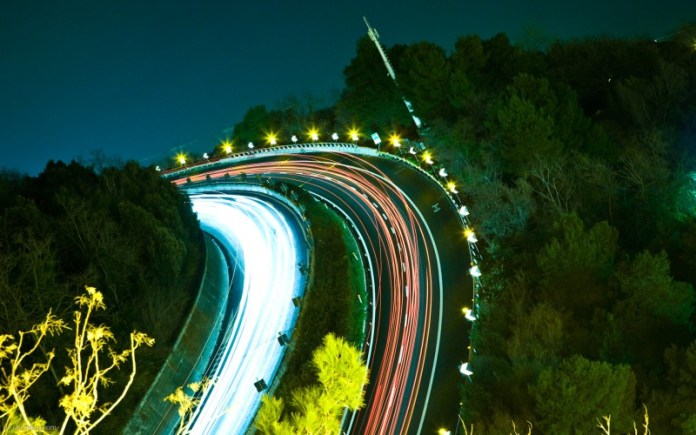
The roads were kept in good shape. There were a few towns (Pisa, for example) where the roads were in construction and full of potholes, and a few sections of the highways where potholes were beginning to emerge through the asphalt, but generally speaking, the roads were smooth, well-built and fairly safe.
I have a bone to pick with Italian speed limit signs. You’re generally expected to do 50 km/h while in the city and 90 km/h outside, but more often than not, they had me going 50 km/h outside the cities, in places where I should have been going 70-90 km/h or more. The Italian drivers themselves didn’t obey the speed limit signs. They usually did 10-20 km/h more than the posted speed limit, or even more, even in the cities. I tried to obey the posted limit but also keep up (more or less) with the general traffic, and I hope I’m not going to be surprised with one or more speeding tickets in the mail.
Street and landmark signs are pretty good. Sometimes, there are too many of them and you can’t figure out which way to turn while the traffic behind you keeps pushing you along. What I did was to put on my emergency blinkers and pull to the right. As long as you don’t do it in the middle of an intersection, people will understand.
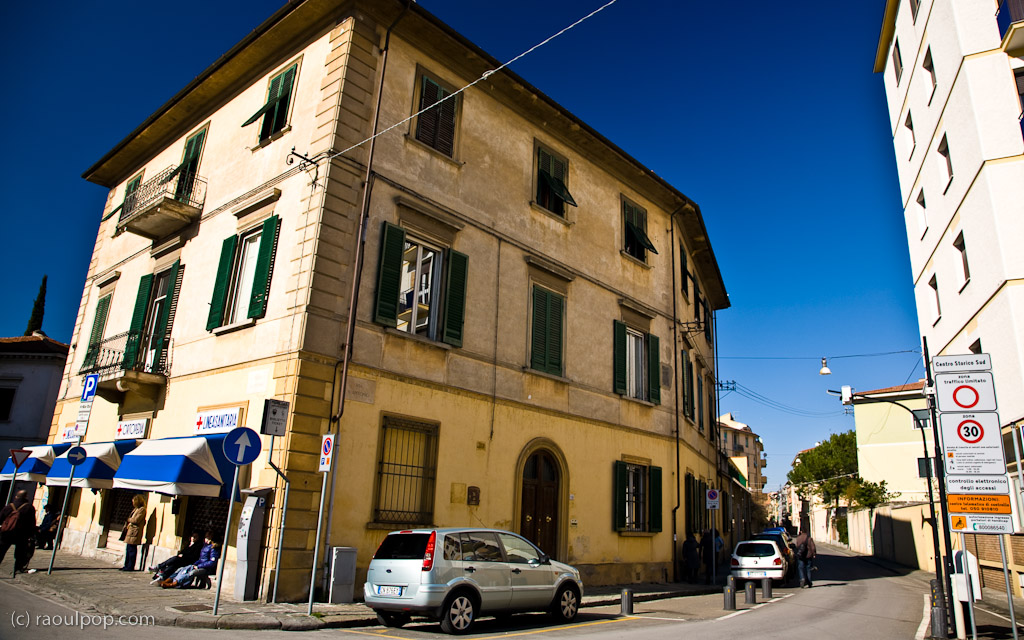
Be careful with a new batch of signs called ZLT (Zone a Traffico Limitato). They weren’t in place in 1999. They were introduced recently to curb the traffic through certain areas in popular cities, and to reduce the amount of pollution. You’ll get a hefty fine if you happen to pass through such a zone when you’re not supposed to do it. The signs should say what hours and days the ZLT rules are enforced. Ask a policeman to be sure, or just don’t venture inside the zones. Find a parking spot somewhere near the places you want to see, and go on foot.
Hotel signs are another matter altogether. There are tons of little signs advertising hotels of all kinds along the roads in major cities. They’ll say go left or go right, but unfortunately, those initial signs aren’t followed up by subsequent signs that take you to the hotel. You may find yourself nowhere near the hotel at the end of 5 minutes’ or 10 minutes’ driving, even though you’ve turned like the sign said. That can get pretty frustrating, particularly if it’s getting dark and you need to find a place to stay.
The hotels
In Italy, there’s a huge difference between a two-star or three-star or four-star hotel in a city, particularly in a city’s downtown area, and a two-star or three-star or four-star hotel on the city’s outskirts, or in the countryside. Keep that in mind when you look for hotels in Italy.
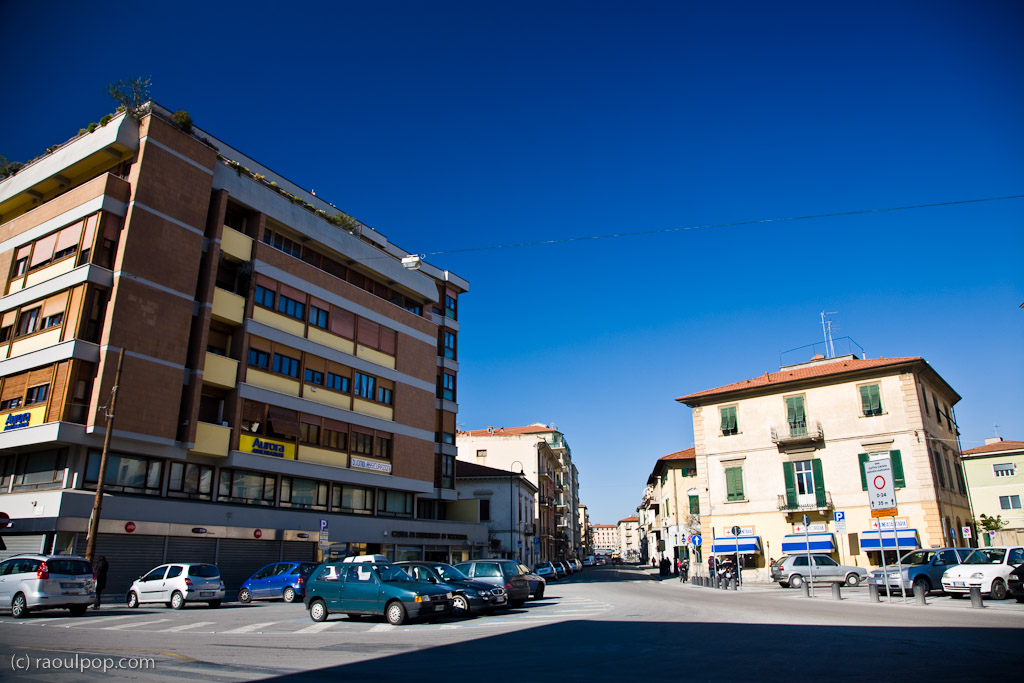
We stayed at a two-star hotel on the outskirts of Ferrara one night. A few days later, we looked at two-star and three-star hotels in the middle of Pisa (centro), and they didn’t even compare to the two-star hotel out in the countryside of Ferrara. That hotel was clean, roomy, warm and downright luxurious when compared to the dumps they call two-star hotels in Pisa. Those don’t even have bathrooms in the rooms — they have a single bathroom in each hallway, yet they have a sink, bidet and trash can next to the bed, which is disgusting.
The lesson to be learned is simple: stay at four-star hotels inside the cities, if you find a good price, or find two or three-star hotels, or even bed & breakfast places, outside the cities, in the countryside or in small villages, if you want something clean and comfortable. Of course, that entails having a car so you can get around without having to worry about public transportation routes, which don’t exist (to my knowledge) in the countryside.
While most gadgets one carries around with them when traveling are made to work on both 120V and 230V current these days, almost all of the electrical outlets in Italian hotels take only the thinner round prongs, not the thicker round prongs used elsewhere in Europe. This means you won’t be able to recharge your laptop or camera batteries or your cellphone if you don’t bring or buy an adapter that has the thinner round prongs.

Also related to electrical outlets, make sure to also have an electrical strip or splitter with you. You’ll be lucky to find one spare outlet in most hotel rooms, and if you have multiple gadgets and no splitter, you won’t be able to recharge all of them during the night. I found no spare outlet in a few of the rooms we stayed, and had to unplug the TV in order to plug in my own stuff.
Here’s the list of places we stayed at, in chronological order:
Villa Aurora, Firenze: not open to the public. Family of ours from Florence arranged our stay there, so it doesn’t really count, but it was beautiful. I’ll post photos from there in my Italy album, probably under a new sub-album for Florence. Price is usually €50/night for a double room.
Hotel Daniela, Ferrara: a two-star hotel with bigger, cleaner rooms and newer fixtures and linens than a three-star hotel in downtown Pisa. It had rooms with real bathrooms, proper heating, shiny floors and clean, comfortable beds. Shower water was piping hot, which was nice. Breakfast was included, and it was good. Espresso was good as well. Only problem was a pipe/drain in one of the walls that made a small but annoying dripping noise during the night. Thankfully we were so tired we slept through it. Price was €60/night for a double room with a queen size bed and €80/night for a triple room with a queen size bed and a single bed. The hotel is in the middle of a field. The view isn’t special in any sort of way, but the price is decent and it’s very clean. There’s parking in the back.
Hotel Caldini, Chiaggio: no stars were advertised for this hotel, but the rooms were large, clean, well heated and it had large, proper bathrooms. Breakfast was not included, but we started on the road so early that day that we didn’t need it. The price was definitely worth it: only €50/night for a double room with a queen size bed and €55/night for a triple room with a queen size bed and two single beds. The hotel is inside Chiaggio’s centro, and faces a canal with small boats. Nice view. There’s parking in the front of the hotel.
Bed & Breakfast La Toretta sul Borgo, Grottommare: this was an experience above and beyond everything we’d hoped to find on our road trip. We found the city of Grottommare by happenstance, because we saw its lights from the highway. It looked nice, so we pulled off, and when we entered the old part of the city, our jaws dropped. We just had to find a place to stay right there in the old city, so we kept looking around until we found this B&B, which is set right in a medieval building in an old citadel. They only had one room available, but we didn’t care. We crowded into it, all five of us, and we loved it. I definitely recommend it, and will post photos soon. Breakfast was included and it was delicious. The espresso was great. The view was amazing, and so was the decor. Price was €100/night for a room with a queen size bed and two bunk beds, meant for four people. We squeezed in five of us anyway, and it was worth it for the amazing experience. You can get a double room there for €60/night. Parking is available in the general parking area right outside the castle, but you’re allowed to drive up to a piazza close to the B&B to unload your luggage, if you can squeeze your car through the narrow medieval streets.
Hotel Executive, Roma: four-star hotel near Piazza Fiume. The rooms we got weren’t quite up to four-star standards, as the bed covers, room fixtures and furniture looked like they’d been there for a few decades, but at least the bed linens and the bathrooms were clean. A nice bonus was a large terrace that I used to take photos of Rome at night and in the early morning — we were given rooms on the top floor since that’s all they had available. Price was €100/night for a double room and €130/night for a triple room, breakfast included. The espresso was good. They had valet parking but it cost €35/night, so we used metered parking on the street, which was hard to find but only €4/day.
Hotel Miramare, Ladispoli: a three-star hotel built in the early 1900s, with original marble pebble floors, stairwell and doors. I think the rest of the stuff got renovated sometime during the last 10 years or so. The taste of the recent interior decorator left quite a bit to be desired, but the original architecture and design thankfully still showed through. The rooms were nicely sized and clean. The bathrooms were alright as well, but the shower stall was so tiny I could barely fit in it, and I’m not a large person at 5’11” and 165 pounds. The hotel isn’t soundproofed in any way, shape or form, so you’ll hear your neighbors if they talk somewhat louder or do something else… We got woken up early in the morning by sounds from the bathroom fixtures of our neighbors. Smoking is allowed in the hallways, but the smoke will make its way into your room sooner or later. The breakfast, included in the price, was halfway decent. The espresso was the best I had during this road trip. The price was €60/night for a double room with a queen size bed and €80/night for a triple room with a queen size bed and a single bed. For what it’s worth, the hotel is right on the beach. Parking is €5 per night, or you can find a parking spot on the streets, which is free but hard to find in-season.
Hotel Repubblica Marinara, Pisa: a four-star hotel outside Pisa’s centro. This was the best equipped hotel we stayed at during this trip. I liked everything about it. The rooms were large and clean and had interesting lighting, the bathrooms were large and clean, and they smelled fresh. I think they’d redecorated the hotel recently. Some hallways still smelled of fresh paint. The shower stall was finally properly sized. I could stretch in there and twist around as one normally does when they wash, without hitting my elbows on the walls. Another thing I loved about this hotel was the presence of extra electrical outlets in the room, which is a rarity in Italy, believe me. The had four outlets right above the desk and one outlet next to each side of the bed. Two of those four outlets next to the desk even worked with the thicker prongs of the plugs from other regions in Europe. I was in gadget heaven, as I could finally charge up all my stuff in peace. Price was €90/night for a double room with a queen size bed and €110/night for a triple room with a queen size bed and a single bed. Breakfast was included and they had ample free parking in the back of the hotel.

We really enjoyed our trip to Italy. It got a little stressful in the larger cities as we tried to find our way around and a place to stay, but it’s a very freeing experience to go out on your own and plot your own course through a country, then follow up on your plans and bring them to completion. It’s also fun to stray off the course when you discover something you really want to see, as we did, then pick up where you left off. As I promised above, I plan to write up the experiences we had in each city and to publish photos that I took. Stay tuned for that.

















 Raoul Pop