Thoughts

Let's recap where we are economically

A video compilation of various Peter Schiff TV appearances (2002-2009) is available on YouTube. The quality isn’t that great, but the message is pure gold. He’s been saying since 2002 that the US economy would collapse, and he gave solid reasons why it would collapse every time. His messages got more pointed with each appearance, they made sense, and yet he was ridiculed over and over for his opinions by so-called pundits on various TV networks. Ben Stein once said to him: “Sub-prime is a tiny, tiny blip.” I bet he’d like to eat his words now…

In 2004, I wrote an article where I said some of the same things Peter Schiff was saying — namely, that an economy financed by debt would not go on forever, and that we might be headed for another Great Depression. Back in 2004, the real estate market hadn’t even hit its peak, so I based my observations on common sense. I have no education in finance, but I can spot a turd no matter what it’s called.

I wrote then that the slowing US economy was being falsely propped up by the war spending in Iraq, but that wouldn’t last. You see, the government operated under a false assumption. The thought that what pulled us out of the Great Depression — the ramped up spending for WWII — would do it again in modern times. They were wrong. As I also wrote then, the WWII spending paid off: the world wanted American products after the war — they were hungry for them, and the manufacturing economy, which had been making weapons, shifted into making lots of things for export, like cars and clothes and other badly needed things in war-torn countries. Back then, we had a manufacturing economy, and there was real demand for our products.

History unfortunately does not repeat itself. In 2004, things were different. The US had no American products to export (unless you count weapons of war). It had moved most of its manufacturing overseas, leaving little to make at home. It was going into massive debt to finance a war that would (among other doubtful goals) stimulate a slowing economy, yet, from the get-go, they were not building American goodwill overseas in order to stimulate demand for American products. Even if they had done that, there were no American products to export, since we did not have a manufacturing economy any more.

A quick aside: some were saying a while back that the US is in the information services business — you know, IT, expertise, analysis, consulting, research, etc. — white collar stuff. I don’t buy it. For one thing, not everyone in the US can hold a white collar job. There are a finite number of people out of the US population (percentage-wise) that can do those jobs, and there are a finite number of such jobs available. To make things worse, information products lose their market value fast in times of economic hardship: when you need money to buy bread, you aren’t going to worry about knowledge; your stomach comes first. Also in the “things get worse” department, India and China are only two of the countries that can steal a large number of our information jobs as more of their people are educated. Don’t forget how many Indians work for Microsoft and other tech companies, and how many Chinese are involved in research. Unfortunately real products that fulfill real, tangible needs are still the king, because they are always in demand if they’re quality goods.

Okay, back to the war. It took people’s minds off the economy until the real estate market ramped up, and when that bubble burst, the whole ugly truth came to life. We had no economy to speak of, it was all propped up by debt, and all that debt was crashing down on us, as some, including myself, predicted. In my article from 2004, I said the following:

… unless we get someone in the White House who is willing to address the problem of debt head-on, I think our country is headed for certain disaster.

Fast forward to 2008. At the end of September of that year, I laid down my thoughts about the impending economic crisis. I was saying pretty much the same things I said now, except I approached the problem from a different angle. You see, we hadn’t yet elected Obama. Later that year, my wife and I, along with many other people, voted for him, because he was better than the alternative, and we hoped he’d do some good.

While the jury is out on that last part, and part of me says I should just sit back and wait to see what he does with his presidency, part of me goes back to the problem of debt and wonders if he’s tackled it head-on, like it needs to be handled. Unfortunately, he’s headed in the very opposite direction. He’s going to put our country into yet more debt in order to keep stimulating the economy. All this stimulating makes me wonder what status quo the government hopes to achieve. Just what state of the economy do we want to return to? Where do we want to go after we’ve spent all of that money? These words from Jim Kunstler say it best:

“… to what state of affairs do we expect to recover? If the answer is a return to an economy based on building ever more suburban sprawl, on credit card over-spending, on routine securitized debt shenanigans in banking, and on consistently lying to ourselves about what reality demands of us, then we are a mortally deluded nation.”

So, we’ve been going into more and more debt, for years and years, propping up a sick economy that has no more manufacturing backbone to stand on its own, and we’ve never taken our medicine. The US economy is like a sick man who’s hyped up on speed and other crap to keep from crashing into a bed and going through a proper recovery from a serious bout of the flu. It can’t go on forever. It has to at some point end. It doesn’t make sense otherwise. Like I said in an article from February of this year, there will be an ugly third act, where the fat lady will sing and the curtains will come down, and believe you me, it’s going to be a doozy.

Will it have to do with the severe de-valuing of the dollar and cause it to be replaced as the world reserve currency? Possibly, since some countries out there, like China and Russia, are already calling for a new global currency. I think there will be more unrest beyond the dollar debacle. And who knows, perhaps behind the scenes, that was the plan all along: bring on a crisis where bargains are to be had for those with the money to get them, and the sort of economic unrest that would make it easier to move certain pieces of the big puzzle into their place.

Standard
Thoughts

Obama wants to increase airport security tax

Waiting to check in

We’re currently getting charged $2.50 per passenger to go through the security theater* at our airports. Now the Obama administration wants to increase this fee. Quoting from this article at the Economist:

“The Homeland Security portion of Obama’s proposed 2010 budget (PDF) includes a plan to raise the fees by an as-yet-undisclosed amount in 2012. The increase, the White House says, is needed because the current fee only funds about 36% of airport security costs.”

So let me get this straight: not only do we have to go through the inane, annoying and useless experience of getting scanned, uber-prodded and turned over every time we want to board a plane, but now we’ll have to pay more for that unsavory experience as well? Thanks a lot, Mr. Obama. I can see my vote went to a good cause.

As I said before, I think we should be doing away with the whole darned thing. What happened to accepting the risk and moving on? That’s how the United States was founded and built. It wasn’t built by wimps who wanted to make sure no letter openers or nail clippers got on the plane with them. Why zap us with X-rays, make us take off our shoes, put us through air blowers to sniff us (I’ve half a mind to fart when I go through those things just to see what happens), open up our luggage, and generally speaking stink up the whole flying experience when we don’t really need any of it?

It’s shocking to hear that, isn’t it? Truth of the matter is we wouldn’t really need any of it if security were done right, and if people had the courage to step up and disarm the terrorists when and if they dared do something on a plane. Since the general populace is a bunch of pansies who’d rather have big-brother government do everything for them, now we have to put up with cretinous security checks and starting next year, with increased fees for said security checks. Hooray for democracy, where the majority rules with a pudgy, slightly damp and sweaty fist, tired from holding the remote control too long.

* Term coined by Bruce Schneier.

Standard
Events

The Atlantic Cable – Eighth Wonder of the World

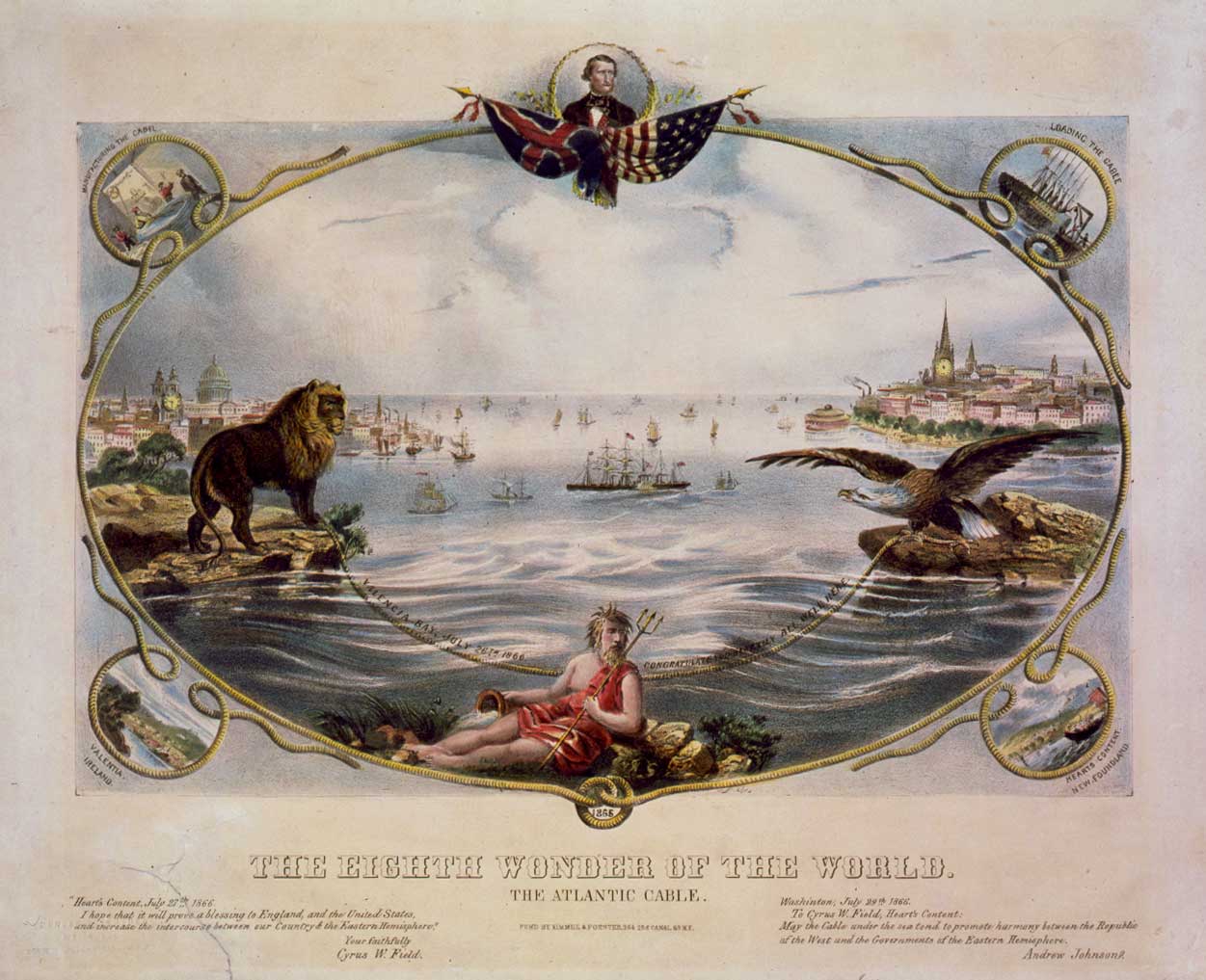
In July 1866, after the successful completion of the project which undertook to lay a single undersea cable through the North Atlantic, from Newfoundland to Ireland, this following commemorative print was created:

The Eighth Wonder of the World

The Atlantic Cable was the idea of the New York merchant and financier Cirus W. Field, who wanted to communicate with Europe in hours, not weeks, and in 1854, conducted the first trial of laying a 2,000 mile cable between the US and Europe. The first three attempts were not successful, but in 1866, his persistence paid off, and his cable worked. Needless to say, he was showered with due praise and honors for his efforts — one of them being this print.

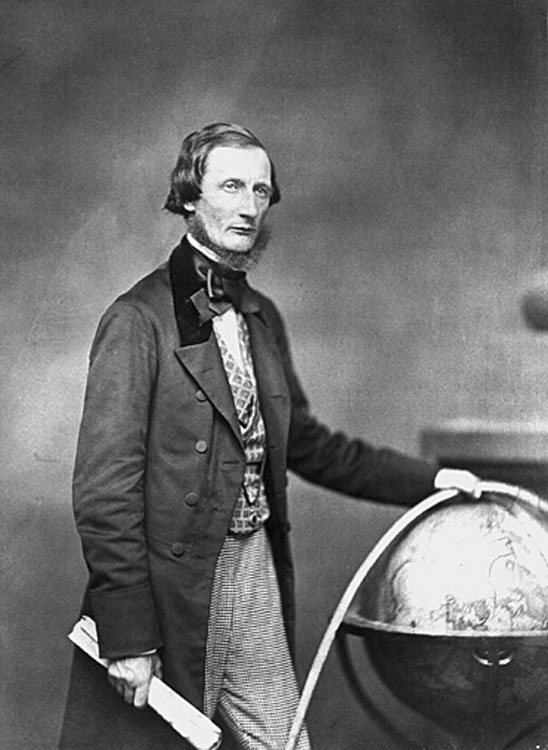
When you look at Cirus W. Field, the man, he wasn’t that imposing. He seems to have been of average height and thinner build, and yet, this is the man that laid the foundation of long-distance communication. Isn’t it wonderful what one person can achieve if they set their mind to it?

Cyrus W. Field, as photographed by Mathew Brady in 1958

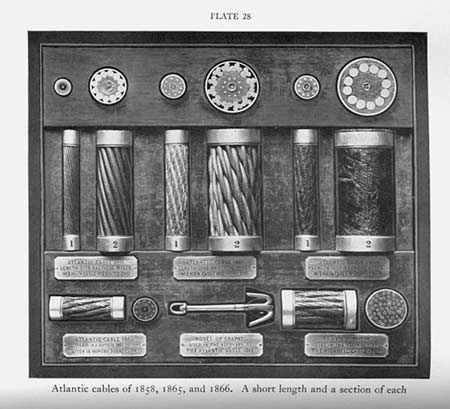
Just how did those trans-Atlantic telegraph cables look? You can see longitudinal and transverse sections of each size in this print:

Samples of the Atlantic cables used in the 1800s

The cables are quite complex, as you can see above. When you think that 2,000 miles of these cables had to be made, from scratch, in the mid 1800s, it’s no wonder they were at the time called the Eighth Wonder of the World.

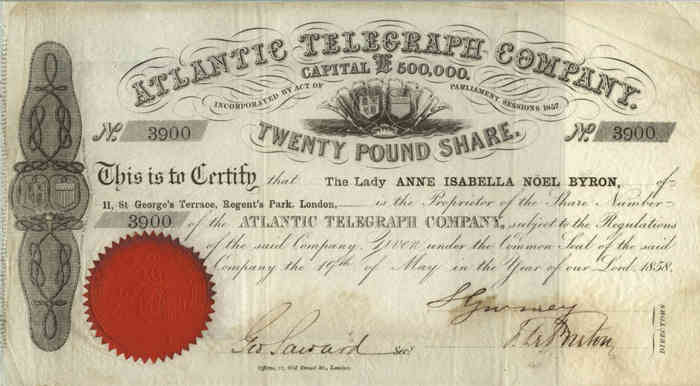
The failures to lay working cables before 1866 attracted controversy. You see, Cyrus Field didn’t finance the matter himself. He’d have been bankrupted many times over. He used other people’s money by selling shares in the venture. Here’s one such stock certificate, sold to Lady Anne Isabella Noel Byron, Lord Byron’s widow. This certificate lost most of its value after the failure of the 1858 cable, then became worthless until the formation of the companies which handled the laying of the 1865 and 1866 cables.

Atlantic Cable Stock Certificate

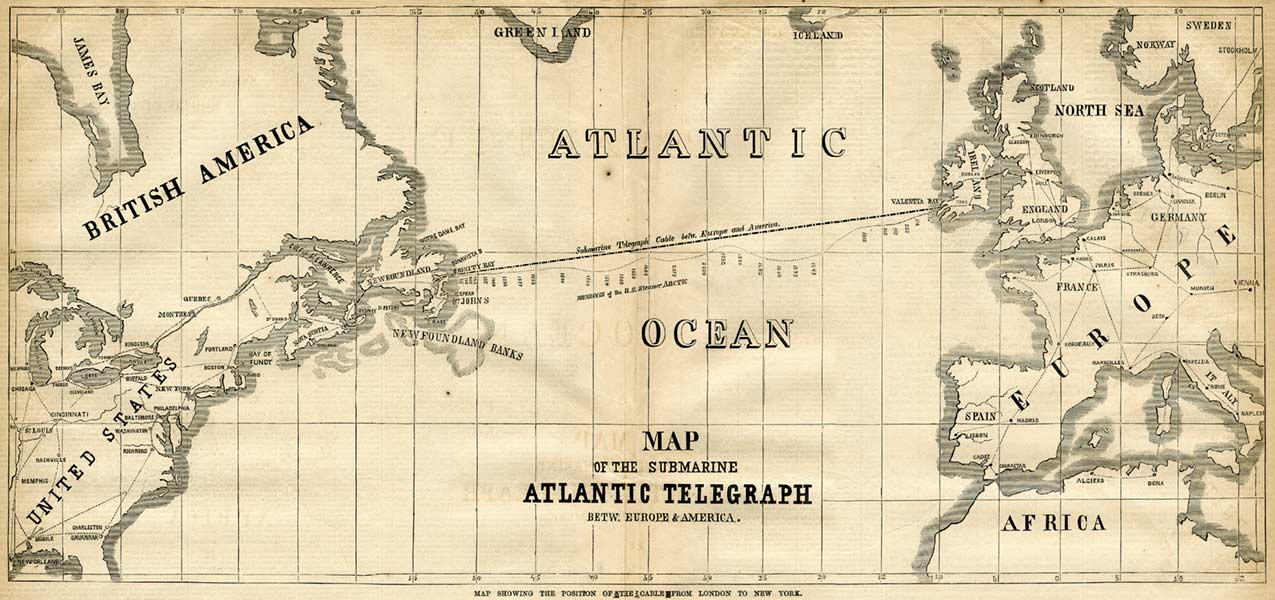
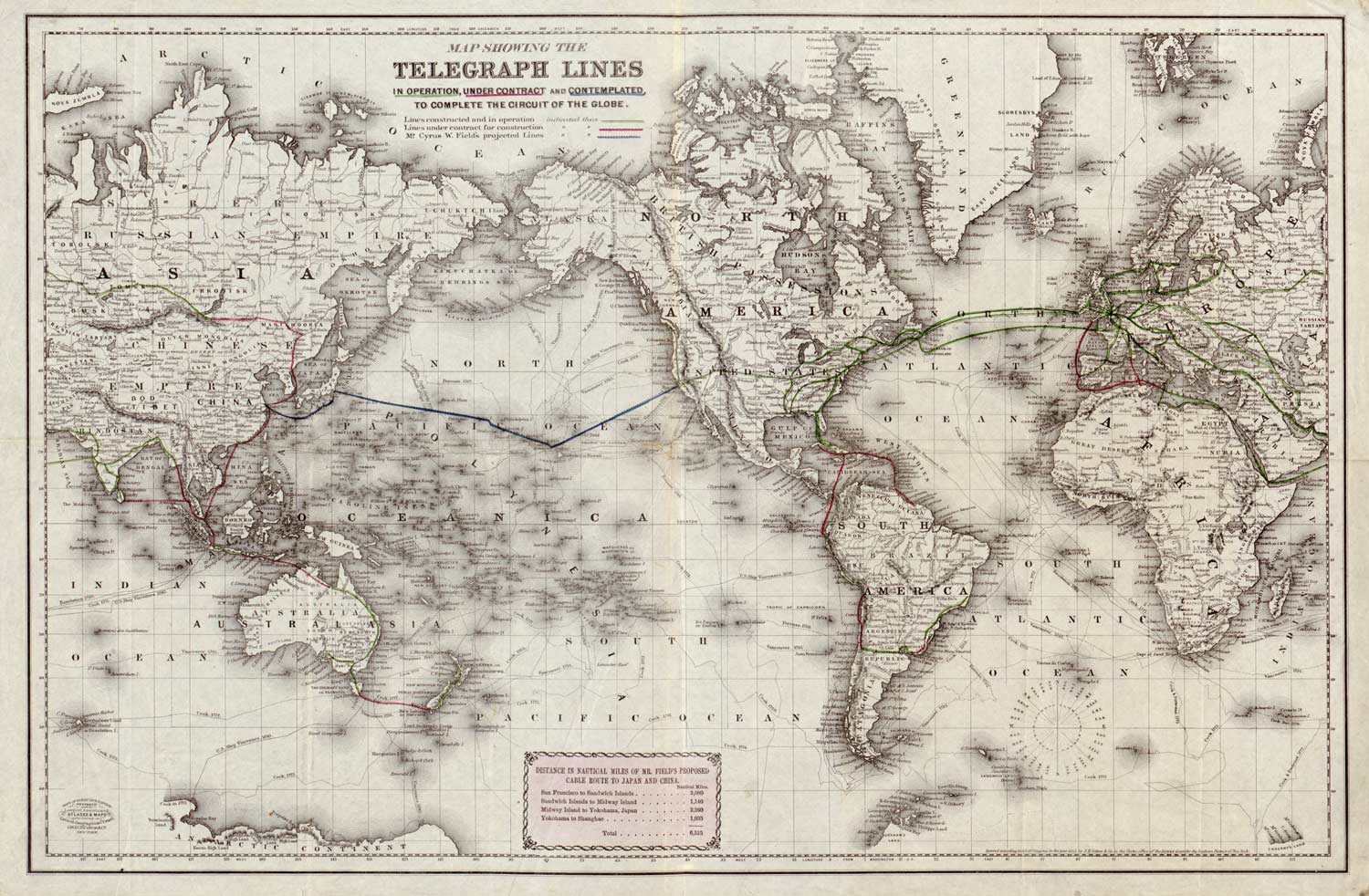
The route of the 1858 cable can be seen in the map included here:

1858 Telegraph Cable Map

The routes of the cables available in 1870 can be seen on this map:

1870 Telegraph Cable Map

Pause here for a bit and think about this: in the late 1800s, these were all of the communication routes available in the entire world. That was it. There was no internet, no telephone, no TV, no radio, only written letters and telegraph. Oh yes, they also had Indian smoke signals, but they weren’t as widely used, and those communication lines aren’t marked on these maps as each transfer hub was assembled and disassembled on the fly.

It’s easy to complain about how much faster and more reliable our Internet access could be, but the fact of the matter is that we’ve made amazing strides in communication over the past century and a half. As I write this, I’m sitting at a desk in a village in rural Dobrogea, Romania, and am storing these letters or bits or whatever you want to call them on my server back in the United States, instantly, each and every time I press the “Save Draft” button in my WordPress Editor. That’s amazing, in and of itself.

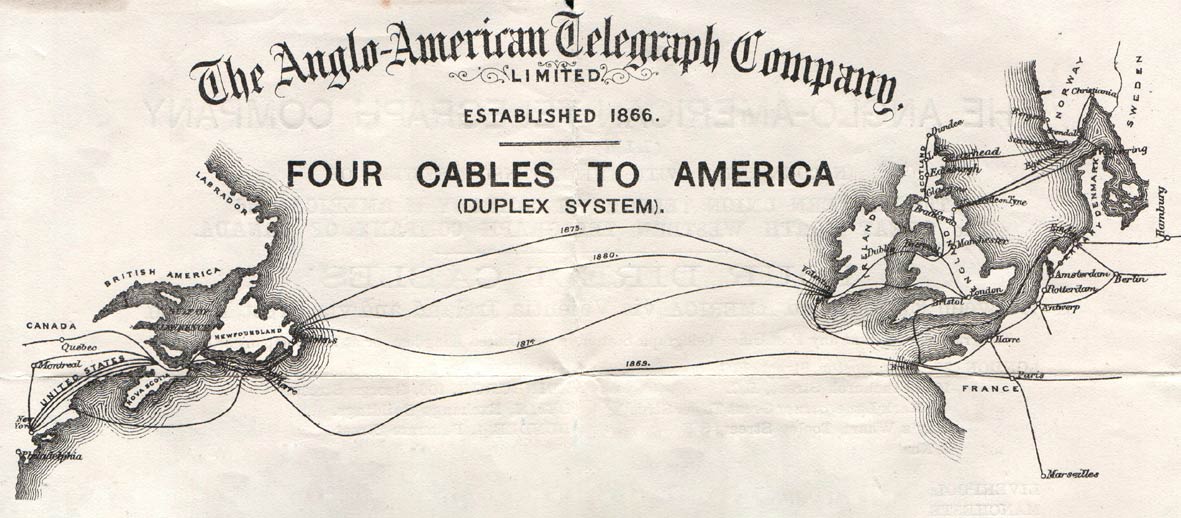
Let’s fast forward and see how fast things progressed from that single cable laid in 1866. By 1880, there were four cables already.

1880 Telegraph Cable Map

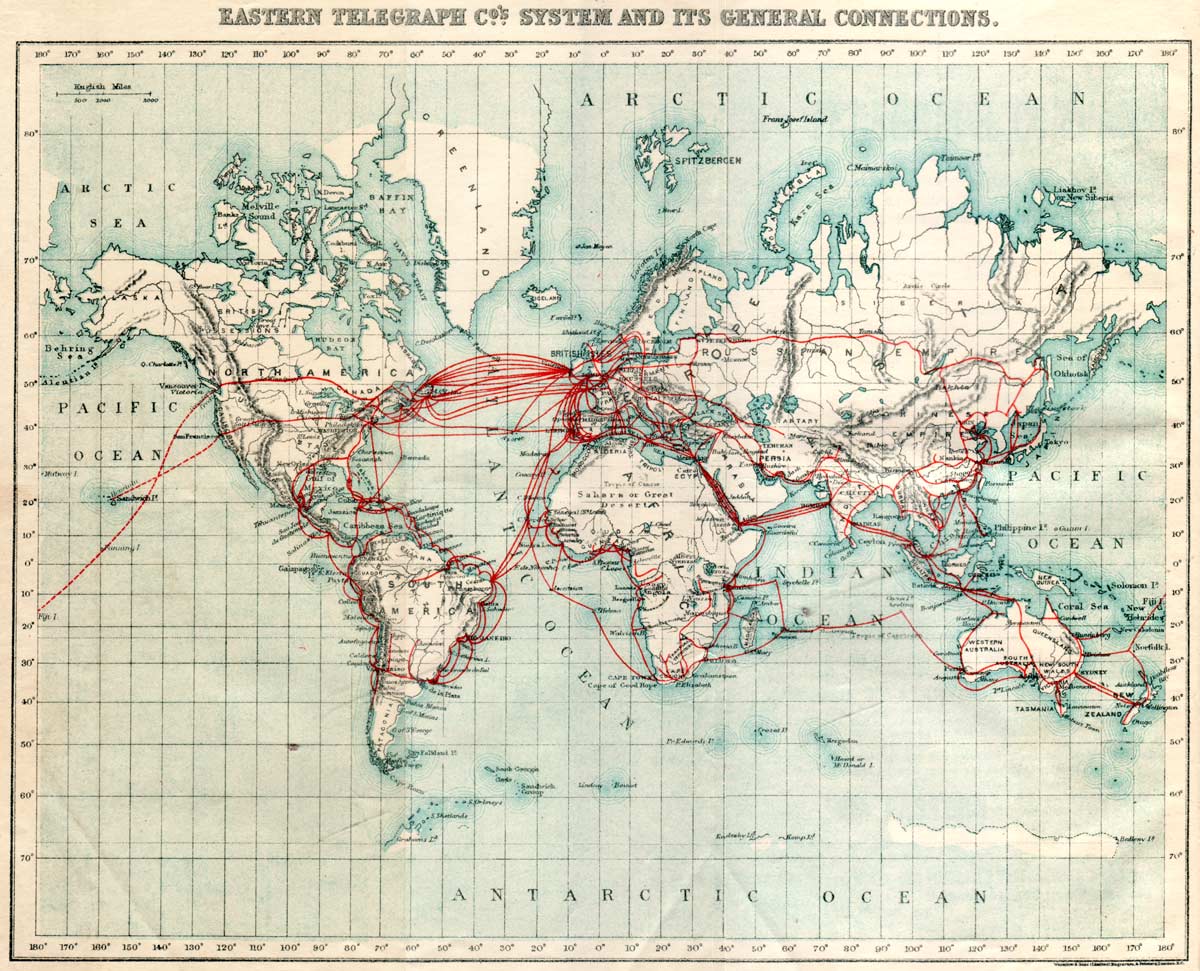
By 1901, there were 14 cables. That’s right, fourteen, from four just 20 years earlier.

1901 Telegraph Cable Map

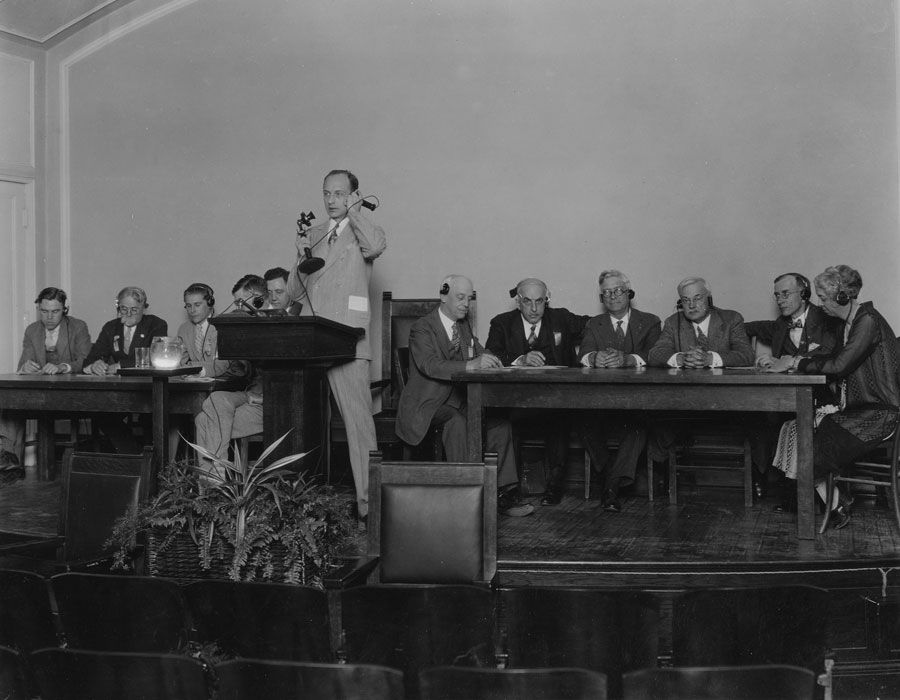
Although trans-Atlantic telegraph communications progressed quite fast, the first trans-atlantic telephone call did not occur until 1927. It was made from Columbia, Missouri, to London, lasted six minutes and cost $162, which was quite a large sum for that time.

The first trans-Atlantic telephone call, in 1927

Just think, now we can talk anywhere in the world for pennies a minute, or do audio or video chats with applications like Skype or iChat for free. We sure have come a long way!

Sources

Images used courtesy of the History of the Atlantic Cable & Undersea Communications and Missouri School of Journalism Archives.

Standard
Thoughts

Our economy: a very distinctive photoplay

I found this photo of a truck advertising the Rialto Theatre on Shorpy. What perked my interest was the juxtaposition of the truck in front of the US Treasury Building. Although the photo was taken in 1925, it’s somehow applicable to our times.

Rialto Theatre truck in front of US Treasury, 1925

Doesn’t it seem strangely non-coincidental that a photoplay/movie truck would find itself in front of the Treasury building, particularly when you consider what economic times we’re living in? I for one have been feeling like we’re watching a theater performance every time I turned on my TV in recent months. Politicians and government employees and suits from the Federal Reserve (which is separate from the US government) and CEOs have all paraded in front of the cameras and wept for the state of our economy when they themselves were at fault for its state. They’ve been crying crocodile tears and promising to make it all better, and we sat there mesmerized, hoping for a savior.

We had the drama of the economic downturn, then the drama of the election. The first act is over. Now we await the second act, which includes a bonus appearance from a fantastic pork-barrel stimulus plan guaranteed to make all the Washington hogs cry out for joy. I don’t want to spoil the plot, so I won’t tell you what I think of it, but it’ll involve a lot of work from the US Treasury building in the photo above. They’ll need to print a lot of Monopoly money to finance it all.

At any rate, this is what I think of the economic crisis. And this is what I think of the way companies are treating their employees nowadays. Finally, this is what I think of the problems car companies are having. Call me the guy from the nosebleed seats who thinks the show sucks and keeps throwing peanuts at the performers. Maybe I’ll get booted from the theatre, but at least I’ve spoken my piece.

Just remember, there will be a third act…

Photo used courtesy of Shorpy.

Standard
Thoughts

Is it any wonder there's computer piracy in Romania?

If the US and other Western countries are looking at Romania and shaking their heads while wondering why there’s so much computer piracy there, perhaps this will help them get the picture.

In 2008, the median monthly salary in Romania was €285, or $353, as another source quotes it. The same source says that by 2014, the median salary will grow to $1,400, but that’s another story. I’ve heard a number of such predictions in previous years, none of which have yet come true.

Let’s look at Microsoft Windows, probably the most pirated piece of software in Romania. Vista Home Basic, which is really just XP dolled up a bit, is 325 RON, or around $101. The decent version of Vista, Home Premium, is 434 RON. When you convert the median monthly salary to RON, the Romanian currency, it comes out to about 1,120 RON.

Now, when you keep in mind that most people make less than 1,120 RON per month, do you think they’d give up a third of their gross monthly income (before taxes) so they can buy an operating system legally? Would you do it?

Say you made $40,000 per year in the US. Wikipedia says the median income for men in 2007 was roughly $45,000, and the median income for women in 2007 was roughly $35,000. If we use $40,000 as an example, that works out to $3,333 before taxes. If Windows Vista cost you a third of that monthly income, or $1,111, would you pay full price to get it?

Don’t think only software costs this much in Romania. I have on my desk right now two inkjet cartridges from HP, one color, one black. The black ink cartridge, a 338 Vivera, cost 67.75 RON, and the color cartridge, a 342 Vivera, cost 73.05 RON. Those prices are in line with what these cartridges cost in the US, but that’s the problem, isn’t it?

People in Romania don’t make the same salaries as people in the US or in Western Europe. Since the 1990s, prices in Romania have risen to match those in Western Europe, yet salaries have risen at a much, much slower pace. Romanians have to contend with paying Western European prices for food, clothing, utilities and fuel, yet they make a mere pittance compared to their European counterparts. It’s simply not fair.

When you have to decide between buying food or paying all your utility bills in the winter, or when you can’t buy adequate clothes or shoes because you have to pay your rent and other expenses, paying for software is the least of your worries. I for one don’t blame Romanians one bit for using pirated software. Considering the amount of money they’re making, I completely understand why they turn to cheaper solutions.

UbuntuDo you know what I advise my Romanian friends and family when they come to me for help? I tell them to use Ubuntu. It’s free and it’s legal. I’ven even installed Ubuntu recently on two computers, one for family and one for an acquaintance. So far, the reaction was positive. They’ve been able to work with their Office documents on Ubuntu thanks to Open Office, and they’ve been able to view and play their photos and movies as well. For most people, the Linux platform is the way to go, especially when you consider that they can’t afford to get the faster and more expensive hardware that’s needed to run Windows Vista.

Standard