Thoughts

Cows and roads in Romania

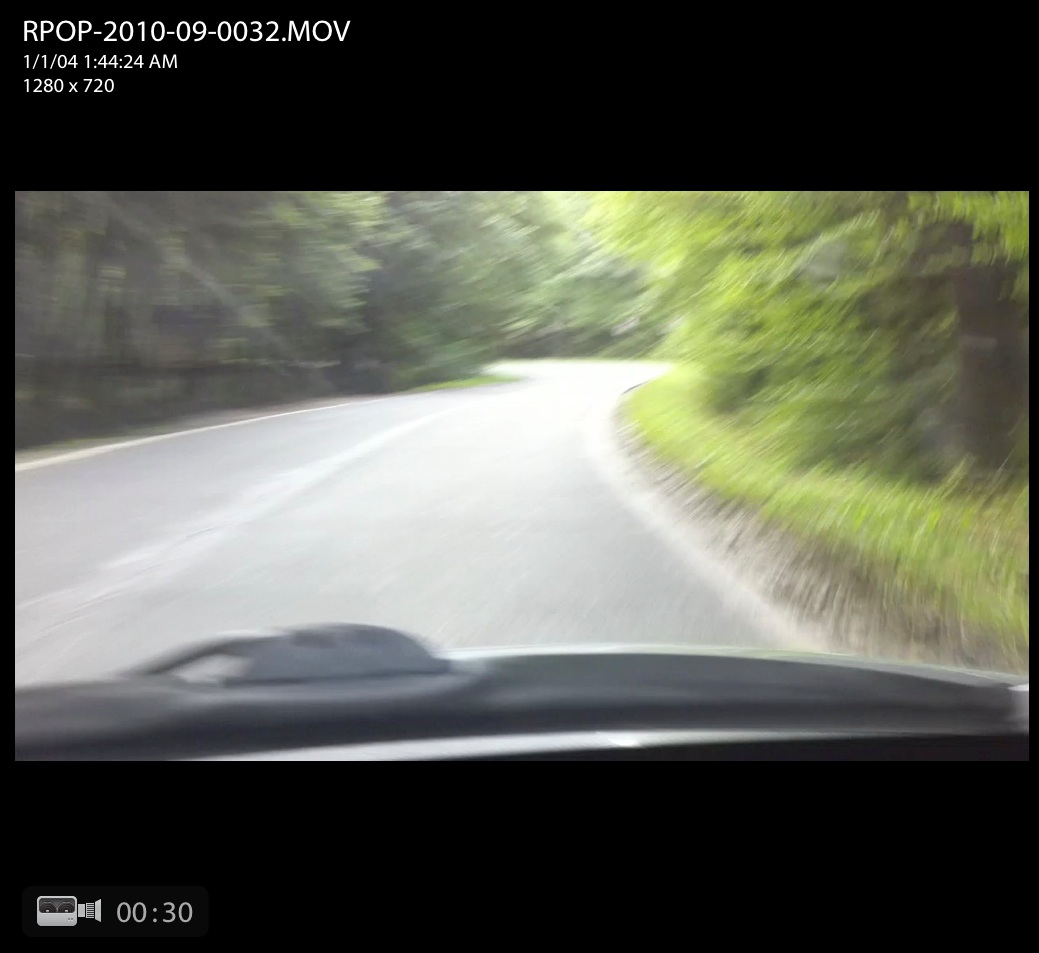
A typical sight you might encounter as you drive through the Romanian countryside is cows returning home from pasture in the evening, or, if you’re an early morning traveler, going to pasture.

It’s interesting the first few times, particularly if you’ve never seen that sort of thing before. It’s “touristy”, cute, etc. But it gets old really fast, for multiple reasons:

  • Herds on the roads worked back when the pace of travel was as fast as a horse and buggy could take you. Nowadays cars go somewhat faster than that. Having to slam on your brakes and go in 1st gear or stand still for up to 30 minutes isn’t something the weary traveler looks forward to doing when trying to get home or find some lodging.
  • You won’t find it cute after an angry ox sticks his horns into your hood or tries to mount your car, frustrated because he couldn’t mount his favorite cow that day…
  • Your neck veins will possibly burst as you experience the indolence of the cow herders, who will drag themselves along at a snail’s pace, blissfully unaware of the cars that are waiting for them to move the animals off the road. Most won’t give a cow’s behind about you even if you ask them nicely or yell at them.
  • You’ll not think it such a quaint sight after you run through a few steaming cow pies and have to hose them off your car later.
  • If you have to brake suddenly, then begin to slide dangerously on the mud laid on the road by the cows, you’ll begin to appreciate the usefulness of clean asphalt, unsullied by manure or thick mud.

In this day and age, I’m surprised village mayors still allow the cows to use the main roads, instead of directing the animal traffic to use the side roads and the back roads. Sure, the cows have gotten used to using the same route every day, but they can be re-trained. It seems to me the will just isn’t there, and that’s a shame.
Standard
Reviews

POLLI-BRICKS reduce plastic bottle pollution

Plastic pollution is a huge problem. Most everyone has heard of the floating plastic islands in our oceans (the biggest is in the Pacific Ocean, but there are several others), all of which are made up of plastic bottles, wrappers, bags and other plastic waste that can float. They don’t break down. They only break into smaller pieces, which are still plastic and continue to pollute over time. For a wonderful primer on the subject, check out Dianna Cohen‘s talk at TED about it.

MINIWIZ, a Taipei company, has come up with an innovative “brick” design they call POLLI-BRICKS. They’re made from 100% recycled PET polymer (plastic bottles) collected from plastic waste reservoirs. This means that instead of ending up in the floating plastic islands, plastic waste can be re-purposed into bricks that can be used as building materials. Because they’re hollow and translucent (but not transparent, for those concerned about privacy), they have inherent thermal insulation, offer natural lighting during the day, and can be embedded with LED lights and solar panels for night lighting. They’re also durable, fire-resistant, interlock readily, and can be manufactured on-site. Check out the two videos embedded below, one recorded at CES by InfoWorld, and another showing how sturdy a small bridge built out of these bricks can be.

There are more videos posted on the MINIWIZ channel at YouTube.

[via Greenopolis]

Standard
Reviews

Time of capture metadata bug in iPhone 4 movie clips

Updated 9/12/10: I’m not sure any more if this is an iPhone 4 glitch or an Adobe Lightroom 3.2 bug. A thread has been opened in the Adobe Lightroom Forum, if you’d like to chime in there.

After upgrading the iPhone with iOS 4.1, I recorded a new video clip, imported it and some new photos into Lightroom, and the same wrong date and time appear for it.

According to a comment on my thread in the Apple Support Forums, the correct time of capture is displayed for iPhone 4 video clips elsewhere but Lightroom. And I also noticed that Lightroom displays the very same incorrect date and time of capture for video clips taken with the Nokia N95.

Updated 9/27/10: I’ve been in touch with Adobe, and it turns out this is a “designed” behavior. That is, because movie clips do not have EXIF data (there is no standard for EXIF data when it comes to them), they are assigned a random date and time as they’re imported into Lightroom. HDSLR video files are accompanied by a .THM file which stores the necessary EXIF data, and that’s why they show up properly.

Quoting from Davide M.’s (Adobe) response:

So I then had a look at our bug database and it turns our this is a known issue with mobile phones although somewhat out-with our control. Movie files do not technically have EXIF data or at least the standard has not yet been established. Since the import process can assign a timestamp to a movie file, we ignore this time stamp since it can be inaccurate, as shown by the example of your video file being changed by the simple process of email. Other applications while appearing to work fine, in fact are simply showing you the files creation date. If you were to duplicate the file, you will see that the timestamp in these other applications will change to the time the file duplication took place.

The reason why most DSLRs work is because they create a sidecar file containing that information. Files with no timestamp, such as the ones from the iPhone and the Nokia N95 do not create this and hence default to 1/1/04 when looking at the Loupe information overlay.

In the example you used, the Canon 7D creates a .THM sidecar file with the same name as the video file it generates. This contains all the data associated with the video file.

Still, this is problematic behavior, as it introduces erroneous times of capture in these movie files. So I asked Davide if it would be possible for Lightroom to be updated so that it writes a more accurate time of capture for these movie files. Thankfully, he agreed to log it as a feature request. Time will tell if this will make it into a future LR update. Quoting him below:

That’s certainly something I can log in our feature request list. Because this has been deemed ‘as designed’ by our engineering team (due to the lack of EXIF data in movie files) it is not technically a bug. None the less, I can see that this would be a useful addition to our application. Thanks for bringing this to our attention.

Thank you, Davide!

After downloading a few movie clips taken with an iPhone 4 (running iOS 4.0.1) onto my computer, I saw right away that their time of capture was incorrect, even though the iPhone’s time had been set up correctly. I took a few screenshots of the movie clips in Lightroom, which you can see below. Click on each to view them large.

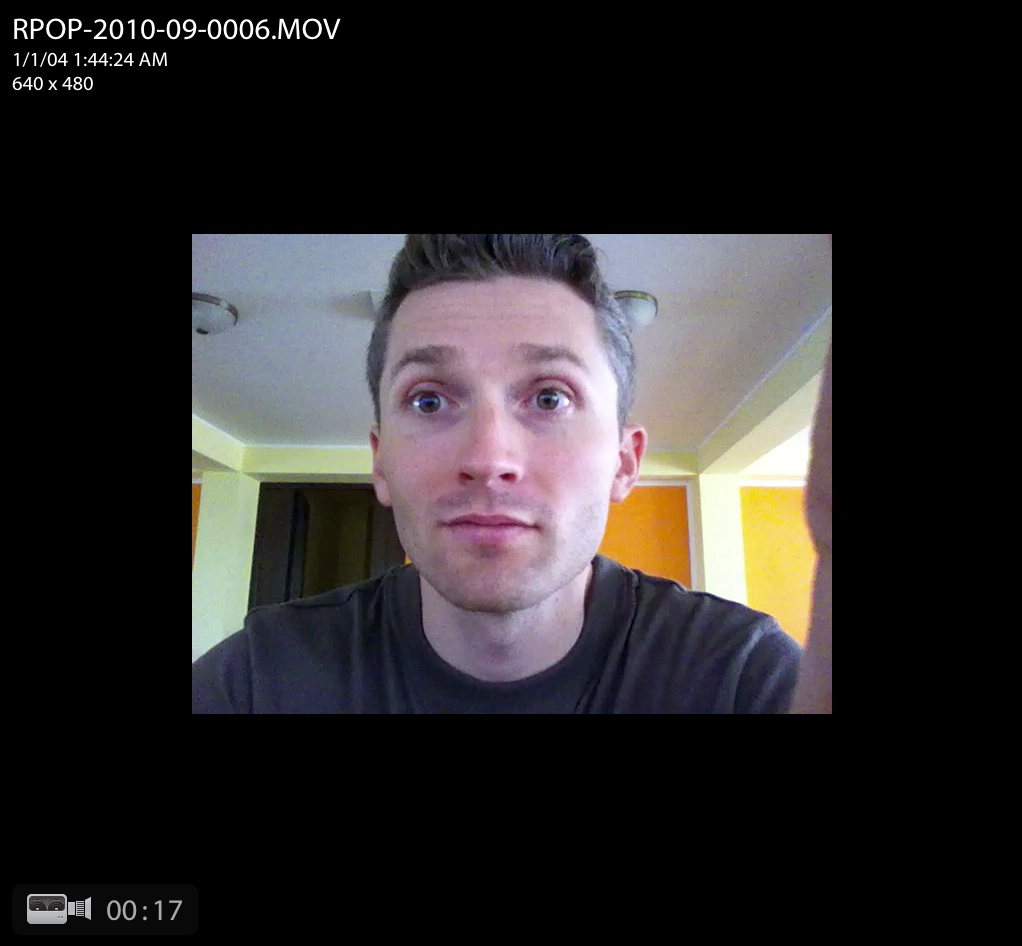
This time metadata error happens when using either the main (back-facing) HD video camera, as shown above, or the front-facing VGA camera, as you can see from the screenshot below.

It looks like iPhone 4 records the same time for all video clips recorded with it, set at 1/1/04 1:44:24 AM.

It goes without saying that any digital video camera worth its salt will record the time of capture properly. The question, naturally, is when Apple will fix this glaring bug?

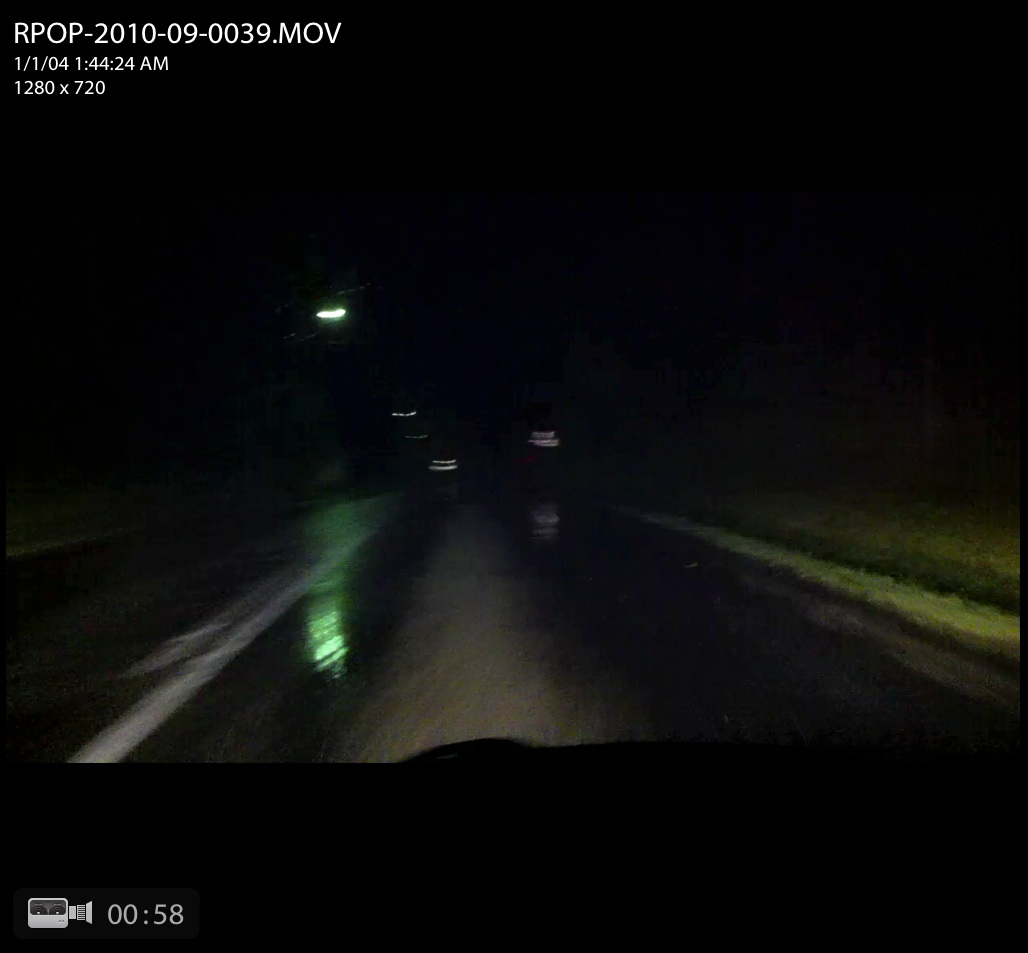
For comparison purposes, here is a screenshot of a Canon 7D movie clip, also shown in Lightroom. The time of capture was recorded properly, as was to be expected.

Standard
Thoughts

YouTube’s copyright claim process still needs some work

A while back, I edited and uploaded what I thought was a fairly innocuous video to YouTube, called A walk on Dania Beach. You can see it below. It shows a few clips of the beach that I took during two walks with my wife. It’s nothing special, really. The quality of the video isn’t even that good, because the camera I used at the time compressed the video too much.

Because there was a lot of wind noise from the in-camera microphone, I muted the sound on some portions of the video, and used the stock surf sound that ships with iMovie (as part of iLife).

You may or may not know (depending on whether you use a Mac) that the sounds that ship with iLife are free to use as you like in your videos, podcasts, presentations, etc. You paid for them when you purchased the software. While their creators retain copyright, in essence, by purchasing iLife, you have gained a license to use them as you see fit in your work.

And so I do use them, all the time. Many of the videos I uploaded to my YouTube channel contain either a sound or a clip from the iLife library, in order to enhance the video’s presentation. So far, so good.

Imagine my surprise when YouTube promptly informed me that this particular video contained copyrighted audio, and that I was welcome to file a copyright claim if I wanted to dispute their findings. They identified two entertainment companies, Go Digital and WMG, as the potential copyright holders. I did file a dispute, where I stated that I didn’t use their content. It took a few weeks, but their replies were finally posted.

GoDigital confirmed its claim to the sound recording, and WMG agreed with my dispute. It’s interesting to see that WMG, the far larger company, agreed with me, while GoDigital, a company I’ve never heard of, maintained their claim… to what? That’s really the question I’d like to ask them, but I can’t, because this is as far as I can go with YouTube’s claim dispute process.

If you’d like to learn how YouTube identifies potentially copyrighted material (video or audio) in the videos its users upload to the site every day, Margaret Stewart, YouTube’s head of user experience, gave a talk at TED about that very subject in June of this year.

Now that you’ve presumably watched that video and you understand how YouTube scans and identifies potential copyrighted assets, I’d still like to find out exactly what GoDigital sees in my not-so-special video that it thinks it owns. The sound of the waves I recorded with my camera? The sound of the waves from the iLife library? The seagulls I recorded? The sound of the wind, also recorded by me? What is it they think they own?

If someone at YouTube’s user experience team reads this, please, either enlighten me, or introduce an extra step in the copyright dispute process that allows the user to ask what particular piece of content was identified as copyrighted, or allows the company to specify it directly when they review the dispute and decide it’s still theirs. Then, for those special cases like mine, where I don’t see how the content is theirs, allow me to request a third-party review, by a human at YouTube, someone who could have a look at the video and see what’s going on.

Thanks.

Standard
Thoughts

The kittens at play

❗ Free kitten alert! ❗

We’re getting ready to say goodbye to our kittens. We’re going to give them away for adoption in the next week or two. If you’re in Romania and you’d like one, let us know. Otherwise, we’ll take them to a pet store in Sibiu or Tg. Mures, where eager children will surely squeal in delight and tug at their parents’ sleeves, wanting one.

We have four little tomcats and two kitties: two black males with white socks, two grey-brown striped males with white socks, one brown-beige striped kitten and one beige-orange striped kitten. They’ve been lovingly cared for since birth by our two cats, Mitzi and Trixie, who’ve shared responsibilities in grooming and feeding them. They have already visited the vet, have their health cards, have been treated for internal and external parasites, are weaned, eating solid food, and they’re ready to be welcomed into someone’s family.

Here are photos and a couple of videos of them. The first video shows them playing inside, and the other shows them playing and suckling outside, in our yard.

The photos were taken while they were playing and suckling inside one evening.

This last photo shows the two striped tomcats sleeping next to each other.

Just so there’s no confusion, let me make it clear that they’re free. If you want one, as long as you can come and pick it up, it’s yours.

Standard