Reviews

Christoph Rehage's China hike

Christoph Rehage walked through China for a year, on foot, while letting his hair and beard grow. The total distance walked was 4,646 km. He took photos of himself along the way, then put them together in a wonderful time lapse video which you can see below. He also kept a travel log, which he’s been posting to his website.

I bookmarked his video a few weeks back and meant to blog it. Now it’s already making the rounds. If I hadn’t procrastinated, I wouldn’t be in the me-too group…

It’s a great video, and a great achievement. It’s amazing to see Christoph’s face change through his trip. He emerges a changed man at the end, and exclaims as he puts up a photo of himself at the start of the trip, “Who was this man? Was it really me?” Good question.

The Longest Way 1.0 – one year walk/beard grow time lapse from Christoph Rehage on Vimeo.

Standard
Reviews

Adrian Holovaty

It turns out Adrian Holovaty, the co-creator of the open-source Django Web framework, also plays the guitar. My wife found a few videos of him on YouTube and sent them to me. The videos aren’t recorded professionally — it’s him in front of a webcam, with a small mike placed on the table close to his guitar, but his music is great. From the looks of the background in some of his videos, it looks like some are recorded in his office at work — when you think about it, it’s pretty cool when you can play guitar at work, right?

Adrian creates his own arrangements for various songs, video games and TV shows, like Duck Tales (which I love, btw).


Adrian Holovaty – Duck Tales theme song

There’s also an acoustic version of the Super Mario Bros. theme.


Adrian Holovaty – Super Mario Bros. theme song

He’s got plenty of serious stuff if you’re not into cartoons and video games. For example, there’s his rendition of Beatles’ “Yesterday”.


Adrian Holovaty – Yesterday

Or how about “Hit the Road Jack”?


Adrian Holovaty – Hit the Road Jack

He also did the Monkees’ “Daydream Believer”.


Adrian Holovaty – Daydream Believer

Sometimes he does multitrack videos, like his rendition of Nola, a 1915 ragtime piano piece by Felix Arndt. Here he used the original Les Paul arrangement from the 1950s, where he recorded the lead guitar at half time, then sped it up 200%, to give it the classic high pitched sound.


Adrian Holovaty – Nola

While I’m on the topic of multitrack videos, he also did a gypsy jazz rendition of the Super Mario Bros. 2 theme song.


Adrian Holovaty – Super Mario Bros. 2 theme song

I love gypsy jazz, which Django Reinhardt popularized. Adrian did a multitrack gypsy jazz version of “All of Me”, which I think is great.


Adrian Holovaty – All of Me

I’m going to close with Adrian’s rendition of Django’s “Tears”. He plays it with four fingers, unlike Django, who played it with two. Did you notice the Django Web framework shares someone’s name? Methinks Adrian is a big fan of the legendary guitarist.


Adrian Holovaty – Tears

Standard
Reviews

Comfortable by Frankel

This is a song called “Comfortable” by a West Coast folk/pop band called Frankel. Courtesy of Elliot Glass, who’s been going out and recording various cool bands in their homes, as they play laid-back versions of their songs. There are more videos like this at Elliot’s Vimeo account. Know what else is cool? Frankel’s latest CD is available in vinyl on their website. You can listen to more Frankel songs on their MySpace page.

I like the clarity of the song (voice and music both), and the unexpected twists in the melody. I also like the video’s color grading.

http://vimeo.com/5939849
Frankel – “Comfortable” from elliot glass on Vimeo.

Standard
Reviews

Tommy Emmanuel CGP

I found about about Tommy Emmanuel recently, from a YouTube video that showed him playing a wild and incredible version of “Guitar Boogie”. That particular video was afterward removed from YouTube due to a copyright claim from an entertainment company. Still, thanks to someone from that same entertainment company (see comment #1 below), I found another clip of him playing that same song. Try to follow the incredibly complicated fingerwork if you can. The amount of dexterity and virtuosity this man possesses is amazing.


Tommy Emmanuel – Guitar Boogie

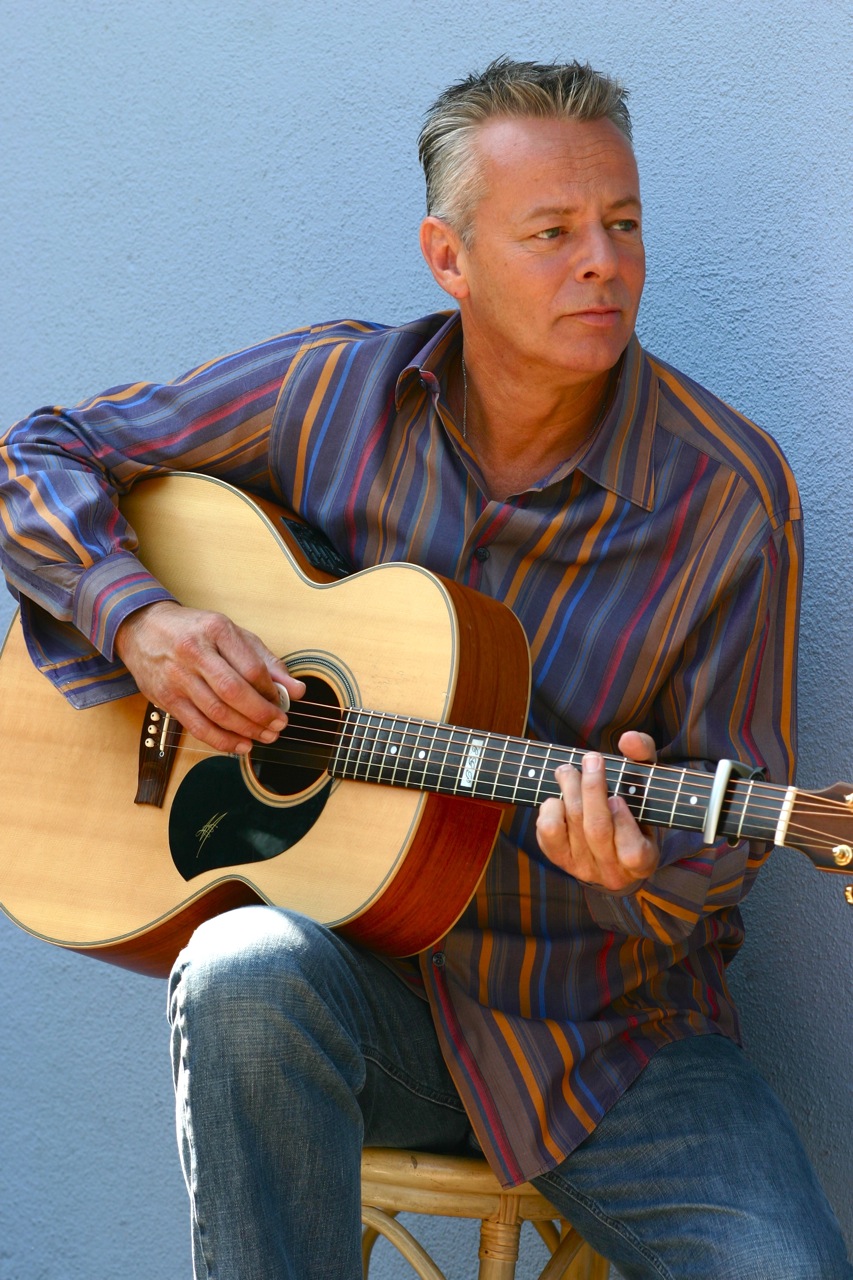
Tommy Emmanuel

Photo used courtesy of tommyemmanuel.com

Tommy’s been playing guitar professionally for over 40 years, and is huge in his native Australia. He started playing at the age of 4, by ear, without formal instruction. Two years later, he was already working pro gigs. He plays guitar differently from most, using all ten fingers. He calls it “finger style”, and I’m sure you appreciated it on the version of “Guitar Boogie” shown above.

I found two other really nice videos with him, recorded when he did a show on Korean television. The first is “Since We Met”, and the second is “Angelina”. These are quieter songs, but the man’s talent is readily apparent. These two songs, instead of impressing with virtuosity, relaxed me, and that’s worth more to me than a little excitement. (I’m somewhat tightly wound, as regular readers might have found out by now…) The final proof of Tommy’s talent came when I showed the videos to Ligia (who is Conservatory-trained in voice and piano) — and she immediately said they’re great.


Tommy Emmanuel – Since We Met


Tommy Emmanuel – Angelina

Want to know what the CGP in his name stands for? It’s “Certified Guitar Player” — a title given to him by the legendary Chet Atkins in 1999, for his lifetime contribution to the instrument. Awesome, don’t you think?


Tommy Emmanuel – Questions

Standard
Events

120th Anniversary of the Eiffel Tower

Eiffel Tower under construction, 1878

Built between 1887 and 1889 by French engineer Gustave Eiffel, the tower has since become the most recognizable landmark (and the most visited) in the world. For its size, the tower is amazingly light — its mass is less than the mass of the air contained in a cylinder of the same size. For its time, the system for joining the metal girders together was truly innovative, and was inspired by the design ideas of a Romanian engineer named Gheorghe Panculescu.
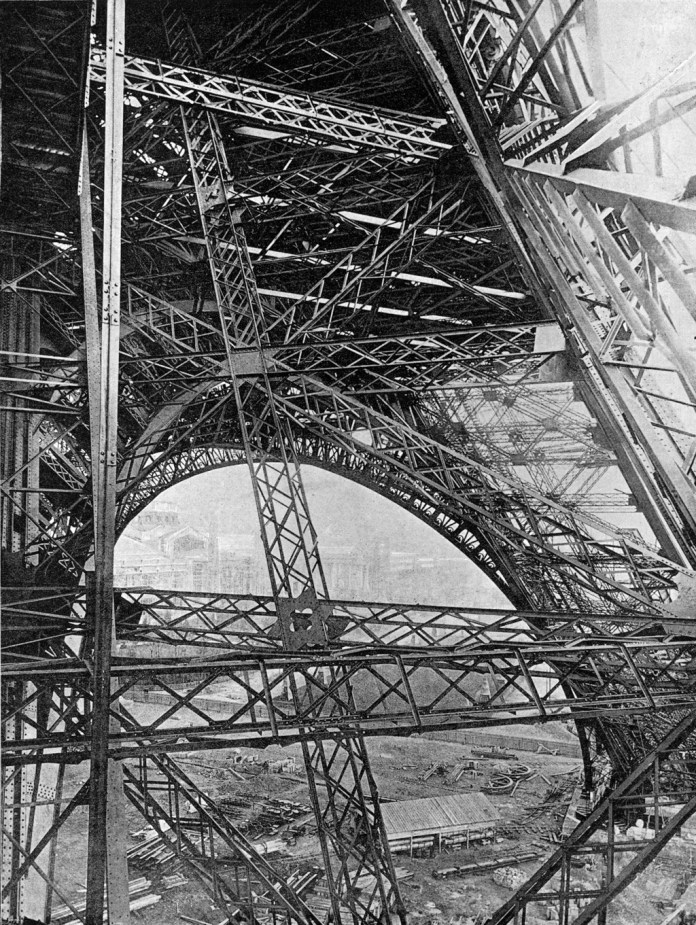
Eiffel Tower Girders, 1889

The shape of the tower was dictated purely by mathematics, and the primary design goal was wind resistance. Eiffel and the other engineers wanted to make sure it could withstand strong winds, being at the time the tallest building in the world. Being a very tall building, made almost entirely of metal, it’s also a very large lightning rod, which attracts amazing lightning bolts, as you can see in this photo from 1902.
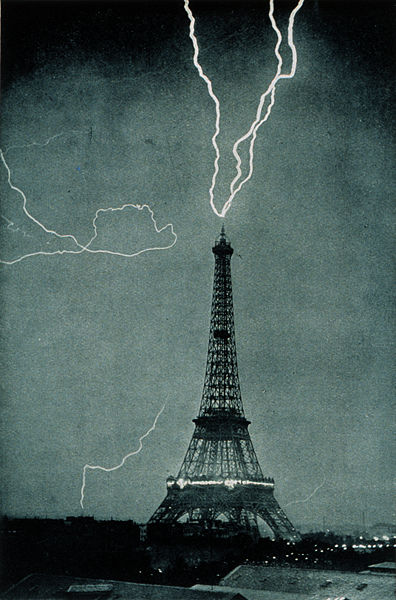
Lightning striking the Eiffel Tower, 1902

Also interesting is the use of the tower as a radio antenna. Over time, antennas were mounted to the tower, or the tower itself was used as a large antenna for radio communications. In 1910, the first cosmic rays were observed with the aid of the tower by Father Theodore Wulf. Nowadays, 9 radio and TV stations broadcast content with the aid of the tower.

This year, the French celebrated the tower’s 120th anniversary on Bastille Day. A concert by Johnny Hallyday was held at night, while fireworks blazed forth from the tower. It was an amazing lightshow, captured fittingly by Alta Media Productions and Toys Prophet, two Vimeo users. You can see their videos below. Taken from different vantage points, one focuses on the Paris nightscape and the tower lightshow, while the other captures the interaction of people with the evening’s events.

http://vimeo.com/5621455
Eiffel Tower on Fire from Alta Media Productions on Vimeo.

-SPEED OF LIGHT- ….. ESSAI N°5.1 from toys prophet on Vimeo.

I haven’t yet visited the Eiffel Tower, and I look forward to doing it someday. It’s a structure unlike any other. When you think of it in the context of architectural design, it fits into no category. Its design is pure engineering, with no allowances for the niceties of normal architecture. Sure, it’s been adapted for human use over time, and you can even eat there now, but these are all add-ons, insignificant to the initial design goals. It didn’t fit within the times when it was made, in spite of some of the Victorial wrought iron work it faintly resembles, and it still doesn’t fit within any normal design constraints today, even in post-modernist times. And yet it has become a symbol of architectural design, of Paris, and of French culture, odd as it may be. If nothing else, Gustave Eiffel had serious guts to undertake such a work and to withstand all of the criticism leveled at him during and after the construction of the tower. He was right all along.

Eiffel Tower by briandeadly on Flickr.

Eiffel Tower by briandeadly on Flickr

Historic photos of the Eiffel Tower used here are public domain, obtained courtesy of Wikimedia Commons.

Standard